
This Underrated Western Arkansas Town Offers Small-Town Charm And Forest Drives Worth The Trip
You could drive through and never realize how much sits just beyond the highway. Slow down, though, and this western Arkansas community begins to show its personality.
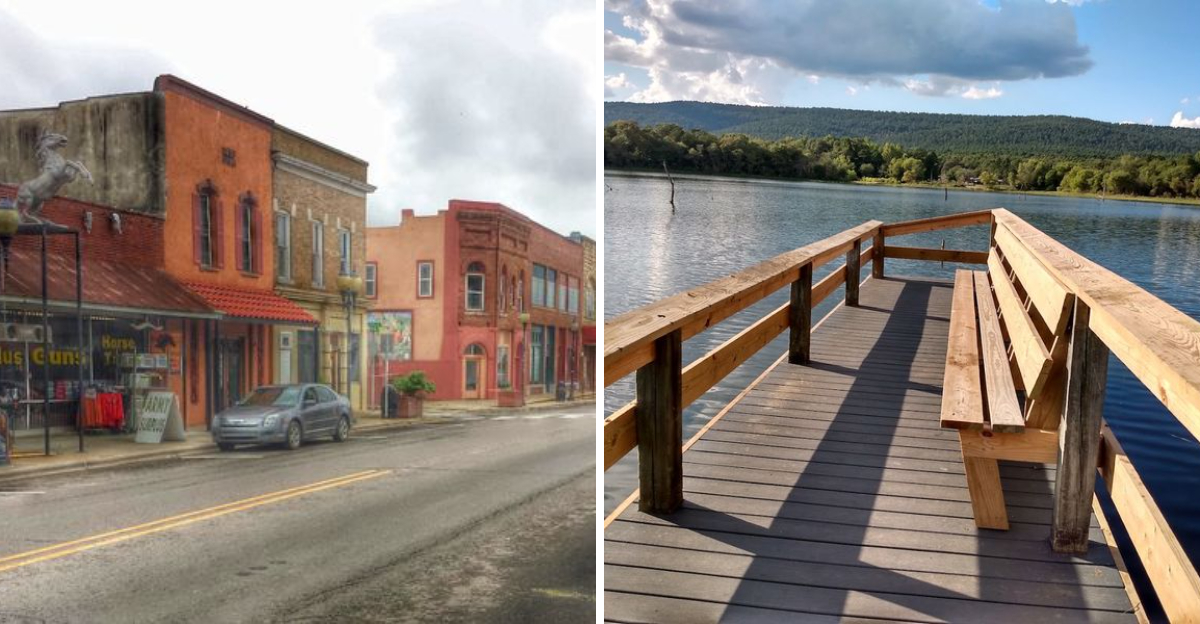
The downtown holds onto its brick buildings, while an Art Deco courthouse adds a bold touch to the center. A movie theater still lights up Main Street, connecting modern evenings with decades of local memories.
Then the landscape takes over. Forest roads climb through the Ouachita Mountains and open toward ridges stretching far beyond the next curve.
Lake views offer another reason to linger on an afternoon. Autumn brings the biggest visual payoff as the surrounding hills change color.
Scenic routes become destinations of their own. The appeal here is not loud or complicated.
It comes from noticing what remains and following roads without rushing. Somehow, so much history and scenery fit into one small stop that many travelers miss on the map.
Historic Brick Buildings Along Main Street

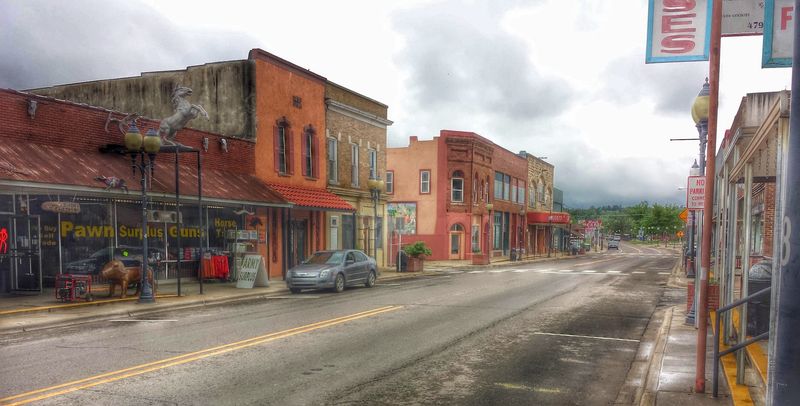
A well-preserved Main Street can set the mood for a small-town visit immediately, and this historic district delivers that feeling block by block. The commercial district stretches across five blocks, from 1st to 5th Street, and contains 34 buildings plus one additional structure.
Twenty of those 35 resources retain a high level of historical integrity and contribute to the district.
That is not just architectural trivia; it means you are walking past structures that have stood the test of time.
Construction here happened in waves, with the oldest surviving buildings dating to around 1880 and the district continuing to develop through 1958. Ten brick buildings were erected between 1880 and 1900, followed by another major period of construction during the early 20th century.
The district earned its spot on the National Register of Historic Places in 2008, a recognition that feels entirely deserved once you see it in person.
One highlight is the Scott Theater, originally called the Pines Theatre, which opened around 1930 and is recognized as the oldest operating movie theater in the state.
Main Street was paved for the first time during the 1930s, adding another layer to a downtown that practically breathes history with every step you take.
This historic district stands at the heart of Waldron, Arkansas.
Quiet Roads Framed By Towering Pines
Scott County wears its timber identity proudly. About 82% of the county’s land area is timberland, with 62% of the county owned by the U.S.
Forest Service and 20% privately owned. That means nearly every road leading out of town quickly becomes a corridor of towering pines and filtered green light.
Driving here feels less like commuting and more like being quietly absorbed by the landscape.
The Ouachita National Forest, the oldest national forest in the southern region of the United States, wraps around the area and defines much of what makes these roads so striking.
Sandstone and shale slopes support pine and oak on south-facing hillsides, while northern slopes lean toward hardwoods, giving each stretch of road its own distinct character depending on which direction you are headed.
Forest Road 158, part of the Poteau Mountain Rustic Road Auto Tour, offers a 22-mile drive along the crest of Poteau Mountain with broad mountain views.
The Buffalo Road Tour south of town passes through an area associated with shortleaf pine and bluestem restoration efforts, adding an environmental story to the scenery.
These are roads worth driving slowly, windows down, with no particular deadline pulling you forward.
Art Deco Details At The County Courthouse

Not every small town can claim an Art Deco courthouse, but Waldron can, and it wears that distinction with quiet confidence.
The Old Scott County Courthouse on Courthouse Square was built in 1934 with funding from the Works Progress Administration during the New Deal era, making it both a piece of architectural history and a social history artifact rolled into one handsome building.
Fort Smith architects T. E.
Bassham and Carnall Wheeler designed the three-level structure using red brick and concrete, finished with a flat roof and a clean parapet line.
The tall granite panel above the entrance bay catches the eye immediately, and the building’s strong geometric details add a layer of elegance that feels almost surprising for a county seat of this size.
It was listed on the National Register of Historic Places in 1989, well before the downtown district received the same recognition.
The courthouse served as the seat of county government until 1996 and now houses the Scott County Museum of History. Viewed from across the square, the building appears especially striking, with its bold geometry standing out against the Arkansas sky.
It is located at 252 South Main Street in Waldron.
Forested Ridges Rising Beyond Town
Stand at almost any edge of Waldron and you will see ridgelines pulling your gaze upward.
The Ouachita Mountains cradle the town from multiple directions, and their east-to-west orientation sets them apart from most mountain ranges in North America, giving the landscape a distinctive horizontal rhythm that you notice almost immediately.
The Ouachita National Forest covers approximately 1.8 million acres of this terrain, rolling through dense woodlands, rocky outcroppings, and hollows that feel genuinely remote even when you are not far from a paved road.
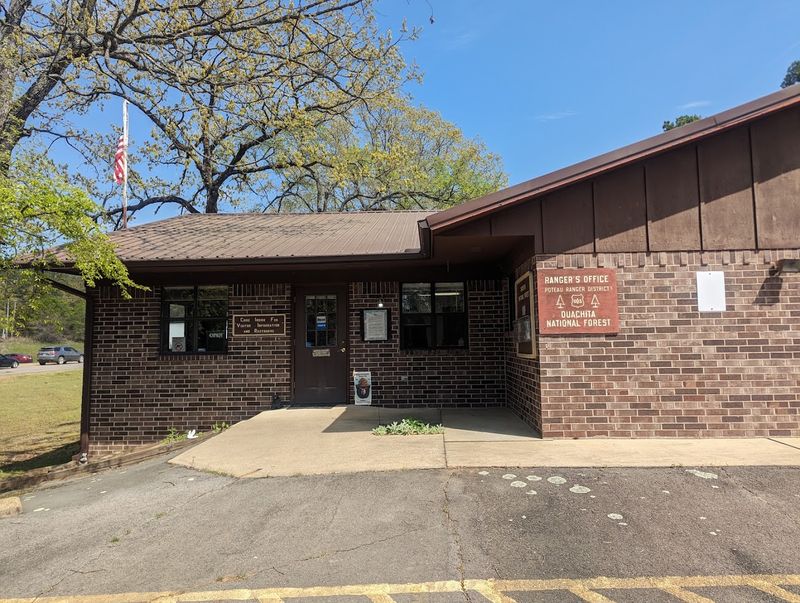
The Poteau-Cold Springs Ranger District maintains offices directly in Waldron, which underscores how tightly the town is woven into the management and identity of this vast natural area.
Trails like the Buffalo Gap Trail offer panoramic views of both the national forest and Buffalo Gap Mountain, giving hikers a sense of scale that photographs struggle to capture honestly.
The ridges here do not announce themselves loudly; they simply rise, green and steady, framing every view out of town with a kind of effortless grandeur that keeps pulling your eyes back to the horizon.
A Downtown Shaped By Generations Of History

Waldron’s downtown has roots that run deeper than most people expect. The town was incorporated on December 17, 1852, but its story stretches back to the 1840s, when early settlers were already establishing a community in this corner of Scott County.
In 1845, William G. Featherston donated ten acres of land to establish a town and county seat.
He hired engineer W. P.
Waldron to survey and lay out the settlement, which was named in the engineer’s honor.
The Arkansas Western Railroad reached Waldron in 1902 and later became part of the Kansas City Southern system. Its arrival helped turn Waldron into an important shipping location, and the commercial district expanded rapidly through the early 20th century.
Many buildings that went up during that growth period still line Main Street today, with local businesses continuing to occupy parts of the historic district.
A monthly community tradition called Waldron Trade Days brings vendors and neighbors together on Main Street. History here is not stored only behind glass; it is still being lived and celebrated on the same stretch of pavement that has anchored this community for generations
Winding Drives Through The Ouachita Mountains
Waldron sits at what feels like a natural launching point for mountain driving, and the roads radiating outward from town do not disappoint.
The Ouachita National Forest contains over 700 miles of trails and several scenic byways, giving drivers and hikers more options than a single visit can reasonably cover.
The Talimena National Scenic Byway is the crown jewel of the region, a 54-mile route that threads through the Ouachita Mountains with views of forested peaks, valleys, and the occasional glittering lake visible through the tree line.
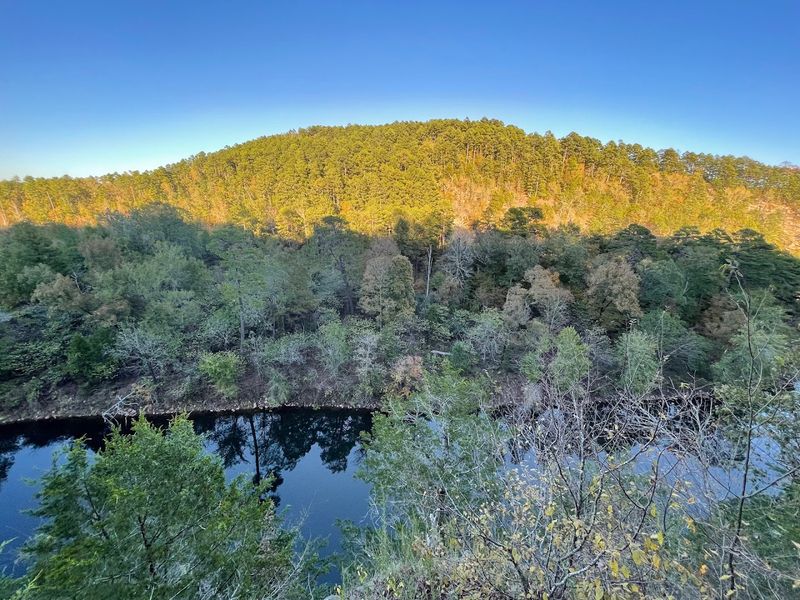
The byway earns its reputation in spring when wildflowers push through the undergrowth, and again in autumn when the whole ridge turns into something worth photographing at every pullout.
Forest Road 158, the Poteau Mountain Rustic Road Auto Tour, covers 22 miles along the mountain crest and pairs those panoramic vistas with reliable opportunities for wildlife sightings.
I spent a full afternoon on these roads and still felt like I had only scratched the surface of what the Ouachita Mountains are willing to show a patient driver willing to take the slower route.
Peaceful Lake Views Beyond The Town Limits
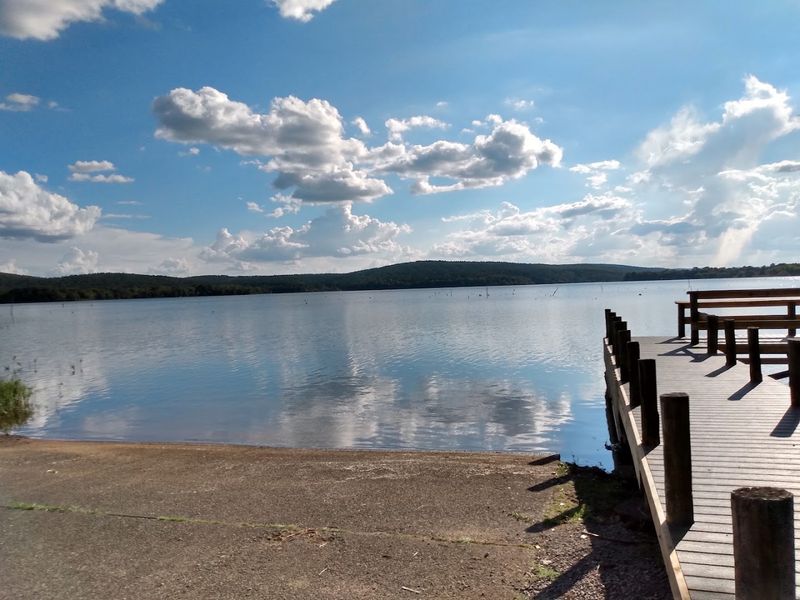
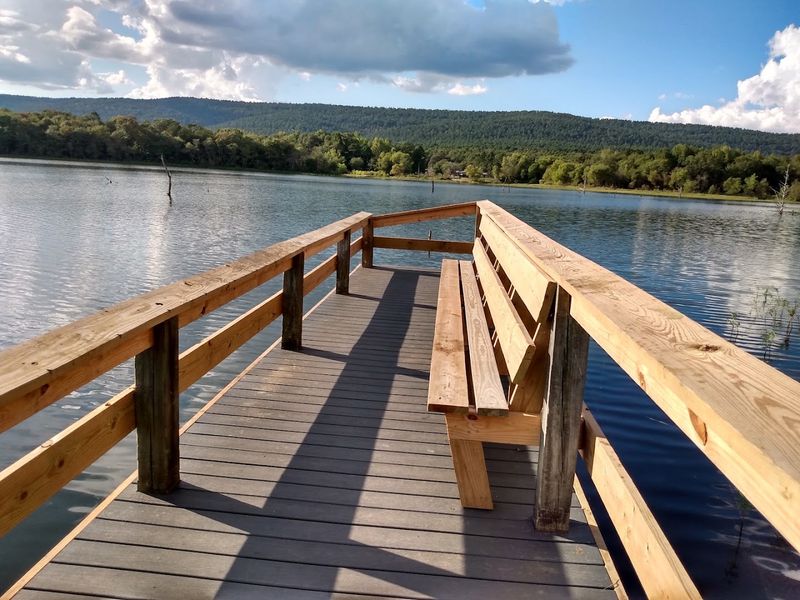
About 12 miles west of Waldron, Lake Hinkle spreads across roughly 960 acres of quiet water. People who know about it tend to describe it in protective terms, as though they are reluctant to share the secret of its clear water and unhurried pace.
The Little Pines Recreation Area on the lake’s banks provides camping, day-use facilities and lake access. Its amenities include a boat ramp, fishing dock and hiking trail, while swimming facilities may operate seasonally.
Blue Mountain Lake offers another option, with 54 miles of shoreline and a location in the shadow of Mount Magazine, the highest mountain in the state. The lake is undergoing a scheduled drawdown from May through November 2026, so access is currently limited.
A temporary ramp at Ashley Creek Park remains available, while the swimming beach is closed and several water activities are prohibited during the project.
Between these two lakes, the countryside surrounding Waldron offers more waterfront scenery than many visitors expect to find in this part of western Arkansas.
Seasonal Color Along Mountain Highways
Autumn in the Ouachita Mountains arrives on its own schedule, and that schedule tends to reward patient visitors.
Fall color in Arkansas typically begins in the Ozark highlands in late September and moves southward through October, with the Ouachitas reaching their peak vibrant hues around mid-November, later than most people expect and longer-lasting than most other regions.
The Talimena National Scenic Byway becomes something close to legendary during peak foliage season.
Brilliant reds, deep oranges, and warm yellows blanket the ridgelines on both sides of the road, and the panoramic views from the higher elevation pullouts turn a simple drive into something you find yourself talking about months later.
The diverse hardwood forests of the Ouachita region contribute to this extended color season, with different species peaking at different times and keeping the display fresh across several weeks rather than collapsing into a single brief window.
Spring brings its own quiet version of the show, with new green pushing through the understory and wildflowers dotting the roadside.
No matter which season carries you down these mountain highways, the landscape around Waldron has a way of making the drive feel like the destination itself.