
The Abandoned Place In New York That Has An Incredible History
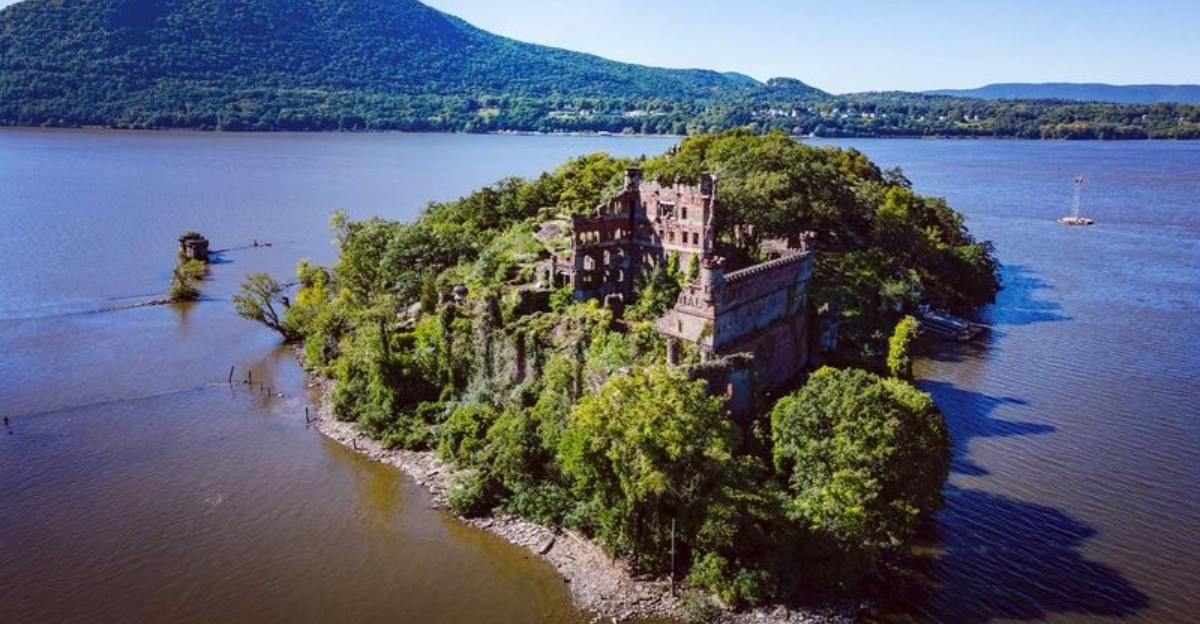
New York has skyscrapers, famous landmarks, and places everyone knows. Then there’s a castle sitting quietly on an island, looking like it escaped from a fantasy movie. The strange part?
This isn’t a movie set. It’s a real piece of history with a past full of ambition, mystery, and unexpected twists.
Built more than a century ago, this fortress-like structure once stored a massive collection of military goods before time, fire, and nature slowly changed its fate. Today, its weathered walls tell a different kind of story.
One about forgotten dreams, hidden corners of New York, and the places that become even more fascinating after they’re left behind. Some ruins disappear. Others become legends.
A Visionary’s Grand Idea Took Hold
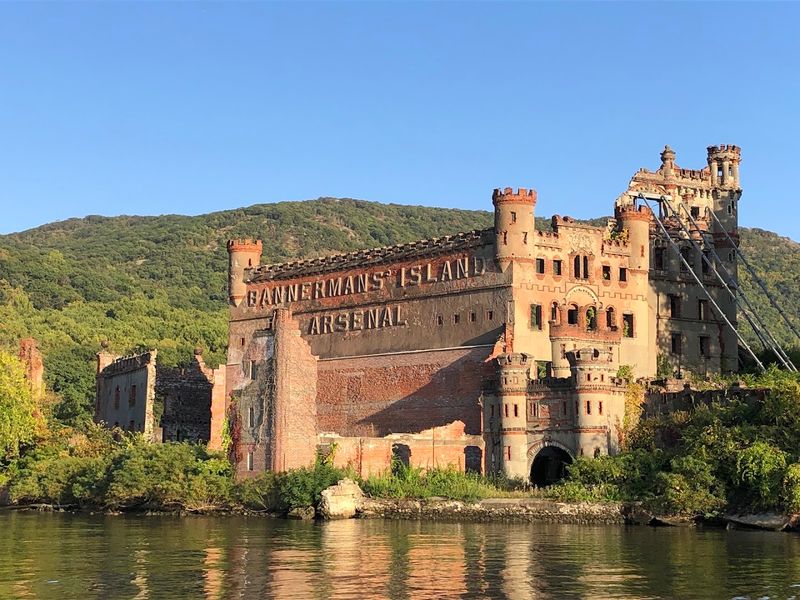
Some people dream big, and then there are people who buy an entire island to store their dreams. Francis Bannerman VI was a Scottish-American businessman with a truly extraordinary vision.
After the Spanish-American War ended, he acquired roughly 90% of the surplus military equipment up for sale.
His collection grew to include an estimated 30 million cartridges and numerous barrels of black powder. New York City regulations wisely prohibited storing such volatile materials within city limits.
He urgently needed a massive, safe solution far from crowded streets.
His son stumbled upon Pollepel Island during a casual canoe trip along the Hudson River. This rocky, uninhabited isle seemed almost custom-made for Bannerman’s bold ambitions.
In 1900, he purchased the island and immediately set his grand plan into motion.
His deep Scottish heritage inspired the entire architectural vision from the very beginning. He envisioned a castle echoing those of his ancestral homeland, something both functional and awe-inspiring.
This would not simply store goods, it would proudly announce his thriving enterprise to every passing boat on the river. Bannerman was not just a businessman; he was a showman with serious stone-laying skills.
An Island Fortress Began To Rise
Most ambitious construction projects come with blueprints, engineers, and carefully drafted plans. Bannerman had something far more interesting: sketches drawn on office paper scraps and an unshakeable belief in his own vision.
From 1901 to 1908, he personally designed the island’s buildings with remarkable creative freedom.
Pollepel Island sits in the Hudson River between Beacon and Cold Spring, New York, at coordinates placing it roughly at Beacon, NY 12508.
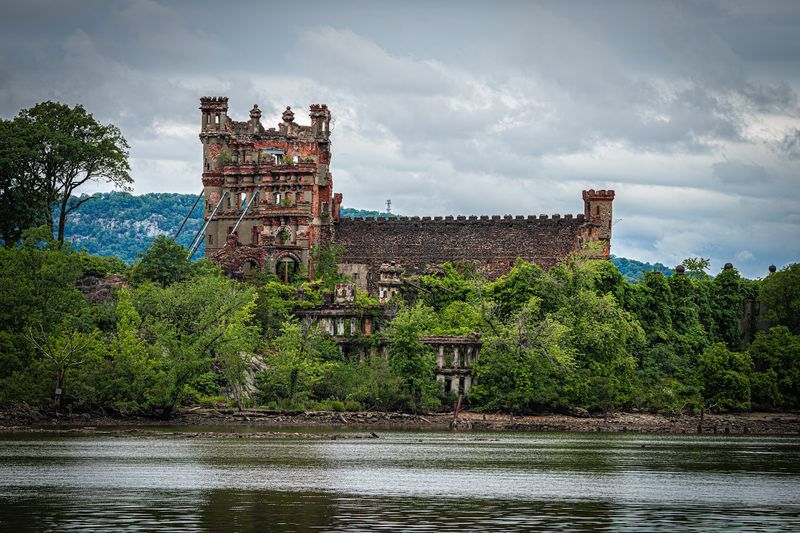
The main arsenal structure rose six stories high, resembling a proud Scottish castle straight from a fairy tale. Some walls were even reinforced using salvaged bed frames sourced directly from military surplus stock.
Bold letters on one side proudly announced “Bannerman’s Island Arsenal” for all river traffic to admire. This served simultaneously as a functional warehouse and a giant floating advertisement for his booming business.
The complex grew to include docks, dramatic turrets, and beautifully crafted garden walls.
Bannerman was essentially building a brand before branding was even a concept anyone discussed. Every stone placed was another chapter in his self-written legend.
The result was a 6.5-acre rocky island transformed into something utterly unlike anything else on the entire Hudson River.
A Castle With A Family Heart
Behind every grand fortress, there is usually a softer story waiting to be told.
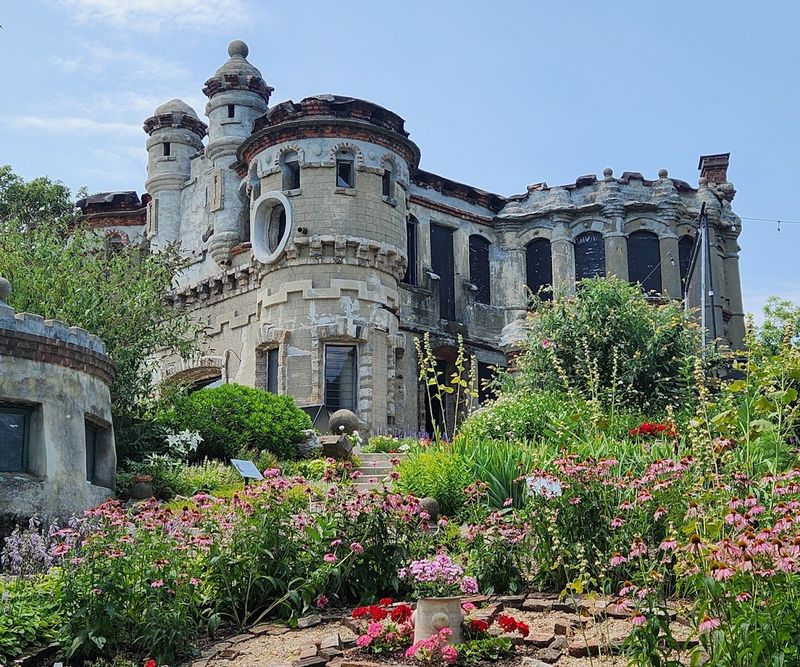
While the main arsenal dominated the island’s skyline, Bannerman also built a cozy summer residence known as Crag Inch Lodge. This charming structure was designed as a warm family retreat for his wife Helen and their children.
Helen Bannerman was an enthusiastic gardener with a remarkable talent for coaxing life from rocky terrain. She carefully laid out winding paths and terraced gardens bursting with colorful flowers and lush shrubs.
Some of her resilient plantings have actually survived on the island to this very day.
The family enjoyed a truly unique lifestyle, overseeing arsenal operations while also savoring the island’s natural beauty.
Imagine your summer home being an actual castle on a private Hudson River island. That is a flex that simply cannot be topped by any Hamptons vacation rental.
This personal, warmhearted layer added real depth to what could have been just a cold industrial warehouse.
The island became a genuine blend of bustling commerce and idyllic family living. Helen’s gardens stand as quiet proof that beauty and practicality can absolutely coexist, even on a rocky island surrounded by a tidal river.
Echoes Of A Dramatic Past
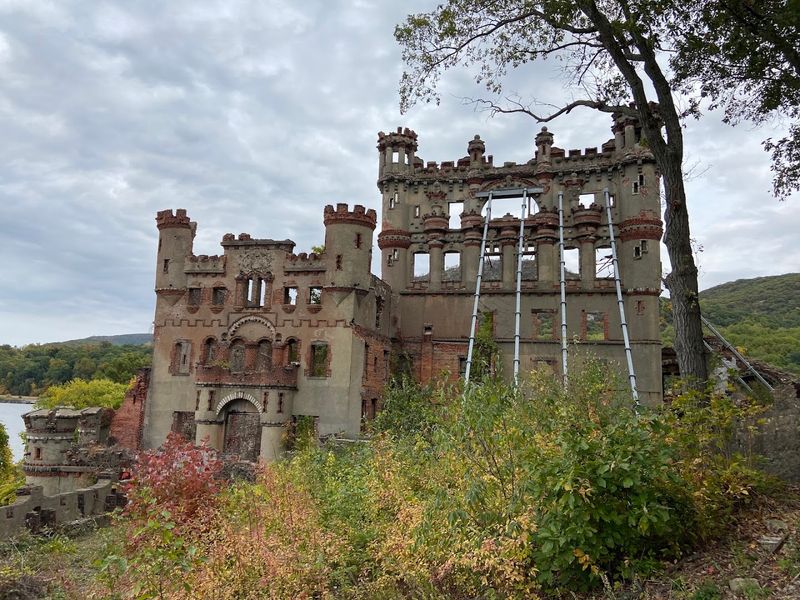
Not every chapter of this island’s story is calm and picturesque. Tragedy struck the formidable arsenal in August 1920.
An estimated 200 pounds of shells and powder detonated in one of the ancillary storage buildings.
The force of the blast was so powerful that massive brick wall sections reportedly flew across the Hudson River. Residents in towns as far away as Poughkeepsie and Peekskill felt the tremors rattling their windows.
This single catastrophic event left significant portions of the castle severely damaged and structurally compromised.
The golden age of military surplus sales also began fading as new legislation reshaped the industry.
These compounding setbacks marked the beginning of a long, slow decline for the once-thriving island operation. The business that had made Bannerman famous gradually wound down alongside the crumbling walls.
Yet somehow, even in its damaged state, the castle retained an almost magnetic pull on people passing by on the river.
There is something undeniably compelling about a structure that has survived so much and still stands. The walls that remained after the blast became symbols of stubborn, quiet resilience that only deepened the island’s mystique.
Whispers Of Ancient Legends
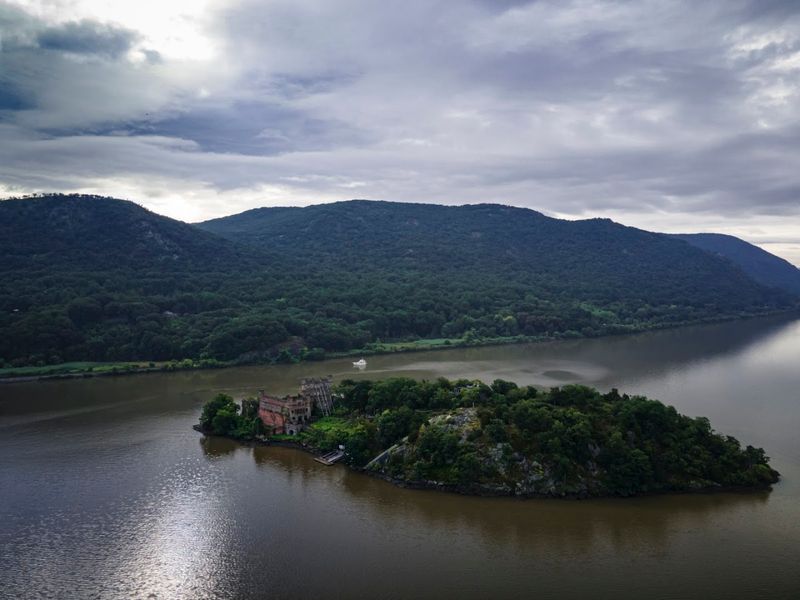
Long before a single stone of Bannerman’s castle was ever laid, Pollepel Island already carried centuries of mystery.
Native American tribes believed the island was inhabited by powerful, unseen spirits. They refused to set foot on its shores after sunset, treating it with deep reverence and careful avoidance.
Early Dutch settlers brought their own superstitions to the island’s reputation. They attributed sudden violent river storms to a legendary “Storm King” spirit said to rule the surrounding waters.
There are even colorful tales of sailors being left on the island overnight as a strange initiation ritual among river crews.
During the Revolutionary War, the island took on genuine strategic importance for American forces. Patriots attempted to block British naval vessels by sinking sharpened logs called chevaux de frise beneath the river’s surface.
Their waterlogged remains still rest at the bottom of the Hudson to this day.
These layers of legend, folklore, and real history stack up like the most fascinating geological cross-section imaginable. Every era left its own distinctive mark on this tiny rocky island.
Pollepel Island was never just a piece of land, it was always a stage for extraordinary human stories waiting to unfold.
A Gradual Abandonment Takes Hold
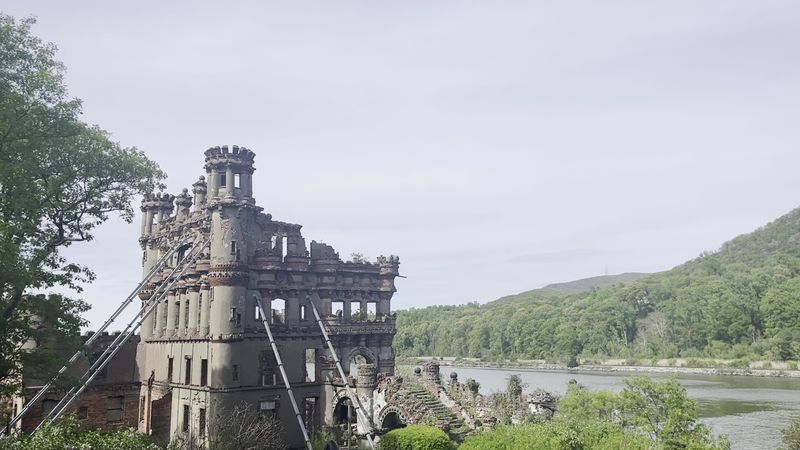
After the 1920 explosion, the island never quite regained its former momentum. A severe storm in 1950 sank the Pollepel, the ferryboat that had faithfully served the island for years.
This crucial loss severely limited access and effectively sealed the island’s commercial fate for good.
The Bannerman family gradually reduced their presence, and by the late 1940s the island sat mostly vacant and quiet.
In 1967, the family officially sold Pollepel Island to New York State, hoping it might find new purpose as a public park. Plans were drawn up and optimism briefly returned to the conversation.
Then on August 8, 1969, a massive fire erupted and tore through the main arsenal building with devastating force. Roofs and floors collapsed entirely, leaving only the dramatic external stone walls standing against the sky.
The once-proud castle quickly deteriorated into the atmospheric ruins visitors see today.
Interestingly, the fire’s destruction somehow amplified the castle’s visual drama rather than diminishing it. Open window frames now frame perfect river views like living paintings.
What was lost in function was more than gained back in sheer, haunting, unforgettable beauty that no architect could have deliberately designed.
A New Chapter Of Preservation Unfurls
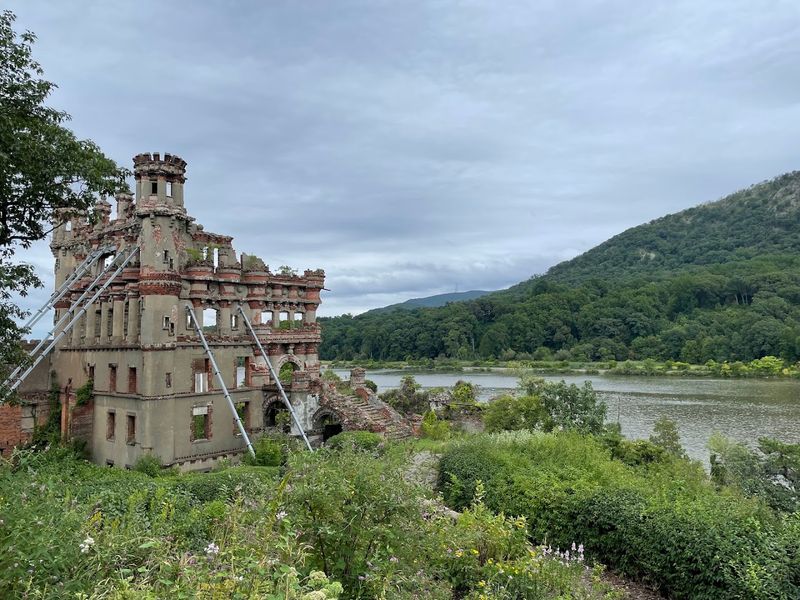
Even in its ruined state, Bannerman Castle refused to fade quietly into obscurity. In 1993, a passionate group of history enthusiasts formed the Bannerman Castle Trust, a dedicated nonprofit organization.
Their singular mission was to stabilize, preserve, and share this extraordinary piece of Hudson Valley history.
Working closely with New York State Parks, the Trust tirelessly fundraised and tackled one restoration challenge after another. After years of dedicated effort and community support, the island finally reopened for public tours in 2004.
That reopening felt like the castle itself was taking a long, triumphant breath after decades of silence.
Today, visitors can walk stabilized pathways through the ruins and marvel at the surviving architecture up close.
The Trust has rehabilitated garden terraces and established a small but wonderfully informative visitor center on site. Helen Bannerman’s beloved gardens have even been partially restored to their former colorful glory.
Every ticket purchased and every donation given directly funds ongoing preservation efforts for future generations. The work being done here is genuinely meaningful, transforming crumbling walls into living classrooms.
This ongoing dedication proves that communities can absolutely rescue extraordinary places when they care enough to show up and get their hands dirty.
Experience The Island’s Magic Today
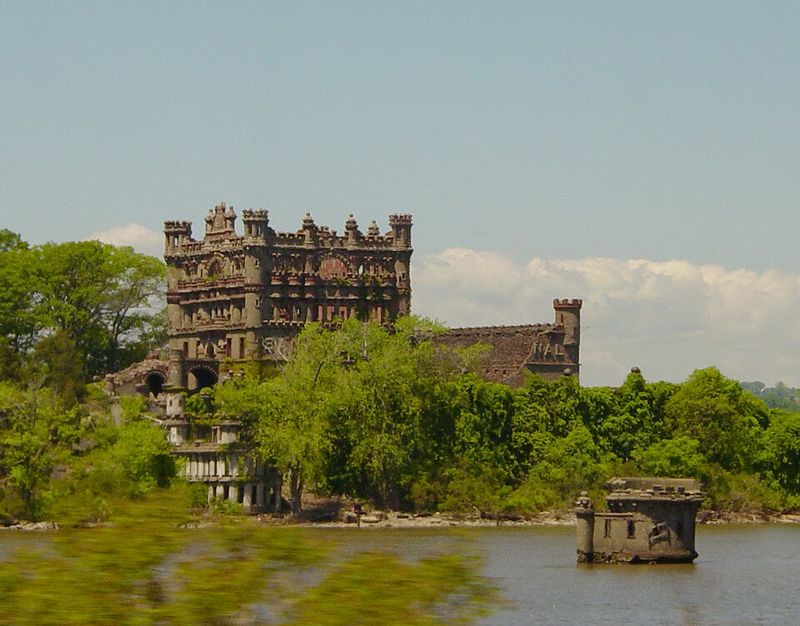
Honestly, visiting Bannerman Castle feels like stepping directly into a living history book, one with spectacular river views and fresh Hudson Valley air.
The Bannerman Castle Trust offers guided walking tours, kayaking adventures, theatrical performances, and even outdoor movie screenings with the ruins as your backdrop. Tours depart seasonally from Beacon, New York, via a scenic boat ride across the Hudson.
The boat journey itself is part of the experience, offering sweeping views of the Catskill Mountains and the dramatic castle silhouette growing larger as you approach.
Once on the island, guided tours reveal the full fascinating story behind every wall and archway. Free exploration time afterward lets you discover hidden corners like Wee Bay and the upper gardens at your own pace.
Comfortable shoes are strongly recommended since trails include uneven rocky terrain and approximately 72 steps throughout the island.
Parking is conveniently free on weekends at the Metro-North Beacon Station, which sits just steps from the departure dock. Planning ahead for tickets is smart since tours fill up quickly during peak season.
Bannerman Castle stands as living proof that even ruins can carry the most powerful stories imaginable.