
This Famous Illinois Aquarium Lets You Reach In And Touch Live Stingrays
How often do you get to reach into the water and feel a stingray glide beneath your fingertips? That encounter is only the beginning at a famous Illinois attraction where aquatic life fills nearly every corner.
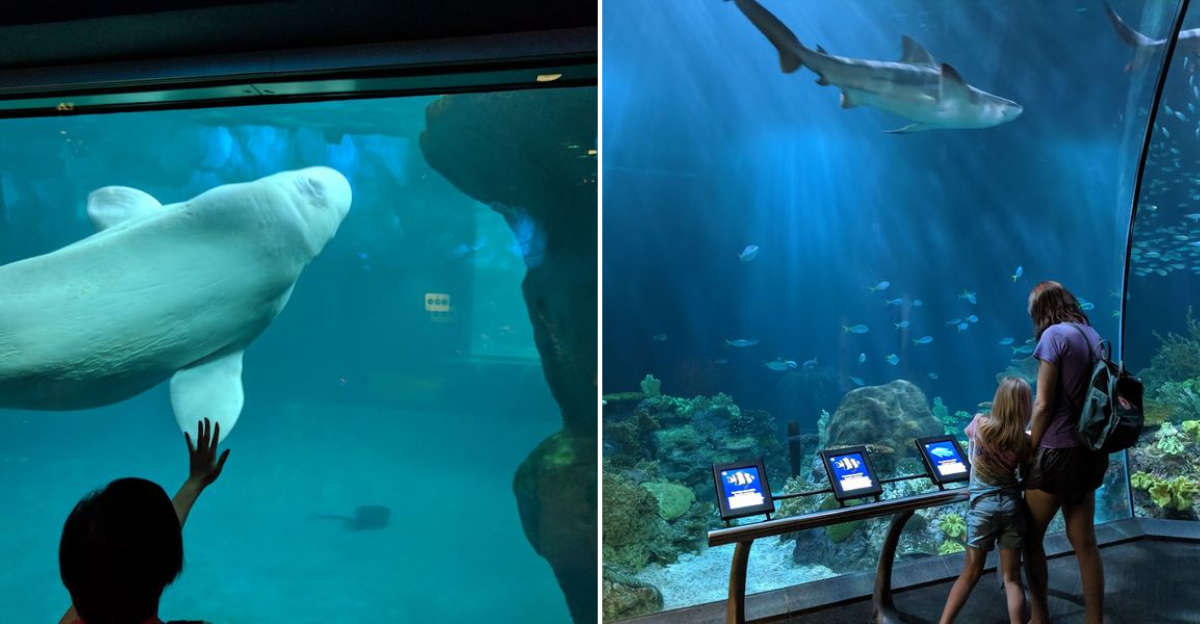
Beluga whales drift past enormous windows, dolphins race through deep pools, and sharks circle just beyond the glass. Quieter exhibits bring their own kind of magic, especially when glowing tanks turn delicate jellyfish into living art.
The lakefront setting adds another layer to the experience, giving visitors sweeping views of Chicago between exhibits. Nearly a century of history also lives inside the grand building, making the destination much more than a collection of tanks.
Curious about what else awaits beneath its roof?
Dip Your Hand Into A Pool Of Gliding Stingrays
Few aquarium experiences match the rush of reaching your hand into a shallow pool and feeling a stingray glide right under your palm.
At Shedd Aquarium, located at 1200 S DuSable Lake Shore Dr, Chicago, Illinois 60605, the seasonal outdoor Stingray Touch exhibit gives visitors a hands-on encounter with cownose rays during the summer.
The rays cruise slowly through the water, almost as if they enjoy the gentle contact from curious fingers.
Staff members stand nearby to guide you on the correct way to touch the animals, always using two flat fingers along the top of the ray’s body. This keeps both the visitor and the animal comfortable and safe.
The experience feels surprisingly peaceful, since the rays move with such smooth, unhurried grace.
The touch pool is especially popular with younger visitors, though adults tend to linger just as long once they realize how calm and interactive the rays actually are.
It is one of those rare moments where wildlife feels genuinely within reach. Plan to spend at least ten to fifteen minutes here because once you try it, walking away quickly is harder than it sounds.
Nearly A Century Of Aquatic Wonder Lives Inside
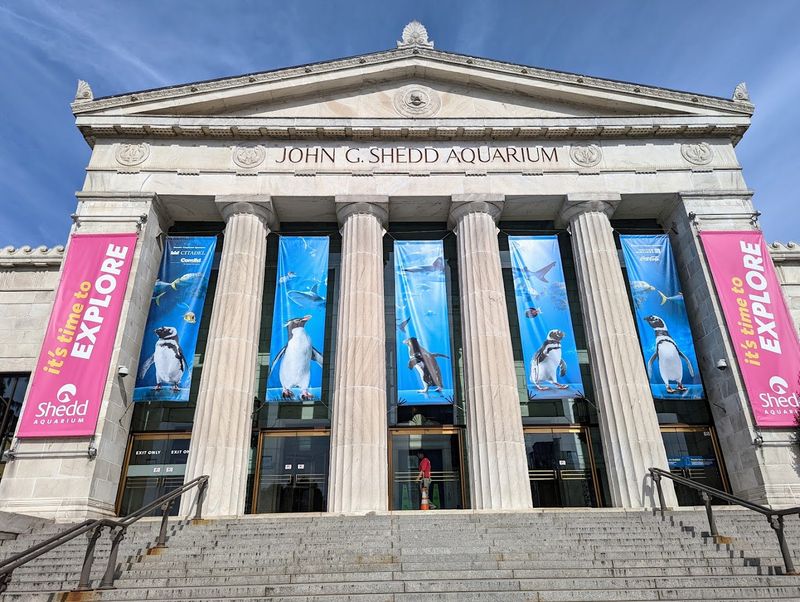
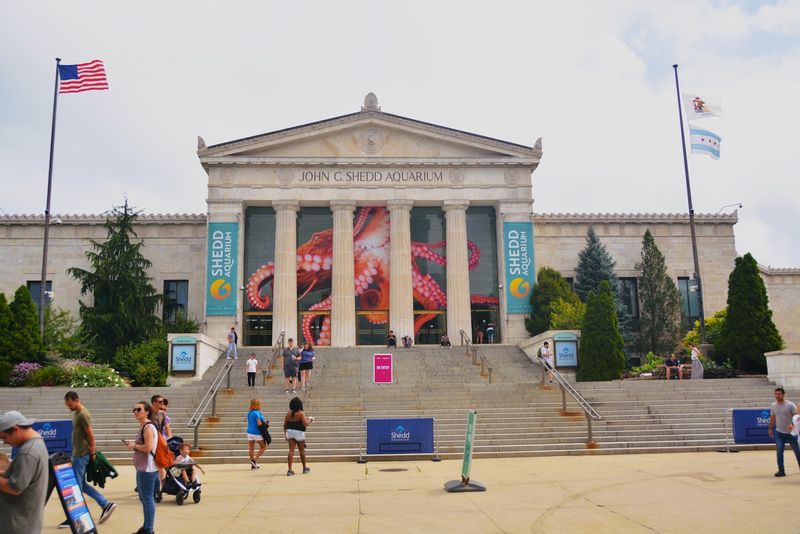
Opening its doors on May 30, 1930, Shedd Aquarium has been one of Chicago’s most beloved landmarks for nearly a century. When it first opened, it was the largest indoor aquarium in the world, a title that reflected just how ambitious the project truly was.
The building itself is a stunning example of Greek-inspired architecture, with massive columns framing the entrance in a way that feels almost ceremonial.
John G. Shedd, a former president of Marshall Field and Company, donated $3 million to fund the construction, which was an extraordinary sum at the time.
His vision was to create a place where everyday people could encounter aquatic life they would never otherwise see. That spirit of accessibility and wonder has carried through every decade since.
Walking through the entrance today still carries a sense of occasion. The grand interior, with its central rotunda and redesigned Wonder of Water habitat at its heart, connects the present experience to nearly a hundred years of history.
The original aquarium building was designated a National Historic Landmark in 1987, recognizing its architectural and historical significance. Knowing that generations of families have stood in the same spot, equally amazed, adds a quiet layer of meaning to every visit.
Beluga Whales Turn The Oceanarium Into Pure Magic
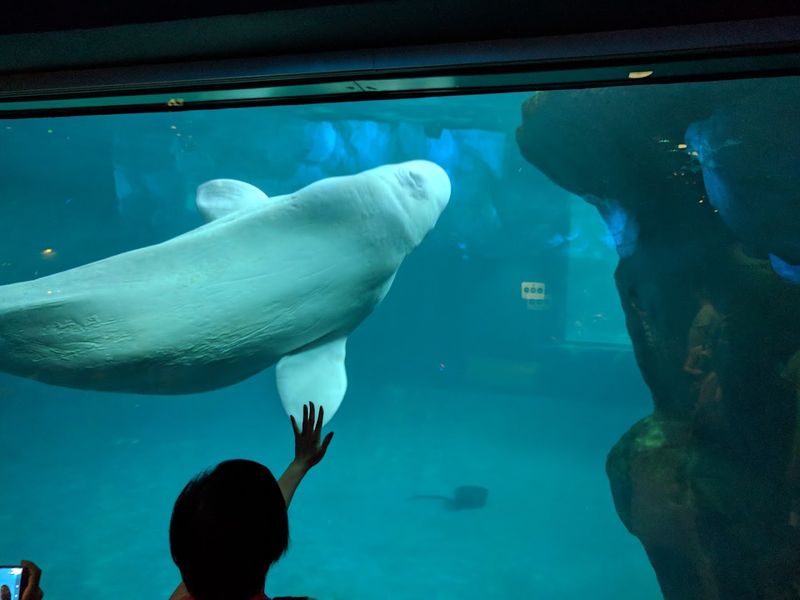
Nothing quite prepares you for your first close look at a beluga whale. These creatures are enormous, brilliantly white, and move through the water with an almost eerie elegance.
At Shedd Aquarium, the beluga habitat features tanks deep enough to make you feel like you are staring into the ocean itself, and the whales seem completely at ease as they glide past the viewing glass.
What makes the beluga experience especially memorable is the sound. Belugas are known as the canaries of the sea because of their wide range of vocalizations, and if you stand near the tank long enough, you may actually hear them calling.
The sounds are strange and beautiful at the same time, somewhere between a whistle and a chirp. The fourth floor of the aquarium offers an observation deck where visitors can watch whale feedings and learn about the care that goes into keeping these animals healthy.
The staff who work with the belugas are clearly passionate, and their knowledge adds real depth to the viewing experience.
Watching a beluga whale hover just inches from the glass, its melon-shaped forehead almost comically round, is the kind of moment that stays with you long after you have left the building.
Marine Mammals Bring The Oceanarium Amphitheater To Life
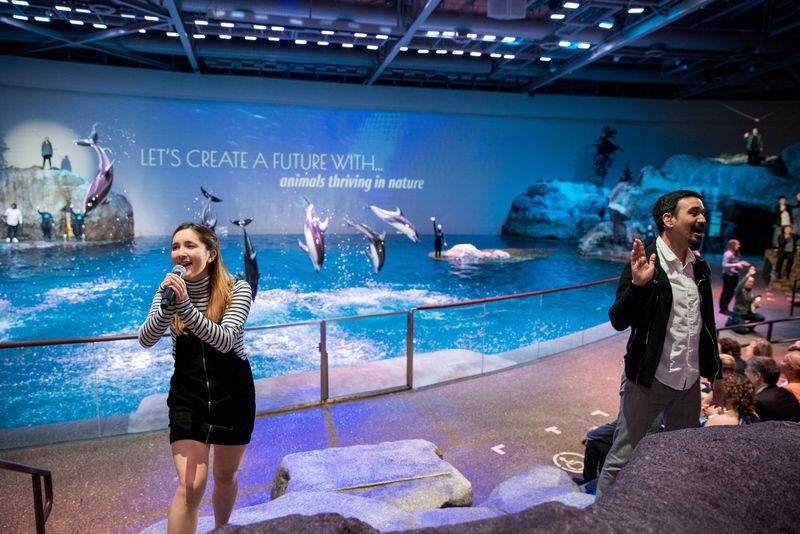
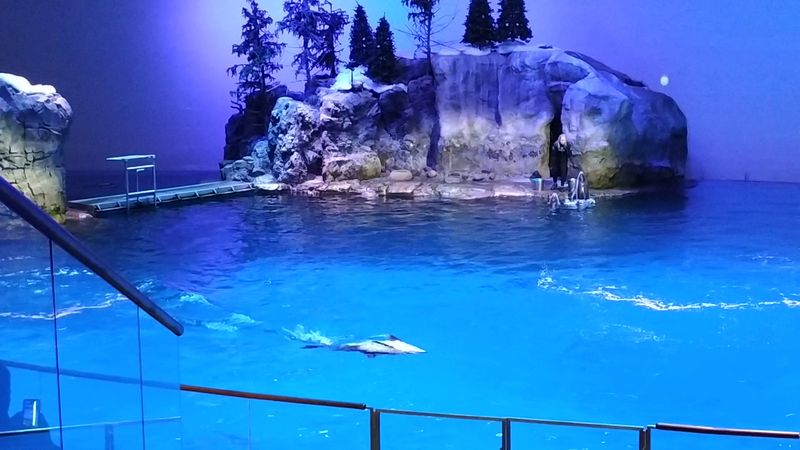
Up on the fourth floor, the Abbott Oceanarium hosts one of the most entertaining live animal shows you can find anywhere in the Midwest.
These educational presentations may feature Pacific white-sided dolphins, belugas, sea lions, or penguins, depending on the day and animal-care needs. The dolphins are playful, fast, and clearly thriving in their environment.
Trainers build obvious connections with each individual dolphin, and watching that bond play out in real time is part of what makes the show feel different from a standard performance.
The show weaves in facts about dolphin behavior, communication, and conservation without ever feeling like a classroom lecture. It manages to be entertaining and informative without sacrificing either quality.
Seating fills up quickly, so arriving early and aiming for the center section gives you the best unobstructed view of the action.
The pool is large, and the dolphins use every inch of it, which means seats at the very ends of the rows can sometimes miss key moments.
The show typically runs for around twenty to thirty minutes, and the energy in the room during the finale is genuinely electric. It is the kind of performance that sends kids home buzzing and gives adults something to talk about on the drive back.
Sharks Surround Your Senses In This Wild 4-D Experience
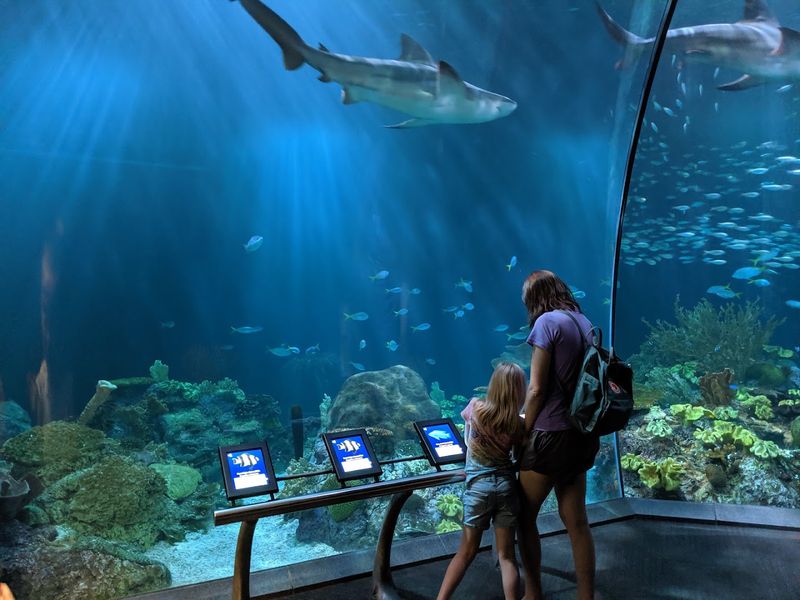
For those who want their aquarium visit to include a little more adrenaline, the BBC Earth Shark 4D Experience delivers in a big way.
The theater features a wraparound screen that curves around the entire room, which immediately creates a sense of total immersion before the show even begins. When the sharks appear on screen, the scale of the image makes them feel startlingly real.
The 4D part of the experience refers to physical effects built into the seats and the room itself. Wind, mist, rumbling seats, and other sensory effects work in sync with the film.
It is genuinely surprising how effective these effects are, even for adults who might feel skeptical going in.
The show runs approximately fifteen minutes, and tickets are an add-on to general admission, priced at around five dollars per person or discounted for members and CityPass holders.
There are multiple shows available throughout the day, so checking the schedule when you arrive helps you plan your time efficiently.
Kids tend to react with pure delight, especially during moments when the mist hits or the seats shift unexpectedly. It is a smart use of fifteen minutes that adds a whole new dimension to the overall visit.
Chicago Disappears Inside This Lush Amazon River World
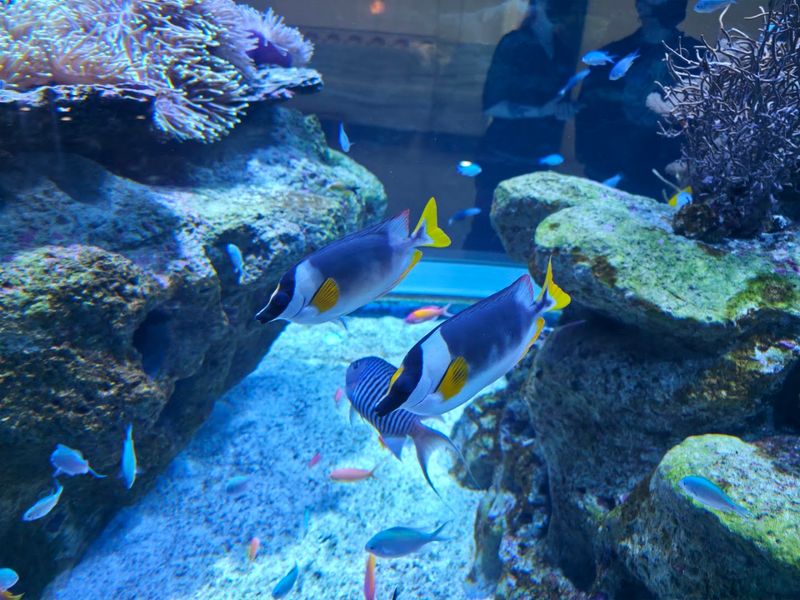
Not every exhibit at Shedd Aquarium is about the ocean. The Amazon Rising exhibit takes visitors on a completely different kind of journey, recreating the seasonal flooding of the Amazon River basin in impressive detail.
The use of live plants, both above and below the waterline, gives the tanks a richness and authenticity that sets them apart from standard freshwater displays.
Fish species that most visitors have never seen before populate these tanks in vibrant color and variety. Arapaima, piranhas, and electric eels share space with dozens of other species in an environment that genuinely feels like a slice of South America transplanted into Chicago.
The attention to habitat design here is particularly striking, with roots, branches, and vegetation creating natural hiding spots and swimming paths.
Beyond the fish, the exhibit also introduces visitors to the broader story of the Amazon ecosystem, including how seasonal flooding shapes the behavior and diet of the animals that live there.
Interpretive signage throughout the space is informative without being overwhelming, making it easy to absorb the key ideas at a relaxed pace.
For anyone who assumes aquariums are only about saltwater life, this exhibit is a genuinely pleasant and eye-opening surprise that rounds out the whole experience beautifully.
These Tiny Sea Creatures Look Like Living Works Of Art
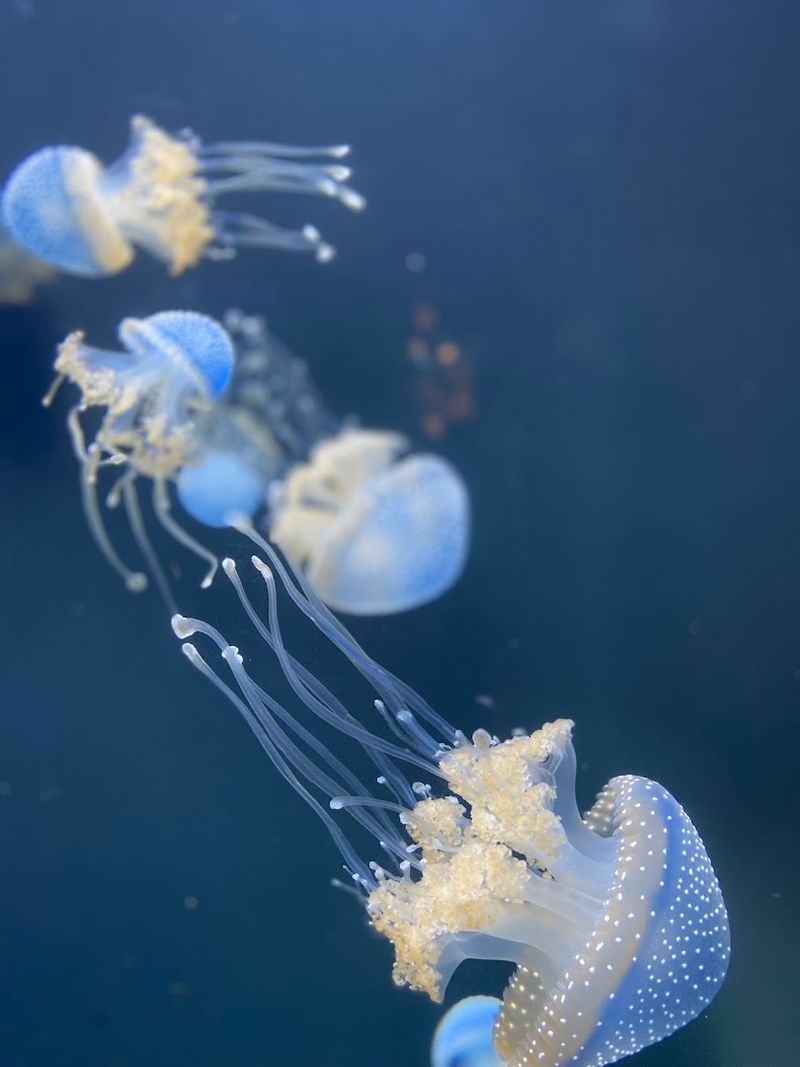
There is a particular kind of calm that settles over you when you stand in front of the jellyfish tanks at Shedd Aquarium.
The jellyfish drift through illuminated habitats, where shifting colors highlight their translucent bodies and make the display feel more like living art than a typical exhibit. It is genuinely hard to walk away quickly.
Seahorses occupy a different kind of magic. Watching them anchor their tails to coral and sway with the current, their tiny fins fluttering at an almost invisible speed, is one of those small moments that sticks in your memory.
The seahorse tanks are compact but beautifully arranged, and the animals are surprisingly active once you take a moment to observe them carefully.
Sea anemones also feature throughout this section of the aquarium, their waving tentacles adding texture and movement to the reef displays.
Together, these exhibits create a quieter, more contemplative corner of the aquarium that provides a welcome contrast to the busier, louder shows and touch pools elsewhere.
If you find yourself feeling overwhelmed by the crowds, heading toward the jellyfish tanks is an almost guaranteed way to reset your mood and remind yourself why you came here in the first place.
A Few Simple Tips Make The Whole Visit Smoother
Buying tickets in advance is genuinely the single most important thing you can do before visiting Shedd Aquarium. The aquarium operates on timed entry sessions, and popular time slots, especially on weekends and holidays, sell out well before the day arrives.
Tickets run approximately fifty dollars per person for general admission, so building that into your budget early avoids surprises at the door.
The aquarium is open Monday through Sunday, with hours varying by day. Wednesday evenings extend to 10 PM, which makes it a surprisingly good option for a quieter mid-week visit when crowds thin out compared to weekend afternoons.
Arriving early on any day, ideally fifteen minutes before opening, puts you ahead of the rush and gives you a calmer first hour inside.
Parking is available in nearby lots, including the Soldier Field parking area, typically costing around thirty to thirty-five dollars.
The aquarium is reachable by public transit as well, which can save both money and the hassle of finding a spot. Bringing snacks is allowed, which is a genuinely helpful detail for families planning a full-day visit.
The cafe inside offers lake views worth a quick stop too.