
The Historic Landmark In Virginia Every Traveler Should Visit Once
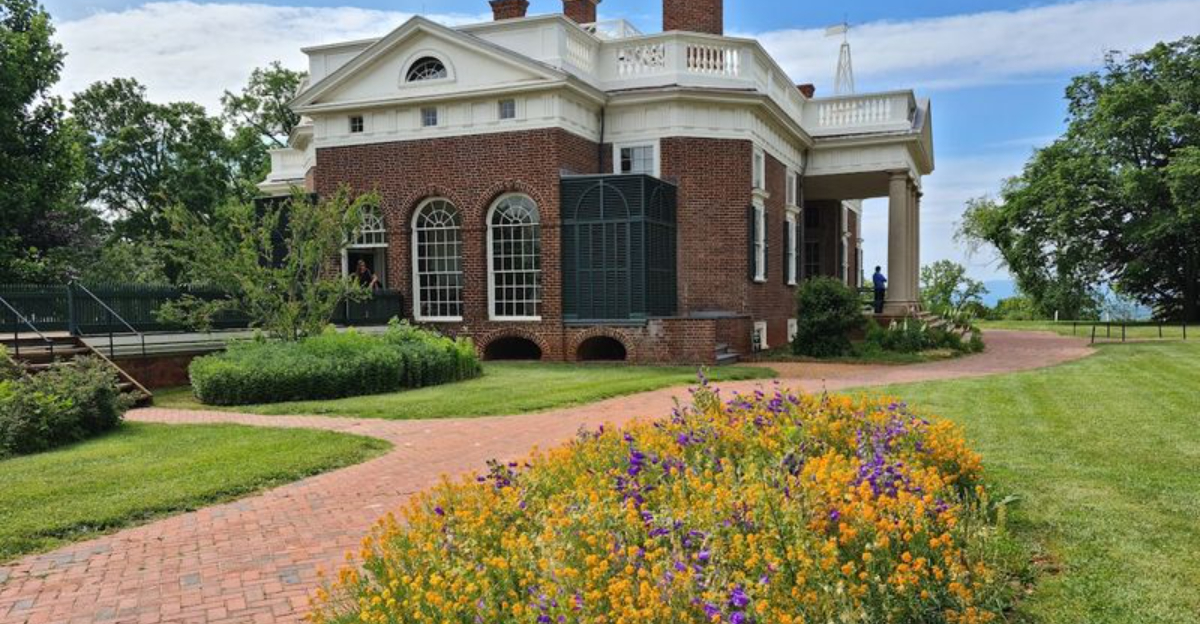
What if one of America’s most influential presidents left behind something even more fascinating than his time in office? Not a speech.
Not a monument. A place. Hidden among Virginia’s rolling hills is a historic landmark that offers a rare glimpse into the mind of a man whose ideas helped shape a nation.
Every hallway, every garden, and every carefully designed detail reflects a vision that stretched far beyond politics.
The scenery is stunning, the history is undeniable, and the stories are far more complex than most visitors expect. It’s the kind of destination that leaves you admiring the brilliance, questioning the past, and seeing American history through an entirely different lens.
All before you even reach the gift shop.
The Architectural Masterpiece That Stops You In Your Tracks
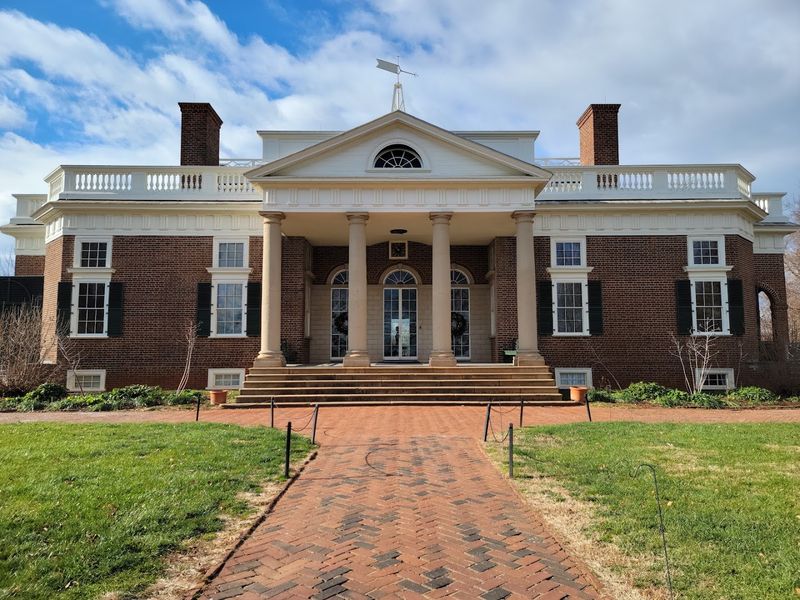
Nobody warns you about that first moment when the full facade of Monticello comes into view. Your brain simply stops for a second, trying to process how something this stunning was designed without a computer, without modern tools, and without a professional architecture firm.
Thomas Jefferson designed this home himself, drawing inspiration from ancient Rome, Renaissance Italy, and French Neoclassical styles he admired deeply.
The red brick exterior, sourced from Virginia clay, contrasts beautifully against crisp white columns.
The symmetry is precise and intentional, following Palladian principles that Jefferson studied obsessively. Every proportion feels balanced, like a painting you could walk into.
One of the most remarkable features is the octagonal dome sitting proudly above the roofline. It was the first dome ever built on a private residence in the entire United States.
Jefferson called this project his “essay in architecture,” and honestly, the man earned an A-plus. The dome was not just decorative either.
It allowed natural light to flood the upper spaces in ways that felt almost magical for the era.
Standing on the front lawn and looking up at it, you genuinely feel the ambition and creativity that went into every single brick.
The Clever Contraptions Hidden Throughout The Home
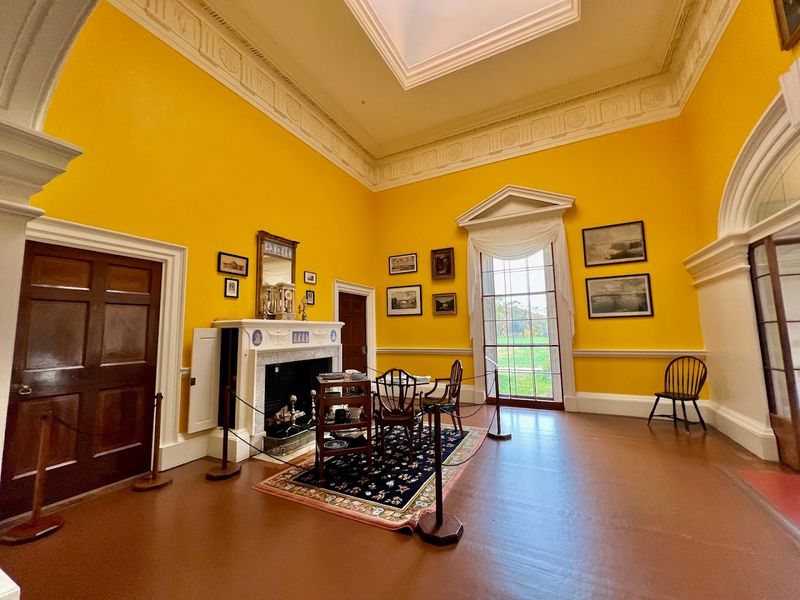
Located at 1050 Monticello Loop in Charlottesville, Monticello is basically what would happen if a genius with too much free time and a love for problem-solving designed his own dream home.
Jefferson packed the estate with clever mechanical inventions that were so far ahead of their time, visitors today still do a double-take when they spot them. The Great Clock in the entrance hall is one of the first things that catches your eye.
This remarkable timepiece tells both the hour and the day of the week, powered by cannonball-like weights that descend along the walls.
A matching weather vane on the roof connects to a dial on the ceiling inside, letting Jefferson check wind direction without stepping outside. The dining room features a revolving service door that allowed dishes to pass through seamlessly, keeping meals private and efficient at the same time.
Small dumbwaiters built into the fireplace mantel carried items up from below, a detail so subtle that most visitors walk right past without noticing. Jefferson also designed indoor privies ventilated through a cleverly hidden tunnel system.
Every gadget here had a purpose, and every purpose was thought through with impressive precision. This house is basically a 1700s version of a smart home, and it genuinely delivers.
Views From The Top That Will Genuinely Take Your Breath Away
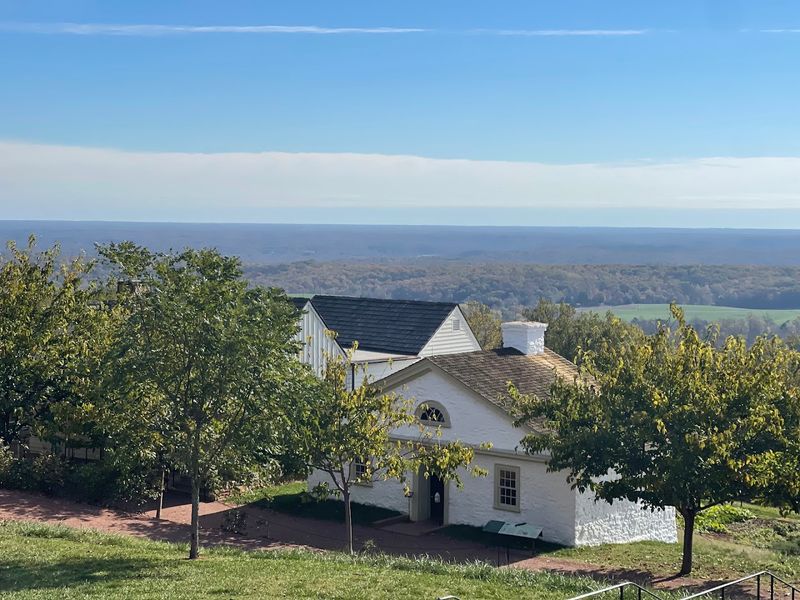
There is a reason Jefferson chose this particular hilltop for his home. The name Monticello itself translates to “little mountain” in Italian, and standing at the summit, you completely understand why he could never bring himself to leave.
The estate sits at roughly 800 feet above sea level, and the views of the surrounding Virginia Piedmont stretch out in every direction like a landscape painting come to life.
On a clear day, the rolling hills seem to go on forever. The Blue Ridge Mountains frame the horizon in the distance, and the patchwork of forests and farmland below creates a scene that feels both peaceful and grand at the same time.
Jefferson reportedly spent hours simply observing the land from various points around the property.
Monticello was designated a UNESCO World Heritage Site in 1987, making it the only private residence in the entire United States to hold that distinction. That honor speaks volumes about how significant this place truly is on a global scale.
The hilltop setting was not just a romantic choice either. It gave Jefferson a commanding view of his entire working plantation, which stretched across thousands of acres.
Few places in Virginia offer this kind of sweeping, unobstructed natural beauty paired with such profound historical weight.
The Botanical Garden That Would Make Any Plant Lover Swoon
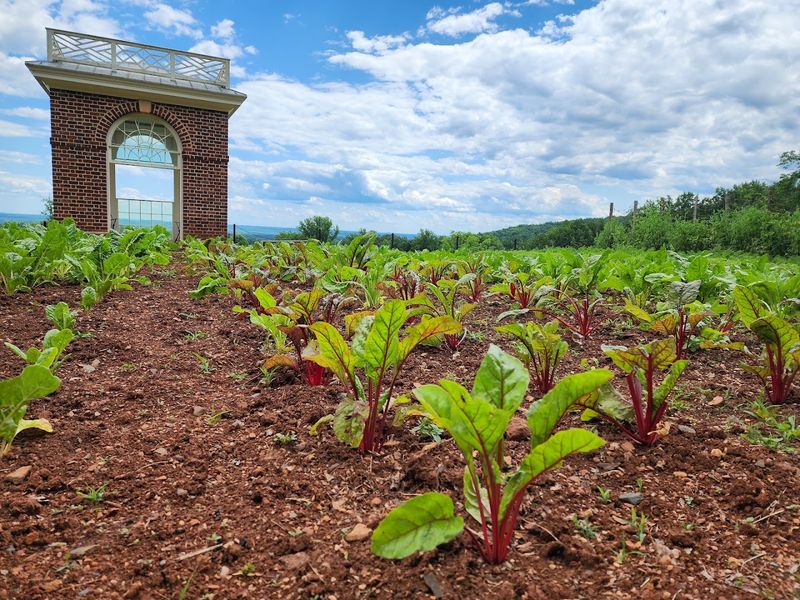
Forget everything you thought you knew about presidential hobbies, because Jefferson’s gardening obsession was on a completely different level.
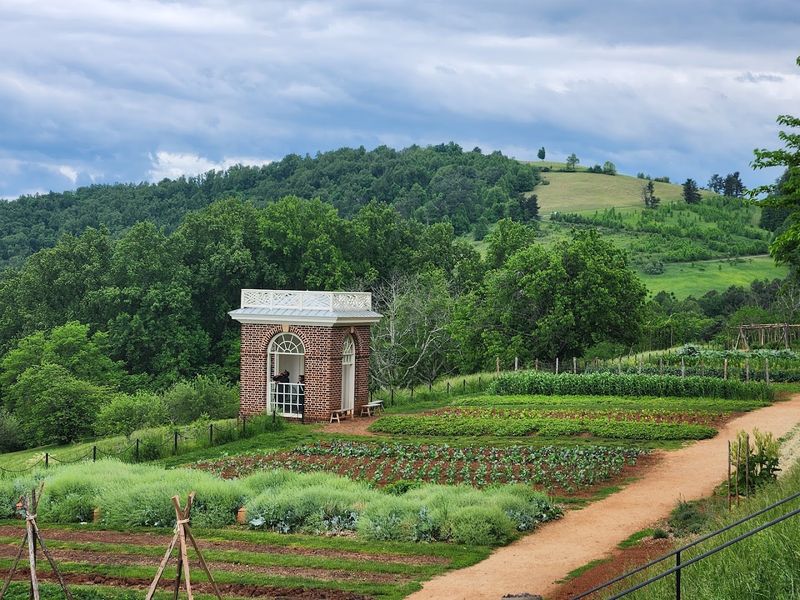
His vegetable garden stretched an impressive 1,000 feet along a south-facing terrace, designed to capture maximum sunlight throughout the growing season.
He kept meticulous records in his garden book, tracking planting dates, weather patterns, and the performance of each variety with near-scientific precision.
Over 300 varieties of vegetables were grown here, with seeds sourced from across the globe.
Exotic species from Europe, Africa, and South America all found their way into Jefferson’s terraced beds. He also cultivated more than 170 fruit varieties in his orchards, including apples, peaches, and figs that thrived in the Piedmont microclimate he had carefully studied.
After years of decline following Jefferson’s era, the gardens were painstakingly restored using his original records and historical research.
Today, heirloom seeds grown here are even available for purchase in the estate shop, letting you bring a tiny piece of Monticello’s botanical legacy home. Walking through these terraced rows in full bloom is an experience that hits differently than any museum exhibit could.
The garden feels alive, purposeful, and deeply connected to the man who spent decades perfecting it, one carefully observed harvest at a time.
The Entrance Hall That Functions Like A Mini Museum
Walking into Monticello’s entrance hall feels less like entering a home and more like stepping into someone’s personal curiosity cabinet. Jefferson used this space intentionally as a showcase for his vast collections, and the effect is immediately striking.
Native American artifacts gathered during the Lewis and Clark Expedition lined the walls, sitting alongside European sculptures and detailed maps of the expanding American continent.
Mastodon bones and other prehistoric animal remains were displayed here too, reflecting Jefferson’s deep interest in natural history and paleontology.
He was one of the first Americans to seriously study fossils, and he believed giant creatures might still roam the unexplored western territories. The entrance hall was essentially his way of showing guests what he cared about most before they even sat down.
The Great Clock anchors the room with quiet authority, its cannonball weights slowly descending along the walls as it marks the passage of time.
Paintings and busts of figures Jefferson admired completed the display, turning a simple foyer into a conversation-starting gallery.
This room captures his intellectual range better than any biography could. Every object chosen for this space had a story, and Jefferson clearly loved nothing more than a room that invited people to ask questions the moment they crossed the threshold.
A Forty-Year Construction Project That Never Got Boring
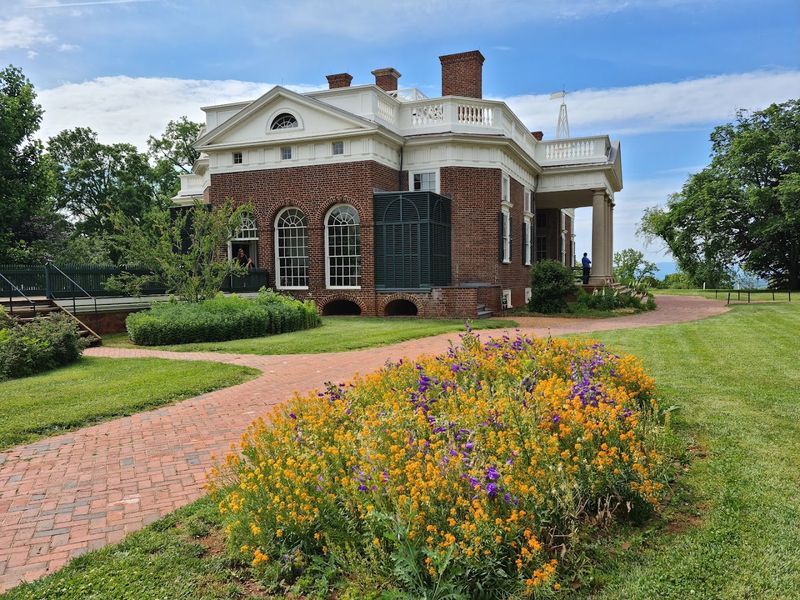
Most people renovate their kitchen once and swear they will never do it again. Jefferson spent roughly forty years continuously rebuilding, expanding, and reimagining his entire estate, and by all accounts he found the process genuinely exciting.
Construction began in 1769, and the project evolved dramatically over the following decades as Jefferson’s ideas and inspirations kept shifting and growing.
The original version of the home, sometimes called Monticello I, was largely complete by 1781. After spending time in France as a diplomat, Jefferson returned with a head full of new architectural ideas and immediately began tearing things apart again.
The result was Monticello II, an expanded 35-room mansion that incorporated French Neoclassical influences he had absorbed while living in Paris.
Jefferson himself described the process as “putting up and pulling down,” which honestly sounds like every ambitious renovation project ever attempted. The constant evolution of the home is part of what makes it so fascinating to explore today.
Each section of the house reflects a different chapter of his thinking, making the architecture itself a kind of autobiography.
Visitors who pay attention to the subtle shifts in style and proportion across different rooms will notice how one man’s curiosity kept reshaping the same beloved space across an entire lifetime of creative restlessness.
Mulberry Row And The Full Story Of The Plantation
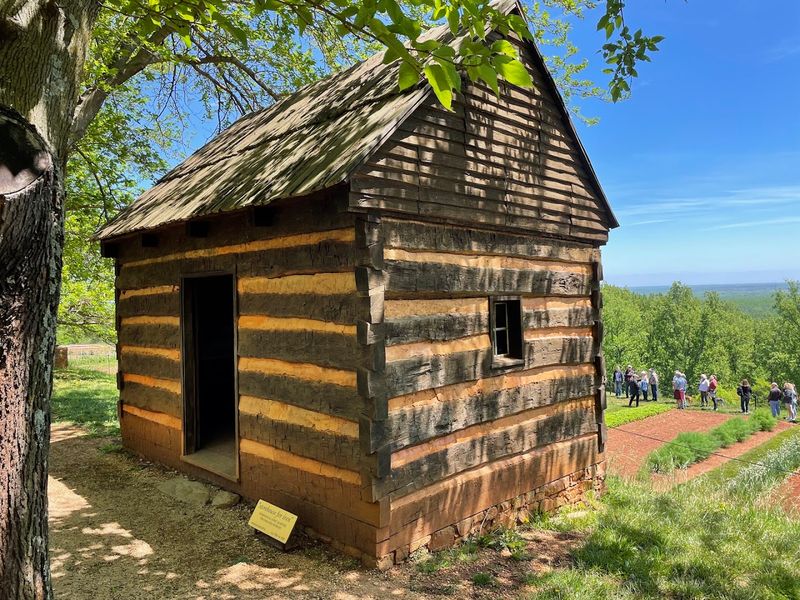
The story of Monticello is not just the story of one brilliant man. It is the story of an entire community of people whose labor made the estate function, and Mulberry Row is where that fuller picture comes into focus.
This roughly thousand-foot road ran along the south side of the mountain and served as the industrial and domestic heart of the plantation during Jefferson’s lifetime.
At its peak, Mulberry Row held more than twenty structures, including workshops, smokehouses, and living quarters for enslaved people who worked the land and maintained the estate.
The plantation originally grew tobacco before shifting toward wheat cultivation in the 1790s, a change that reshaped the daily routines of everyone living and working on the property.
Today, archaeological work and careful historical research have helped reconstruct a detailed picture of life along this road.
Visiting this area adds a depth to the Monticello experience that the mansion alone cannot provide. The exhibits here are thoughtfully presented and genuinely informative, offering context that helps visitors understand the full complexity of the place.
Monticello does not look away from this history, and that honesty is part of what makes a visit here feel meaningful rather than just scenic. Understanding the whole story makes the entire estate feel more real, more human, and more worth remembering.
The Visitor Experience That Keeps You Coming Back For More
Monticello is one of those rare places where a single visit genuinely leaves you wanting to come back. The estate is open daily from 8:30 AM to 5:30 PM, giving visitors plenty of time to explore at a comfortable pace.
Multiple tour options are available, ranging from a focused 45-minute house tour to longer, more immersive behind-the-scenes experiences that take you through every floor of the mansion.
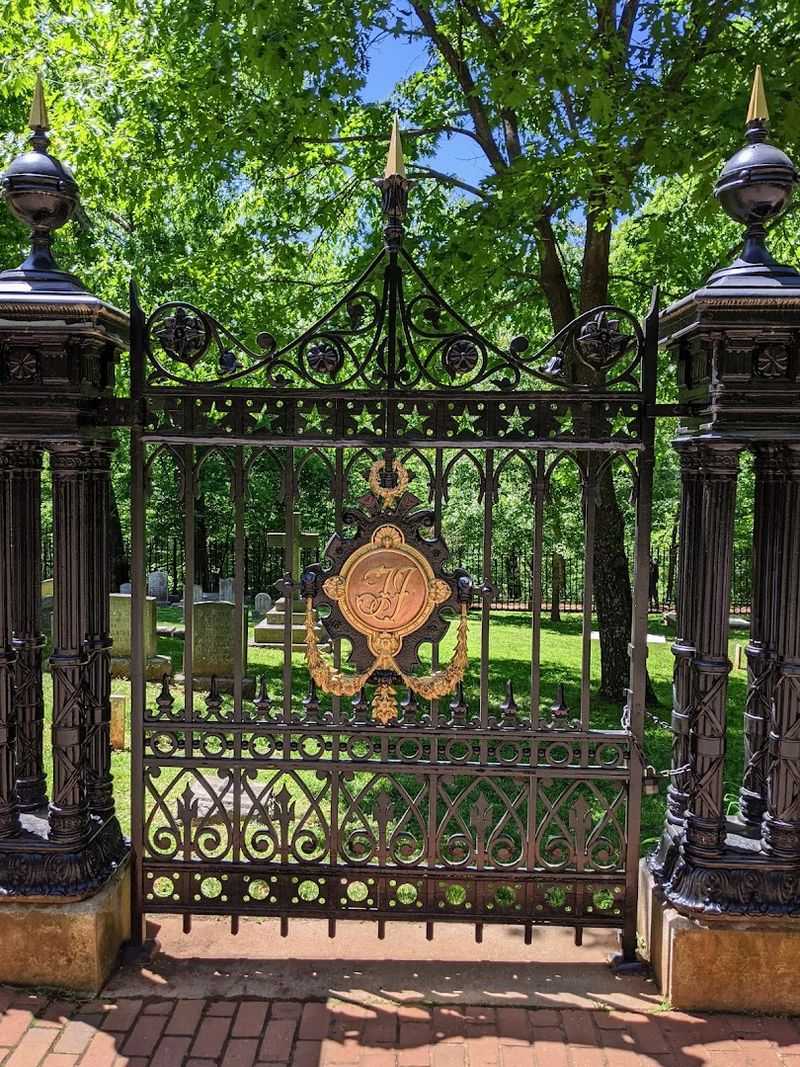
A grounds pass offers access to the gardens, Mulberry Row, the family cemetery, and various outdoor exhibits without stepping inside the house at all, and many visitors find it just as rewarding.
Shuttle service runs regularly between the welcome center and the hilltop, making the trip accessible and easy. The welcome center itself is worth arriving early for, featuring exhibits that provide excellent context before you even reach the mansion.
Plan for at least three to four hours if you want to do justice to everything the property offers. Comfortable shoes are genuinely essential here, since the terrain includes uneven paths and hillside walking that adds up quickly.
A cafe on site serves sandwiches and salads, so you can refuel mid-exploration without leaving the grounds. Monticello rewards curious visitors who slow down and pay attention, because every single layer of this place has something new to offer.
Have you ever visited a historic site that made you rethink what you thought you knew about American history?