
Detroit, Michigan, Has A Food Hall Built From Shipping Containers

Stacked steel containers painted in bold colors rise from a neighborhood that spent years waiting for exactly this kind of reinvention.
Inside, narrow walkways thread past kitchens run by chefs who might have started at a pop-up table but now hold their own permanent stalls, turning out tacos, noodles, plus sandwiches that make you forget you are eating inside a structure designed to cross oceans.
The setup is clever: each container houses a different concept, so the menu options multiply the further you walk.
Shared seating fills the gaps between stalls, plus the whole operation hums with the kind of energy that only happens when independent food businesses share walls instead of competing behind them.
You could visit on three separate weekends and still discover a stall you missed the first time around. Shipping containers stacked into kitchens have given Michigan a food hall unlike anything else in the state.
Go Hungry For Variety

A good strategy is to arrive undecided. The hall works best when you let the range of independent vendors guide you, since the lineup has included Bangkok 96, Momo Cha, Motor Burger, Takitos AF, Sushi Lounge, Konjo Me, Halal Street, COOP, plus coffee and liquid-nitrogen ice cream.
I like that the choices feel genuinely varied rather than lightly cosmetic. Thai street food, Nepalese dumplings, burgers and poutine, tacos, gluten-free sushi, Ethiopian dishes, and Mediterranean options make this more food collective than ordinary court.
Because vendors are separate operations, meals come with distinct personalities. If your group never agrees on dinner, this address solves the problem gracefully and still keeps everyone at the same table.
Dinner Arrives In A Stack Of Shipping Containers
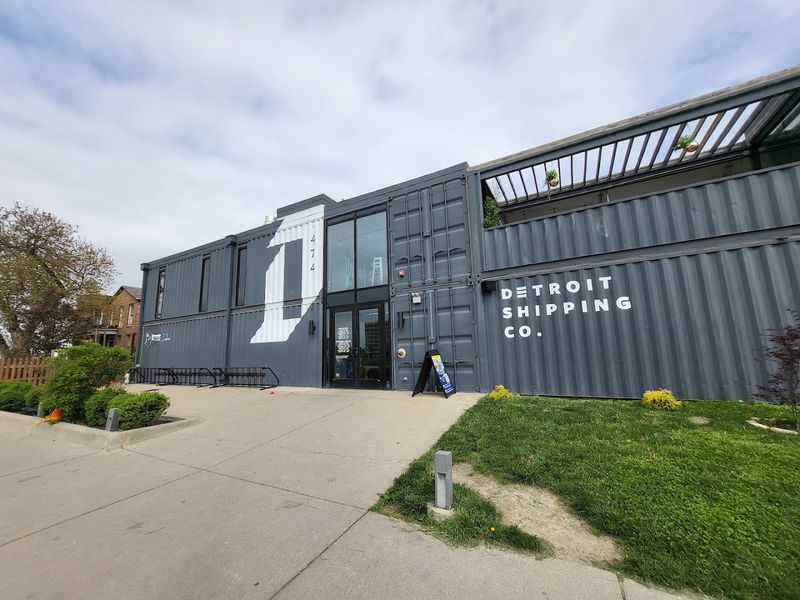
Detroit Shipping Company is at 474 Peterboro Street in Detroit, Michigan, between the Midtown and Brush Park districts. Approach from Woodward Avenue by turning onto Peterboro Street, or use Cass Avenue to enter the surrounding neighborhood grid.
The final approach passes a mix of restored buildings, vacant lots, and newer development before the multilevel structure of repurposed shipping containers comes into view. Peterboro Street is relatively short, making the distinctive industrial building a more useful landmark than the street number alone.
Free street parking is available around the venue, though spaces can tighten during events and busy evenings. Park legally on Peterboro Street or a nearby block, then walk toward the open courtyard and ground-floor entrance.
Use The Layout To Wander
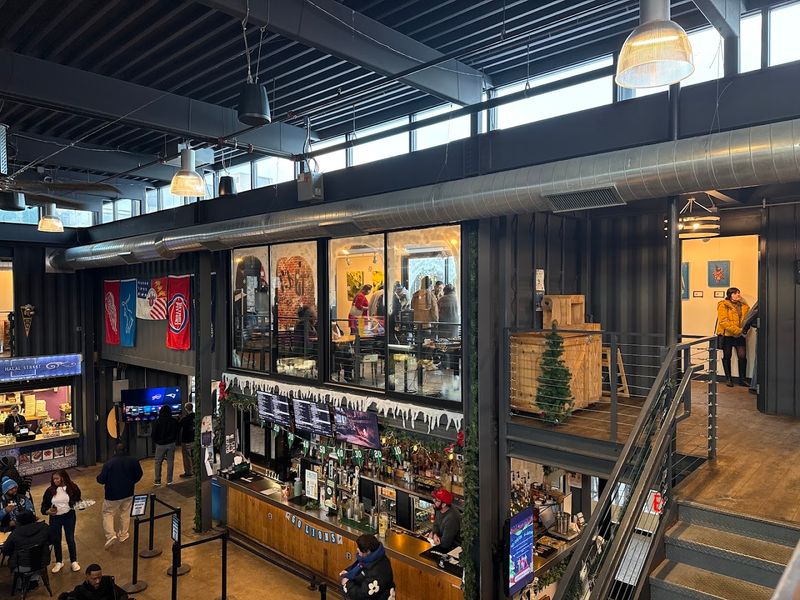
One of the pleasures here is that waiting for food never feels like dead time. Orders are usually prepared quickly, but the design encourages movement, so you can drift from the main floor to the outdoor area or head upstairs instead of guarding a table.
The hall blends circulation with curiosity in a useful way. Containers divide spaces without making them feel sealed off, and that keeps the visit active, especially if you like places where discovery happens in small increments.
Use that rhythm to your advantage. Order first, then explore while your meal is underway, because Detroit Shipping Company rewards people who treat it less like a transaction and more like a compact urban ramble.
Look Upstairs For Art
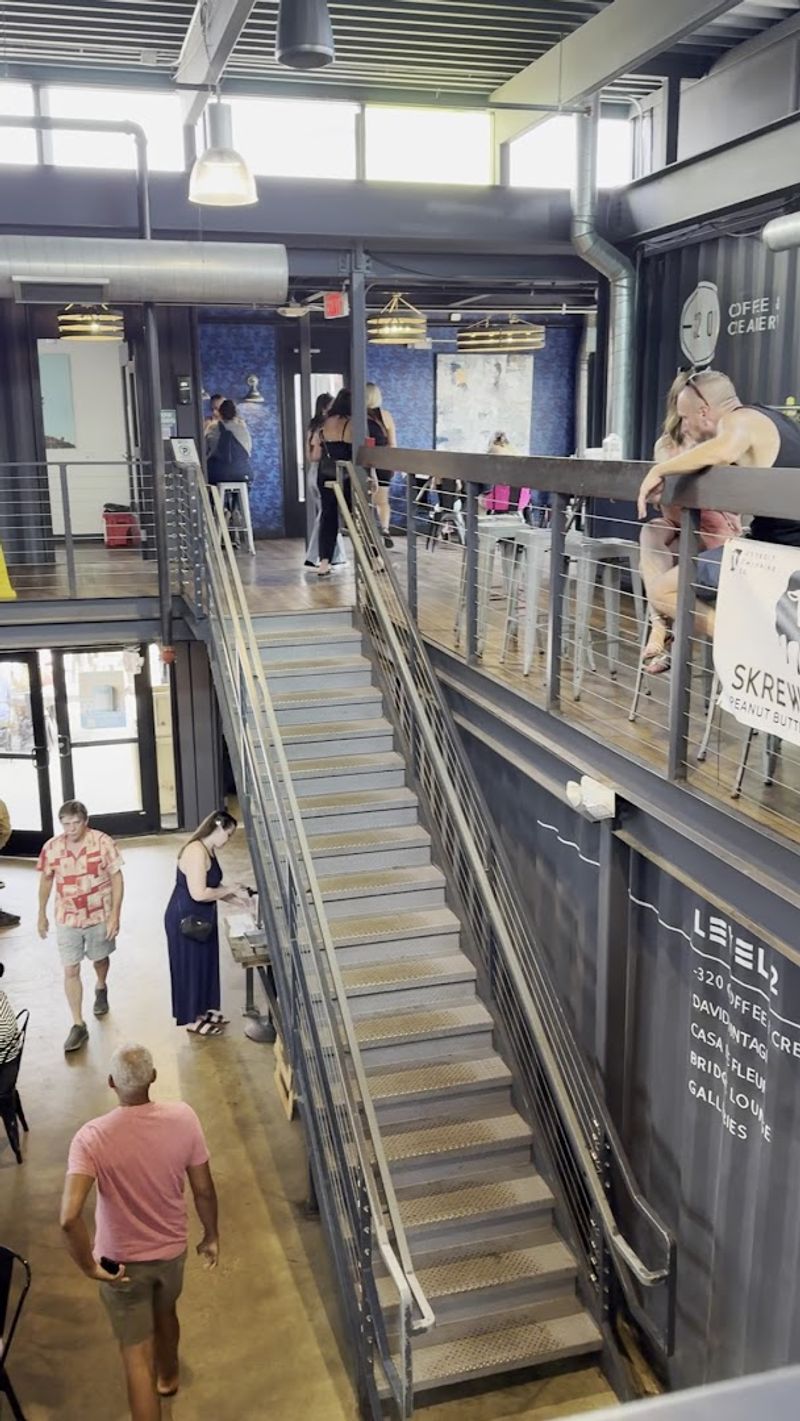
Upstairs, the mood shifts from hungry to observant. Detroit Shipping Company includes a second-level gallery space curated by Disco Walls, and the rotating installations give the building a cultural layer that changes the pace of a visit.
This is more than decoration hung near tables. The art program connects the hall to Detroit’s creative ecosystem, with local emerging artists shown in a setting that feels accessible rather than ceremonious, which suits the building’s open, social character.
If you tend to rush through food halls, make a deliberate detour here. A few quiet minutes in the gallery can reset the visit, and it reminds you that this address was designed as a community hub, not only a place to eat.
Treat It As A Community Hub

What makes the place stick in memory is its mixed-use personality. Beyond the food vendors, Detroit Shipping Company has housed retail such as David Vintage, occasional workshops, and even a podcast studio, which gives the building a broader neighborhood purpose.
That layering feels very Detroit to me: practical, creative, and not overly polished. Instead of isolating art, shopping, and dining into separate errands, the venue lets them overlap in one compact footprint that invites different kinds of visitors.
You do not need a formal event to enjoy that energy. Simply paying attention to the side spaces, upper level, and changing activity around you makes the visit feel fuller and more connected to Midtown’s local creative life.
Choose Your Seating Carefully
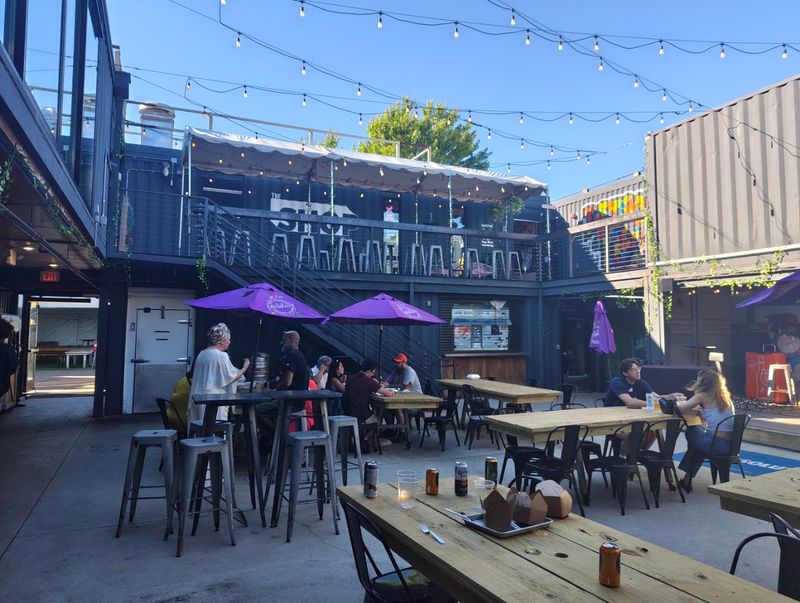
Seating changes the whole experience here. Inside, communal tables create a social, bustling feel, while the outdoor area can feel looser and more open, especially when the weather cooperates and the overhead lights begin to define the space.
I usually pause before committing to a spot, because your choice shapes the tone of the meal. Near the center, you catch more movement and conversation; farther out, it becomes easier to talk, observe, or simply watch the building do its work around you.
That flexibility is part of the venue’s appeal. Come expecting a shared environment rather than a secluded corner, and the hall makes much more sense as a public gathering place designed for overlap, not isolation.
Time Your Visit Around Events
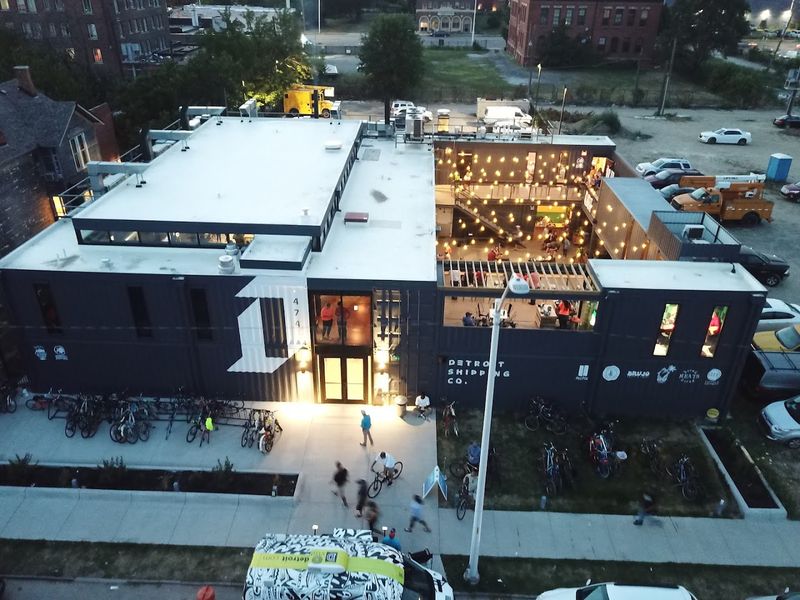
Some visits here are about lunch, and some are about timing. Detroit Shipping Company runs regular programming that has included live music on Fridays and Saturdays from May through October, weekly stand-up comedy, open mic nights, sports watch parties, and seasonal events.
The stage and courtyard setup explain why the place can feel different from one evening to the next. On a quieter day, it reads as a smart food hall; during programming, it behaves more like a neighborhood venue with dinner attached.
Check the calendar before you go if atmosphere matters to you. A planned event can add energy, but if you want a calmer meal and easier circulation, an off-peak visit may suit you better.
Appreciate The Outdoor Courtyard
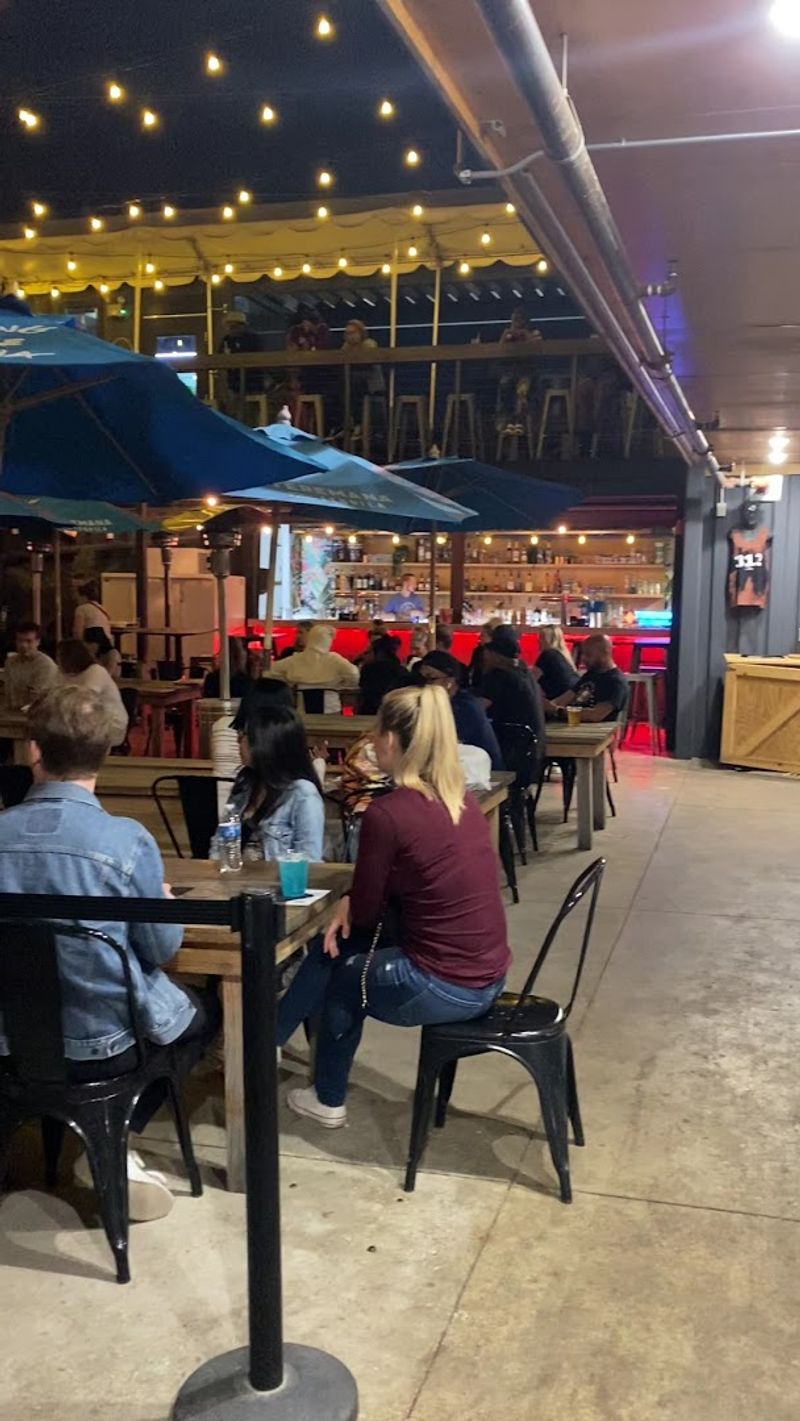
Out back, or more accurately out in the open heart of the complex, the courtyard gives the building its breathing room. Overhead lights, tables, chairs, and the performance stage make the exterior feel less like spillover seating and more like a central feature.
The space is pet-friendly and has hosted yard games such as cornhole, which keeps the mood casual without flattening it into generic fun. That matters because the architecture could have felt severe, but the courtyard adds softness and movement.
If the weather is decent, spend at least part of your visit outside. The contrast between stacked steel containers and relaxed gathering space is one of the clearest examples of why this place works so well in Midtown.
Know The Practical Basics
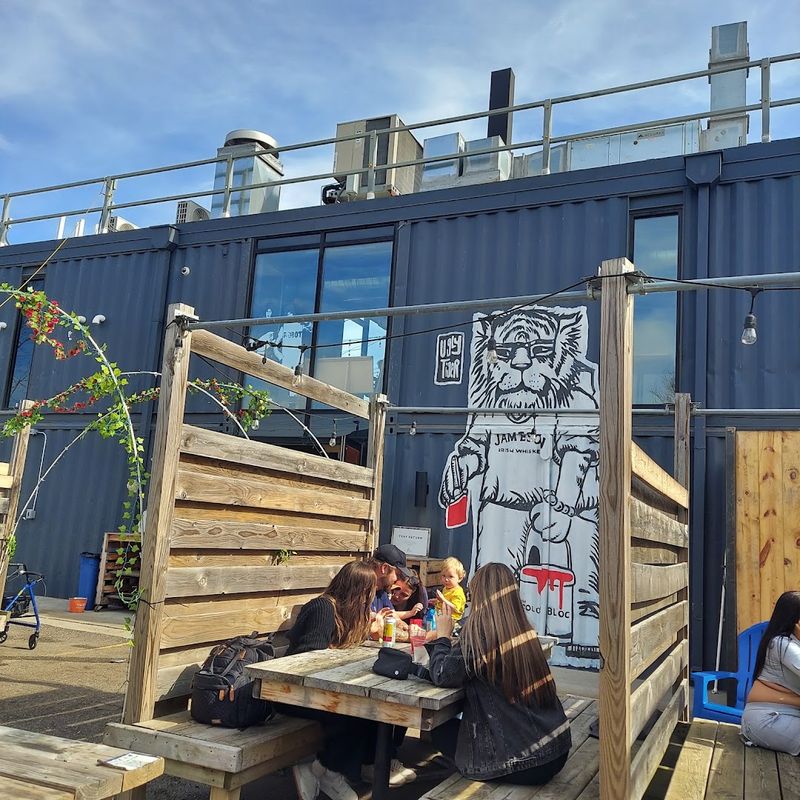
Practical details are refreshingly straightforward here. Detroit Shipping Company is at 474 Peterboro Street in Midtown Detroit, and recent listed hours show service Tuesday through Sunday, with Monday closed and later hours on Friday and Saturday.
Accessibility is helped by the venue’s compact setup and the fact that food is generally prepared fast. The hall also offers free parking, a useful perk in a neighborhood where convenience can shape whether a spontaneous stop feels easy or mildly annoying.
If you are building a day around Midtown, this works especially well as a flexible anchor. You can keep the stop brief, stretch it into an event night, or use it as a reliable meal break between other Detroit plans.
See How It Fits Midtown
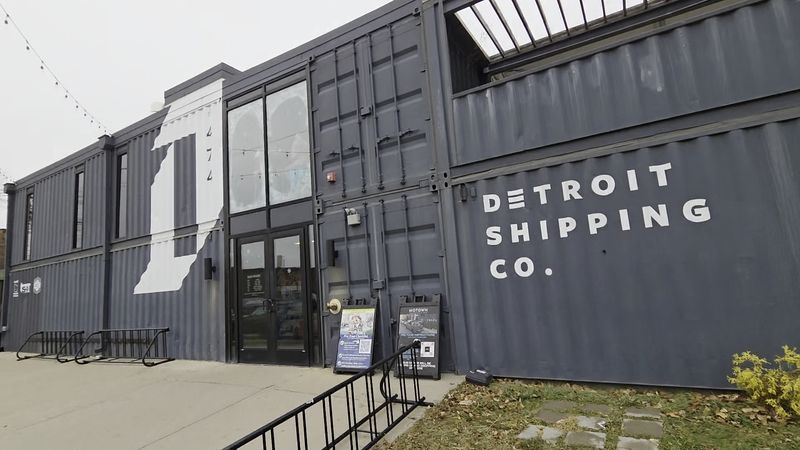
Part of the appeal is how naturally the venue fits its block. Detroit Shipping Company occupies a once-vacant lot in the Cass Corridor section of Midtown, and its container construction adds density and life without pretending to be historic masonry.
I find that honesty appealing. The project, started by founding partners James Therkalsen and Jonathan Hartzell, began as a more casual open-air idea before becoming a permanent multi-level structure that now reads as both entrepreneurial and civic-minded.
That local context gives the hall more weight than a novelty build might deserve elsewhere. In Detroit, adaptive reuse often carries real social meaning, and here the architecture visibly participates in the city’s ongoing habit of practical reinvention.
Let Curiosity Set The Pace
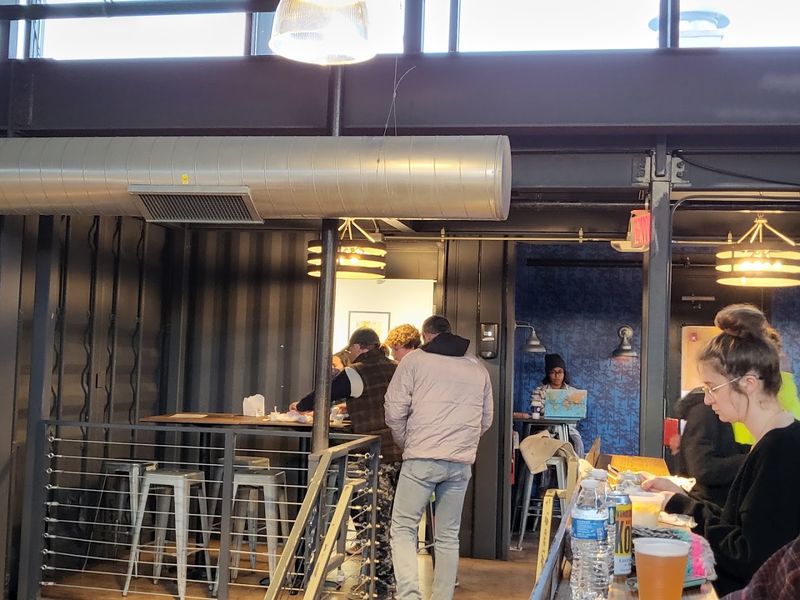
The best tip is the least efficient one: do not rush. This place rewards curiosity because its appeal comes from accumulation, not one single headline feature, whether that is the container architecture, the independent food stalls, the courtyard, or the upstairs gallery.
Each element is modest on its own, but together they create a venue that feels more dimensional than many larger destinations. You can eat quickly here, certainly, yet the building quietly invites a slower pattern of looking, tasting, and wandering.
That is why Detroit Shipping Company lingers after the meal ends. It succeeds not by overwhelming you, but by arranging good urban ingredients carefully enough that an ordinary stop begins to feel specific, local, and worth repeating.