
The Utah Landmark That Has Become One Of The Most Photographed Places In America
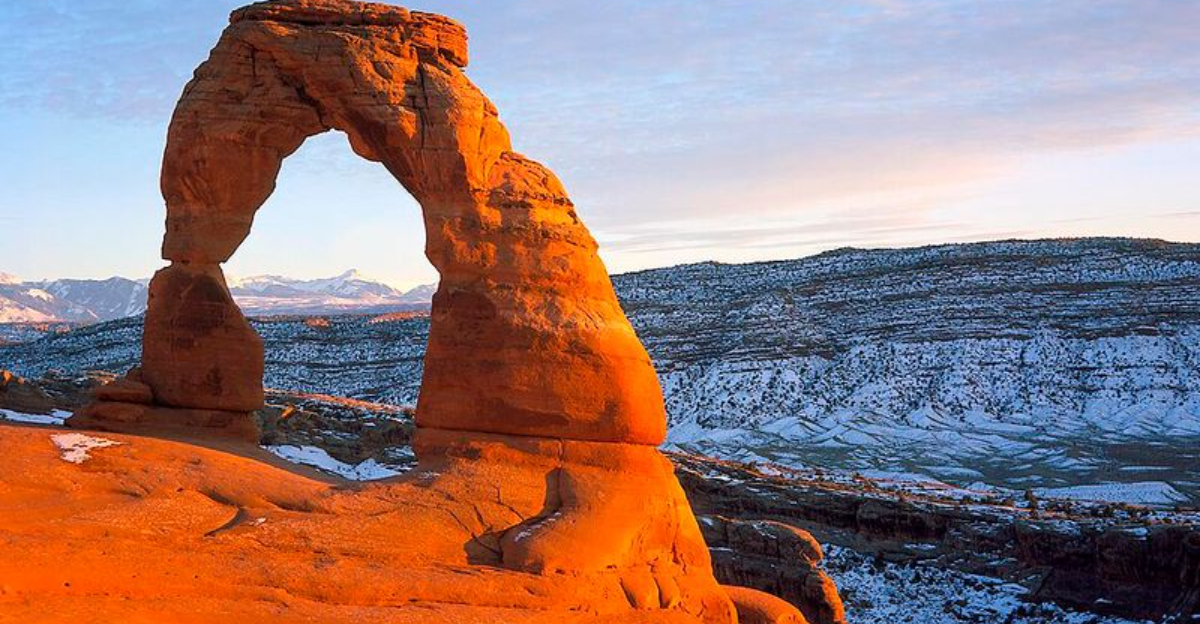
How many photos does the world really need of the same place? Apparently, one more.
Because every year, thousands of travelers still make the journey to capture their own version of one of Utah’s most unforgettable landmarks.
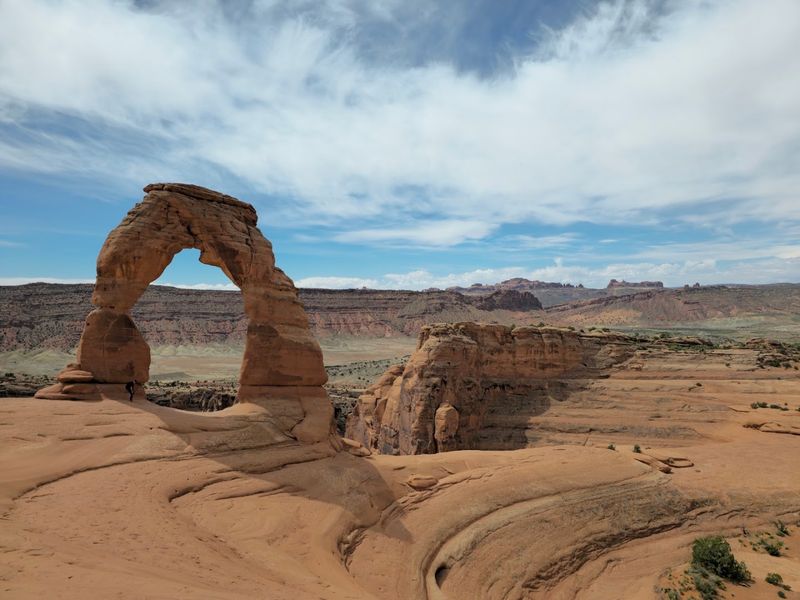
It’s the kind of scene that looks almost too perfectly designed to be real, with towering red rock, endless desert views, and a natural formation that seems to defy the rules of gravity.
Cameras have been pointed at it for decades, postcards have featured it countless times, and yet the first glimpse still feels completely new. Maybe that’s the secret. Some places aren’t photographed because people haven’t seen them before.
They’re photographed because seeing them in person feels different.
How Delicate Arch Was Formed
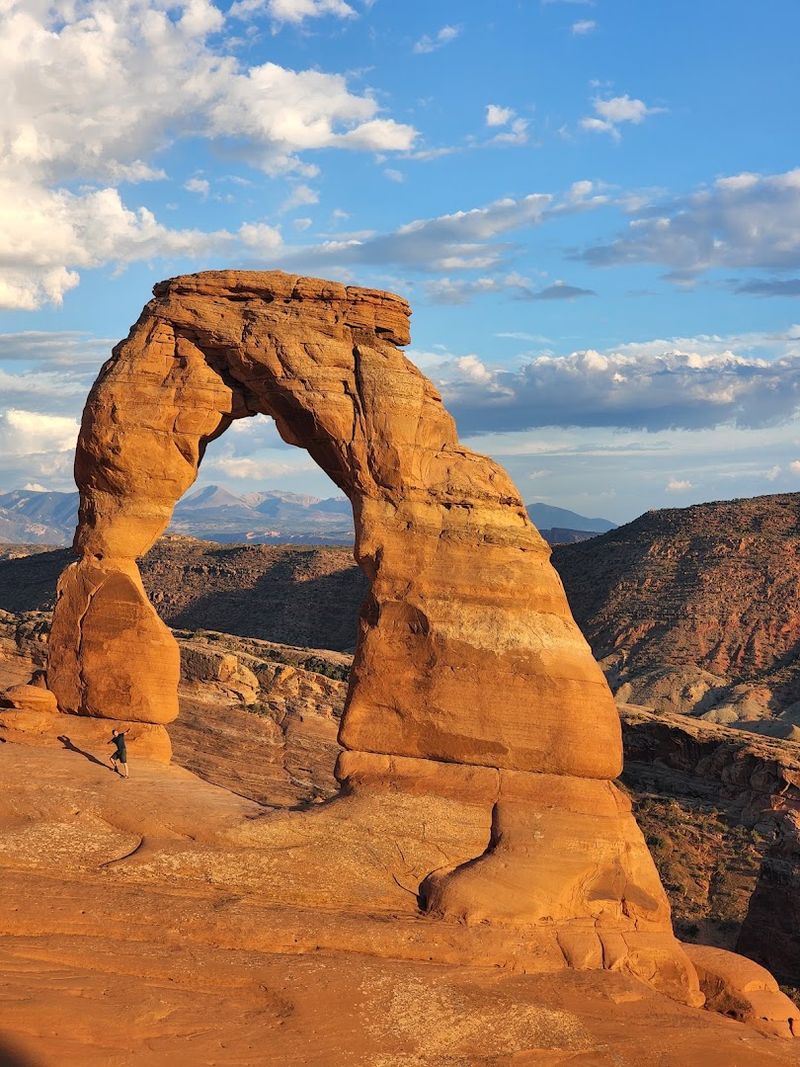
Millions of years of patience created something truly extraordinary. Delicate Arch is composed primarily of Entrada Sandstone, a warm reddish rock that formed from ancient sand dunes compressed over time into solid stone.
What stands before visitors today was once part of a massive sandstone fin, a tall wall of rock rising from the desert floor.
Wind, water, and ice worked like nature’s own sculpting team over countless centuries. Softer rock layers eroded gradually while harder sections held their ground.
That slow, relentless process carved out the stunning opening that now defines the arch’s silhouette against the Utah sky.
The result is a freestanding arch that measures approximately 52 feet tall, with a light opening 46 feet high and 32 feet wide. No human hand touched it.
No blueprint guided it. Just raw geological forces doing their thing across an almost incomprehensible stretch of time.
Understanding the geology makes standing beneath it feel even more surreal. You are not just looking at a pretty rock.
You are witnessing the slow, powerful work of an entire planet reshaping itself. That perspective alone is worth the trip to Arches National Park.
The Quirky History Of Delicate Arch’s Identity
Before it became the icon printed on Utah license plates, this arch had some truly colorful nicknames. Local cowboys who roamed the area once called it “the Chaps” or, even better, “the Schoolmarm’s Bloomers.”
Other early names included “Salt Wash Arch” and the wonderfully blunt “Pants Crotch.” Clearly, the naming committee had a sense of humor.
The name Delicate Arch was officially given during the winter of 1933 to 1934 by Frank Beckwith, who led a scientific expedition through the region.
He described it as “the most delicately chiseled arch in the entire area,” and honestly, that description still holds up perfectly today.
The arch sits within Arches National Park, located near Moab, UT 84532, a stretch of Utah desert that holds over 2,000 documented stone arches. Beckwith’s poetic eye gave this particular formation a name worthy of its elegance.
Naming something changes how the world sees it. Calling it Delicate Arch invited a sense of wonder and reverence rather than a punchline.
That single word, delicate, transformed a cowboy joke into a national treasure that millions now travel across the country to witness.
Hitting The Trail
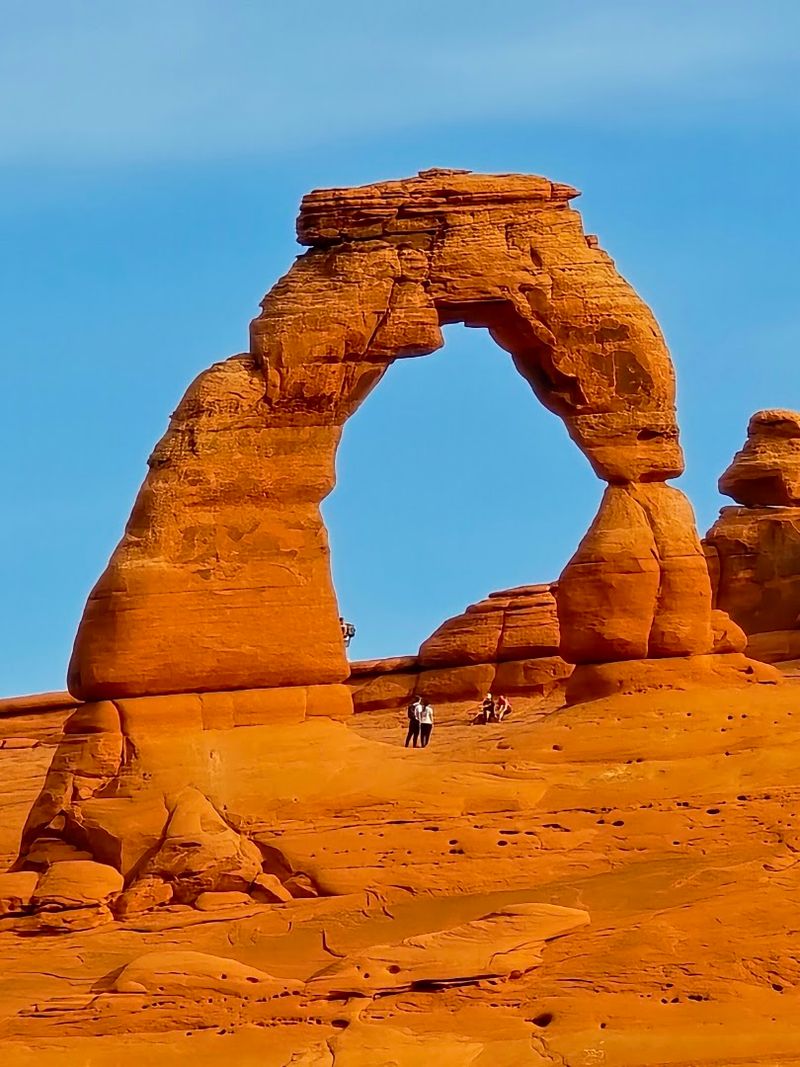
Nobody said the best things come easy, and the trail to Delicate Arch is proof of that philosophy. The main hiking trail is a moderately challenging 3-mile roundtrip journey that gains roughly 480 to 550 feet in elevation.
There is almost zero shade along the route, so the sun is your constant, relentless companion.
Early in the hike, visitors pass by two genuinely fascinating stops. The historic Wolfe Ranch cabin offers a glimpse into the rugged life of early settlers, and nearby Ute Indian petroglyphs etched into the rock face add a layer of ancient storytelling to the journey
. These moments slow you down in the best possible way.
The final stretch of the trail is where things get truly dramatic. A narrow ledge carved into the cliff face requires careful footing, with a canyon drop on one side and solid rock on the other.
Then, suddenly, the arch appears in full view, framed perfectly against the open sky.
That moment of first seeing Delicate Arch from the trail’s end is genuinely hard to describe. Your legs are tired, the sun has worked you over, and then there it stands, enormous and serene.
Bring plenty of water, wear solid shoes, and start early to beat the heat.
Why Golden Hour Here Is Absolutely Unreal
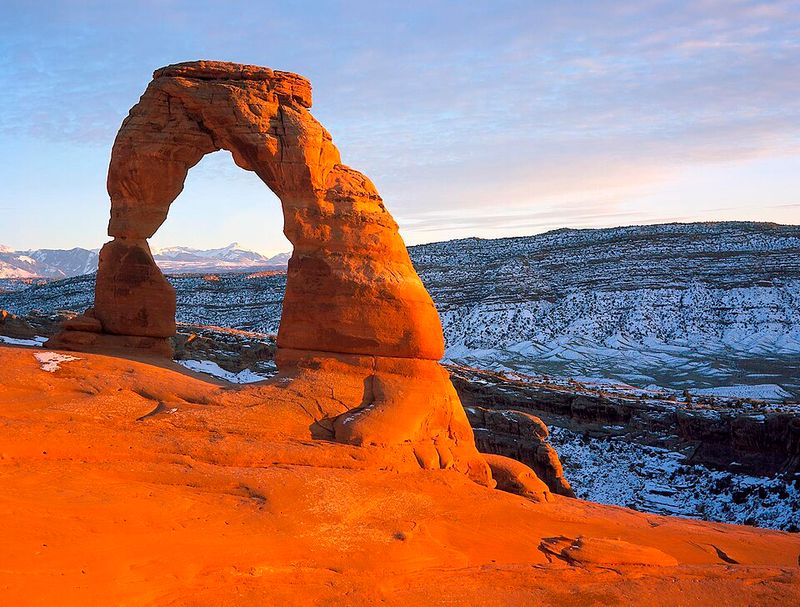
If there is one time of day that turns Delicate Arch into pure visual poetry, it is sunset.
The warm, low-angle light from the setting sun bathes the sandstone in shades of deep amber, burnt orange, and glowing red. Every photographer who has ever visited knows exactly what that light does to this arch.
The colors shift quickly and dramatically as the sun drops toward the horizon. What starts as golden becomes fiery, then softens into a warm rose before the shadows take over.
Standing beneath the arch during those final minutes of daylight feels cinematic in the most breathtaking way imaginable.
Sunrise also draws early risers to the area, though the sun rises behind the arch rather than in front of it. For photography purposes, sunset offers the more dramatic frontal lighting.
However, arriving just after sunrise on a weekday gives you a quieter, more personal experience with far fewer people around.
Avoiding the hottest midday hours during summer is strongly recommended. The exposed trail and lack of shade make afternoon heat genuinely tough.
Plan your visit around the golden hours and you will not only protect yourself from the sun but also catch the arch at its absolute most photogenic.
The Deep Spiritual Significance Of Delicate Arch
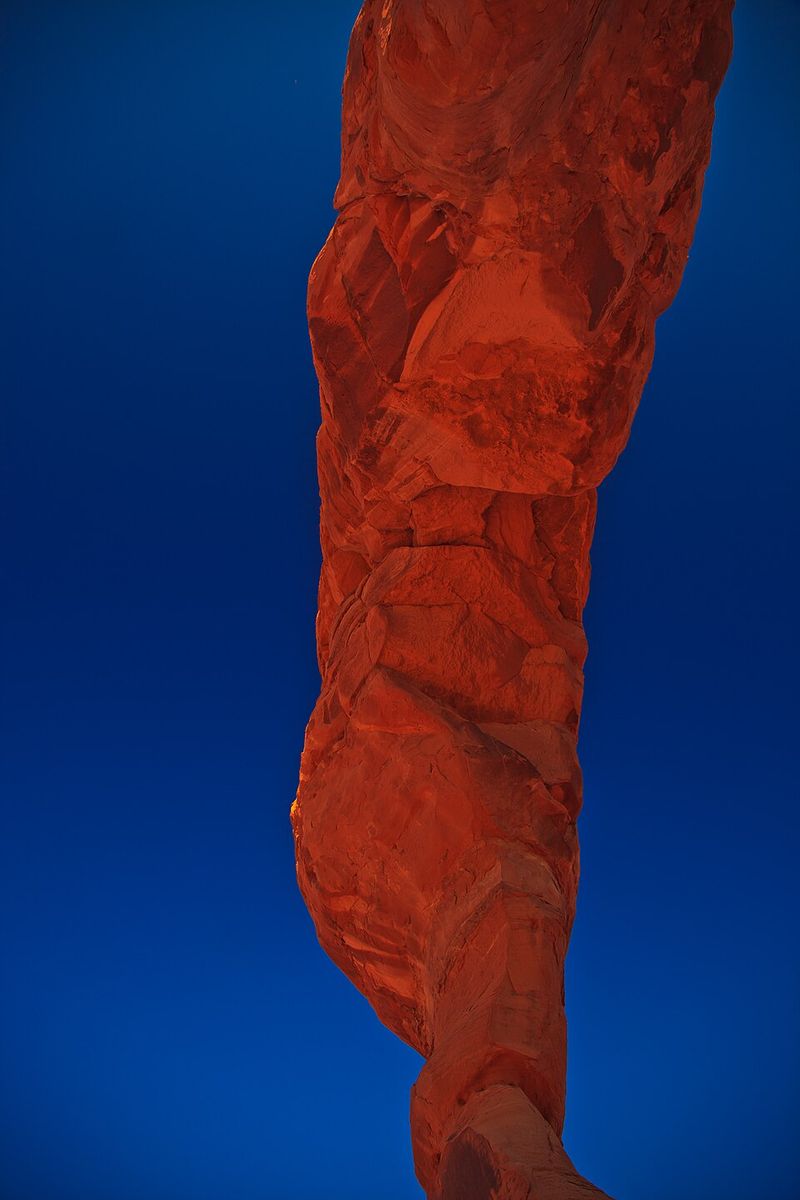
Long before cameras existed to capture it, Delicate Arch held deep meaning for the people who called this land home. Several Native American tribes, including the Ute, Paiute, Navajo, and Hopi, regard this formation as a sacred site with profound spiritual importance.
This is not just a scenic backdrop. It is living history.
For the Ute and Paiute peoples, the arch represents a gateway to the spirit world, a threshold between the physical and something far greater. The Hopi refer to it by the name “Wahboos,” which translates to “the painted window.” That name alone carries a sense of reverence and beauty that no photograph can fully capture.
Visitors are reminded to stay on established trails throughout the park to protect fragile biological soil crust, a living layer of organisms that holds the desert ecosystem together.
Climbing on any arch within the park is strictly prohibited to preserve these irreplaceable natural formations.
Approaching Delicate Arch with awareness of its cultural significance transforms the experience entirely. You are not just ticking off a landmark.
You are stepping into a space that has held meaning for thousands of years, and that deserves genuine respect and quiet appreciation from every visitor who passes through.
How Delicate Arch Became Utah’s Icon
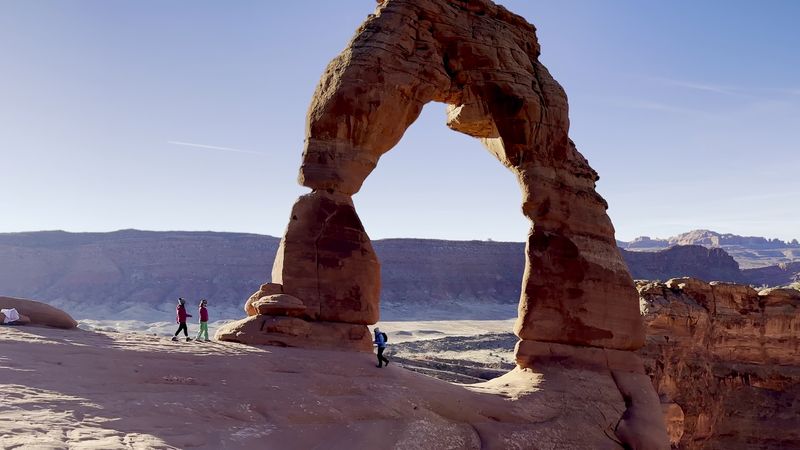
Not many natural formations get to represent an entire state, but Delicate Arch pulls it off effortlessly. Its silhouette appears on Utah license plates, making it one of the few geological features in America iconic enough to earn a spot on a government-issued identification tag.
That is a level of fame most landmarks can only dream about.
The arch has also been featured on a special United States postage stamp, cementing its place in American cultural history.
Then came the ultimate moment of recognition: during the 2002 Winter Olympics held in Salt Lake City, the Olympic torch relay passed directly through the arch’s opening. The image broadcast around the world was simply unforgettable.
These milestones did not happen by accident. Delicate Arch earned its symbolic status through sheer visual power and geological uniqueness.
It is the largest freestanding arch in Arches National Park, and its dramatic isolated position on the edge of a canyon bowl makes it unlike any other arch on earth.
When a single natural formation becomes the face of an entire state, something special is happening. Utah has mountains, canyons, salt flats, and forests, yet Delicate Arch is the image that says Utah louder than anything else.
That kind of quiet dominance is genuinely remarkable.
You Do Not Have To Hike To See It
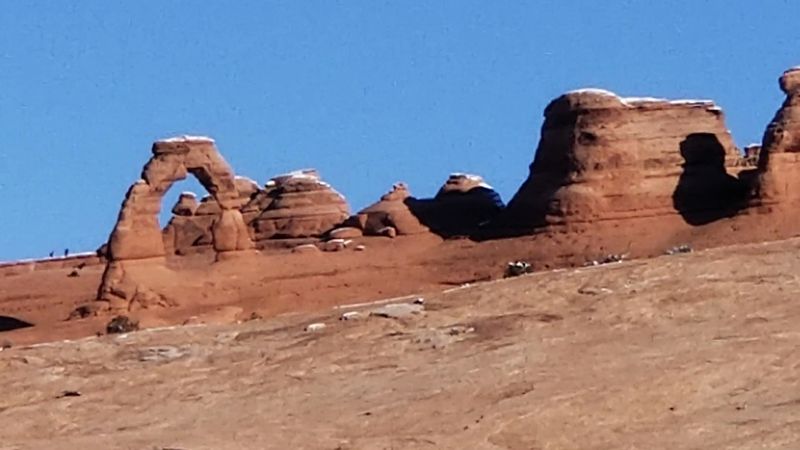
Not every visit to Delicate Arch has to involve a strenuous hike, and that is genuinely great news for a wide range of visitors.
Two dedicated viewpoints offer accessible ways to appreciate the arch without tackling the full trail. Both options deliver real, satisfying views of this legendary formation.
The Lower Delicate Arch Viewpoint is an easy, flat walk of about 100 yards from the parking area.
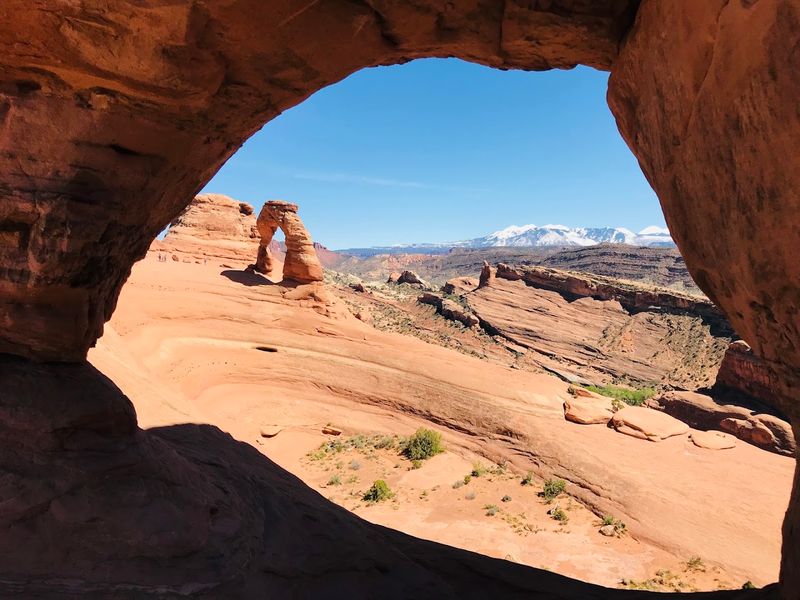
From this vantage point, the arch is visible approximately one mile away, sitting majestically on the edge of its canyon bowl. Binoculars make this experience significantly more rewarding and are worth bringing along.
The Upper Delicate Arch Viewpoint involves a slightly longer 0.5-mile walk that includes some stairs. This higher angle provides a less obstructed line of sight to the arch and gives a better sense of the dramatic drop below it.
Even on this shorter trail, the surrounding red rock scenery is stunning in every direction.
Having multiple ways to experience Delicate Arch makes the park genuinely welcoming for everyone. Whether you are an experienced trail runner or someone who prefers a short, scenic stroll, the arch rewards every level of effort with something worth remembering long after you have driven back toward Moab.
Planning Your Visit
Showing up prepared makes the difference between a great visit and a rough one. Arches National Park is open 24 hours a day, seven days a week, which gives visitors incredible flexibility.
However, the most popular times, especially for the Delicate Arch trail, fill up fast and parking can become competitive quickly during peak season.
Spring and fall offer the most comfortable temperatures for hiking. Early May and late September tend to be sweet spots for weather, with manageable heat and fewer crowds than summer peak months.
Summer visits require an early start, ideally before 8 a.m., to beat both the heat and the crowds that build up as the morning progresses.
Water is non-negotiable on this trail. The exposed terrain and desert climate pull moisture away fast, so carrying more than you think you need is always the right call.
Sun protection, including a hat, sunscreen, and lightweight long sleeves, will also save you significant discomfort on the shadeless path.
The park’s website at nps.gov/arch has updated information on timed entry permits, which have been required during peak periods.
Checking ahead prevents surprises at the entrance gate. Delicate Arch rewards the prepared visitor with an experience that genuinely stays with you, so does proper planning sound like a good idea for your next adventure?