
This Washington Bridge Dares Drivers To Face One Of The Scariest Drives In The State
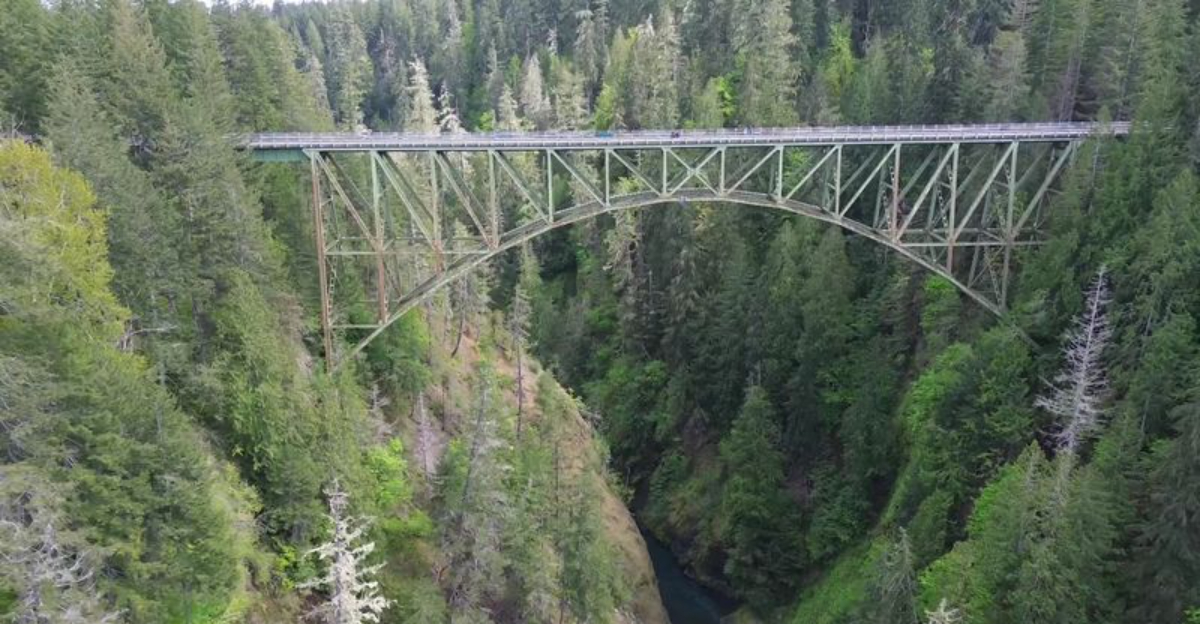
Height has never been my best friend, yet here we are, rolling toward a structure that clearly doesn’t care about my vertigo. Finding yourself halfway across this bridge in Washington feels like being a toy car suspended by a thread in the middle of a forest.
The view is undeniably gorgeous, assuming you can keep your eyes open long enough to appreciate the scenery instead of just praying for solid ground.
It’s a rush of adrenaline that hits you before you even realize you’ve stopped breathing.
This Washington bridge dares drivers to face one of the scariest drives in the state, and let’s just say it makes the average highway overpass look like a playground slide. Prepare for some serious floor-board staring.
A Bold Structure Born From Logging History
Back in 1929, the Simpson Logging Company needed a way to move timber across a deep river canyon, and they did not think small.
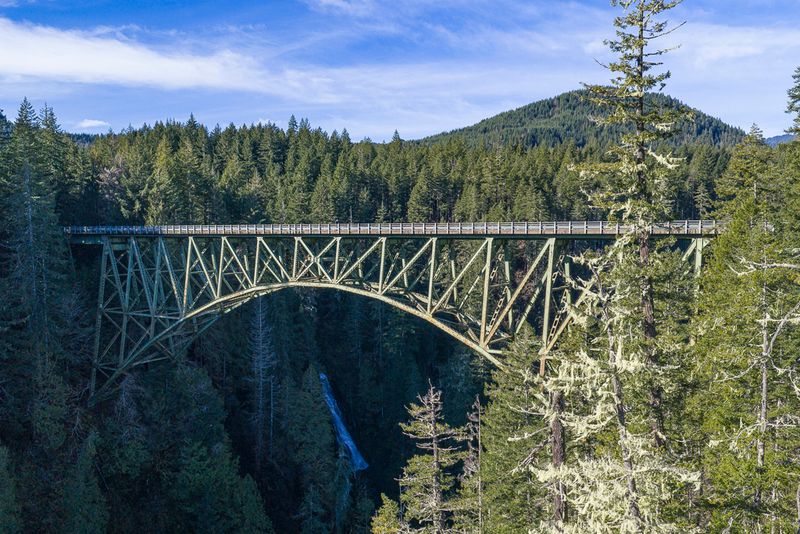
The result was the High Steel Bridge, a steel truss arch structure designed by the American Bridge Company that was built to carry a rail line hauling logs from the Olympic Peninsula forests.
What set this bridge apart from most logging infrastructure of its era was its sheer permanence. While wooden trestle bridges were common in logging operations, this structure was engineered to last, and that foresight paid off in a big way.
By the 1950s, the rail line was converted into a roadway, opening the bridge to vehicle traffic for the first time.
The bridge earned a spot on the National Register of Historic Places in 1982, cementing its status as more than just a crossing. Today, it stands as a proud symbol of Washington’s industrial past and the bold engineering spirit that shaped the Pacific Northwest.
The Jaw-Dropping Setting That Surrounds It
Roughly two hours west of Seattle and about 20 minutes north of Shelton, Washington, the High Steel Bridge sits nestled inside one of the most dramatically beautiful landscapes in the entire state.
The drive leading to it winds through open farmland before narrowing into a forest service road that feels increasingly remote with every mile.
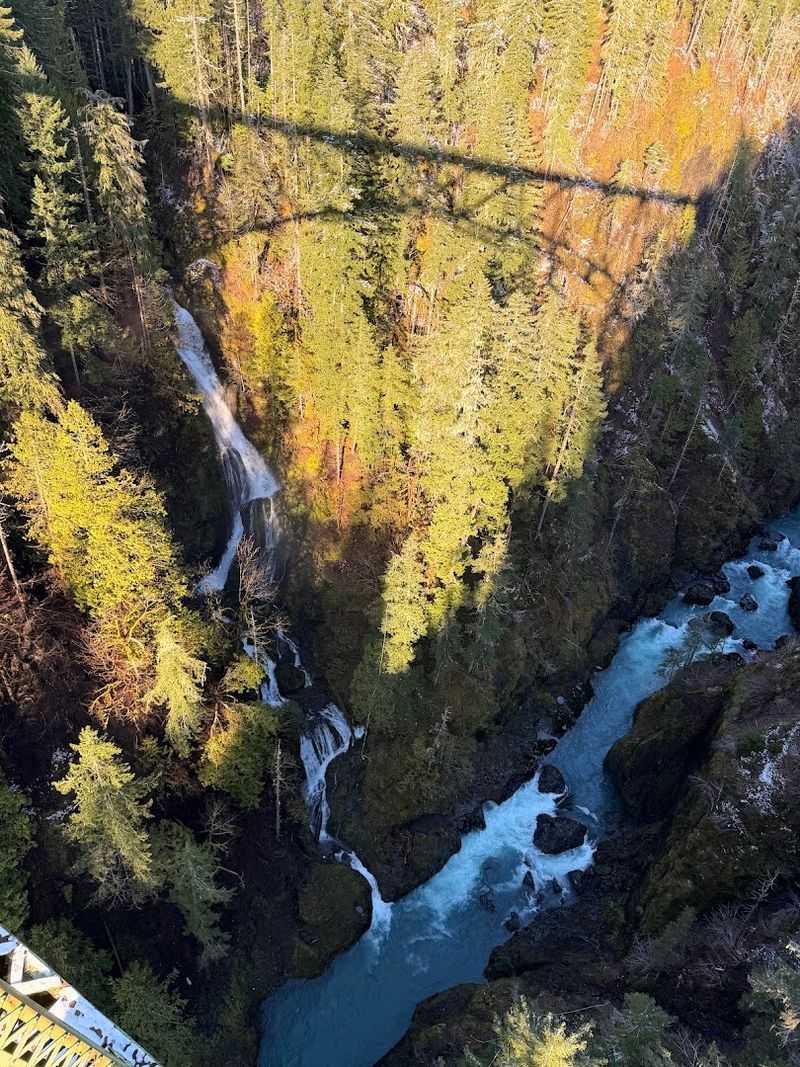
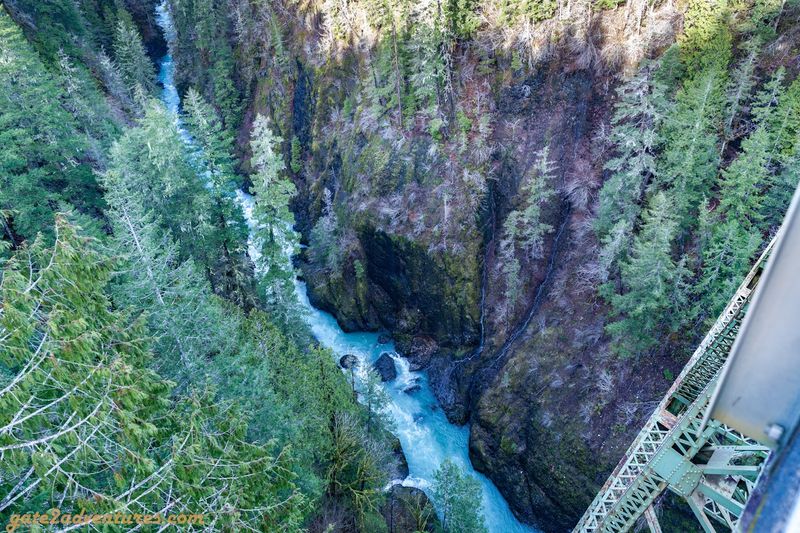
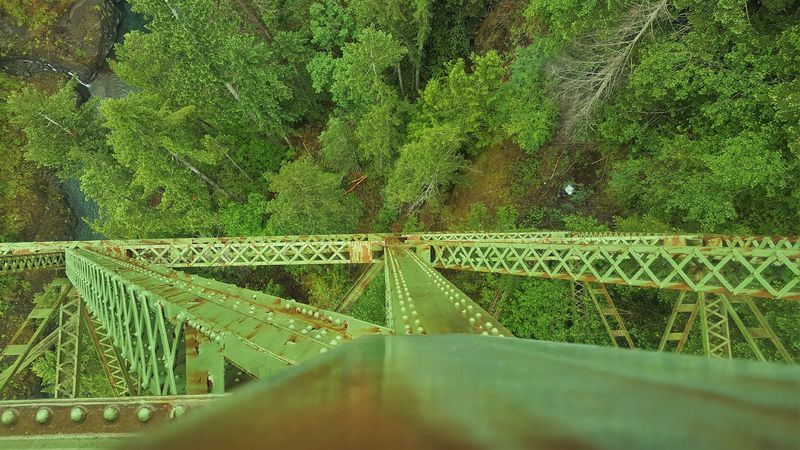
Then, almost without warning, the trees part and the bridge appears, stretching 685 feet across a canyon with the river glinting far below. Evergreen treetops often sit at eye level with the bridge deck, which gives the whole scene a surreal, floating quality.
On clear days, the distant Olympic Mountains frame the horizon like a painted backdrop.
The air up here carries a crispness that feels genuinely different from anywhere else, and the faint sound of rushing water hundreds of feet below adds a layer of atmosphere that no photograph can fully capture. Few places in Washington deliver this kind of sensory overload so naturally.
Low Railings And High Nerves On The Crossing
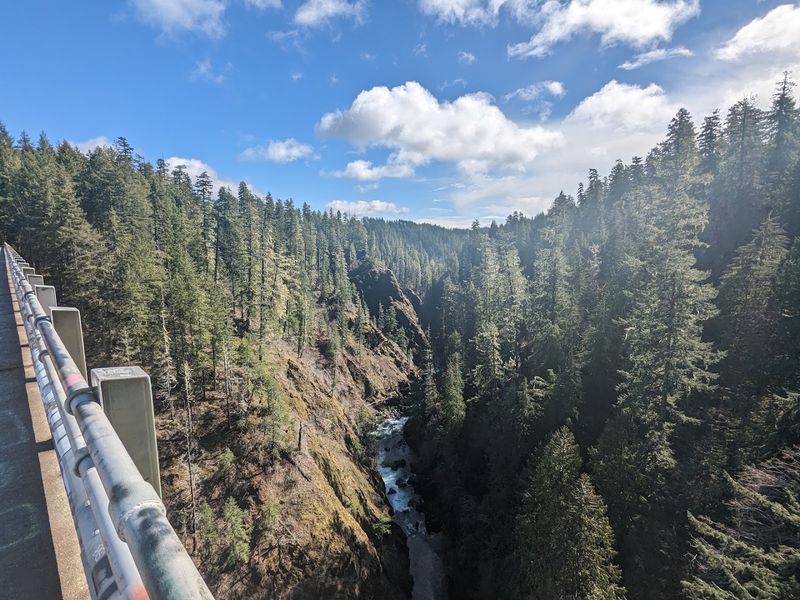
Crossing the High Steel Bridge is an experience that gets your attention fast. The moment your tires roll onto the steel deck, you become acutely aware of just how much open air surrounds you on both sides.
The guard rails, particularly on the north side, are reported to stand only around three feet high, which means the canyon below is very much part of your field of vision. That design was not meant to intimidate, but it certainly does the job.
Many visitors describe a strange combination of wonder and wobbly knees when they peer over the edge, and even confident drivers tend to slow down instinctively as they cross. Walking across is also permitted, and doing so on foot gives you a much more personal encounter with the bridge’s scale.
The steel beneath your feet hums with a satisfying solidity that is genuinely reassuring given the height. Every step or slow roll across this bridge feels earned, and reaching the other side comes with a quiet rush of satisfaction that stays with you long after you leave.
Getting There On Roads That Test Your Patience
Reaching the High Steel Bridge is part of the adventure, and you should plan accordingly. From Shelton, the route follows Highway 101 to the West Skokomish Valley Road exit, then turns right onto Forest Service Road 23 before connecting to Forest Service Road 2340.
The paved portion of the drive is pleasant enough, but the final stretch is a different story entirely. The last few miles are unpaved, and the road can be rough with potholes that will rattle a low-clearance vehicle.
Taking it slow is not just recommended, it is genuinely necessary. A standard car can usually make it, but an SUV or truck will handle the terrain with more confidence and less anxiety.
There are no restrooms available on site, so plan ahead before leaving town. Cell service is also limited or nonexistent once you enter the forest road.
Bringing water, snacks, and a paper map or downloaded offline directions will make the whole trip smoother and more enjoyable from start to finish.
Photography Opportunities
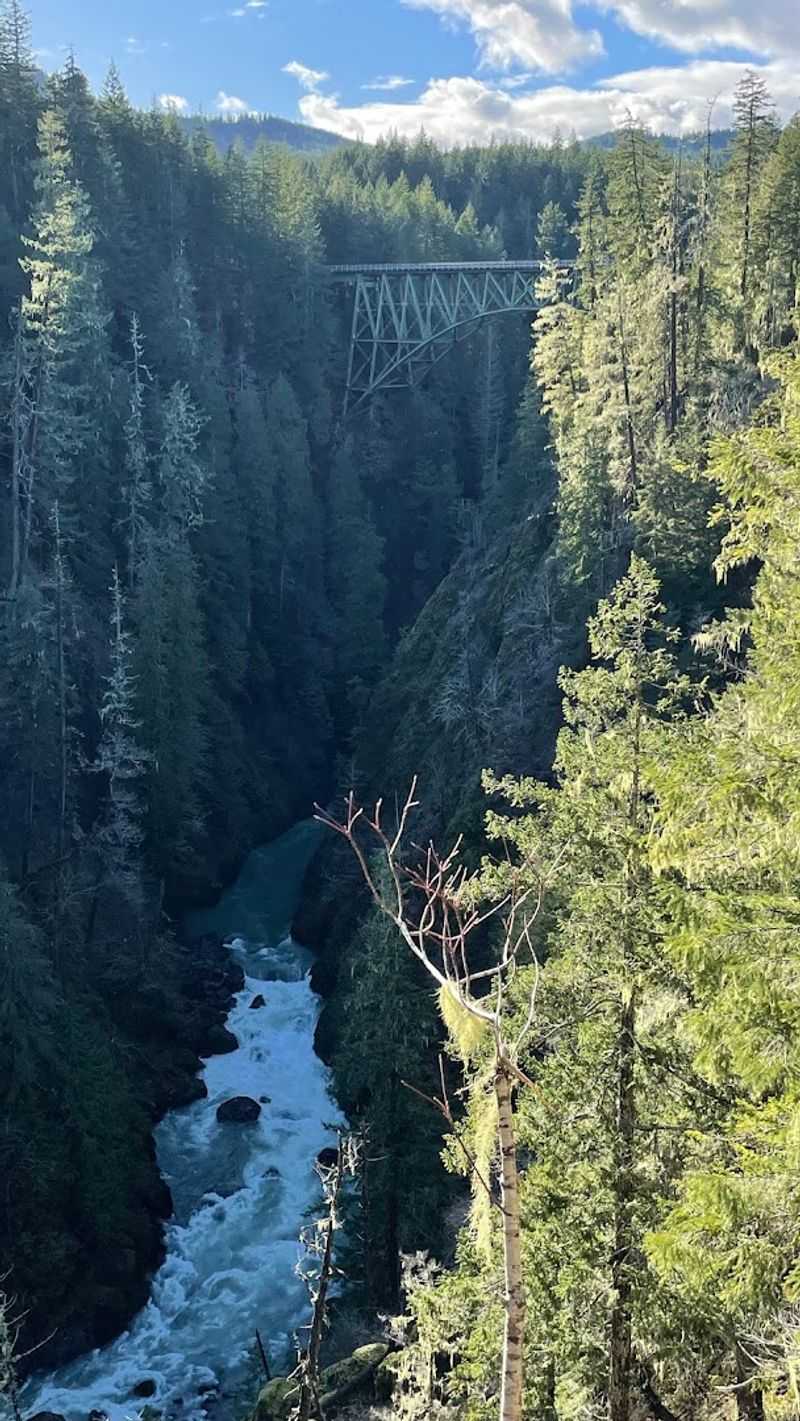
Few bridges in Washington hand photographers such a generous collection of angles and lighting conditions as this one does.
The canyon’s depth creates dramatic shadows during midday, while sunrise and sunset transform the canyon walls into something that looks almost too cinematic to be real. Golden hour here is genuinely something special.
Wide-angle lenses capture the full sweep of the steel arch against the forest backdrop, while a telephoto lens can pull in details of the river threading through the canyon floor hundreds of feet below.
The bridge itself, with its exposed rivets and weathered steel, makes for compelling close-up subjects as well. Drone photography is popular in the area, though always check current regulations before flying.
The surrounding forest provides natural framing from the road leading up to the bridge, giving you strong compositional options even before you step onto the deck.
Overcast days soften the light beautifully and bring out the rich greens of the Olympic National Forest, making cloudy visits just as rewarding as sunny ones.
Outdoor Activities Beyond The Bridge Itself
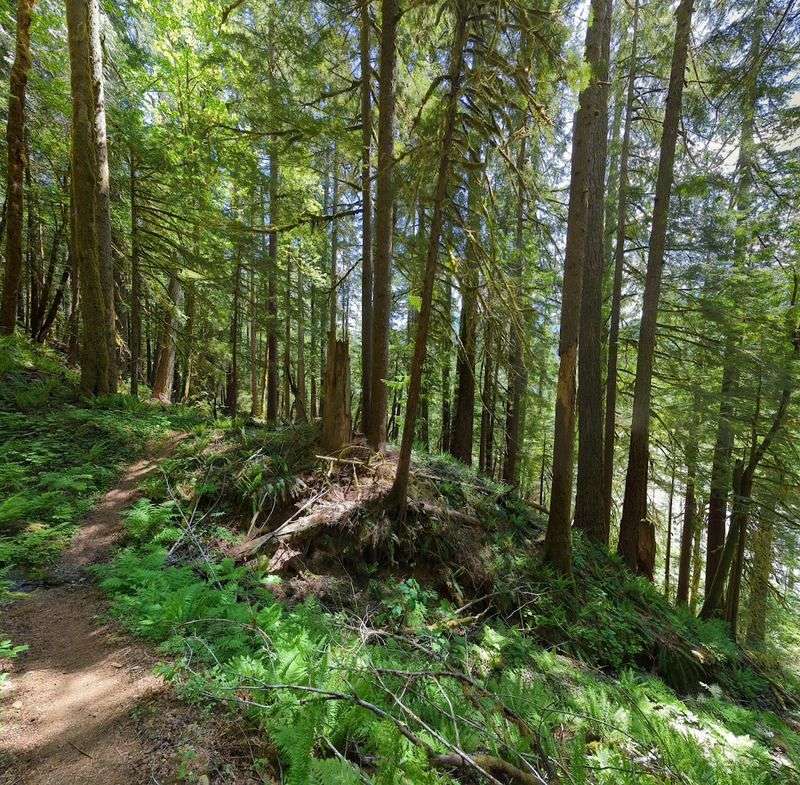
The bridge is the main draw, but the surrounding Olympic National Forest holds plenty more for visitors willing to explore.
The Skokomish River Trail offers a rewarding hike through old-growth forest with the river as a near-constant companion, and the trail system in this area connects to broader network routes for those wanting a longer outing.
Fishing is another strong reason to linger in the area. The South Fork of the Skokomish River supports populations of salmon and trout, making it a favorite spot for anglers who prefer their fishing spots to come with extraordinary scenery.
Kayaking is also an option for those with the equipment and experience for river paddling. Wildlife watching rewards patient visitors with sightings of deer and elk moving through the forest, particularly during early morning or late afternoon hours.
The sheer biodiversity of the Olympic Peninsula means that any time spent outdoors here has the potential to deliver memorable encounters with the natural world that go well beyond the bridge itself.
Why This Bridge Stays With You Long After You Leave
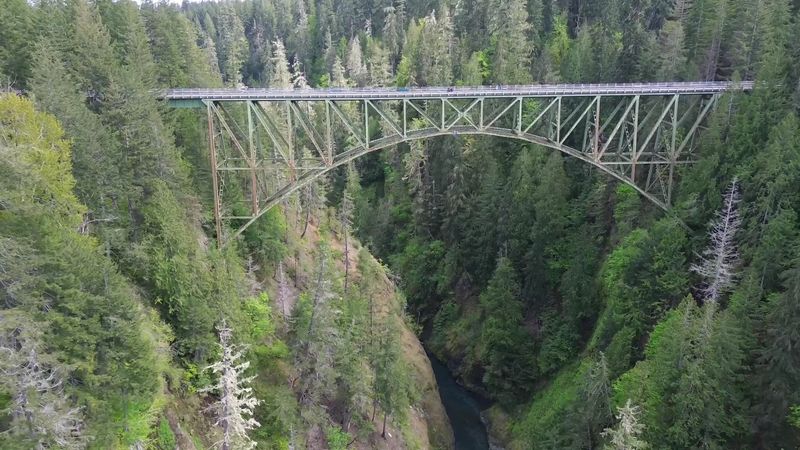
Some places earn their reputation through hype, and others earn it through the actual experience of being there. The High Steel Bridge falls firmly in the second category.
There is something about standing on a 95-year-old steel structure, 375 feet above a rushing river, inside one of the most beautiful forests in the Pacific Northwest, that simply does not fade from memory quickly.
Visitors consistently describe the experience as humbling in the best possible way. The combination of industrial history, natural grandeur, and a genuine physical sensation of height creates a layered impression that sticks around long after the drive home.
It is the kind of place you find yourself describing to people who have never heard of it.
The bridge also rewards repeat visits because the forest, light, and weather change it constantly. A foggy morning crossing feels entirely different from a clear afternoon one, and each version has its own mood and magic. If Washington has a hidden chapter worth reading more than once, the High Steel Bridge is it.
The Best Season To Plan Your Visit
Timing your trip to High Steel Bridge can make a big difference in what you experience.
Summer months bring clearer skies and easier road conditions, making the drive slightly less nerve-wracking than usual. Wildflowers bloom along the forest roads, and the river below adds movement to the deep green scenery.
Early mornings can be especially peaceful before more vehicles begin navigating the narrow approach. Even in summer, patches of fog may drift through the gorge and briefly hide the view below.
Fall is another beautiful time to visit, when the surrounding trees turn golden and rust-colored and add a new layer of color to the scene. Weekdays generally offer a quieter experience than busy summer weekends.
Winter visits are possible but often come with icy roads and limited visibility, so late spring through early October is usually the more practical window. Recent rain can also leave the unpaved approach muddy, rough, and slower to navigate.
Check current forest-road conditions before leaving, since closures and access restrictions can change with weather or maintenance.