
This Washington Park Is Home To Five Completely Different Gardens Waiting In Plain Sight
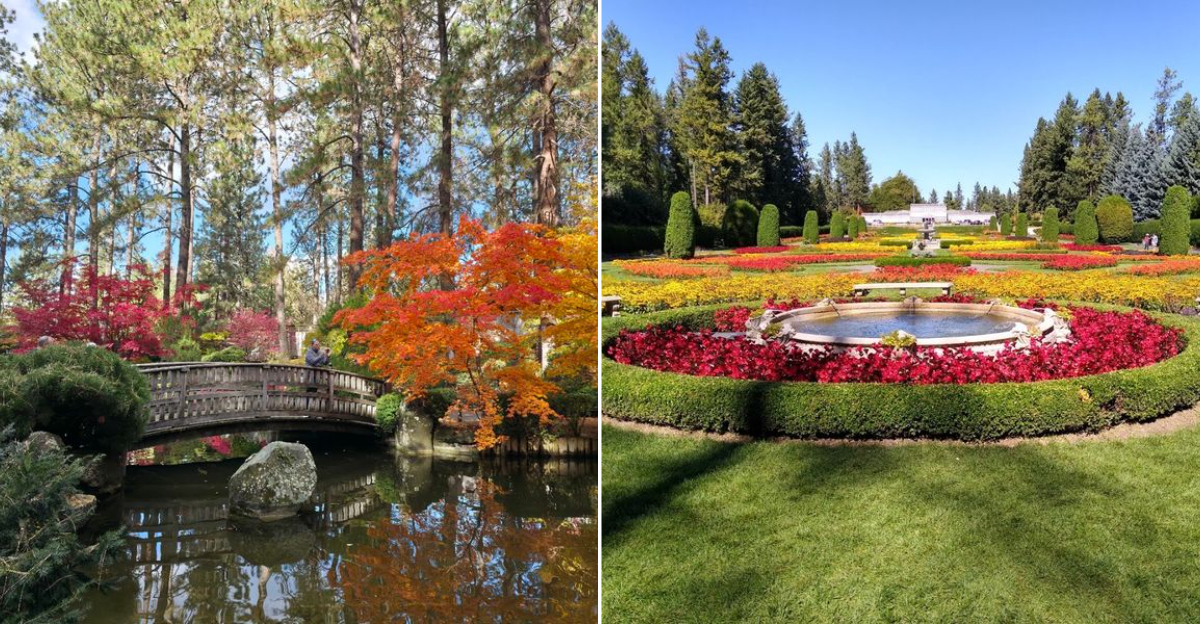
Some weekend plans are better when they require very little effort. Stepping into a glass conservatory offers the perfect excuse to ignore your inbox, slow down, and spend time surrounded by warm air, lush greenery, and plants that seem far more relaxed than the rest of us.
The space may be compact, but it packs in an impressive range of colors, textures, and shapes.
Every turn brings something different, making it easy to linger longer than expected and forget about whatever was waiting on your screen. Outside, five distinct gardens add even more variety, each offering its own atmosphere and reasons to keep exploring.
A camera come in handy, though curiosity matters more, especially when a wandering peacock decides to make an unexpected appearance. The conservatory sits at the heart of a sprawling 78-to-90-acre urban park that also holds five stunning outdoor themed gardens, each with its own personality and charm.
Free to enter and open most days from 9 a.m. to 3:30 p.m., this place in Washington proves that extraordinary botanical beauty does not require a plane ticket or a pricey admission fee.
The Gaiser Conservatory’s Tropical Dome
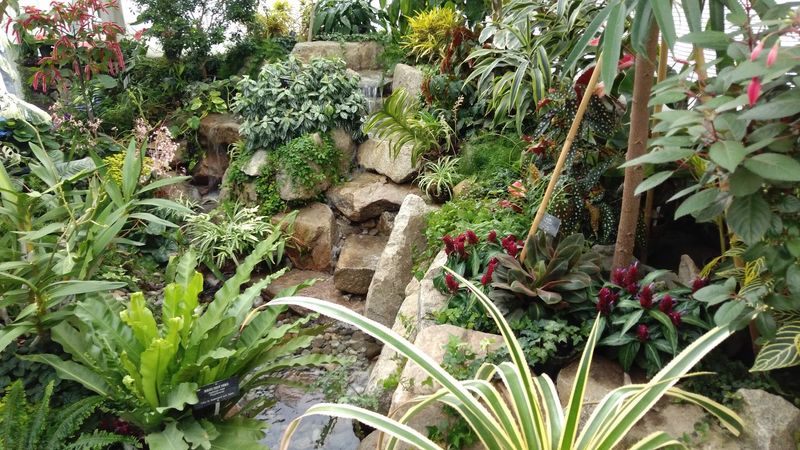
Walking into the central dome of the Gaiser Conservatory feels like stepping through a portal to somewhere far warmer and wilder. A towering Norfolk Pine stretches confidently toward the glass ceiling, flanked by palms, ficus, and citrus trees that fill every corner with living color.
The air is thick and warm, a welcome contrast to Spokane’s famously chilly winters. A wall of orchids commands your attention almost immediately, bursting with purples, pinks, and creamy whites that seem almost too vivid to be real.
A gentle waterfall and stream, added during a 2014 renovation, trickle softly beneath the canopy, adding a layer of calm that makes the whole space feel genuinely therapeutic. Seasonal displays rotate throughout the year, so no two visits are ever quite the same.
This dome has been the conservatory’s showpiece since Dr. David Gaiser funded its expansion in 1988, and it earns that title every single day. Plan to linger here longer than you expect, because the details keep revealing themselves the slower you walk.
The Arid West End Succulent Collection
Right when you think you have figured out the conservatory’s rhythm, a sharp turn leads you into a completely different world.
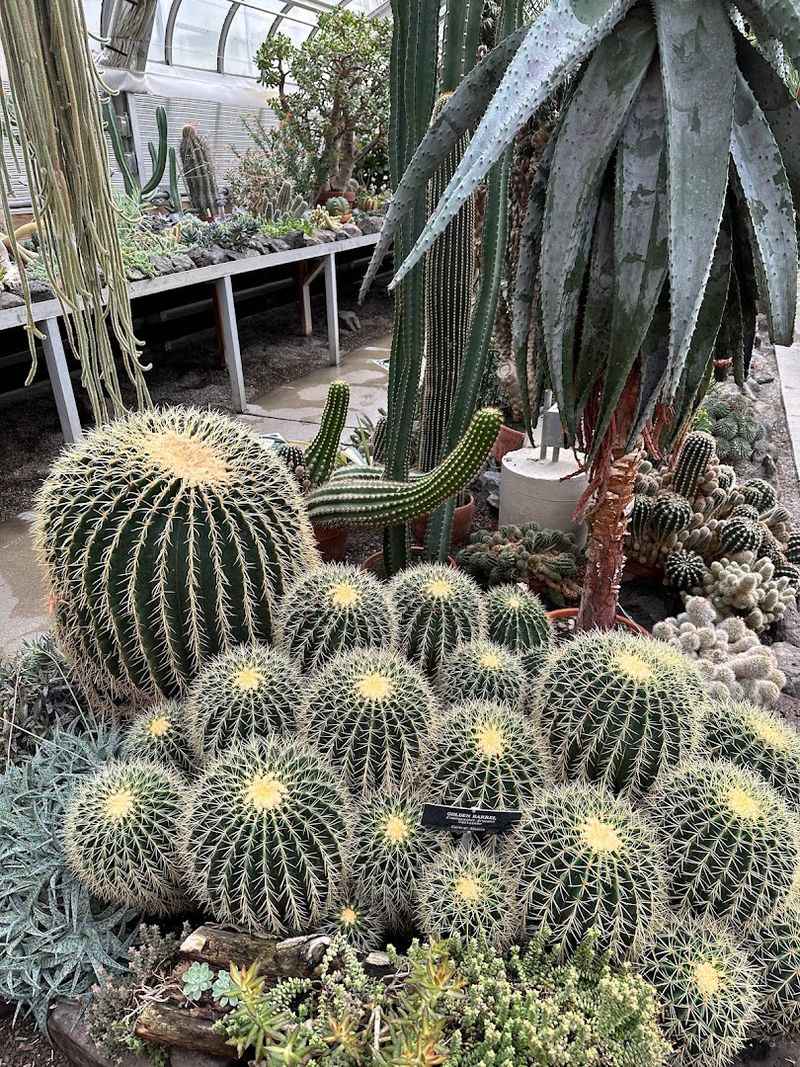
The west end of the Gaiser Conservatory is dedicated to arid-climate plants, and the shift in atmosphere is almost startling after the humid warmth of the central dome. Suddenly the air is drier, the light feels sharper, and the plants wear their survival strategies like badges of honor.
Cacti of all shapes and heights stand at attention alongside sculptural succulents and bold bromeliads, each one a quiet masterpiece of adaptation. Some specimens have spines thick as toothpicks, while others carry smooth, waxy surfaces that catch the light beautifully.
The collection demonstrates just how inventive nature gets when water becomes scarce.
For anyone who assumed conservatories were all about lush tropical greenery, this section delivers a genuinely surprising twist. It is a wonderful reminder that the plant kingdom contains multitudes, and that beauty thrives even in the most unforgiving conditions.
The Tropical East Section And Its Giant Banana Tree
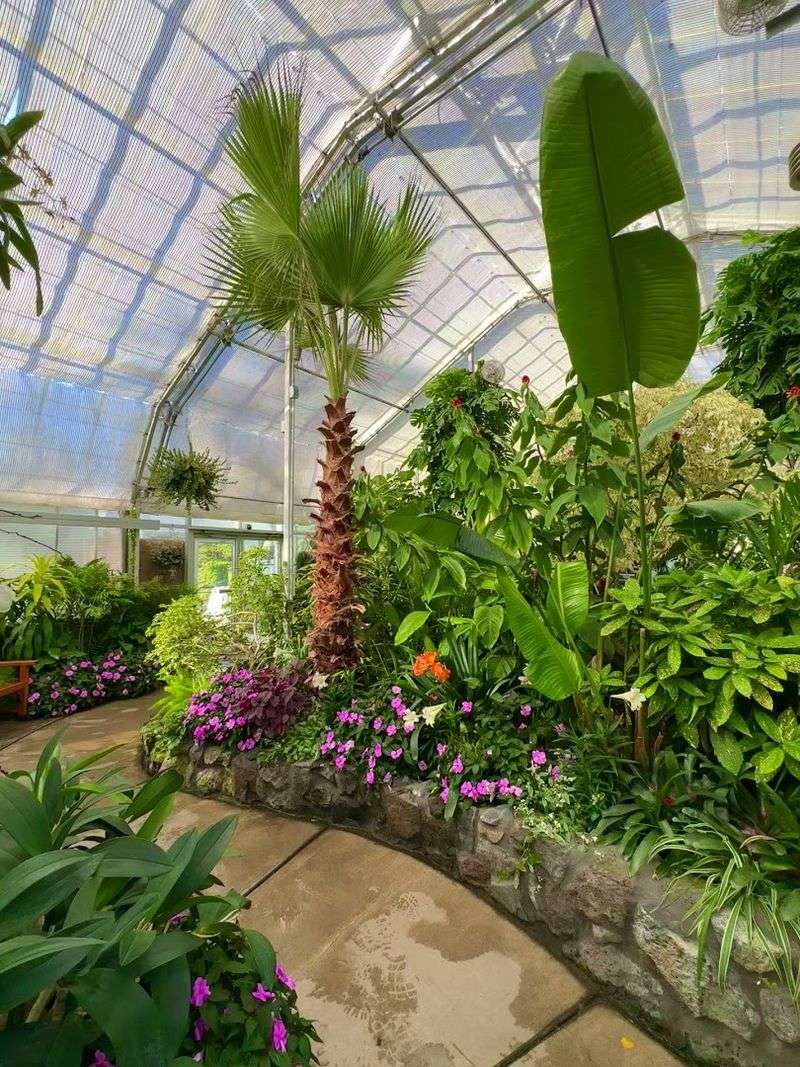
There is something almost theatrical about the east section of the Gaiser Conservatory, where an enormous banana tree commands the room like it owns the place.
Its broad, dramatic leaves arc outward in every direction, creating a canopy that makes you feel genuinely small in the best possible way.
This is the kind of plant that makes you rethink what a greenhouse can hold. Sharing the spotlight is a staghorn fern that has been thriving in this spot for well over a decade, its antler-shaped fronds spreading wide across the wall with quiet confidence.
The combination of towering tropicals and dense, layered greenery gives this section a richly immersive quality that photographs love and eyes linger over. Every angle offers a new composition worth noticing.
I spent more time in this corner than I planned, partly because the light filtering through the glass hits the banana leaves in a way that feels almost cinematic. If you enjoy tropical environments, this section will feel like a small personal victory every time you visit.
The Nishinomiya Tsutakawa Japanese Garden
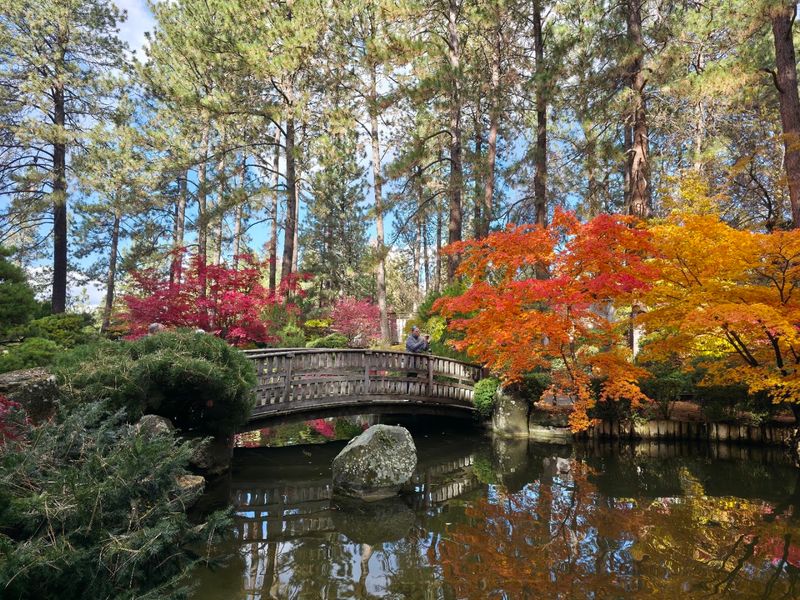
Just steps beyond the conservatory’s glass walls, Manito Park opens into one of Spokane’s most serene outdoor spaces. The Nishinomiya Tsutakawa Japanese Garden is named in honor of Spokane’s sister city in Japan, and it carries that cultural connection with quiet grace and careful design.
Every element, from the stone lanterns to the koi pond, feels intentional and deeply considered. A wooden bridge arcs over still water where koi drift lazily beneath the surface, and manicured trees frame the scene with the kind of patience that only decades of tending can produce.
The garden shifts personality with every season, offering cherry blossoms in spring, dense green in summer, and fiery foliage come autumn. Winter visits reveal a spare, architectural beauty that many people overlook entirely.
Spending time here after the sensory richness of the conservatory creates a lovely contrast, trading tropical abundance for measured stillness. It is the kind of garden that asks you to slow down, and most visitors find that request surprisingly easy to honor.
Duncan Garden, Rose Hill, And The Perennial Garden
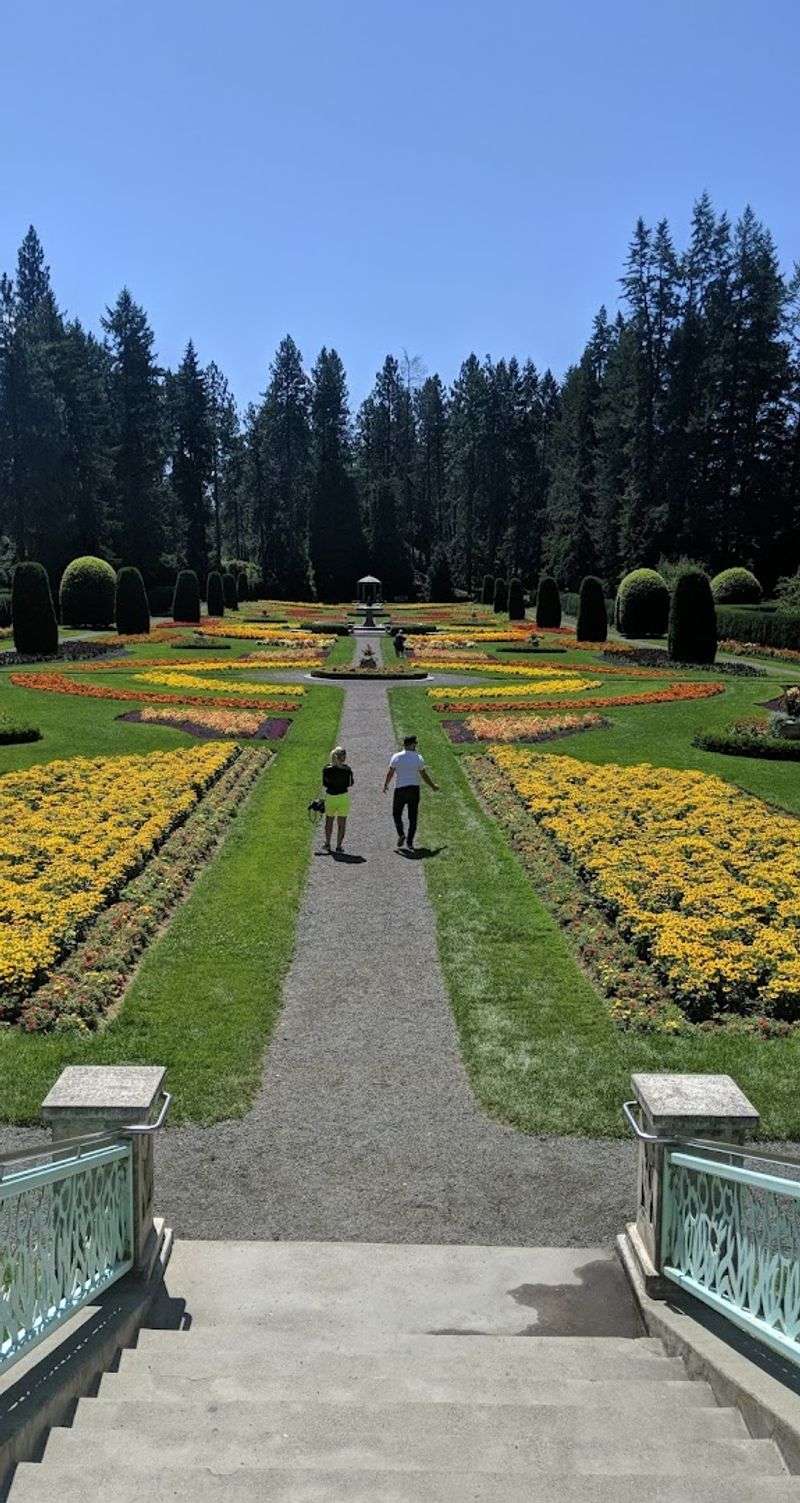
Manito Park saves some of its most visually spectacular moments for the gardens that fan out across its open grounds.
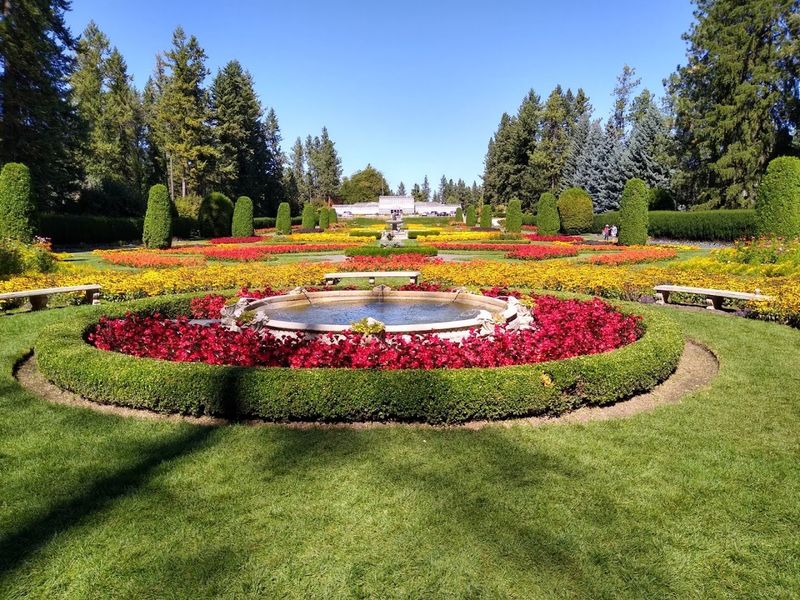
Duncan Garden is a formal European-style sunken garden where symmetrical flower beds are planted with thousands of colorful annuals each season, creating geometric patterns that look almost too perfect to be natural.
Standing at the top of the surrounding lawn and looking down at the full display is genuinely one of Spokane’s great free pleasures.
Rose Hill brings an entirely different mood, with hundreds of rose varieties filling the air with fragrance during peak summer bloom.
The Joel E. Ferris Perennial Garden edges the experience with a more relaxed, cottage-style energy, where layered plantings shift and change across the growing season in ways that reward repeat visitors.
Each of these three gardens has its own pace and personality, yet they flow naturally into one another across the park’s landscape. Together with the Japanese Garden and the Lilac Garden, they create a full-day horticultural journey that most visitors never quite expect to find in a single city park.
The Conservatory’s Rotating Seasonal Flower Displays
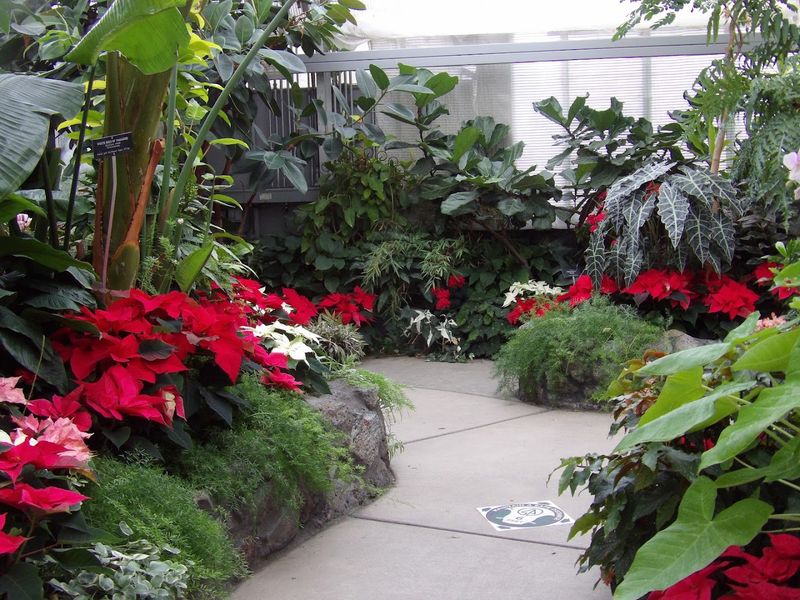
The Gaiser Conservatory doesn’t stay the same year-round, and that’s exactly what keeps people coming back season after season.
Three times a year, the central dome transforms with carefully curated displays featuring chrysanthemums in autumn, poinsettias in winter, and cheerful spring blooms that fill the space with vivid color.
Each seasonal change gives the conservatory a noticeably different personality. Autumn brings warm shades of gold, orange, burgundy, and deep red beneath the glass dome.
Winter follows with bright poinsettias arranged in festive patterns that stand out against the permanent greenery. Spring introduces softer colors, fresh foliage, and flowers that make the room appear lighter.
Visitors who return throughout the year can experience an entirely new display without changing destinations.
Small decorative details often complement the plants and help each installation reflect the season.
The changing displays also give photographers new colors, arrangements, and angles to capture. Even regular visitors rarely see the central dome presented exactly the same way twice.
Each show runs for several weeks, giving visitors plenty of chances to catch them at their peak. Local horticulturalists spend weeks preparing each installation, and the results are genuinely worth the trip.
The Manito Park Lilac Garden And Open Lawns
Few things signal the arrival of spring in Spokane quite like the lilac display at Manito Park, the sprawling green space surrounding the Gaiser Conservatory.
Hundreds of lilac bushes bloom in shades of purple, white, and pink each May, drawing crowds from across the Pacific Northwest for Spokane’s beloved Lilac Festival. Some varieties produce tightly packed clusters, while others spread their blossoms across long, arching branches.
The changing shades make even a slow walk through the garden surprisingly colorful.
The fragrance alone makes the visit worthwhile. It drifts along the paths and becomes stronger as you move closer to the thickest groups of blooms. Benches placed around the garden give visitors an easy place to sit and enjoy the view without rushing onward.
Beyond the lilacs, open lawns stretch between the various gardens, offering easy spots to rest between explorations. Shady trees provide relief when the afternoon sun starts to feel stronger.
Paved walkways also make it simple to move between the park’s major garden areas.
Families spread out blankets, kids run freely, and the whole park carries a relaxed, unhurried energy that makes it genuinely easy to linger for hours. Photographers often pause beside the fullest bushes, waiting for a clear moment to capture the flowers.
Even after the main festival crowds leave, the blooming garden remains one of the park’s most enjoyable spring attractions.