
This WWII Submarine In Ohio Still Carries The Marks Of Its Wartime Past (And It’s A Remarkable Sight To See)
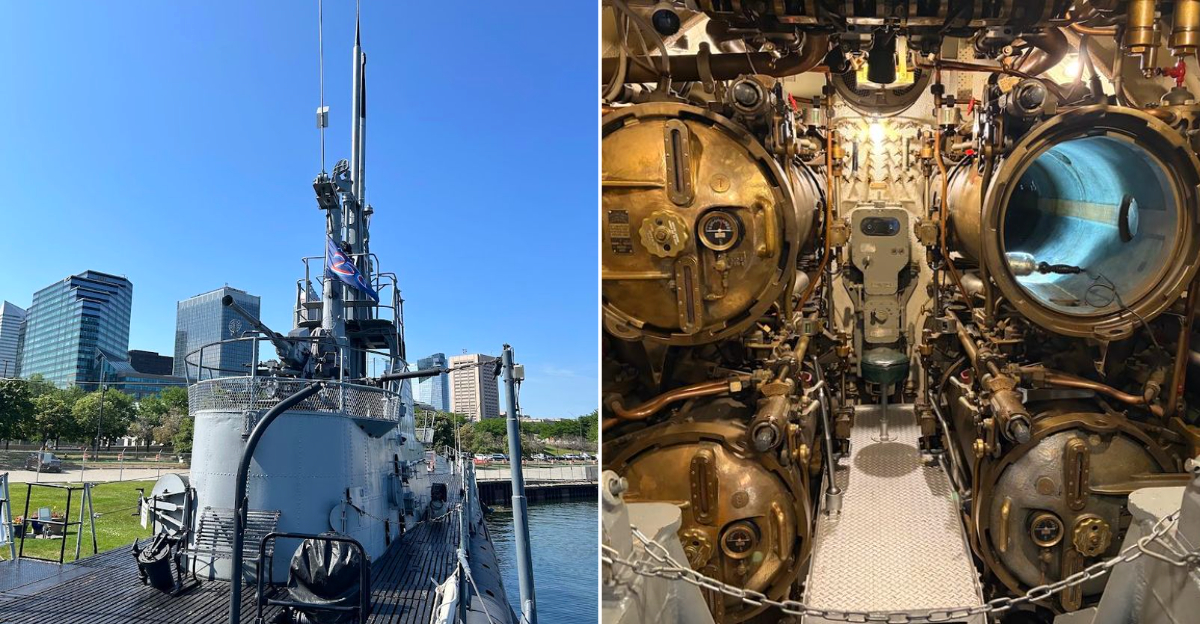
This does not look like a typical museum. Its dark steel hull rests beside Lake Erie, while narrow hatches and heavy deck equipment hint at how demanding life aboard once was.
I did not expect to find such an intact World War II submarine in Ohio. Even more surprising, visitors still enter through the original hatches and move through the same cramped compartments used by its crew.
What does history feel like when you have to climb into it? This Cleveland memorial answers that question quickly, and the marks left across the vessel make the experience difficult to forget.
A Steel Giant On The Lakefront
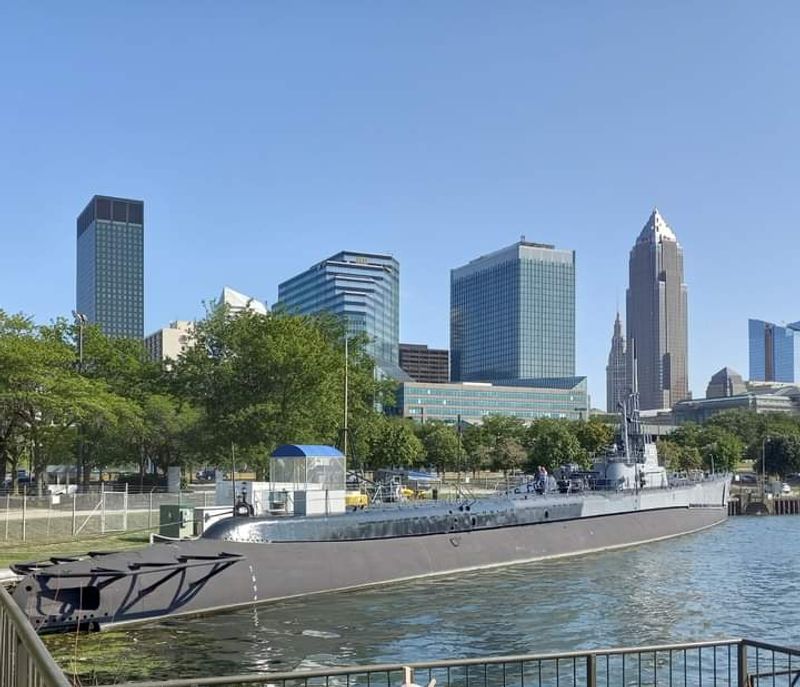
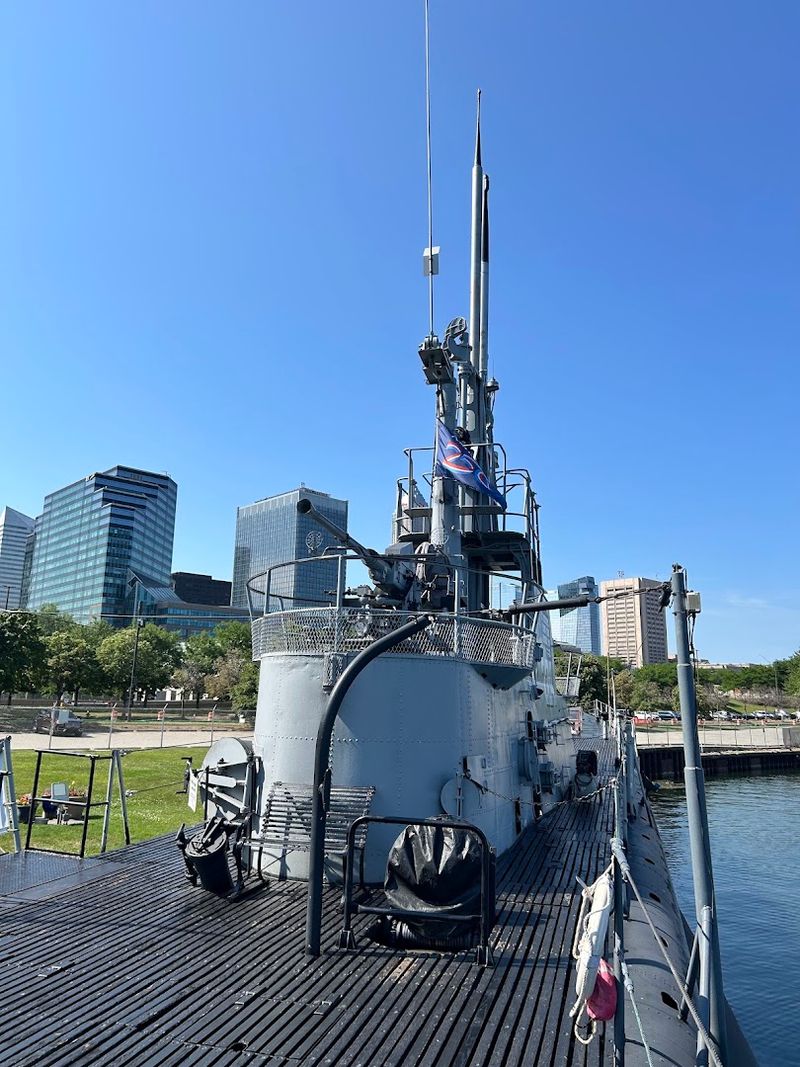
The first glimpse of this vessel from the parking area stops you in your tracks. A long, low, black steel hull rests in the water with a quiet authority that no photograph can fully capture.
The USS Cod is a Gato-class submarine commissioned in 1943, and it served seven successful war patrols in the Pacific during World War II. That record alone would make it worth a visit, but the sheer physical presence of the boat adds another layer entirely.
Outside the sub, you will find a jeep, a working periscope display, and a propeller on display, giving the pier area a genuinely museum-quality atmosphere before you even board.
The rugged deck guns point silently toward the horizon, and Lake Erie shimmers in the background.
The Cleveland skyline frames the whole scene in a way that feels almost cinematic. I stood there for a few minutes just taking it all in before I even thought about going aboard.
You can find this remarkable piece of naval history near 1201 N Marginal Rd, Cleveland, OH 44114, right along the lakefront.
The History Behind The Hull
Not every museum ship carries a story this layered. The USS Cod earned its place in the history books through combat patrols, but one mission stands apart from all the rest.
During World War II, the Cod executed the first international submarine-to-submarine rescue in recorded history, saving the crew of a grounded Dutch submarine called the O-19. That single act of seamanship under pressure is the kind of story that deserves its own movie.
Commissioned in 1943, Cod was mothballed in 1946, recommissioned in 1951, and decommissioned again in 1954 before later serving as a naval reserve training vessel in Cleveland. It opened for public tours as a memorial in 1976.
What makes it especially rare is that its pressure hull has never been cut open or modified the way most museum submarines have been.
That means every hatch, every ladder, and every passageway you navigate is the real thing, unchanged from the days when a crew of around 80 sailors depended on it for survival. History does not get much more immediate than that.
The deeper you read into the Cod’s wartime record, the more impressive it becomes as a symbol of American naval courage.
Boarding Through The Original Hatches
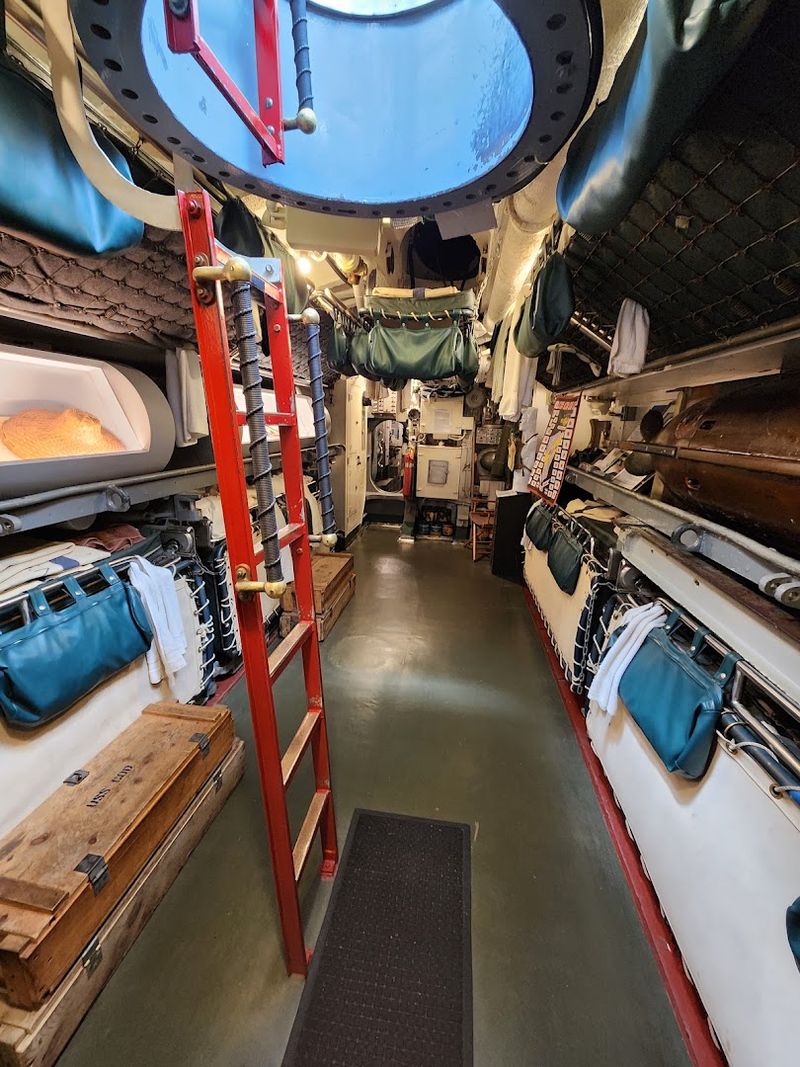
Here is something that sets the USS Cod apart from almost every other museum submarine in the country: you enter and exit through the original vertical hatches, exactly as the wartime crew did.
There are no cut-open hull sections, no wide ramps, and no modern accessibility shortcuts. You climb down a steep vertical ladder to get in, and you climb back up one to get out.
It is a physical experience that immediately tells your body something important about what life aboard this vessel actually felt like.
I will be honest, the first ladder gave me a moment of pause. The opening is narrow, the rungs are metal, and the drop feels real.
But once you are inside, that brief challenge transforms into a genuine sense of connection with the sailors who used these same hatches under far more stressful circumstances.
Visitors with mobility limitations or joint issues should know in advance that this is not an accessible tour in the traditional sense. The experience rewards those who can manage it with something truly unforgettable.
No elevator, no shortcut, just the real thing.
Inside The Cramped Quarters
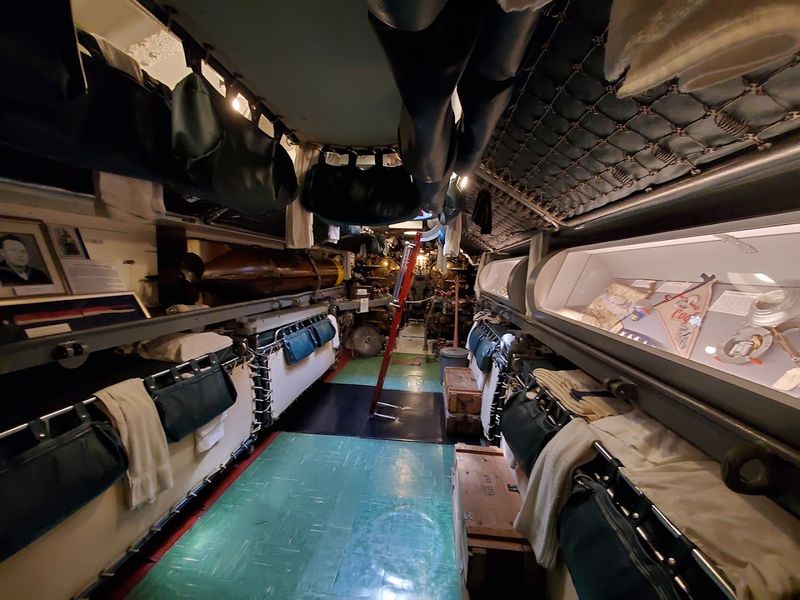
Once you are inside, the first thing you notice is how little space there is. The passageways are narrow, the ceilings are low, and equipment crowds in from every direction.
Bunks are stacked in tight rows, and the sleeping areas look almost comically small by modern standards.
Around 80 men shared this space for weeks at a time during active patrols, and standing there made me genuinely appreciate what that level of close-quarters living must have demanded from each crew member.
The kitchen area, the officers’ quarters, and the control room are all staged to look as though the crew just stepped ashore for a few hours.
Clocks are still ticking, gauges read actual lake temperatures, and personal items are placed throughout the sub to bring the whole scene to life.
Some rooms even play music from the 1940s, which adds an unexpectedly warm and human touch to a space that could otherwise feel purely mechanical.
The attention to period-accurate detail throughout the interior is something I did not expect to find at this level.
Every corner rewards a slow, curious look.
The Self-Guided Audio Tour Experience
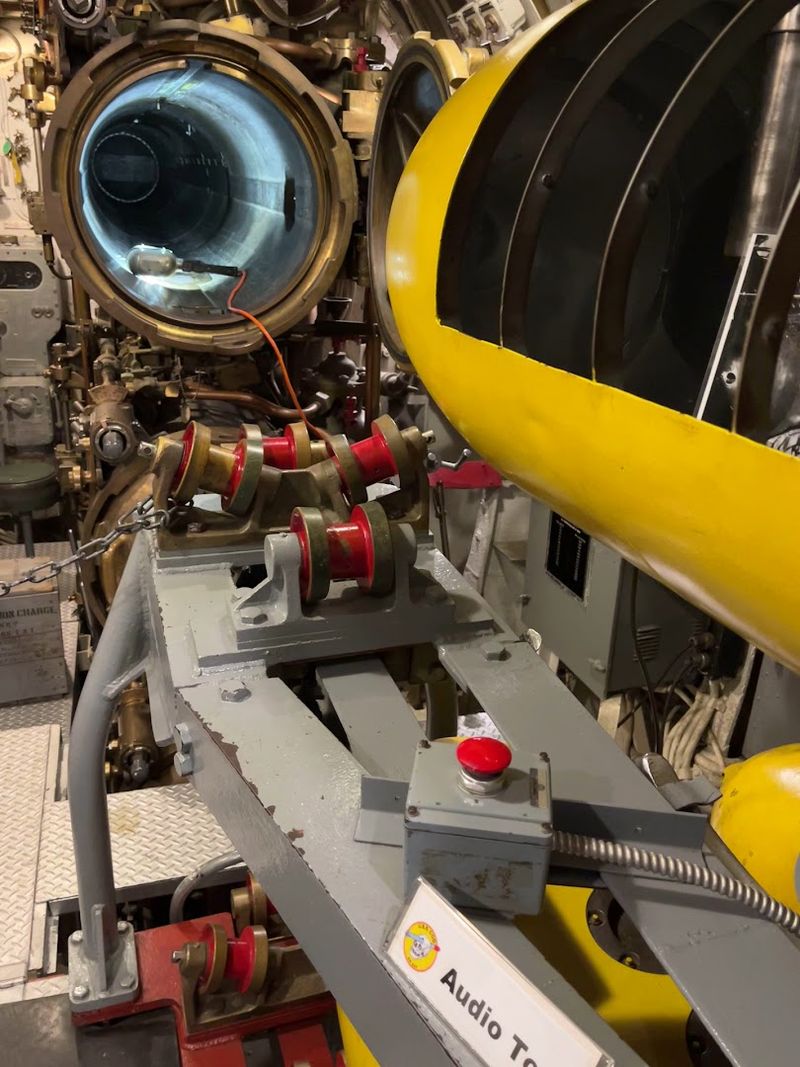
The tour format here is self-guided, which I personally loved. You move at your own pace, spending as much time as you want in each section without feeling rushed by a group schedule.
Throughout the submarine, there are clearly marked audio buttons you can press to hear recorded narrations about each area.
The recordings explain the purpose of the equipment, the daily routines of the crew, and specific moments in the Cod’s wartime history that relate to that part of the boat.
On top of the audio stations, the USS Cod also has veterans and knowledgeable staff members stationed inside who are happy to answer questions and share stories.
I had a conversation with one of them that genuinely changed how I thought about submarine warfare and the psychological demands it placed on sailors.
The combination of self-paced exploration, recorded audio, and live human interaction makes the educational experience feel layered and personal rather than rigid or textbook-like.
Plan to spend at least 45 minutes, though you could easily stretch it to an hour and a half if you engage with everything available.
Curious visitors will find more than enough to keep them busy.
The Torpedo Room Up Close
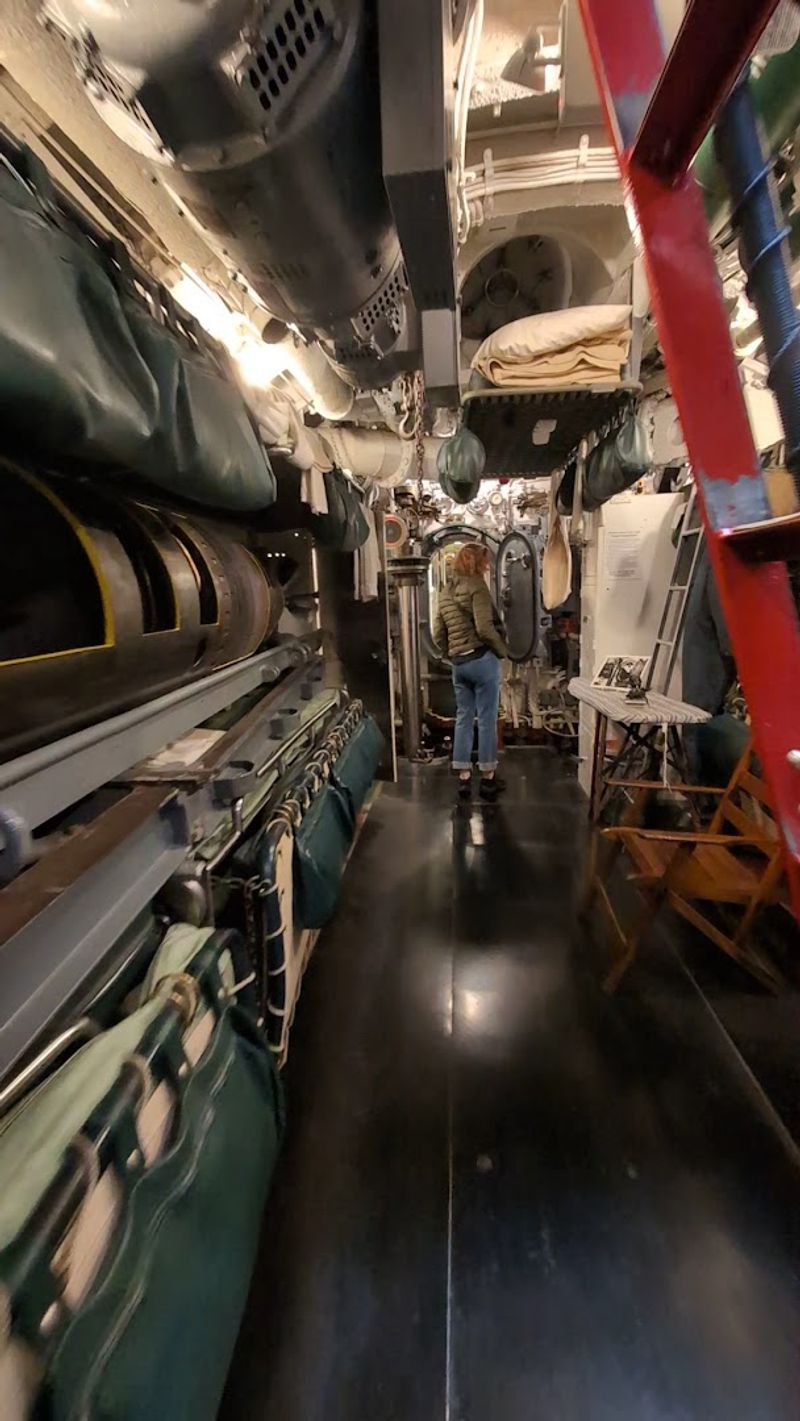
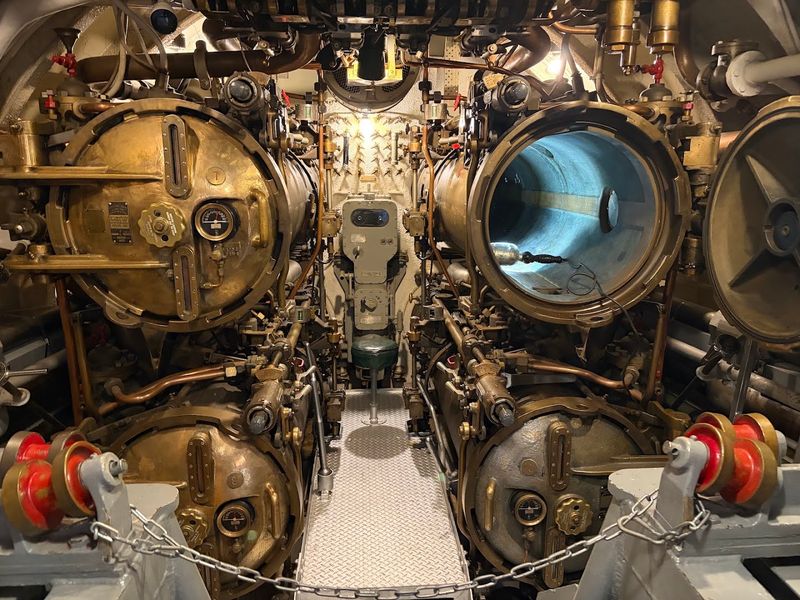
Few spaces aboard the USS Cod hit harder than the torpedo room.
Rows of gleaming torpedo tubes line the compartment, and the sheer mechanical scale of the weapons system makes the abstract concept of submarine warfare suddenly very concrete.
The torpedoes themselves were the Cod’s primary tool during its Pacific patrols, and the room is set up to show exactly how the crew loaded, aimed, and fired them.
Standing in that space, surrounded by the original equipment, you get a clear sense of the coordination and precision required to operate a submarine effectively in combat conditions.
What surprised me most was how much other gear was crammed into the same compartment.
Crew members also used the torpedo room for sleeping, working, and storing supplies, which meant the space had to serve multiple functions simultaneously at all times.
The torpedo room is one of those spots where the audio narration is especially worth using, because the recorded explanation adds context that transforms the visual display from impressive to genuinely meaningful.
It is the kind of room that stays with you long after you climb back up the ladder and step into the sunlight.
The Control Room And Periscope
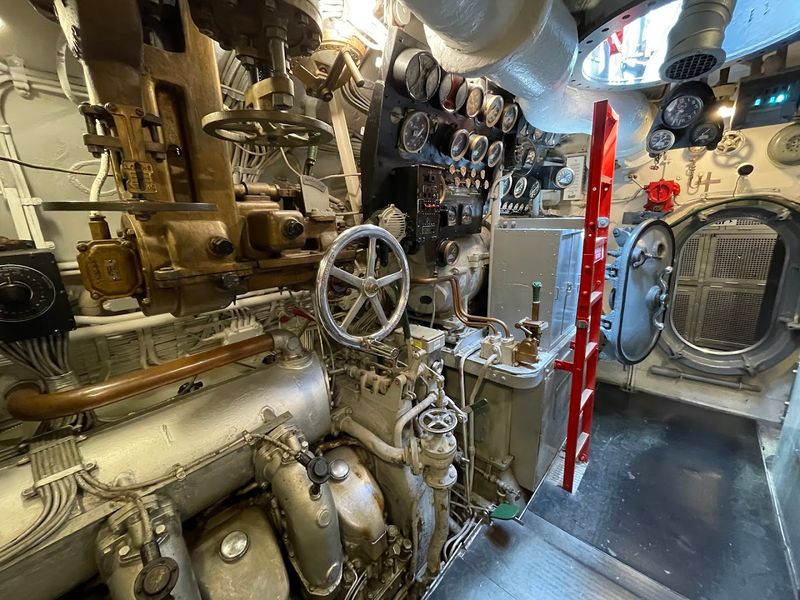
The control room is the beating heart of the USS Cod, and it is the section that tends to hold visitors the longest.
Every wall surface is covered in gauges, valves, levers, and dials, and periscope equipment remains one of the most fascinating parts of the submarine experience.
This is where the commanding officer made the calls that determined the outcome of each patrol.
The equipment looks simultaneously ancient and impressive, a reminder that the engineers who designed these systems were solving problems that had never been solved before.
I spent a good chunk of time in the control room just reading the labels on the equipment and trying to understand what each system controlled.
The audio narration here is detailed and well-produced, walking you through the diving controls, the navigation tools, and the communication systems in plain language.
Outside on the pier, a working periscope display is also available for visitors to examine and use, which adds a nice visual bookend to the experience of seeing the submarine’s interior systems in context.
The control room is the section most likely to make you stop and stare in genuine amazement at what these machines were capable of doing.
The Deck Gun And Outdoor Displays
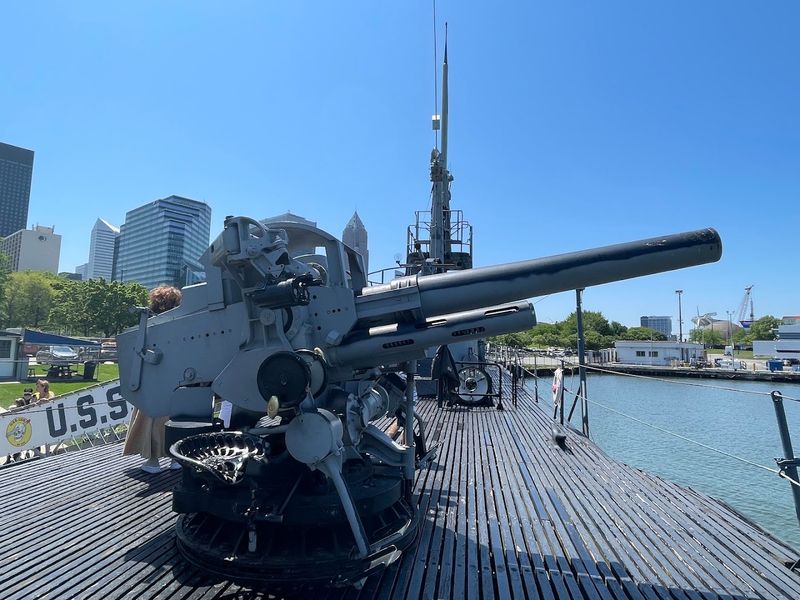
Before or after going below, most visitors spend time exploring the exterior deck of the USS Cod, and there is plenty to see up top.
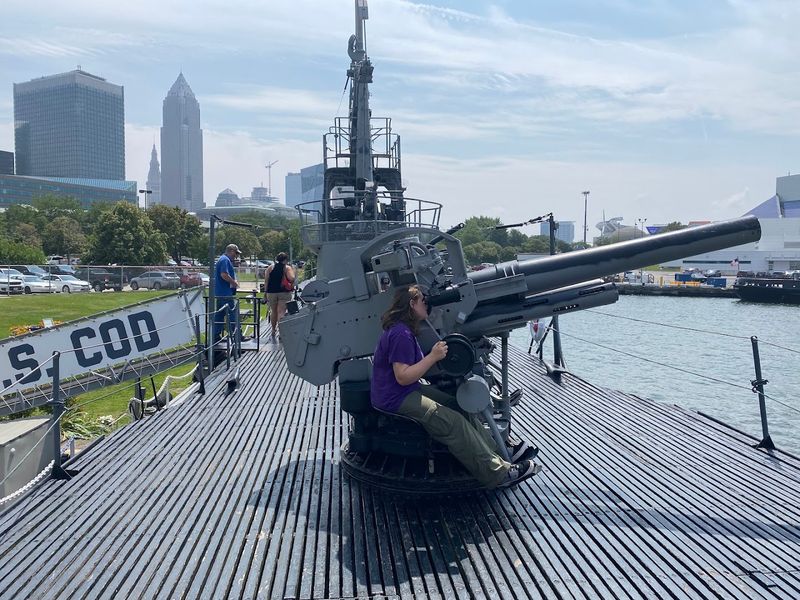
The 5-inch deck gun mounted on the forward deck is one of the most striking features of the whole memorial.
During certain events, staff members have actually fired the cannon, which by all accounts is a sound that commands the full attention of everyone within earshot.
Even when silent, the gun is a powerful physical reminder of the offensive capability this submarine carried on the surface.
Visitors are also encouraged to sit on the deck gun and move it around, which is one of those rare interactive moments that makes a museum experience feel genuinely hands-on rather than look-but-don’t-touch. That kind of access is unusual and very much appreciated.
The outdoor area also features a period-accurate jeep and the original propeller on display near the gangway. Together, these elements create an outdoor exhibit space that sets the tone perfectly before you ever descend below deck.
The combination of fresh lake air, industrial steel, and authentic wartime hardware makes the exterior of the Cod just as worth your time as the interior.
Visiting Tips And Practical Information
Getting the most out of a visit to the USS Cod takes a little planning, and a few practical details are worth knowing before you go.
The memorial’s regular tour season runs from May 1 through September 30, with out-of-season tours dependent on weather and maintenance work.
Operating hours currently run daily from 10 AM to 5 PM, with last visitors going below at 4:30 PM.
Admission is priced at $15 for adults, $13 for seniors and veterans with ID, and $9 for students in grades K-12, which is genuinely reasonable for the depth and quality of the experience on offer.
Payment information can change, but official group-tour material says checks, cash, or credit cards are accepted. Confirming current details ahead of time by calling or checking the website at usscod.org is worth the 30 seconds it takes.
Parking is available nearby, and the location along N Marginal Rd puts you close to other lakefront attractions as well.
Wearing comfortable, flat-soled shoes is strongly recommended, since the deck surfaces and ladder rungs require sure footing throughout the tour.
Why This Memorial Matters Today
There is a reason the USS Cod has earned a huge rating from visitors and counting.
This is not a replica, a recreation, or a sanitized museum version of a submarine. It is the actual vessel, preserved with remarkable fidelity to its wartime configuration.
The memorial serves as a tribute to the submariners who served aboard vessels like the Cod during World War II, many of whom never returned home. That purpose gives the whole experience a quiet gravity that stays with you well after you leave the pier.
For families, the Cod offers a rare opportunity for kids to engage with history in a way that no textbook can replicate.
Touching the equipment, hearing the audio narrations, and physically navigating the same spaces that wartime sailors used creates a kind of learning that sticks.
For history enthusiasts, military buffs, or anyone who simply wants to understand what the Silent Service actually looked like from the inside, this is one of the most rewarding stops available anywhere in the Midwest.
Ohio has a lot to offer visitors, and the USS Cod belongs near the top of any serious list.