
8 Forgotten Ohio Ruins With Creepy History Worth Exploring
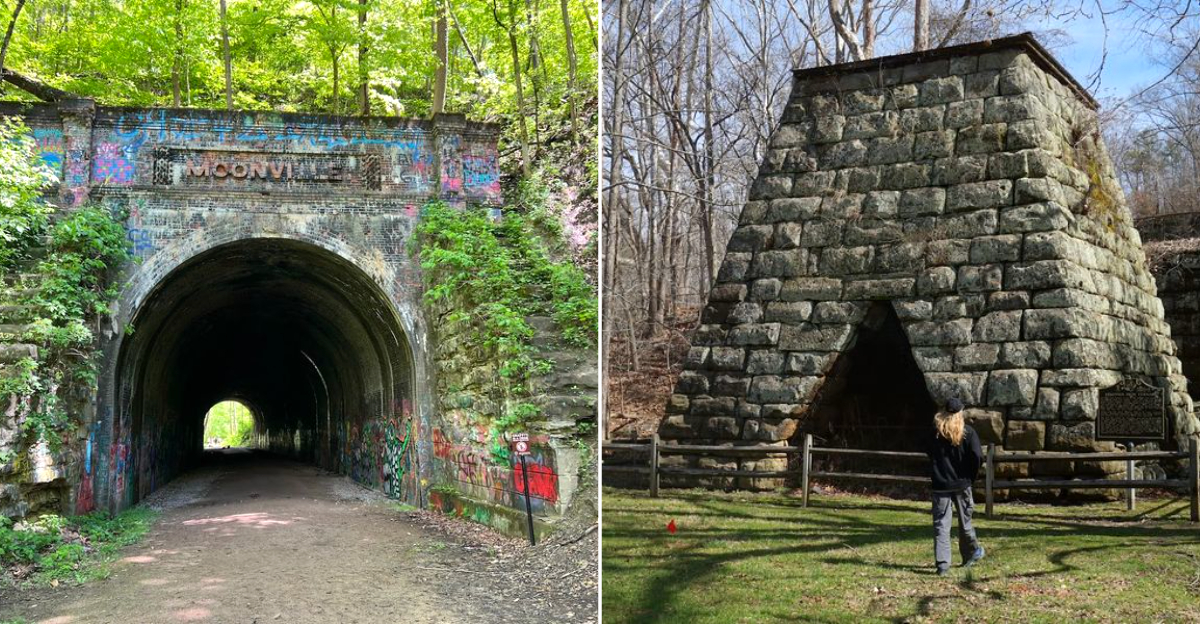
Old ruins can make a quiet walk feel different almost immediately.
You start with a trail, a stone wall, or a tunnel half hidden by trees. Then you learn what happened there, and the place suddenly feels a lot less ordinary.
Before long, you are not just looking at broken stone or empty passageways. You are standing near a ghost town remnant, an old furnace, a forgotten lock, a prison corridor, or a castle-shaped ruin with a story people still repeat.
That is what makes these Ohio spots so interesting. They are not just creepy for the sake of being creepy.
They still carry pieces of the lives, work, fear, and rumors that passed through them.
These eight forgotten ruins offer enough history, mystery, and atmosphere to make the walk stay with you longer than expected.
1. Hope Furnace Ruins, McArthur
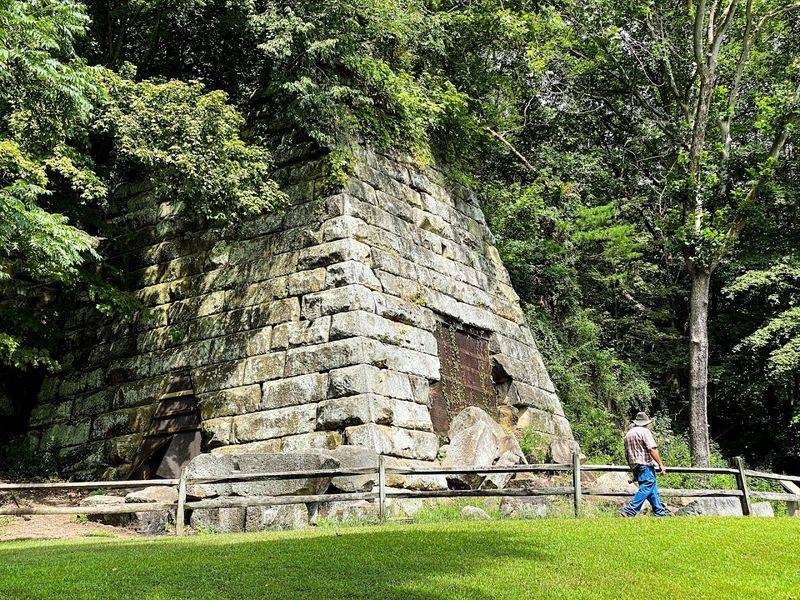
Standing quietly in the woods near McArthur along State Route 278, Hope Furnace looks like something a fantasy writer dreamed up and left behind.
The massive stone structure rises out of the trees like an ancient tower, its arched openings dark and silent where fire once roared.
Built in 1854, Hope Furnace was used to smelt iron ore during an era when Ohio’s Hanging Rock Iron Region was one of the most productive in the country.
Workers lived nearby in a small community that has since completely disappeared, leaving only the furnace as proof they were ever there. At its peak, the furnace ran around the clock, fed by charcoal from the surrounding forest and ore pulled from local hillsides.
The region’s iron industry collapsed in the late 1800s as newer technologies took over, and Hope Furnace was abandoned along with dozens of similar structures across southern Ohio.
Today it sits within the Zaleski State Forest, accessible via a short walk from a nearby parking area. The furnace is remarkably well-preserved, and getting up close lets you appreciate just how massive and ambitious the original construction was.
Visiting in the fall is especially rewarding, when golden leaves frame the stone walls and the whole scene feels like a painting. It is a quiet, thoughtful kind of place that rewards patience and curiosity.
2. Moonville Tunnel, McArthur
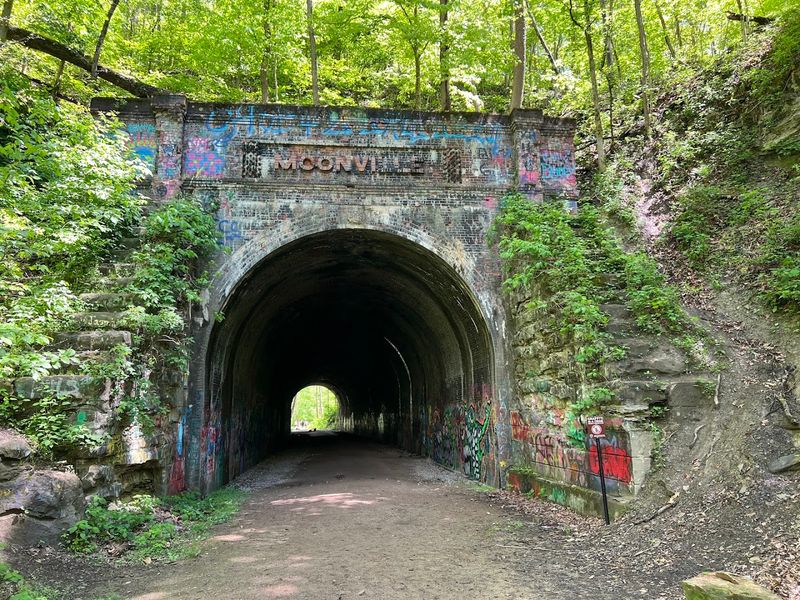
Few places in Ohio earn their spooky reputation quite as honestly as this one. Moonville Tunnel sits along Hope-Moonville Road in McArthur, deep inside the Zaleski State Forest, and it has been drawing curious visitors for decades.
Built in the 1800s to serve the Marietta and Cincinnati Railroad, the tunnel is all that remains of the ghost town of Moonville, which once housed workers and their families.
The town itself vanished long ago, but the tunnel stayed, and so did the legends. Local stories describe a ghostly light that floats through the tunnel at night, said to belong to a railroad worker who lost his life on the tracks years ago.
Whether you believe in ghosts or not, walking through that curved stone passage at twilight is genuinely atmospheric. The graffiti-covered walls, the damp smell of old stone, and the way sound echoes inside make it feel like stepping into another era entirely.
The surrounding forest adds to the mood, with tall trees pressing in on both sides of the old rail bed. The trail leading to the tunnel is about half a mile and is manageable for most visitors.
Spring and fall offer the best conditions for exploring, when the forest is either blooming or blazing with color. Wear sturdy shoes and bring a flashlight if you plan to visit near sunset.
3. Vesuvius Iron Furnace, Pedro
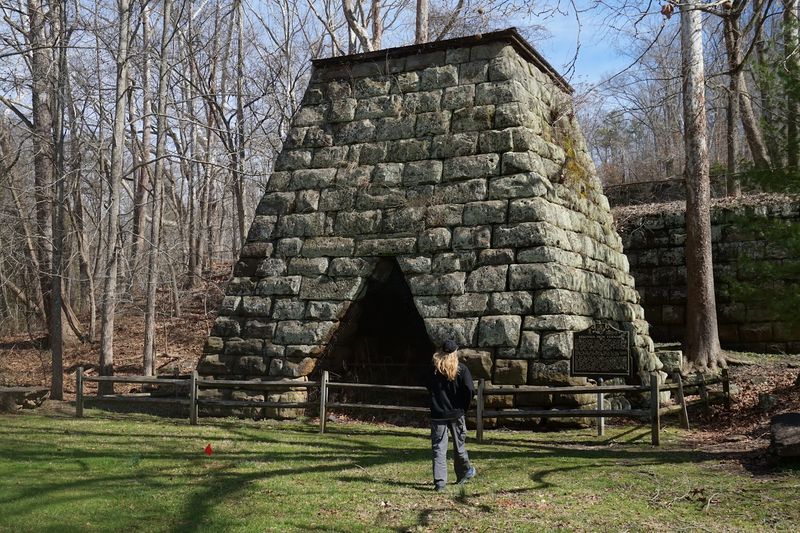
Named boldly after the famous Italian volcano, this furnace certainly had the fire to match its reputation.
Vesuvius Iron Furnace stands near Lake Vesuvius outside Pedro in Lawrence County, reached from State Route 93 by turning onto County Road 29, tucked inside the Wayne National Forest where it has been slowly reclaimed by nature for well over a century.
Constructed in 1833, Vesuvius was one of the earliest iron furnaces in the Hanging Rock region and operated for several decades before the local iron industry faded away.
The stone structure is impressively intact, rising about thirty feet and still showing the arched openings where molten iron once poured out. A small creek runs nearby, which historically provided water power to support the operation.
The surrounding forest has grown thick and lush around the ruins, creating a contrast between the rough industrial stonework and the soft, living landscape pressing in from every side.
Lawrence County has a rich industrial past that most visitors never learn about, and Vesuvius is one of the best physical reminders of that era. The Wayne National Forest maintains the site and surrounding recreation area.
The furnace sits beside the road near several hiking trails through the surrounding woodland, making it a great stop for hikers who want a little history with their nature walk. Early morning visits offer the best light and the most peaceful atmosphere.
4. Squire’s Castle, Willoughby Hills
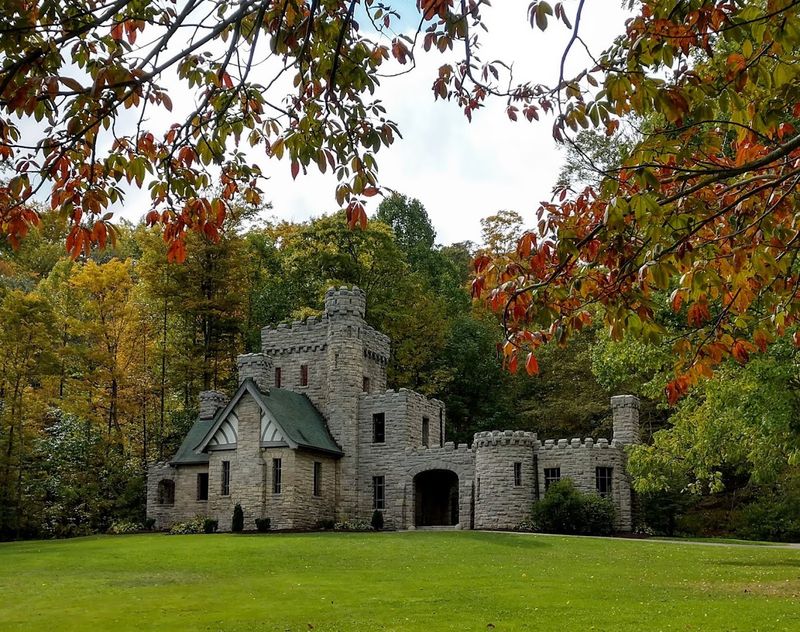
There is something wonderfully theatrical about a castle-like stone gatehouse sitting in the middle of a public park, and Squire’s Castle delivers exactly that kind of dramatic surprise.
Located along River Road in Willoughby Hills, this structure is part of the North Chagrin Reservation managed by the Cleveland Metroparks.
Feargus B. Squire, a Standard Oil executive, began building the estate in the 1890s with grand plans for a sprawling country retreat.
The stone gatehouse, which is what visitors see today, was completed, but the main mansion was never built.
Squire eventually sold the property in 1922, and the unfinished gatehouse was left to weather the decades on its own. Local legend, naturally, filled the vacuum left by history, and stories of a ghostly woman carrying a red lantern through the structure became part of the local folklore.
The castle’s interior is open to visitors who want to step inside and study the roof structure above the old stone walls. It is a genuinely striking visual, especially when light moves through the windows.
The surrounding parkland is beautiful and well-maintained, with trails winding through forest and along the Chagrin River. Families visit regularly, and the castle draws a particularly enthusiastic crowd around Halloween.
Autumn is the best season to visit, when the trees surrounding the castle turn deep red and orange and the whole scene feels almost theatrical.
5. Ohio State Reformatory, Mansfield
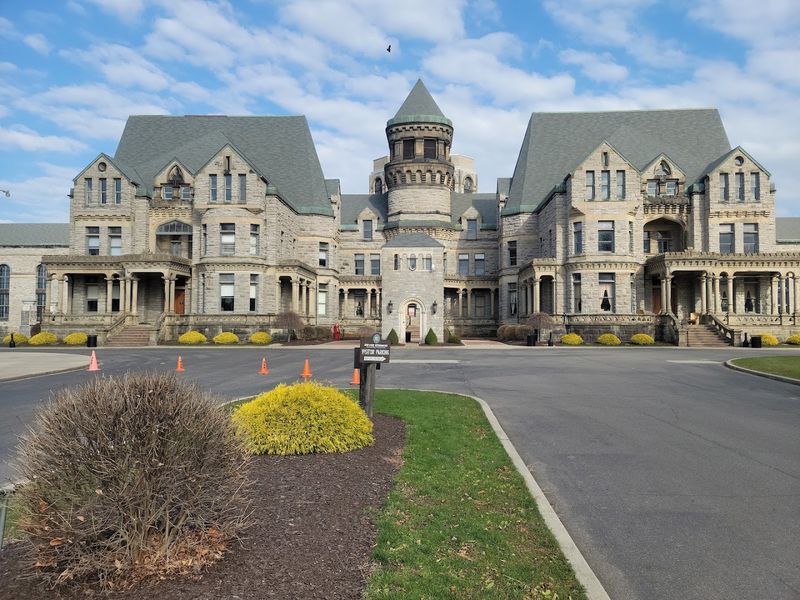
Imposing is not a strong enough word for what greets you on Reformatory Road in Mansfield.
The Ohio State Reformatory is a colossal Victorian Gothic structure that looks like it was designed specifically to make visitors feel small, and it has been doing exactly that since it opened in 1896.
The building served as a prison for nearly a century before closing in 1990, and its history includes both remarkable architecture and deeply troubling conditions that led to a federal lawsuit over inhumane treatment of prisoners.
After closing, the reformatory became famous in a very different way when it was used as a filming location for the 1994 movie The Shawshank Redemption. That connection brought a new wave of visitors who came for the movie magic and stayed for the history.
The Mansfield Reformatory Preservation Society now manages the building and offers a range of tours, from daytime historical walks to nighttime ghost tours that have made the reformatory one of the most visited haunted attractions in the Midwest.
The interior is genuinely staggering, featuring the world’s largest free-standing steel cell block, which rises six tiers high and stretches the length of a football field.
Visiting during the day gives you a clear picture of the architecture and history. The nighttime ghost tours add a layer of atmosphere that is hard to replicate anywhere else in Ohio.
6. Lusk Lock at Beaver Creek State Park, Lisbon
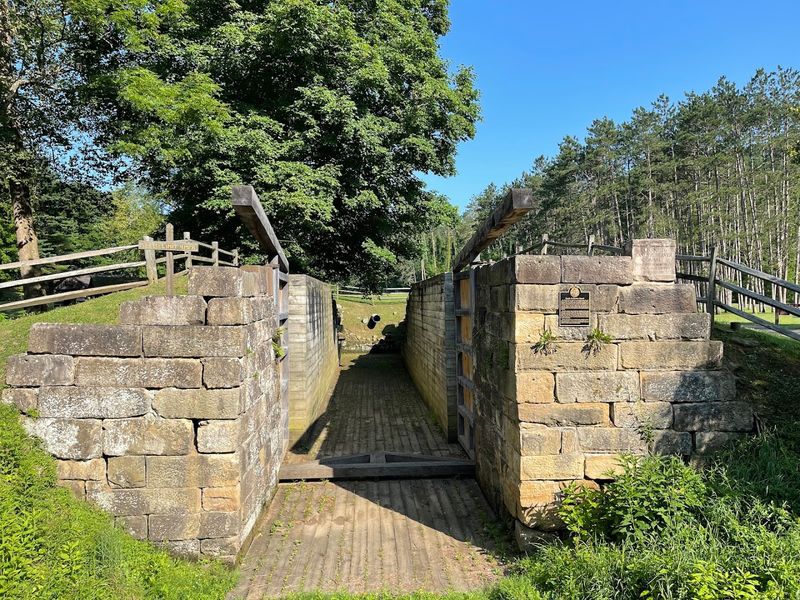
Canal history can be quietly fascinating once you know where to look, and Lusk Lock at Beaver Creek State Park is one of the best places in Ohio to look.
Located off Middle Beaver Road near Lisbon and Elkton in Columbiana County, about five miles from the park’s main Echo Dell area, this old canal lock is a remarkably well-preserved piece of industrial history tucked inside a beautiful forested landscape.
The Sandy and Beaver Canal, of which Lusk Lock was a part, was an ambitious 19th-century engineering project designed to connect the Ohio River with the Ohio and Erie Canal.
Construction was plagued by financial problems and flooding, and the canal never fully operated as intended before it was abandoned.
Lusk Lock has been standing since the 1840s. The craftsmanship in the stonework is remarkable, and the moss-covered walls give the whole site a timeworn beauty.
The surrounding section of Beaver Creek State Park includes forested scenery and access to Little Beaver Creek, offering opportunities for fishing, hiking, and wildlife watching.
The historic village of Sprucevale, located in the park’s main Echo Dell area, adds another layer of history to a wider visit. Several old buildings from the 1800s still stand there, giving the area a genuinely immersive historical atmosphere.
Fall foliage season turns the surrounding landscape into a spectacular natural display, making it the perfect backdrop for exploring the lock.
7. Lockington Locks, Lockington
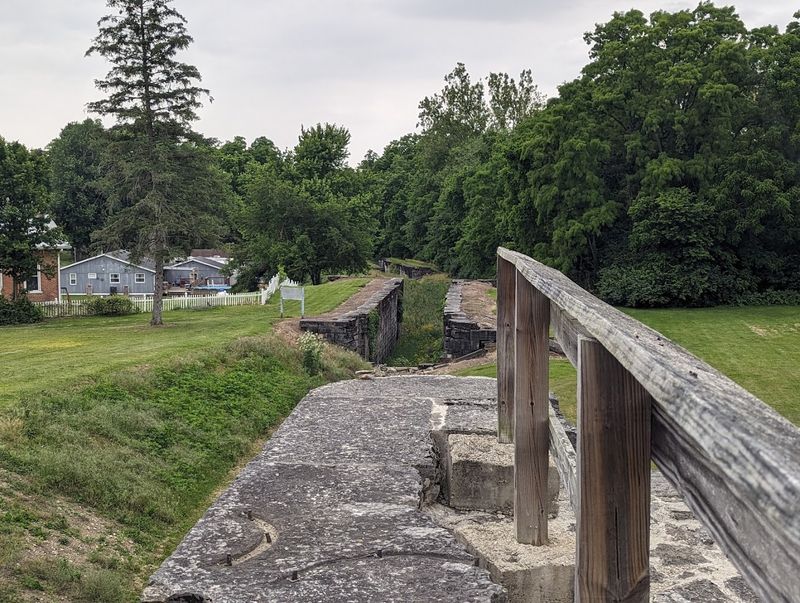
Right in the small village of Lockington in Shelby County, a remarkable flight of five stone canal locks sits along a quiet trail, largely unknown to anyone who has not specifically gone looking for them.
These are the Lockington Locks, located along Museum Trail and Cross Trail, and they represent one of the finest surviving examples of Miami and Erie Canal engineering in the state.
Built in the 1840s, the five locks form a staircase that once lifted canal boats about 67 feet in elevation as they traveled through the region. The stonework is tight, precise, and has held up extraordinarily well over nearly two centuries.
The Miami and Erie Canal was a massive public works project that stretched from Cincinnati to Toledo, transforming commerce across western Ohio during the mid-1800s. When railroads made canals obsolete, most of the infrastructure was abandoned and eventually buried or demolished.
Lockington managed to preserve its locks, and the site is now maintained as a historical landmark with interpretive signage that explains how the lock system worked.
The setting is peaceful and rural, with the old canal channel still visible alongside the locks. Walking the trail gives you a tangible sense of what travel and trade looked like in an era before engines and highways.
The site is accessible year-round and is free to visit, making it an easy and rewarding stop for history enthusiasts passing through western Ohio.
8. Frankenstein’s Castle at Hills and Dales MetroPark, Kettering
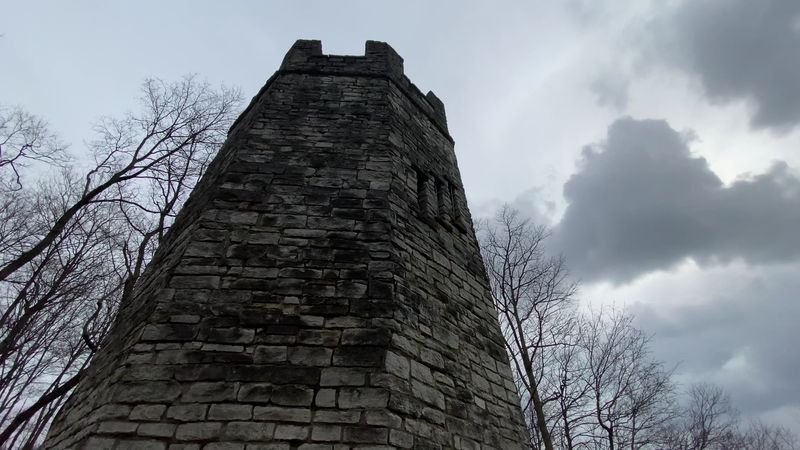
The name alone is enough to make you want to find it on a map. Frankenstein’s Castle at Hills and Dales MetroPark sits along South Patterson Boulevard in Kettering, and despite the theatrical nickname, the real history behind this tower is genuinely interesting on its own terms.
The structure is actually a lookout tower built in 1940 and completed in 1941 by workers from the National Youth Administration.
Stone salvaged from condemned buildings around Dayton was used in its construction, and the tower originally offered broad views across the surrounding landscape.
The tower’s original roof disappeared long ago, and its interior was permanently sealed following a serious lightning incident in 1967.
Its turreted stonework and wooded hilltop location helped inspire nicknames including Frankenstein’s Castle, the Witch’s Tower, and Patterson’s Castle.
Hills and Dales MetroPark itself is a lovely urban green space managed by the Five Rivers MetroParks system, offering paved and unpaved trails through a mix of open meadows and forested areas.
The lookout tower is one of the park’s most recognizable destinations.
The trail leading up to the tower is short but involves some elevation gain, and the hilltop setting is worth the effort.
Visiting around dusk gives the tower its most atmospheric quality, when long shadows fall across the old stonework and the forest below goes quiet.
It is the kind of place that rewards a slow, unhurried visit rather than a quick pass-through.