
This Hidden Monument In Arkansas Is A Must-Visit For Anyone Who Loves Quirky History
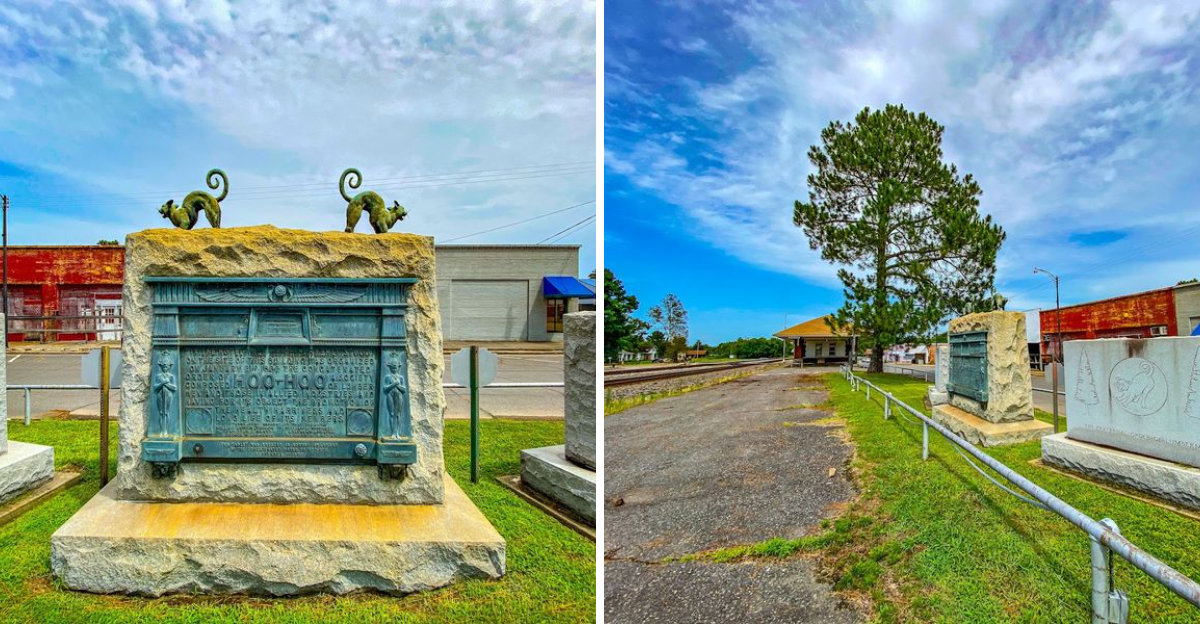
At first glance, it looks like a serious block of granite beside a quiet street. Look up, and two snarling bronze cats change the entire mood.
This quirky Arkansas monument is packed with details that seem pulled from different worlds. Egyptian-inspired carvings meet lumber history, while curled tails point to a number with meaning.
The combination should not work, yet it creates a landmark that is hard to forget. You do not need much time to explore it, but rushing past would miss the best part.
Walk around the stone and the plaques begin explaining why this unusual structure exists. Names, symbols, and sculpted figures reveal an organization that took its identity seriously without choosing an ordinary memorial.
The setting remains low-key, which makes the monument feel more surprising when it comes into view. This roadside stop proves that local history can be strange, specific, and fun to uncover.
Two Bronze Cats Watch From Above
Monuments rarely announce themselves with feline guardians, but this one does exactly that, and the effect is genuinely striking.
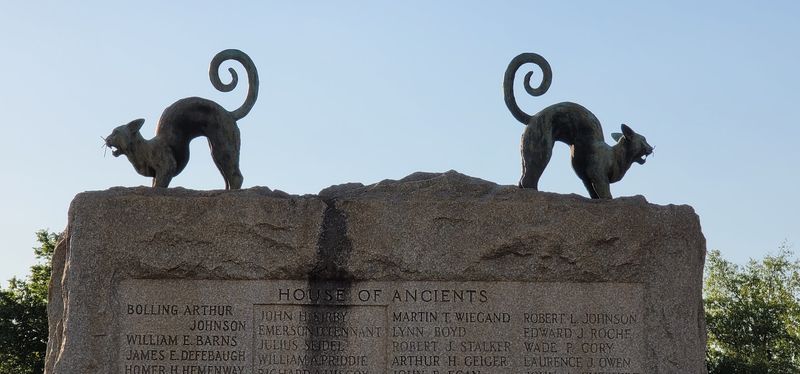
At the very top of the granite structure, two bronze cats crouch with snarling expressions, their posture alert and watchful, as if they have been assigned permanent sentry duty over the surrounding street corner.
These are not decorative afterthoughts bolted on at the last minute.
Each cat is a carefully sculpted replica of the official emblem belonging to the Concatenated Order of Hoo-Hoo, an organization rooted deeply in the American lumber industry of the late 1800s.
The craftsmanship on both figures is detailed enough that you can see the tension in their posed bodies, even from the ground below.
Bronze weathers differently than granite, and the contrast between the aged metal cats and the solid stone beneath them gives the monument a layered, almost theatrical quality.
Visitors who spot the cats first tend to do a double take, and that moment of surprised recognition is part of what makes stopping here so memorable.
The Hoo Hoo Monument, located at 109 N 1st St, Gurdon, AR 71743, earns every curious glance those two cats manage to attract.
Curled Tails Create A Curious Number Nine
Numbers can carry meaning far beyond their mathematical value, and for the Concatenated Order of Hoo-Hoo, the number nine was practically sacred.
The two bronze cats perched atop the monument have their tails deliberately curled into the shape of the number nine, a detail that rewards visitors who look closely rather than glancing and moving on.
The number nine appeared throughout the organization’s traditions, including its original officers, meeting schedule, initiation fee, and annual dues. It also reflected the symbolic nine lives of the black cat chosen as the group’s emblem.
This kind of symbolic consistency is rare in fraternal organizations, and it gives the monument a coded quality that feels almost like a puzzle waiting to be solved.
Standing at street level and tilting your head back to study those curled bronze tails, you start to appreciate the thought that went into every inch of this structure.
Nothing here was accidental or rushed.
The sculptor understood that the cats were not simply decorative but were carrying the full weight of an organization’s identity on their curling, nine-shaped tails.
That quiet intentionality is what separates a great monument from a forgettable one, and this one lands firmly in the great category.
Egyptian-Inspired Details Cover The Monument
Egyptian Revival architecture had a remarkable moment in American design during the 1800s, and whoever commissioned this monument clearly had strong opinions about embracing that style fully.
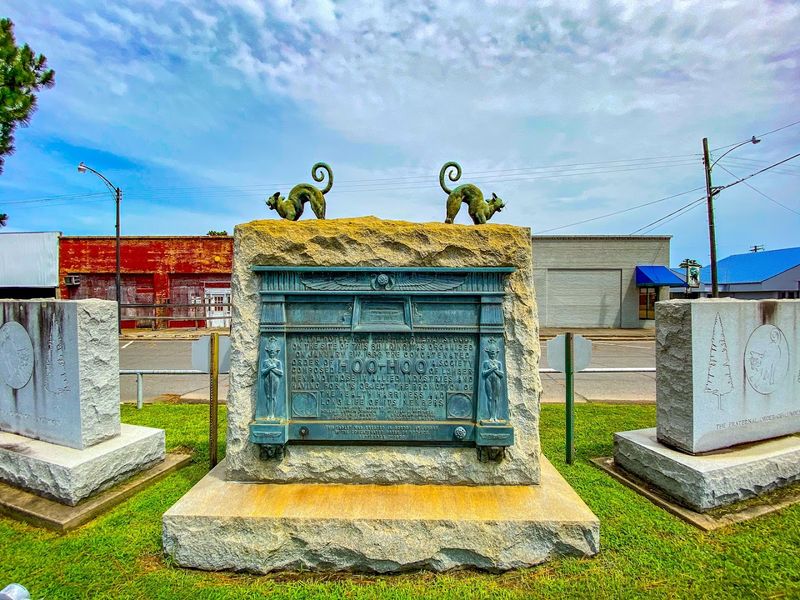
The surface of the granite block is covered in carefully executed Egyptian-inspired reliefs that transform what could have been a plain stone slab into something that looks transported from another era entirely.
A cavetto cornice runs along the upper edge, and at its center sits a winged sun-disc, one of the most recognizable symbols from ancient Egyptian iconography.
Above the main face, a pediment features a two-headed bird, an image that feels simultaneously ancient and oddly modern in its strangeness.
Twin figures of Ramses flank the cornice, standing with the formal, frontal posture characteristic of Egyptian royal sculpture.
The combination of all these elements on a single monument in a small Arkansas town is genuinely unexpected, which is precisely what makes it so rewarding to study up close.
Most people associate Egyptian Revival design with larger cities and grand public buildings, not quiet intersections in small southern towns.
Finding it here feels like stumbling onto a secret that the monument has been keeping for well over a century.
A Giant Granite Block Commands Attention
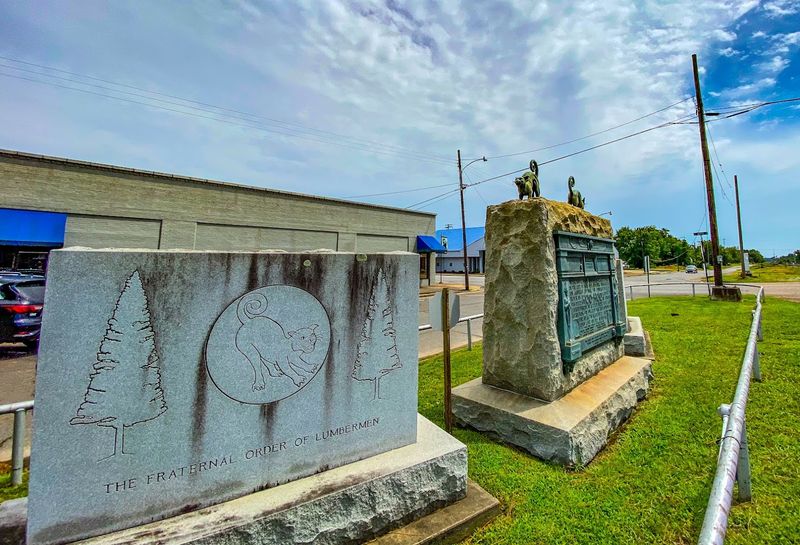
Scale matters when it comes to monuments, and this one does not apologize for its size.
The core of the structure is an ashlar-faced barre granite block that measures 116 inches high, 107 inches wide, and 44 inches deep, dimensions that make it genuinely imposing when you stand directly in front of it.
Barre granite, quarried from Vermont, is known for its fine grain and durability, which explains why this monument has survived more than a century of Arkansas weather without losing its sharp carved edges.
The ashlar facing gives the surface a clean, dressed appearance that contrasts nicely with the ornate Egyptian carvings layered on top of it.
At over nine feet tall before you even factor in the bronze cats above, the block has a commanding presence that feels deliberate and confident.
Whoever selected this material understood that the monument needed to outlast the industry it was honoring, which has largely faded from public memory.
The granite has done its job admirably, holding firm through decades of heat, rain, and the slow passage of time that erases lesser memorials.
Standing beside it, you feel the weight of intention behind every carefully chosen inch of stone.
Railroad Tracks Add To The Unusual Setting
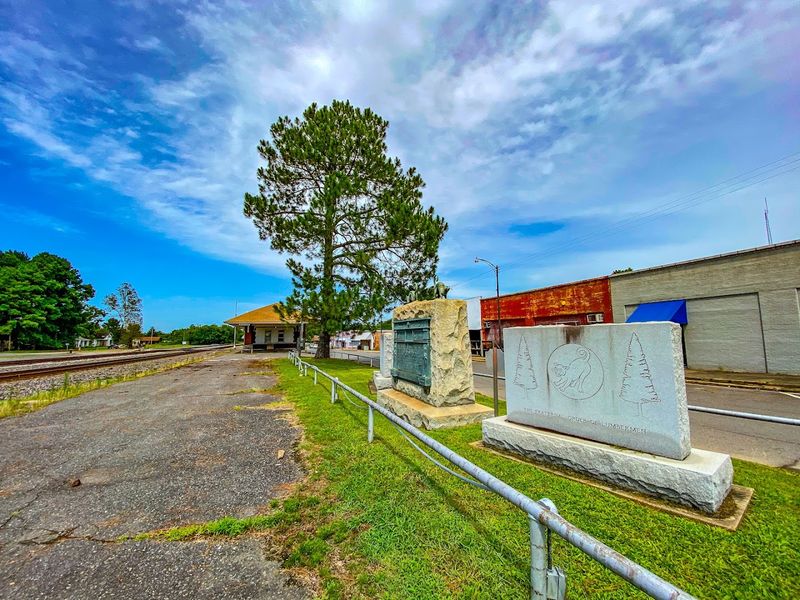
Context shapes how a monument feels, and the setting surrounding this one adds a whole extra dimension to the experience.
The structure sits adjacent to the old Missouri Pacific Railroad Depot, positioned at the southeastern corner of its parking lot, with railroad tracks nearby providing an industrial backdrop that feels entirely appropriate given the monument’s lumber industry connections.
Lumber and railroads were inseparable in 19th-century America, and seeing this monument near active rail infrastructure quietly reinforces that historical relationship without a single word of explanation needed.
The current location was established in 1927, after the original building to which the monument had been affixed was scheduled for demolition.
Rather than losing the structure entirely, someone made the practical decision to relocate it, preserving a piece of history that might otherwise have been lost to the wrecking crew.
That act of preservation says something about how the community valued what the monument represented, even decades after the lumber industry had moved on.
The railroad setting also gives the site a slightly melancholy, time-capsule quality, as if the monument is still waiting for the next freight car loaded with timber to roll through.
Patience, it turns out, is a quality shared by both granite and good history.
Bronze Panels Reveal A Forgotten Lumber Story
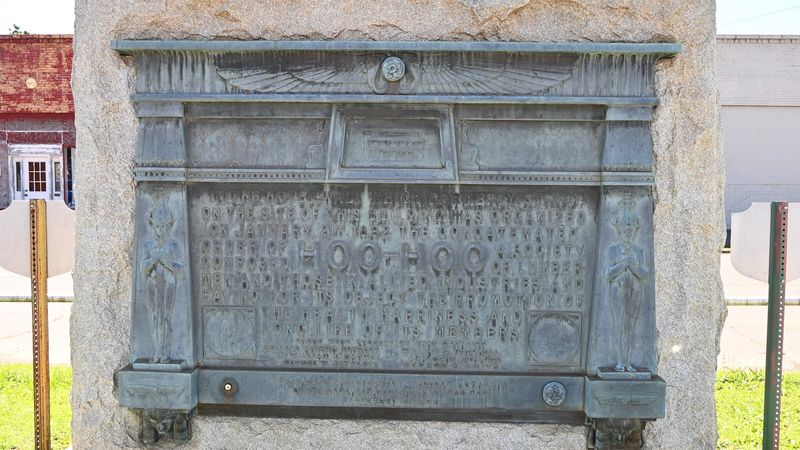
Two sides of the granite block carry bronze plaques that do most of the storytelling work, and both repay careful reading.
One plaque honors the founders of the Concatenated Order of Hoo-Hoo, includes a relief image of the original Hotel Hall where the organization was born, and spells out the group’s mission to promote the health, happiness, and long life of its members, a refreshingly optimistic goal for a lumber fraternity.
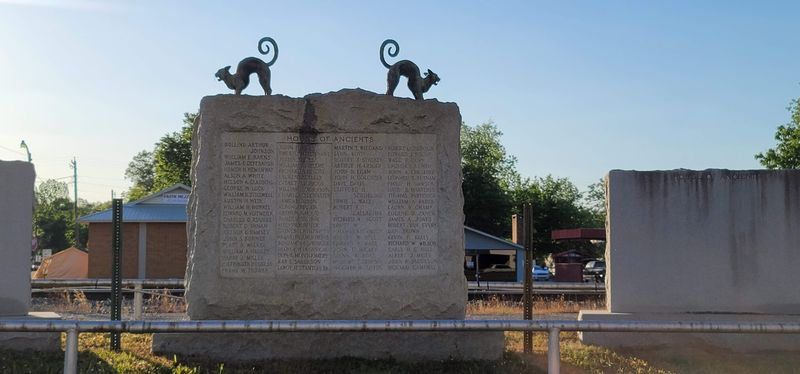
The second plaque takes a more archival approach, listing the names of past presidents, who held the gloriously absurd title of Snark of the Universe, up through 1988.
What makes these plaques especially interesting from a material standpoint is how they were made.
Members of the Hoo-Hoo Order donated copper pennies, which were then melted down and cast into the bronze panels you see today.
That detail transforms the plaques from simple memorial markers into a collective act of community, each penny representing one member’s small contribution to a shared legacy.
The Concatenated Order of Hoo-Hoo was founded in 1892 in Gurdon, making Arkansas the unlikely birthplace of one of America’s most unusually named fraternal organizations.
Every time someone reads those plaques, a forgotten chapter of American industry gets a brief, well-deserved moment back in the spotlight.
A Quiet Roadside Setting Makes It Easy To Miss
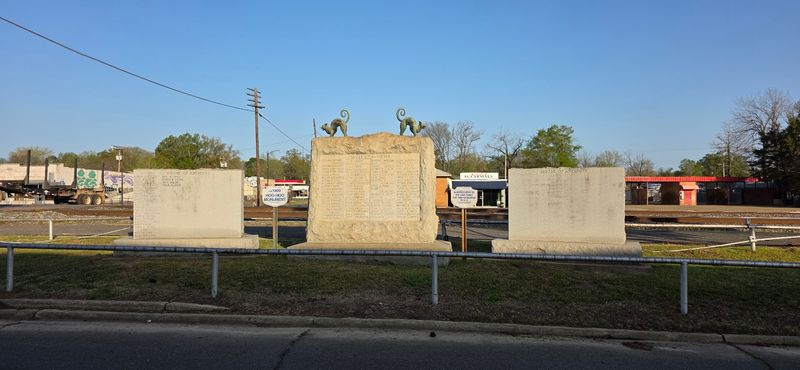
Not every great landmark announces itself with fanfare, and this one is a master of understatement when it comes to roadside visibility.
The monument stands at the intersection of North 1st Street and West Main Street, which is also Arkansas Route 53, a spot that sees regular traffic but offers no dramatic pull-off area or flashing signage to slow drivers down.
If you are moving at normal road speed without knowing what to look for, the granite block and its bronze cats can blur into the general background of a quiet small-town street corner.
That low-key quality is actually part of its charm for the kind of traveler who enjoys the satisfaction of finding something that most people have driven past without a second thought.
The full address is 109 N 1st St, Gurdon, AR 71743, and plugging that into a navigation app before you arrive is genuinely the smartest approach.
Once parked, you have all the time you need to circle the monument, read both plaques, and study the Egyptian details and bronze cats at your own pace.
The quiet setting means you are unlikely to compete with crowds for a good view.
Sometimes the best travel rewards go to the people willing to slow down first.
Smaller Markers Add Another Layer Of History
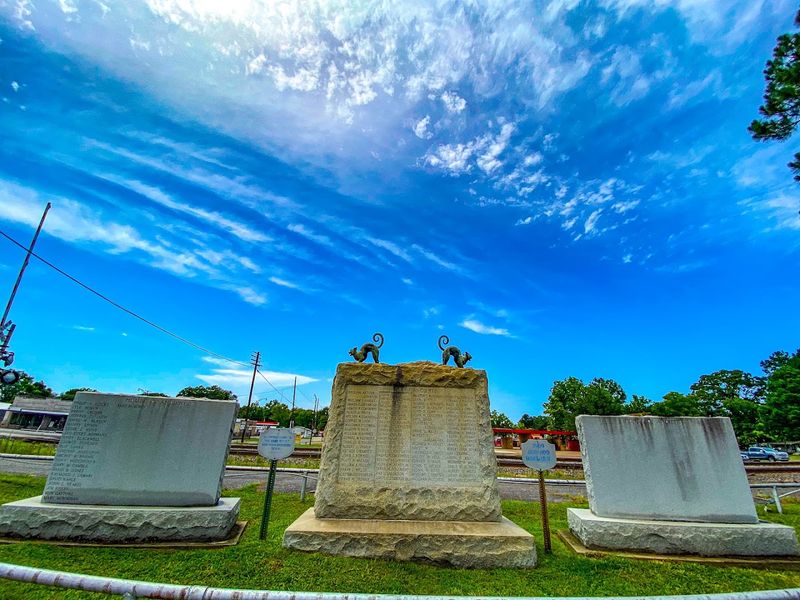
A single monument can only hold so many names before the record starts to overflow, and the people responsible for maintaining this site found a practical and respectful solution.
Two smaller granite stones have been placed on either side of the main block, each one bearing a bronze plaque that continues the list of Hoo-Hoo Order presidents from 1988 onward.
This addition means the site functions as a living record rather than a frozen snapshot of one particular moment in the organization’s history.
The smaller stones are modest compared to the towering central block, but their presence gives the overall installation a sense of ongoing care and attention that many roadside monuments sadly lack.
Seeing the continuation of presidential names beyond 1988 also confirms that the Concatenated Order of Hoo-Hoo did not simply dissolve into history after the lumber industry declined.
The organization persisted, elected new Snarks of the Universe, and made sure those names were preserved in stone and bronze alongside their predecessors.
That continuity gives the site a depth that goes beyond a single historical moment, turning it into a multi-layered record of an organization that refused to be entirely forgotten by the towns and industries that shaped it.
Arkansas keeps its quirky history close, and this monument proves exactly why that instinct is worth celebrating.