
The World’s Largest Tree-Ring Collection Is Hiding At An Arizona University
Wood you believe me if I told you the ultimate historical archive isn’t made of paper, but bark? On a surprisingly crisp morning in Arizona, I wandered into a sprawling labyrinth of timber that practically breathes centuries of ecological gossip.
We are talking about the biggest collection of tree rings on the planet, tucked away where nobody casually expects to find a botanical VIP lounge.
Every single slice of pine and fir holds a cheat code to understanding past climates, civilizations, and ancient weather tantrums. Walking through these aisles felt like being hugged by a giant wooden library with an attitude.
Let’s dive into how studying tree stumps turned out to be the coolest detective work I never knew I desperately needed.
Founded in 1937, this place turns humble slices of wood into time machines, letting researchers read the planet’s past the way you might flip through an old journal.
The Visionary Behind Dendrochronology
An astronomer who spent his nights scanning the stars ended up changing how we read the Earth itself. Andrew Ellicott Douglass never set out to become the father of dendrochronology, the scientific study of tree rings, but curiosity has a way of leading people somewhere unexpected.
While working at the University of Arizona in the early 1900s, he noticed that tree rings seemed to reflect patterns connected to solar activity and climate cycles.
His breakthrough moment came in 1929 at Show Low, Arizona, when he successfully connected living-tree ring chronologies with those from ancient archaeological wood.
That single achievement, often called “bridging the gap,” allowed scientists to date prehistoric wooden structures with pinpoint accuracy for the first time. It was a turning point that opened an entirely new scientific discipline.
Douglass officially founded the Laboratory of Tree-Ring Research in 1937, planting the seed for what would grow into the world’s premier dendrochronology institution. His legacy rings loud and clear, one annual growth layer at a time.
The questions he asked about the sky ultimately gave scientists a new calendar written inside the trunks of trees. Nearly a century later, researchers still build on the timeline he pieced together ring by ring.
Architecture That Speaks Its Purpose
Some buildings tell you exactly what they’re about before you even walk through the door.
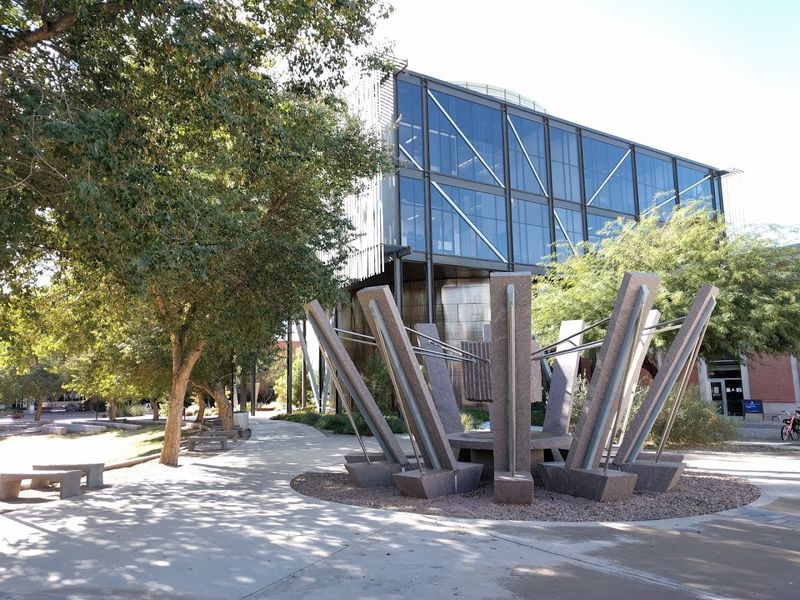
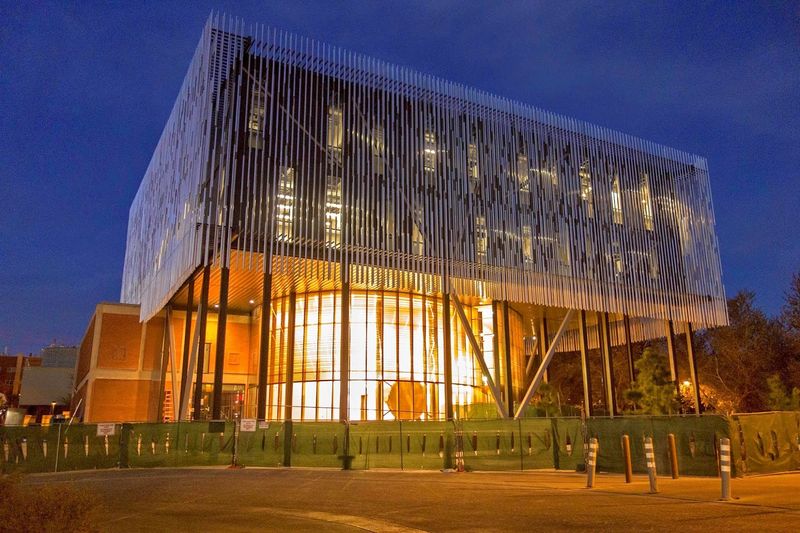
The Bryant Bannister Tree-Ring Building, opened in 2013 on the University of Arizona campus at 1215 E. Lowell Street in Tucson, Arizona, is one of those rare structures where architecture and mission are completely inseparable.
Its most striking feature is a round cylindrical tower designed to mimic the cross-section of a tree trunk, and the exterior facade echoes the branching silhouette of a native paloverde tree.
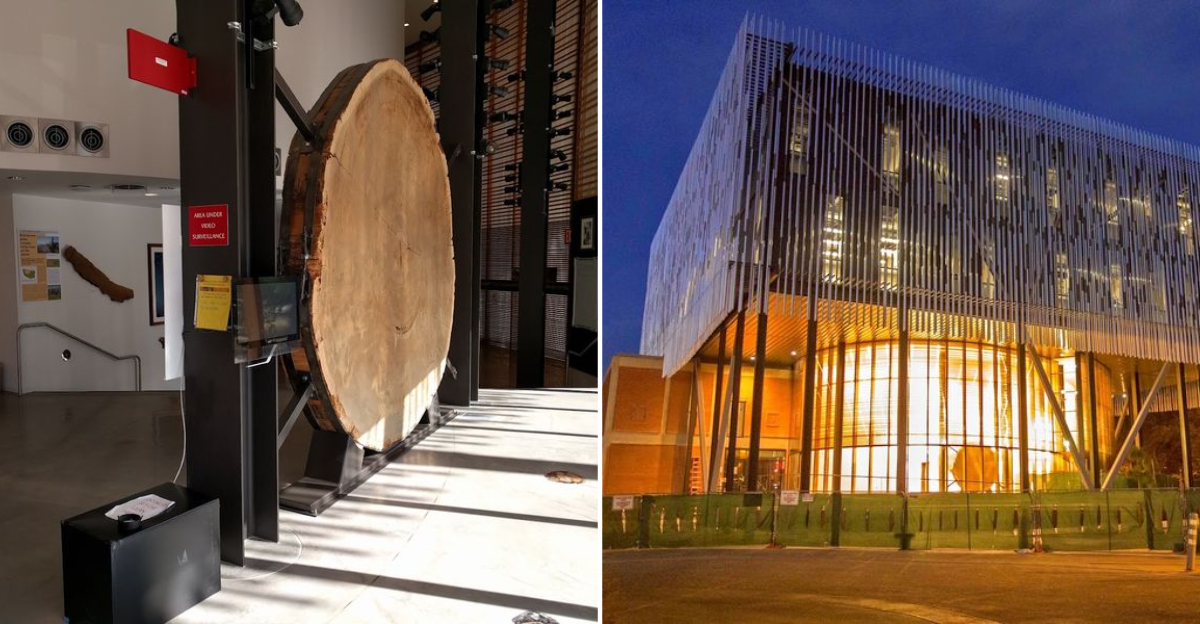
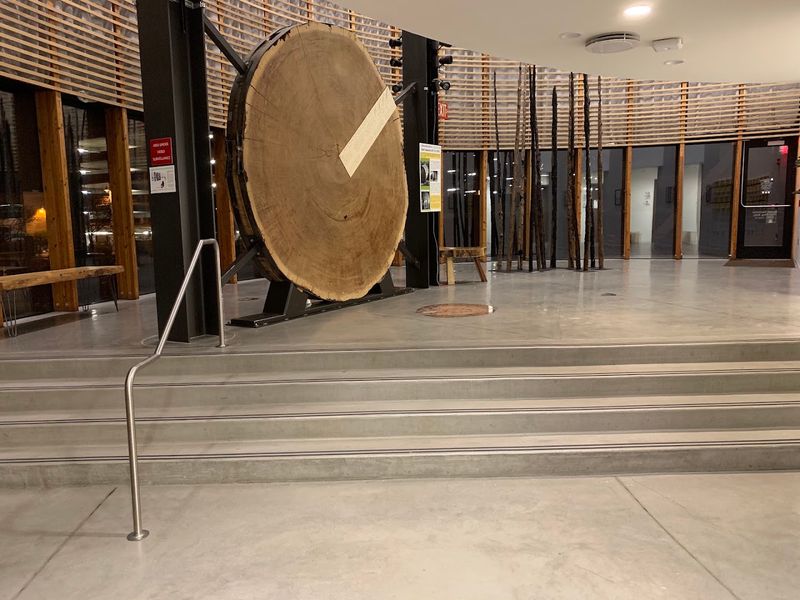
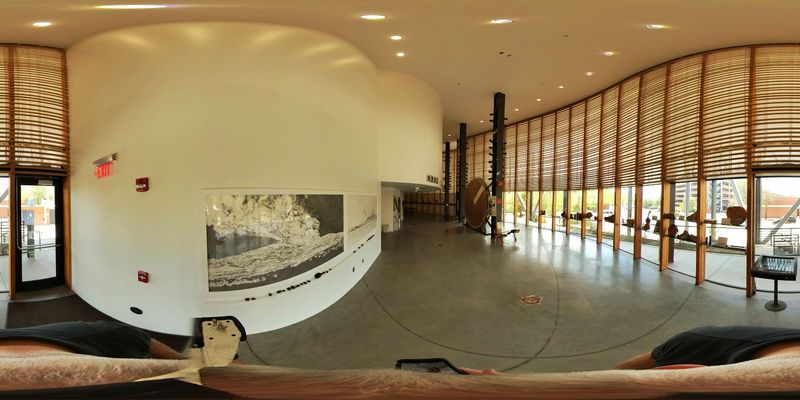
That kind of thoughtful design signals immediately that you’re entering a place where wood is not just material but meaning. Step inside and the lobby greets you with an enormous Sequoia cross-section, ten feet in diameter, representing a tree that lived from 212 CE to 1915 CE.
Nearly two thousand years of planetary history, laid out in a single breathtaking specimen.
The building was named in honor of Bryant Bannister, a former director whose contributions to the field helped elevate the lab’s global reputation. Every corner of this space feels intentional and deeply connected to its scientific soul.
Even the building itself becomes part of the lesson, turning architecture into another way of reading the natural world. Before you see the collections, the structure has already explained why tree rings matter.
4 Kilometers Of Shelving Holding Earth’s Memory
Picture a library where none of the items have words printed on them, yet every single one tells a story. That’s essentially what the Tree-Ring Archive inside the Bryant Bannister Building is.
Spanning two environmentally controlled underground floors, the archive holds over 700,000 individual samples, including wood cores, cross-sections, and ring-readable charcoal, arranged across an astonishing 4.4 kilometers of shelving.
The collection covers more than 12,000 years of continuous chronologies, making it the largest and most comprehensive tree-ring repository anywhere on Earth.
Samples have been gathered from dozens of countries across multiple continents, representing species ranging from ancient bristlecone pines to subtropical hardwoods.
Each one carries climate data encoded in its rings, waiting patiently to be read by researchers. Temperature control and humidity regulation are essential here because wood is a sensitive material, and even small environmental fluctuations can degrade irreplaceable specimens.
The lab has absorbed several other major international collections over the decades, ensuring that these wooden records of our planet’s past remain intact and accessible to scientists worldwide for generations to come.
What Tree Growth Patterns Actually Reveal
A wide ring means a good year. A narrow one signals drought, cold, or some other kind of environmental stress.
That basic principle is the foundation of dendrochronology, but researchers at the Laboratory of Tree-Ring Research take it far beyond simple counting. Each ring is essentially a year’s worth of autobiography, written in wood fiber rather than ink.
Burn scars from ancient wildfires show up as blackened blotches preserved inside the wood. Frost rings, caused by a sudden temperature drop during the growing season, appear as pockmarks or compressed cells visible under magnification.
Researchers use these details to reconstruct past droughts, flood cycles, volcanic eruptions, and long-term climate trends with remarkable precision.
The lab contributes to multiple scientific fields simultaneously, including dendroclimatology, dendrohydrology, dendroecology, and dendroarchaeology.
Their data even helps calibrate radiocarbon dating, a technique so significant it earned a Nobel Prize. Knowing that a single tree can carry this much scientific information makes standing in front of a cross-section feel genuinely awe-inspiring rather than ordinary.
How Tree Rings Unlock Archaeological Mysteries
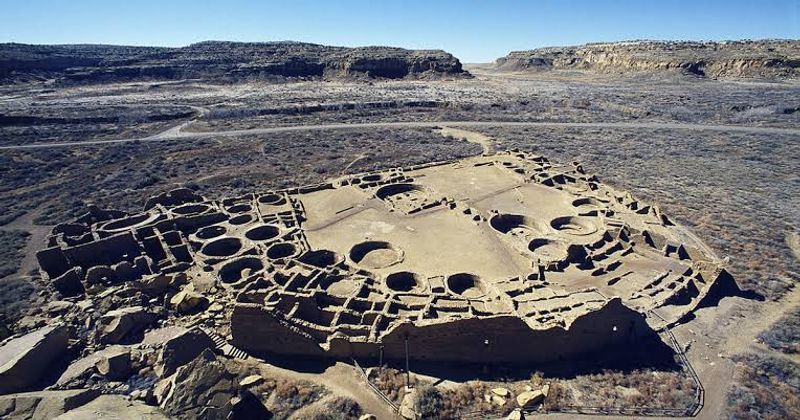
Before dendrochronology existed, dating ancient wooden structures in the American Southwest was more guesswork than science.
Thanks to the pioneering work that began at the University of Arizona, researchers can now determine the precise year a beam was cut for a prehistoric building, sometimes narrowing it down to a specific season. That level of accuracy transformed Southwestern archaeology completely.
Ancient Puebloan sites like those at Chaco Canyon and Mesa Verde have been dated with extraordinary precision using wood samples matched against the lab’s master chronologies.
Knowing exactly when a structure was built or abandoned allows historians to reconstruct migration patterns, population changes, and social upheavals in cultures that left no written records.
The wood itself becomes the primary document. This field, called dendroarchaeology, has expanded well beyond the American Southwest.
The lab’s techniques have been applied to Viking settlements, Medieval European buildings, and even ancient shipwrecks. Every new application reinforces the same powerful idea: trees were recording history long before humans started writing it down, and the LTRR knows exactly how to read those records.
Free Tours And The Exhibit Hall Experience
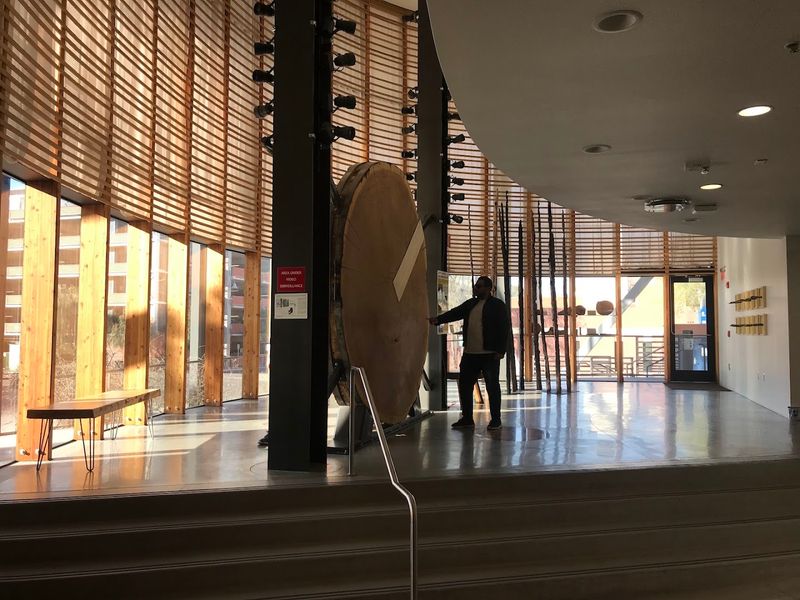
Not many world-class scientific institutions open their doors to curious visitors free of charge, but the Laboratory of Tree-Ring Research genuinely welcomes the public.
Docent-led tours run approximately 90 minutes and cover the fundamentals of dendrochronology, take guests through the Exhibit Hall, and offer glimpses into active research labs. It’s the kind of experience that makes science feel immediate and personal rather than distant and textbook-dry.
Reservations are required and can be made by emailing [email protected] or calling 520-621-0984. Groups are kept small, which means you actually get to ask questions and interact with the material rather than shuffling past behind a velvet rope.
Parking is available at the Sixth Street Garage nearby, making logistics straightforward. The Exhibit Hall also offers self-guided audio tours in English, Spanish, and Diné, reflecting the lab’s commitment to making this knowledge accessible to diverse communities.
Accessibility accommodations are available upon request. If you’re planning a trip to Tucson and want to add something genuinely surprising to your itinerary, this visit will likely become the highlight you talk about long after you’ve returned home.
A Ten-Foot Window Into Nearly Two Millennia
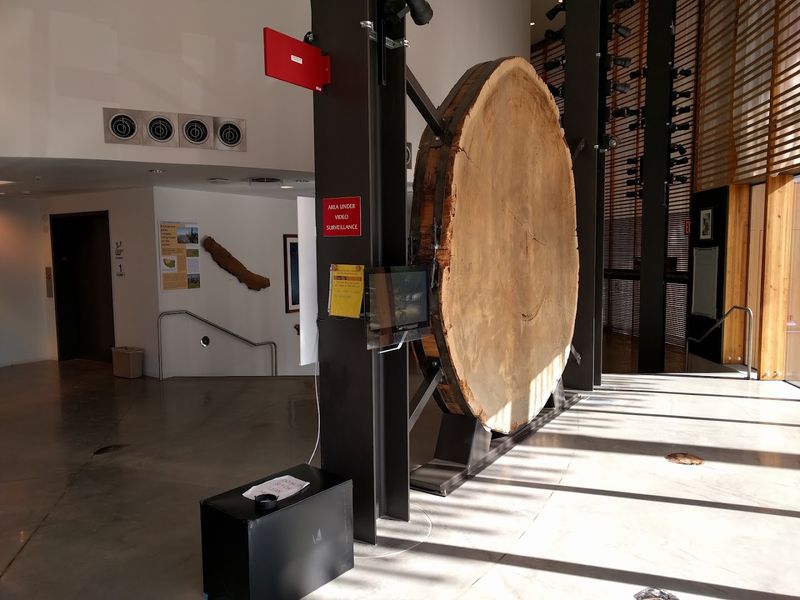
There are museum exhibits that make you stop walking and just stare, and the Sequoia cross-section in the lobby of the Bryant Bannister Building is absolutely one of them.
Measuring ten feet in diameter, this single slice of wood represents a tree that grew from 212 CE to 1915 CE, spanning nearly 1,700 years of planetary life. Running your eyes across those rings is genuinely disorienting in the best possible way.
Think about what that tree witnessed in its lifetime. It was already centuries old when the Crusades began. It kept growing through the Renaissance, the Age of Exploration, and the American Revolution.
By the time it was felled in 1915, the world had electric lights and automobiles.
Yet through all of it, the tree simply kept adding one ring per year, quietly and persistently documenting everything.
Each ring in that massive cross-section holds climate data that researchers can extract and compare against the lab’s master chronologies.
The Sequoia specimen isn’t just a showpiece; it’s a working scientific document and a genuinely moving reminder of how patient and persistent the natural world can be when left to grow undisturbed.