
11 California Experiences That Most First-Time Visitors Completely Miss
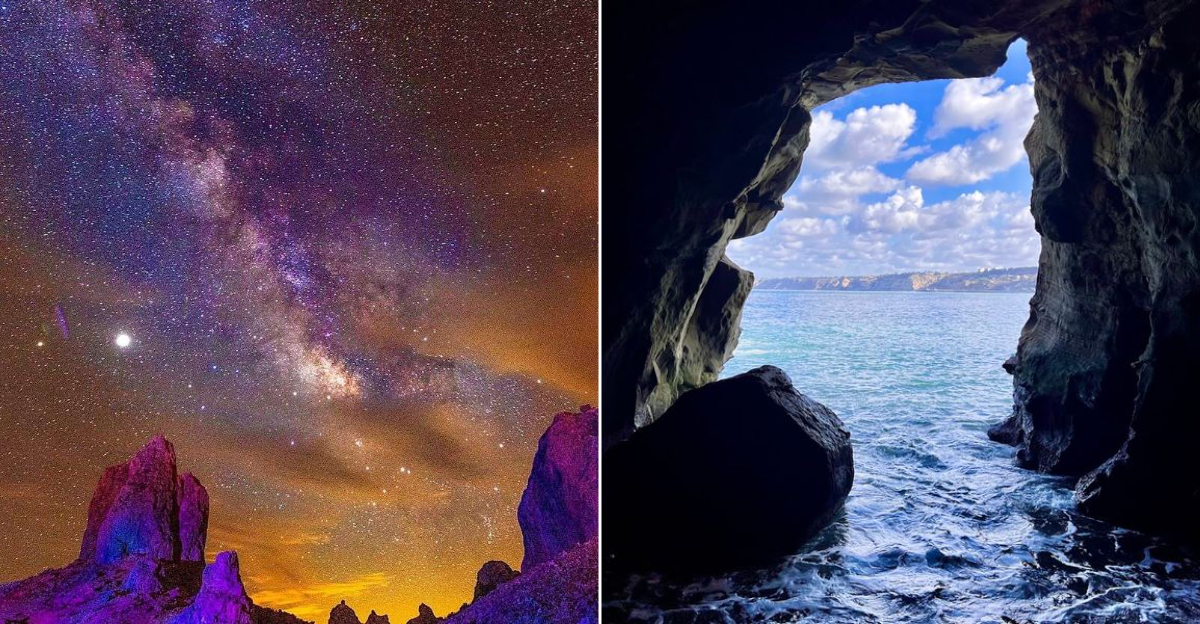
California has a funny habit of letting its biggest stars steal all the attention.
While crowds pack the beaches, theme parks, and famous landmarks, some of the state’s most unforgettable places sit quietly in the background, waiting for curious travelers to stumble upon them.
Picture climbing through colorful slot canyons with ladders bolted into the rock, walking beside ancient limestone towers that look like another planet, or wandering the shores of a lake so surreal it barely seems real.
These aren’t the California experiences you’ll find on every postcard. And that’s exactly the point.
They’re the kind of places that make people ask, “Wait… this is California?” If you’re ready to trade the obvious for the unforgettable, these hidden adventures deserve a spot on your itinerary before everyone else catches on.
1. Kayak Santa Cruz Island’s Sea Caves, Channel Islands National Park
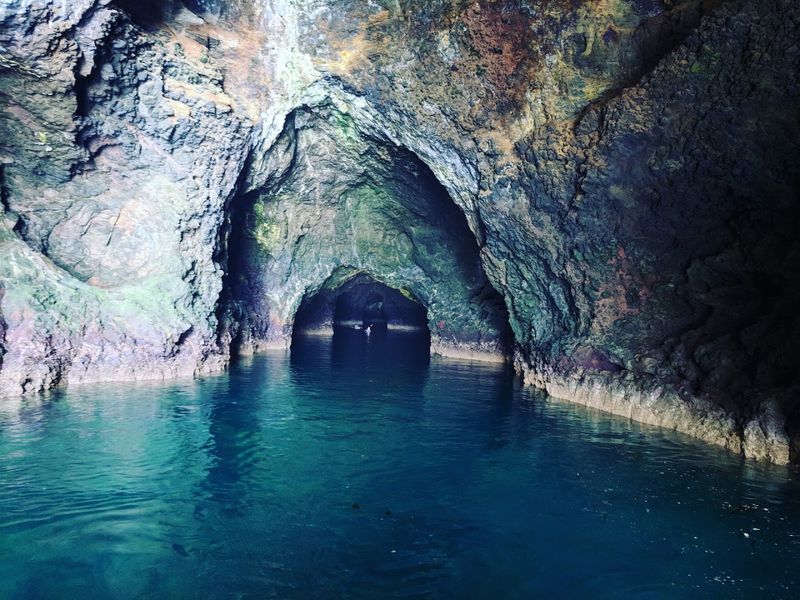
California has its own version of the Galapagos, and it’s just a ferry ride away. Santa Cruz Island, part of Channel Islands National Park, holds the highest density of sea caves of any island in the world.
Most tours launch from Scorpion Anchorage, and getting there means hopping on a ferry that feels more like the beginning of an epic adventure than a casual day trip.
The sea caves themselves are absolutely breathtaking.
Carved by centuries of relentless ocean waves, they twist and tunnel through golden sandstone cliffs in ways that feel almost impossible. Paddling through them in a kayak, with the water glowing blue-green beneath you and the cave walls rising on either side, is genuinely one of those moments that makes you forget to breathe.
Guided tours are available for all skill levels, so you don’t need to be an expert kayaker to experience this. Marine life pops up constantly, from playful sea lions to curious harbor seals.
The island sits about 25 miles off the Ventura Coast, yet it feels like a completely different world. This is Southern California at its most raw and remarkable.
2. Walk The South Tufa Loop, Mono Lake
Imagine stumbling onto a landscape that looks like it belongs on another planet, and then realizing it’s right off Highway 395 in California.
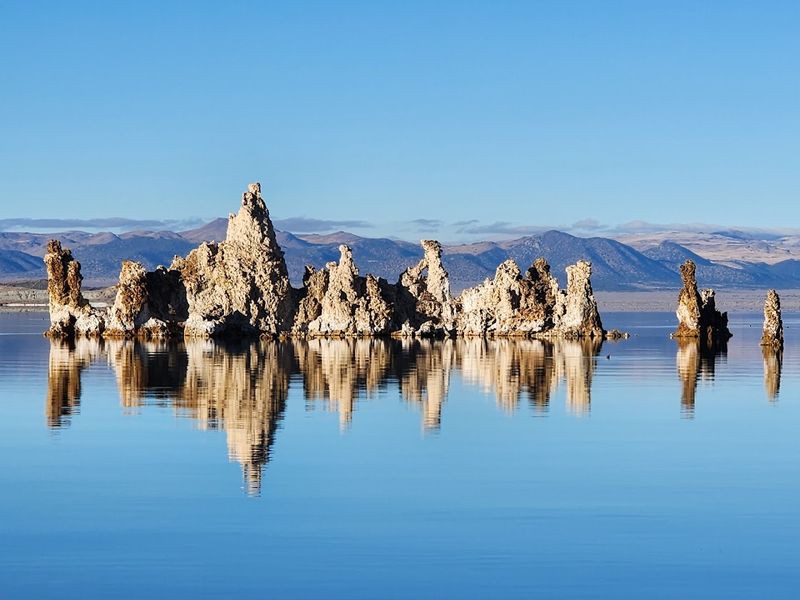
Mono Lake is one of the oldest lakes in North America, and the tufa towers that spike up from its surface are unlike anything else on Earth. These calcium-carbonate spires formed from freshwater springs bubbling up through the alkaline lake water over thousands of years.
The South Tufa area, part of Mono Lake Tufa State Natural Reserve north of Lee Vining, offers the best up-close viewing of these bizarre formations. The loop trail is easy and relatively short, making it accessible for nearly everyone.
Walking among the towers feels like wandering through an ancient sculpture garden that nature built entirely by accident.
What makes this spot even more fascinating is the ecological story behind it. Water diversions in the 20th century dropped lake levels dramatically, exposing towers that had been submerged for centuries.
Conservation efforts have since helped stabilize the water level.
Mono Lake is also a critical stopover for millions of migratory birds each year. Seeing this place in person reframes what you think California even looks like.
3. Stargaze Among The Galleta Meadows Sculptures, Borrego Springs
Borrego Springs is officially a Dark Sky Community, which means the night sky there is something out of a dream.
But before the stars come out, there’s something else entirely happening across the desert floor.
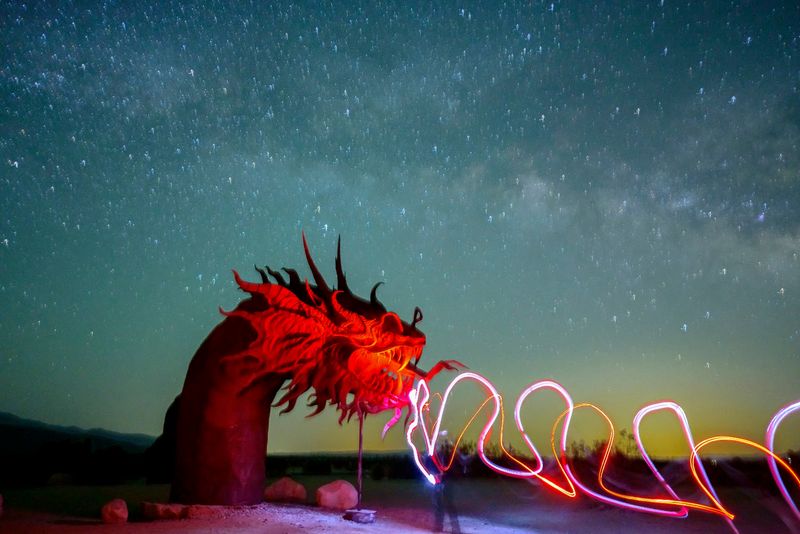
Over 130 enormous metal sculptures of prehistoric creatures and mythical beasts are scattered across Galleta Meadows Estate, turning the Anza-Borrego Desert into the most unexpected open-air art museum you’ve ever wandered into.
The sculptures were created by artist Ricardo Breceda and commissioned by a private landowner. They’re free to visit and spread across several miles of desert terrain near Borrego Springs, California.
A mammoth the size of a small building, a sea serpent emerging from the sand, a saber-toothed cat mid-stride: each piece is more jaw-dropping than the last.
As the sun goes down and the desert cools, the real magic begins. With virtually no light pollution, the sky above Borrego Springs erupts into a full display of stars, planets, and the Milky Way.
Sitting among those ancient-looking metal creatures while the cosmos unfolds overhead is genuinely surreal. It’s the kind of experience that makes you feel both very small and incredibly lucky to be alive.
4. Explore Lava Tube Caves, Lava Beds National Monument
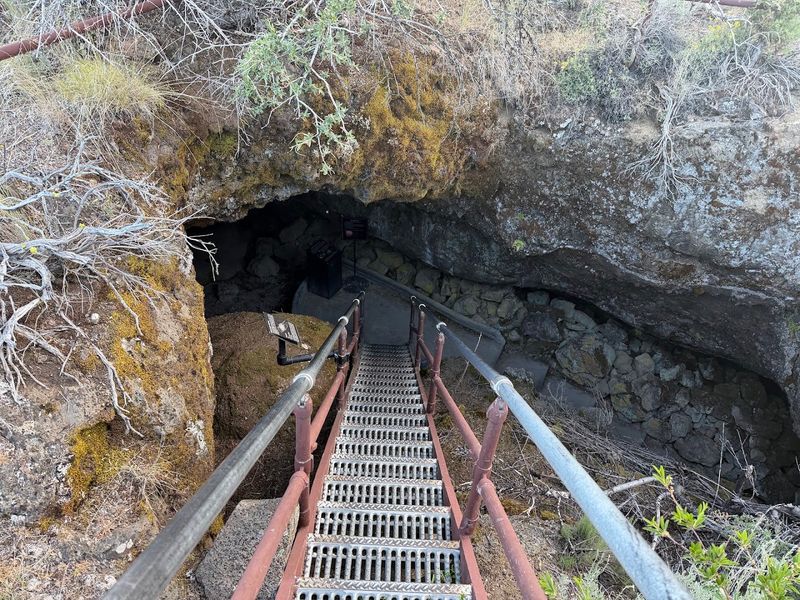
There’s something thrillingly primal about crawling into a cave that was formed by a river of molten lava thousands of years ago.
Lava Beds National Monument in far northeastern California sits on the flank of the Medicine Lake Volcano and protects one of the largest concentrations of lava tubes in North America. With over 800 caves on site, you could spend days exploring and still not see them all.
The caves range wildly in difficulty. Mushpot Cave near the Visitor Center is well-lit and perfect for beginners, while others require helmets, kneepads, and a genuine sense of adventure.
The monument is close to the Oregon border, making it a spectacular detour for anyone driving the northern part of the state. The Visitor Center loans out flashlights and provides maps to help you navigate.
Inside the tubes, the temperature drops noticeably, which feels like a gift in summer.
The walls are sculpted into incredible shapes by ancient lava flows, and some caves even contain ice year-round.
Beyond the geology, the monument also holds significant Indigenous cultural history. Lava Beds is the kind of place that rewards curiosity at every turn.
5. Hike Through Fern Canyon, Prairie Creek Redwoods State Park
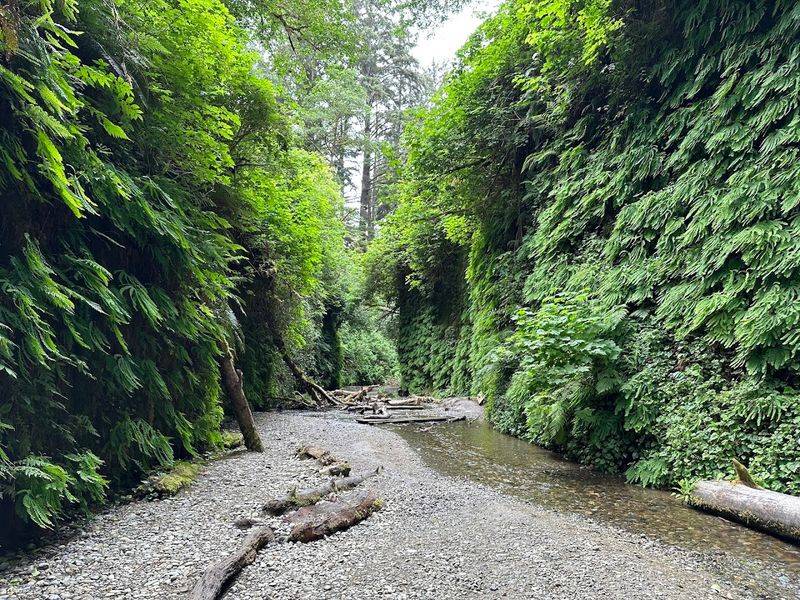
Walking into Fern Canyon feels like the world just hit a reset button back to the Jurassic period.
The canyon walls rise up to 50 feet on either side, and every inch of them is draped in five-fingered ferns, sword ferns, and lady ferns that have existed in some form for millions of years.
It’s no coincidence that Steven Spielberg chose this exact location as a filming site for Jurassic Park.
Fern Canyon is tucked inside Prairie Creek Redwoods State Park in Humboldt County, Northern California. Getting there requires a winding 10-mile drive down Davison Road off Highway 101 near Orick, and that road alone sets the tone.
During peak summer season, a day-use permit is required, so planning ahead matters. Home Creek trickles along the canyon floor, and crossing it a few times on the trail is part of the charm.
The light inside Fern Canyon is soft and green and almost otherworldly. It filters through the fern canopy and makes everything glow.
Surrounding the canyon are some of the tallest coast redwood trees on Earth, which puts the whole experience into a kind of ancient, humbling perspective. This place earns every bit of its reputation as a hidden paradise.
6. Wander Through Bodie State Historic Park, Bodie
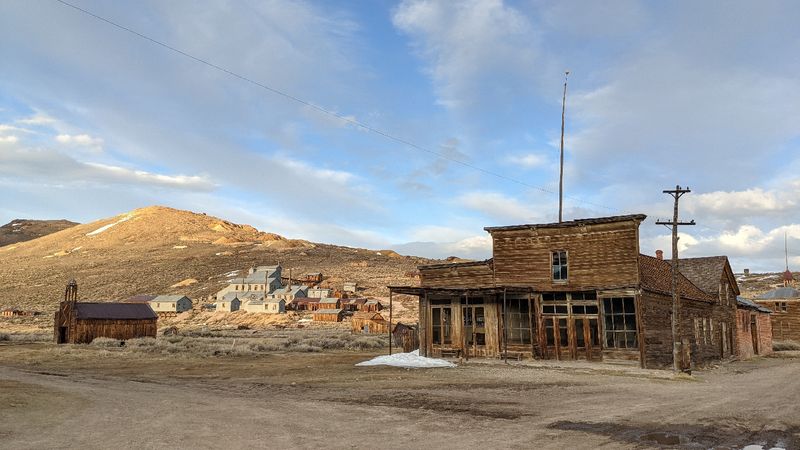
Bodie is the kind of place that makes you feel like you’ve accidentally walked onto a movie set, except everything is completely real.
This genuine California gold-mining ghost town sits in the Bodie Hills of Mono County, east of the Sierra Nevada, and it’s preserved in a state of what historians call “arrested decay.” Nothing is restored. Nothing is staged.
It’s just frozen exactly as it was left.
At its peak in the late 1870s, Bodie was home to somewhere between 8,000 and 10,000 residents. Today, over 100 original buildings still stand, including homes with dishes still on the tables and stores with goods still on the shelves.
The park is located 13 miles east of Highway 395 via State Route 270, with the last three miles on an unpaved road that adds to the adventure.
In winter, the only way to access Bodie is by skis, snowshoes, or snowmobiles, which honestly sounds incredible.
The summer months offer easier access and guided tours that bring the history vividly to life. Standing in the middle of those empty streets, with the wind blowing through the old buildings, is one of the most atmospheric experiences California has to offer.
7. Descend Into Sunny Jim Sea Cave, La Jolla
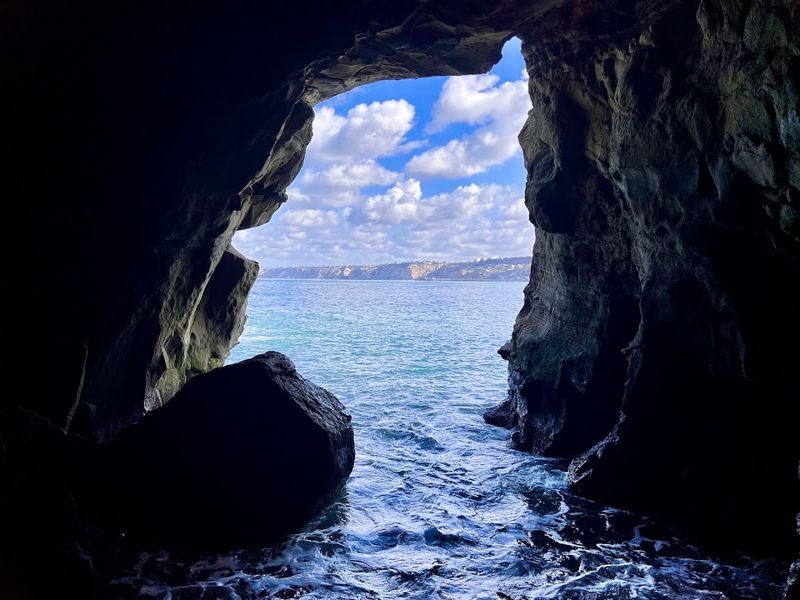
Only one sea cave in all of California is accessible by land, and it’s hiding in plain sight in La Jolla. Sunny Jim Sea Cave sits beneath the cliffs of the La Jolla coastline, and the only way to reach it is through a man-made tunnel carved directly through the sandstone bluff.
The whole setup sounds like something from an adventure novel, and honestly, it feels like one too.
The entrance is through The Cave Store at 1325 Coast Blvd in La Jolla. From there, visitors descend 145 wooden steps through a narrow tunnel that a German engineer named Gustav Schultz dug by hand back in 1902.
At the bottom, the cave opens up to reveal crashing waves, rugged rock formations, and a view of the Pacific that’s completely framed by stone.
The cave was named by none other than L. Frank Baum, the author of The Wizard of Oz, who thought the cave’s silhouette resembled a character from his stories.
Local folklore also suggests the tunnel was used as a smuggling route in the early 20th century. Whether that’s true or not, it adds a deliciously mysterious layer to an already unforgettable experience.
8. Hike Painted Canyon And Ladder Canyon, Mecca Hills Wilderness
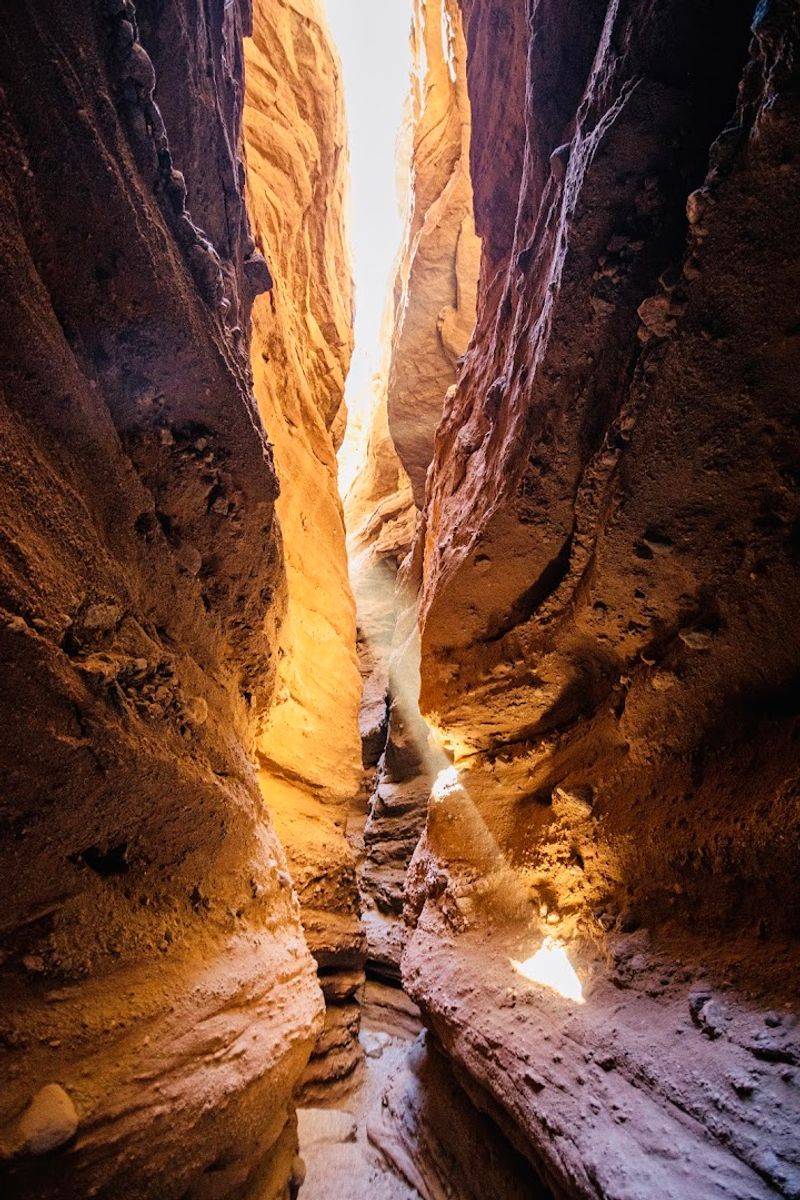
Picture squeezing through a slot canyon so narrow you have to turn sideways, then climbing a wooden ladder bolted directly into the canyon wall to reach the next level.
That’s Ladder Canyon, and it’s every bit as thrilling as it sounds. This trail in the Mecca Hills Wilderness of Riverside County, Southern California, is one of the most unique hikes in the entire state.
The trailhead sits at the end of Painted Canyon Road, accessed via Highway 195 (Box Canyon Road).
The loop combines Ladder Canyon’s dramatic slot canyon sections with the sweeping views of Big Painted Canyon, where the rock walls shift through layers of deep red, purple, orange, and gold.
The geology here is genuinely wild, shaped by the active San Andreas Fault running directly through the area.
The hike is manageable for most people with a reasonable fitness level, though the ladders do require some comfort with heights.
Early morning visits are ideal, especially in cooler months, because the canyon walls catch the light in extraordinary ways. The colors shift as the sun moves, turning the rock into something that looks almost painted.
This trail rewards every single step you take through it.
9. Explore The Trona Pinnacles, Searles Valley
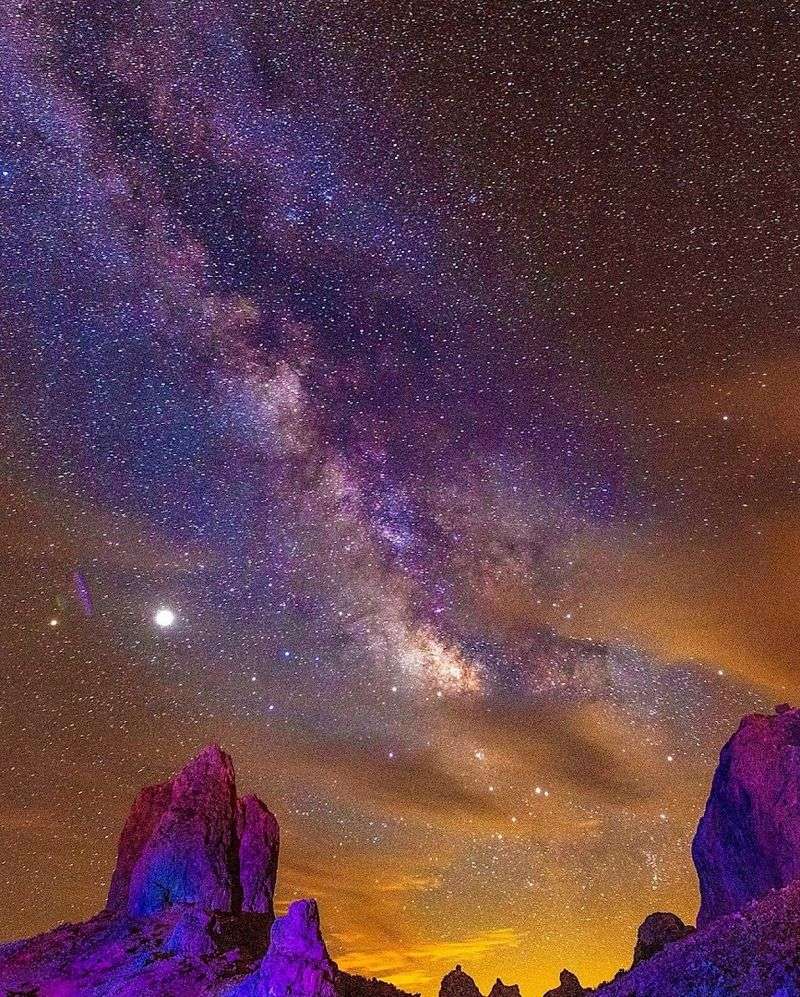
The Trona Pinnacles look like something a science fiction director dreamed up for a distant planet, which is probably why so many films have actually been shot here.
Over 500 tufa spires rise from the floor of Searles Dry Lake basin, some reaching heights of up to 140 feet. These formations are so extraordinary that they’ve been designated a National Natural Landmark by the Bureau of Land Management.
Located about 10 miles south of Trona, California, the pinnacles are accessed via a BLM dirt road labeled RM143, which connects off State Highway 178 east of Ridgecrest.
The road is manageable in most vehicles during dry conditions, though a high-clearance vehicle helps. Getting there feels like driving off the edge of the known world, which makes the arrival even more dramatic.
The pinnacles formed underwater thousands of years ago when the lake was full and freshwater springs interacted with the alkaline water, slowly building up calcium carbonate over time. Now they stand exposed and extraordinary in the open desert air.
Visiting at golden hour turns the whole landscape into something that doesn’t look real. The Trona Pinnacles are proof that California’s most stunning scenery isn’t always in the obvious places.
10. Drive The Sierra Vista Scenic Byway, North Fork
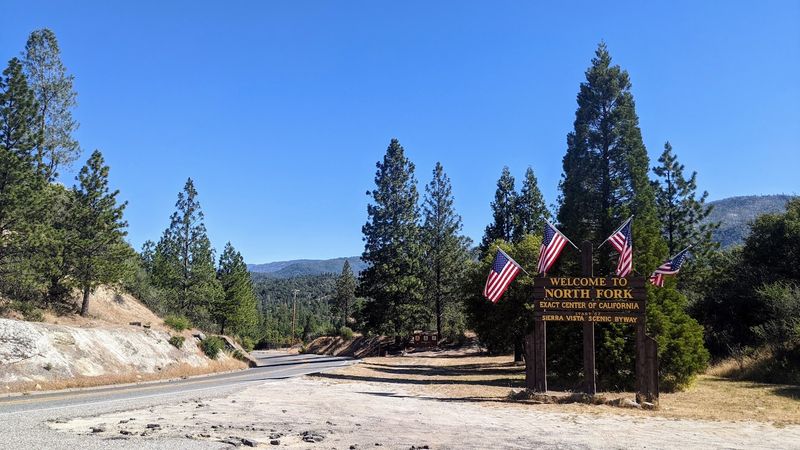
Everyone knows about Yosemite. But fewer people know about the 100-mile Sierra Vista Scenic Byway, which delivers similarly spectacular Sierra Nevada views with a fraction of the crowds.
This seasonal route near North Fork, California, winds through forests, open meadows, and past geological curiosities that feel like they were put there specifically for road trip photography purposes.
The byway is typically open from July through October, making it a summer and early fall treasure. Highlights along the route include Fresno Dome, a dramatic granite formation with panoramic views, the Nelder Grove of Giant Sequoias, and Globe Rock, a perfectly round boulder balanced on a flat granite base that looks like it defies the laws of physics.
The Sierra National Forest surrounds the entire drive.
What makes this byway special beyond the scenery is the sense of genuine solitude it offers. You can pull over at a viewpoint and have it entirely to yourself, something that’s increasingly rare in California’s most celebrated natural areas.
The route also passes through areas rich in Gold Rush history and Indigenous heritage. If you want the full Sierra Nevada experience without the traffic, this drive is the answer you’ve been looking for.
11. Walk The Tafoni-Carved Coastline, Salt Point State Park, Jenner
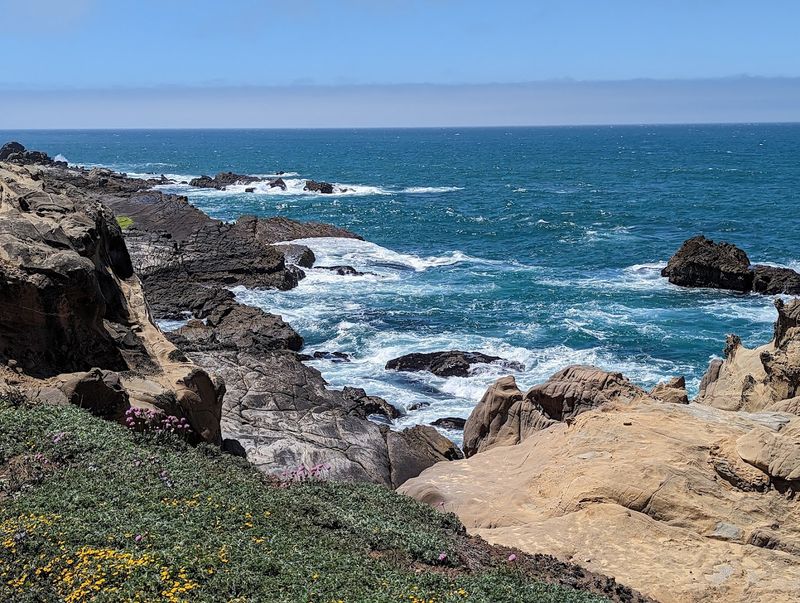
Salt Point State Park near Jenner, California, is the kind of place where the rocks themselves become the main attraction.
Along the rugged Sonoma Coast, the sandstone cliffs and boulders are covered in tafoni, a geological phenomenon where salt erosion creates deep, honeycomb-like cavities in the rock surface.
The word tafoni comes from an Italian term for cavern, and seeing these formations in person makes the name feel perfectly chosen.
The park sits within a tectonic plate collision zone, which contributes to its dramatic and unusual geology. The tafoni formations here are among the best-developed examples in the world, drawing geologists and curious travelers alike.
Walking the coastal trail, you’ll find yourself stopping constantly to peer into the pockets and chambers carved into the rock faces.
The exact process that creates tafoni is still not fully understood by scientists, which gives the whole experience a wonderfully mysterious quality. Beyond the geology, Salt Point also offers stunning ocean views, kelp forest diving, and abalone habitat.
The combination of scientific intrigue, coastal beauty, and wild Pacific energy makes this stretch of coastline genuinely unforgettable.
California has a way of hiding its most extraordinary features in plain sight, and Salt Point is the perfect example of that.