
Washington Built A 7,708-Foot Highway That Floats On Water
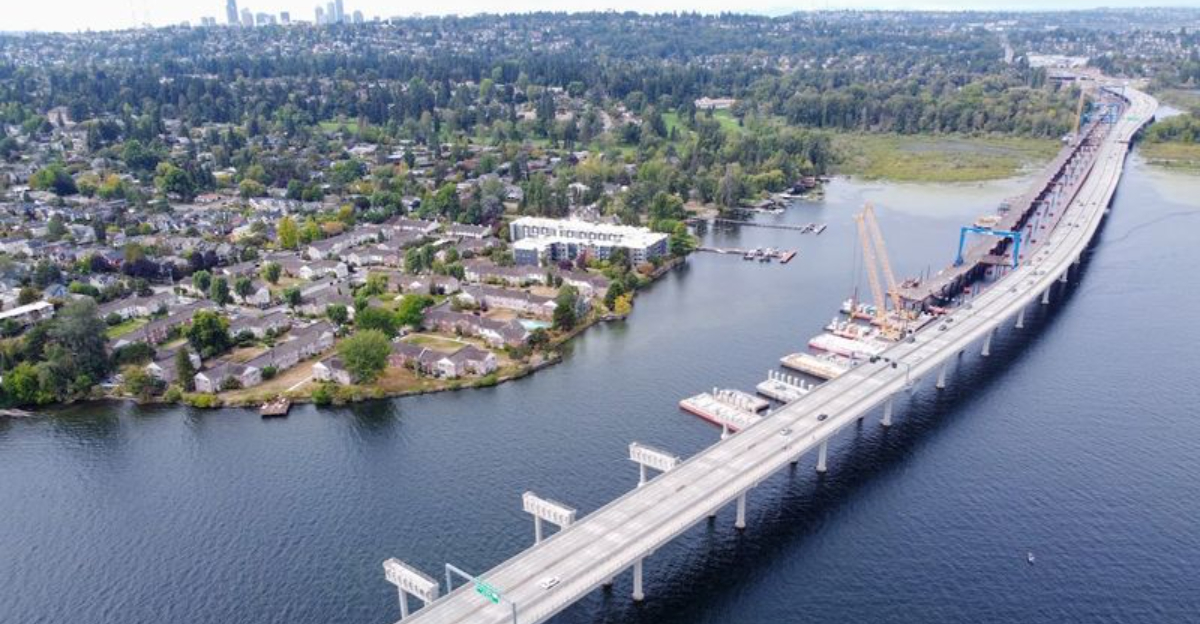
Have you ever driven down a highway and suddenly realized, with a tiny panic attack, that you are essentially piloting a multi-ton metal box across a giant floating bathtub?
Welcome to my daily commute across Washington, where civil engineering apparently decided to take a page out of a cartoon playbook and build a road on actual water.
When I first encountered the gargantuan 7,708-foot floating bridge connecting the high-rises of the city to the leafy suburbs of Medina, I gripped my steering wheel so tightly my knuckles turned white.
I kept waiting for a rubber ducky to bob past my windshield. Yet, despite my initial dread, there is something undeniably thrilling about hurtling across Lake Washington at seventy miles per hour on a structure held up entirely by buoyancy and sheer architectural audacity.
It is equal parts terrifying and awe-inspiring, proving that humans will literally pave the ocean just to avoid rush hour traffic.
The Record-Breaking Length That Made History
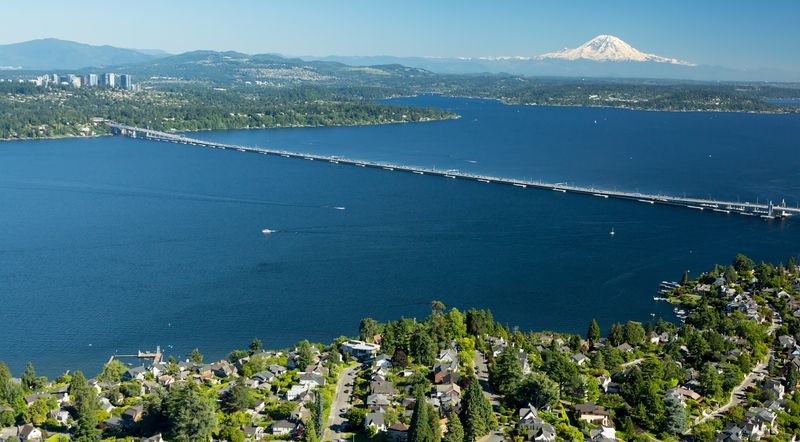
At 7,708.5 feet from end to end, the SR 520 Floating Bridge is officially the longest floating bridge on the planet, a title confirmed by the Guinness World Records. That distance is roughly the length of 26 football fields laid end to end, which gives you a real sense of just how massive this structure is.
What makes this record even more fascinating is that the bridge it replaced was also a floating bridge in the same location, and that older span held the same world record before it. Washington State essentially broke its own record when the new bridge opened to traffic in April 2016.
The floating span alone measures 7,710 feet, making it longer than many bridges are in their entirety. Crossing Lake Washington in a car takes only a few minutes, but those minutes carry the weight of extraordinary human achievement beneath your tires.
This bridge quietly reminds every driver that engineering ambition has no ceiling.
77 Pontoons Keeping It All Afloat
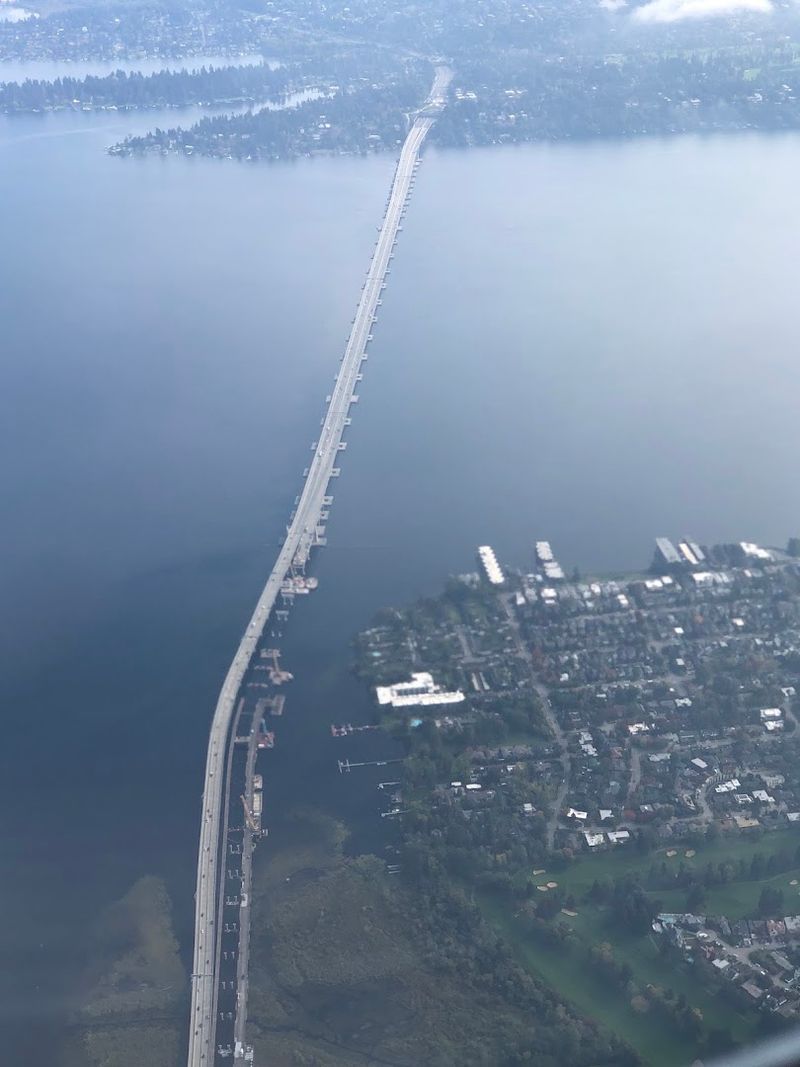
The secret to this highway floating on water comes down to 77 watertight precast concrete pontoons sitting just below the surface of Lake Washington.
These pontoons act like giant sealed boxes, trapping air inside and creating enough buoyancy to support the entire roadway, its traffic, and all the structural weight above.
The 21 largest pontoons are genuinely jaw-dropping in scale. Each one stretches 360 feet long, 75 feet wide, and nearly 30 feet tall, weighing a staggering 11,000 tons.
They were precast in Aberdeen, Washington, then towed approximately 400 miles through open water before being carefully positioned and assembled on Lake Washington.
Imagine watching one of those enormous concrete boxes being guided across Puget Sound toward its final resting place.
The logistics alone required months of planning and precise marine engineering. Each pontoon had to be perfectly sealed, perfectly positioned, and perfectly connected to its neighbors to create a stable, continuous floating platform. The result is a road that feels rock solid despite sitting on water.
58 Anchors Holding The Bridge In Place
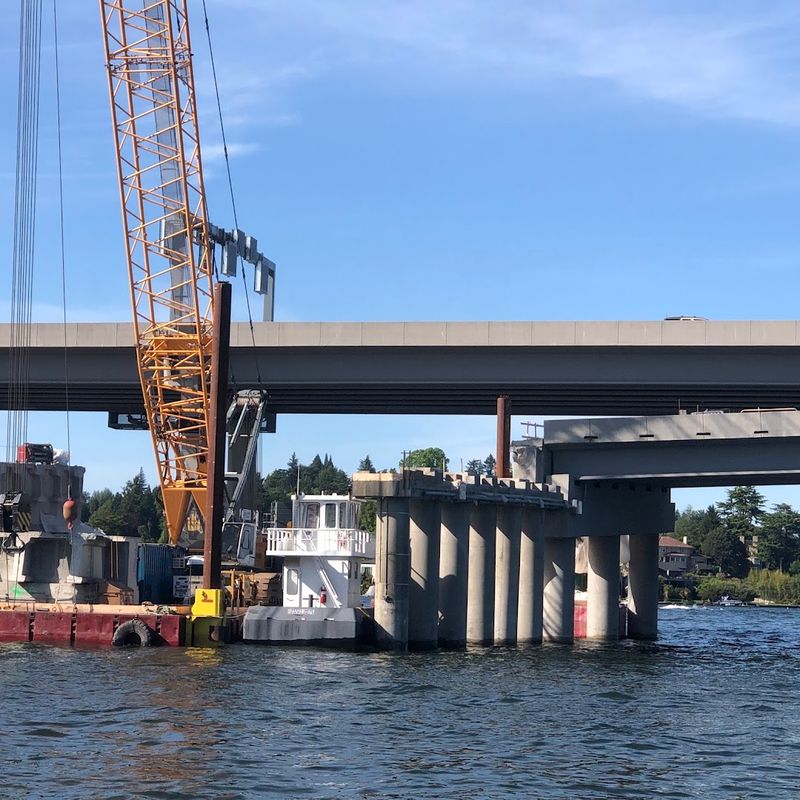
Floating on water sounds peaceful until you consider wind, waves, and the constant push and pull of a lake. Keeping a 7,708-foot bridge from drifting requires a serious anchoring system, and the SR 520 bridge delivers with 58 large anchors embedded into the floor of Lake Washington.
The anchor lineup includes 45 precast concrete fluke anchors, 8 precast concrete gravity anchors, and 5 cast-in-place drilled shaft anchors.
Steel cables, some stretching up to 800 feet long and more than 3 inches thick, connect the pontoons directly to these anchors, holding everything firmly in position no matter the conditions on the water above.
This system is engineered to handle winds reaching up to 89 miles per hour, which is nearly the strength of a Category 1 hurricane. The roadway is also elevated above the pontoons so that wind-driven waves and spray cannot reach traffic lanes.
Every detail of the anchoring design prioritizes safety, and that confidence is exactly what keeps 100,000 daily commuters crossing calmly without a second thought.
The $4.65 Billion Project Behind The Bridge
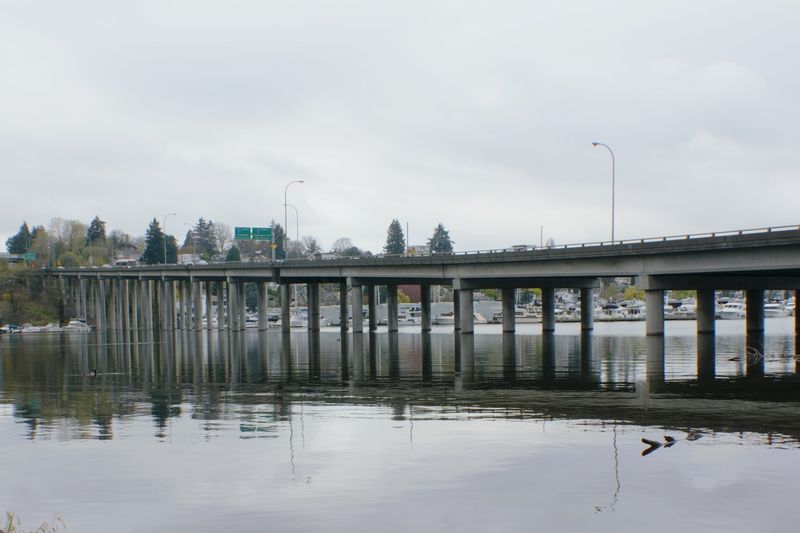
Building the longest floating bridge in the world was never going to come cheap. The full SR 520 Bridge Replacement and HOV Program, which includes the floating bridge itself along with major highway improvements on both ends, carried a total project budget of approximately $4.65 billion.
The floating bridge and its landings alone cost around $849 million, a figure that reflects the complexity of designing, casting, transporting, and assembling thousands of precast concrete elements across an active lake.
Every pontoon, every cable, every anchor bolt, and every lane of roadway had to meet strict engineering standards while being built in a live marine environment.
For Washington State taxpayers and commuters, that investment has paid off in the form of a safer, wider, and more resilient crossing than the bridge it replaced.
The old span was aging and vulnerable to storm damage, while the new structure is built to last well into the future. Big price tags make more sense when the result floats this steadily.
Seattle To Medina: The Route Across Lake Washington
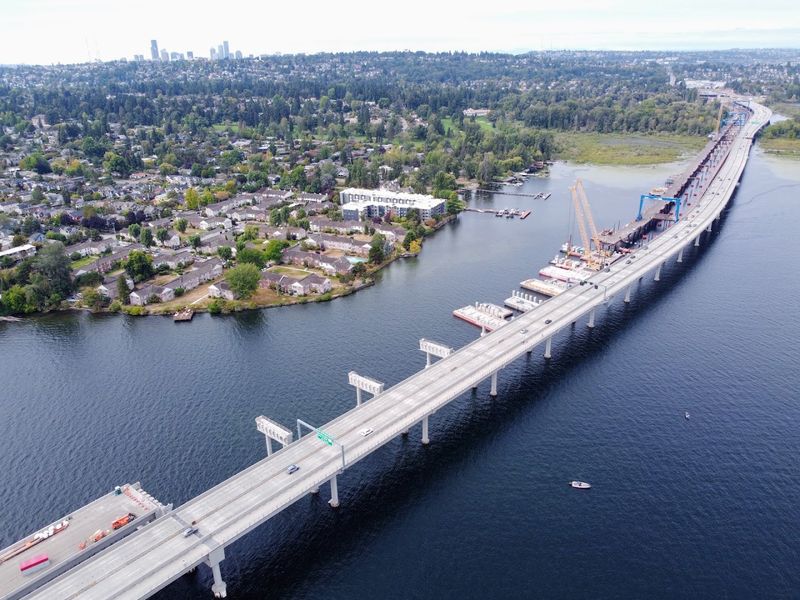
The SR 520 Floating Bridge connects two very different worlds separated by the wide blue expanse of Lake Washington.
On the western end, drivers enter the bridge near the Montlake neighborhood in Seattle, one of the city’s most charming and historic residential areas sitting just south of the University of Washington campus.
On the eastern end, the bridge lands in Evergreen Point within the city of Medina, a quiet and upscale suburb on the eastern shore of Lake Washington.
Medina is known for its tree-lined streets, waterfront homes, and a relaxed atmosphere that feels a world away from downtown Seattle despite being just minutes across the water.
For daily commuters, the SR 520 corridor is a critical east-west link connecting Seattle to the tech-heavy Eastside cities of Bellevue and Redmond.
For visitors, the drive itself is an experience worth having, with open water views on both sides and the distant Cascade Mountains occasionally framing the horizon on clear days.
The Scenic Pedestrian And Bicycle Path
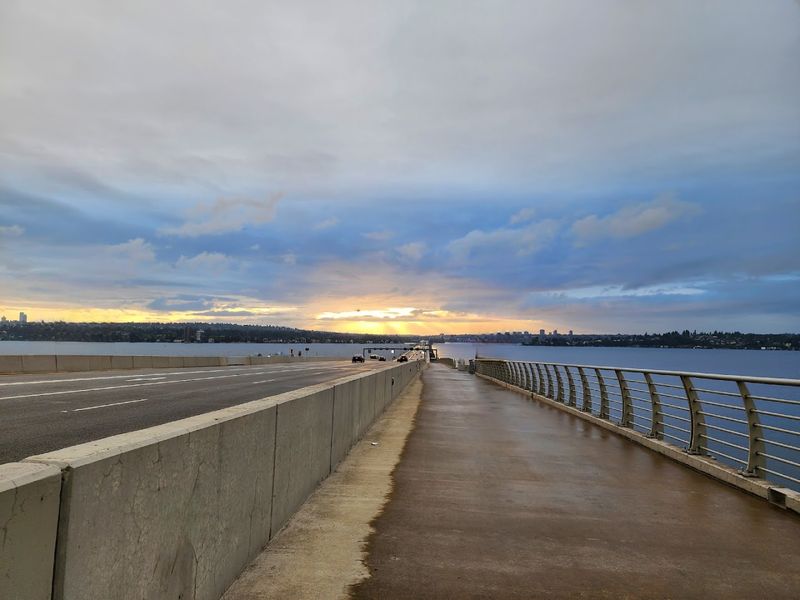
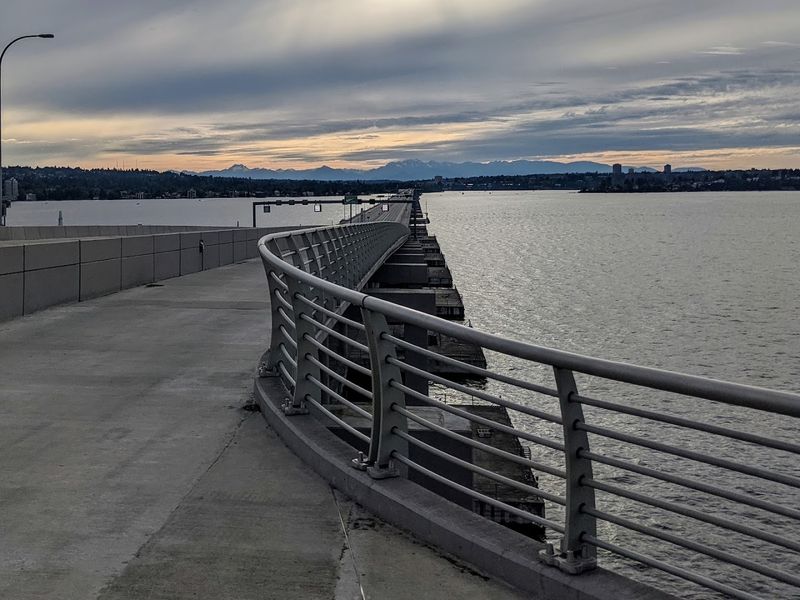
Not everyone crossing SR 520 is behind a steering wheel. The bridge features a 14-foot-wide pedestrian and bicycle path running along its entire north side, giving non-motorized travelers their own dedicated space to enjoy one of the most scenic crossings in the Pacific Northwest.
Along the path, five semi-circular rest areas called belvederes offer spots to pause, take in the view, and appreciate the scale of what you are standing on.
On clear days, those views can stretch all the way to Mount Rainier rising dramatically to the south, with waterfront homes and sailboats dotting the lake below.
The path connects to local and regional trail networks on both the Seattle and Eastside ends of the bridge, making it a popular link for cyclists commuting between neighborhoods or recreational riders exploring the area.
Walking or biking across a floating bridge gives you a very different perspective from driving it. You can hear the water, feel the gentle movement, and take your time soaking in the experience properly.
Toll Collection And Practical Tips For Crossing
Crossing the SR 520 Floating Bridge costs money, but the process is straightforward once you know how it works. The bridge uses all-electronic toll collection, meaning there are no traditional toll booths where you stop and pay.
Instead, cameras read your license plate as you drive through, and the toll is charged automatically. Drivers with a Good To Go pass, Washington State’s electronic toll account system, pay a lower rate and avoid any processing fees.
Those without a pass can pay online after crossing, though the rate is slightly higher. Rental car drivers should check with their rental company beforehand, since some companies add their own fees on top of the standard toll amount.
One more thing worth knowing: many first-time drivers cross the SR 520 bridge without even realizing they are on a floating structure. The ride is smooth, the roadway feels stable, and nothing about the experience screams that you are on a highway resting on water.
That seamless quality might be the bridge’s most impressive engineering achievement of all.
How The Bridge Handles Storms And Rising Water
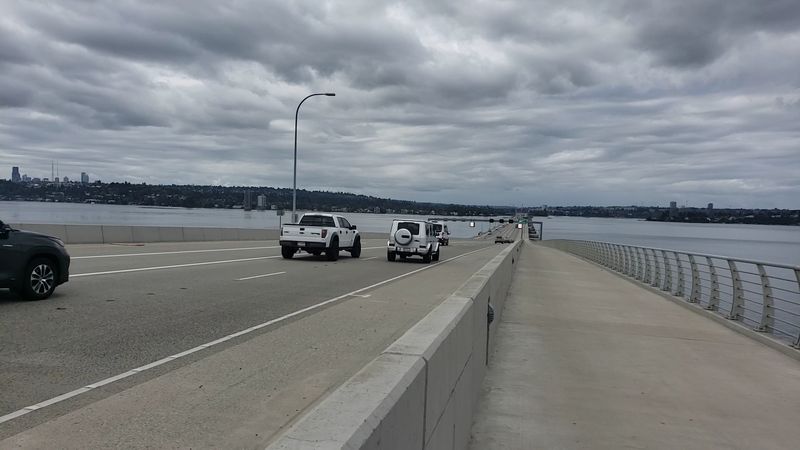
Lake Washington is no calm pond. It can whip up serious waves during Pacific Northwest storms, and the SR 520 bridge was engineered specifically to survive them.
Each pontoon is designed to flex slightly, absorbing wave energy rather than fighting it head-on. That flexibility is actually a feature, not a flaw. The movement helps reduce the strain placed on individual sections of the floating structure.
Engineers also designed the connections to respond as changing water conditions push and pull against the bridge. The bridge can handle winds exceeding 80 miles per hour and has a built-in storm protection system. During severe weather, sensors monitor the structure constantly.
Emergency draw cables help keep the pontoons aligned when conditions get rough.
Crews can use the information from those sensors to identify unusual movement before it becomes a larger concern. Every major component works together to keep traffic moving safely above the restless lake.
Amazingly, the original 1963 bridge actually sank during a 1990 storm while undergoing repairs, a costly lesson that shaped every safety decision made in building today’s stronger, smarter replacement.