
One Montana Lake Has Water Clear Enough To See Straight To The Bottom
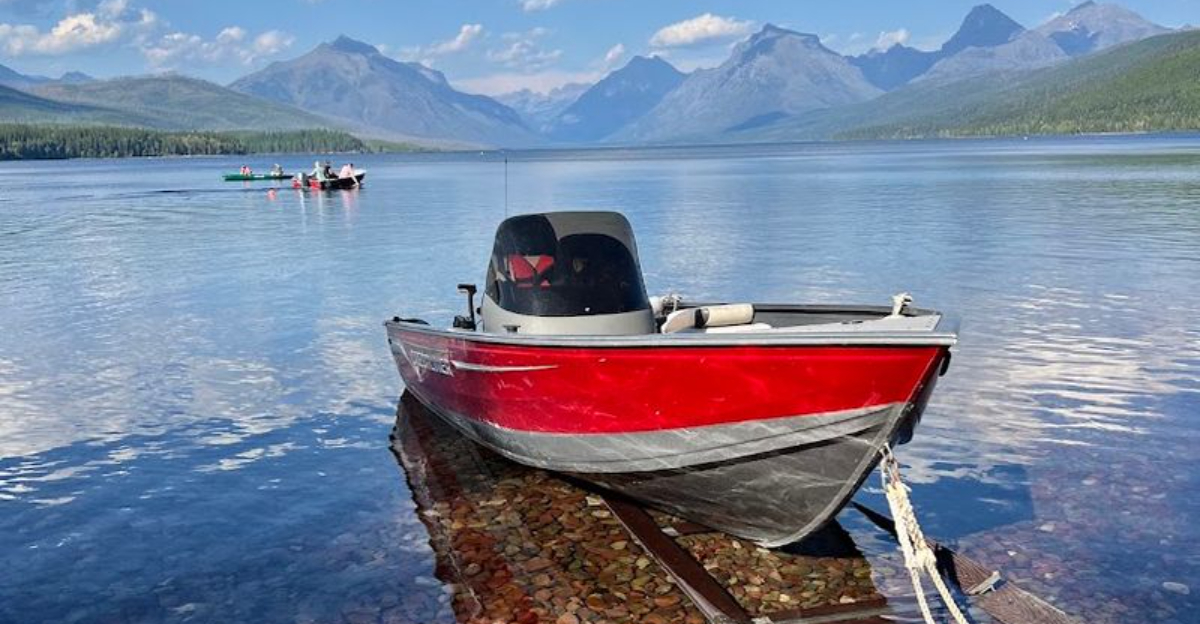
If lakes could keep secrets, this one would struggle.
Every colorful pebble, every ripple, every hidden corner beneath the surface is on full display, thanks to water so crystal clear it almost feels invisible. It’s the kind of place that quietly rewrites your expectations.
Where reflections compete with mountain views, and even skipping a stone feels wrong because the bottom is too beautiful to disturb.
In a state overflowing with spectacular scenery, this Montana lake still manages to steal the spotlight without saying a word.
The Legendary Crystal Clarity Of The Water
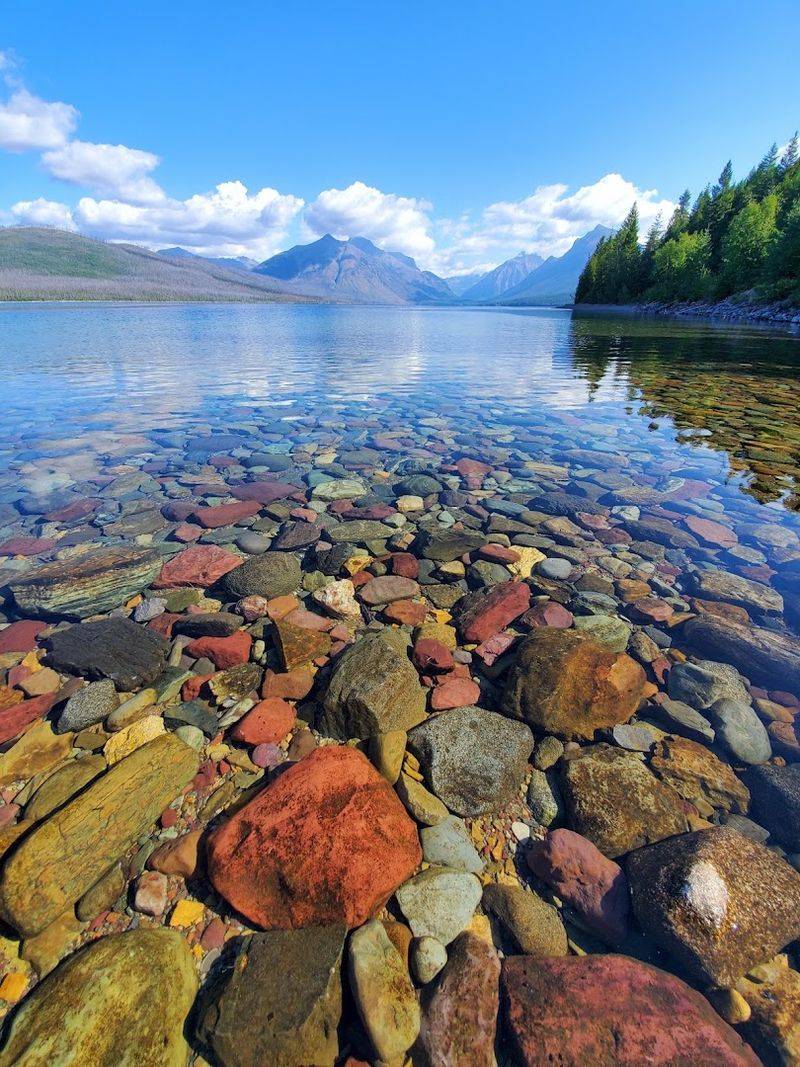
Honestly, the first time you see how clear this water is, you will do a double-take. Lake McDonald sits at an elevation of 3,153 feet, fed by glacial melt, snowmelt, and rainfall that has been naturally filtered through mountain terrain for centuries.
The result is water so pure and transparent it almost feels like cheating nature.
Cold temperatures year-round prevent plankton and algae from thriving here. That means no murky green tint, no hazy film, just pure, glassy clarity stretching downward.
Visibility can reach 30 feet or more in many areas, and some spots let you spot individual pebbles resting quietly on the lakebed at impressive depths.
Standing at the shoreline and watching the bottom come into focus is genuinely surreal. The water shifts from pale aqua near the edges to deep cobalt blue toward the center.
It feels less like looking into a lake and more like gazing through a window into a hidden world. This kind of natural clarity is rare, precious, and completely unforgettable once you witness it firsthand.
The Famous Rainbow Rocks Of The Lakebed
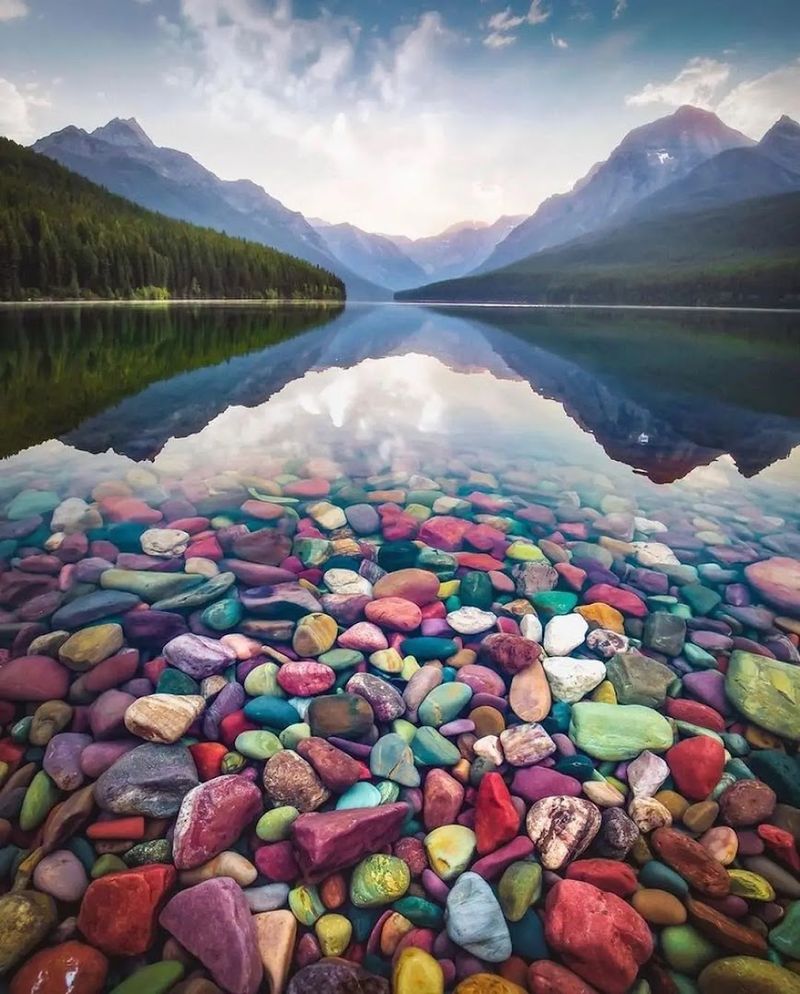
Nothing quite prepares you for the moment you notice the lakebed looks like someone scattered a bag of gemstones across it.
Lake McDonald, located within Glacier National Park, West Glacier, Montana 59936, is world-famous for its rainbow-colored pebbles. These stunning rocks display vivid shades of red, green, blue, purple, orange, yellow, turquoise, black, and white all at once.
Here is the wild part: these colors are not a trick of the light. They come from ancient argillite rock formed over 1.5 billion years ago.
Different iron content levels and varying oxygen exposure during formation created each unique hue. Red and maroon rocks formed in shallow, oxygen-rich waters.
Green and blue ones came from deeper, oxygen-starved environments.
Glaciers then spent thousands of years grinding these ancient rocks into smooth, rounded pebbles. The eastern shores near Apgar Village and north of Lake McDonald Lodge offer the most spectacular viewing.
Sunlight hitting the wet stones makes the colors pop with an almost theatrical intensity.
These rocks are protected, so admire them freely but leave every single one exactly where you found it.
The Glacial Origins That Shaped Everything
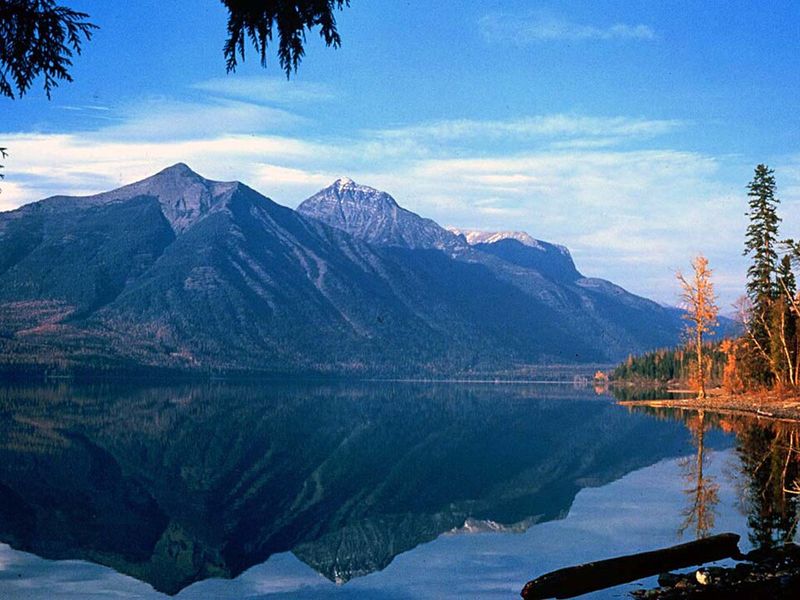
Lake McDonald did not just appear one day looking this majestic. It earned every inch of its dramatic shape through thousands of years of glacial force.
During the Ice Age, massive glaciers carved relentlessly through this valley, gouging out a deep, elongated basin that eventually filled with pristine mountain water.
The result is a lake that geologists describe as fjord-like, with steep sides, a long narrow shape, and impressive depth.
At 472 feet deep, it holds an extraordinary volume of water. The surrounding peaks rise dramatically on the north, south, and east, creating a natural amphitheater of stone and forest that frames every view with cinematic grandeur.
What makes this geological story even more fascinating is the scale of time involved. The colorful argillite rocks on the lakebed formed 1.5 billion years ago.
The glacier that carved the basin moved through roughly 10,000 years ago.
Every element of this landscape is the product of slow, powerful forces working across unimaginable stretches of time. Standing here, you genuinely feel the weight and wonder of deep geological history beneath your feet.
The Sheer Scale That Will Stop You In Your Tracks
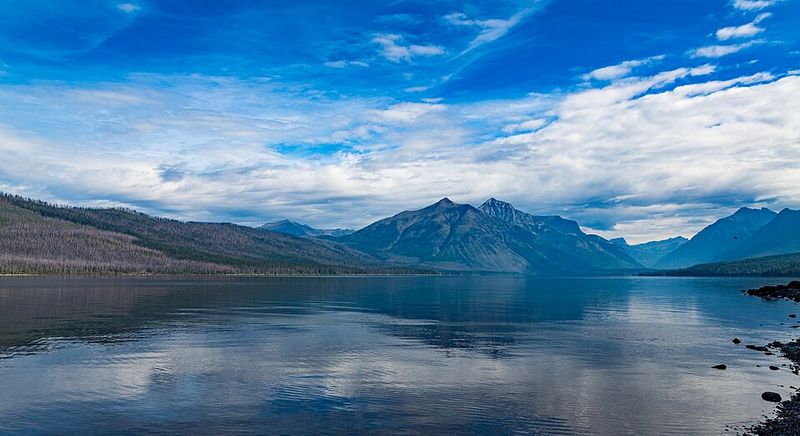
Some lakes are pretty. Lake McDonald is enormous and pretty, which is an entirely different experience.
Stretching approximately 10 miles long and more than a mile wide, this is the largest lake in all of Glacier National Park. The surface area covers roughly 6,823 acres of some of the most spectacular water on the planet.
Standing at one end and looking toward the other feels like staring down a corridor of mountains. The scale is genuinely humbling.
High peaks tower on three sides, and dense coniferous forests line the shores, making the whole scene feel like a painting someone forgot to tell you was real.
The depth adds another layer of awe entirely. Dropping to 472 feet at its deepest point, Lake McDonald holds an almost incomprehensible volume of cold, clear water.
This size also means the lake creates its own microclimate in the McDonald Valley, with the surrounding mountains acting as a natural rain block. Visiting feels less like a quick photo stop and more like arriving at a place that demands your full, undivided attention from the moment you see it.
Lake McDonald Lodge And Its Timeless Charm
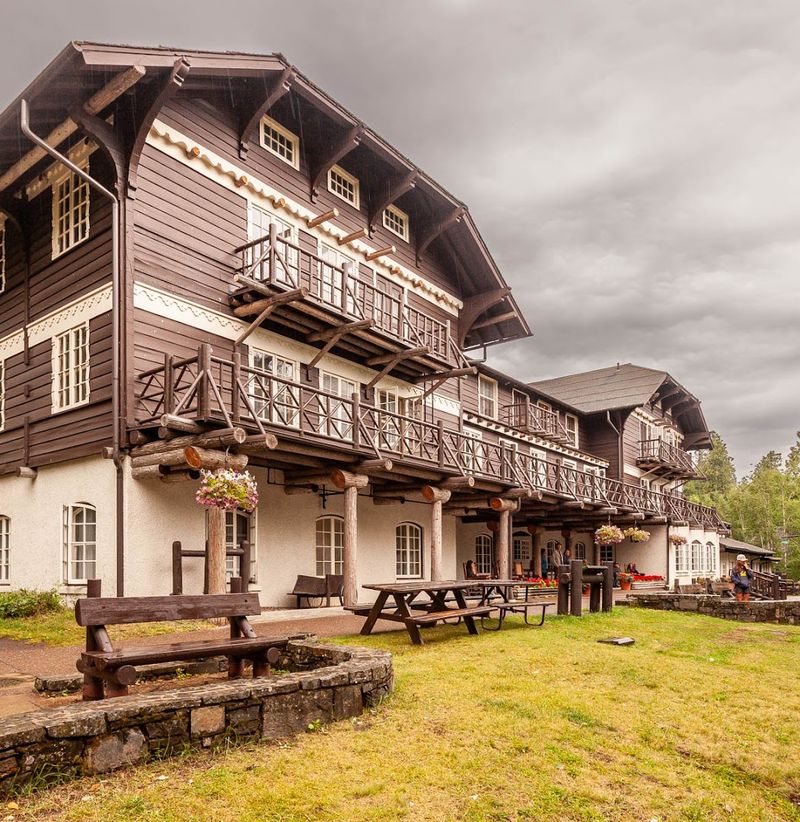
Built between 1913 and 1914, Lake McDonald Lodge is one of those rare buildings that feels perfectly placed in its setting.
The Swiss-influenced architecture, with its exposed timber and rustic hunting lodge aesthetic, looks like it grew organically from the forest surrounding it. It is a National Historic Landmark and one of the most iconic structures in all of Glacier National Park.
Step inside and the massive stone fireplace immediately commands your attention. The grand lobby feels warm and welcoming even on the coldest mountain morning.
Indigenous language inscriptions on the concrete floor add a quiet, meaningful layer of cultural history to the space. The lodge connects visitors to the park’s earliest days of organized tourism.
Boat tours depart from the lodge docks, including rides aboard the historic wooden vessel DeSmet, built in 1930.
Spending time at the lodge before or after exploring the lake adds real depth to the visit. It anchors the experience in history rather than just scenery.
The combination of stunning architecture, lakeside location, and rich backstory makes this landmark genuinely worth slowing down to appreciate properly.
Water Adventures You Will Actually Want To Try
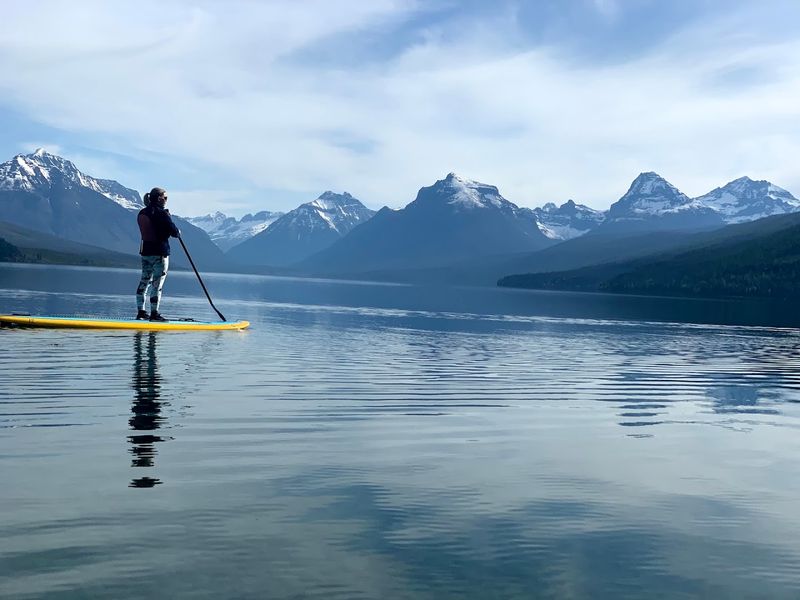
Cold water has never looked so inviting. Swimming is allowed at Lake McDonald, though the glacial-fed temperatures rarely climb above 60 degrees Fahrenheit even in midsummer.
Apgar Beach on the southwest shore is the most popular swimming spot, where slightly shallower water warms just enough to make a refreshing dip genuinely tempting.
Paddleboarding and kayaking on this lake are experiences worth planning your entire trip around. Gliding across that impossibly clear water at dawn, watching the mountain reflections shift beneath your board, is the kind of moment that becomes a permanent memory.
Rentals are available in Apgar Village, making it easy to get out on the water without hauling your own gear across the country.
Clear-bottomed kayaks are also available nearby, offering a unique way to watch the rainbow pebbles and lake floor pass beneath you as you paddle. Narrated boat tours aboard the historic DeSmet add a storytelling dimension to the experience.
Fishing is another option, with native westslope cutthroat trout, bull trout, and kokanee salmon all calling these waters home. No fishing license is required inside the park boundaries.
The Mirror Effect That Makes Photographers Weep With Joy
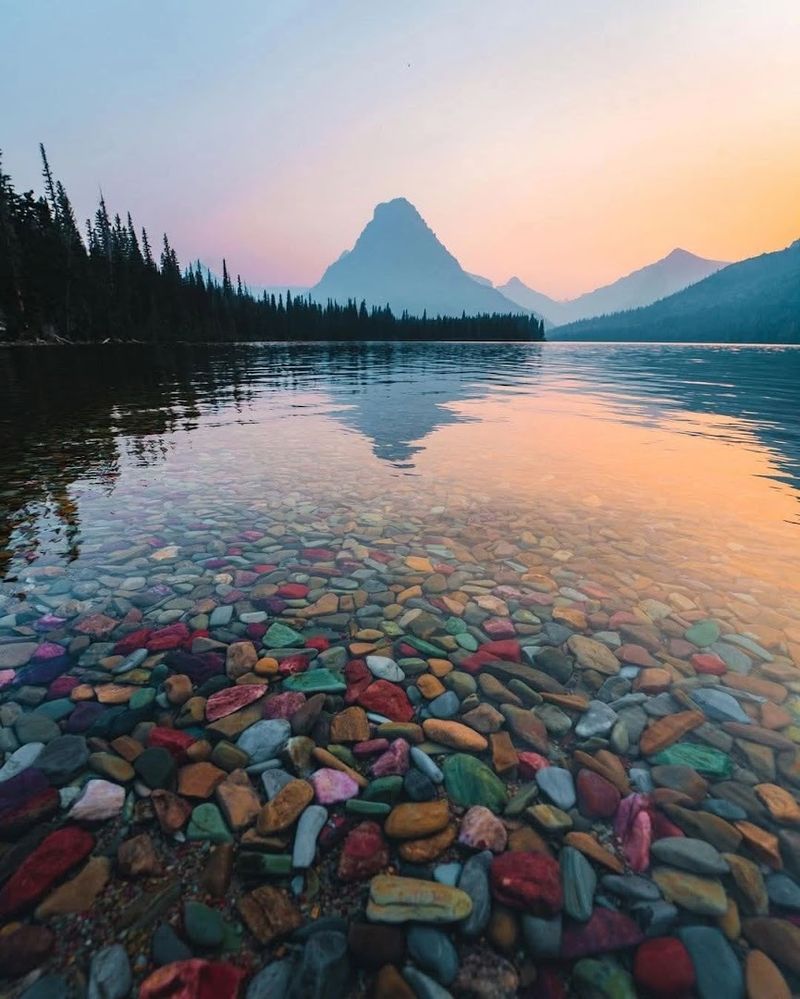
There is a specific kind of morning magic that happens at Lake McDonald when the wind is completely still. The surface of the water becomes so calm and flat that the surrounding mountains reflect in it with almost photographic precision.
You end up with two identical mountain ranges, one rising into the sky and one plunging into the lake, separated only by the thin line of the shoreline.
Photographers from around the world make the journey specifically to capture this effect. The south shore near Apgar Village is considered the prime location for reflection shots, particularly at sunrise when the light is soft, golden, and perfectly angled.
Going-to-the-Sun Road parallels the southern shoreline and provides multiple pull-off points with stunning elevated vantage perspectives.
The colors that appear in these reflections are extraordinary. Deep blues, rich greens, burnt oranges from autumn foliage, and the crisp white of snowcapped peaks all layer together in the water below.
No filter required, and honestly, no filter could improve on what nature has already arranged here. Waking up early to catch this light is one of those decisions you will never once regret making.
Apgar Village And The Gateway To Every Adventure
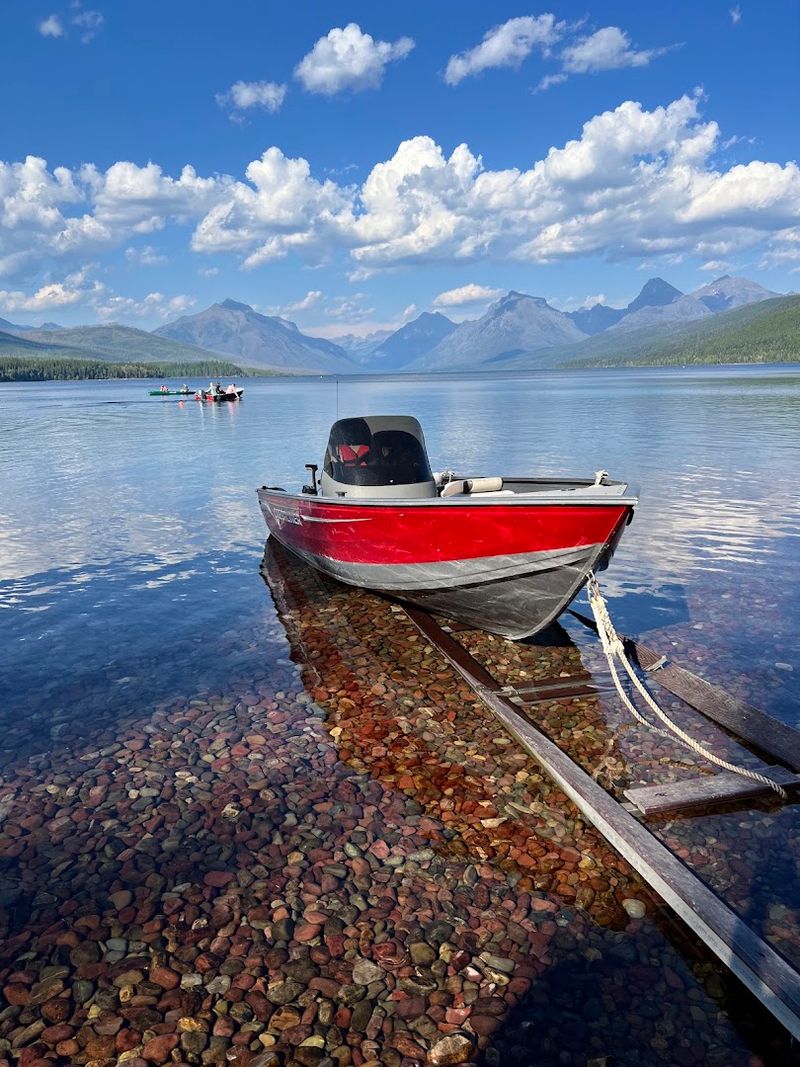
Apgar Village sits at the westernmost tip of Lake McDonald and functions as the unofficial headquarters for every adventure the area offers.
It is the first stop most visitors make after entering the park’s west entrance, and it packs a remarkable amount of usefulness into a small, charming footprint. Visitor services, restrooms, gift shops, and boat rentals are all clustered here for convenience.
The beach at Apgar is one of the most accessible spots to get close to those famous rainbow pebbles. Shallow, slightly warmer water makes it the go-to swimming area during warmer months.
The Kootenai people historically called this area the place where they dance, referencing a sacred campsite that speaks to the deep spiritual significance this land has held for indigenous communities across generations.
From Apgar, hiking trails branch out in multiple directions. The Trail of the Cedars offers an easy, boardwalk-style walk through ancient forest.
The path to Avalanche Lake rewards more ambitious hikers with one of the most stunning destinations in the entire park. Apgar is also where Going-to-the-Sun Road begins its iconic journey eastward.
If Lake McDonald is the heart of Glacier’s west side, Apgar Village is the pulse that keeps everything moving. Where will your first trail lead?