
10 Michigan River Towns That Make August Feel Like A Vacation
August has a way of slipping through my fingers every single year. I spend the first seven months counting down to summer.
Then suddenly it is the middle of August, plus I have not gone anywhere. Last year I decided to stop planning plus just drive.
That is how I stumbled onto a stretch of Lake Michigan shoreline where every town feels like it was built for people who forgot to take a vacation. Lighthouses dot the long coastline. Drawbridges open for sailboats.
Farm stands sell fruit so fresh it barely made it off the tree. Some of these river towns have fewer than a thousand residents.
Every single one knows how to make a person feel like time has stopped completely.
These ten river towns that make August feel like a Michigan vacation are waiting for anyone willing to point the car toward the coast.
10. Saugatuck
Colorful storefronts, gallery windows, and boats rocking along the Kalamazoo River give Butler Street an immediate vacation mood.
The downtown stretch is compact enough to explore without a plan, yet varied enough to fill an afternoon with independent shops, cafés, studios, and shaded corners where people linger over cold drinks.
Its character comes from layers of history rather than careful staging. The town began as a trading settlement connected to William Butler, grew through lumber and shipping, then gradually became known for artists, summer visitors, and creative businesses.
Buildings such as the 1878 Landmark structure and the former 1901 post office preserve that older story within a lively modern district.
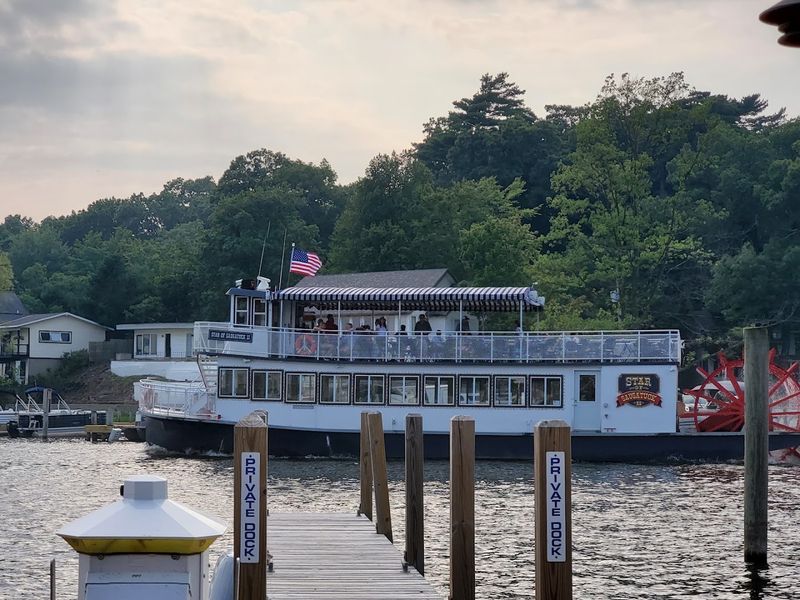
After browsing downtown, walk toward the river and watch paddlecraft, sailboats, and the Star of Saugatuck sternwheeler move past. August light stays warm well into the evening, making the waterfront especially pleasant after dinner.
The combination of art, river activity, and walkable streets makes a short visit feel fuller than expected. A short ferry ride adds another easy riverside diversion.
9. South Haven
A few blocks separate Phoenix Street from the Black River, which means downtown shopping can turn into a harbor walk almost without notice.
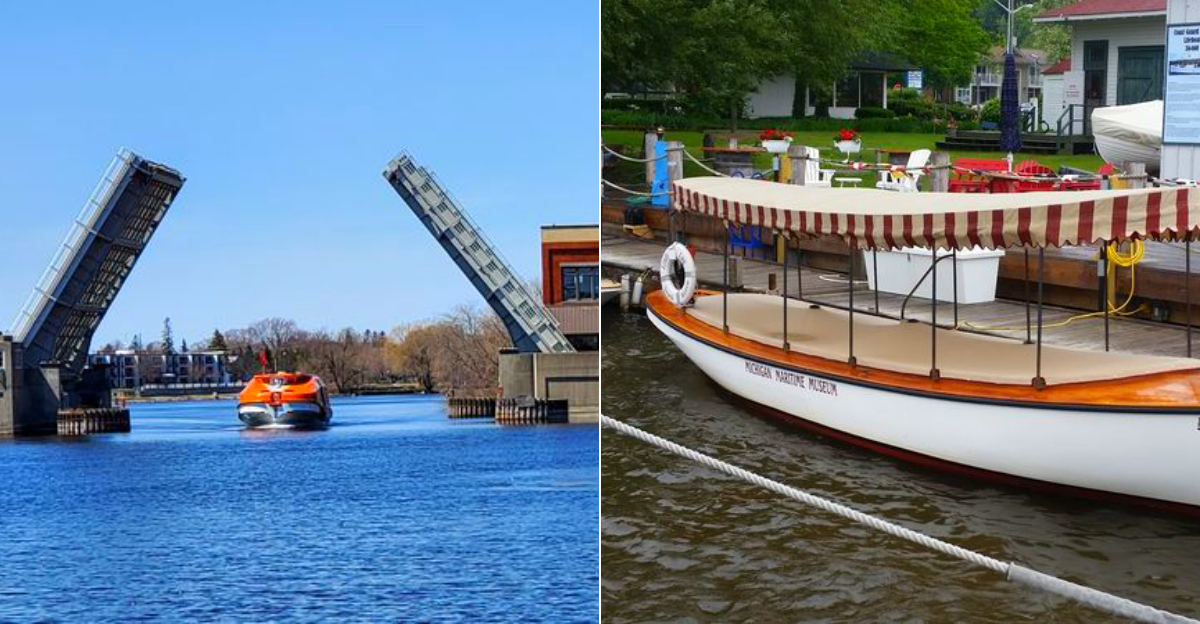
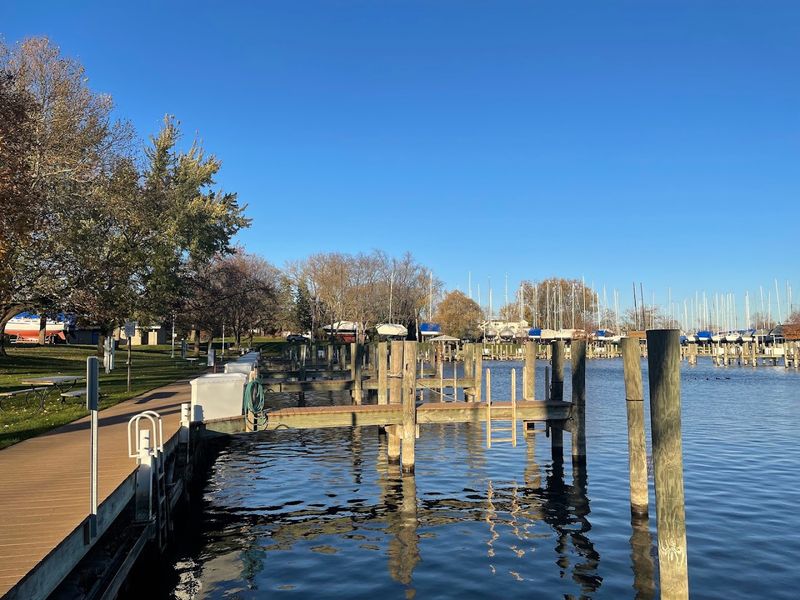
Restaurants, small stores, and historic buildings create an easy resort-town rhythm, while masts and drawbridges keep reminding visitors that this is still a working waterfront.
The settlement was founded in 1833 and named for its protected harbor, though Indigenous communities had long known the area before that. Lumber shaped its early economy, followed by fruit farming and tourism.
Blueberries remain especially important, with the National Blueberry Festival bringing food, parades, music, and community events each August.
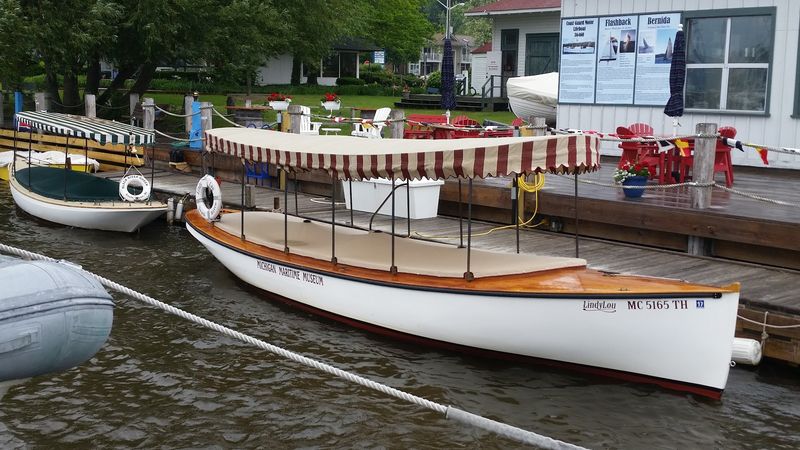
Spend part of the day at the Michigan Maritime Museum, then follow the river toward South Beach and its red lighthouse. The Kal-Haven Trail also begins nearby for anyone wanting a longer bicycle ride or shaded walk.
Sunset is the natural finale, but the town is equally appealing in the quieter morning hours, when cafés open and boats begin moving through the channel before the beach crowds arrive before heading home.
8. St. Joseph
Brick storefronts and lake light give State Street a polished appearance without making the downtown feel artificial.
Independent shops, cafés, candy counters, and shaded benches encourage slow wandering, while Lake Bluff Park opens suddenly above the water and changes the scale of the entire visit.
The St. Joseph River meets Lake Michigan below the bluff, a location that has shaped settlement, trade, and navigation for generations. Lighthouse history reaches back to 1832, when one of Lake Michigan’s earliest lights was established here.
The current North Pier lights and preserved catwalk remain the city’s most recognizable landmarks.
Walk downhill toward Silver Beach for swimming, the carousel, or a closer look at the pier. Families often divide the day between downtown and the shoreline, returning uphill for dinner after the strongest sun has faded.
Late August evenings are especially beautiful because the light turns softer while the lake remains warm enough for a final swim. From State Street to the beach, everything feels close, bright, and designed for an unhurried day slowly.
7. Grand Haven
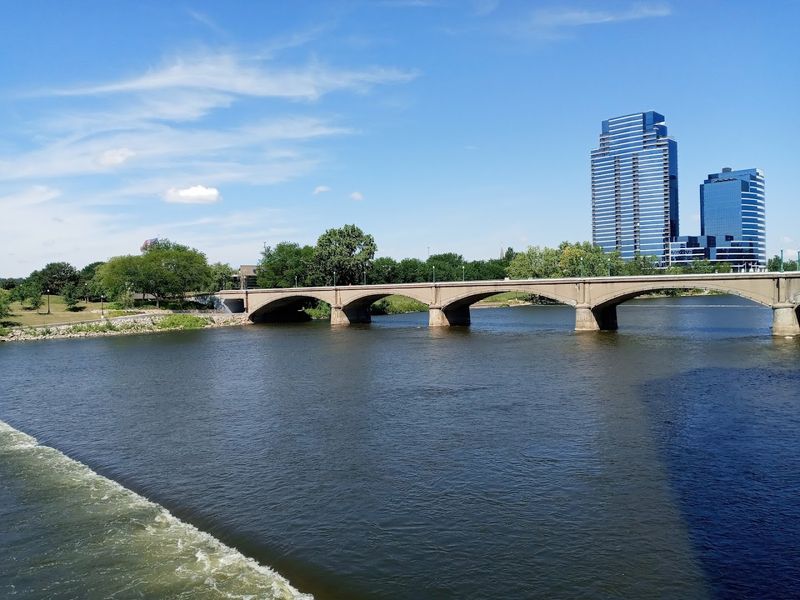
By evening, Grand Haven starts behaving like a town with a ritual. Evening gives Washington Avenue its strongest sense of direction.
Shops and restaurants gradually lead toward the Grand River, where the boardwalk, boats, stadium seating, and two red lighthouses create a natural gathering place before sunset.
The Musical Fountain becomes the town’s nightly ritual during summer. Opened in 1962 after former mayor Dr. William Creason drew inspiration from a German display, it was built through local engineering and volunteer support.
Water, colored lights, and music still transform the riverfront after dark, with free performances scheduled throughout August.
Arrive early enough to walk the boardwalk before choosing a seat at Lynne Sherwood Waterfront Stadium. The river carries fishing boats and pleasure craft toward Lake Michigan, while food stands and downtown patios keep the area lively without requiring a strict itinerary.
After the show, the walk back along Washington Avenue feels calmer, especially once families begin drifting home.
Grand Haven succeeds because the beach, downtown, harbor, and evening entertainment connect naturally, allowing one ordinary August day to expand from coffee through darkness together.
6. Ludington
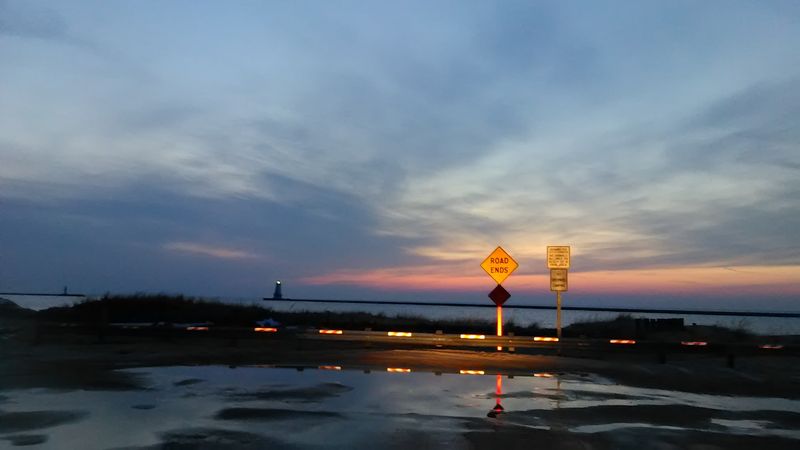
Following Ludington Avenue west feels like approaching a place where downtown, harbor, and open lake belong to the same story. Shops and restaurants give way to waterfront parks, marinas, and views of the SS Badger, whose massive profile keeps the city’s transportation history visible.
Car ferries once defined the port. During the 1920s and early 1930s, Ludington supported the world’s largest fleet of railroad car ferries.
Launched in 1952, the Badger now carries passengers and vehicles across Lake Michigan to Manitowoc, Wisconsin, operating from spring into autumn and remaining a National Historic Landmark.
The Port of Ludington Maritime Museum explains the city’s shipping, railroad, and harbor history inside the former Coast Guard station. Afterward, walk through Waterfront Park or continue toward Stearns Park Beach and the North Breakwater Light.
August offers the best balance of active harbor scenes and long daylight. Watching the Badger arrive or depart turns an ordinary shoreline visit into a piece of living Great Lakes history rather than a static display across the harbor each evening.
5. Manistee
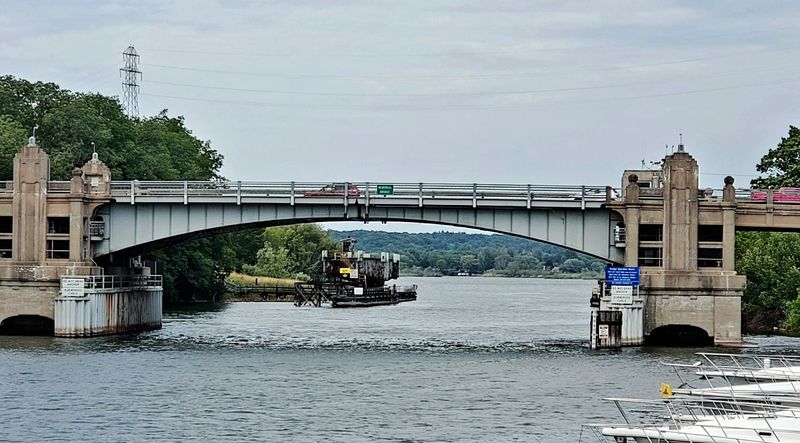
Victorian brickwork and a river running directly behind downtown give River Street a sense of drama uncommon in a town this size. Storefronts hold cafés, bakeries, theaters, and independent shops, while short passages between buildings reveal boats moving along the Manistee River.
Much of that architecture reflects rebuilding after the Great Fire of 1871 destroyed the earlier wooden commercial core. Lumber wealth funded elaborate new structures in brick and stone, leaving a streetscape that still carries the confidence of the city’s nineteenth-century boom.
The nearly two-mile Riverwalk provides the best way to understand how downtown and water connect. Interpretive signs describe shipping, industry, and local landmarks as the path moves toward the lake.
Continue to First Street Beach or the North Pierhead Lighthouse if weather is calm. August evenings bring warm light to the buildings and a steady breeze from the channel.
Manistee feels historic without becoming frozen, because marinas, shops, fishing boats, and residents continue using the same riverfront that shaped the town in the first place after dark.
4. Frankfort
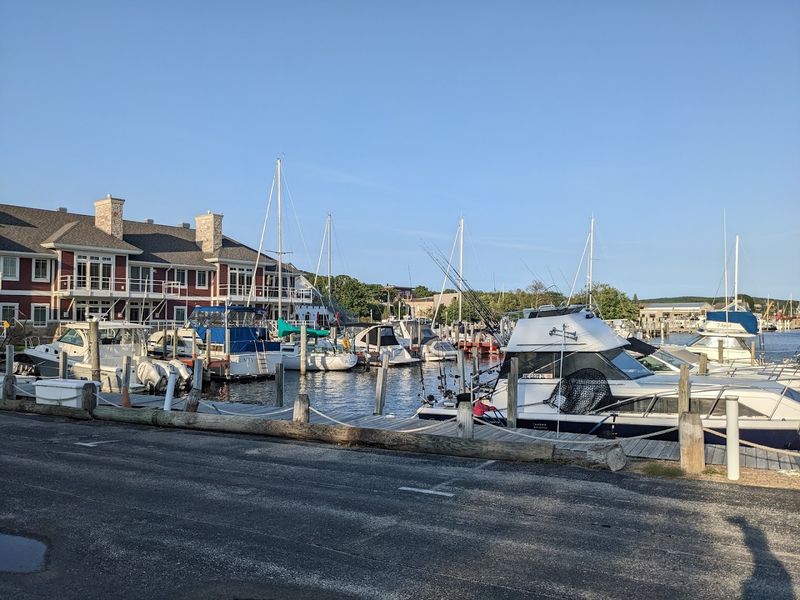
Small scale works in Frankfort’s favor. Main Street runs only a short distance before the harbor and Lake Michigan begin pulling attention away from storefronts, making it easy to combine shopping, lunch, beach time, and a pier walk without returning to the car.
Maritime history appears in details throughout town. A navigation light was operating here by the 1870s, and the current North Breakwater Lighthouse began as a 1912 structure before being moved and raised in 1932.
Its white tower and red roof remain visible from the beach and downtown waterfront.
Start with coffee or breakfast on Main Street, browse the independent shops, then continue west toward Frankfort Beach. The breakwater can be walked during calm conditions, though high waves and slippery surfaces require caution.
Nearby benches offer safer views when the lake becomes rough. August brings bright water, sailing activity, and long evenings that make the town feel more spacious than its size suggests.
Everything remains close enough that the day unfolds naturally instead of following a schedule beautifully.
3. Bay City
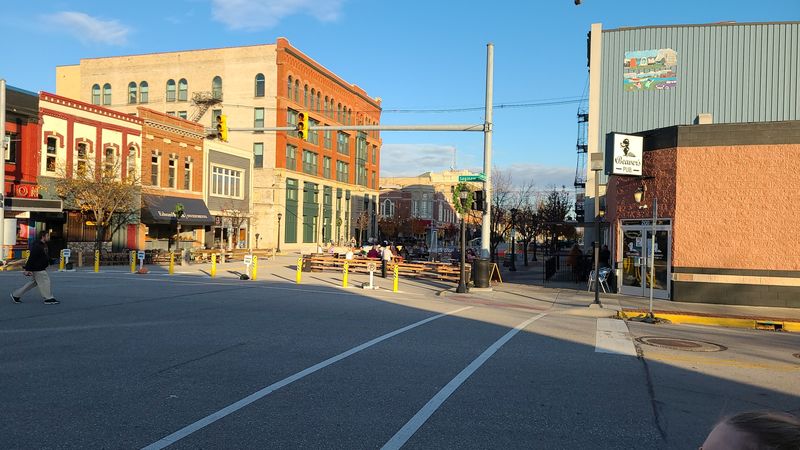
Late afternoon light reveals why Center Avenue deserves more than a quick drive. Towers, porches, carved trim, brickwork, and broad lawns create an architectural corridor shaped by the fortunes of lumber barons, shipbuilders, merchants, and industrialists.
The historic district contains more than 250 contributing structures and has appeared on the National Register of Historic Places since 1982.
Queen Anne, Italianate, Second Empire, Victorian, and Romanesque styles stand close together, turning several blocks into an informal catalogue of nineteenth-century ambition.
A self-guided walk is the best way to appreciate the details. Begin near downtown, move east along Center Avenue, and pause where side streets reveal additional homes and churches.
Bring water and choose the cooler part of an August day, since shade varies along the route. Afterward, head toward the Saginaw River for parks, riverfront paths, or a meal downtown.
Bay City offers a different vacation rhythm from beach towns, replacing sand with architecture while keeping the water close enough to shape the atmosphere without losing its strong maritime identity entirely.
2. Alpena
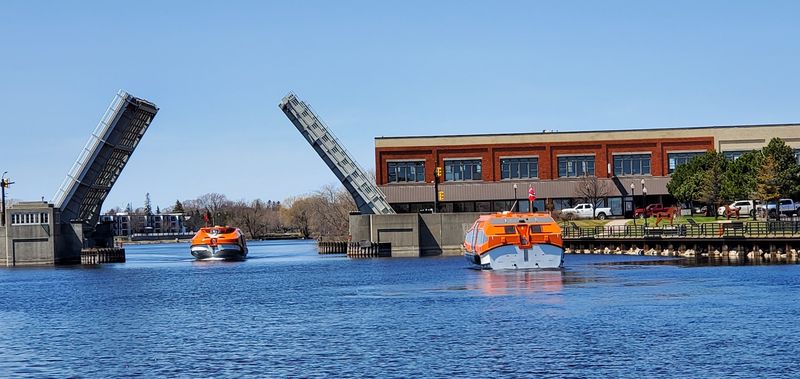
Lake Huron’s surface looks calm from Alpena, but the water offshore holds one of the Great Lakes’ richest collections of shipwrecks. That hidden landscape gives the town an adventurous identity that reaches beyond beaches and harbor views.
The Thunder Bay National Marine Sanctuary was designated in 2000 and now protects nearly 100 known wrecks across thousands of square miles.
At the Great Lakes Maritime Heritage Center, exhibits explain navigation, storms, vessel construction, and the dangerous conditions that earned this coast the name Shipwreck Alley.
Glass-bottom boat tours allow visitors to see selected wrecks without diving, with August offering some of the season’s most dependable operating weather. Reservations are wise because tours can fill or change with lake conditions.
After returning, explore the riverfront, downtown shops, and nearby parks around Chisholm Street. The contrast is part of Alpena’s appeal: dramatic maritime stories beneath the water, followed by a calm walk beside the Thunder Bay River.
It feels educational, scenic, and genuinely different from Michigan’s western resort towns on a warm afternoon.
1. Marine City
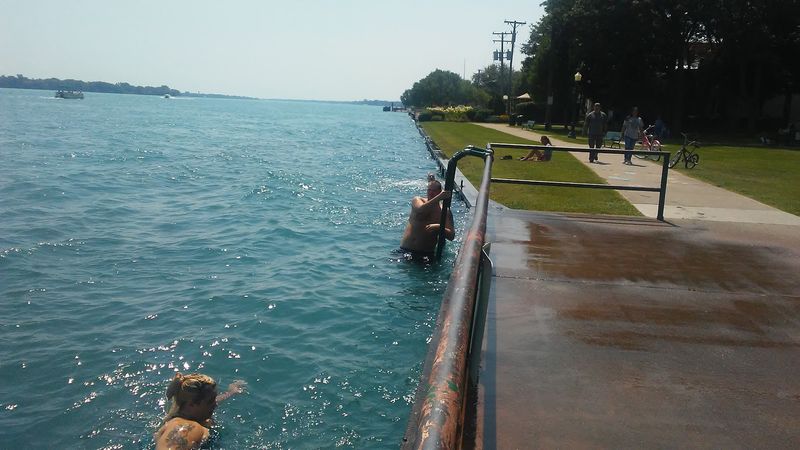
Freighters dominate the view along Water Street, passing close enough that conversations pause while people watch them move through the St. Clair River. The constant traffic gives Marine City an energy that is active but never hurried, with benches and parks positioned for ship watching.
Originally called Newport, the community was established in the 1830s and developed into a major wooden shipbuilding center. Captains, builders, and maritime workers shaped its neighborhoods, while salt production and sugar processing later broadened the local economy.
Today, the downtown mixes antique shops, restaurants, historic buildings, and the intimate Snug Theatre. Walking Water Street requires little planning because the river remains visible everywhere.
Use a ship-tracking app if you want to identify passing vessels, or simply wait and let traffic arrive unexpectedly. August evenings are pleasant when the heat drops and lights begin appearing across the water in Canada.
Marine City makes vacation feel simple: find a bench, buy something cold, and watch one of North America’s busiest shipping routes move past at river level.