
The World’s Largest Rose Bush Is Hiding Behind An Arizona Museum
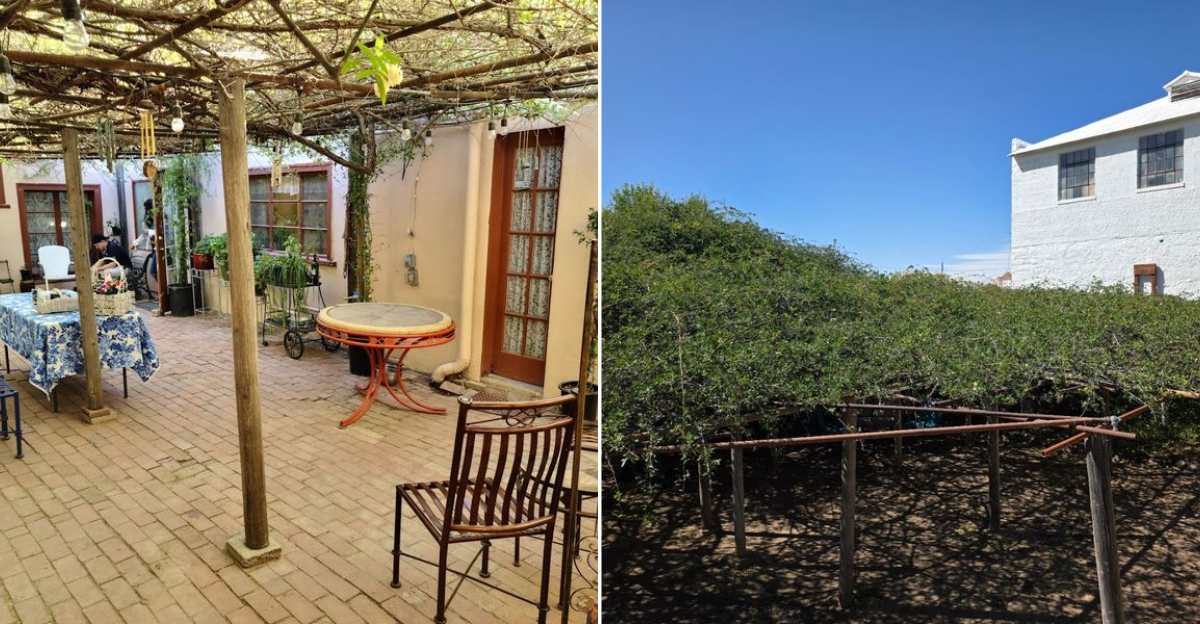
My relationship with gardening is strictly adversarial. Mostly because I usually manage to murder even the hardiest plastic succulents. So, naturally, I felt a deep, profound sense of botanical inadequacy when I tracked down a legendary giant rose bush hiding behind a quaint little history museum.
We are talking about a living, breathing floral leviathan here, covering a massive trellis like some sort of botanical octopus with commitment issues.
It currently holds a shiny title for being the biggest of its kind on Earth, which is a lot of pressure for a plant, frankly. But trust me, nothing humbles a stressed-out traveler quite like standing beneath a canopy of 200,000 blooming white roses in the middle of historic Arizona.
I half-expected the thing to whisper gardening tips at me, or demand a blood sacrifice for staying alive in this heat.
The Remarkable Origin Story
Back in 1885, a homesick young Scottish bride named Mary Gee arrived in Tombstone with her husband Henry, carrying memories of green Scottish gardens in her heart.
She had received a package of cuttings from her family back home, including a rooted clipping of a white Lady Banksia rose. As a tender gesture of friendship, she gifted one cutting to her friend Amelia Adamson, who ran the Cochise boarding house where the Gees were staying.
Together, the two women planted that cutting in the back patio, probably never imagining it would one day break a world record. The arid Arizona climate should have made survival nearly impossible for a rose more accustomed to the cool, misty Scottish countryside.
Yet somehow, it not only survived but began a slow, steady, unstoppable expansion that continues to this day.
That single act of friendship between two pioneer women became the seed of something truly extraordinary, a living monument to resilience, companionship, and the unexpected power of a small, hopeful gesture.
The World Record That Keeps Growing
Numbers tell only part of the story here, but they are still jaw-dropping.
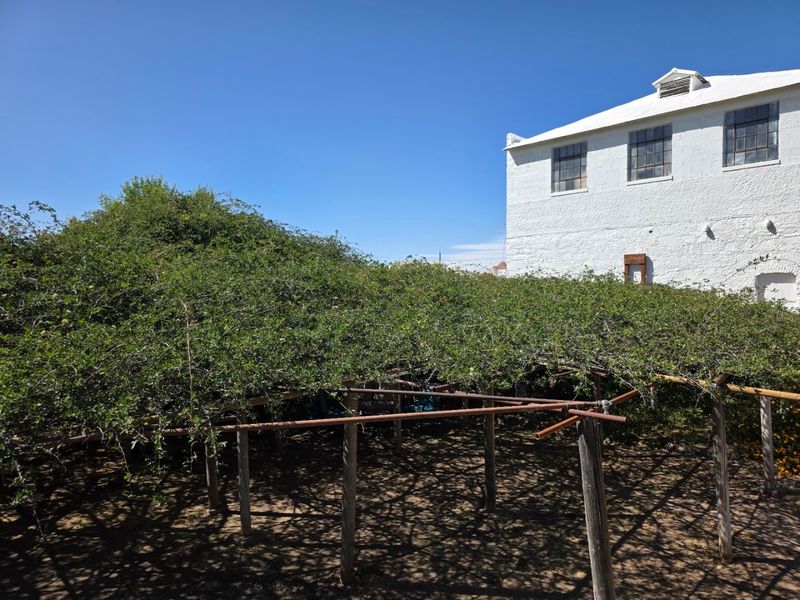
The rose bush at the Rose Tree Museum in Tombstone, Arizona, holds an official Guinness World Record for being the largest rose bush on the planet, with a canopy measuring approximately 8,000 square feet, and some estimates pushing that figure closer to 9,000 square feet during peak growth seasons.
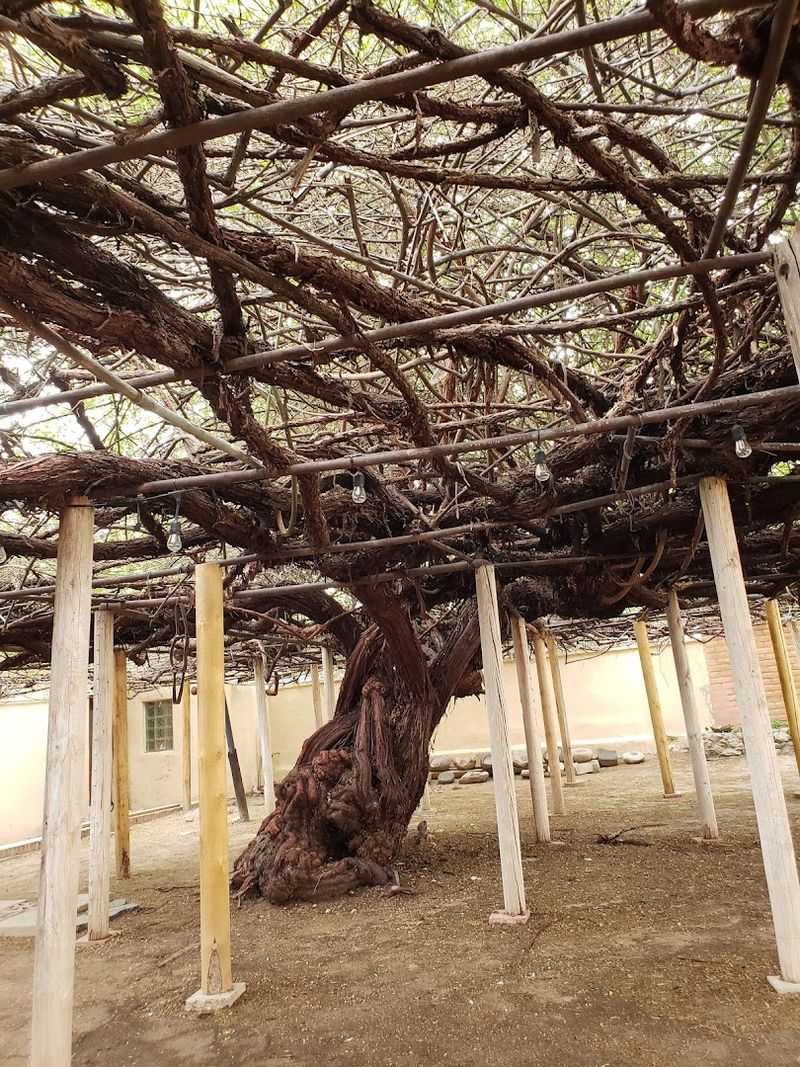
The trunk alone can measure up to 16 feet in circumference, which feels more like a tree than anything most people would call a rose.
A custom trellis system of wooden poles and metal pipes was designed by James and Ethel Macia after they purchased the property in 1920, built specifically to support the plant’s relentless growth.
What started as a single clipping smaller than your hand has become a botanical phenomenon that scientists, horticulturists, and curious travelers make special trips to witness firsthand. Records were made to be broken, but this one has held firm for a very long time.
Stepping Into The Courtyard Garden
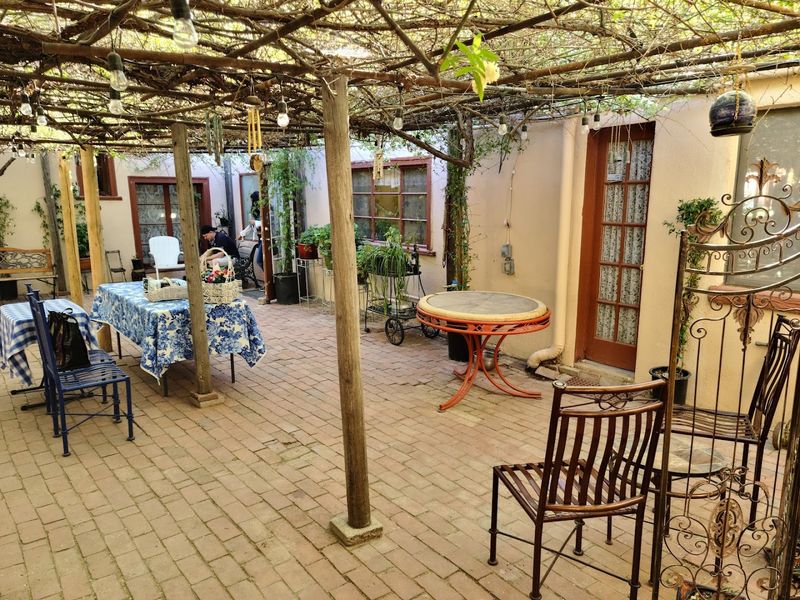
Walking through the entrance of the Rose Tree Museum and into the courtyard feels like stepping through a doorway into a completely different world.
The noise of Tombstone’s tourist-filled streets fades away, replaced by birdsong, the rustle of leaves, and the faint, sweet scent of flowers drifting on the dry desert air. The sheer scale of the canopy overhead is genuinely hard to process at first.
Branches stretch in every direction like a natural ceiling, casting cool, dappled shade across the patio below. During bloom season, clusters of small white flowers hang in dense sprays from every branch, turning the entire canopy into something that looks almost like a painting.
The effect is peaceful, almost meditative, which feels delightfully at odds with Tombstone’s rough-and-tumble reputation.
An elevated viewing platform gives visitors a bird’s-eye perspective on the full spread of the canopy, and standing up there, looking down at the intricate tangle of branches, you start to truly appreciate what 140 years of uninterrupted growth actually looks like.
The Lady Banksia Rose And Why It Thrives Here
Not all roses could have pulled off this feat. The Lady Banksia rose, known botanically as Rosa banksiae, is a climbing rose variety originally from China, and it happens to be unusually well-suited to hot, dry climates.
Unlike many rose varieties that struggle without regular rainfall, the Lady Banksia is hardy, vigorous, and remarkably drought-tolerant once it establishes a strong root system.
The white variety, which is what grows in Tombstone, produces clusters of tiny, delicate flowers that carry a soft fragrance often compared to violets. It blooms once a year in spring, and when it does, the display is nothing short of spectacular.
Thousands upon thousands of white blossoms open simultaneously across the entire canopy, creating a scene that visitors frequently describe as surreal.
The Lady Banksia also has very few thorns compared to most rose varieties, which makes the whole plant feel less intimidating and more approachable as you walk beneath its enormous, gently swaying branches in the warm Arizona sunshine.
Inside the Museum’s Historical Collections
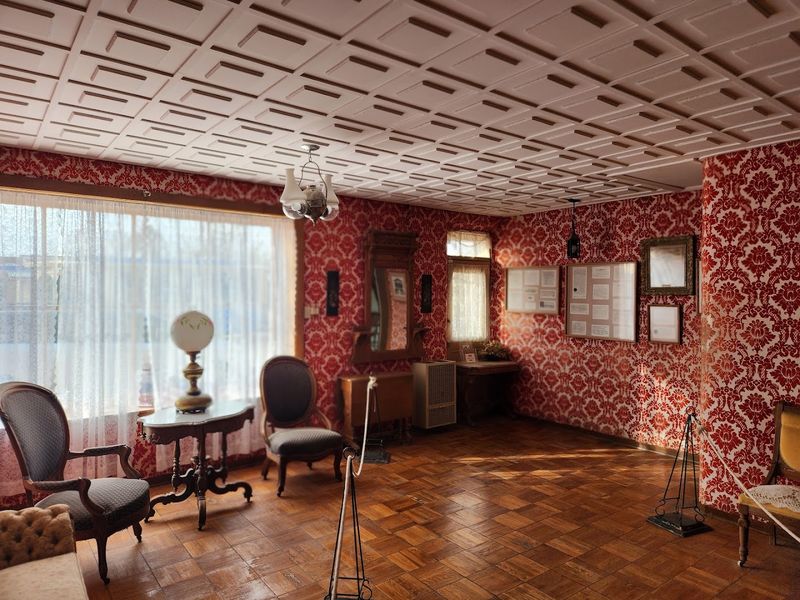
The rose bush gets most of the attention, and fairly so, but the building that houses it has its own fascinating story worth exploring.
The Rose Tree Museum at 118 S. 4th St., Tombstone, Arizona, is set inside what was originally the Cochise boarding house, later known as the Rose Tree Inn, and it has been carefully preserved as a window into the town’s pioneer past.
Inside, visitors will find historical collections belonging to the Robertson-Macia family, who played a central role in protecting this landmark for future generations.
There are dioramas depicting scenes from Tombstone’s early mining days, including a detailed recreation of the Lucky Cuss Mine and a vivid portrayal of the famous Gunfight at the O.K. Corral.
Framed photographs, period furniture, and personal artifacts fill the rooms with a quiet sense of the lives that were lived here. It is the kind of museum where you slow down, linger over small details, and leave feeling like you actually understand the place a little better than when you arrived.
Bloom Season And The Annual Rose Festival
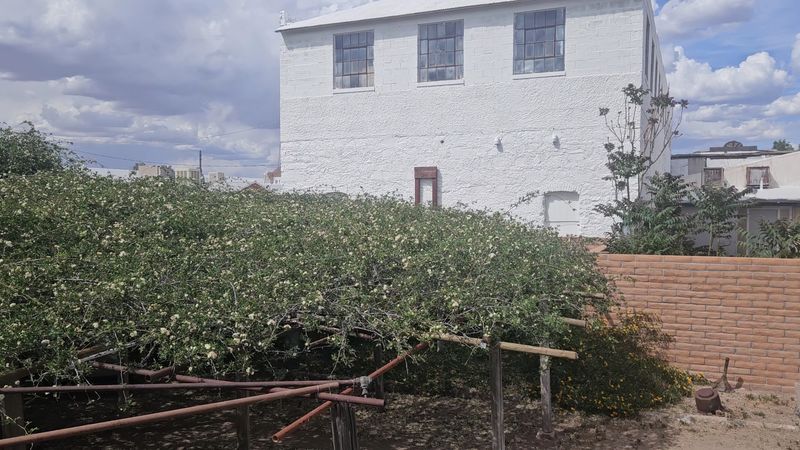
Timing your visit to catch the rose in full bloom is the kind of travel planning that pays off in a big way. The bush typically flowers for about six weeks between mid-March and late April, and during this window, the courtyard transforms into something genuinely breathtaking.
Every branch disappears under a thick layer of white blossoms, and the air carries that soft violet-like fragrance everywhere you walk. Tombstone celebrates this annual event with its Rose Festival, which draws rose enthusiasts, historians, and curious travelers from across the country and beyond.
The festival adds a lively, community-spirited energy to an already interesting destination, with local vendors, guided tours, and special programming that makes the whole experience feel more immersive.
Even outside of bloom season, the sheer architecture of the bush is worth seeing, but if your schedule has any flexibility at all, aim for that spring window.
Seeing thousands of flowers open at once across a canopy the size of a small house is one of those travel moments that genuinely sticks with you.
Practical Tips For Visiting The Rose Tree Museum
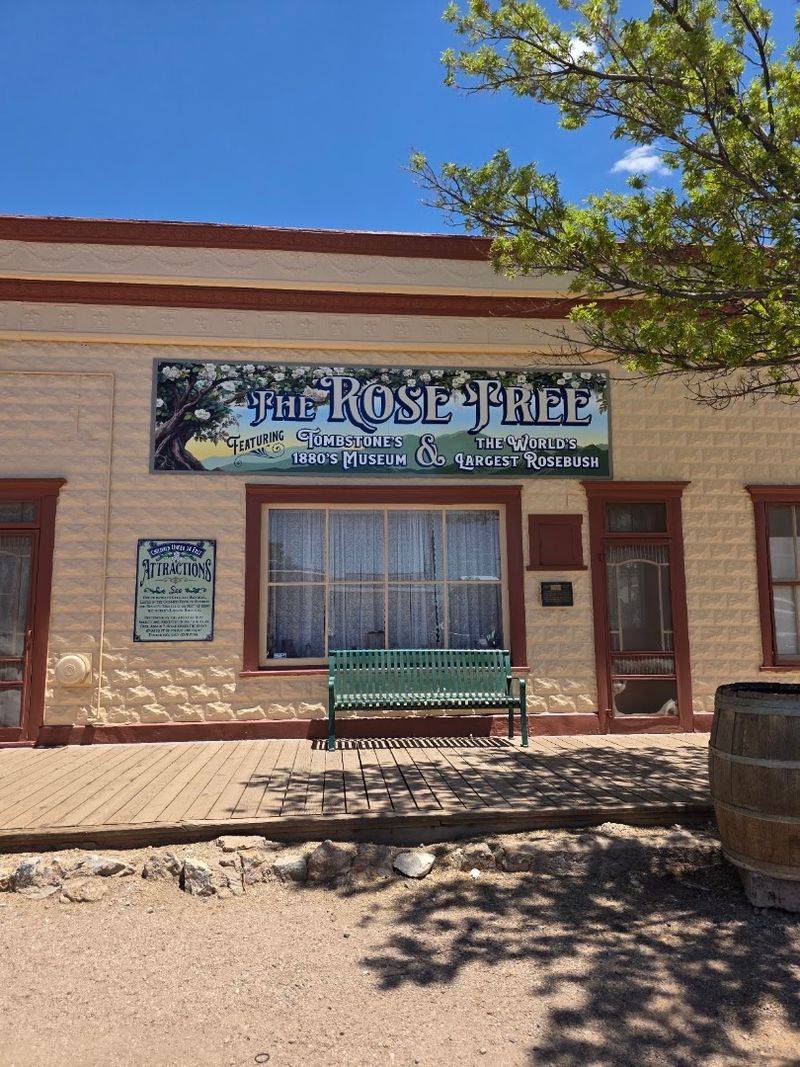
Getting the most out of your visit starts with knowing the basics. The Rose Tree Museum is open Monday through Saturday from 9 am to 5 pm and on Sundays from 10:30 am to 5 pm.
It closes on Thanksgiving and Christmas Day, so keep those dates in mind if you are planning a holiday road trip through southern Arizona.
Admission is priced at a very reasonable $6 per person. Children under 12 enter free when accompanied by an adult, and there is a family rate of $20 covering two adults and up to four children between the ages of 12 and 18.
Parking in Tombstone is generally easy to find, and the museum sits right in the heart of town, making it simple to combine with other stops along Allen Street.
Comfortable shoes are helpful since you will be walking the courtyard and possibly climbing the viewing platform. Bringing a camera is strongly encouraged because the canopy provides naturally beautiful, soft-lit conditions that make for some genuinely memorable photographs at almost any time of day.
Why Tombstone Deserves More Than One Day
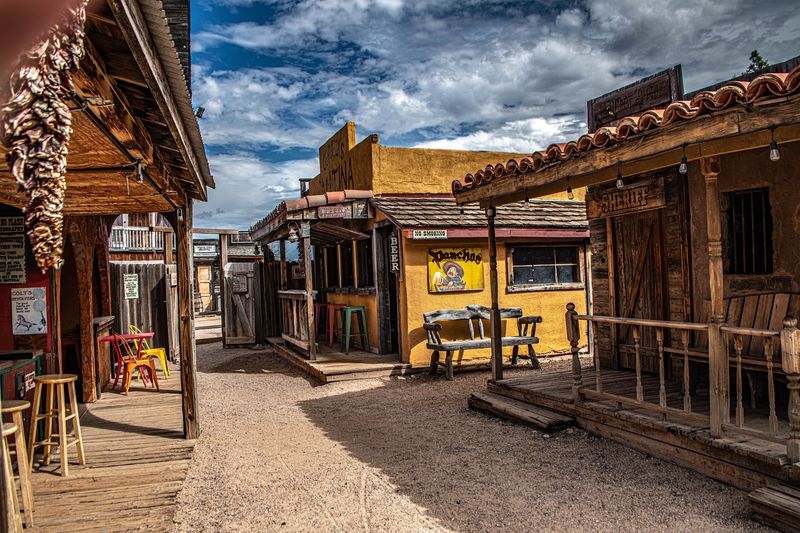
Tombstone has a way of surprising visitors who expected only a one-trick tourist town. Yes, the gunfight reenactments on Allen Street are fun and campy in the best possible way, and Boot Hill Graveyard offers a genuinely sobering look at frontier life.
But beyond those headline attractions, the town rewards slower, more curious exploration. The Rose Tree Museum sits just a short walk from most of the main attractions, and pairing it with a stroll through the historic district gives the whole visit a satisfying mix of natural wonder and human history.
Local shops, small restaurants, and the Bird Cage Theatre all add texture to a town that has far more layers than its gunslinger image suggests.
Spending two days here lets you absorb both the wild and the peaceful sides of Tombstone without feeling rushed.
The rose bush alone is worth a lingering visit, and when you factor in everything else the town offers, you start to understand why so many people who come for an afternoon end up staying much longer.