
North Carolina Is Hiding A Beach So Beautiful It Rivals The Islands
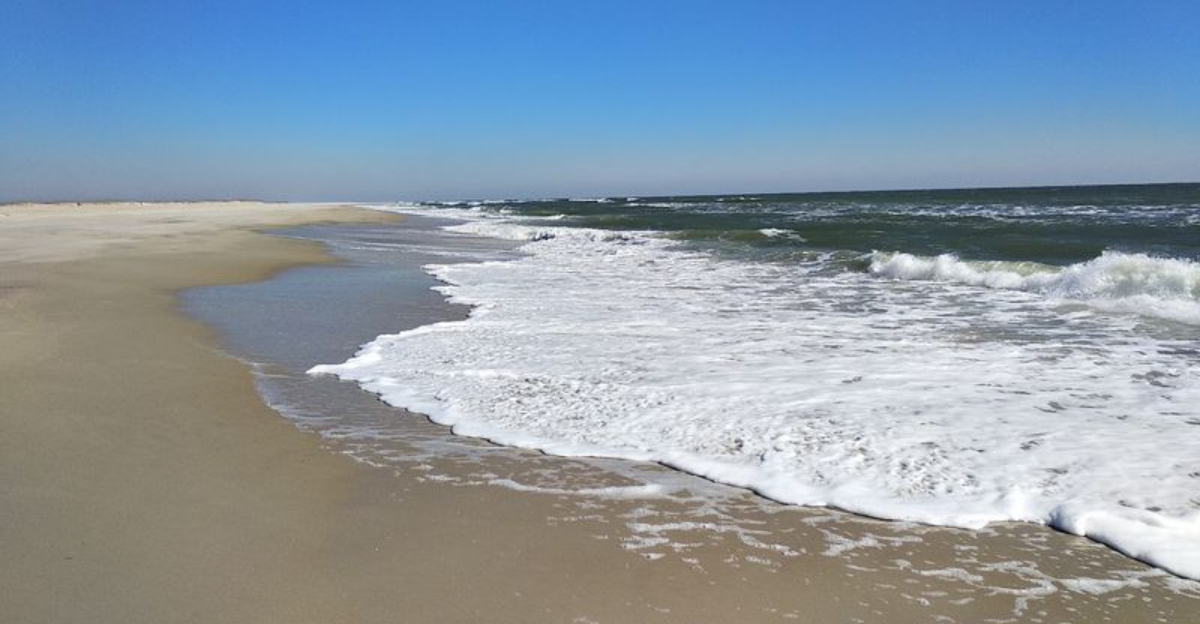
Who needs a plane ticket to a tropical island when North Carolina has a beach that looks this good? With powdery sand, remarkably clear water, and wild horses adding to the scenery, this coastal escape feels like it belongs thousands of miles farther south.
The views are stunning, the crowds are surprisingly light, and the atmosphere makes it easy to lose track of time.
Forget packed boardwalks and rows of high-rise hotels. Here, nature takes center stage.
Every stretch of shoreline feels untouched, every wave invites you to stay a little longer, and every visit leaves you wondering why this place isn’t on every traveler’s bucket list.
It’s proof that some of the most spectacular beach destinations are hiding in plain sight.
The Wild Horses That Will Stop You In Your Tracks
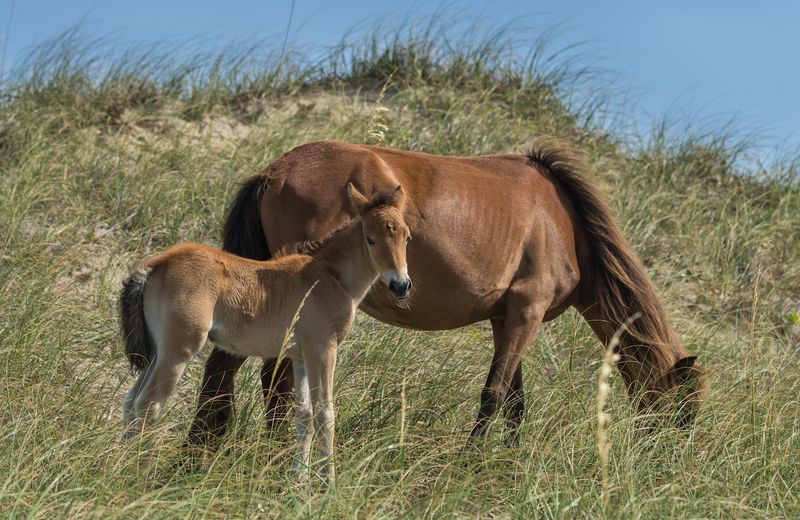
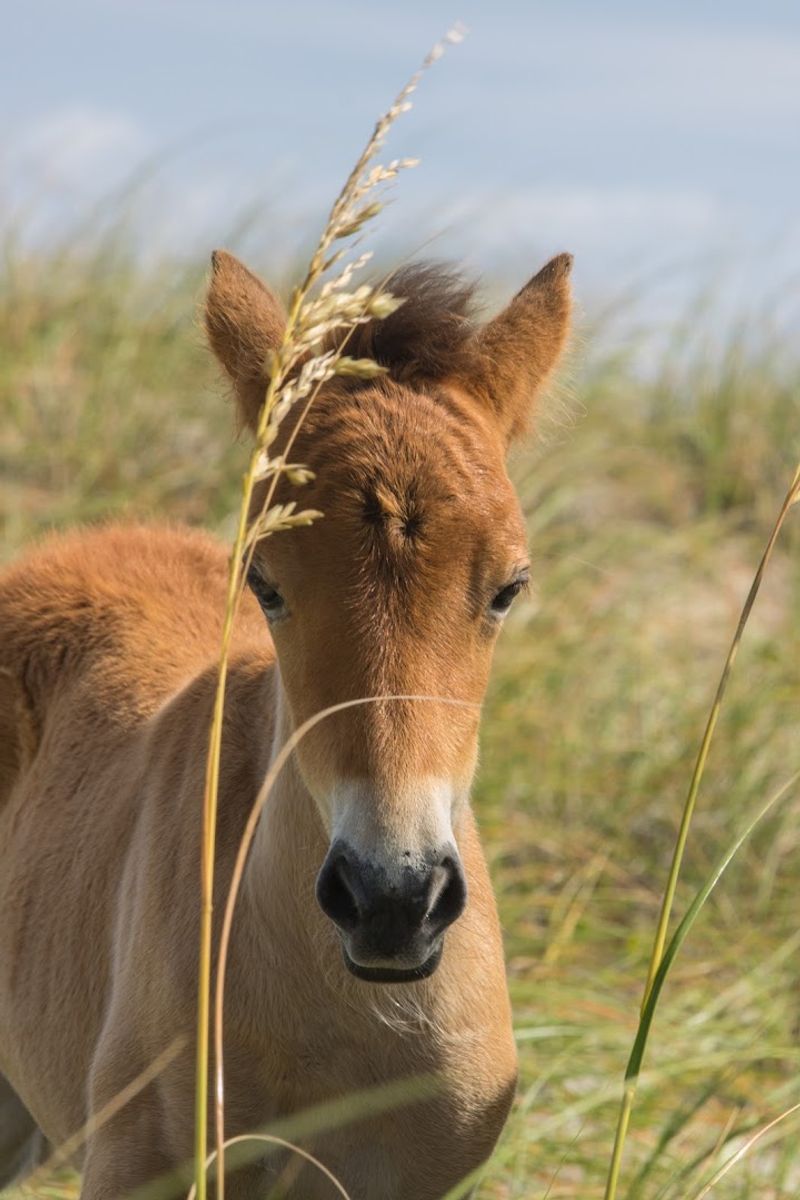
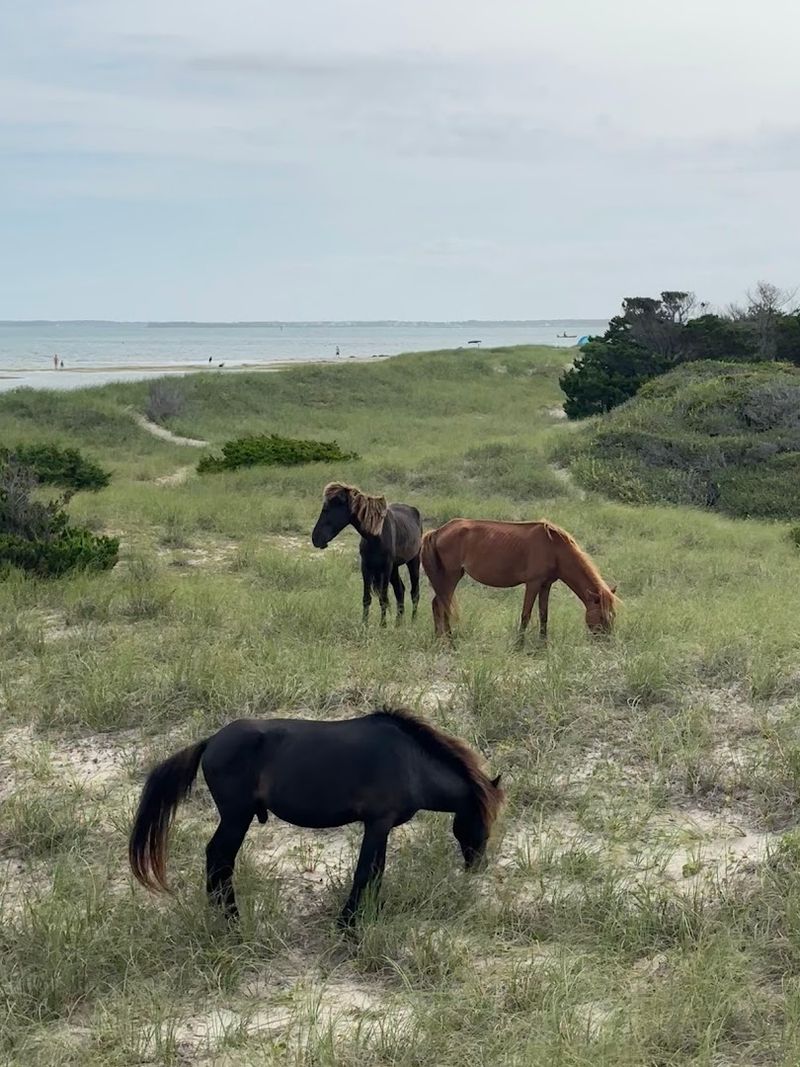
Nothing quite prepares you for the moment you spot a wild horse grazing calmly on an open beach. The Banker ponies of Shackleford Banks are not a tourist gimmick or a staged attraction.
These are genuinely wild animals living completely on their own terms, and seeing them up close is one of those experiences that rewires your brain a little.
Their ancestors are believed to be Spanish mustangs, possibly arriving on the island centuries ago. Genetic testing has actually confirmed their Iberian heritage, which makes their presence feel even more mythical.
The herd typically numbers between 100 and 130 horses at any given time.
They graze on sea oats, salt marsh grasses, and whatever the island generously offers them.
What makes watching them so special is the silence around it. No announcer, no fence, no feeding schedule.
Just horses being horses in one of the most beautiful settings imaginable. Federal guidelines require visitors to stay at least 50 feet away, which honestly only adds to the experience.
Watching them from a respectful distance, you realize you are the guest here.
This island belongs to them first, and that perspective shifts something inside you completely.
How To Actually Get There And Why The Ride Is Half the Fun
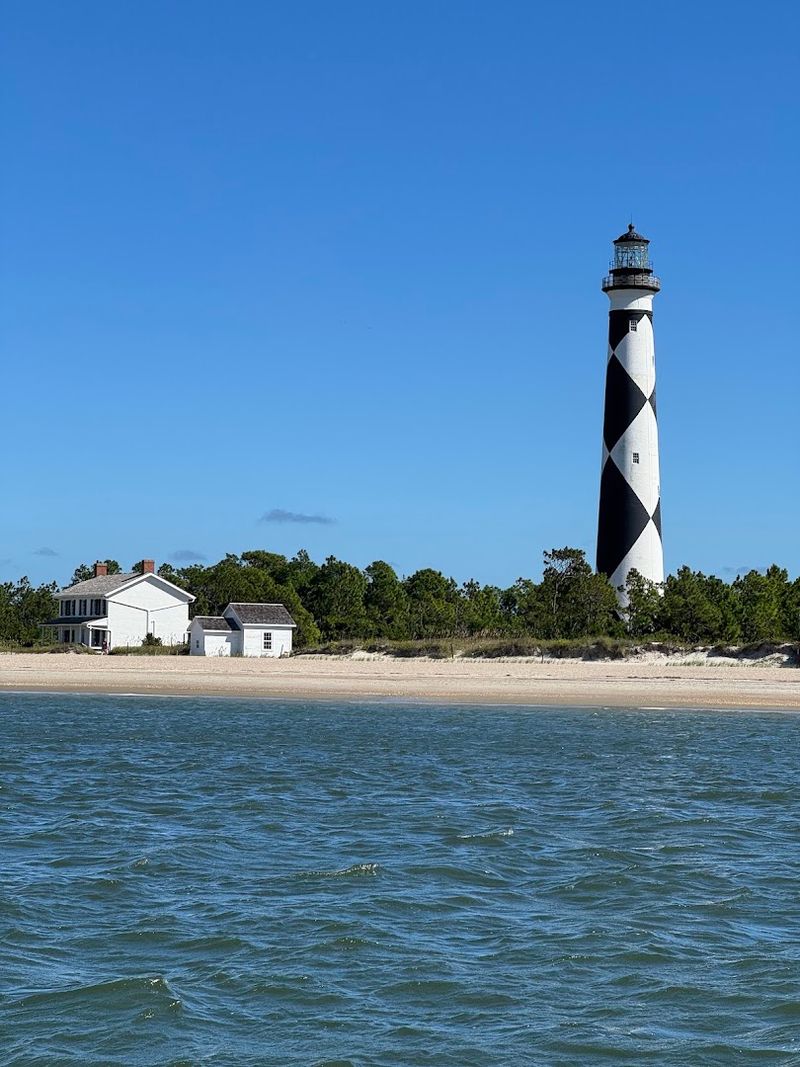
Shackleford Banks sits off the coast near 1800 Island Road, Harkers Island, North Carolina 28531, and the only way to reach it is by boat.
That single fact immediately separates it from every other beach you have ever visited. There are no bridges, no parking lots, no drive-through lanes.
Just water between you and paradise.
Passenger ferries depart regularly from Harkers Island and nearby Beaufort.
The crossing takes roughly 20 minutes across Back Sound, and the views along the way are genuinely stunning. Keep your eyes on the water during the ride because bottlenose dolphins frequently show up to escort the ferry.
It feels almost too good to be real.
Island Express Ferry Service is one of the well-known options operating from Harkers Island. For those with kayaking experience, paddling over from Beaufort is also a popular route.
Private boaters can anchor offshore and wade in.
The ferry journey builds anticipation in the best possible way. By the time your feet touch that sand, you have already earned the experience a little, and that makes every single step feel more satisfying than any regular beach arrival ever could.
Shelling Here Is Basically A Full-Time Obsession
Forget everything you thought you knew about beach shelling. Shackleford Banks operates on a completely different level.
The island sits in a prime location where ocean currents converge, pushing an extraordinary variety of shells onto its shores. Serious shell collectors call this stretch of coastline one of the finest on the entire East Coast, and they are not exaggerating.
The most coveted find here is the Scotch Bonnet, which happens to be North Carolina’s official state shell. Spotting one feels like winning a small lottery
. Beyond that, you might find elegant Lightning Whelks, spiraling Knobbed Conchs, delicate Olive Shells, and the always satisfying Sand Dollar.
The variety keeps every walk along the waterline genuinely exciting.
Timing matters more than luck when it comes to shelling success.
Low tide reveals the best pickings, and the hours following a storm can uncover shells that have never seen the surface before. Visitors are allowed to collect up to a five-gallon bucket of shells per day, as long as no living creatures are inside.
Always check before you collect. The shells tell stories of the ocean floor, and finding the right one feels like receiving a tiny gift from the sea itself.
The Beaches Here Are The Kind You Thought Only Existed In Screensavers
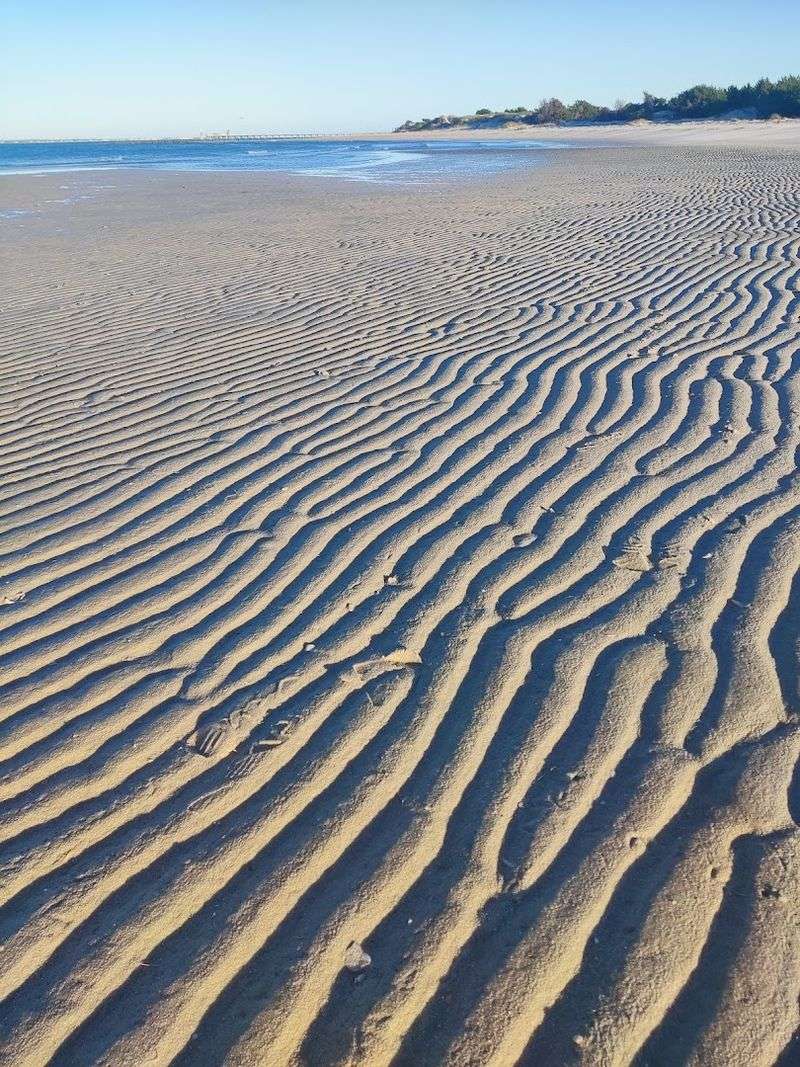
Wide open. Completely undeveloped.
No vendors, no volleyball nets, no umbrellas for rent. The beaches of Shackleford Banks are the real thing, the kind of shoreline that reminds you what a beach is actually supposed to feel like.
Miles of white sand stretch in both directions with nothing blocking the view except the horizon itself.
The Atlantic Ocean side of the island brings active surf that experienced swimmers genuinely enjoy. The waves have energy and presence.
On the opposite side, the sound offers calm, shallow water that is ideal for wading and paddleboarding. Two completely different beach experiences exist on the same island, separated by a short walk across the dunes.
What makes the water here so striking is its clarity. The Crystal Coast earned its nickname for a reason, and Shackleford Banks delivers on that promise every single time.
The absence of motor vehicles and permanent structures keeps the environment exceptionally clean and undisturbed. Standing at the water’s edge with nothing but open ocean ahead and wild horses somewhere behind you is the kind of moment that becomes a permanent memory.
Some places just photograph themselves, and this is absolutely one of them.
The Ecosystem Here Could Fill An Entire Nature Documentary
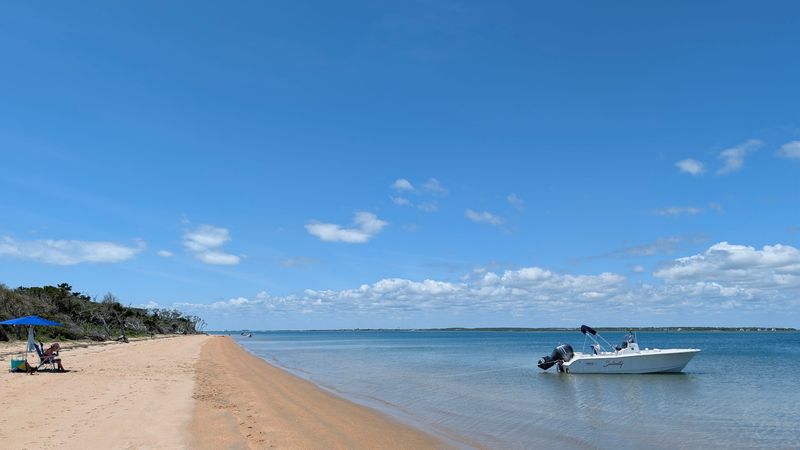
Most people come for the horses and the shells, but the full scope of life on Shackleford Banks goes far beyond what most visitors expect. This island is essentially a working, breathing ecosystem that operates entirely without human management.
Every creature here has found its own role in keeping the place running beautifully.
Ghost crabs scurry across the sand faster than your eyes can follow them. Brown pelicans glide low over the water in perfect formation.
Wilson’s Plovers and other shorebirds nest along the upper beach. During summer, loggerhead sea turtles come ashore to lay their eggs in the same sand where horses graze.
The overlap of species here is genuinely remarkable.
Moving into the island’s interior reveals even more. Gray foxes patrol the maritime forest.
River otters splash through the salt marshes.
Blue crabs navigate the shallow sound waters with surprising speed. The plant life transitions from open dune vegetation to dense shrub thickets to shaded forest canopy within a short walk.
Cape Lookout National Seashore’s protected status ensures this ecosystem stays intact for generations to come.
Every visit to Shackleford Banks is essentially a free front-row seat to one of nature’s most impressive productions.
Exploring The Island On Foot Feels Like A Real Discovery
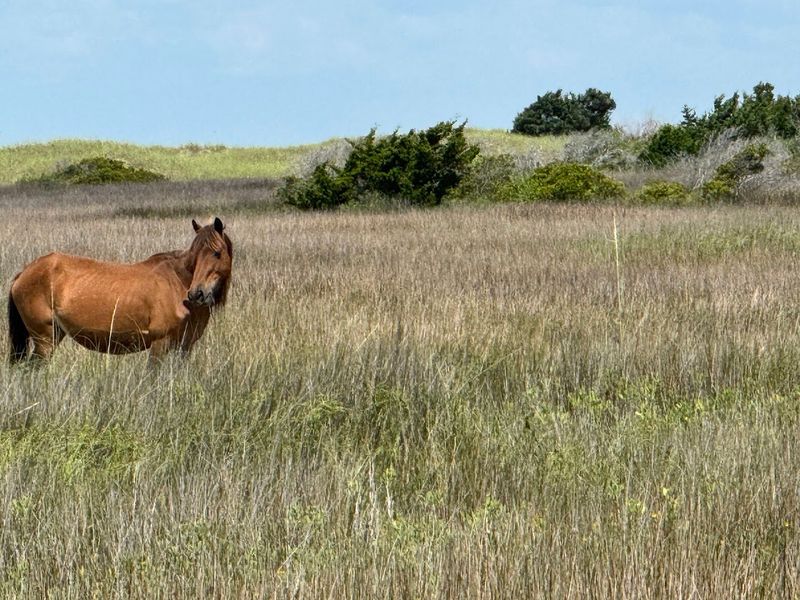
There are zero roads on Shackleford Banks. Zero.
No paved paths, no marked trails, no signage pointing you toward anything.
Navigation here is entirely up to you, which sounds intimidating but actually feels incredibly freeing once you are standing on the island itself. The exploration is entirely self-directed, and that is the whole point.
The island stretches roughly eight to nine miles in length, offering plenty of ground to cover. Natural paths worn by the horses weave through the dunes and into the island’s interior.
Following them leads you through dramatically different landscapes within short distances. Sandy beach gives way to rolling dunes, which open into pockets of maritime forest offering real shade and a completely different atmosphere.
Salt marshes appear on the sound side, where the light hits the water in ways that genuinely make you stop walking just to look.
The absence of any human infrastructure creates a rare sense of solitude that is increasingly hard to find anywhere along the East Coast. You are not following a tour route or a suggested itinerary.
You are just wandering a wild island, letting curiosity lead the way.
That kind of unscripted exploration is something most people have never experienced, and it changes how you think about what a trip can actually be.
Camping Under A Sky Full Of Stars Is The Ultimate Power Move
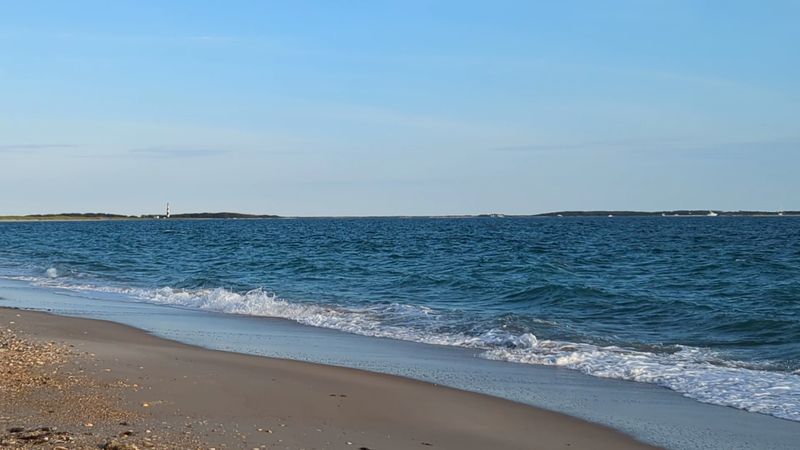
Spending a night on Shackleford Banks is not for the faint of heart, and that is precisely what makes it so unforgettable.
The island permits primitive backcountry camping, which means you bring everything you need and leave absolutely nothing behind. No restrooms, no fresh water, no electricity.
Just you, your gear, and one of the most spectacular night skies on the East Coast.
Far from city light pollution, the stars above Shackleford Banks are the kind you only usually see in photographs.
The Milky Way becomes visible on clear nights, and the quiet is so complete it almost sounds like something. Camping between the dunes provides natural windbreaks and a sense of being tucked into the landscape rather than just sitting on top of it.
Preparation is everything for a trip like this. Insect repellent is essential, especially near the maritime forest and marsh areas.
A quality tent, plenty of fresh water, and solid navigation skills make the difference between a great adventure and a rough night. The National Park Service requires a free backcountry permit, which you can obtain before your trip.
Waking up on a wild, undeveloped barrier island with horses potentially nearby and waves in the background is the kind of morning that permanently raises your standards for every camping trip afterward.
The History Buried In This Island Will Genuinely Surprise You
Shackleford Banks looks like pure untouched wilderness today, but the island actually carries a layered human history that most visitors never think to explore.
Long before it became part of Cape Lookout National Seashore, this stretch of barrier island was home to a thriving community called Diamond City. At its peak in the late 1800s, roughly 500 people lived here, making their living primarily from whaling and fishing.
An 1899 hurricane devastated the settlement so completely that residents eventually relocated to the mainland and nearby islands.
Some residents reportedly floated their homes across the water rather than abandon them entirely. The land was left to nature, and nature reclaimed it completely.
The National Park Service acquired the island in the 1960s, ensuring it would remain protected and undeveloped in perpetuity.
The wild horses carry their own historical mystery.
Local tradition holds that their ancestors survived Spanish shipwrecks somewhere along the Outer Banks in the 1500s. Genetic research has since confirmed strong Iberian ancestry in the Banker pony herd, lending real scientific weight to what was once considered folklore.
Walking across Shackleford Banks today, you are walking across layers of time.
History, ecology, and wild beauty all exist in the same place at once, and that combination is genuinely rare. Are you ready to experience it for yourself?