
Tourists Overran This Once-Pristine Pennsylvania Swimming Hole And Locals Still Aren’t Over It
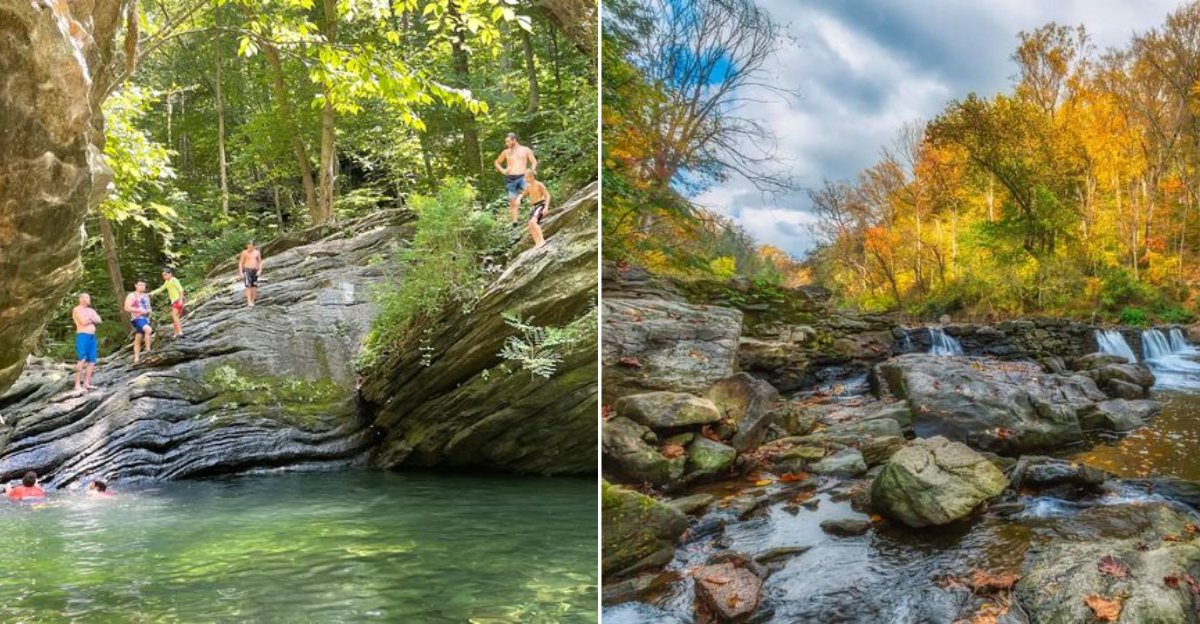
Some summer spots become famous in the worst possible way.
A quiet Pennsylvania swimming hole can start as a local escape, then suddenly turn into the place everyone heard about, everyone posted about, and everyone decided to visit at once.
That is when the mood changes. What once felt peaceful starts feeling crowded, messy, and harder for locals to enjoy the way they remember it. The tension is easy to understand.
People want beautiful places, but beautiful places can only take so much attention before the charm starts paying the price.
This is the kind of story that makes a simple swim feel wrapped in neighborhood pride, frustration, and nostalgia.
I have been to places where the secret was clearly already gone, and it always makes me wish I could have seen them before the crowds found the map.
The Origins Of Devil’s Pool And Its Mysterious Name
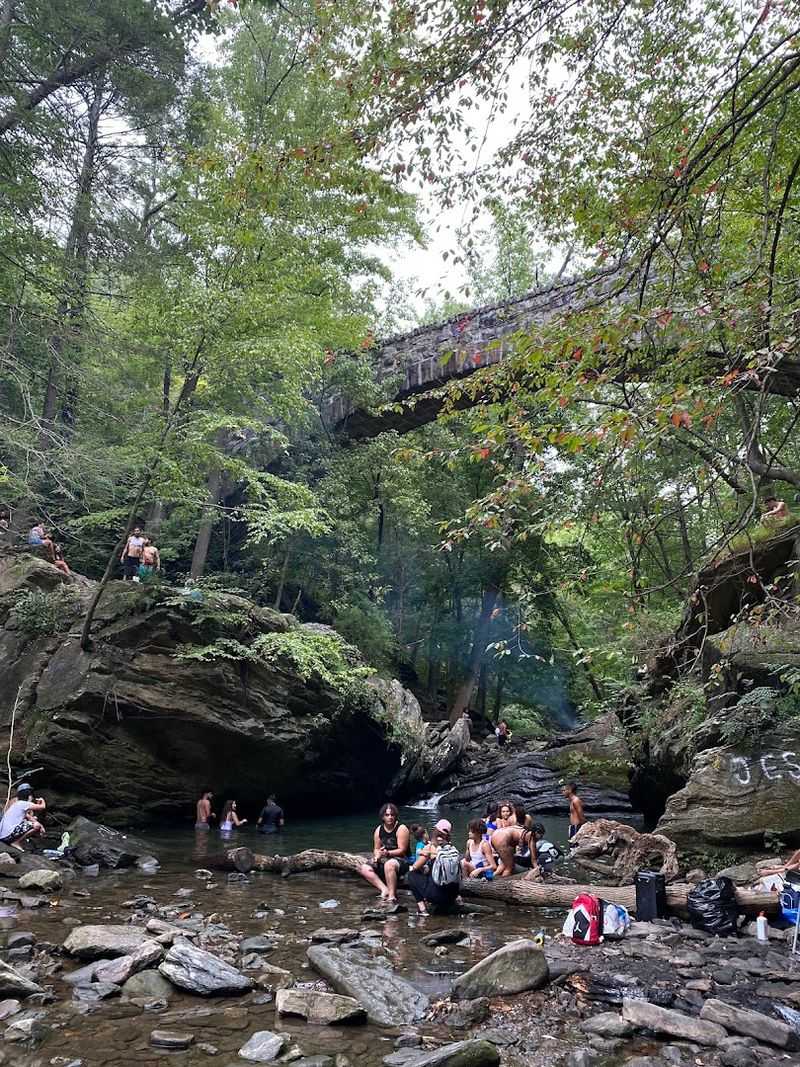
Long before social media existed, Devil’s Pool had already earned a reputation that made people curious. The name alone is enough to stop someone and ask, “Wait, what is that place?”
Cresheim Creek carved the basin through exposed layers of Wissahickon schist over millions of years before flowing into Wissahickon Creek.
Those folded rock layers are geologically significant, but no authoritative source confirms that their appearance directly created the pool’s name.
Friends of the Wissahickon documents several legends connected to the site, along with stories of Pietist religious activity and Revolutionary-era events nearby.
The precise origin of the name remains uncertain rather than firmly tied to supernatural shadows or dangerous currents.
Whatever its exact beginning, the name endured and helped make the landmark memorable. Pennsylvania has no shortage of beautiful waterways, but few carry a name quite this recognizable today.
What The Pool Actually Looks Like Up Close
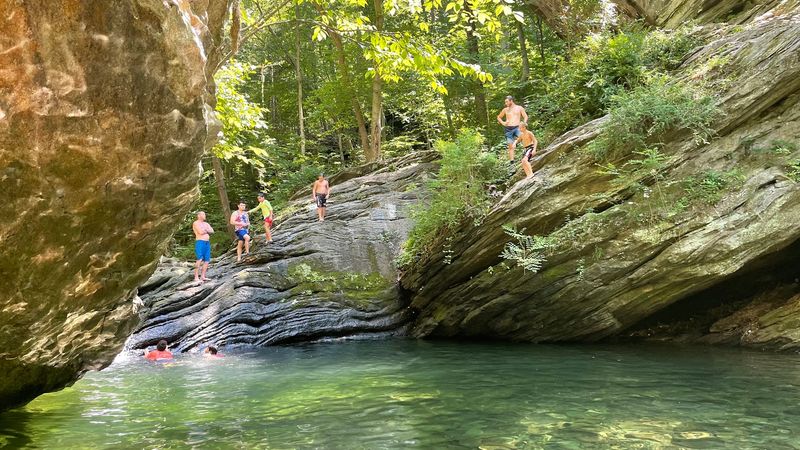
Photographs of Devil’s Pool can make it look like something from a fantasy novel, and the setting is dramatic.
The pool lies where Cresheim Creek approaches its meeting with Wissahickon Creek, forming a dark basin among Wissahickon schist.
Large sloping rocks border the water on several sides, giving visitors places to stand or sit, although entering the pool or jumping from those rocks is prohibited.
Historical descriptions put the basin at roughly fifteen feet deep and twenty feet wide, but water level and depth can vary with weather and runoff.
The surrounding forest shades much of the area, adding to its enclosed atmosphere. Moss and vegetation cover sections of rock, while a cascade and the stone arch above the site add distinctive visual features.
It feels surprisingly wild for a landmark inside a major Pennsylvania city, and that contrast remains a large part of its appeal to hikers and photographers.
The Long Hike Just To Get There
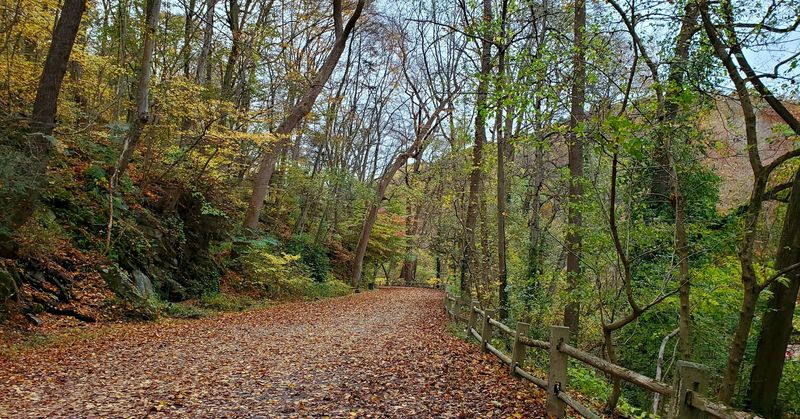
Getting to Devil’s Pool is not as simple as pulling up to a beach and dropping your towel.
The closest parking area is roughly a mile away, and the trail shifts from a smooth path to a rocky, uneven surface as you get closer to the pool.
Most visitors say the walk takes between fifteen and thirty minutes depending on pace, and strollers can only make it about halfway before the terrain becomes too rough.
The trail itself is genuinely beautiful, running alongside Wissahickon Creek through thick forest that feels surprisingly remote for a place inside Philadelphia.
On busy summer weekends, that trail turns into something closer to a parade. Crowds of people carrying towels, coolers, and speakers fill the path in both directions.
The hike is part of what makes arriving at the pool feel earned. Pennsylvania trails rarely disappoint, and this one is no exception, even when shared with a hundred strangers.
Swimming Is Officially Prohibited Here
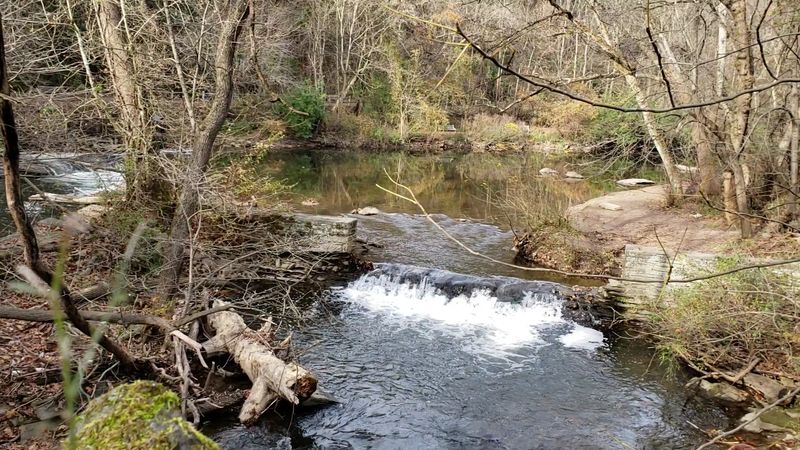
Here is the part that surprises first-time visitors. Swimming at Devil’s Pool is prohibited under Philadelphia’s citywide ban on swimming in rivers and streams, and signs warn visitors to stay out.
Despite those rules, people have entered the water for decades.
Friends of the Wissahickon, Philadelphia Parks and Recreation, and the Philadelphia Water Department cite drowning risks, submerged objects, slippery rocks, difficult emergency access, and unpredictable water quality.
The Wissahickon receives treated wastewater from upstream plants, while stormwater runoff can carry bacteria and pollutants into the creek system.
Conditions may worsen after rain, when water levels, currents, turbidity, and bacterial measurements can change quickly.
Jumping from rocks adds risk because depth varies and the bottom includes rock and debris. Crowds still gather during hot weather, but popularity does not make the activity legal or safe.
Visitors can view the landmark from the trail without entering the water, climbing restricted areas, or treating the pool as an authorized swimming facility.
Rock Jumping Culture And The Daredevils Who Love It
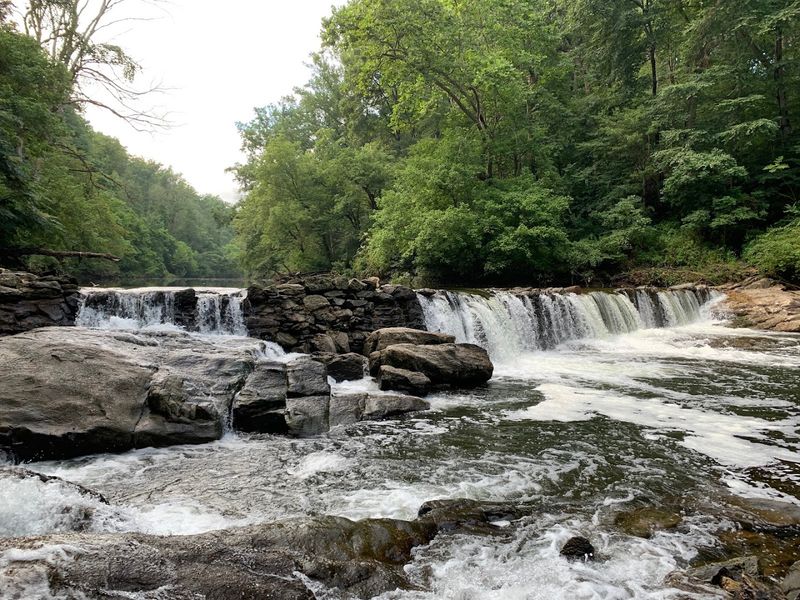
If there is one thing that put Devil’s Pool on the map for younger generations, it is the rock jumping.
The boulders surrounding the pool rise to varying heights, and the highest spots draw a specific type of visitor: the kind who needs everyone to watch before they leap.
On a busy summer afternoon, the rocks become a kind of informal performance stage.
People line up, psych themselves up, and launch themselves into the cold water below while onlookers cheer or gasp from their perches on the surrounding boulders.
The jumps range from short hops to genuinely high leaps that make your stomach drop just watching.
Submerged rocks and unpredictable water depth make the higher jumps particularly risky, and park officials have repeatedly warned visitors about the dangers.
Still, the culture around rock jumping at this Pennsylvania swimming hole has taken on a life of its own, fueled by social media clips that make the whole thing look thrilling and consequence-free.
How Social Media Turned A Local Spot Into A Viral Destination
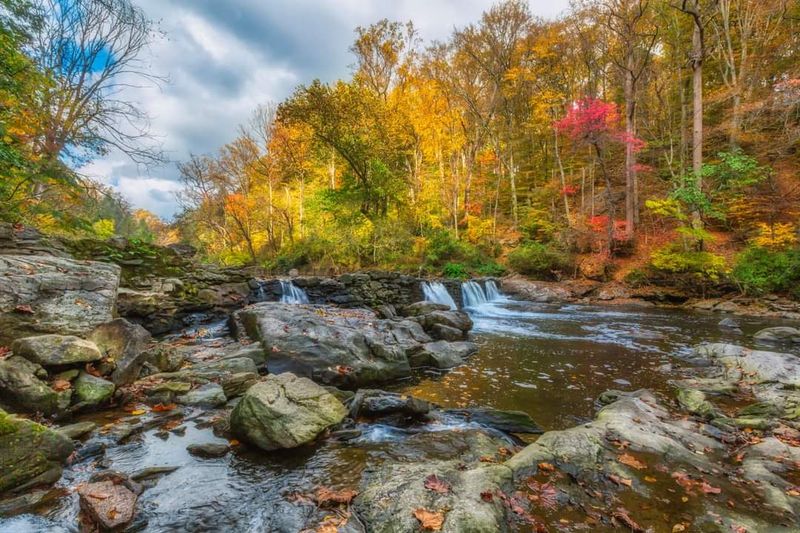
For many years, Devil’s Pool spread through local knowledge and word of mouth.
Longtime Philadelphia residents remember periods when weekday visits could feel quieter than the crowded scenes associated with recent summers.
Photographs and videos of rock jumping, creek swimming, and the surrounding Wissahickon forest later circulated through news coverage and social platforms.
Friends of the Wissahickon linked that online attention to rising visitation and safety problems.
During the 2018 Fourth of July weekend, the organization recorded about 1,200 visits per day, compared with a previous record of roughly 400 in 2011.
The pool’s dramatic rocks and dark water make visually striking content, but short clips rarely communicate the swimming ban, poor water quality, difficult emergency access, litter, or environmental damage.
Recent 2026 reporting shows the pressure continues. After the Fourth of July, workers and volunteers collected more than twenty bags of trash, five times their usual Sunday amount, while visitors continued arriving despite posted warnings.
The Trash Problem That Breaks Local Hearts
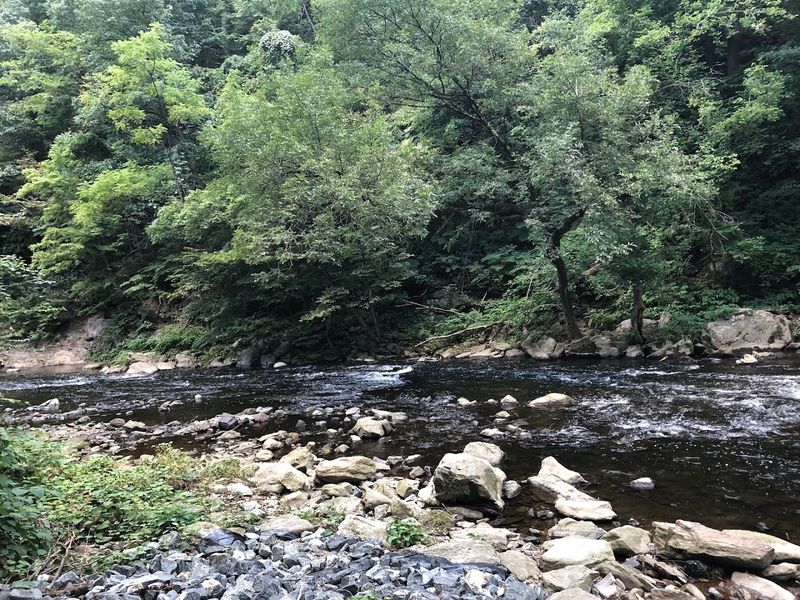
Ask any longtime Philadelphia resident about Devil’s Pool and the conversation will eventually turn to trash.
The surge in visitors brought a surge in litter, and the natural beauty of the area has paid the price.
Empty chip bags, plastic containers, foil wrappers, and discarded bottles have been spotted scattered across the rocks and forest floor after busy weekends.
Early morning visitors who arrive before the crowds sometimes find the area looking like the aftermath of a large outdoor party.
Volunteer cleanup groups and the Friends of the Wissahickon organization have worked hard to keep the area clean, but the volume of visitors makes it a constant battle.
The “leave no trace” principle, which should be standard practice on any Pennsylvania trail, gets ignored at a frustrating rate here.
The litter issue is one of the biggest reasons locals feel protective of the space. Watching a beloved natural area fill up with garbage is genuinely painful for people who have treasured it for years.
Limited Parking and Vehicle-Safety Advice
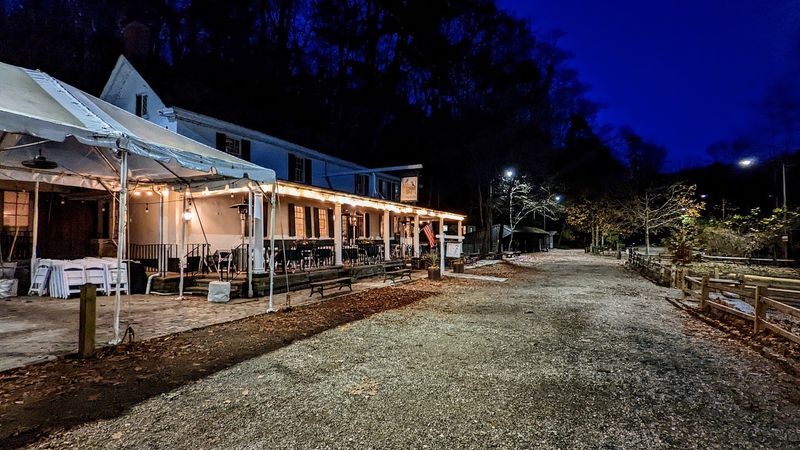
Parking near Devil’s Pool requires planning because the landmark has no dedicated parking lot nearby.
Common approaches begin near Valley Green Road, Livezey Lane, and Forbidden Drive, where legal spaces may fill during busy periods.
Visitors should use designated spaces and follow all posted restrictions.
Friends of the Wissahickon notes that illegal parking can block or delay emergency access to a site already more than half a mile from the nearest trailheads.
Vehicle security is another documented concern. The organization advises drivers to lock doors, carry their keys, and never leave valuables visible inside parked cars.
Any break-in or vandalism should be reported to the appropriate Philadelphia police district.
Parking farther away may add walking distance, but visitors should not invent spaces along road edges or obstruct access points.
Checking current trail and road conditions before leaving home is especially important because construction, weather, or temporary closures can change the most practical entrance into this section of Wissahickon Valley Park.
Water Quality Concerns That Deserve Serious Attention
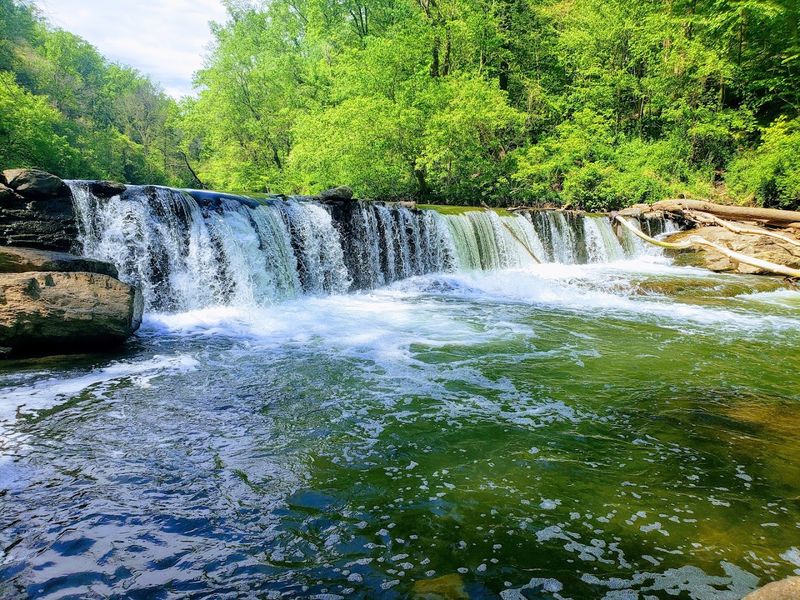
Beyond the posted swimming ban and crowding, water quality is a serious concern that social media images rarely communicate.
The Wissahickon receives treated wastewater discharged by upstream treatment plants, while rain carries stormwater, animal waste, litter residue, chemicals, and pollutants through the watershed.
Those are different processes; describing the problem as treated sewage overflow after rain is inaccurate.
A Philadelphia-area recreational water study sampled Devil’s Pool and found that bacterial indicators increased sharply after rainfall.
Its findings concluded that swimming there presents greater risk than wading or fishing and that wet-weather recreation may be riskier than dry-weather exposure.
Philadelphia’s Water Department advises against swimming in any city river or creek because bacteria can cause gastrointestinal illness.
Murky water after storms also reduces visibility around rocks and submerged objects, adding a physical hazard to the microbial concern.
The pool may look inviting during hot weather, but visitors should understand that appearance is not proof of safe water and that the prohibition applies regardless of rainfall.
What Locals Wish Visitors Would Actually Do
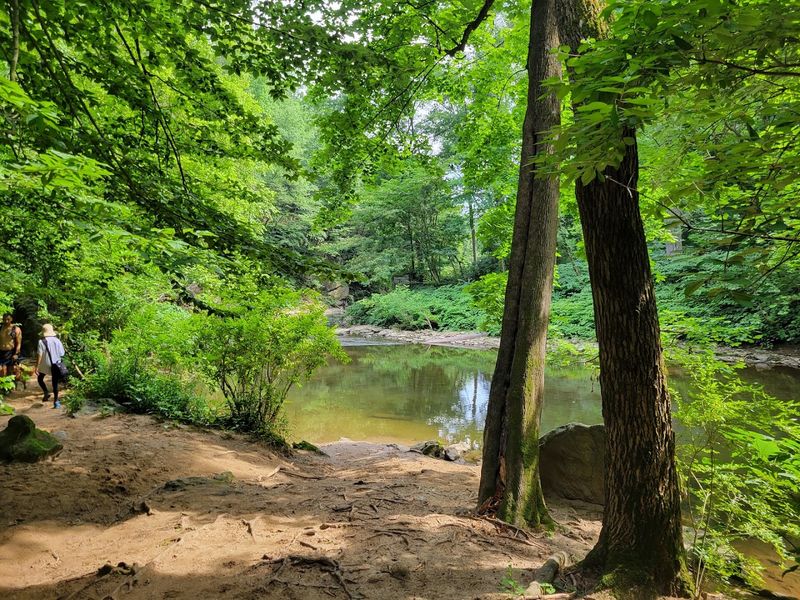
Longtime fans of Wissahickon Valley Park are not anti-visitor. Most of them genuinely want people to experience the park and appreciate what Pennsylvania’s natural spaces have to offer.
What they want is for visitors to show up with a little more respect and a little less entitlement.
The most common requests from regulars are simple: carry out your trash, follow the posted rules, avoid parking in restricted areas, and be mindful of the people around you.
Bringing loud speakers into a nature preserve tends to go over poorly with hikers who came for the sound of the creek.
Going early on weekdays is the best way to experience Devil’s Pool closer to its natural state.
The trail is quieter, the water is calmer, and the rocks are not covered in people performing for their phone cameras.
The pool and the park around it are genuinely worth protecting. Treating them well is the only way to make sure future visitors, and future Pennsylvania generations, get to enjoy them too.