
11 Historic Ohio Churches Along The Scenic Byway Of Cross-Tipped Steeples
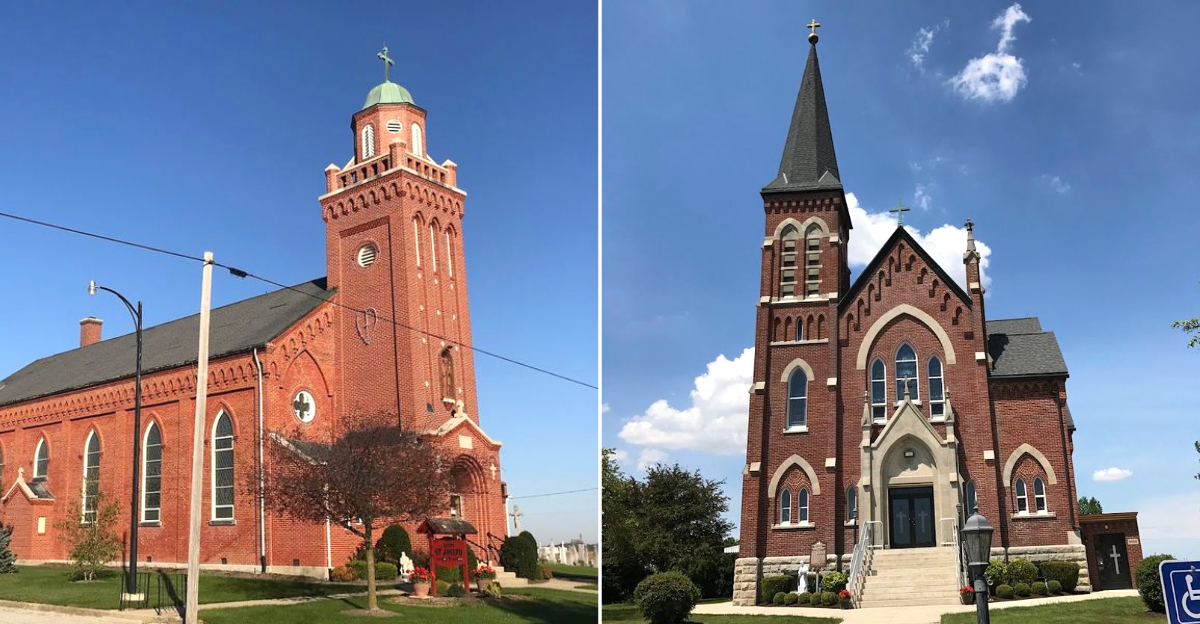
I did not expect a quiet drive through western Ohio farmland to keep producing steeples that made me slow down. Then another one appeared above the fields, followed by another.
This scenic route links small communities shaped by German Catholic immigrants, where churches were built with far more ambition than the surrounding towns might suggest.
Stone towers, stained glass, and careful craftsmanship still define the landscape more than a century later.
How did so many remarkable churches end up along one rural road? These 11 stops tell that story one cross-tipped steeple at a time.
1. St. Augustine Catholic Church, Minster
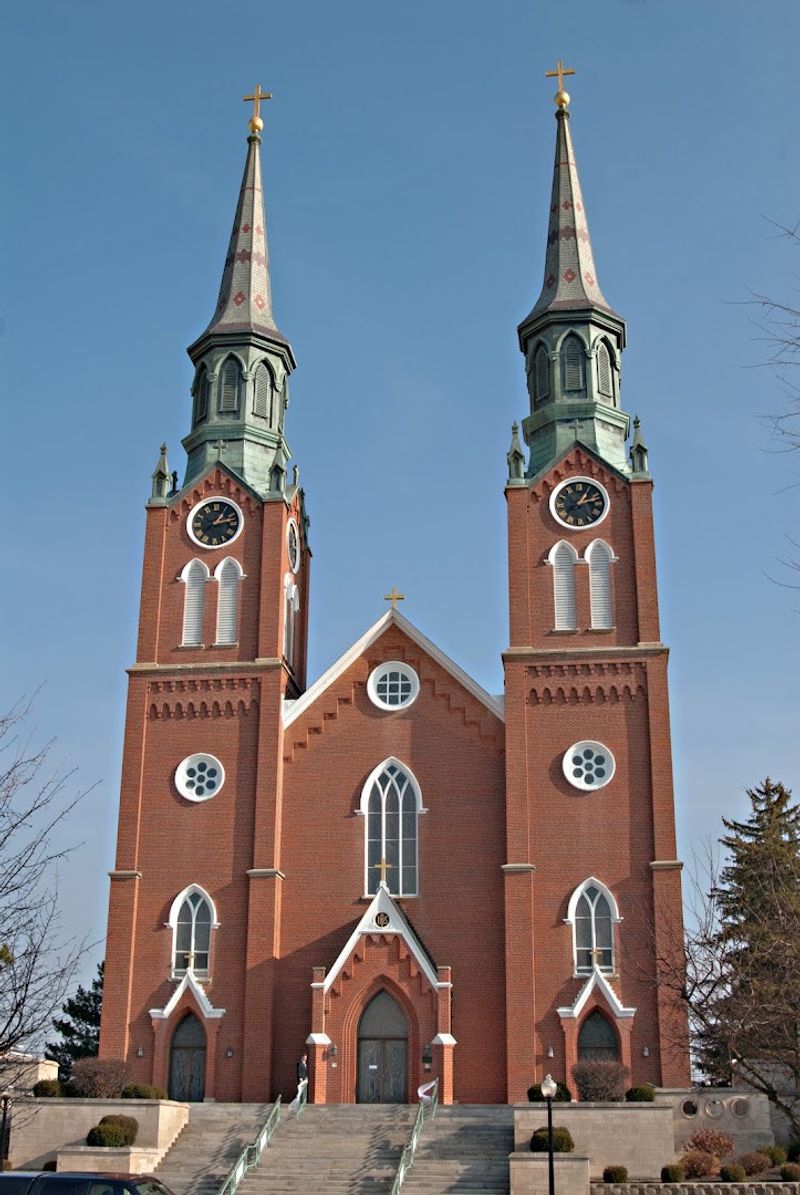
Few churches announce themselves quite like St. Augustine in Minster, Ohio, where twin towers rise above the town center and seem to compete with the sky itself for attention.
Formally established in 1836, the parish grew alongside the German Catholic community that shaped Minster and much of the surrounding region.
The present church dates to 1848, while its distinctive twin towers were added in 1874.
The church stands at 48 North Hanover Street, right in the heart of Minster, making it easy to find and hard to ignore.
When the building is open outside scheduled services, the interior reveals ornate altars, stained glass, and carefully maintained decorative details.
The parish has been a cornerstone of community life for well over a century, continuing to host regularly scheduled Masses and parish events.
If you are visiting on a weekend, the surrounding downtown area offers small shops and local bakeries worth exploring before or after your visit.
St. Augustine is the kind of place that makes you slow down and actually look at what surrounds you.
2. St. Joseph Catholic Church, Egypt
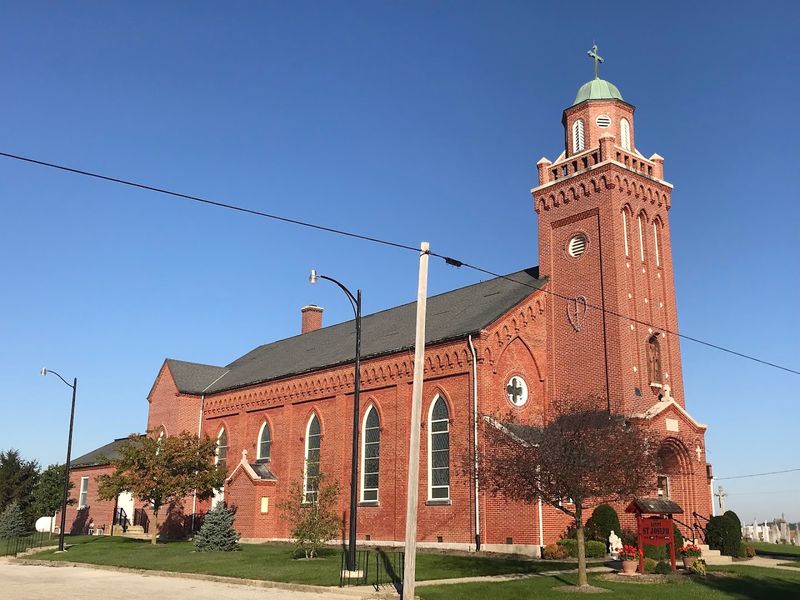
Just a short drive from St. Augustine, St. Joseph Catholic Church stands in the rural community of Egypt and offers a completely different architectural personality worth savoring.
Located at 2441 State Route 364, Minster, OH 45865, the church rises above flat farmland like a landmark for travelers who know where to look.
The parish was organized in 1852 to serve Catholic farming families living outside Minster, while the historic church and rectory associated with the byway date to 1887.
The rural setting gives the parish an intimate character that contrasts beautifully with the larger church in downtown Minster.
The surrounding countryside makes this stop especially scenic, particularly in autumn when the fields turn gold and the steeple catches the late afternoon light.
Visiting St. Joseph and St. Augustine in a single afternoon is easy and deeply rewarding.
Together, they show how Catholic parish life developed both inside Minster and among the farming settlements surrounding it.
3. Nativity of the Blessed Virgin Mary Catholic Church, Cassella
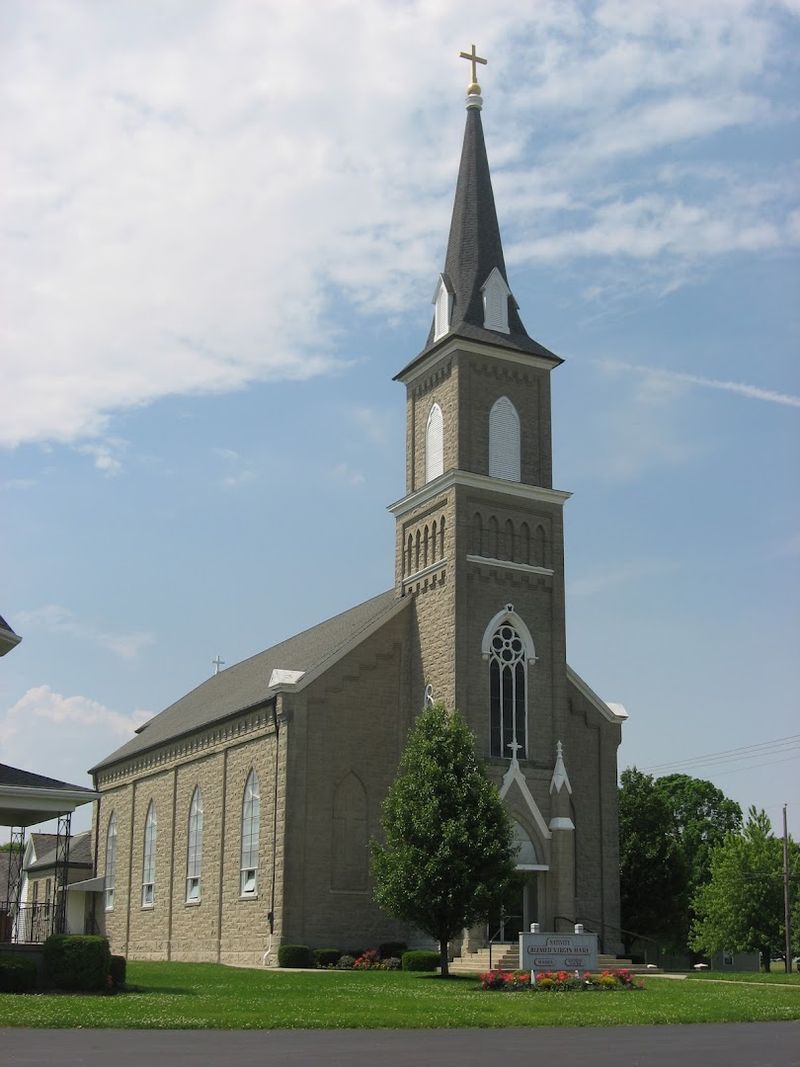
Right along State Route 119 in Cassella stands a remarkable church that proves western Ohio’s smallest rural communities built with extraordinary ambition.
Nativity of the Blessed Virgin Mary Catholic Church at 6524 State Route 119 is a beautifully preserved example of the German immigrant parish tradition that defines this entire byway.
The Cassella parish was formed in 1847, and the present brick church was constructed in 1858.
After a fire in 1888 left the exterior walls standing, the building was reconstructed and blessed again in 1889 with the tower and Gothic character visitors recognize today.
Visiting this church alongside St. Rose and other nearby Marion Township stops creates a natural short-driving tour for history lovers and architecture enthusiasts.
The surrounding farmland provides a peaceful backdrop that slows everything down in the best possible way.
Early morning visits can be especially atmospheric when mist settles across the fields around the church.
This is one of those stops on the byway that quietly becomes a personal favorite.
4. St. Rose Catholic Church, St. Rose
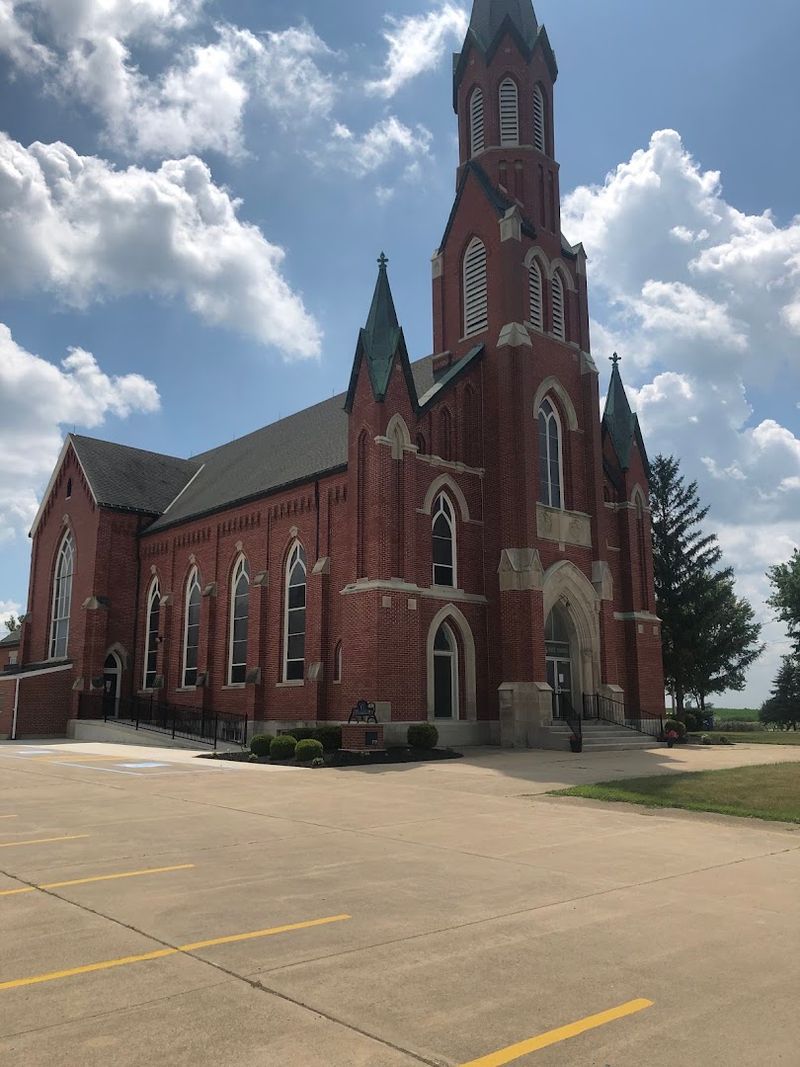
Another historic church along State Route 119 might sound excessive, but once you see St. Rose Catholic Church at 7428 State Route 119, you will be grateful that the route includes it.
St. Rose is a separate rural community east of Cassella, with architectural details that give its church a distinct character within this concentrated collection of historic parishes.
The parish was founded in 1839, while construction of the present Gothic-style church was completed in 1911.
Its cross rises approximately 133 feet above the ground, creating a landmark that is visible well beyond the immediate church property.
The grounds surrounding St. Rose are well-kept and peaceful, making them a lovely place to pause and take in the rural Ohio scenery before continuing down the byway.
Seasonal flowers near the entrance add color and charm during spring and summer visits.
St. Rose, Cassella, and Maria Stein form separate communities whose churches help explain how Catholic settlements spread across this farming region.
St. Rose adds a memorable flourish to that story, and it does not disappoint.
5. St. Sebastian Catholic Church, St. Sebastian
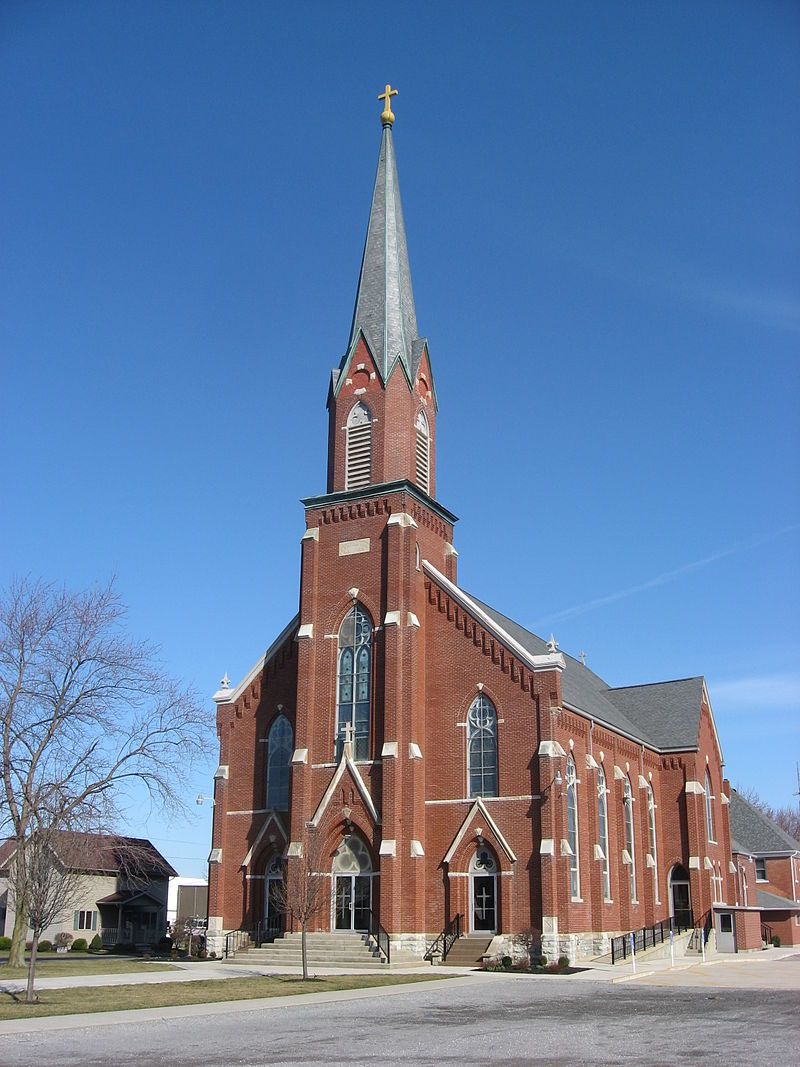
County Road 716A in the rural community of St. Sebastian leads to one of the most pleasantly surprising stops on the entire byway.
The church stands at 3280 County Road 716A, Celina, OH 45822, using a Celina mailing address even though it belongs to the historic St. Sebastian settlement.
The present church complex dates to 1903 and continues to serve a farming community that has gathered here across multiple generations.
The rural setting gives St. Sebastian a quieter, more contemplative atmosphere than the village churches elsewhere on the route.
Its prominent tower and historic architecture reflect the same Catholic building tradition seen throughout southern Mercer and Auglaize counties.
Visiting in the late afternoon can provide attractive light across the church exterior and surrounding farmland.
Fields stretch in several directions, with limited development interrupting the view.
St. Sebastian is a reminder that the best discoveries sometimes happen on roads you almost did not take.
6. St. Aloysius Catholic Church, Carthagena
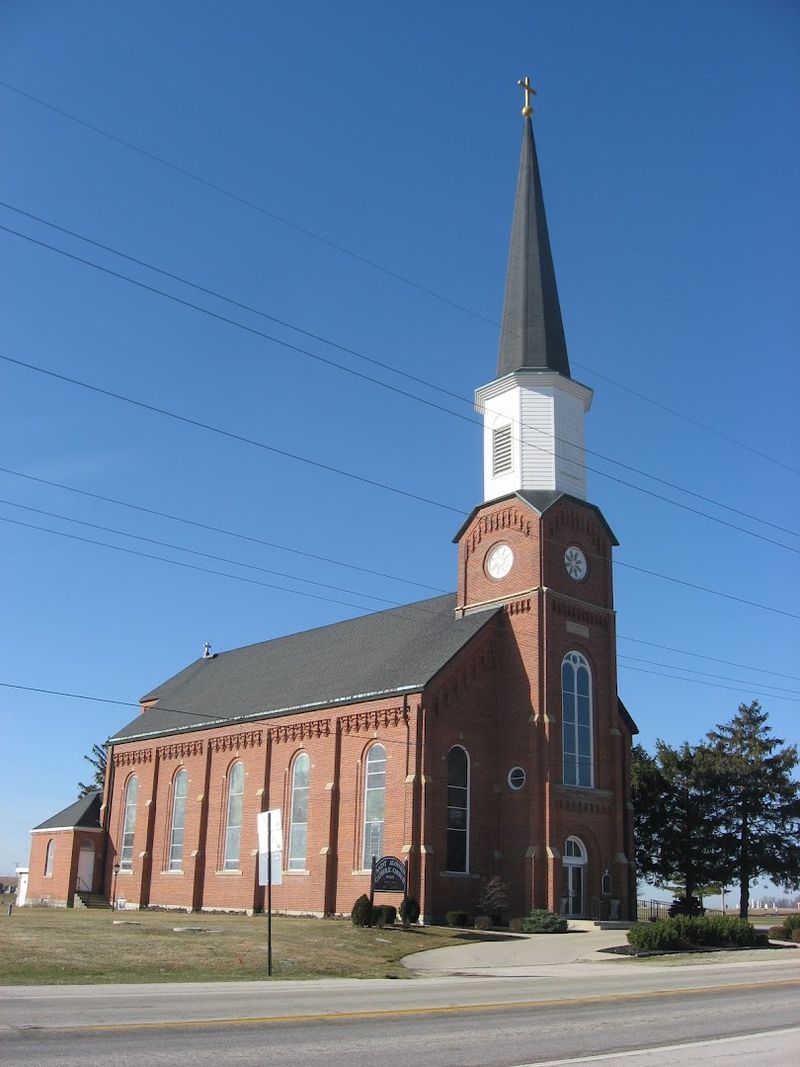
State Route 274 in Carthagena is home to St. Aloysius Catholic Church, a parish that shares the region’s deep Catholic roots while expressing them with its own architectural voice.
Located at 6036 State Route 274, Celina, OH 45822, the church uses a Celina mailing address but stands in the historic community of Carthagena near St. Charles Center.
The present church dates to 1878 and has served its rural congregation for well over a century.
The steeple is particularly photogenic when framed against the wide Ohio sky that dominates this flat, open landscape.
When the church is open, traditional Catholic artwork and stained glass reward visitors who take time to study the details.
The parish grounds provide enough open space to view the exterior from several angles.
St. Aloysius pairs naturally with the nearby St. Charles Center, giving visitors a fuller picture of Carthagena’s importance to the region’s Catholic history.
7. St. Henry Catholic Church, St. Henry
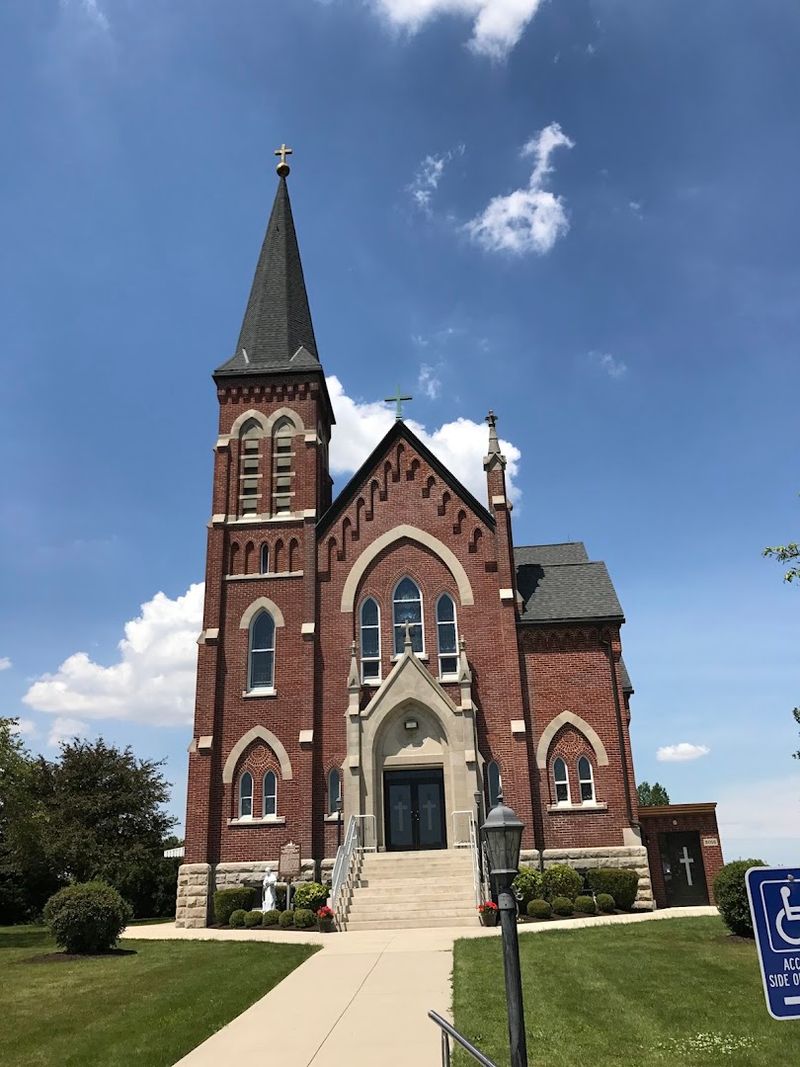
A town that shares its name with its most famous church creates a certain expectation, and St. Henry Catholic Church at 272 East Main Street in St. Henry, Ohio, absolutely delivers on it.
This is one of the grandest stops on the entire byway, with a steeple that dominates the small town skyline in a way that makes first-time visitors stop their cars and stare.
The church was built to be a centerpiece, and it has fulfilled that role magnificently for generations of parishioners who have gathered here for every major moment in their lives.
The interior is spacious and richly decorated, with high ceilings that amplify the sense of awe you feel the moment you walk through the doors.
St. Henry the town is also worth a brief exploration, as its tidy Main Street and friendly atmosphere make it a great place to grab a bite and chat with locals who are usually happy to share their town’s history.
This stop has a way of anchoring the whole byway experience in something deeply human and real.
8. St. Wendelin Catholic Church, Wendelin
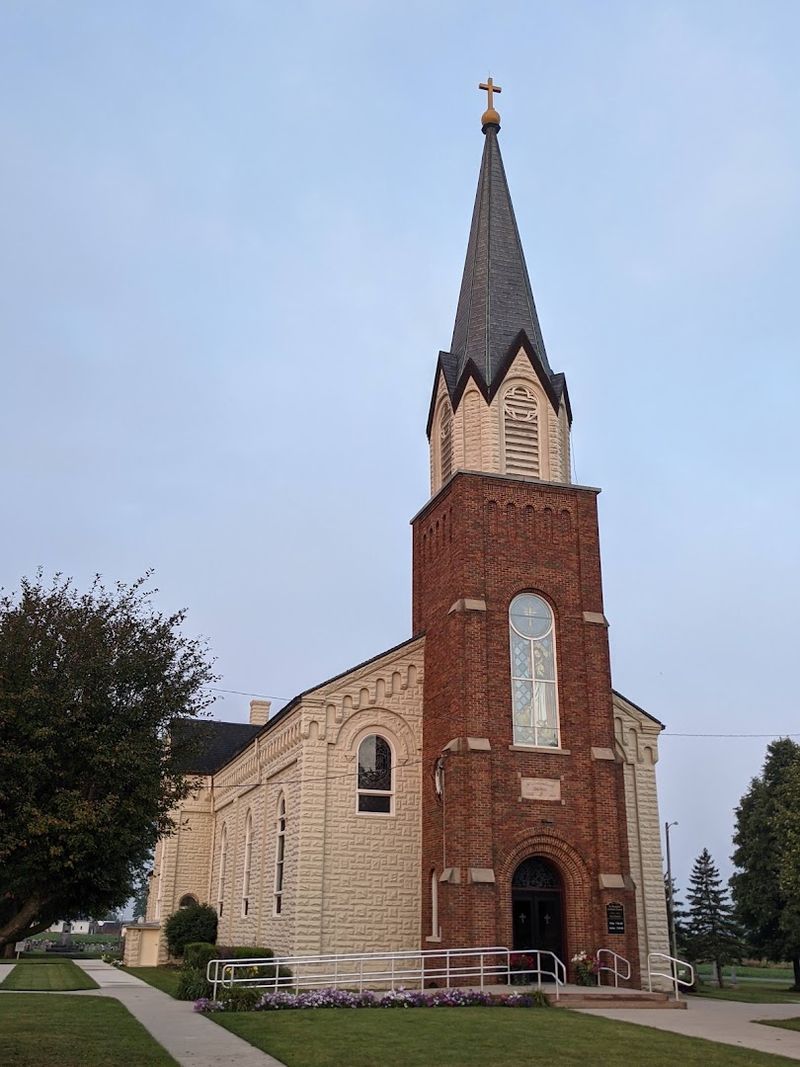
The Fort Recovery-Minster Road corridor is scenic on its own, but St. Wendelin Catholic Church gives travelers a compelling reason to slow down and stop.
The church stands at 2980 Fort Recovery-Minster Road in the rural community of Wendelin, between St. Henry and Fort Recovery.
The parish was formed in 1856, and the present historic church dates to 1870.
The parish is dedicated to St. Wendelin, a patron saint of farmers and herdsmen, which feels particularly appropriate in the agricultural landscape surrounding it.
Its steeple is a familiar landmark above the flat fields and remains a consistent point of reference across the seasons.
The church and grounds have been maintained through the work of parishioners whose families have remained connected to the community for generations.
St. Wendelin adds a distinctly rural chapter to the byway’s larger religious and architectural story.
Allow enough time to appreciate the setting without assuming that the church interior will be open outside scheduled services.
9. St. Bernard Catholic Church, Burkettsville
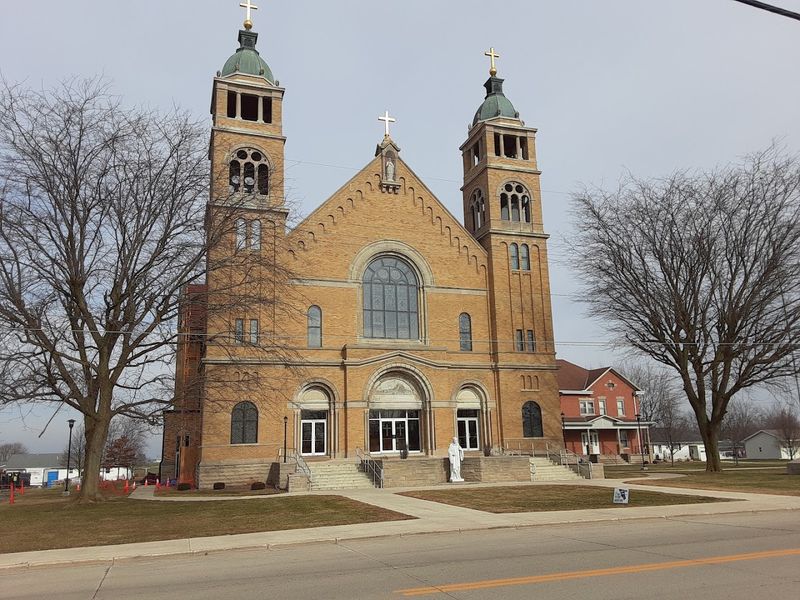
Burkettsville is one of those blink-and-you-miss-it Ohio villages that turns out to be far more interesting than its size suggests, largely because of St. Bernard Catholic Church at 71 West Main Street.
This small parish carries enormous historical weight for such a compact building, representing the faith and determination of a community that established itself in a very rural, very modest setting.
The church’s scale is actually part of its appeal: there is something deeply moving about a congregation that built with such care and intention even when resources were limited.
St. Bernard has a certain quiet dignity that larger, more elaborate churches sometimes lack, and spending time here gives the byway trip a welcome moment of stillness and reflection.
The village of Burkettsville itself is peaceful and photogenic, with the kind of unhurried atmosphere that feels increasingly rare in modern life.
Arriving here after the larger parishes earlier on the route creates a natural emotional rhythm that experienced road trippers will appreciate.
St. Bernard is small in size but genuinely large in character.
10. Holy Trinity Catholic Church, Coldwater
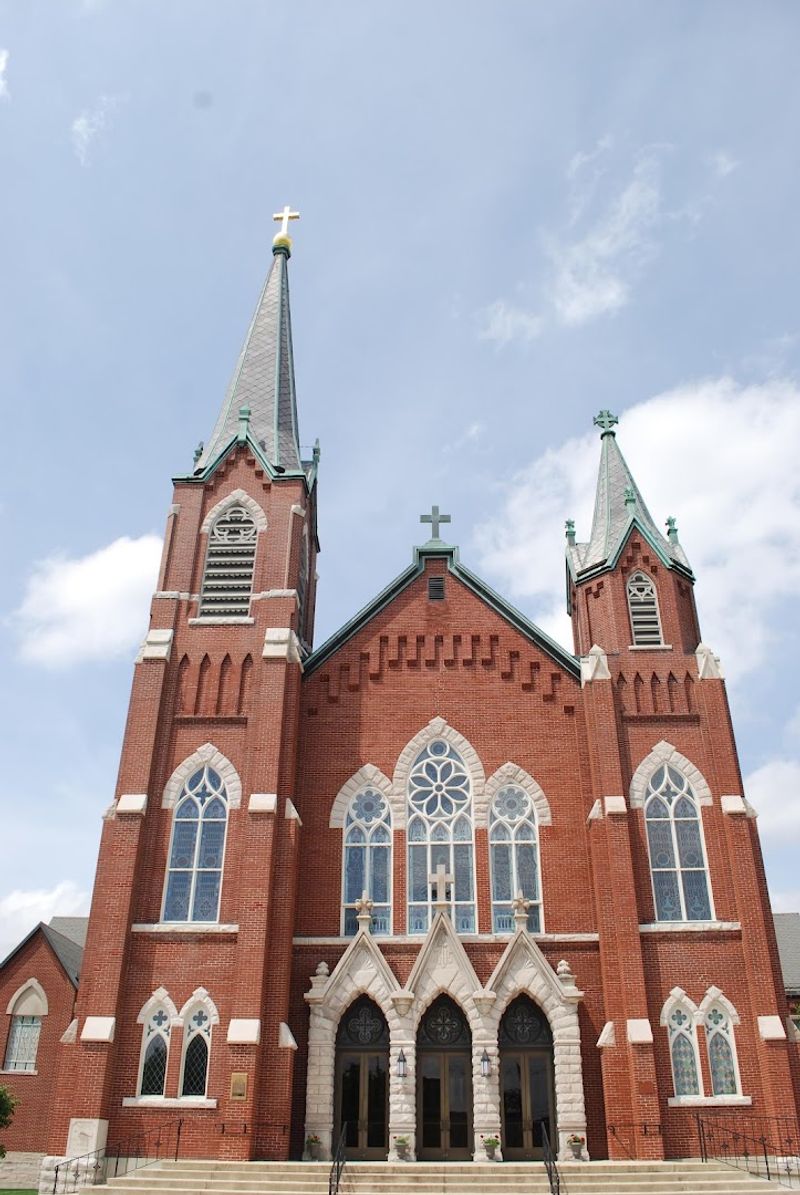
Coldwater’s Holy Trinity Catholic Church at 116 East Main Street is one of the most visually commanding buildings along this portion of the byway.
The parish was founded in 1867 after three Catholic families requested permission to establish a church in the growing community.
The present Gothic-style building was dedicated in 1899 and features two unequal spires rather than a single steeple.
The taller spire reaches approximately 145 feet, while the smaller one stands about 85 feet high, creating the distinctive silhouette visible above Coldwater.
The scale of the church reflects the growth of the parish and the commitment of the families who supported its construction.
When the building is open, its interior columns, stained glass, and traditional Catholic design provide additional reasons to linger.
Coldwater itself is a lively small town with enough local character to make an extended visit worthwhile.
Holy Trinity is the kind of stop that earns a permanent place in your travel memories.
11. Immaculate Conception Catholic Church, Celina
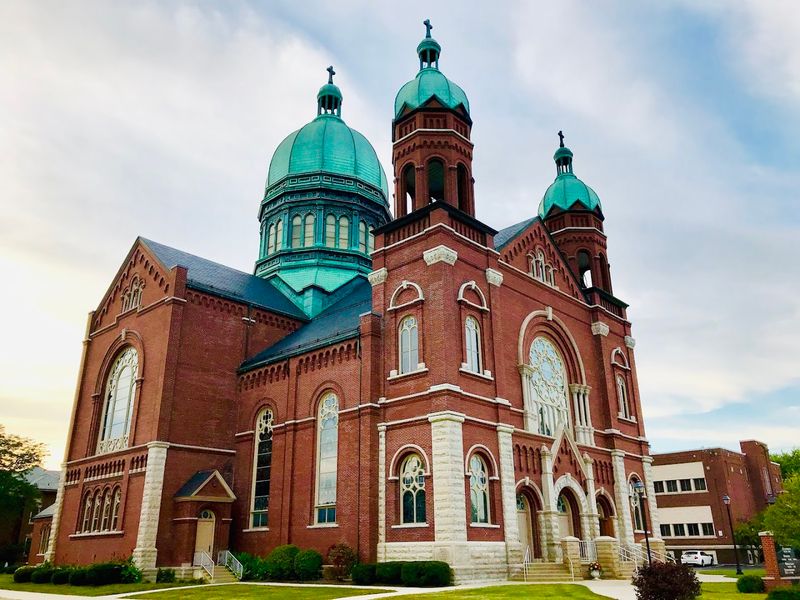
Saving Celina for last on this particular cluster makes perfect sense when the final stop is Immaculate Conception Catholic Church at 229 West Anthony Street, a parish that sends you home with a strong final impression.
The church carries the full weight of the German Catholic immigrant tradition that defines this entire byway, with architecture that is both confident and graceful in equal measure.
Celina itself is the largest community on the byway route, situated near Grand Lake St. Marys, which gives this stop an added layer of scenic appeal that the more rural churches cannot quite match.
Immaculate Conception has served Celina’s Catholic community for well over a century, adapting to the changing needs of its congregation while maintaining the historic character that makes it a byway highlight.
The church’s location on West Anthony Street puts it within easy walking distance of Celina’s downtown area, making it simple to combine a church visit with a broader exploration of the town.
As a final stop on the byway, Immaculate Conception offers a satisfying sense of completion.
It is a genuinely beautiful ending to an unforgettable Ohio road trip.