
Dayton Locals Love This Nearby Town For Weekend Strolls
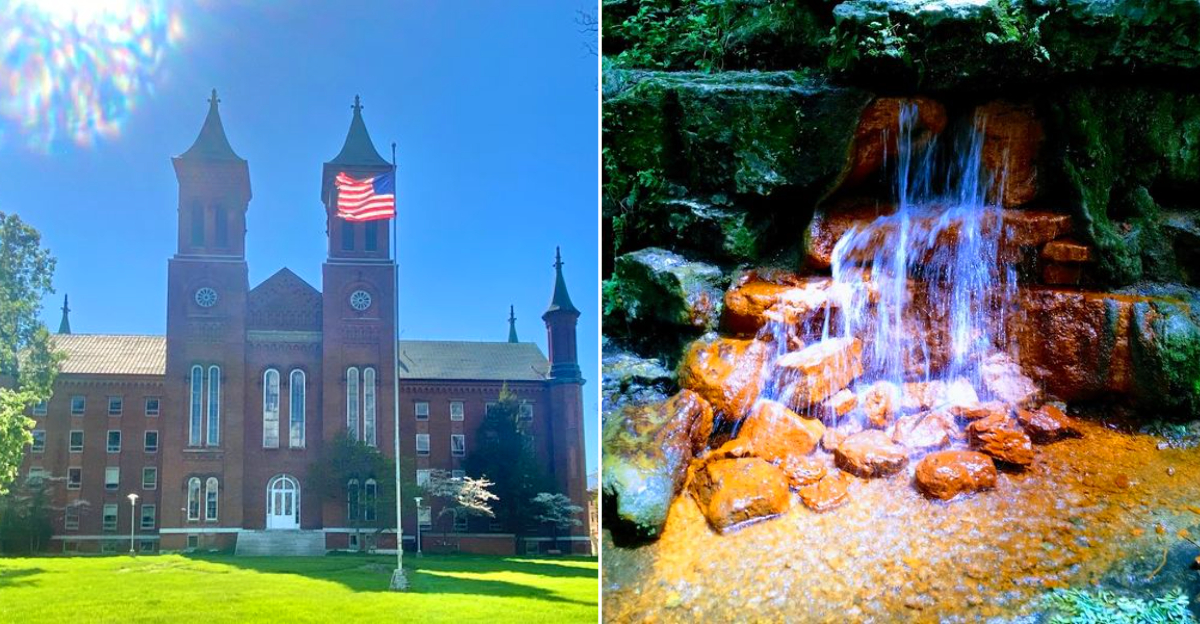
I have driven much farther for weekend plans that offered considerably less. This small Ohio town makes its case before you even finish the first block.
Bookshops, murals, local food, and shaded sidewalks give the downtown plenty to work with. A few minutes later, wooded trails and a limestone gorge completely change the pace.
Why do Dayton locals keep returning for an easy Saturday stroll? This nearby village manages to feel creative, outdoorsy, and pleasantly unhurried without trying too hard at any of them.
A Village Called Yellow Springs
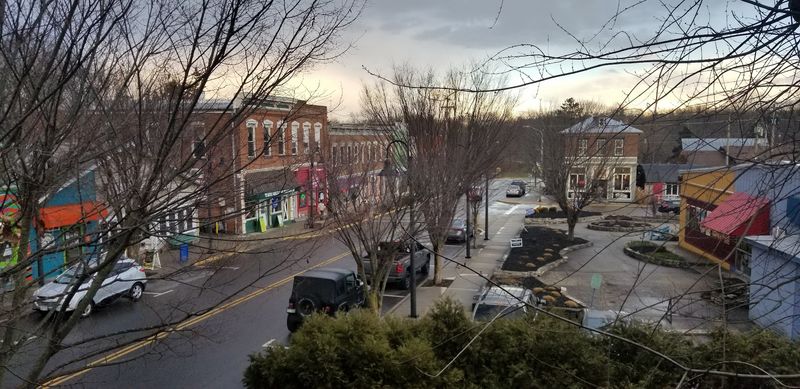
Most people who stumble into Yellow Springs for the first time leave wondering why they waited so long to visit.
Located in Greene County, this village of about 3,600 people carries an outsized personality that has attracted artists, activists, students, and nature lovers for decades.
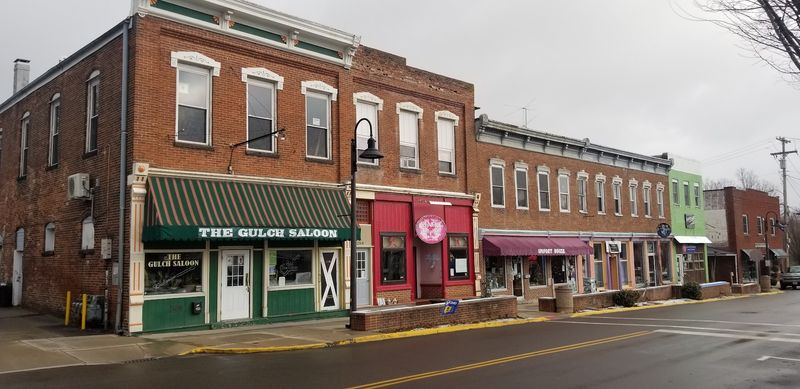
The downtown area, centered around Xenia Avenue, is walkable, lively, and packed with independent shops that have zero interest in looking like a mall.
Antioch College was founded in 1850, and its academic presence has helped give the town a thoughtful, independent character that visitors can still feel while spending an afternoon here.
Yellow Springs is generally about 25 to 30 minutes by car from central Dayton, depending on traffic and the exact starting point.
The town sits at a comfortable crossroads between natural beauty and creative culture, which is a combination that is genuinely hard to find.
First-time visitors and returning regulars often find Yellow Springs immediately welcoming. The village is located in Greene County, Ohio, with the ZIP code 45387.
The Story Behind The Springs
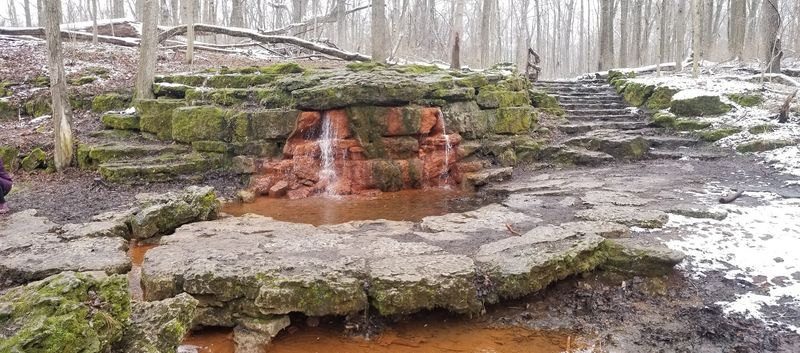
Long before boutique coffee shops and art galleries arrived, this village earned its name from something far more ancient.
Archaeological and historical records indicate that Indigenous people used the iron-rich spring as a water source long before European settlement.
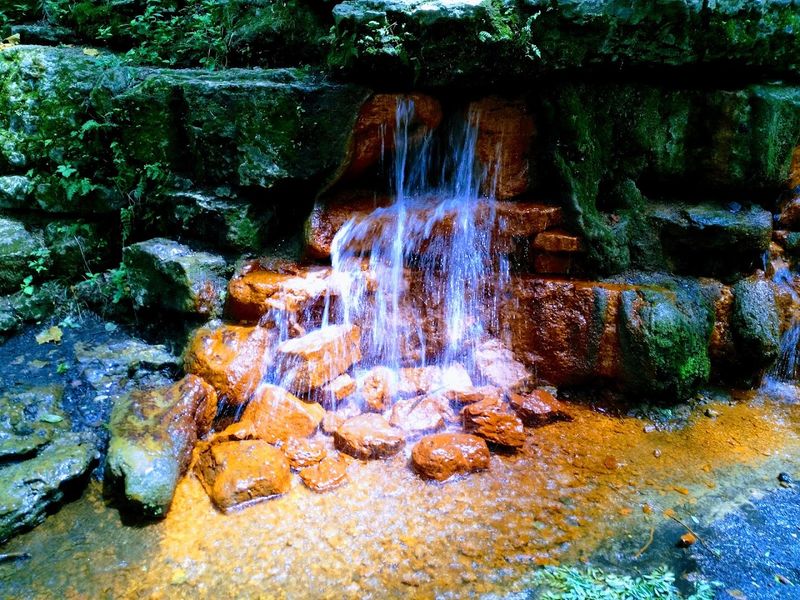
The water itself is clear, but dissolved iron settles out and stains the surrounding rocks yellow-orange, giving the village its distinctive and memorable name.
Beginning in the early 1800s, settlers advertised the water’s supposed curative effects, and Yellow Springs developed into a popular health resort with hotels, spas, and boarding houses.
That history of people traveling here specifically to feel better has never really gone away. It has simply evolved into hiking trails, wellness businesses, and locally focused food.
Antioch College, founded during the same century, added an intellectual dimension to the town that shaped its identity for generations.
Understanding this backstory makes a walk through Yellow Springs feel richer, like you are strolling through layers of history rather than just a pretty street.
The past here is not behind glass. It is woven directly into the village and the preserve beside it.
Glen Helen Nature Preserve
Right at the edge of the village, a 1,125-acre nature preserve waits patiently for anyone who needs to decompress.
Glen Helen contains mature hardwood forest, limestone gorges, the Yellow Spring, The Cascades waterfall over Birch Creek, and a broad network of natural-surface trails.
The approximately one-mile Inman Trail is a popular first visit because it passes the Yellow Spring, The Cascades, a beaver pond, and several geological features.
All hikes inside Glen Helen are classified as moderate because the preserve has natural packed-earth surfaces, elevation changes, exposed roots, and sections that can become muddy.
Birdwatchers can look for more than 200 recorded species, while wildflower enthusiasts have more than 340 documented plant species to notice throughout the preserve.
The land was given to Antioch College in 1929, but the Glen Helen Association purchased and reopened the preserve in 2020 and now manages it independently.
The sound of water moving through the gorge provides plenty of reason to slow down, but visitors should arrive with proper footwear rather than treating the preserve like a flat city park.
John Bryan State Park
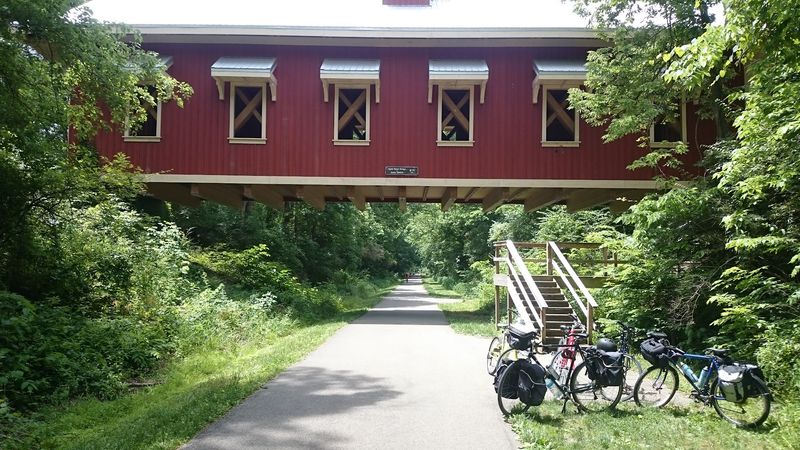
Directly adjacent to the wider Glen Helen and Clifton Gorge natural corridor, John Bryan State Park adds even more outdoor space to an already nature-rich area.
The park follows the Little Miami River through a dramatic limestone gorge, offering some of the most visually striking scenery in southwestern Ohio.
Rock climbers visit designated climbing areas along limestone cliffs that generally rise between 25 and 35 feet above the gorge.
Climbing and rappelling are permitted only in specifically designated areas, so visitors should follow posted signs and current park regulations.
The park also offers hiking and mountain-biking trails, picnic shelters, campsites, fishing access, and an 18-hole disc golf course.
Spring and fall are particularly attractive here, when seasonal color changes the appearance of the gorge and surrounding forest.
Few parks this close to the Dayton area feel this removed from an urban landscape, and that contrast is part of what makes the visit so satisfying.
Xenia Avenue: The Heart Of It All
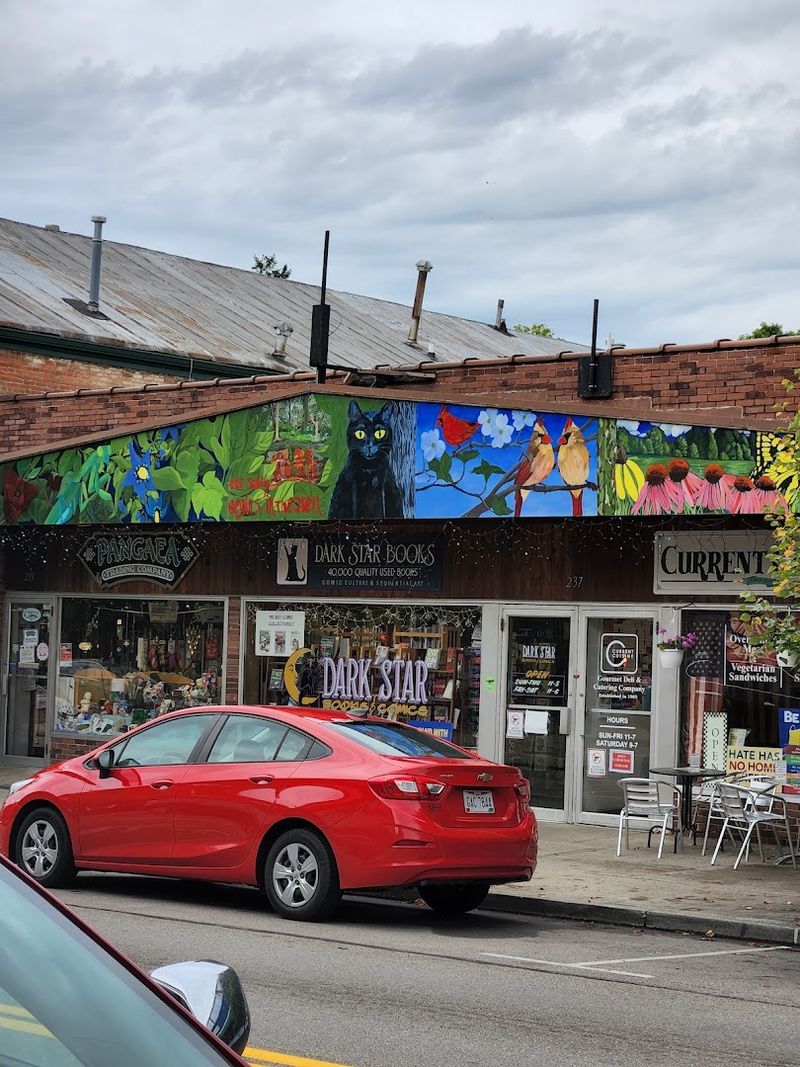
There is something almost magnetic about Xenia Avenue, the main commercial strip that runs through the heart of Yellow Springs.
It is the kind of street where every single shop has a personality, and none of them are trying to be anything other than exactly what they are.
I counted record stores, used bookshops, locally made jewelry, handcrafted pottery, vintage clothing, and more than one place selling things I had never seen before but immediately wanted.
The street is compact enough to cover on foot in one leisurely afternoon, but interesting enough that you will probably spend twice as long as you planned.
On weekends, the sidewalks fill up with locals and visitors alike, creating a low-key but genuinely festive atmosphere that does not feel manufactured or staged.
Street musicians occasionally set up near the storefronts, and the whole scene has a relaxed rhythm that encourages you to slow down and actually look at things.
Xenia Avenue is the kind of place that reminds you what a real main street is supposed to feel like, and it delivers that reminder every single time.
The Art Scene That Never Sleeps
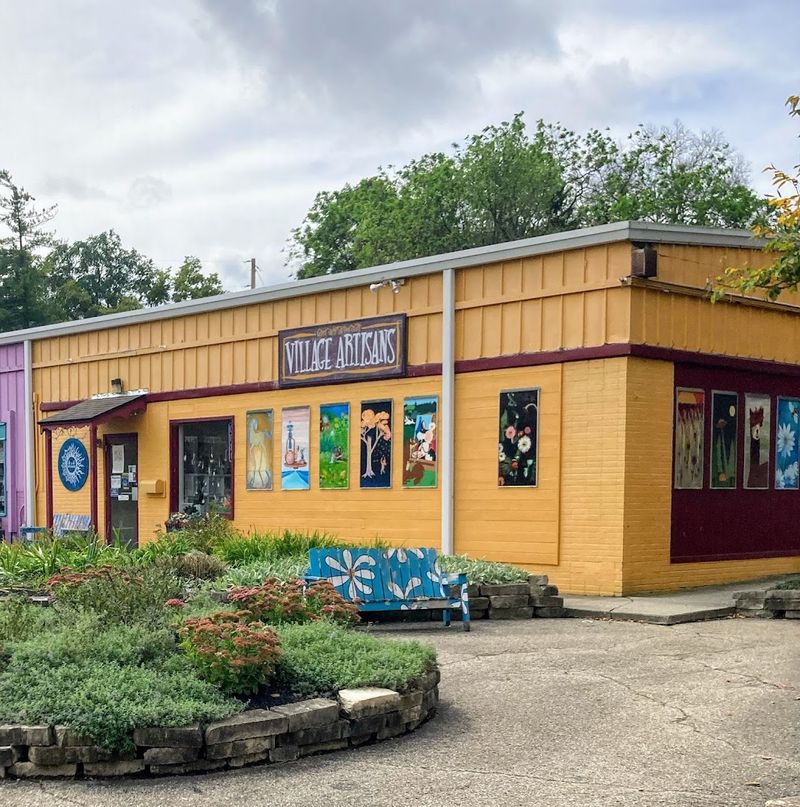
Art is not just displayed in Yellow Springs. It appears throughout galleries, businesses, public spaces, murals, and community events.
Murals cover several building exteriors around the village, with local and regional artists contributing to the downtown’s colorful visual identity.
The Yellow Springs Arts Council maintains a year-round schedule of gallery exhibitions, receptions, concerts, and other creative programs.
Painted walls, signs, storefronts, and smaller public-art details give visitors plenty to notice while walking around downtown.
Independent galleries and cooperative spaces display photography, paintings, pottery, sculpture, fiber art, and other locally produced work.
Yellow Springs Street Fair takes place twice each year, on the second Saturday of June and October, bringing hundreds of arts, crafts, and food vendors into the village for a one-day event.
What stands out most about the art scene is how closely it connects working artists with the wider community rather than confining creativity to formal gallery spaces.
That collaborative spirit is one of the clearest parts of the village’s identity.
Food Worth The Drive Alone
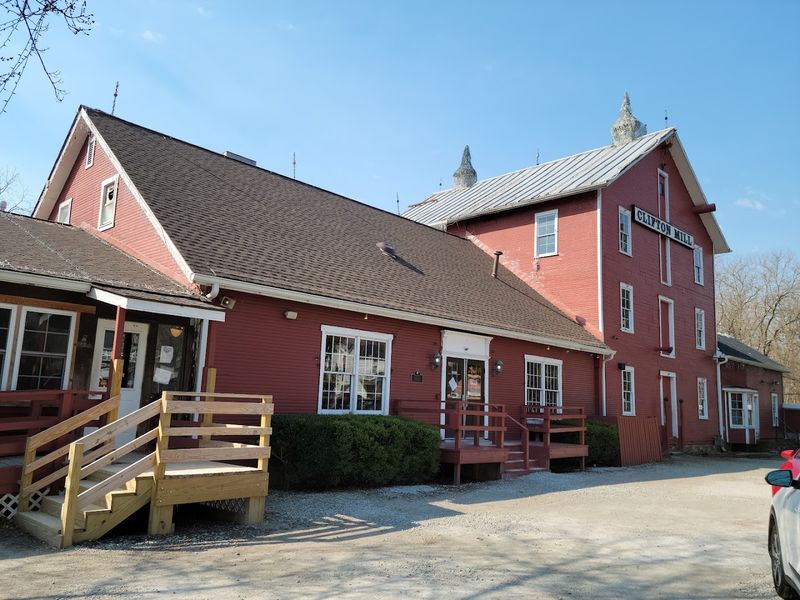
Skipping a meal in Yellow Springs would be a genuine mistake because the village offers an unusually varied dining scene for its size.
Several local restaurants emphasize regional ingredients and farm-to-table cooking, reflecting the village’s connection with farms in Yellow Springs and the surrounding Greene County countryside.
The downtown dining mix includes casual cafes, bakeries, international dishes, familiar American favorites, and restaurants built around seasonal menus.
Breakfast and brunch are popular weekend choices, although waits and opening hours vary between businesses.
Vegetarian and vegan selections are available at multiple restaurants, alongside menus designed for diners who prefer more traditional options.
Grab-and-go counters, bakeries, markets, and cafes make it easy to find something before or after hiking in Glen Helen.
The selection is impressive for a village of approximately 3,600 residents, although checking individual restaurant hours before making a special trip remains a smart idea.
Good food beside walkable streets and nearby trails gives visitors another practical reason to return.
Antioch College: The Soul Of The Village
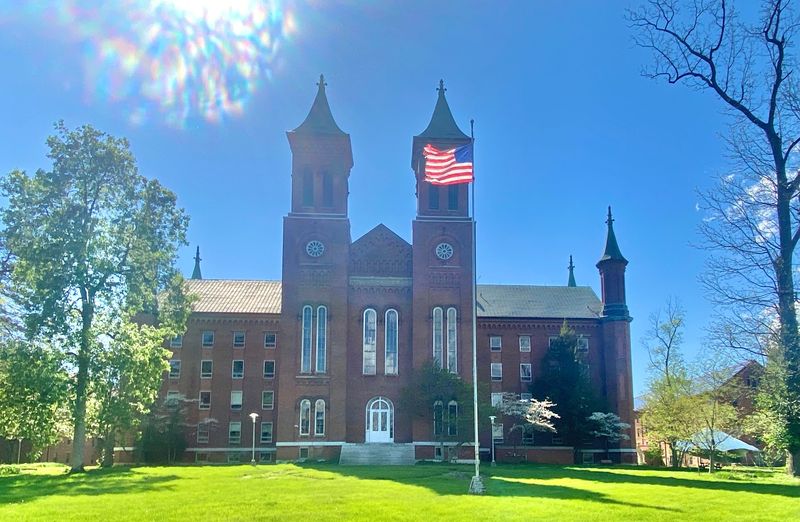
Few small villages in America can claim to have a college as historically significant as Antioch right in their backyard.
Founded in 1850, Antioch College has long been associated with progressive education, social justice, and cooperative learning programs that send students into real-world work placements.
The campus itself is beautiful, with brick buildings, open green spaces, and a quiet academic energy that feels distinct from the commercial buzz of Xenia Avenue.
Antioch has had a complicated history, including a closure and reopening in 2011, but the college has continued to rebuild and now operates with a renewed sense of purpose.
The presence of the college has historically attracted intellectuals, activists, and creative thinkers to Yellow Springs, and that legacy is visible in the character of the town today.
Public events, lectures, and performances hosted on campus occasionally open to the broader community, making the college feel like a shared resource rather than a closed institution.
Spending even a short time on the Antioch campus gives you a clearer sense of why this village thinks and feels the way it does.
Little Miami Scenic Trail
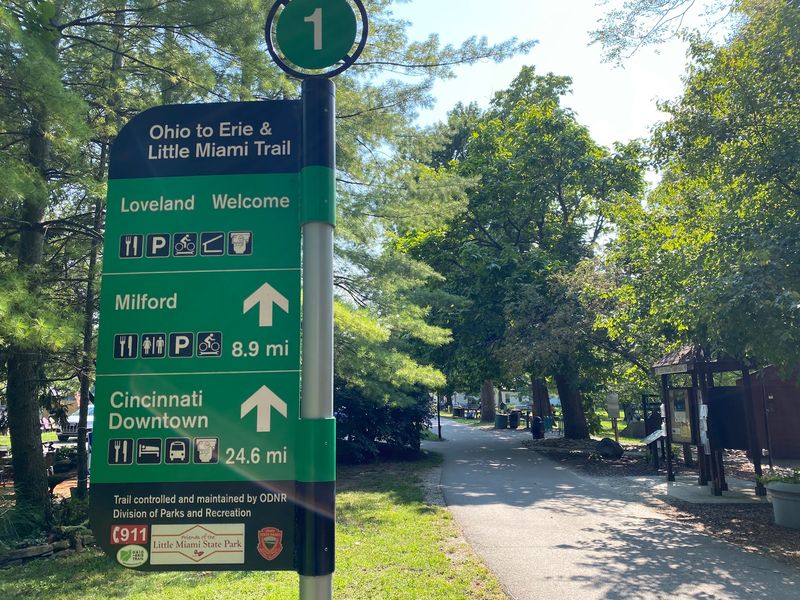
Cyclists and walkers in Yellow Springs have direct access to one of the longest paved trails in the Miami Valley network.
The 78-mile Little Miami Scenic Trail runs through Yellow Springs while connecting communities between the Springfield area and Anderson Township near Cincinnati.
The paved route follows former railroad corridors through farmland, woodland, towns, and sections near the Little Miami River.
Its generally gentle grades make substantial distances manageable for recreational riders, although every visitor should choose a route suited to their ability.
The trail connects with several other regional paths, allowing experienced cyclists to plan longer journeys through the wider Miami Valley network.
As of late July 2026, construction near Brush Row Road still required a signed detour between Yellow Springs and Xenia that included a short section along U.S. Route 68.
Visitors should check the Miami Valley Bike Trails closure page before leaving because bridge projects, high water, and maintenance can temporarily change access.
Community Events That Draw Crowds
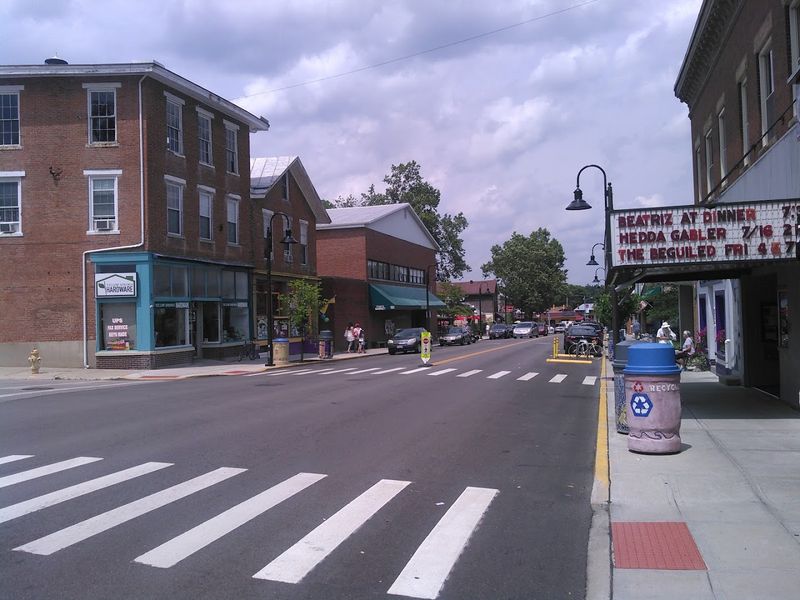
Yellow Springs has an active events calendar that gives visitors reasons to return in several seasons.
Yellow Springs Street Fair takes place twice each year, on the second Saturday of June and October, rather than running as a two-day spring-and-fall event.
Each one-day edition fills downtown with arts and crafts vendors, food stands, performances, community groups, and thousands of visitors.
The June 2026 Street Fair attracted an estimated 30,000 people and included 170 vendor booths, 28 food vendors, and 16 entertainers.
The next 2026 Street Fair is scheduled for Saturday, October 10.
Beyond Street Fair, the village hosts art receptions, theater performances, concerts, film events, holiday activities, and other community programs throughout the year.
Seasonal markets and local-food events provide additional connections with farms and producers from the surrounding region.
Checking the current village, Chamber, and Arts Council calendars before visiting remains the most reliable way to see what is happening.
Shopping Like A Local
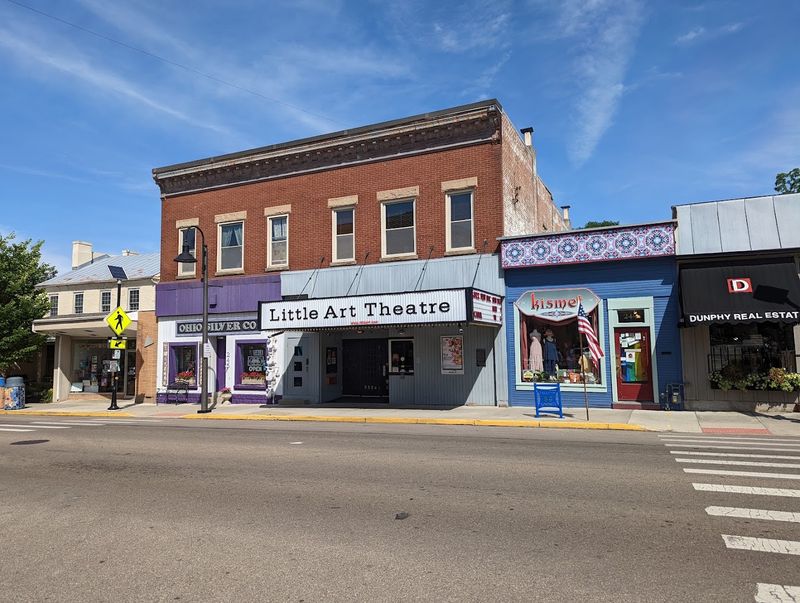
Retail therapy hits differently in Yellow Springs, mostly because none of the shops here feel like they were designed by a corporate committee.
Every store on and around Xenia Avenue has a distinct point of view, from the used bookshop that smells exactly like a used bookshop should, to the handmade jewelry boutique where every piece tells a story.
I spent an embarrassing amount of time in a shop that sold locally made ceramics, eventually walking out with a mug that I have used every morning since.
Vintage clothing stores in Yellow Springs are particularly well-curated, attracting shoppers from Dayton and beyond who are tired of finding the same things everywhere else.
The shopping experience here rewards slow browsing, so resist the urge to rush and give yourself permission to wander without a plan.
Many shop owners are the makers themselves, which means conversations can quickly turn into fascinating behind-the-scenes tours of someone’s creative process.
Shopping in Yellow Springs feels more like treasure hunting than errand running, and that distinction makes all the difference on a lazy weekend afternoon.
Why Dayton Locals Keep Coming Back
A drive of roughly 25 to 30 minutes from central Dayton can deliver a surprisingly large change of pace.
Yellow Springs offers something that larger cities often struggle to provide: a compact place that feels noticeably different from where the trip began.
The combination of walkable streets, independent businesses, substantial outdoor spaces, and an active creative community creates several ways to build an easy day trip.
Families visit the trails and parks, while artists and shoppers have galleries, murals, studios, and independent storefronts to explore.
Restaurants and cafes add enough variety to make lunch part of the plan rather than an afterthought.
Other visitors simply find a bench near Xenia Avenue and watch downtown move at a slower pace.
The village does not try to be everything to everyone, but it offers enough variety to suit many different weekend moods.
That combination of proximity and genuine change of scenery explains why Yellow Springs remains such a practical return trip from the Dayton area.