
This Arizona Attraction Puts Nothing But Glass Between You And The Canyon Floor
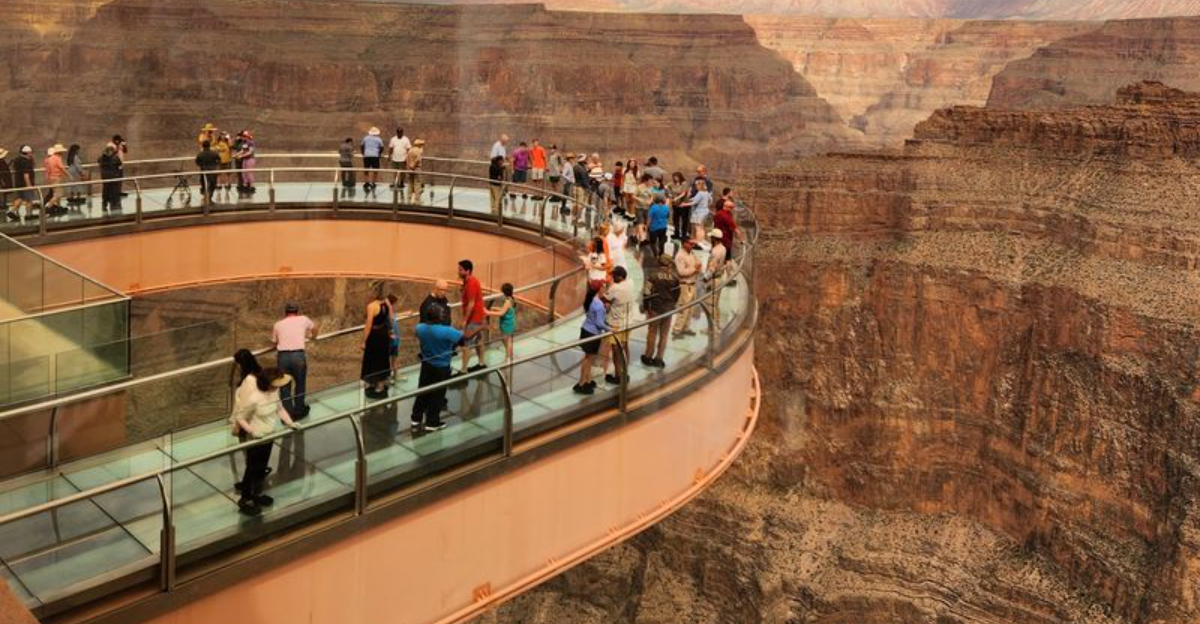
If you had told me five years ago that I’d willingly pay money to step out onto a horseshoe-shaped glass bridge dangling 4,000 feet above nothingness, I would have laughed in your face. Heights and I usually have a strict “stay on solid ground” policy.
But there I was, standing on the edge of the ultimate Arizona attraction, questioning every life choice that led me to this exact, terrifying moment.
As I looked straight down through the transparent floor at the jagged canyon floor far below, my stomach did a swan dive.
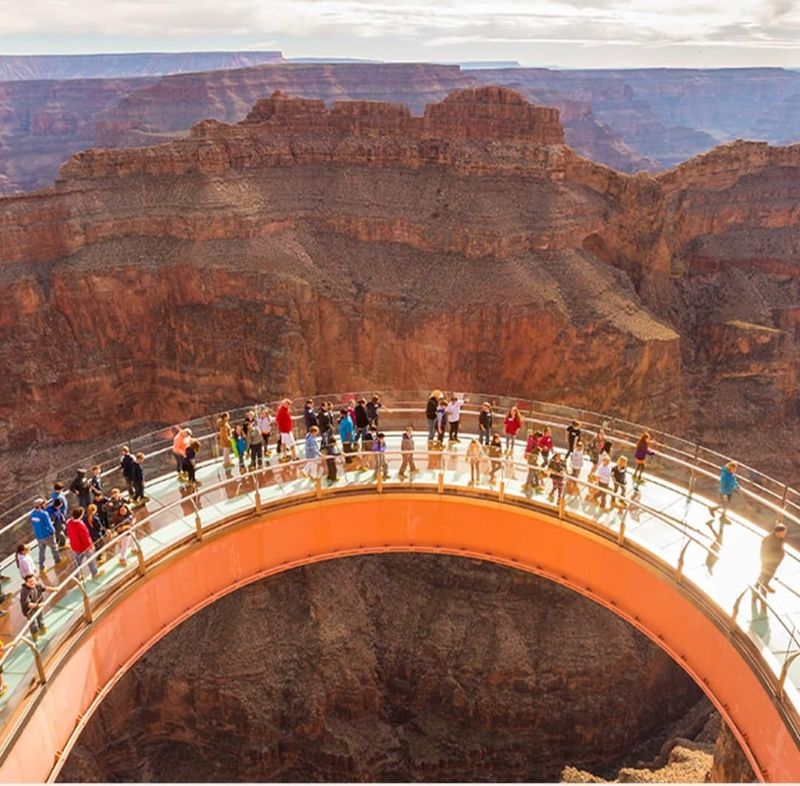
My palms were sweating through my jacket, and my knees felt like overcooked spaghetti. Located at Eagle Point on the Hualapai Reservation in Peach Springs, Arizona, this horseshoe-shaped glass bridge extends 70 feet over the canyon rim and has welcomed more than 10 million visitors since opening on March 28, 2007.
It is completely separate from Grand Canyon National Park, which means it offers a different kind of adventure with a strong cultural connection to the Hualapai Tribe.
The Engineering Story Behind The Glass Bridge
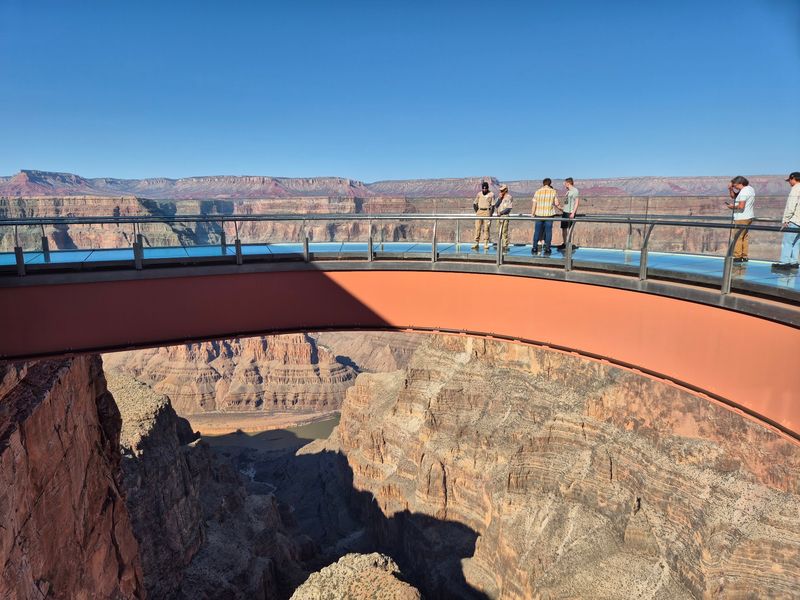
Few structures in the world carry a story as bold as the Grand Canyon Skywalk. Businessman David Jin first pitched the idea to the Hualapai Tribe, and together they turned a vision into a $30 million reality that took four years to build before opening to the public in March 2007.
The numbers behind this bridge are genuinely staggering. Engineers used over one million pounds of steel and 83,000 pounds of glass to create a 10-foot-wide deck with glass side walls reaching five to seven feet high. The structure can handle the weight of 71 fully loaded 747 airplanes at once.
A special construction method called the rod and plate technique was used to carefully roll the walkway out over the canyon’s edge, piece by piece.
The bridge is also built to withstand wind speeds of 100 miles per hour and an 8.0 magnitude earthquake within 50 miles, making it one of the most robustly engineered tourist attractions ever built.
That First Step Onto The Glass Floor
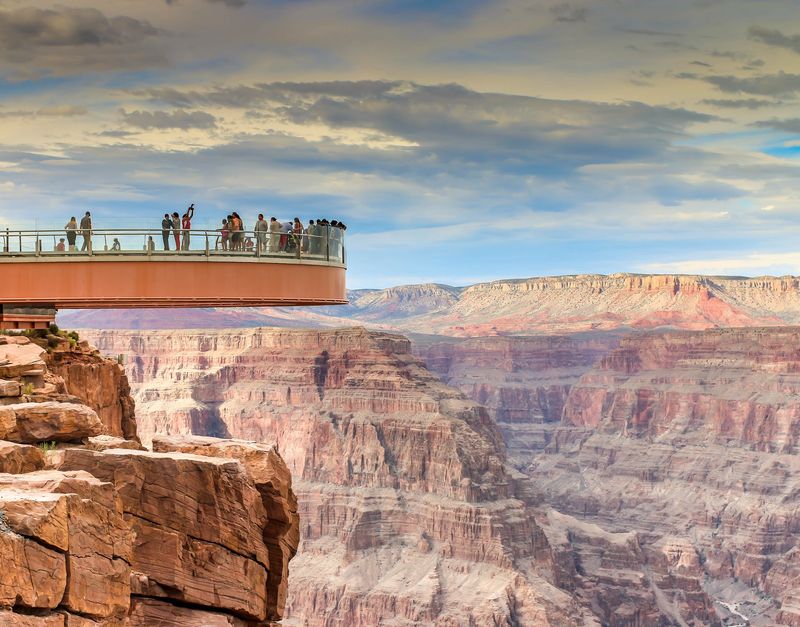
Nothing quite prepares you for the moment your foot lands on clear glass with 4,000 feet of open canyon stretching below.
Visitors consistently describe that first step as the most thrilling second of the entire experience, a split-second where your brain and your body have a very honest disagreement about what is happening.
Before you walk out, staff will fit you with special cloth booties that slip over your shoes. This keeps the glass spotless and scratch-free so every visitor gets the same crystal-clear view downward to the Colorado River far below.
Personal items including cameras, cell phones, purses, and backpacks are not allowed on the walkway for safety reasons.
Free lockers are available near the entrance to store everything securely. Professional photographers are stationed on the Skywalk to capture your walk, and you can purchase those photos afterward as a keepsake of one genuinely unforgettable moment in your travel life.
Eagle Point And The Hualapai Cultural Connection
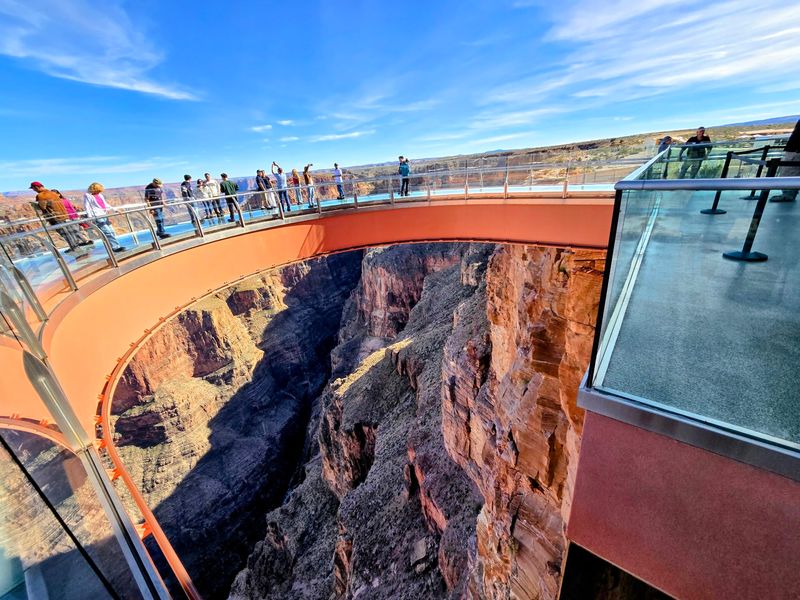
The Skywalk sits at Eagle Point, and that name carries real meaning. The rock formation visible from the walkway resembles a giant eagle with wings spread wide, a shape that holds deep spiritual significance for the Hualapai people who have called this land home for generations.
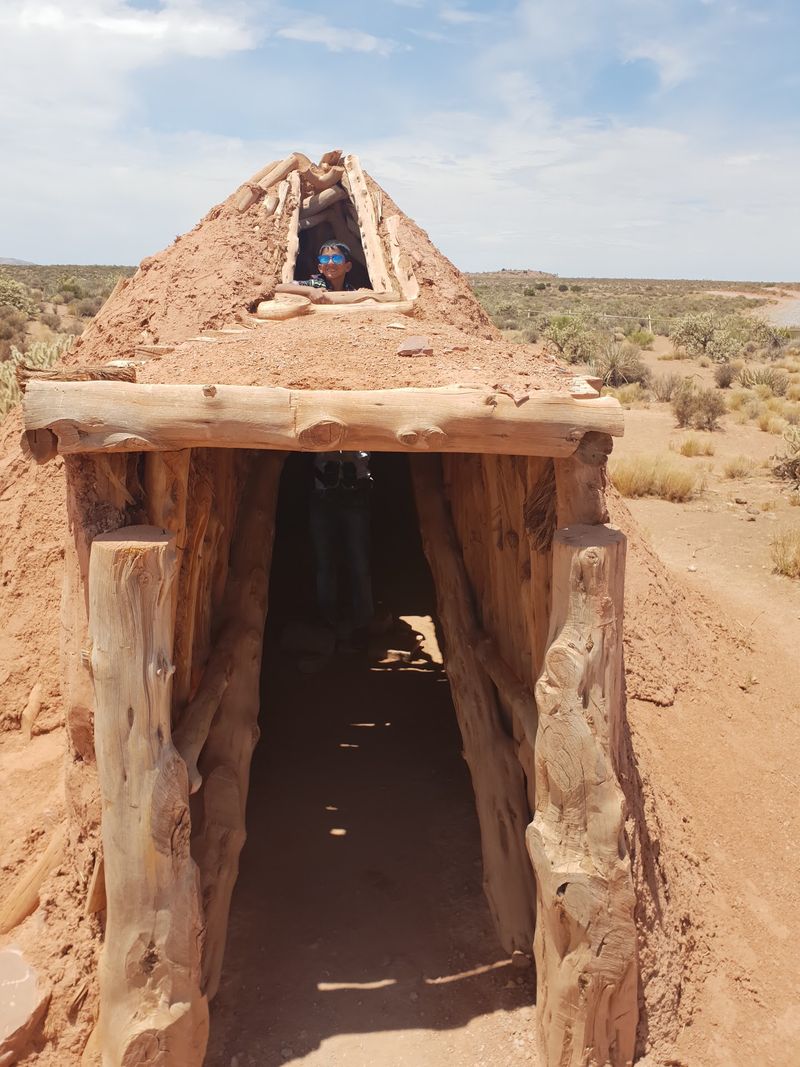
Right at Eagle Point, visitors can explore the Native American Village, a collection of traditionally constructed homes representing different Indigenous nations. Cultural exhibits inside offer a genuine look at the history, tools, and daily life of Native peoples of the Southwest.
Live Indigenous song and dance performances take place regularly at the village, giving visitors a chance to witness traditions that have been passed down through centuries.
The Hualapai Tribe manages Grand Canyon West entirely, and their involvement means every ticket purchase directly supports the community.
Spending time at Eagle Point turns a thrilling glass-bridge experience into something far richer, a real conversation between ancient culture and modern adventure that stays with you long after you leave.
Guano Point And The Panoramic Views
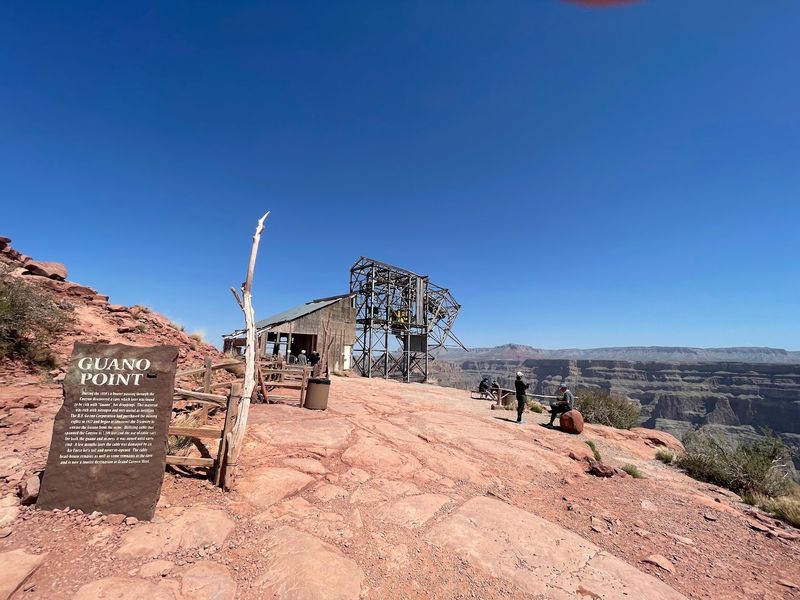
Hop on the complimentary shuttle at Grand Canyon West and you will find yourself at Guano Point, a spot that competes hard with the Skywalk for the title of most jaw-dropping view in the area.
From the ridge here, the Colorado River curves through the canyon in both directions, creating a sweeping 360-degree panorama that photographers absolutely love.
The name comes from a bat guano mining operation that ran here decades ago. Rusted remnants of the aerial tramway that once stretched across the canyon still stand at the point, adding an unexpected layer of industrial history to an otherwise wild and natural setting.
Guano Point Cafe is nearby if you need a meal or a snack after soaking in the scenery. Many visitors say Guano Point surprises them most during their trip because they arrived focused entirely on the Skywalk and left talking about this viewpoint just as much.
Sometimes the supporting act turns out to be every bit as memorable as the headliner.
Helicopter Tours And Canyon Floor Adventures
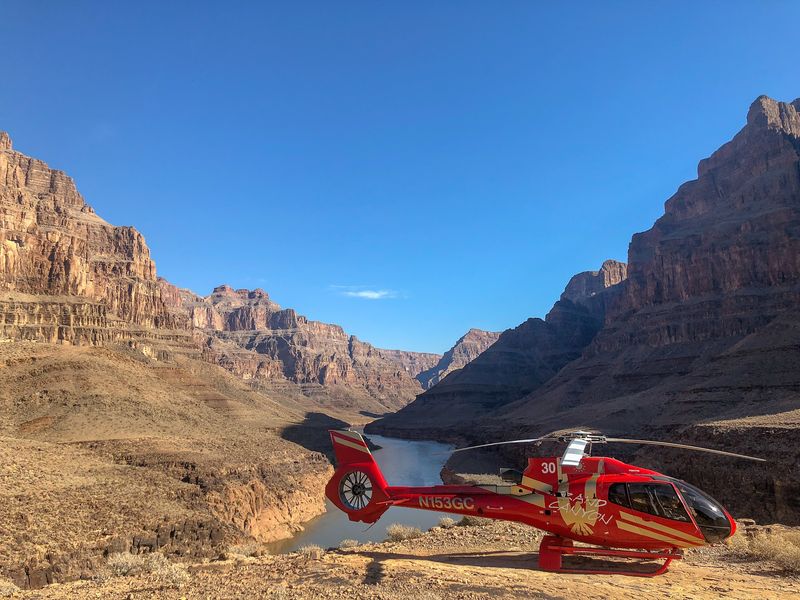
For those who want to take the adventure several thousand feet further, Grand Canyon West offers helicopter tours that do something most Grand Canyon experiences cannot: they take you all the way down to the canyon floor.
Watching the canyon walls rise above you as the helicopter descends is a perspective shift that genuinely rewires how you understand the scale of this place.
Once at the bottom, some tour packages include pontoon boat rides along the Colorado River, letting you look straight up at the towering red and brown walls from water level.
Whitewater rafting tours also depart from nearby Peach Springs for those who want a more active time on the river.
Back on the rim, a zipline lets you soar 500 feet over a side canyon at speeds reaching 40 miles per hour. Grand Canyon West is genuinely built for people who want to do more than stand and look, and it delivers on that promise with options that range from peaceful to pulse-raising.
Planning Your Visit: Tickets, Timing, And Getting There
Grand Canyon West is located on the Hualapai Indian Reservation at 5001 Diamond Bar Road, Peach Springs, Arizona 86434.
From Las Vegas, the drive takes roughly two hours, making it a popular day trip for visitors staying on the Nevada side of the region. From Phoenix, plan on about four hours behind the wheel.
Tickets are typically sold as an All-Access Pass, which bundles the Skywalk entry with shuttle access to Eagle Point and Guano Point, along with cultural experiences at the Native American Village. Booking in advance online is strongly recommended, especially during spring and summer when crowds peak.
Arriving early in the morning gives you the best light for photos and shorter wait times at the Skywalk itself.
The site is open year-round, and each season brings something different. Summer mornings are clear and warm before the afternoon heat builds.
Spring and fall offer comfortable temperatures and softer light. Winter visits are quieter and the cooler air makes walking around the rim genuinely pleasant from start to finish.
Why The Skywalk Stays With You Long After You Leave
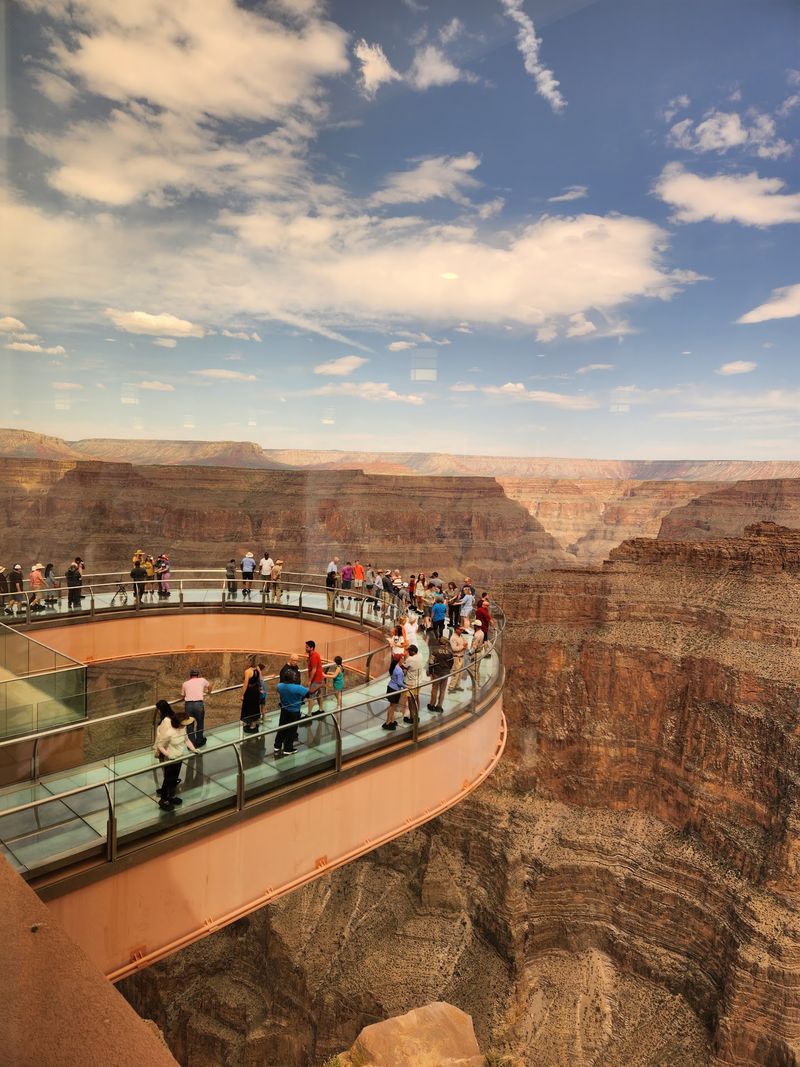
There is a particular kind of travel memory that does not fade the way most do. The Grand Canyon Skywalk creates exactly that type of moment.
Standing on transparent glass above a 4,000-foot drop, watching light play across canyon walls that formed over millions of years, is the sort of thing your mind keeps returning to weeks later.
Part of what makes it stick is the combination of elements packed into one visit. You get world-class engineering, Indigenous culture, wild canyon scenery, and a genuine physical thrill all within a few hours. Very few travel destinations can offer that range without feeling scattered or forced.
The Hualapai Tribe has built something that honors their land while sharing it generously with the world, and that spirit comes through in every part of the experience.
Whether you are a seasoned traveler who has seen dozens of natural wonders or someone on their very first big road trip, the Grand Canyon Skywalk has a way of making the world feel both enormous and incredibly close at the same time.
Photography Tips
Cameras and phones are allowed on the Skywalk, but tripods are not permitted on the glass bridge itself. The photo opportunities here are unlike anything you will find at a typical tourist stop. Crouch down slightly and you can capture both your feet and the canyon floor below in one stunning frame.
Early morning light is softer and the crowds are thinner, which makes a noticeable difference in your shots. Polarized lenses help reduce glare bouncing off the glass surface. Most visitors say their best photos come from slowing down, taking in the moment, and not rushing the perfect angle.
Phone grips and wrist straps are smart additions because one nervous hand movement can turn an ambitious shot into an expensive mistake. Keep the lens close to the glass for dramatic depth, but stay aware of other visitors moving around you.
Wide-angle mode helps fit more of the canyon into the frame without stepping backward repeatedly. Try one shot looking straight down and another aimed toward the canyon walls for two completely different perspectives.
Photos taken from Eagle Point can also capture the Skywalk curving over the canyon from a distance. Check the latest rules before arriving, since the official FAQ currently permits cell phones but does not clearly extend that permission to all personal cameras.