
9 Wyoming Places That Show The Beauty Of The American West
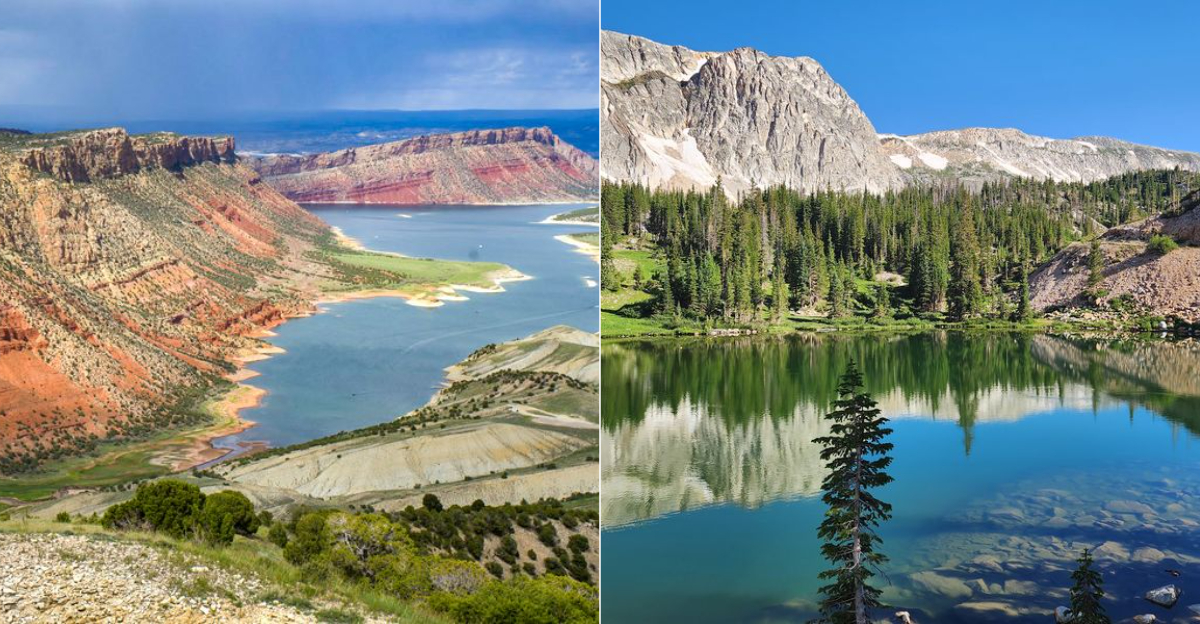
What comes to mind when you think of the American West? Endless horizons?
Towering peaks? Wildlife roaming free? Wyoming somehow packs all of that, and more, into one unforgettable state.
But beyond the postcard views lies a collection of places that capture the West at its wildest and most breathtaking.
Think dramatic canyons, crystal-clear alpine lakes, steaming geothermal wonders, and landscapes so vast they make you feel wonderfully small.
Whether you’re chasing epic adventures or simply looking for scenery that leaves you speechless, these destinations prove that some of America’s greatest natural treasures are still waiting to be explored.
1. Yellowstone National Park
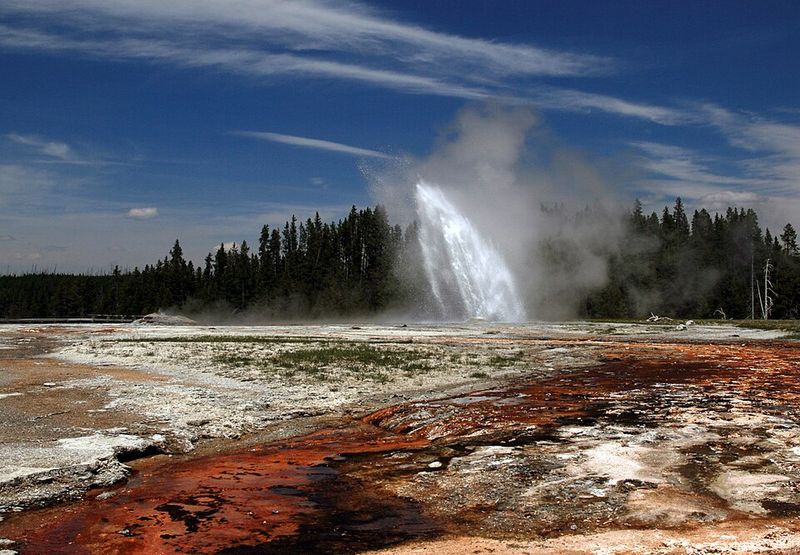
Stepping into Yellowstone feels like the earth itself decided to show off. This iconic park, located mostly in Wyoming’s northwest corner and extending into Montana and Idaho, is the world’s very first national park.
It earned that title back in 1872, and honestly, nothing has come close to challenging it since.
The park sits on top of a dormant supervolcano, which fuels over 10,000 thermal features scattered across the landscape.
Old Faithful, the world-famous geyser, erupts roughly every 90 minutes, shooting water up to 185 feet into the air. Watching it feels like the earth is performing just for you.
Beyond the geysers, Yellowstone offers the Grand Canyon of the Yellowstone River, a dramatic gorge painted in yellows and oranges.
Yellowstone Lake shimmers at an elevation of 7,733 feet, making it one of the largest high-elevation lakes in North America. Wildlife roams freely here, from bison herds to wolves and grizzly bears.
Every season transforms the park into something entirely new.
Winter turns it into a snow-globe fantasy, while summer bursts with wildflowers and wildlife activity.
Yellowstone is not just a destination, it is proof that nature, when left to its own devices, creates absolute masterpieces.
2. Grand Teton National Park
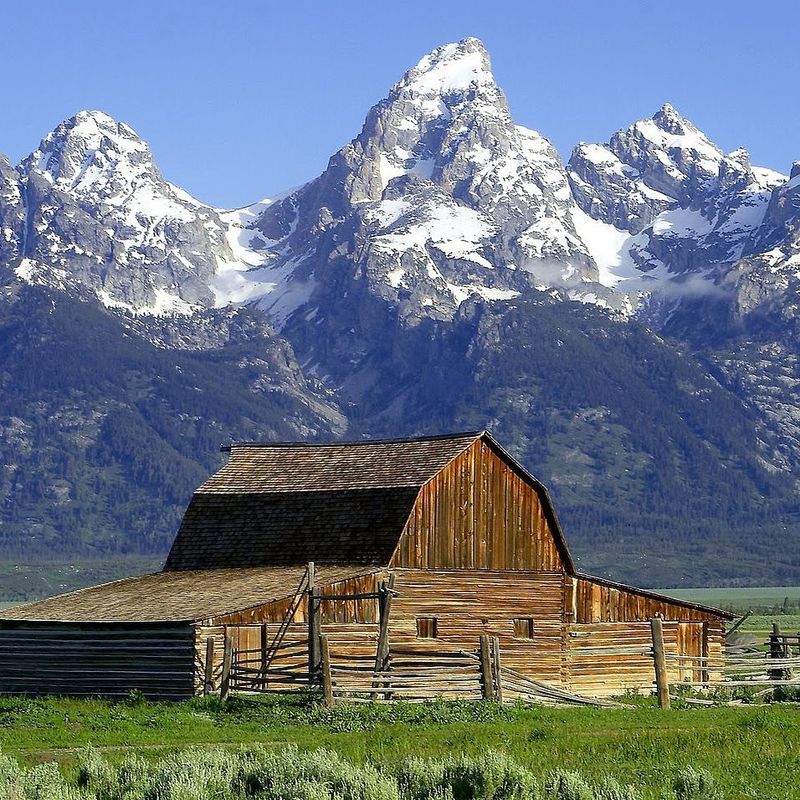
Grand Teton National Park does not ease you in gently. It grabs your attention immediately with mountains that shoot straight up from the valley floor, no foothills required.
Located in Teton County, Wyoming, this park redefines what dramatic scenery actually looks like.
The Teton Range features some of the sharpest, most photogenic peaks in all of North America. The Grand Teton summit itself reaches 13,775 feet above sea level.
Below those towering giants, a string of glacier-carved lakes reflects the mountains like enormous mirrors.
Jenny Lake is arguably the crown jewel of the park. A short boat ride across its impossibly clear waters leads to the trailhead for Cascade Canyon, one of the most rewarding hikes in Wyoming.
The canyon walls close in around you, and the scenery only gets better with every step you take.
The park also offers world-class wildlife viewing, with moose, elk, and pronghorn grazing across the valley floor.
Snake River winds through the landscape, offering incredible photography opportunities at every bend.
The Teton Park Road and the scenic Mormon Row historic district are must-visit stops for anyone exploring the area. Grand Teton is the kind of place that makes you understand why people dedicate entire lifetimes to exploring the American West.
3. Tower National Monument
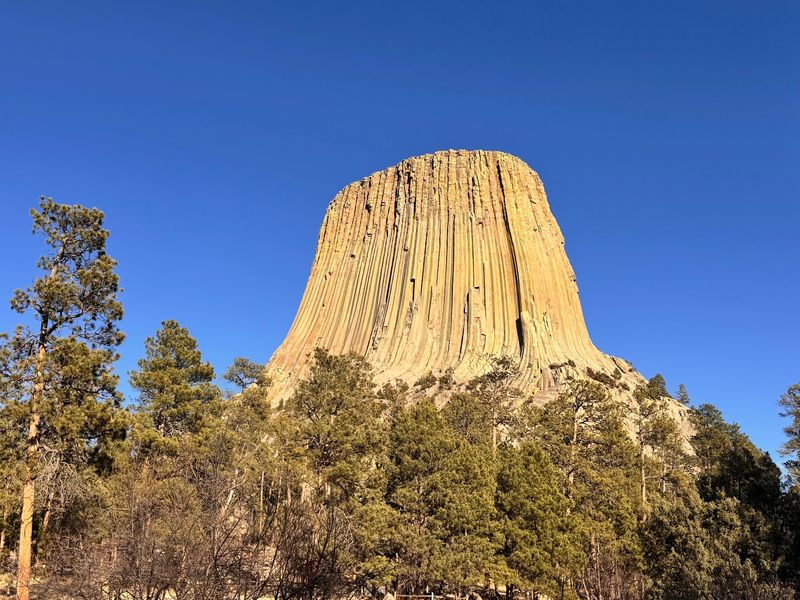
There is something almost cinematic about seeing Tower for the first time. It rises 867 feet above its base like a giant stone fist punching through the earth, impossible to ignore and impossible to forget.
Located near the towns of Hulett and Sundance in northeastern Wyoming, this formation has been turning heads for thousands of years.
The tower is made of phonolite porphyry, a rare igneous rock that formed from cooling magma millions of years ago. As it cooled, it cracked into the striking hexagonal columns that give the tower its unmistakable texture.
Climbers from around the world travel here specifically to scale those columns, and watching them from below is both thrilling and slightly terrifying.
Tower holds deep spiritual significance for over 20 Native American tribes, who know it as Bear Lodge.
Their traditions and stories connected to this place stretch back generations, adding a layer of cultural richness that makes visiting feel even more meaningful.
In 1906, President Theodore Roosevelt designated it as America’s first national monument. The Tower Trail, a 1.3-mile loop around the base, offers incredible close-up views of the columns and surrounding Belle Fourche River valley.
Prairie dogs pop in and out of their burrows nearby, adding a surprisingly charming touch to the whole experience. Tower is genuinely one of a kind.
4. Bighorn Canyon National Recreation Area
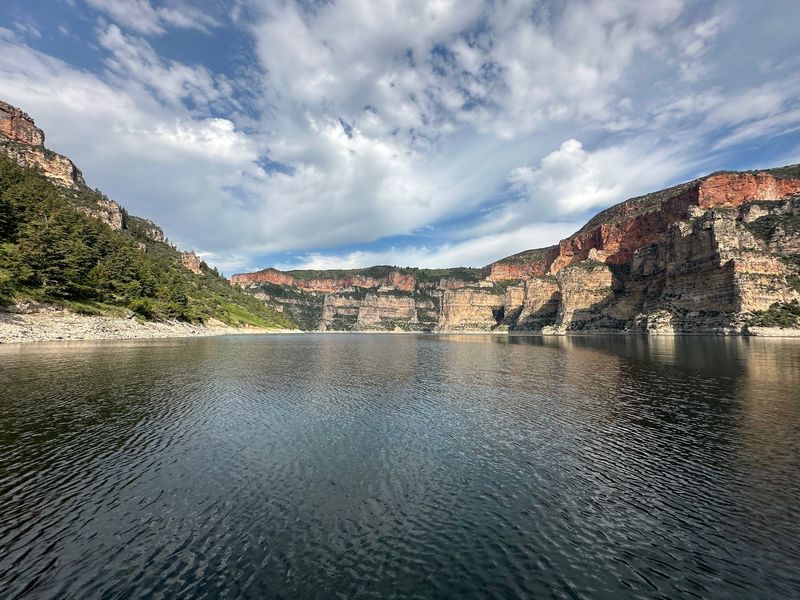
Bighorn Canyon is the kind of place that sneaks up on you. You are driving through high desert, thinking it is pretty but nothing extraordinary, and then the canyon opens up and your jaw just drops.
This sprawling recreation area straddles the border of southeastern Montana and north-central Wyoming, with the Cal S. Taggart Bighorn Canyon Visitor Center serving visitors in Lovell, Wyoming.
The canyon was carved over millions of years by the Bighorn River, creating walls that plunge up to 1,000 feet straight down.
The Yellowtail Dam transformed the river into the stunning Bighorn Lake, a 71-mile-long reservoir that winds through the canyon like a turquoise ribbon. Boating here feels like exploring a secret world hidden between ancient cliffs.
The recreation area covers approximately 120,000 acres of diverse terrain, blending high desert, forests, and dramatic canyon landscapes. Fishing on Bighorn Lake is excellent, with walleye and trout drawing anglers from across the region.
Hikers can explore trails that offer sweeping canyon overlooks and access to remote, rarely visited corners of the park.
Wild horses roam freely in the Pryor Mountain Wild Horse Range adjacent to the area, adding an iconic western element to the whole experience.
Bighorn Canyon rewards those willing to seek it out with scenery that feels entirely untouched and absolutely breathtaking. This is the American West at its most raw and real.
5. Flaming Gorge National Recreation Area
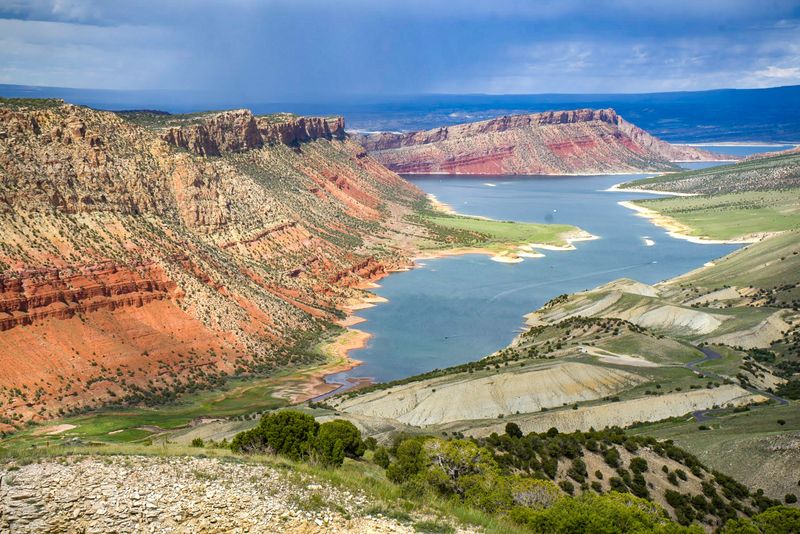
The name alone should tell you everything. Flaming Gorge is not subtle, and it does not pretend to be.
This spectacular recreation area straddles the Wyoming and Utah border, with access points near Green River, Wyoming, and it delivers on every bit of drama its name promises.
The star of the show is the 91-mile-long Flaming Gorge Reservoir, carved into layers of red and golden sandstone that genuinely glow when the sunlight hits them at the right angle.
The Red Canyon Overlook offers one of the most photographed views in the entire region, where the canyon walls drop nearly 1,600 feet to the shimmering water below. It is the kind of view that makes your camera feel inadequate.
Over 100 miles of trails wind through the surrounding landscape, ranging from easy lakeside walks to challenging ridge hikes with panoramic views.
The Green River below Flaming Gorge Dam is famous among fly fishing enthusiasts, offering crystal-clear water and abundant trout in a stunning natural setting.
Boating, swimming, and kayaking are wildly popular on the reservoir during summer months.
Geology lovers will appreciate the exposed rock layers that tell 500 million years of Earth’s history in vivid, colorful detail. Flaming Gorge is the kind of place where every photo looks professionally edited, even when you have absolutely no idea what you are doing with a camera.
6. Wind River Range
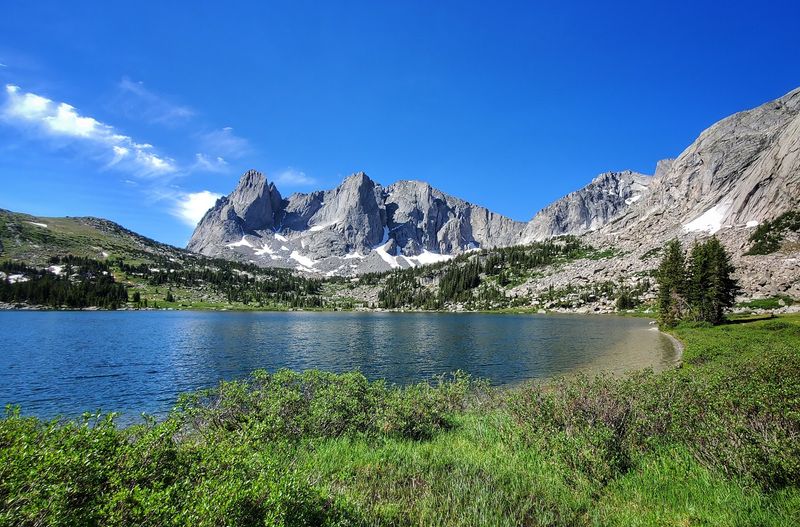
If Wyoming has a backbone, it is the Wind River Range. This magnificent mountain chain stretches for about 100 miles across western Wyoming, forming a dramatic section of the Continental Divide.
It is wild, remote, and absolutely stunning in a way that feels almost personal, like the mountains are revealing themselves just for you.
The range boasts over 40 peaks exceeding 13,000 feet, with Gannett Peak standing tallest at 13,804 feet as Wyoming’s highest summit. Seven of the ten largest glaciers in the lower 48 states are tucked into these mountains.
Over 2,300 lakes dot the landscape, many of them so clear you can see every rock on the bottom from 20 feet up.
Backpacking in the Winds, as locals call it, is a bucket-list experience for serious outdoor adventurers. The famous Cirque of the Towers, located near Big Sandy Lodge in the southern portion of the range, attracts rock climbers and photographers from around the world.
Granite walls rise dramatically around a high alpine basin, creating a scene that feels almost theatrical.
The Wind River Range also holds deep cultural significance for the Eastern Shoshone and Northern Arapaho peoples, whose reservation borders the range.
Fishing in the countless alpine lakes and streams is exceptional, with native cutthroat trout thriving in the cold, pristine waters. The Winds are not just a mountain range; they are a whole world unto themselves.
7. Sinks Canyon State Park
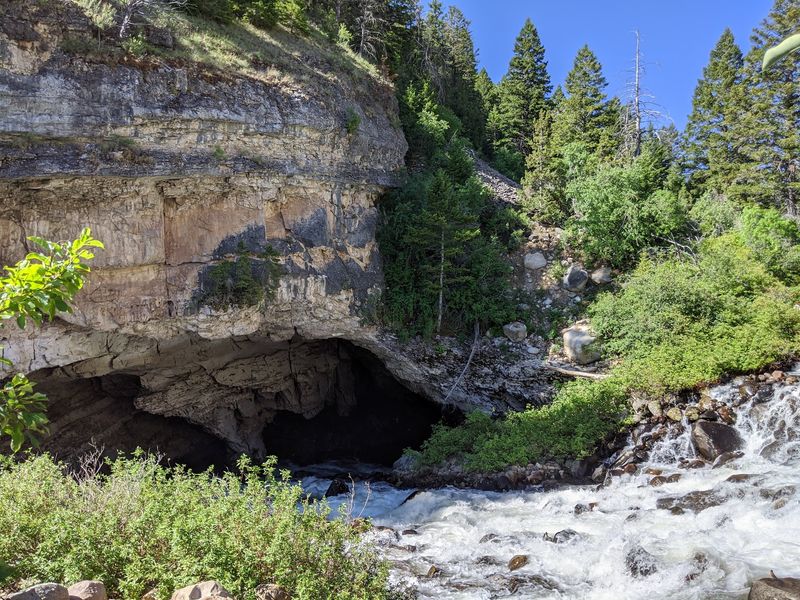
Nature loves a good magic trick, and Sinks Canyon State Park has one of the best.
Located six miles southwest of Lander in west-central Wyoming, nestled within the Wind River Mountains, this park is home to one of the most fascinating geological phenomena you will ever witness with your own eyes.
The Popo Agie River flows along the canyon floor until it reaches a limestone cavern and simply vanishes underground. No drama, no warning, it just disappears into the rock.
Then, a quarter-mile downstream, it bubbles back up from the earth in a pool called The Rise.
Scientists have poured dye into the water at The Sinks and tracked it emerging at The Rise, but the journey still takes two hours longer than expected. Nobody fully knows why.
The canyon walls surrounding this mystery are stunning in their own right, layered with colorful geology and draped in pine forests.
Rock climbers flock here for some of the best limestone sport climbing in Wyoming. Hikers have access to trails that climb out of the canyon and into the open mountain terrain above.
Large trout gather in the pool at The Rise, visible from the viewing platform above, making it a surprisingly captivating spot even for non-fishers.
Sinks Canyon is compact but packed with wonder, the kind of park that makes you feel like you discovered something special that the rest of the world somehow overlooked.
8. Medicine Bow National Forest
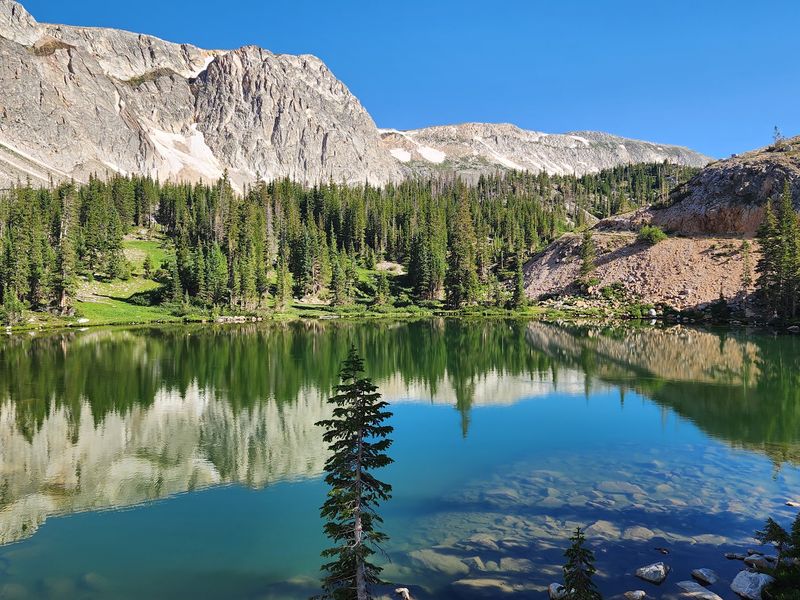
Medicine Bow National Forest has a quiet confidence about it.
While other Wyoming destinations shout for attention with geysers and tower formations, this million-acre forest simply spreads out across southeastern Wyoming and northern Colorado near Laramie and lets its beauty speak softly. And somehow, that makes it even more irresistible.
The forest covers an extraordinary range of elevations, from rolling foothills to alpine peaks reaching 12,940 feet.
The Snowy Range, located within the forest, is one of Wyoming’s most accessible mountain areas, with the Medicine Bow Peak rising dramatically above a series of mirror-smooth alpine lakes. The Snowy Range Scenic Byway, Highway 130, cuts through this landscape and is widely considered one of the most beautiful drives in the entire state.
Hiking trails here range from gentle lakeside paths to challenging summit routes with panoramic views stretching into Colorado.
Fishing is exceptional in the forest’s many streams and lakes, with brook and rainbow trout thriving in the cold, clean water. Camping spots are plentiful and often surprisingly uncrowded, even during peak summer months.
In winter, the forest transforms into a cross-country skiing and snowshoeing paradise.
The historic significance of the area runs deep, with ties to both Plains Indian cultures and early Wyoming settlers. Medicine Bow rewards those who take their time with it, revealing layer after layer of beauty the longer you stay and explore.
9. Ayres Natural Bridge Park
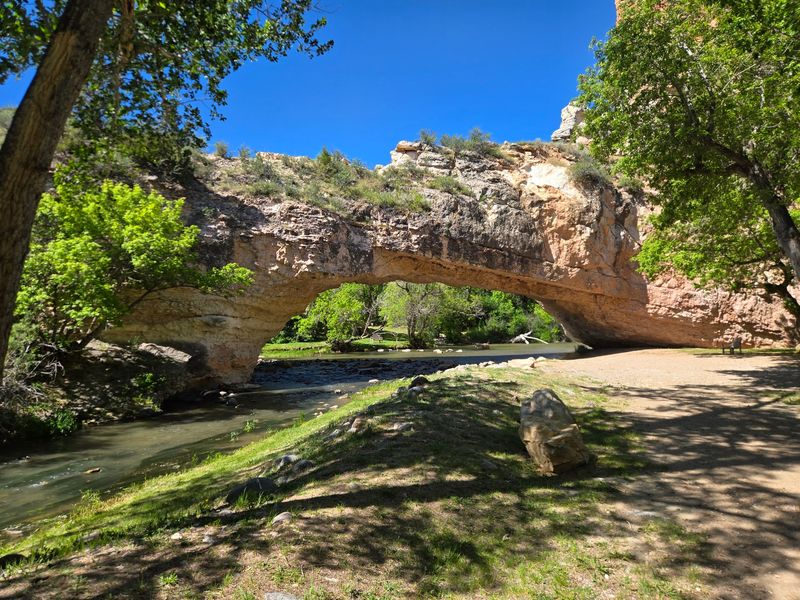
Some of the best discoveries in Wyoming are the ones you almost drive right past. Ayres Natural Bridge Park is exactly that kind of gem.
Tucked away in Converse County, about 15 miles west of Douglas via County Road 13 just south of Interstate 25 exit 151, this small county park protects something genuinely extraordinary.
A natural stone arch, standing 30 to 50 feet high, spans LaPrele Creek in a way that looks almost too perfect to be real.
The creek flows quietly right beneath the arch, its clear water catching the light as it moves through the red sandstone canyon. It is one of only a handful of natural bridges in the United States where a living stream still flows beneath the span.
The arch formed over millions of years as LaPrele Creek slowly carved through the sandstone, a patient geological process that created something breathtaking.
Oregon Trail emigrants stopped here in the 1800s, drawn by the fresh water and the shade of the canyon walls. Signatures and carvings from those early travelers are still visible on the rock surfaces nearby.
Today, the park offers picnicking areas, short hiking paths, and excellent wildlife viewing in a remarkably peaceful setting.
The red canyon walls create a natural amphitheater around the bridge, making the whole place feel hushed and a little sacred. Ayres Natural Bridge is proof that Wyoming hides incredible wonders even in its quietest corners.