
One Michigan Artist Turned A Crumbling Detroit Block Into A Landmark The Whole World Recognizes
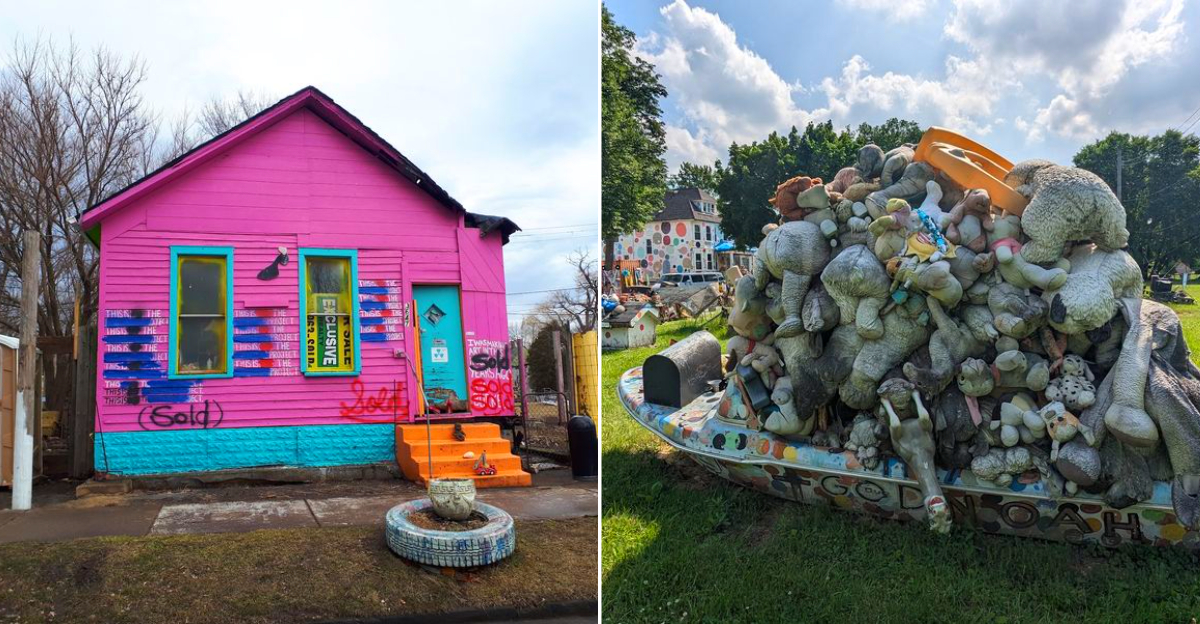
I have driven past abandoned blocks in Detroit more times than I can count. This one stopped me cold. Not because it was crumbling. Because it was exploding with color.
A man named Tyree Guyton came home to his neighborhood in 1986 and saw decay everywhere. Instead of looking away, he started painting. Polka dots covered the houses. Salvaged vacuum cleaners stood upright in the yard like soldiers. Shoes hung from trees in clusters titled Souls of the Most High.
Every surface told a story. I walked slowly because rushing felt disrespectful. The project has survived demolition orders and arson attacks.
Visitors from over eighty-five countries have stood where I was standing. The Dotty Wotty House still has his original polka dots on its facade.
I left with more questions than answers. One person with paint and stubbornness changed how I see what art can do when it refuses to leave.
Notice How Trash Becomes Testimony
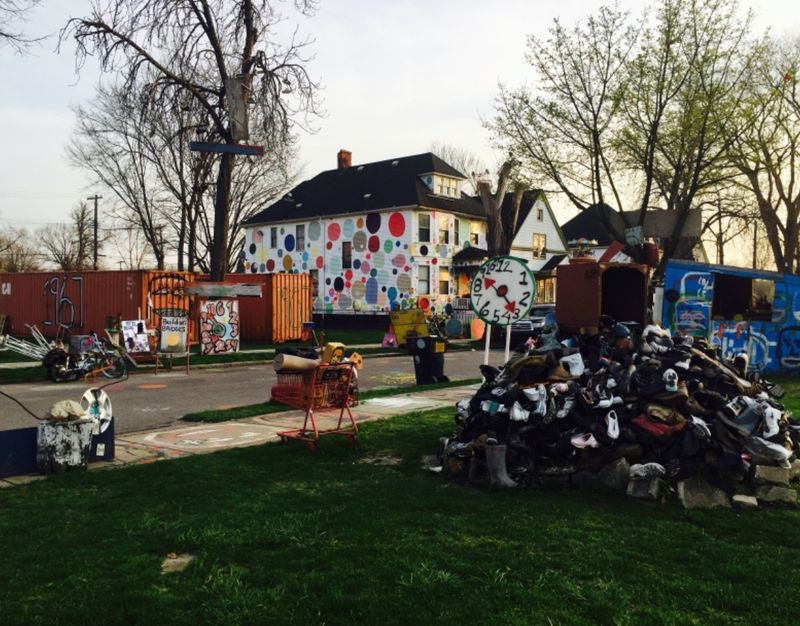
A shoe on a wall can feel oddly powerful here. Across the Heidelberg Project, discarded things like clocks, toys, bikes, and furniture are gathered into installations that turn waste into memory and statement.
Guyton did not hide the rough edges of the neighborhood. He used them. The result is art that feels assembled from real life, not polished for a quiet gallery room.
That choice is worth lingering over. Each reused object reminds visitors that what society throws away can still carry meaning, beauty, warning, and history.
Bring patient eyes, because the small details often say as much as the bold painted houses standing beside them on the block.
The Sidewalk Becomes Part Of The Artwork
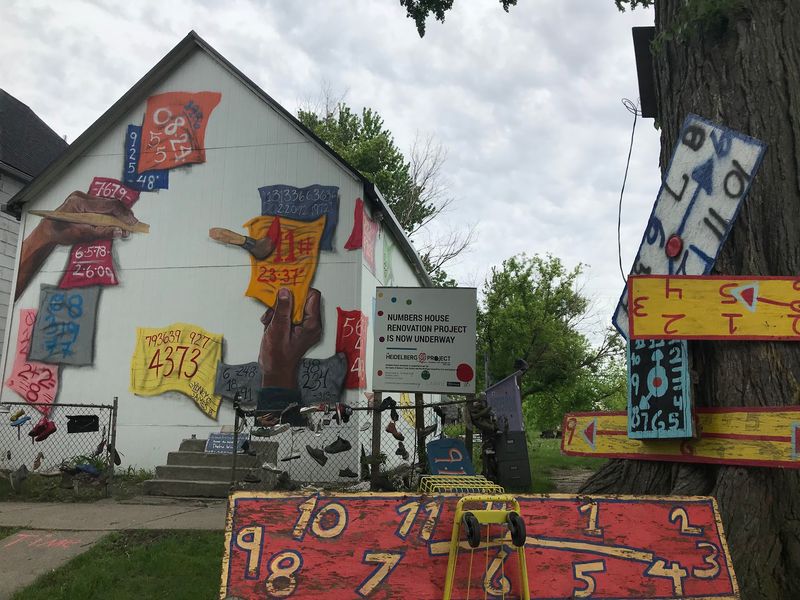
The Heidelberg Project is centered at 3600 Heidelberg Street in Detroit, Michigan, in the McDougall-Hunt neighborhood east of downtown. Approach from Gratiot Avenue or East Warren Avenue, then use Mount Elliott Street to enter the surrounding residential grid.
The final blocks lead into an open-air installation spread across Heidelberg Street and Elba Place between Ellery and Mount Elliott streets.
Slow down and explore carefully, since painted houses, sculptures, sidewalks, trees, and vacant lots all form part of the project rather than gathering around one museum entrance.
There is no formal visitor lot or admission gate. Use a legal street space without blocking driveways, then continue through the two-block area on foot while respecting private homes and remaining on public sidewalks.
Read The Symbols, Not Just The Colors
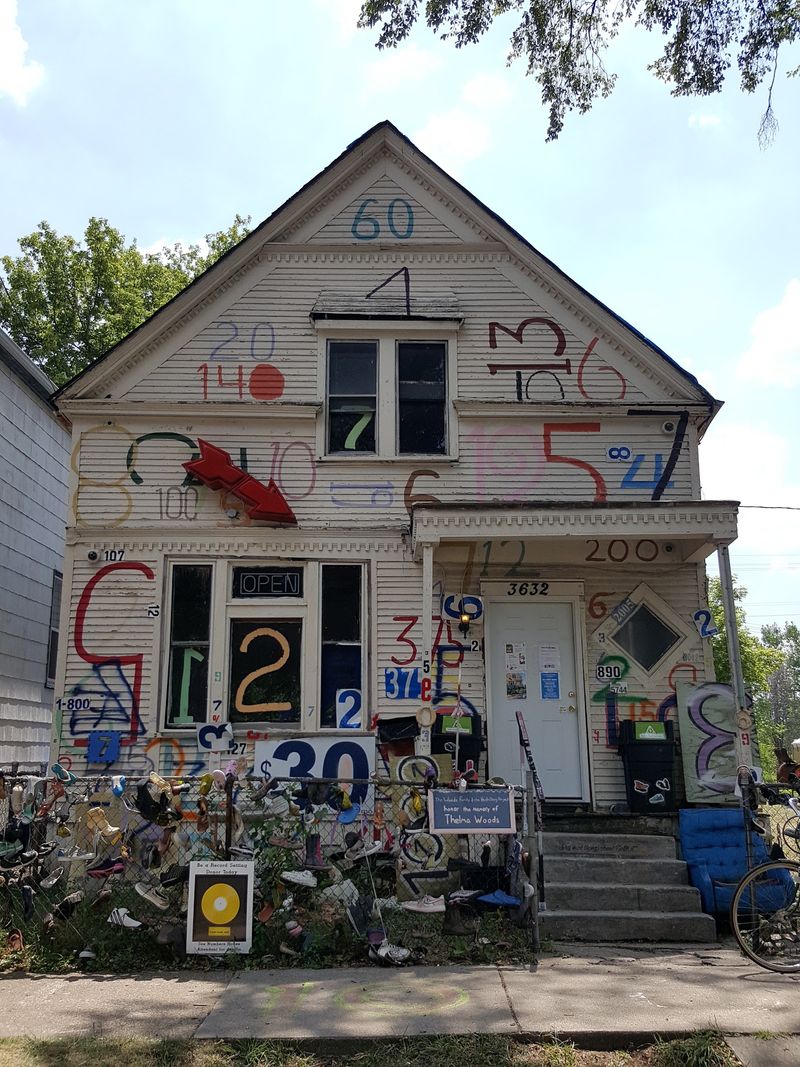
At first glance, the project can seem like a storm of dots, numbers, faces, and color. Stay a little longer, and the repeating symbols begin to speak in a clearer voice.
Clocks are among the strongest images on the block. They suggest time, urgency, and the idea that it is never too late to act.
Faces point back to human dignity, while signs such as You near globes ask viewers to think about personal responsibility.
That layered symbolism gives the place weight. Kids may notice the wild patterns first, but older visitors often leave thinking about fairness, community, and what one person can do when a city seems to be looking elsewhere for answers.
Treat The Street Like A Living Neighborhood
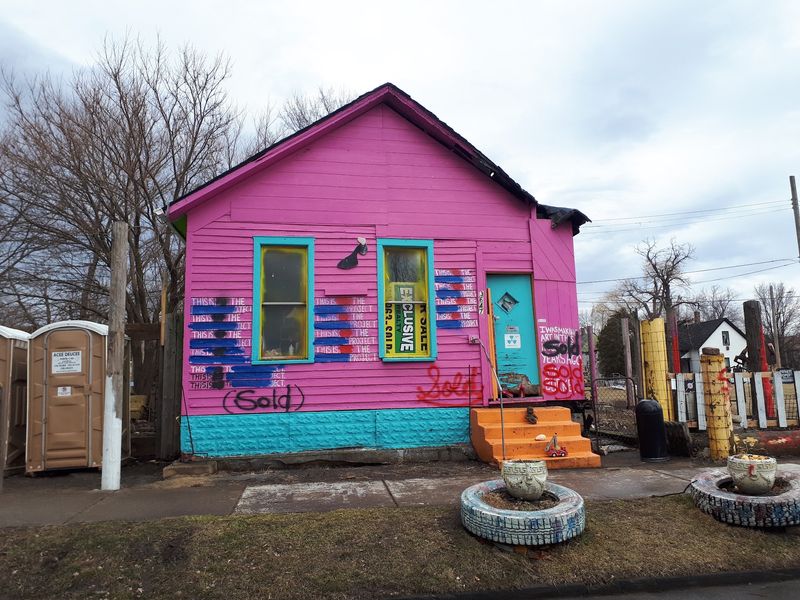
One practical lesson matters as much as any art history note. The Heidelberg Project sits inside a real neighborhood, not inside gates, ropes, or a traditional museum layout.
That means visitors should move with respect. Stay on sidewalks, give residents space, and avoid treating people’s homes like props.
Taking in the art slowly works better than rushing anyway, because the environment changes from lot to lot.
I found that the mood sharpened once I remembered where I was standing. The project is powerful partly because everyday life continues around it.
Being mindful keeps the visit grounded, and it honors the community that has lived with both the beauty and the struggle represented here for decades.
Go Early For Space And Better Light
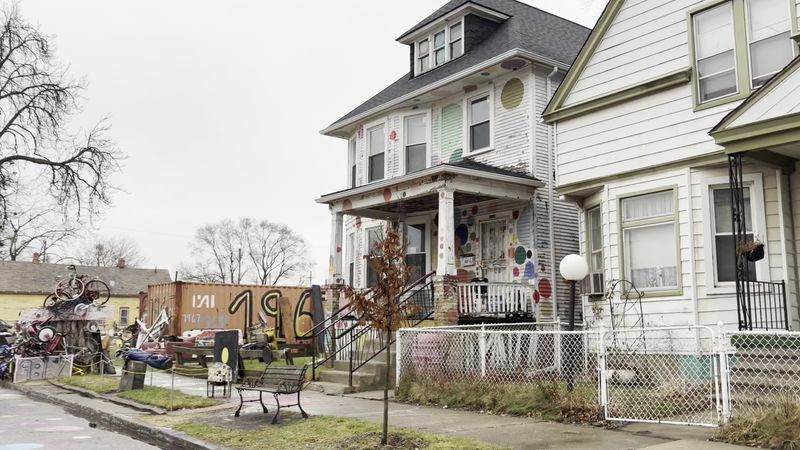
Morning gives the project a different personality. Since the Heidelberg Project is open daily from 8 AM to 7 PM, arriving early usually means softer light, quieter sidewalks, and more room to take in the full sweep.
Bright sun later in the day can flatten some details, especially on painted surfaces and clustered found objects. Early light tends to pull out texture, from worn wood to layered color to the odd sparkle of metal pieces.
There is another benefit too. A calmer start helps you read the street more clearly and move at an easy pace.
If you want photos, thoughtful observation, or a less hurried walk, early hours make the experience feel richer and more personal overall.
Expect Change, Not A Frozen Museum Piece
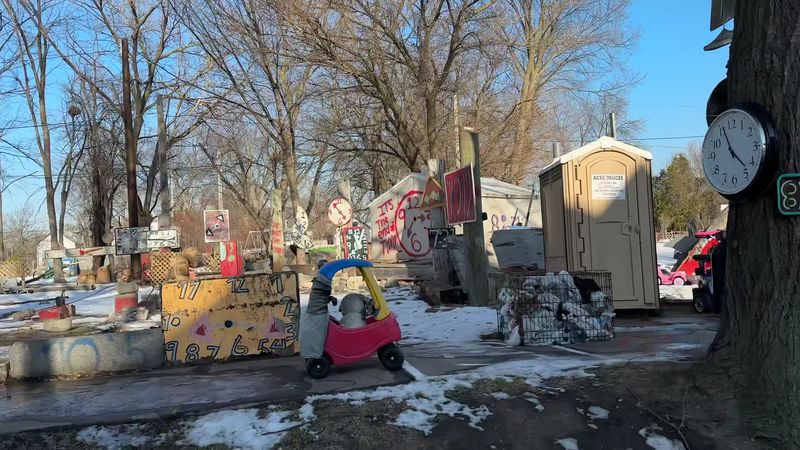
Nothing about the Heidelberg Project feels sealed in glass, and that is part of its point. Weather, time, demolition, fire, and rebuilding have all shaped what visitors see from one period to another.
Parts of the project were demolished by city order in the 1990s, and several art houses were later destroyed in arson attacks between 2013 and 2015. Even so, the site keeps evolving instead of pretending loss never happened.
That makes flexibility a smart visiting tip. Do not arrive expecting a permanent checklist of identical sights.
Come ready to see a living work, one that changes with circumstance and still holds onto its central message of resilience, persistence, and creative refusal in the face of hardship.
Look For Community In The Making

Art here was never only about objects nailed to houses. From the beginning, neighborhood children helped with cleanup and creation, making the Heidelberg Project a community act as much as an artist’s vision.
That origin still matters when you walk the block. The place carries the feeling of shared effort, where making art also meant making dignity visible in a street marked by disinvestment and loss.
Programs connected to the project continue that educational side today, including opportunities for young adults and arts leadership learning. So while the eye catches color first, the deeper story is about participation.
The project teaches that creativity is not reserved for elite spaces. It can begin with neighbors, children, and a hard decision to care.
Use A Tour Or App To Catch More Meaning
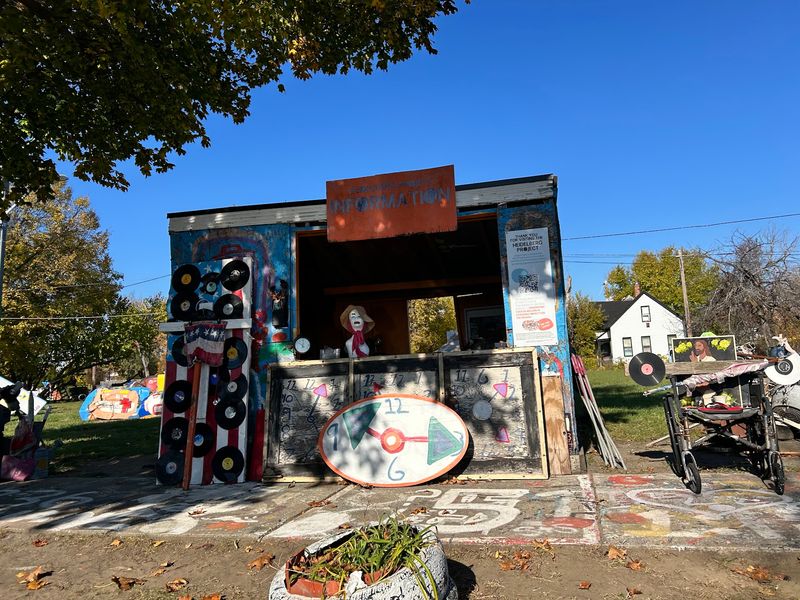
Some places explain themselves in a minute. Heidelberg is not one of them.
The shapes are bold and easy to notice, but the philosophy underneath becomes clearer when you use a docent tour or the project’s self-guided app.
Extra context helps connect the visual surprises to Guyton’s bigger ideas about social inequity, memory, and personal action. Without that layer, a visitor can miss how carefully the symbols, houses, and materials fit together.
If you like wandering alone, the app is a helpful middle path. If you prefer conversation, a guided tour adds stories and structure.
Either way, a little interpretation goes a long way on this block, where meaning often hides inside the most unlikely object.
Watch For The Numbers House And Future Plans
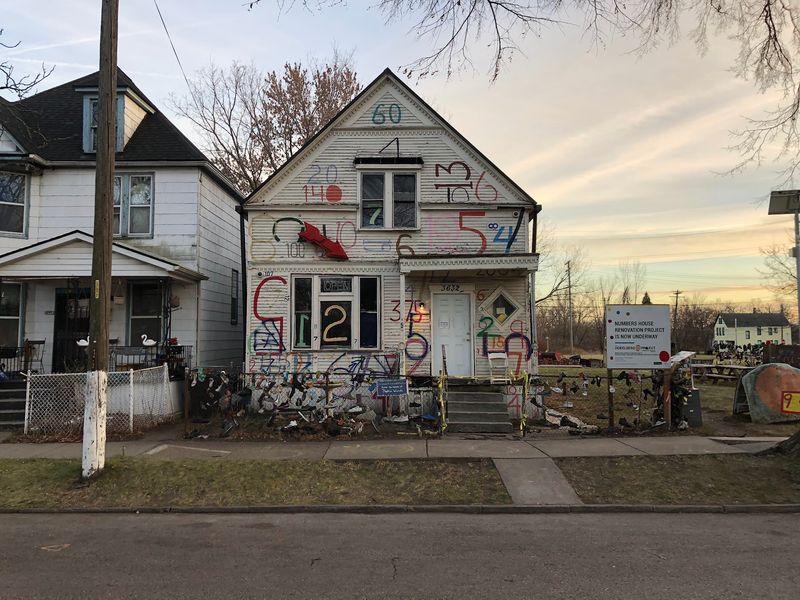
The Numbers House is one of the best-known images on Heidelberg Street, and it points toward the project’s future as much as its past. Numbers appear throughout the site, but this house gathers that visual language into one memorable landmark.
Under the Heidelberg 3.0 vision announced in 2017, the project aims to grow into a culture village and stronger art community. Plans tied to the Numbers House include artist residencies, exhibitions for emerging artists, and community events.
That future-facing energy gives the visit an extra spark. You are not simply looking at a surviving landmark.
You are watching a place that continues to imagine what creative life on this block can become for Detroit and beyond over time.
Bring Curiosity For Beauty And Unease
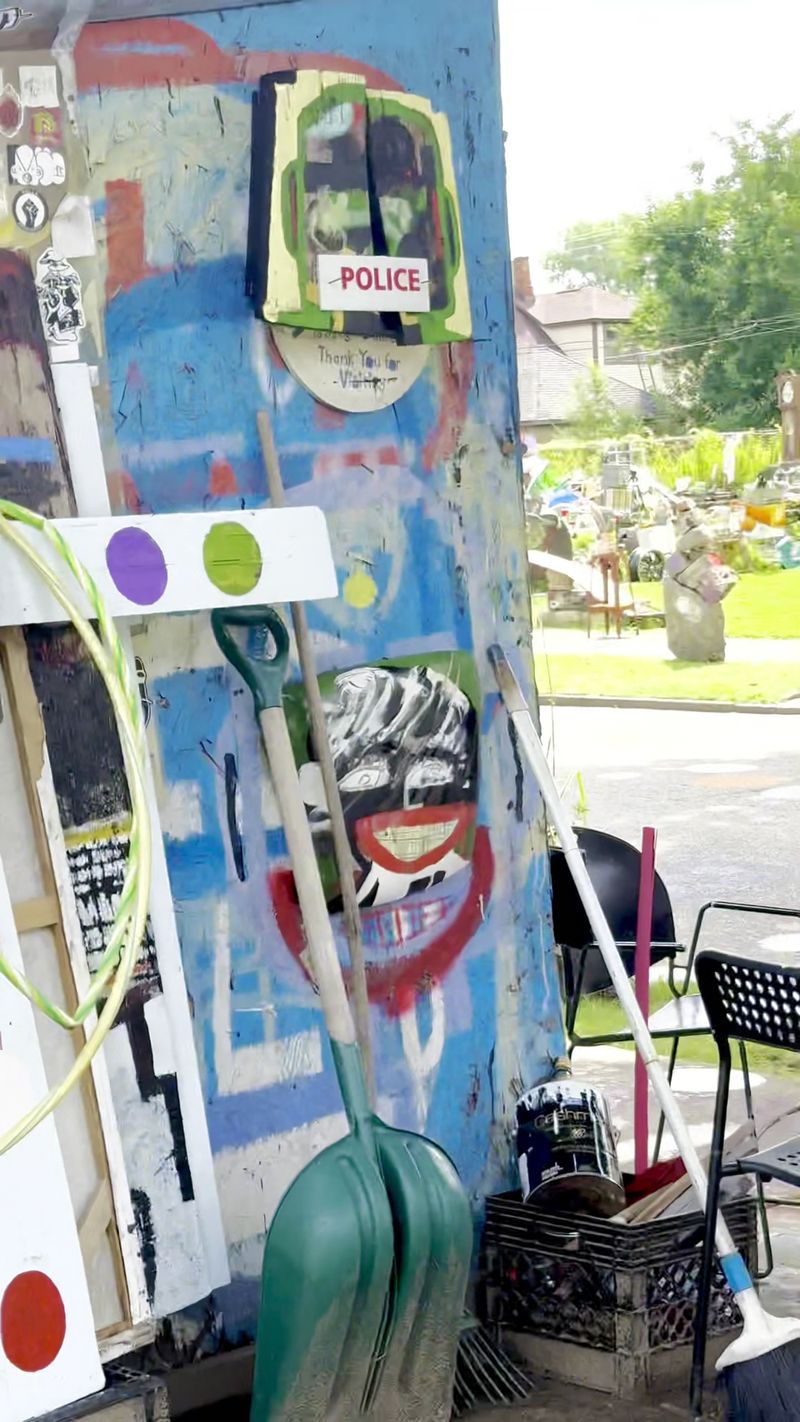
Not every corner of the Heidelberg Project feels cheerful, and that mixed mood is honest. Some pieces can seem funny, some tender, and some a little eerie, all within the same short walk.
That emotional shift is not a flaw to avoid. It reflects the difficult history behind the art and the artist’s refusal to smooth everything into something neat and easy.
The project asks visitors to sit with contradiction.
I appreciated it more once I stopped trying to label it simply beautiful or strange. Bring curiosity instead of fixed expectations.
The block works best when you let it be complicated, because its power comes from showing hardship and imagination side by side without pretending either one cancels the other.
Leave Seeing Detroit A Little Differently

Some attractions impress because they are polished. Heidelberg stays with you for the opposite reason.
It is rough-edged, open to weather, shaped by loss, and still bursting with imagination on a residential block.
By the end of a visit, the lesson feels bigger than art alone. Tyree Guyton showed that one person, working with neighbors and ordinary materials, could turn a damaged street into an international landmark with a moral voice.
That is the tip I would save for last. Do not rush away after snapping pictures.
Walk once more, look down the block, and notice how the place changes your sense of what a city corner can hold. Few sites make that idea feel so immediate and real.