
This Ohio Town Is Home To A Healthcare System Ranked Among America’s Best

Akron built its reputation on rubber, but one of its biggest modern success stories has nothing to do with tires. This northeastern Ohio city is home to a healthcare system that has earned major national recognition for clinical performance and specialty care.
That alone gives Akron a place in conversations usually dominated by much larger cities. What makes the story more interesting is how deeply medicine is tied to the city’s identity today.
Advanced treatment programs sit alongside active research efforts, while community health initiatives reach well beyond hospital walls. Recent national awards have added even more attention to the work happening here.
For a city still known by many for its industrial past, Akron has quietly developed a medical reputation that deserves a much closer look.
Akron’s Crown Jewel In Medicine

Not every mid-sized American city can claim a hospital system that earns national praise year after year, but Akron pulls it off with Summa Health System.
Summa Health System, Akron Campus earned Healthgrades’ 2026 America’s 50 Best Hospitals Award for the third consecutive year, placing it among the top 1% of hospitals nationwide under Healthgrades’ methodology.
The system operates multiple hospitals and outpatient facilities across the region, giving residents access to a broad range of medical services without traveling to Cleveland or Columbus.
Summa Health is headquartered in Akron, with its main Akron Campus centered at 141 N. Forge St.
What makes the recognition especially meaningful is that the rankings are based on patient outcomes, safety scores, and clinical excellence, not just size or spending.
For a city of roughly 190,000 people, having a healthcare anchor of this caliber is a genuine point of civic pride that shapes quality of life for everyone who calls Akron home.
A History Of Healing That Runs Deep
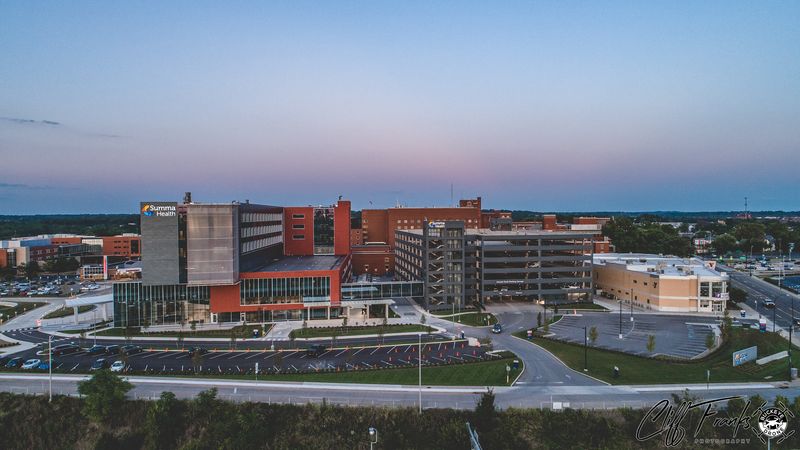
Long before the national rankings arrived, Akron was quietly building a healthcare legacy that stretches back more than a century.
Summa Health traces its roots to Akron City Hospital, founded in 1892, while the modern Summa Health System was formed in 1989 through the merger of Akron City Hospital and St. Thomas Hospital.
Over the decades, mergers and partnerships brought together several Akron-area hospitals under one organizational roof, creating a more unified and powerful system capable of tackling complex health challenges.
That long institutional memory matters in medicine, because experience shapes protocols, training pipelines, and the kind of deep community trust that keeps patients coming back.
The city itself grew rapidly in the early 20th century thanks to the rubber industry, and the demand for quality healthcare grew right alongside it.
Understanding where Summa Health came from helps explain why it performs so well today, because the commitment to patient care was baked into its foundation from the very beginning, and that culture has never really left.
Specialty Care That Stands Out Nationally

One of the clearest signs of a truly excellent healthcare system is the quality of its specialty departments, and Akron’s Summa Health delivers in several key areas.
The system has earned recent recognition for several areas of care, including cardiovascular services, with Summa Health System, Akron Campus also named among Premier’s 50 Top Cardiovascular Hospitals for 2025.
Heart care is particularly notable, as Summa Health’s cardiac program offers advanced interventional procedures, electrophysiology services, and a dedicated heart failure management program that keeps patients healthier between hospital visits.
Orthopedic services have also drawn attention, with surgical teams performing high volumes of joint replacements under protocols designed to reduce complications and speed up recovery times.
For patients living in Summit County and the surrounding region, this means access to specialist-level care without the stress of long drives to larger urban centers.
The breadth of strong specialties under one system also makes coordinated care easier, because when your cardiologist and your orthopedic surgeon are working within the same network, communication tends to be smoother and faster.
Research And Innovation Keeping Akron Ahead

A healthcare system earns its national reputation not just by treating illness well, but by working to understand and prevent it through ongoing research.
Summa Health has invested in clinical research programs that connect patients in Akron to cutting-edge trials and treatment protocols that might otherwise only be available at large academic medical centers in bigger cities.
The system has partnered with institutions including Northeast Ohio Medical University, known as NEOMED, to create a pipeline between medical education and hands-on clinical practice that benefits both students and patients.
That kind of academic affiliation helps attract talented physicians and researchers who want to do more than just practice medicine, they want to advance it.
Akron’s position within the broader Northeast Ohio medical corridor also gives Summa Health access to collaborative networks that share data, best practices, and research findings across multiple institutions.
The result is a hospital system that feels dynamic and forward-looking rather than static, and for patients facing serious diagnoses, knowing that their care team is plugged into the latest thinking in medicine can make a real difference in how hopeful they feel.
Community Health Programs

The best healthcare systems understand that keeping people healthy requires more than waiting for them to show up sick, and Summa Health has built community outreach into its core mission.
Programs focused on diabetes prevention, maternal health, and childhood wellness have extended the system’s reach into Akron neighborhoods that have historically faced barriers to consistent medical care.
Mobile health units bring screenings and preventive services directly to underserved communities, making it possible for residents to access basic care without needing transportation or time off work for a clinic visit.
Mental health services have also grown as part of the community commitment, recognizing that behavioral health is inseparable from physical wellbeing and that stigma should never stand between a person and the help they need.
Partnerships with local schools, community organizations, and city government have helped Summa Health address the social factors that influence health, such as housing instability, food access, and employment stress.
This community-focused approach is reflected in Summa Health’s documented community benefit programs and efforts to improve healthcare access and reduce health disparities.
Patient Safety Scores That Inspire Confidence

When people choose a hospital, they are trusting it with something irreplaceable, and patient safety scores give a measurable way to evaluate that trust.
Summa Health has received strong safety grades from the Leapfrog Group, an independent nonprofit that evaluates hospitals across the country using data on infection rates, medication errors, surgical complications, and staff communication.
Earning a high Leapfrog grade is genuinely difficult because the organization uses a rigorous methodology that hospitals cannot easily game, which makes the recognition carry real weight.
Akron’s system has also performed well on measures tracked by the Centers for Medicare and Medicaid Services, including readmission rates and hospital-acquired infection prevention, both of which directly affect how well patients actually recover.
For families researching where to receive care, these independent third-party scores offer a layer of reassurance that goes beyond marketing language on a hospital’s own website.
Safety culture at Summa Health is reinforced through staff training, transparent reporting of near-misses, and leadership accountability, because the hospitals that improve fastest are the ones honest enough to study their own mistakes carefully.
The Physicians And Nurses Who Make It All Work

Behind every ranking and every award is a workforce of people who show up every day and do the actual work of caring for patients, and Akron’s medical community is genuinely strong.
Summa Health employs thousands of physicians, nurses, and support staff across its facilities, and the system has made workforce development a priority by investing in training programs and competitive recruitment to attract skilled professionals to the region.
Nurse-to-patient ratios, which directly influence both safety and satisfaction, have been a focus area, and the system has worked to maintain staffing levels that allow caregivers to spend meaningful time with each patient.
Physician specialties span everything from oncology to neurology to pediatrics, giving the system a depth of expertise that serves a wide range of patient needs across different age groups and health conditions.
Akron also benefits from its proximity to NEOMED and other training institutions that feed a steady stream of newly trained medical professionals into the regional workforce each year.
The human element is ultimately what patients remember most, and the culture of care that Summa Health has cultivated among its staff is the engine that keeps the rankings meaningful rather than just decorative.
Why Akron’s Healthcare Success Matters

Akron sits at the center of Summit County and serves as a healthcare hub for a much wider swath of northeastern Ohio than its city limits suggest.
Patients from surrounding communities including Barberton, Cuyahoga Falls, Stow, and Hudson regularly travel to Summa Health facilities for specialized procedures and follow-up care, making the system’s quality a regional concern rather than just a local one.
Strong healthcare infrastructure also plays a direct role in economic development, because businesses deciding where to locate or expand pay close attention to the quality of medical facilities available to their employees and their families.
Akron’s ability to attract and retain employers is meaningfully supported by the presence of a nationally recognized healthcare system that signals stability, investment, and long-term civic health.
The ripple effects extend further still, because healthier communities tend to have lower rates of chronic disease, higher workforce participation, and stronger school performance among children who receive consistent preventive care.
For a city that has worked hard to reinvent itself after decades of industrial change, having a world-class healthcare system is not just a medical achievement, it is a cornerstone of Akron’s broader story of resilience and renewal.