
This Illinois Amphitheater Tucked In The Bluffs Belongs On Your Bucket List
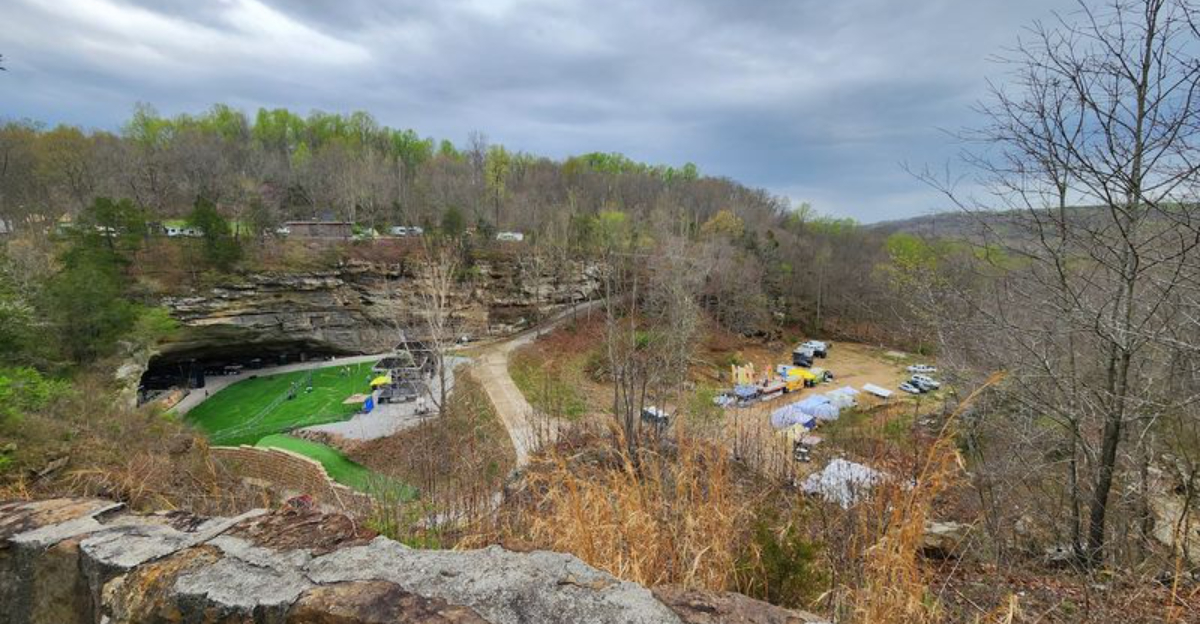
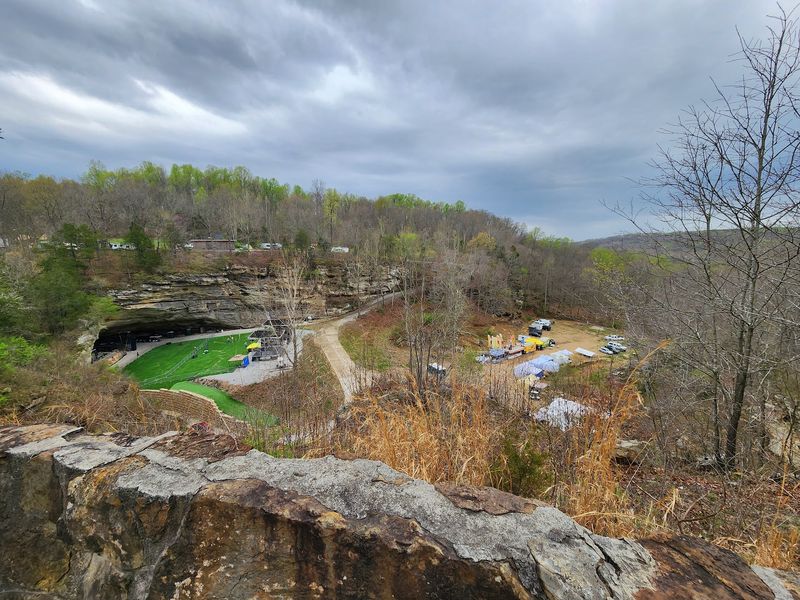
Somewhere in the rolling hills south of Carbondale, a concert stage sits beneath a natural rock bluff while the audience watches from an open-air clearing surrounded by rock formations, a waterfall, and trees. That place is Shawnee Cave Amphitheater near Murphysboro, and it offers something most concert venues simply cannot replicate.
The setting alone makes it worth tracking down, and the surrounding Southern Illinois region gives you plenty of reasons to turn the trip into a full weekend.
Why Shawnee Cave Amphitheater Stands Out
Shawnee Cave Amphitheater sits at 3747 Illinois Route 127 near Murphysboro, roughly 10 miles south of Carbondale. That address puts it squarely in the heart of Southern Illinois, a region better known for hiking trails and wine country than for live music venues.
Yet this spot has drawn concertgoers for decades, and the reason is straightforward once you see it.
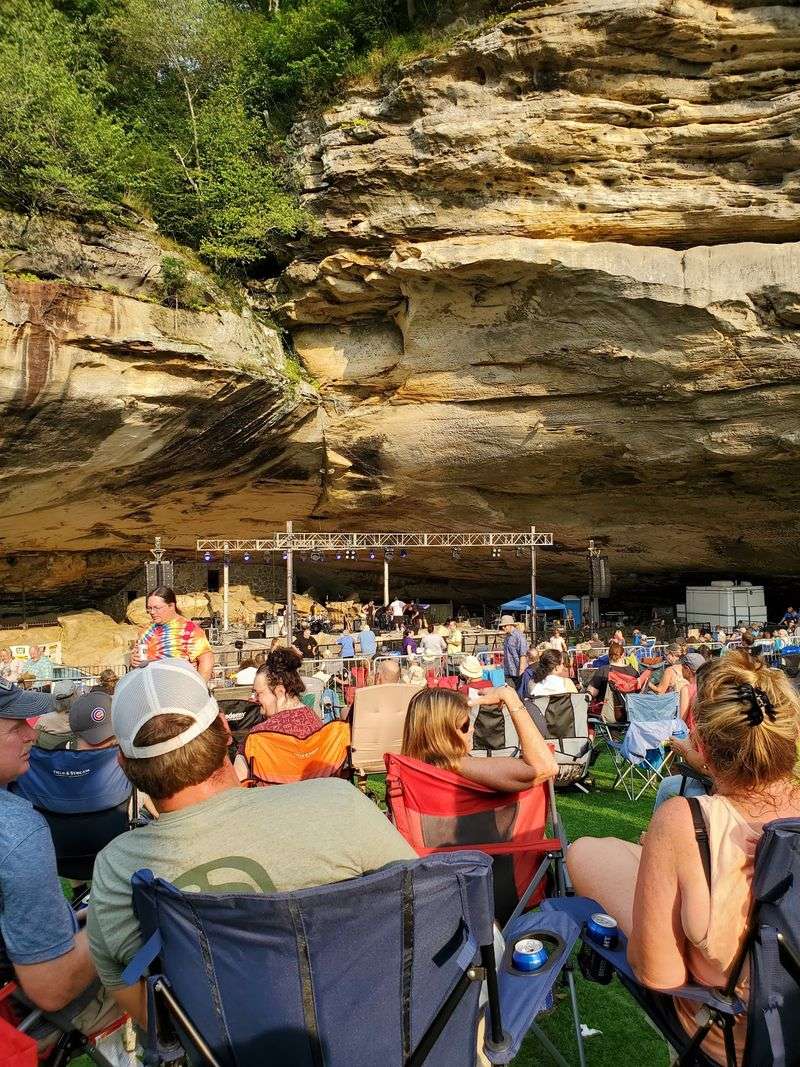
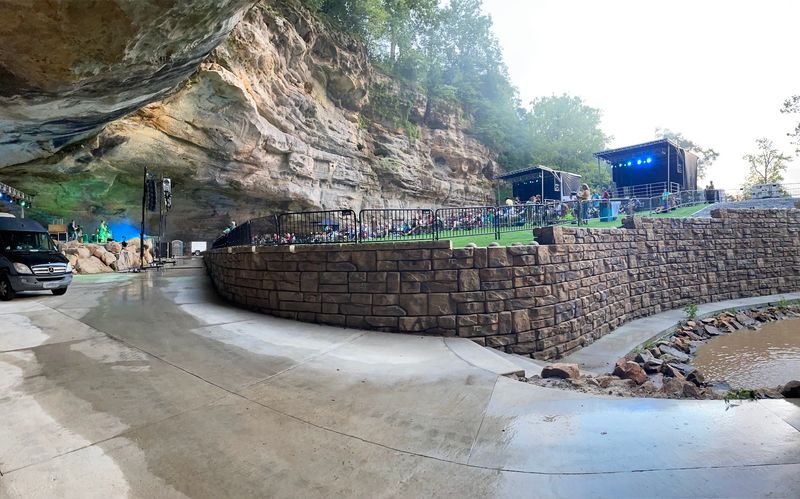
The stage is positioned beneath a natural rock bluff, giving performers a dramatic geological backdrop that no architect could design on purpose. The audience area is open-air, spread across a 50-acre wooded property that the venue describes as a natural rock-formed amphitheater.
According to the Shawnee Cave Amphitheater FAQ, the site is surrounded by rock formations, a waterfall, and native vegetation, and the property was formerly known as Saltpeter Cave.
Calling it a bucket-list venue is an editorial judgment, not an independently verified ranking. Still, the case is easy to make.
Most outdoor concert spaces are flat, fenced fields or manicured lawns with a distant stage. Here, the natural landscape is the venue.
The rock bluff rises behind the performers, the trees close in around the edges, and the waterfall adds ambient sound that no PA system was designed to provide.
That combination of geology, history, and open-air atmosphere creates a concert experience that feels genuinely different from a festival in a parking lot or a show at a generic amphitheater. Whether the setting enhances your night depends on the performer, the weather, and your own taste, but the physical environment gives every event a head start that few venues can match.
How the Shawnee Hills Landscape Shapes the Experience
Southern Illinois sits atop a geological story that took millions of years to write. The Illinois Department of Natural Resources notes that limestone and dolomite bedrock dominate the Shawnee Hills region, and that water moving through those soluble rocks over long periods produces caves, sinkholes, and karst features.
That process is why cave formations appear throughout this part of the state, and why a site like Shawnee Cave exists at all.
The regional geology helps explain the general character of the landscape, but it does not pin down the exact rock type at the amphitheater’s exposed bluff. The reviewed sources confirm a rock bluff and natural rock formations at the venue itself.
Whether that exposed face is limestone, dolomite, sandstone, or a combination is not established by the venue’s own materials or by the geological sources reviewed for this article. Calling it a limestone cliff is directionally plausible for Southern Illinois, but it goes beyond what the available evidence confirms for this specific site.
What the geology does explain, more broadly, is why this corner of Illinois looks so different from the flat agricultural land that covers most of the state. The Shawnee Hills create ridges, hollows, bluffs, and natural shelters that have attracted human activity for centuries.
The amphitheater’s rock bluff is part of that same landscape tradition.
The venue’s FAQ suggests that the bluff amplifies sound, framing it as part of the natural concert experience. That is the venue’s own promotional description, not an independently measured acoustic result.
Even so, the idea that a curved rock face might redirect sound toward an open audience area is physically plausible. Whether you notice it during a show will depend on the production setup and the performer’s own sound system, but the setting at least makes the claim feel believable rather than purely fanciful.
A Music Venue With a Story Beneath the Bluff
Long before the current ownership marketed it as a weekend destination, this piece of Southern Illinois land had a reputation. Southern Illinois Tourism describes the property as having a music history dating to the late 1960s or 1970s, when the natural rock setting first attracted performers and audiences looking for something different from a conventional indoor venue.
The property’s connection to the former Saltpeter Cave gives it an identity that predates the concert business entirely.
The reopening history is worth noting carefully. A 2024 local news report says the venue originally opened in the 1960s and reopened in 2021, while other accounts describe a different timeline.
Those sources do not agree on a single consistent date, and without additional archival confirmation, it would be misleading to pick one figure and present it as settled fact. What the accounts do agree on is that the site went through a period of closure and was eventually brought back as a live-music destination.
The venue’s private events page positions the property as a place with genuine history, one that now hosts weddings and retreats alongside public concerts. That dual identity, part working event space and part storied music venue, gives the site a continuity that most newer outdoor venues lack.
Visiting feels less like attending a pop-up festival and more like stepping into a place that has been hosting gatherings for generations.
Claims about specific famous performers who have played the venue appear in promotional and local-media sources, but those accounts have not been independently verified against archival reporting. The history is real and worth appreciating; the specific details deserve a closer look before being repeated as established fact.
A 2024 report on a canceled Labor Day event is a useful reminder that even a venue with decades of history can face interruptions, and that checking current status before you travel is always the right move.
What to Bring and Confirm Before Arrival
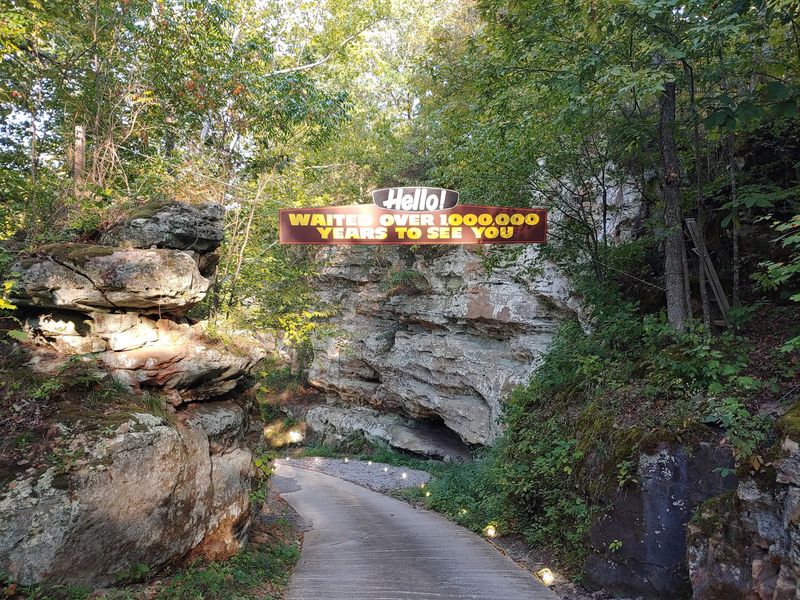
Packing for Shawnee Cave Amphitheater is a bit different from preparing for a stadium show. The open-air audience area means you are fully exposed to the elements, and the natural setting adds a few variables that indoor venues do not.
The venue’s FAQ lays out a practical packing list: bring a lawn chair or blanket, a jacket for cooler evenings, a rain poncho, sunscreen, walking shoes appropriate for uneven terrain, and bug spray. Southern Illinois summers are warm and humid, and insects are a genuine consideration after dark near a wooded, waterfall-adjacent site.
Coolers are listed as allowed, and the venue advertises a BYOB policy, which is a notable perk compared to the typical concert experience where drinks cost as much as a meal. Both coolers and bags are subject to security searches, so plan for a check at the gate rather than walking straight in.
Bringing pre-packaged or clearly labeled items tends to speed that process along.
The venue also advertises an air-conditioned shuttle service from parking and camping areas to the concert-viewing area, which matters if you are traveling with people who have mobility considerations or if you simply want to avoid a long walk in the heat. Accessibility is described as available across most of the property, but that is the venue’s own characterization.
Before you rely on shuttle timing, specific routes, restroom locations, or ADA accommodations for any particular event, contact the venue directly or check the current event page. Those details can change between shows, and the FAQ is written for general guidance rather than event-specific logistics.
One practical note: the terrain around a natural rock amphitheater is not the same as a paved arena concourse. Wearing supportive shoes rather than sandals or dress shoes will make moving around the property noticeably more comfortable, especially after dark.
Arrive early enough to find your spot before the light fades.
Build a Southern Illinois Weekend Around the Concert
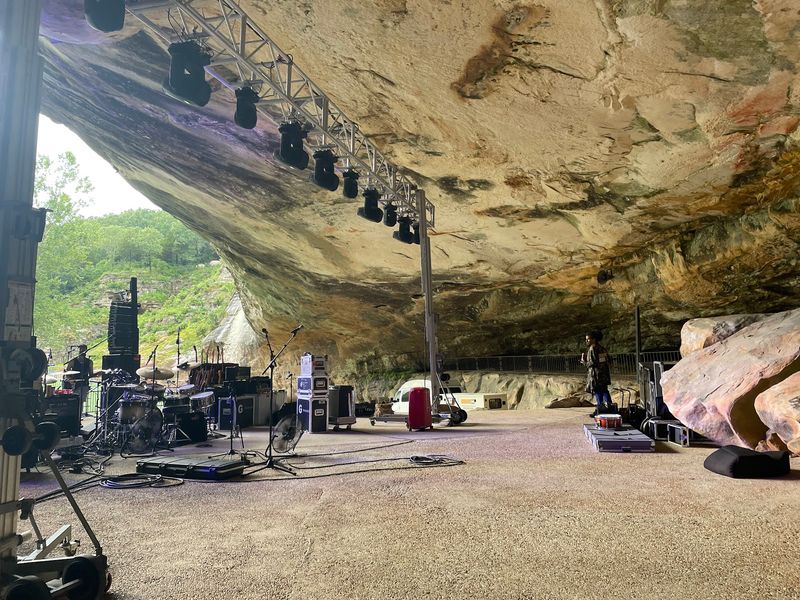
One concert ticket can anchor an entire weekend if you plan the surrounding hours well. The venue has marketed camping, RV spaces, and glamping as add-ons for certain events, and the Shawnee Cave accommodations page describes those overnight options as part of the experience.
Staying on-site or nearby means you can arrive without rushing, enjoy the post-show atmosphere, and wake up already in one of Southern Illinois’ most scenic corners. Availability and exact terms vary by event, so confirm what is offered before booking anything.
The surrounding region gives you plenty to fill the daylight hours before the music starts. Southern Illinois Tourism highlights several nearby destinations worth building into a two-day itinerary.
Pomona Natural Bridge is a sandstone arch reachable by a short trail, the kind of geological feature that rewards a morning visit before the afternoon heat sets in. Cove Hollow offers another chance to see the Shawnee Hills landscape up close, with rock formations and forest that echo the amphitheater’s own setting.
Little Grand Canyon, a box canyon carved by erosion near Murphysboro, is one of the more striking natural features in Illinois and a reasonable half-day hike for most visitors. The Shawnee Wine Trail connects a string of Southern Illinois wineries that have built a genuine regional reputation over the past two decades.
A tasting stop on the afternoon before a concert pairs well with the BYOB policy waiting for you that evening.
None of these attractions are part of the amphitheater itself, and each has its own hours, trail conditions, and seasonal considerations to check in advance. The point is that the concert is a reason to visit a region that offers far more than a single evening of music, and the itinerary practically assembles itself once you have a confirmed show date on the calendar.
Plan for Weather Beyond the Atmosphere
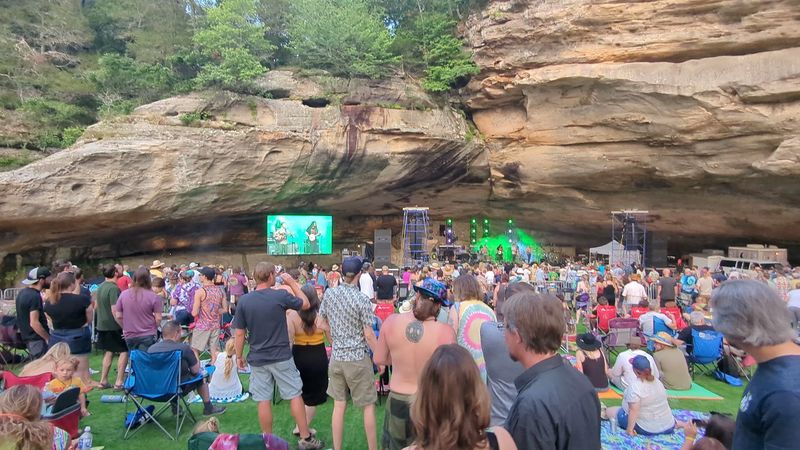
An open-air venue beneath a rock bluff creates an atmosphere that is genuinely hard to replicate, but it also means the sky is always part of the picture. Southern Illinois summer weather can shift quickly, and a show that starts under clear skies can face thunderstorms within an hour.
Knowing what to do before that happens is more useful than figuring it out in the moment.
The rock bluff, cave opening, surrounding trees, a tent, or any open-sided structure at the venue are not safe places to wait out a thunderstorm. National Weather Service guidance on lightning safety for outdoor activities is direct on this point: there is no safe outdoor location during a thunderstorm.
When you hear thunder, move immediately to a substantial enclosed building or a hard-topped metal vehicle. A bluff overhang, however large it may look, does not qualify.
After the last thunder, NWS guidance on lightning safety when a building or vehicle is nearby recommends waiting at least 30 minutes before returning to outdoor activity. That 30-minute clock resets each time you hear thunder, so a storm that lingers can push the safe return time well into the evening.
Follow the venue’s own instructions during any weather event, including announcements about lightning, high winds, and flash flooding.
The phrase “rain or shine” on a concert listing means the event will proceed through ordinary rain. It does not mean the event is safe in all weather, and it does not override National Weather Service guidance about lightning.
Pack your rain poncho, yes, but also know where the nearest enclosed shelter is before the first set begins. A few minutes of planning before the show can make a stressful situation much easier to handle.
Verify the Event Before Making the Trip
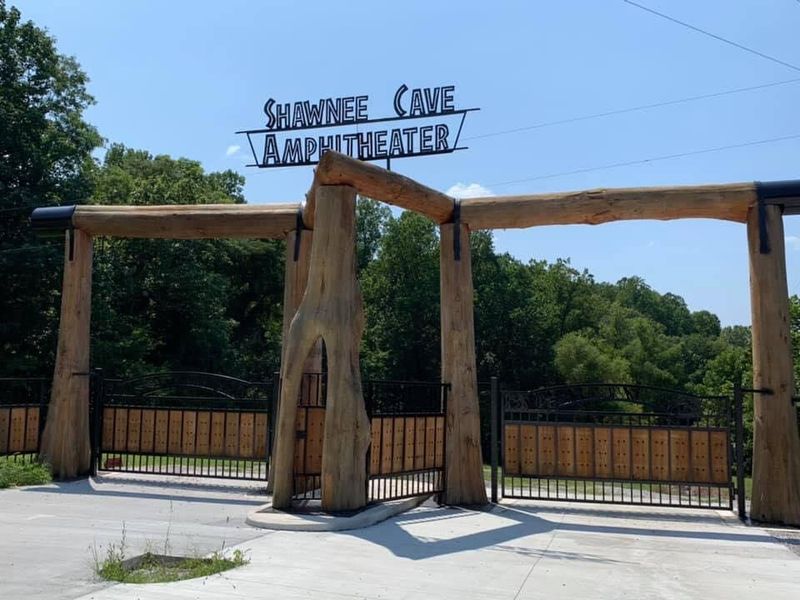
Before booking a hotel, packing a cooler, or planning a trail hike around a show date, confirm that the event is actually happening. The Shawnee Cave Amphitheater homepage currently displays a 2024 event cancellation notice, and the available research does not establish a confirmed public concert schedule for 2026.
The venue’s private-events page indicates it is actively booking weddings, retreats, and private gatherings, but a private booking does not mean a public concert is scheduled.
Check the venue’s upcoming events page immediately before making any travel plans, and cross-reference it with the FAQ for current policies on tickets, parking, BYOB, accessibility, and shuttle service. Event-specific details can differ significantly from the venue’s general descriptions, so contacting the venue directly for any accommodation or accessibility questions is the safest approach.
When a confirmed event does align with your schedule and the logistics work for your group, the setting makes the effort worthwhile. A stage beneath a natural rock bluff, surrounded by rock formations, a waterfall, and trees, is not something you find on every tour stop or weekend calendar.
The venue’s unusual character and the surrounding Southern Illinois landscape together create an experience that genuinely earns the bucket-list label, provided you arrive informed, prepared, and ready for whatever the weather decides to do.