
This Illinois Beach Town On Lake Michigan Is Getting A Little Too Popular
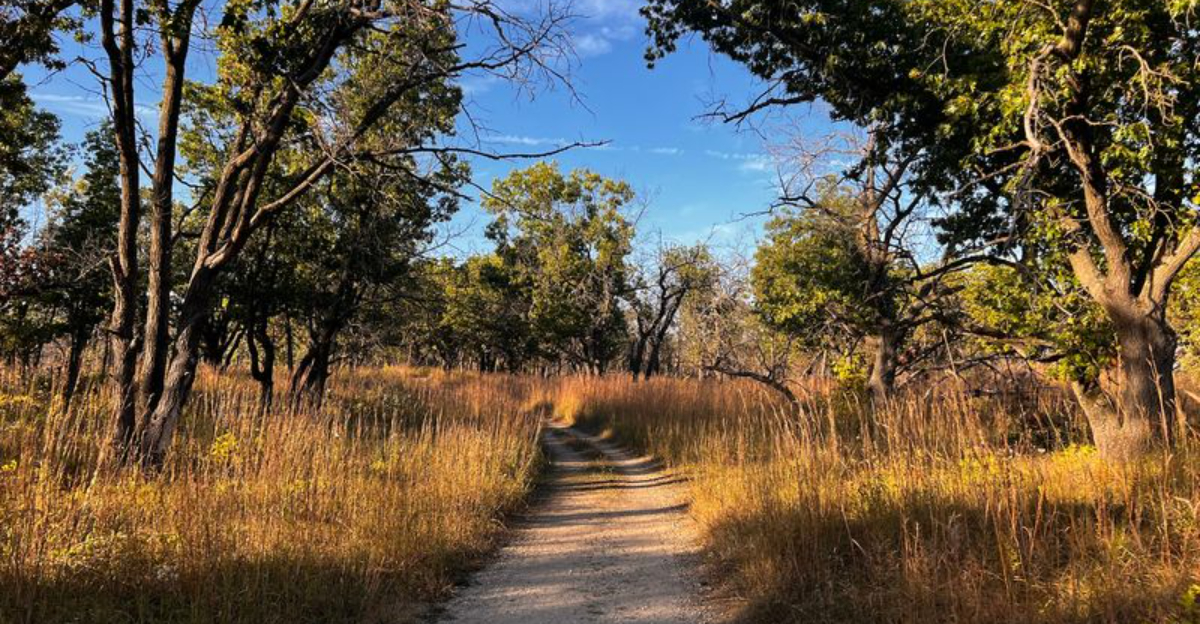
Just north of Chicago, a stretch of Lake Michigan shoreline has been drawing bigger crowds than most people expected. Zion, Illinois sits beside Adeline Jay Geo-Karis Illinois Beach State Park, a roughly 6.5-mile ribbon of dunes, marshes, and oak woodland that looks nothing like the groomed municipal beaches most Chicagoans know.
The park pulled in around 2 million visitors in 2024, making it the second-most visited state park in Illinois. If you have been thinking this spot was still a quiet local secret, peak summer weekends have settled that question.
Zion’s real draw sits beside the city
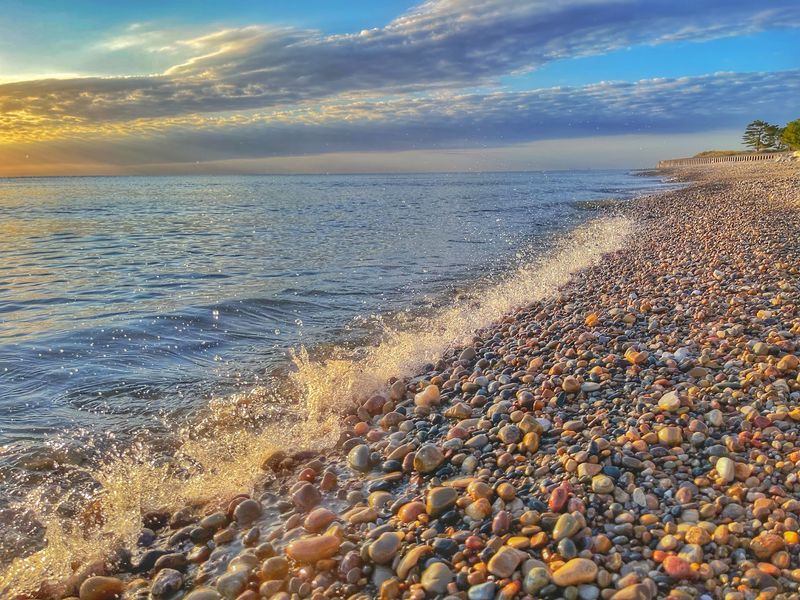
Adeline Jay Geo-Karis Illinois Beach State Park is the reason most people make the drive to Zion. The city itself sits adjacent to the park rather than wrapping around it, so the first thing worth understanding is that the park and the city occupy distinct spaces.
You go to the park for the lake; you go to Zion for everything else.
What makes the park stand out along the Illinois side of Lake Michigan is the landscape it preserves. Illinois IDNR documentation for the park describes it as containing the state’s only remaining beach-ridge shoreline, a geological feature shaped over thousands of years by shifting lake levels and wind-driven sand.
The result is a layered terrain of dunes, swales, marshes, oak woodland, and prairie compressed into a roughly 6.5-mile reach along Lake Michigan.
More than 650 plant species have been recorded in the dune area alone, a count that signals genuine ecological complexity rather than a manicured park setting. Cottonwood and jack pine anchor the older dunes, while wet swales between ridges support plant communities adapted to periodic flooding.
None of this makes the park untouched. Roads, parking areas, a resort, camping facilities, and erosion-control infrastructure are all part of the physical picture.
But compared with virtually every other publicly accessible shoreline between Chicago and the Wisconsin border, the park’s landscape is unusually natural and varied. For a visitor arriving from a city beach with a concrete breakwater and a snack stand, the difference registers immediately.
The dunes alone justify the trip, and the shoreline scale means that even a busy Saturday still offers stretches where the lake feels like it belongs to you for a few minutes.
The park is busy, even if the town is not overwhelmed
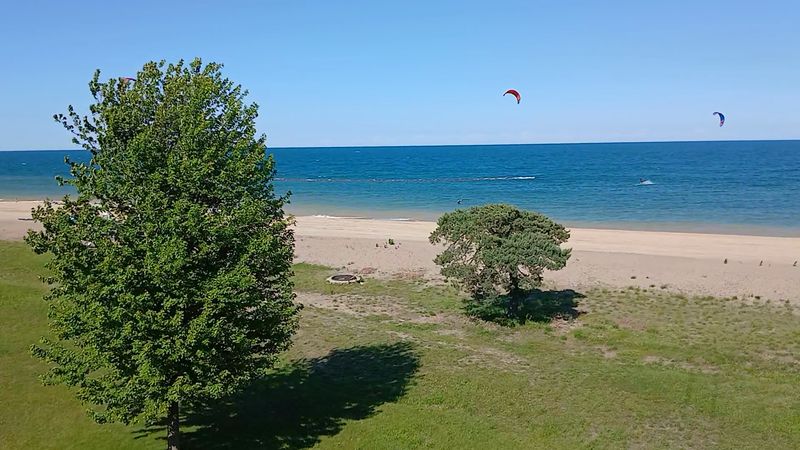
Framing Zion as a town being slowly crushed by tourism overstates what the evidence actually shows. What the numbers do show is a park operating at serious demand levels.
Capitol News Illinois reporting on 2024 state park visitation confirmed that Illinois Beach State Park recorded approximately 2 million visitors, ranking it second among all Illinois state parks by attendance, the highest system-wide total in more than a decade.
That 2 million figure belongs to the entire park, not to Zion’s downtown, its restaurants, or any single beach access point. It would be wrong to picture the city’s commercial corridors clogged with visitors spilling off the sand.
The park draws the crowds; the city sees some of that traffic but is not documented as experiencing a proportional tourism surge across its neighborhoods and businesses.
The same reporting noted that shoreline restoration work and renewed investment in the park’s resort helped attract attention after years when erosion had significantly reduced usable beach. A 2025 field report also described packed weekend parking lots, which is a sharper, more immediate indicator than annual totals: when the lot is full on a Saturday morning in July, the experience of the park changes regardless of what the year-end numbers say.
Whether attendance is climbing year over year is harder to establish. The 2024 figure and the parking-lot observations confirm high demand, but a documented multi-year upward trend would require a longer attendance series than current reporting provides.
The more defensible read is that Illinois Beach State Park is no longer an obscure or reliably uncrowded getaway on peak summer weekends, and visitors planning a trip should treat that as a fixed condition rather than a recent development still unfolding.
Recent restoration changed what visitors see
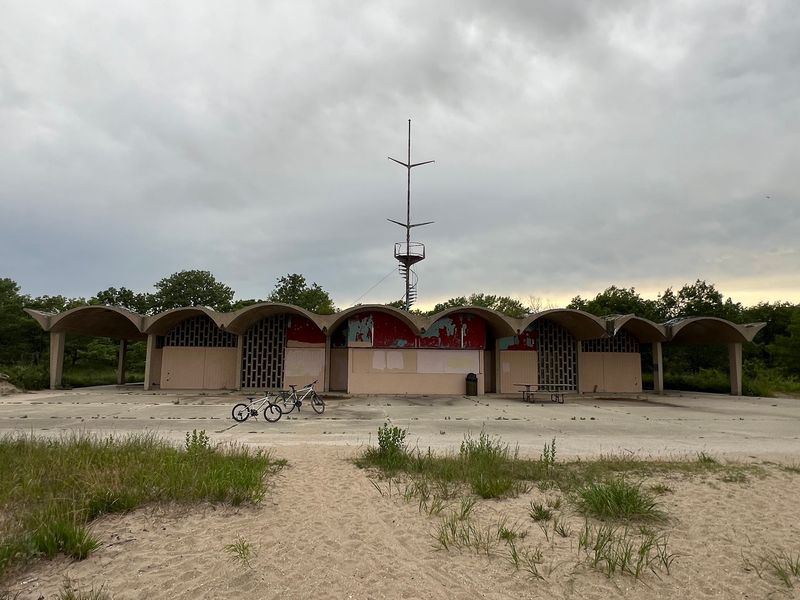
For several years before 2024, parts of Illinois Beach State Park’s shoreline were in rough shape. Lake Michigan’s water levels rose sharply in the late 2010s and early 2020s, and the erosion that followed stripped sand from sections of beach that had previously been wide and accessible.
Some areas shrank to the point where the usable beach nearly disappeared at high water.
WTTW’s 2024 reporting on the park’s restoration documented how the beach came back after major erosion-control and sand-replenishment work, describing the recovery as significant for both visitor access and local ecosystems. The project returned usable beach width to sections that had been functionally inaccessible, which helps explain part of the renewed interest and the 2024 visitation spike.
Knowing that restoration played a role in the park’s comeback also means understanding what it did not permanently fix. Lake Michigan is dynamic.
Water levels shift, storms move sand, and a beach that looks broad in one season can narrow considerably in the next. The park’s physical appearance and the width of walkable shore can change between visits, sometimes dramatically after a run of strong northeast winds or a wet spring.
Visitors should not expect to find the same beach twice. The restored shoreline represents a real improvement over the erosion-era conditions, but it is not a sealed-in-place result.
If current project status or any ongoing stabilization work matters to your planning, checking directly with IDNR before your trip is worth the two minutes it takes. Conditions at the lakeshore are a variable, not a guarantee, and the park’s natural character is partly defined by that unpredictability.
Zion provides a town stop, not a beachside boardwalk
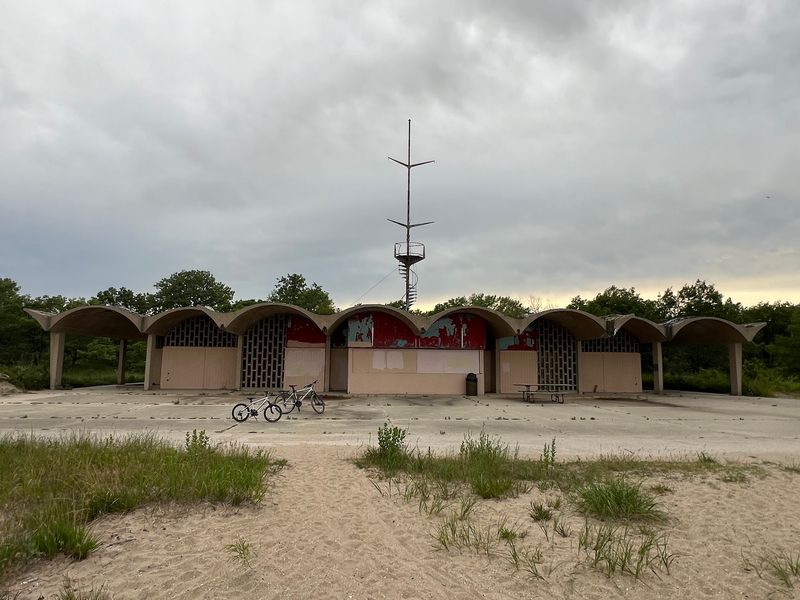
Calling Zion a beach town is close enough to be useful and loose enough to mislead. The city has restaurants, shops, a farmers market, and seasonal events that make it worth building into a day trip or weekend.
What it does not have is a compact waterfront strip where you walk off the sand, grab a fish taco, browse a surf shop, and check into a hotel three blocks from the waves.
Visit Lake County’s Zion page promotes the city and the beach park as complementary attractions, which is accurate as far as it goes. The park is the lakeshore destination; Zion’s commercial activity is centered along its downtown and Sheridan Road-area corridors, which occupy a separate setting from the park entrance.
Getting from a restaurant on Shiloh Boulevard to the main beach parking area requires a car or a deliberate bike ride, not a casual stroll.
The City of Zion’s economic development information describes it as a city with an active commercial base, not as a resort community built around beachfront access. That distinction matters for planning.
You will not wander out of a lakeside cafe and find yourself on a dune.
The upside of that geography is real: Zion’s dining and retail options feel like a working city rather than a tourist markup zone. A summer farmers market, local restaurants, and occasional community events give the city its own reasons to visit.
Treat the park and the city as two stops on the same trip rather than one seamless beach-town experience, and neither will disappoint. Expect a boardwalk, and you will spend half the day confused.
The park supports a full day beyond swimming
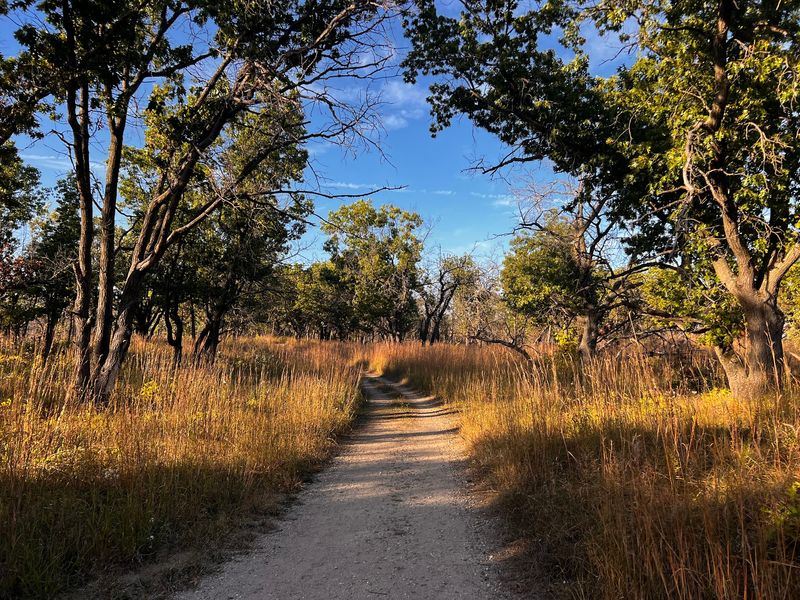
A lot of visitors show up at Illinois Beach State Park with one plan: get in the lake. That works on days when conditions cooperate, but the park earns its visitation numbers partly because there is a full day’s worth of activity available even when swimming is not the right call.
Hiking trails run through the dune ridges and into oak woodland and prairie, giving a ground-level sense of the terrain that an aerial photo cannot capture. Biking is permitted on designated routes, and the varied habitat makes the park a genuinely productive spot for birding and plant observation.
IDNR lists approximately 39,600 feet of swim beach at Illinois Beach, which puts the park’s scale in perspective: this is not a single access point but an extended shoreline with multiple zones, some more suited to swimming and some better for walking the water’s edge and watching the lake move.
Fishing draws a steady crowd to the park’s pier and shoreline, with catches including yellow perch, coho salmon, and steelhead depending on the season. Picnic areas are spread through the park, positioned near the dunes and within earshot of the water.
Camping is available on-site, which means some visitors treat the park as a multi-day base rather than a day trip.
Nature observation is worth planning for specifically. The more than 650 plant species recorded in the dune area, combined with the marsh and swale habitats, mean the park’s ecological range supports wildlife sightings that a standard beach park simply cannot offer.
Shorebirds, migrating warblers in spring and fall, and the occasional fox or deer sighted near the woodland edge make a slow walk through the interior as rewarding as an afternoon on the sand.
Peak weekends reward advance planning
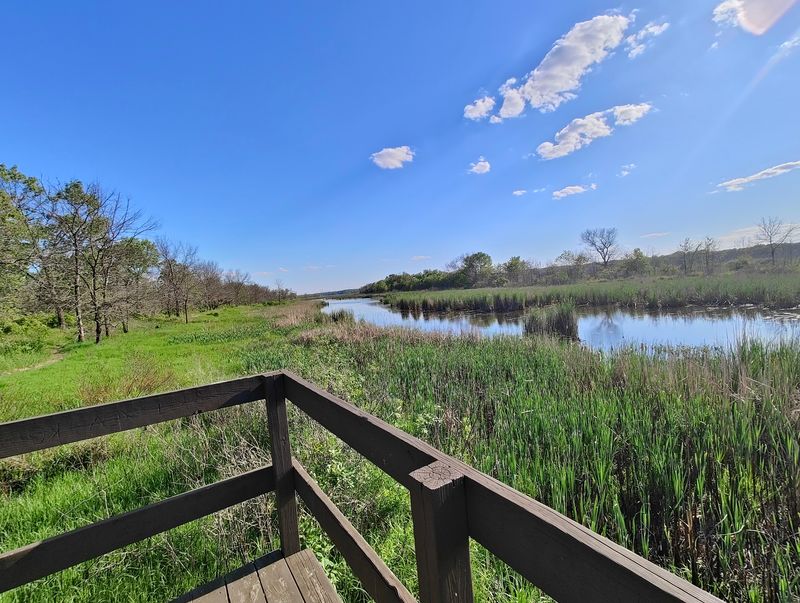
Showing up at Illinois Beach State Park on a Saturday in July without a plan is a gamble that frequently does not pay off. Reports of packed weekend parking lots are consistent with the park’s 2 million annual visitors, and the math on a finite number of parking spaces versus a busy summer weekend is not complicated.
Arriving by 9 a.m. is a reasonable baseline for securing a spot near the main beach area; arriving at noon on a holiday weekend is a different experience entirely.
IDNR designates Illinois Beach State Park’s campground as a premium campground, a classification that reflects a history of consistently operating at or near capacity. Campsites can be reserved online through the IDNR reservation system, and holiday weekends may require a two-night minimum stay.
If camping is part of the plan, booking well in advance is not optional advice – it is the difference between having a site and spending the night somewhere else.
The park also has a resort on-site, which offers lodging closer to the lake than anything in Zion’s downtown. Resort availability and current operations should be verified directly before booking, as seasonal schedules and amenity status can change.
A few other things worth confirming before leaving home: current beach hours, any temporary closures, parking lot conditions, and whether any construction or restoration activity is affecting access. The IDNR park page is the most reliable place to check for updates.
Conditions at Illinois Beach can shift between the day you plan your trip and the morning you arrive, and a quick check saves a frustrating drive.
Lake Michigan conditions set the rules
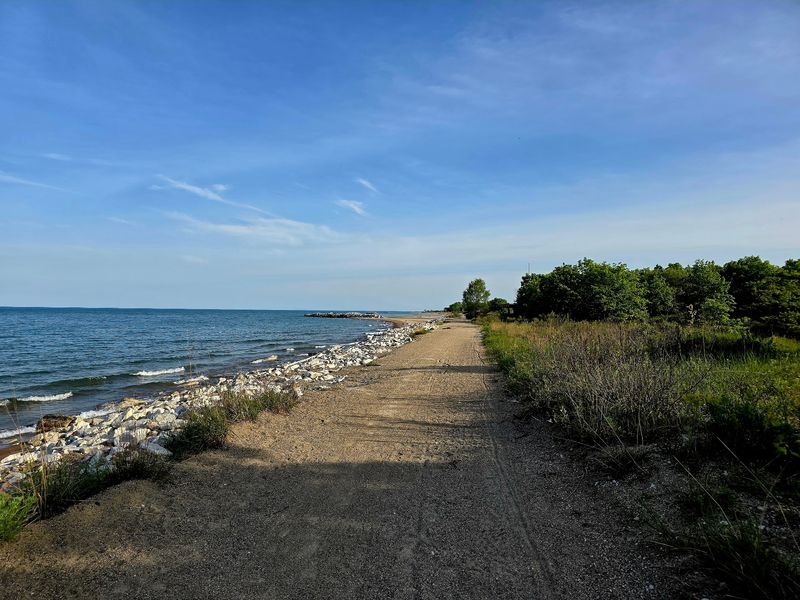
Lake Michigan does not behave like a pool, and it does not behave like the ocean either. It has its own set of hazards that catch people off guard precisely because the water can look calm and inviting while conditions below the surface or just offshore are genuinely dangerous.
Rip currents form along the Illinois shoreline, waves can build quickly with a wind shift, and water temperature drops fast as you move away from the shallows.
Before entering the water at Illinois Beach State Park, check the Illinois BeachGuard system, which tracks current advisories and closures for Illinois beaches, including contamination advisories that have been issued at Illinois Beach State Park beaches in 2026. A beach that was clear yesterday may be under advisory today after a rain event or a shift in currents near a storm drain.
IDNR’s guidance for the park is specific: swim only in designated swimming areas, do not swim alone, avoid the water after heavy rain, and stay away from storm drains, seawalls, and breakwaters. Good weather and calm-looking water are not guarantees of safe conditions.
Those are the rules, not suggestions, and they apply even on a sunny afternoon when the lake looks like a postcard.
Paddlers face a separate set of considerations. IDNR’s Lake Michigan Water Trail guidance recommends a Coast Guard-approved personal flotation device, checking the NOAA marine forecast before launching, avoiding shipping lanes, and staying within your actual skill level rather than your optimistic estimate of it.
Lake Michigan has shipping traffic, and the scale of the lake means that a situation that starts manageable can escalate faster than expected.
On alcohol: IDNR prohibits alcohol on the beach, in the picnic area, and in the campground. The resort is the one location within the park where it is permitted.
That rule is enforced, and it applies regardless of what other parks or beaches you may be used to visiting.
Visit Zion with realistic expectations
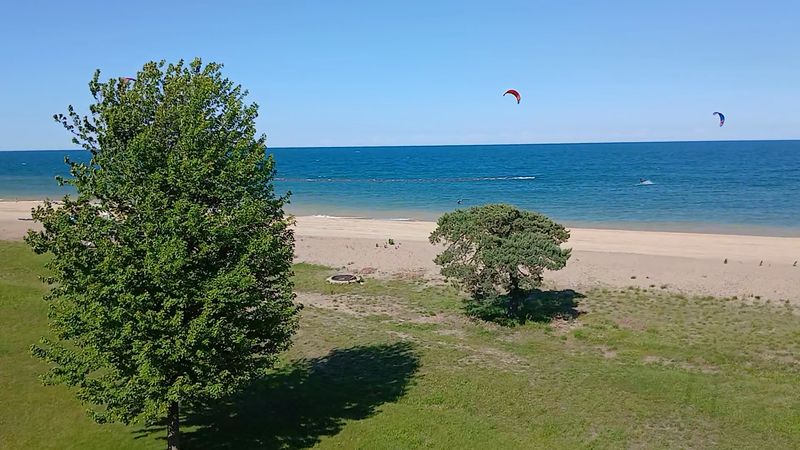
Zion pairs something genuinely rare – a preserved dune-and-beach landscape that has almost no parallel along the Illinois shoreline – with a separate city stop that offers food, a farmers market, and a change of scenery from the park. Those two things together make for a solid day trip or weekend from Chicago, provided you go in with an accurate picture of what each part of the trip looks like.
Illinois Beach State Park is not a hidden gem anymore. Two million visitors in a single year settled that.
Peak summer weekends mean real competition for parking, campsites, and elbow room on the beach. Arriving early, checking BeachGuard before getting near the water, and having a backup plan for activities that do not require swimming will cover most of what can go wrong.
Zion as a city is not being overrun, and its downtown is not a tourist trap. Understanding the geography – park on one side, city on the other, with a drive or a deliberate bike ride between them – keeps expectations honest.
A place this good at combining natural landscape with practical amenities rarely stays uncrowded forever, and on a clear July morning with the dunes lit up and the lake flat, you will see exactly why the crowds found it.