
Nearly 100 Historic Buildings Were Relocated Across America To Build This 80-Acre Village In Michigan
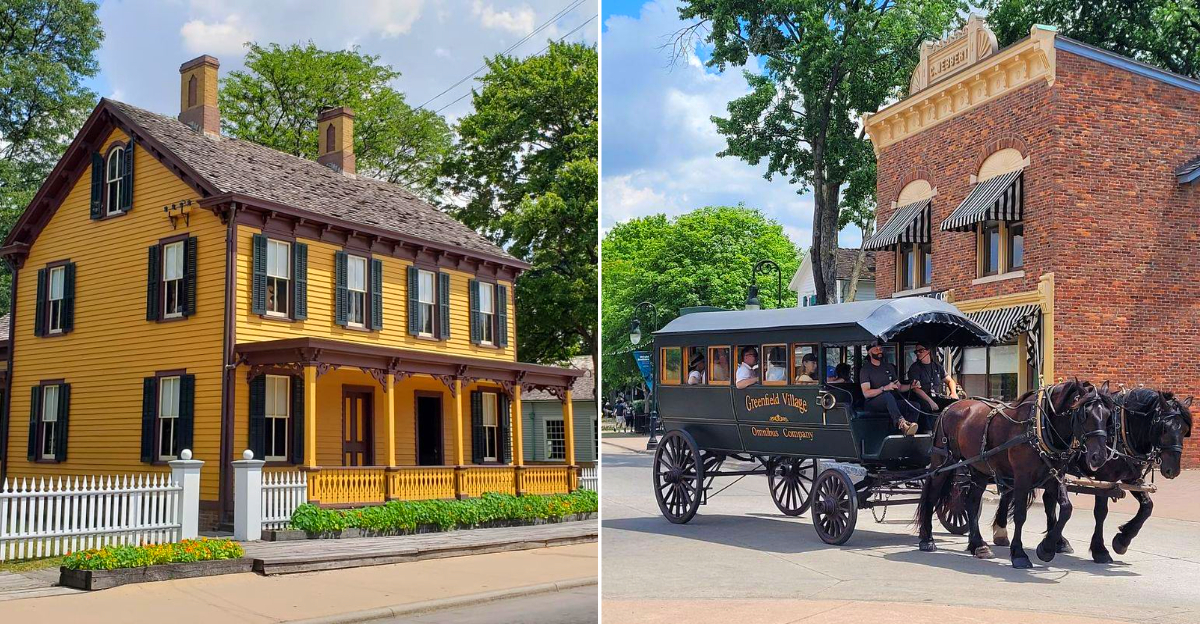
Eighty acres. Nearly one hundred buildings. Each one picked up from its original location and moved here, piece by piece. This village feels like flipping through a book of American history where every chapter has a door you can open.
Edison’s Menlo Park laboratory sits a short walk from the Wright Brothers’ bicycle shop. A courthouse where Lincoln practiced law stands near the home where the Wrights planned their first flight.
Henry Ford started collecting these buildings in the 1920s, determined to preserve the workshops and farms that shaped ordinary American life. You can ride a Model T down the village streets.
Watch glassblowers work with tools their predecessors used a century ago.
The newest addition tells a story of civil rights. Michigan assembled nearly one hundred relocated historic buildings into a single village where you can walk through American innovation from the Wright Brothers to the Civil Rights Movement.
Start At Edison’s Menlo Park Laboratory
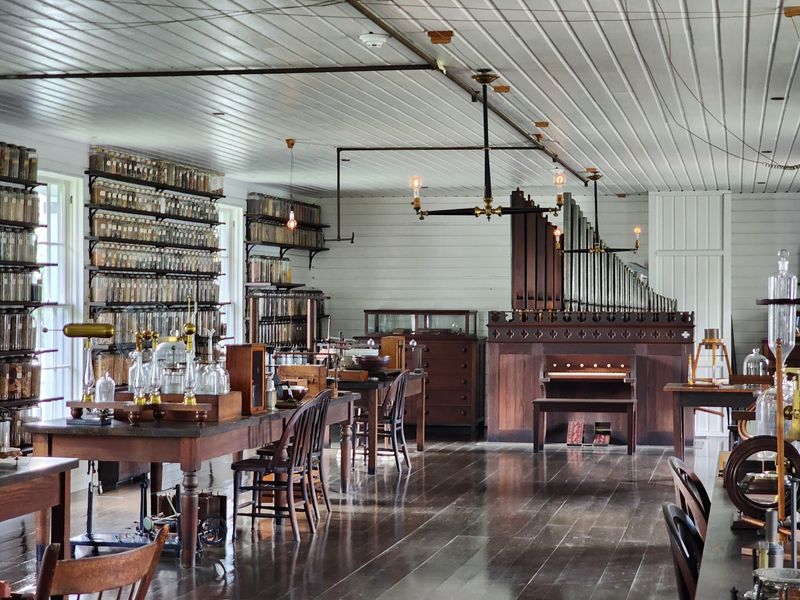
The first surprise is that this is not simply a laboratory lifted intact from New Jersey and dropped into Michigan. Henry Ford reconstructed Thomas Edison’s Menlo Park complex in Greenfield Village using surviving materials, recovered artifacts, documentary evidence, and input from Edison and his associates.
Some original structures survived, while others had disappeared before Ford began the project.
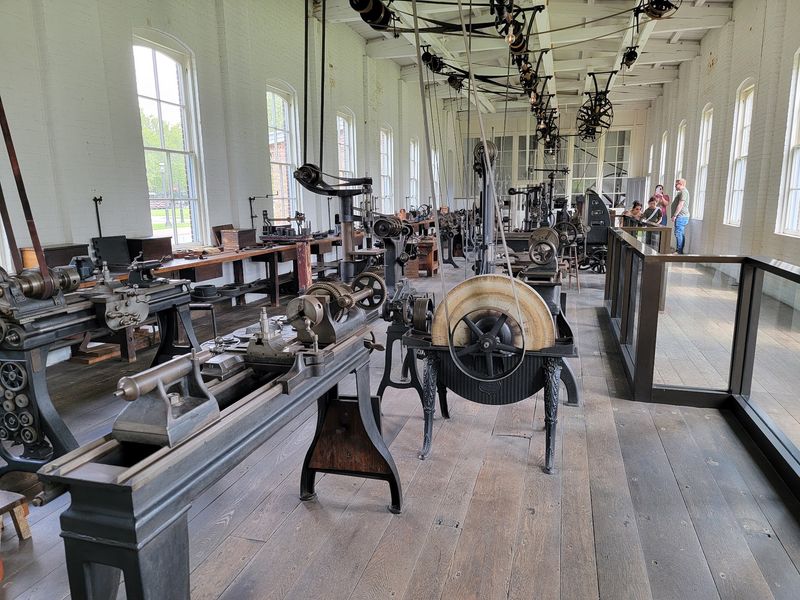
That nuance makes the place more interesting, not less. Inside the Edison at Work district, shelves of chemicals, benches, machinery, and experimental equipment recreate the atmosphere of one of America’s earliest organized research laboratories.
Menlo Park became famous for the practical incandescent lighting system developed there, along with phonograph work and other experiments that depended on teams rather than a lone inventor working in isolation.
Go early enough to hear the interpreters before crowds build. Ask how Ford decided what counted as authentic, because the reconstruction itself has become part of the story.
The Henry Ford now openly explains that some dimensions were enlarged and some details interpreted for visitors.
Standing there becomes a lesson in both invention and preservation: how Edison worked, how Ford remembered him, and how museums translate incomplete historical evidence into a physical place visitors can explore firsthand.
Oakwood Boulevard Opens The Gate To Greenfield Village
The easiest navigation point is The Henry Ford at 20900 Oakwood Boulevard, Dearborn, MI 48124, where Greenfield Village shares a large campus with Henry Ford Museum of American Innovation.
Drivers arriving from I-94 or I-75 can use Southfield Freeway, M-39, then follow signs toward Oakwood Boulevard and the museum complex.
Parking is straightforward once you reach campus. The East Lots off Village Road are closest to Greenfield Village, while the West Lot off Oakwood Boulevard also serves village visitors.
Standard parking currently costs $10 per vehicle, with members parking free. The Henry Ford notes that the East Lots can fill quickly, so the West Lot is a useful backup on busy weekends and event days.
After parking, follow pedestrian signs toward the village entrance rather than assuming every campus doorway leads to the same attraction. Greenfield Village uses a separate admission ticket from the museum unless you purchased a package.
Current online admission generally runs $37 to $39 for adults, depending on the date.
Ride The Steam Train Early
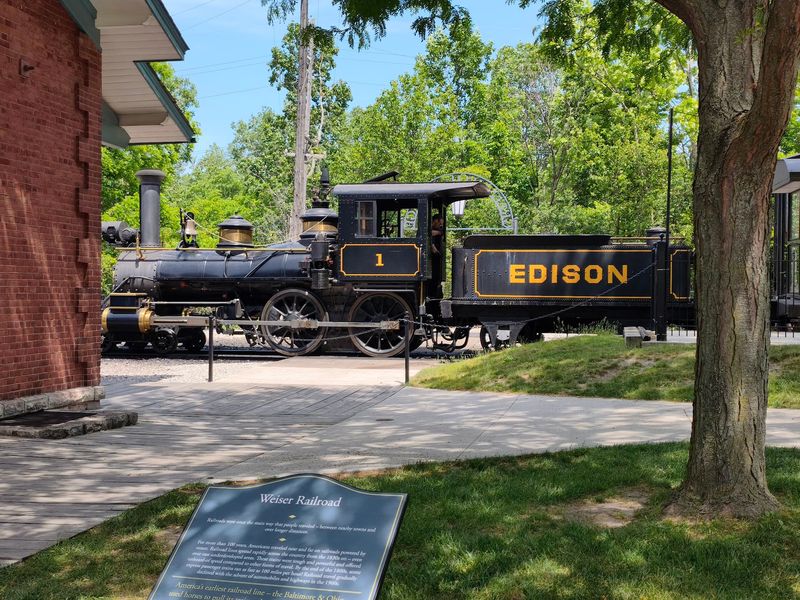
A whistle carries across the whole village, and it never stops being a small thrill. The steam train loops the perimeter in roughly twenty minutes, coal smoke and all.
Beyond the fun of it, the ride works as reconnaissance. You get a rolling overview of the districts, which helps you decide where to spend your walking energy afterward.
Lines build through midday, so board during the first hour or in the last stretch before closing. Sit on the side facing outward for better views of the farm fields, and expect a light dusting of cinders if the windows are open. Worth it.
Book A Model T Ride For The Real Thing
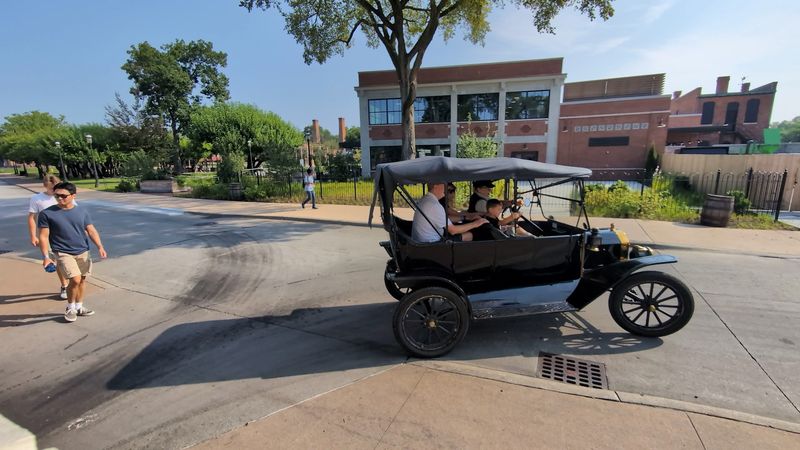
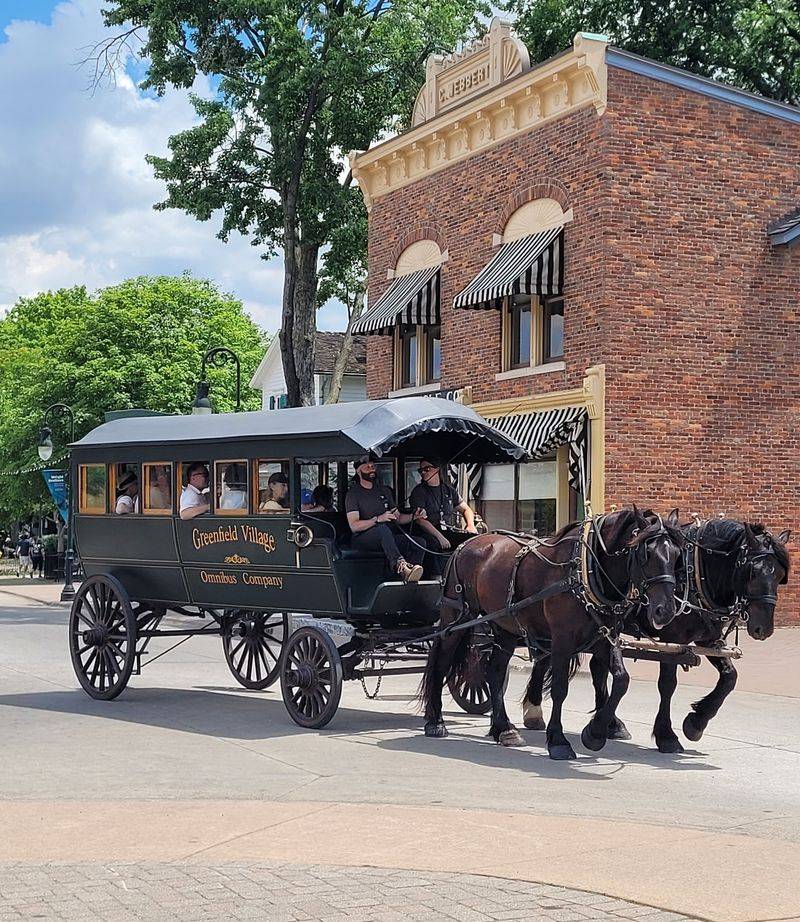
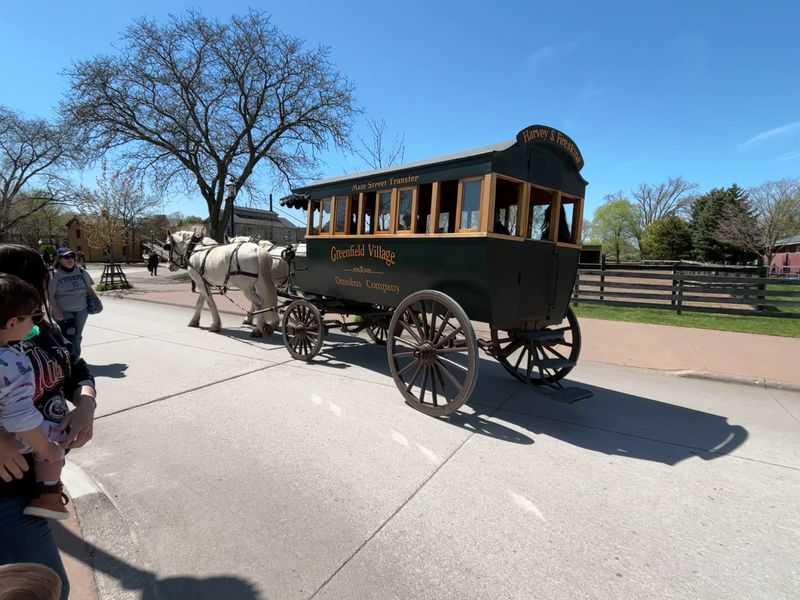
Nothing makes the village streets feel more convincing than watching a restored Model T rattle past while you are standing beside a nineteenth-century storefront. Better yet, climb aboard.
Greenfield Village operates seasonal Model T rides that let visitors experience the car Henry Ford turned into a defining machine of the twentieth century.
Do not expect the smooth isolation of a modern vehicle. The ride is upright, mechanical, noisy, and open to the surroundings.
Drivers handle the unusual controls while village scenery moves past at a pace slow enough to notice buildings, signs, horses, and pedestrians from another angle.
Model T rides require their own ticket or an unlimited Ride Pass covering the village’s historic transportation experiences. Tickets are sold on site, and children fourteen and younger must ride with an adult.
Guests using wheelchairs or scooters need to transfer into the vehicle, though staff can help with access arrangements.
I would ride after you have walked Main Street once. Recognizing the buildings from the back seat makes the route more satisfying.
The experience is not about speed or distance. It is about feeling how physically different early motoring was, even during a short trip through a carefully preserved Michigan landscape.
Watch Glass Being Blown At Liberty Craftworks
Heat hits first inside the Glass Shop, followed by the color. Molten glass moves between furnace and workbench while Greenfield Village artisans shape it with tools and techniques rooted in an ancient craft.
The demonstrations run daily during the village season, making Liberty Craftworks an easy place to catch interpretation without planning around one performance time.
Glass is only part of the district. Weavers demonstrate multiple loom technologies, printers set type and operate presses, and pottery work adds another material.
Seeing several trades close together helps explain how skilled craft developed alongside changing tools rather than disappearing the moment industrial production arrived.
Hands-on programming changes through the season. For 2026, scheduled Liberty Craftworks activity weekends include projects such as weaving, printing, pinch pots, and corn husk dolls, while visiting artists also work with village artisans during selected residency dates.
Check the daily calendar rather than assuming a specific take-home project will be offered.
Give yourself more time than one demonstration. The best moments often happen between the obvious steps, when an artisan explains why a tool changed or how a mistake gets corrected.
Watching skill unfold in real time makes a finished souvenir in the shop feel far more meaningful.
Spend Real Time At Firestone Farm
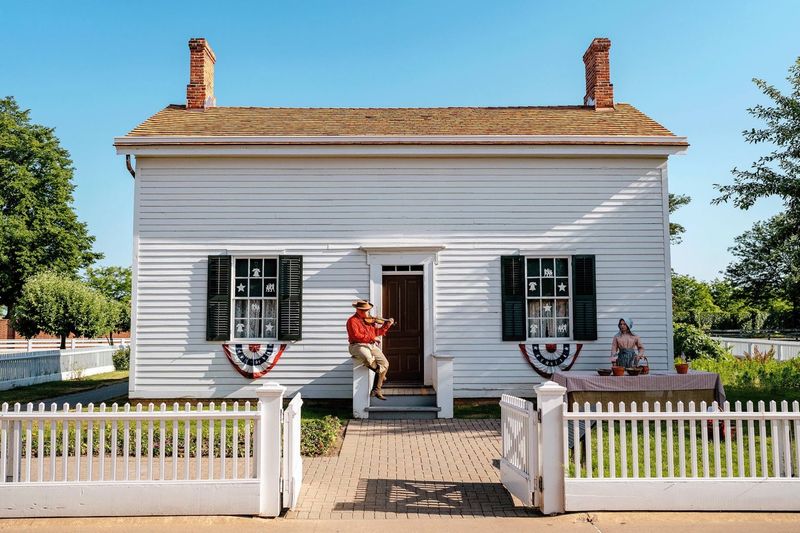
Bread baking in a wood stove, livestock in the barn, chores happening on an 1880s schedule. Firestone Farm was moved here from Ohio and it operates as an actual working farm, not a diorama.
Harvey Firestone grew up on this land before he built a tire empire, and the interpreters portray the family with impressive commitment. Ask what they are cooking and you may get a taste story instead of a lecture.
Visit in the late morning when kitchen work is underway and the smells are strongest. Seasonal chores change through the year, so a spring trip looks nothing like an autumn one.
Find The Wright Brothers’ Bicycle Shop
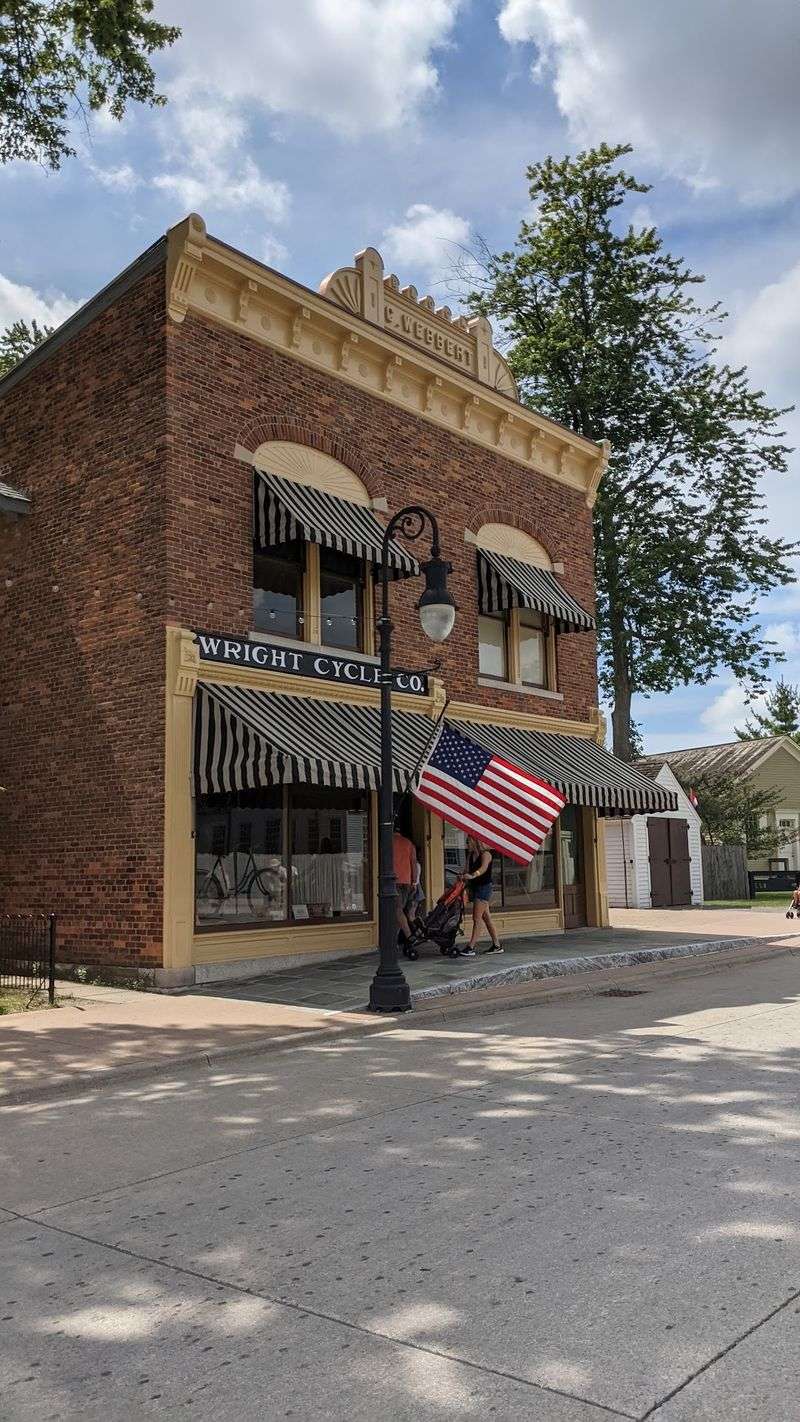
A modest brick storefront carries a major story in the village. Wilbur and Orville Wright operated their bicycle business in this building from 1897 to 1908 in Dayton, Ohio, repairing and selling bicycles while developing the ideas and skills that eventually led to powered flight.
Henry Ford purchased the cycle shop and the Wright family home in 1936 and moved both structures to Greenfield Village. In Dayton they had stood several blocks apart, but Ford placed them side by side in Dearborn.
Orville Wright and mechanic Charlie Taylor helped with the reconstruction so the buildings could be presented accurately.
Look closely inside the shop rather than treating it as a quick aviation photo stop. The brothers built early flying machines here, including work connected to the 1903 Flyer, and their bicycle experience shaped their understanding of balance, control, fabrication, and lightweight mechanical systems.
Pair the shop with the nearby Wright home, then continue toward Edison’s laboratory. Seeing these places within one walking day makes innovation feel less inevitable.
The rooms are small, tools are ordinary, and the people involved had no guarantee their experiments would work. That physical scale is what makes the achievement feel larger rather than smaller today.
Sit For A Historic Base Ball Game
A baseball game becomes wonderfully unfamiliar when the gloves disappear and everyone starts following rules from 1867. Greenfield Village stages Historic Base Ball at Walnut Grove during the summer, using period uniforms, equipment, terminology, and umpiring to recreate early America’s pastime.
For 2026, the season runs from June 13 through September 7, with first pitch at 1:30 p.m. Saturdays include a 1:15 p.m. parade from Town Hall, letting visitors follow the featured clubs down Main Street before the game begins.
The experience is included with Greenfield Village admission and is free for members.
Do not worry if you are not a serious baseball fan. The differences are the entertainment.
Players catch barehanded, the pace feels more social, and familiar situations suddenly operate under rules that seem strange to modern spectators. The relaxed rhythm also gives tired feet an excuse to stop moving for a while.
Bring a hat, water, and something comfortable to sit on if nearby seating is already taken. Stay for several innings rather than five minutes.
Once the vocabulary and rhythm settle in, the game becomes easier to follow. Check the daily calendar before your visit, because weather and seasonal programming can affect what is actually happening.
Step Inside The Mattox And Jackson Houses
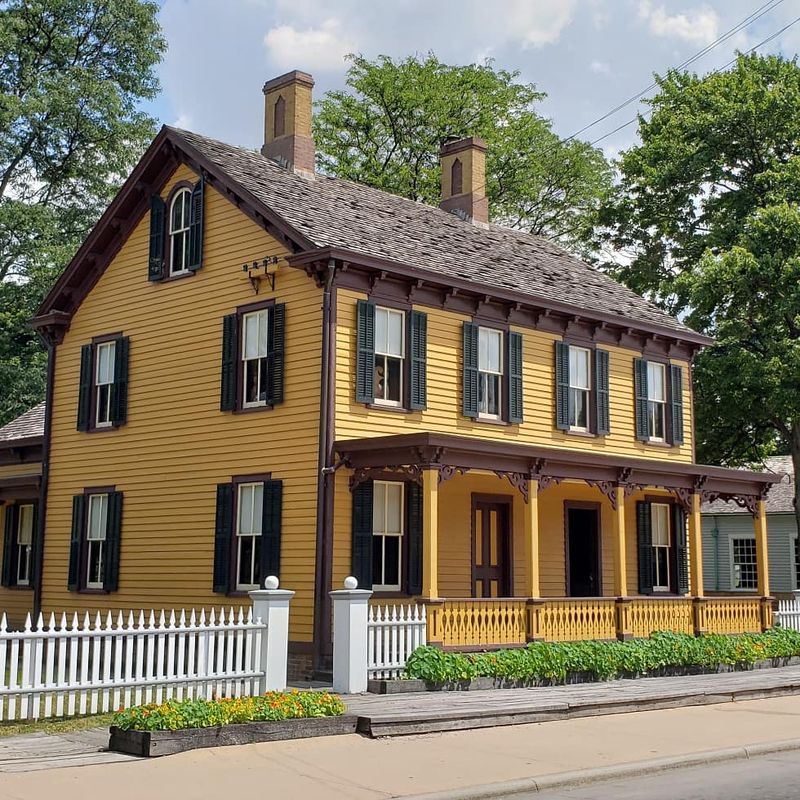
Two modest homes now carry some of important village stories about Black American life, but they speak from very different moments.
The Mattox Family Home interprets the experience of Amos and Grace Mattox, descendants of enslaved African Americans who raised their family and farmed their own land in rural Bryan County, Georgia.
Nearby, the Jackson Home brings the story forward to the civil rights era. Dr. Sullivan and Richie Jean Sherrod Jackson’s house in Selma, Alabama, served as a safe place where Dr. Martin Luther King Jr. and other leaders worked, planned, and rested during the voting rights movement.
The home opened in Greenfield Village in June 2026 after being relocated and restored, becoming the first house added to the village in more than forty years.
Give both spaces time. Their rooms are intentionally domestic, which makes the history feel personal rather than monumental.
The Mattox interpretation was recently adjusted to focus on 1927, while the Jackson Home preserves a setting connected directly to the Selma-to-Montgomery marches and the Voting Rights Act of 1965.
These houses broaden what Greenfield Village can be. Innovation here is not only mechanical.
It also includes survival, community, land ownership, organizing, and demands for citizenship.
Come Back For Holiday Nights And Halloween
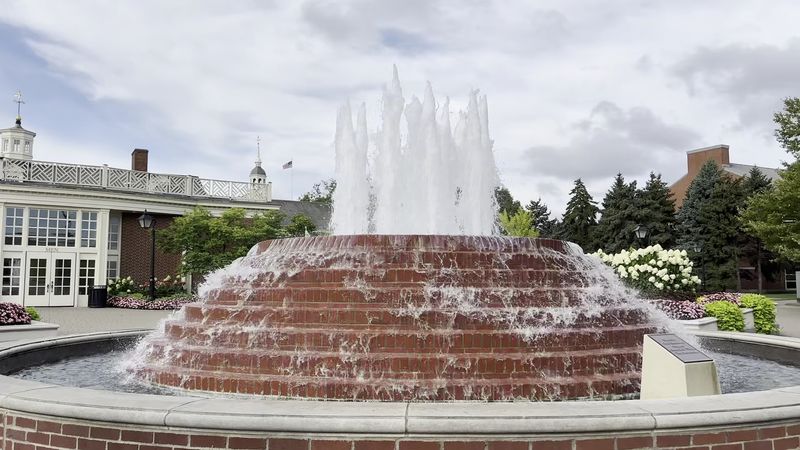
Snow, lantern light, crackling fires and carolers in period dress turn the village into something else entirely during Holiday Nights. Roasted chestnuts, horse-drawn carriages and Model T rides run in the cold.
Autumn brings Hallowe’en evenings, with pumpkins hung in trees, storytellers stationed along the paths and a shuttle service that helps visitors who would rather not walk the full loop.
Buy tickets well ahead, since these evenings sell out. Arrive after dark for the best atmosphere, dress far warmer than you think necessary, and consider renting a scooter or wheelchair if mobility is a concern.
Consider A Membership If You Live Nearby
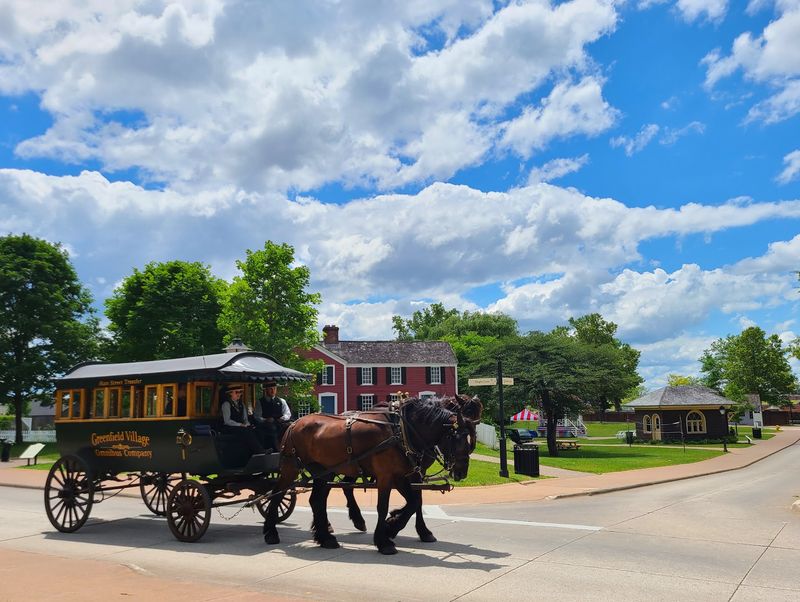
Repeat visits make more sense here than trying to force 80 acres into one exhausting day. The Henry Ford currently sells annual memberships starting at $60, with higher tiers for couples, families, guests, and rides.
Membership includes unlimited general admission to Greenfield Village and Henry Ford Museum of American Innovation .
Members receive free parking, complimentary traditional films at the Giant Screen Experience, dining and retail discounts, Ford Rouge Factory Tour savings, and access to presales and discounts for events such as Hallowe’en and Holiday Nights.
Select seasonal events, including Old Car Festival, are also included with membership.
Whether the math works depends on who is visiting and which membership tier fits, so the old claim that two visits automatically cover every membership is too broad. Compare the current membership price with your household’s admission cost, parking, and likely return trips before buying.
For nearby Michigan families, the strongest argument is flexibility. You can spend one visit on farms and crafts, another on rides and baseball, then return for fall or winter events without treating every trip like a marathon.
The village changes with seasons, programming, crops, animals, and special events, making shorter repeat visits genuinely worthwhile for nearby locals.