
This Illinois Lighthouse On Lake Michigan Lets You Climb To The Very Top
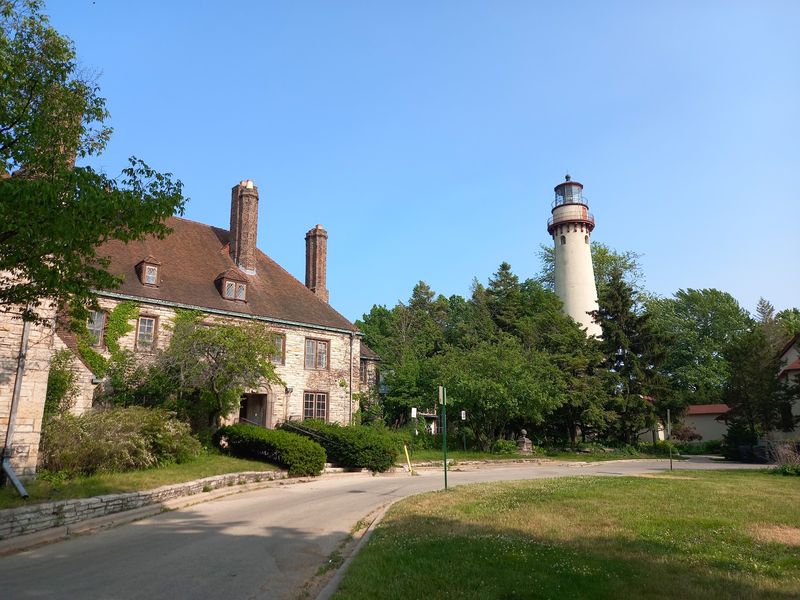
Standing on the shore of Lake Michigan in Evanston, Illinois, Grosse Point Lighthouse has guided ships and captured imaginations since 1874. The 113-foot tower holds a 141-step spiral staircase that climbs all the way to the lantern level, making it one of the few Great Lakes lighthouses where visitors can experience the structure from the inside out.
Whether you are a history buff, a casual day tripper from Chicago, or someone who simply wants a high view over open water, this National Historic Landmark delivers a genuinely memorable outing. Just be sure to confirm tour details before you make the drive, because interior access depends on seasonal tours that should be verified in advance.
Grosse Point Lighthouse offers a real climb in Evanston
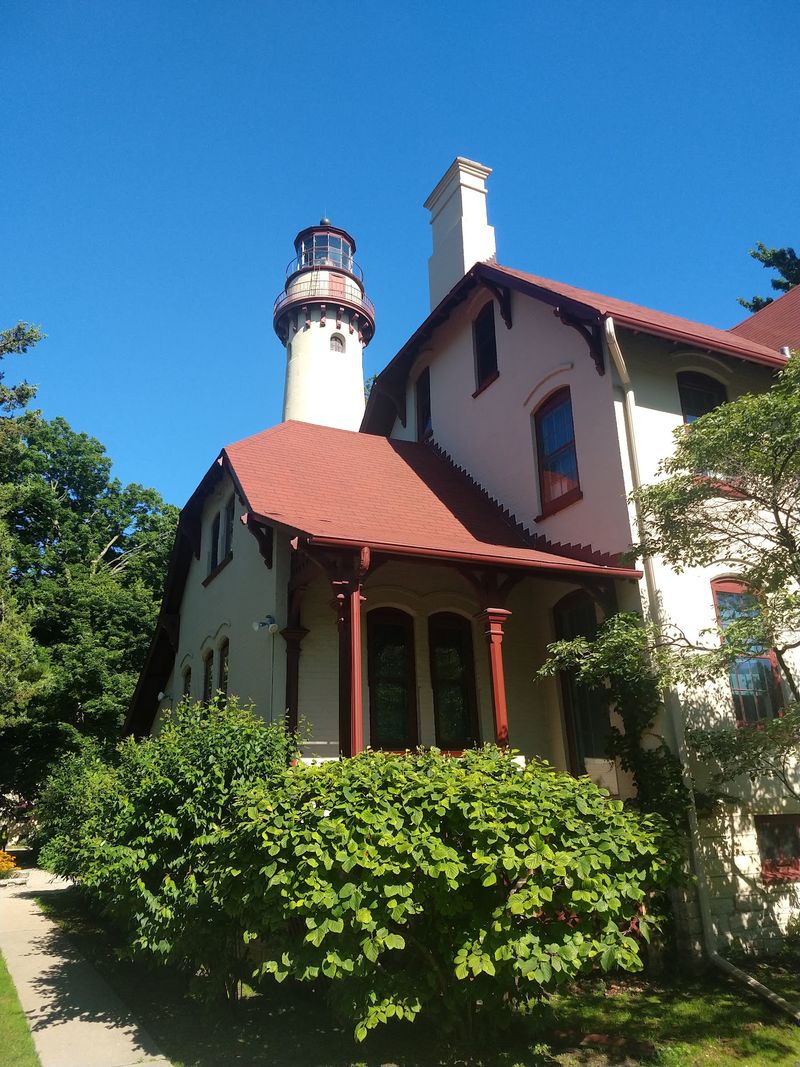
Perched along the Lake Michigan shoreline in Evanston, Illinois, Grosse Point Lighthouse is a National Historic Landmark that gives visitors something genuinely rare: a chance to climb inside a historic tower and reach the lantern level. Evanston sits roughly 13 miles north of downtown Chicago, so this is not a Chicago lighthouse in the strict sense, though it is very much part of the greater Chicago area’s Lake Michigan coastline.
The distinction matters because visitors searching for it should look toward the northern suburbs rather than the city’s lakefront.
The tower rises 113 feet from the ground and contains a 141-step spiral iron staircase that leads up to the lantern, as documented in the National Historic Landmark nomination for Grosse Point Light Station. That staircase is the heart of the visitor experience: an interior climb through a historic structure that ends at the level where the light itself lives.
The phrase “very top” in popular descriptions refers to reaching that lantern level, which is the documented end point of the staircase route.
What remains unverified is whether current tours allow visitors to step onto an exterior gallery or stand directly beside the optic at the lantern level. The nomination confirms the staircase reaches the lantern, but current visitor rules about gallery access are not available from a confirmed official source.
Illinois tourism listings describe the site as a climbable landmark, and that framing is accurate as long as readers understand the climb is tour-dependent and the outer gallery status is unconfirmed. Anyone planning a visit should treat the lantern level as the documented destination and call ahead to ask about any additional access.
The lighthouse guided ships toward Chicago
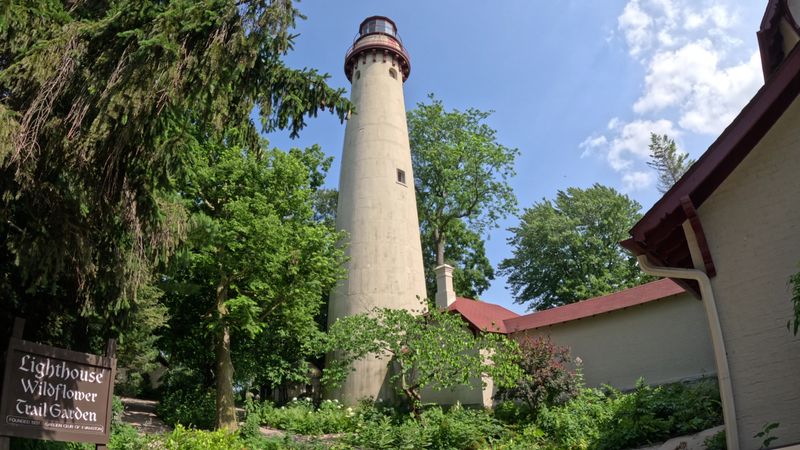
Before GPS and electronic navigation, ships crossing Lake Michigan relied on fixed lights to find safe passage. Grosse Point Lighthouse was built in 1873 and first lit in 1874 specifically to serve vessels approaching Chicago and the busy shipping lanes running north of the city.
The promontory at Grosse Point created a navigational hazard, and the federal government responded by commissioning a powerful lighthouse at that location to mark the turn and warn mariners of the shallowing shore.
According to U.S. Coast Guard historical records, the light was deactivated as a staffed federal lighthouse in 1935, extinguished during World War II, and later relit as a private aid to navigation in 1946.
That layered history means the lighthouse is no longer an official operational Coast Guard aid, and calling it an active government lighthouse would be misleading. Its beacon does shine, but under a different arrangement than its original federal commission.
The site earned National Historic Landmark status, which the National Park Service nomination documents in detail, recognizing both the architectural integrity of the tower and its significance to Great Lakes navigation history. Illinois tourism materials note that the landmark designation occurred in 1999, cementing the lighthouse’s place as a protected piece of the region’s maritime heritage.
For visitors, that status means the structure has been maintained to a high standard and the original features, including the staircase and the Fresnel lens, remain largely intact.
The 141-step staircase leads to the lantern level
Climbing Grosse Point Lighthouse is a physical experience, not just a sightseeing checkbox. The interior staircase consists of 141 steps of spiral iron, confirmed by the National Historic Landmark nomination, and the route winds upward through a tower that narrows as it rises.
Spiral staircases in 19th-century lighthouses were designed to fit inside a tapered masonry column, which means the steps are steep and the center column leaves limited room to maneuver. Visitors should expect the kind of climb that requires steady footing and a bit of patience rather than a casual stroll.
The documented route ends at the lantern level, which is the chamber housing the lighthouse’s optic. Reaching that level is the confirmed payoff of the staircase, and the nomination does not describe an additional staircase or ladder beyond it.
Whether current tours allow visitors to step out onto any exterior gallery from the lantern level is a separate question that the available documentation does not answer definitively, so readers should ask the tour operator directly before assuming they will stand outside at the summit.
One practical consideration that many visitors overlook is the descent. After 141 steps up a spiral staircase, the return trip down the same narrow, steep route can feel more demanding than the climb itself, particularly for anyone with knee discomfort or a strong sensitivity to heights.
The operator’s current safety and accessibility guidelines should be treated as the authority on who can safely participate. Planning enough time for both the ascent and the descent, rather than rushing to catch a specific tour slot, will make the experience more comfortable.
The climb ends with a high view over the shoreline
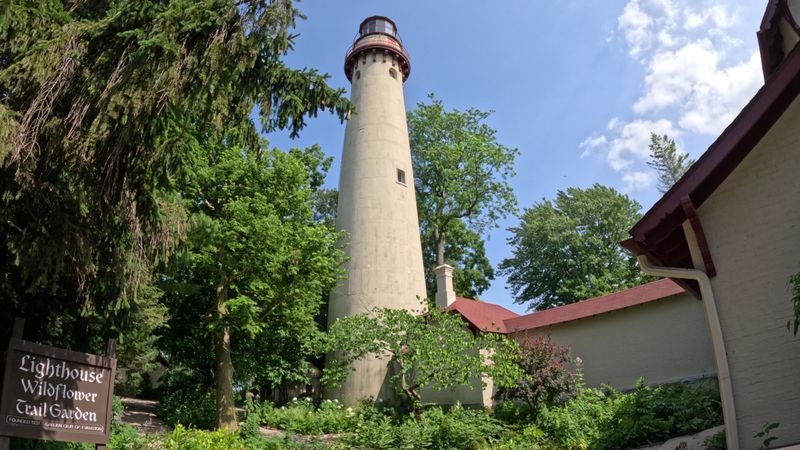
Reaching the lantern level after 141 steps means arriving at a vantage point roughly 113 feet above the ground. At that height, the lake spreads out broadly to the east, and Evanston’s shoreline stretches along the waterline below.
The National Historic Landmark nomination places the tower on a Lake Michigan promontory, and that lakeside position means the upper level faces open water without significant obstruction in that direction. A high view over Lake Michigan and Evanston’s shoreline is the honest, documented description of what the elevation offers.
What that view includes on any specific day depends on conditions that no article can guarantee. Weather and haze can reduce visibility significantly over open water, and nearby tree growth, surrounding development, and the physical layout of the lantern room itself can affect sightlines in different directions.
Visitors hoping to see distant landmarks or specific skylines should understand that clear-weather conditions are required and that the tour’s access rules may limit movement within the lantern level.
Reaching the lantern level is also distinct from standing on an exterior gallery, if one exists and is currently accessible. The lantern room’s windows frame the view from inside the structure, while an exterior position would allow a full 360-degree unobstructed perspective.
Because current gallery-access rules are not confirmed, visitors should picture the lantern-level view as the baseline experience and treat any exterior access as a bonus to verify before visiting rather than a certainty to plan around.
The original Fresnel lens preserves the lighthouse’s purpose
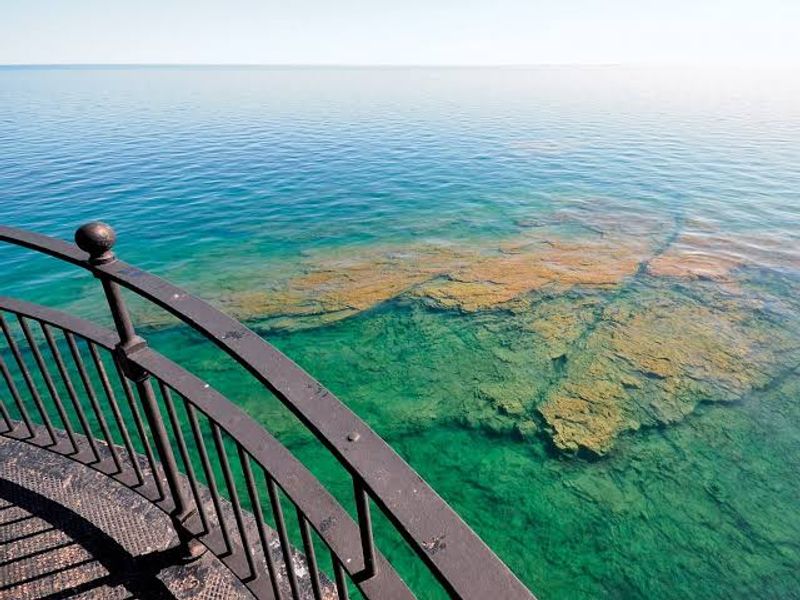
One of the most striking things about reaching the lantern level at Grosse Point Lighthouse is that the original optic is still there. The lighthouse retains its second-order Fresnel lens, a large and precisely engineered piece of 19th-century optical technology that concentrated the light source into a powerful beam visible far out over the lake.
The National Historic Landmark nomination describes it as the largest Fresnel lens on the Great Lakes and the only remaining second-order lens in operation on those inland waters at the time of the nomination.
That superlative language comes directly from the historic nomination document, and readers should understand it as a historically documented claim rather than a freshly verified 2026 ranking. Lens collections and preservation situations change over time, and the nomination reflects conditions at the time it was prepared.
The lens’s survival at Grosse Point is nonetheless significant: many lighthouse Fresnel lenses were removed, damaged, or replaced during the 20th century, and finding one in place inside a climbable tower is genuinely uncommon.
Visitors who reach the lantern level will be in the presence of this optic, but the tour operator’s current rules govern how close anyone may approach or whether touching or standing directly beside the lens is permitted. The lens is a fragile and irreplaceable artifact, and any access rules in place should be respected.
Its presence in the lantern room connects the modern visitor experience directly to the lighthouse’s original working purpose in a way that a photograph or a museum display simply cannot replicate.
Check the tour details before you make the drive
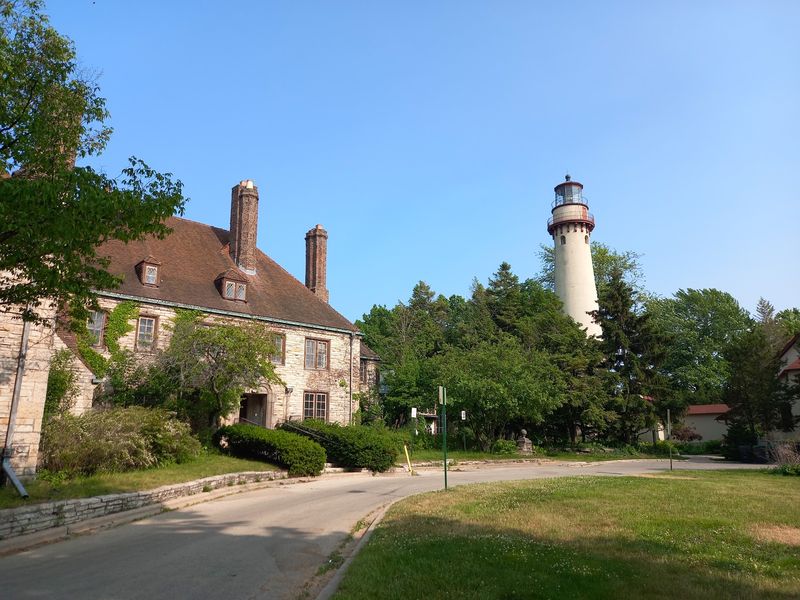
The grounds around Grosse Point Lighthouse are generally described as open to the public year-round, which means visitors can walk the exterior, photograph the tower, and take in the lakeside setting without needing a tour reservation. Interior access to the dwelling and tower is a different matter.
According to Lighthousefriends.com visitor information, the commonly reported pattern is weekend tours during the warmer months, with afternoon tour times cited in multiple secondary sources. That pattern should be treated as a useful starting point rather than a confirmed 2026 schedule, because the official lighthouse website was not retrievable during research and secondary listings may not reflect current operations.
Before making the drive, readers should confirm the current tour schedule, any admission fee, reservation requirements, age restrictions, and whether a particular tour includes access to the exterior gallery in addition to the lantern level. The Illinois Office of Tourism listing provides general visitor information and notes the site’s National Historic Landmark status, but current operational details require direct confirmation.
The listed visitor information phone number is (847) 328-6961, and calling ahead is the most reliable way to get accurate, up-to-date answers about what is available on a specific date.
Address listings for the lighthouse differ slightly across sources, with some citing 2600 Sheridan Road and others listing 2601 Sheridan Road in Evanston. The City of Evanston documentation references the lighthouse and its public access context, but verifying the exact address with the lighthouse directly before departure will prevent confusion.
Arriving to find the tower closed because a tour was not running that day is a frustrating outcome that a single phone call can prevent.
Prepare for the staircase and choose the experience that fits
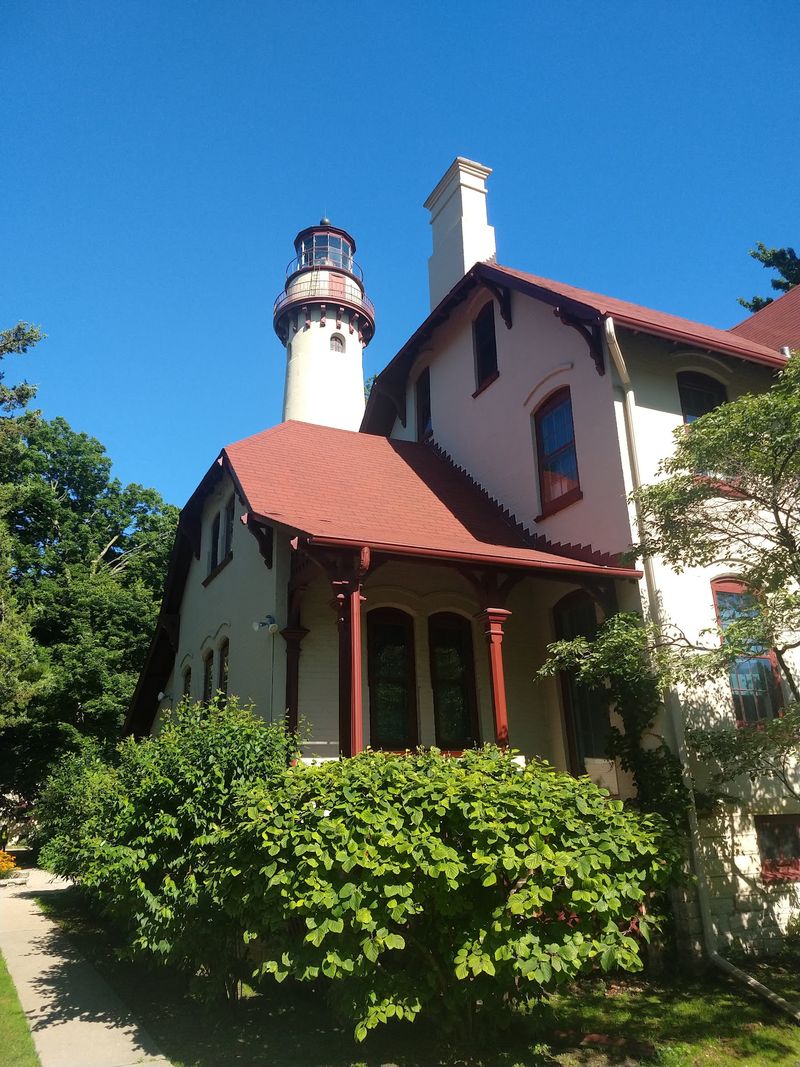
Comfortable, secure shoes make a genuine difference on a 141-step spiral iron staircase. The steps are steep and the spiral configuration means each foot placement shifts slightly inward or outward depending on where you are in the turn.
Flat-soled shoes with grip are a practical choice, and loose sandals or slick-soled footwear can make the descent feel uncertain. Allowing enough time for both the ascent and descent without rushing is equally important, particularly if the tour group is moving at a varied pace.
The operator’s current safety and accessibility rules are the authoritative guide for who can participate in the climb. The National Park Service documentation confirms the staircase configuration, but it does not set visitor eligibility rules.
Those rules belong to the current tour operator, and anyone with mobility concerns, balance considerations, or other physical factors should ask about specific accommodations before purchasing a ticket or joining a tour group. The climb may not be suitable for every visitor, and choosing the grounds experience over the tower climb is a completely valid option.
Visiting the exterior grounds, photographing the tower from below, and exploring the surrounding lakeside setting offer their own kind of reward, separate from the interior climb. Visitor accounts and the Illinois tourism listing both describe a setting worth spending time in regardless of tower access.
When a seasonal tour is operating and you are ready for the staircase, Grosse Point Lighthouse delivers a documented climb to the lantern level and an elevated Lake Michigan shoreline view that connects you directly to 150 years of maritime history.