
10 Michigan Small Towns Worth The Drive Before Summer Fades Along The Great Lakes
Summer in Michigan means the water is finally warm enough to justify the drive. But the towns along the way matter just as much as the destination. One pulls you in with weathered fishing shanties standing over the river since the 1850s.
Another bans cars entirely, forcing you to slow down to bicycle speed. A third sits at the edge of the tallest dunes on the Great Lakes, where a sunset from the top changes how you think about the water forever.
Each of these ten towns offers something specific: a lighthouse you can climb, a stone you can hunt on the beach, a ferry to an island with no permanent residents. They are small enough that the bakery owner knows your order by day two.
From car-free islands to dark sky preserves, these ten small towns deliver the kind of lakefront summer that makes you cancel your return flight in Michigan.
10. Leland
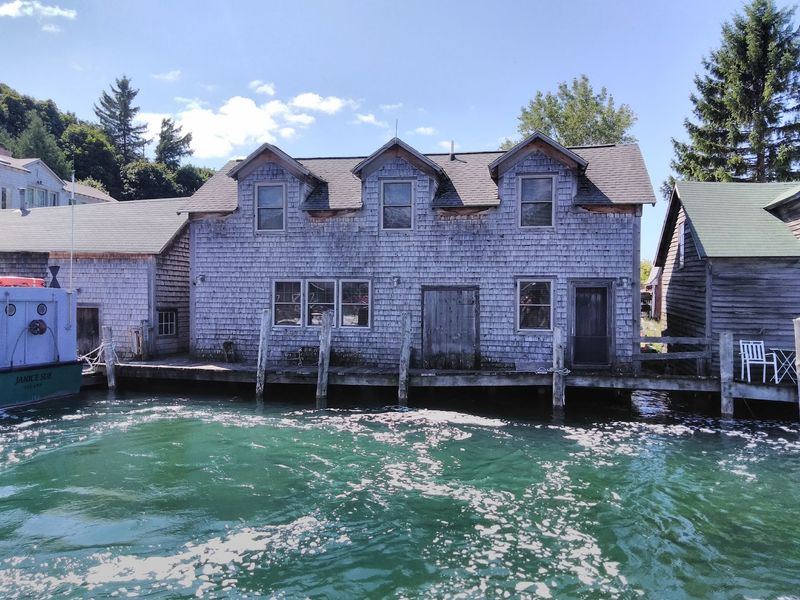
Working water gives this Leelanau Peninsula village its character before anything else does. Fishtown still lines the Leland River with weathered fishing shanties, docks, smokehouses, shops, and commercial fishing activity, creating a waterfront that feels useful rather than staged.
The district’s history reaches back to nineteenth-century settlement and fishing, while preservation work keeps vulnerable structures standing beside changing lake levels.
Summer visitors should know one important 2026 change. Passenger ferries to North and South Manitou Islands are not operating this season because both island docks are closed for reconstruction.
Old guides suggesting an easy day trip from Fishtown are temporarily outdated, so keep the itinerary on the mainland.
That still leaves plenty. Walk the boardwalk, buy smoked fish, browse local shops, and continue to Van’s Beach for Lake Michigan views.
Leland Blue jewelry and Petoskey stone pieces show up around town, tying shopping back to northern Michigan geology and history.
I would arrive early, park once, and stay on foot. The village is compact enough that moving the car usually creates more trouble than it solves.
9. New Buffalo
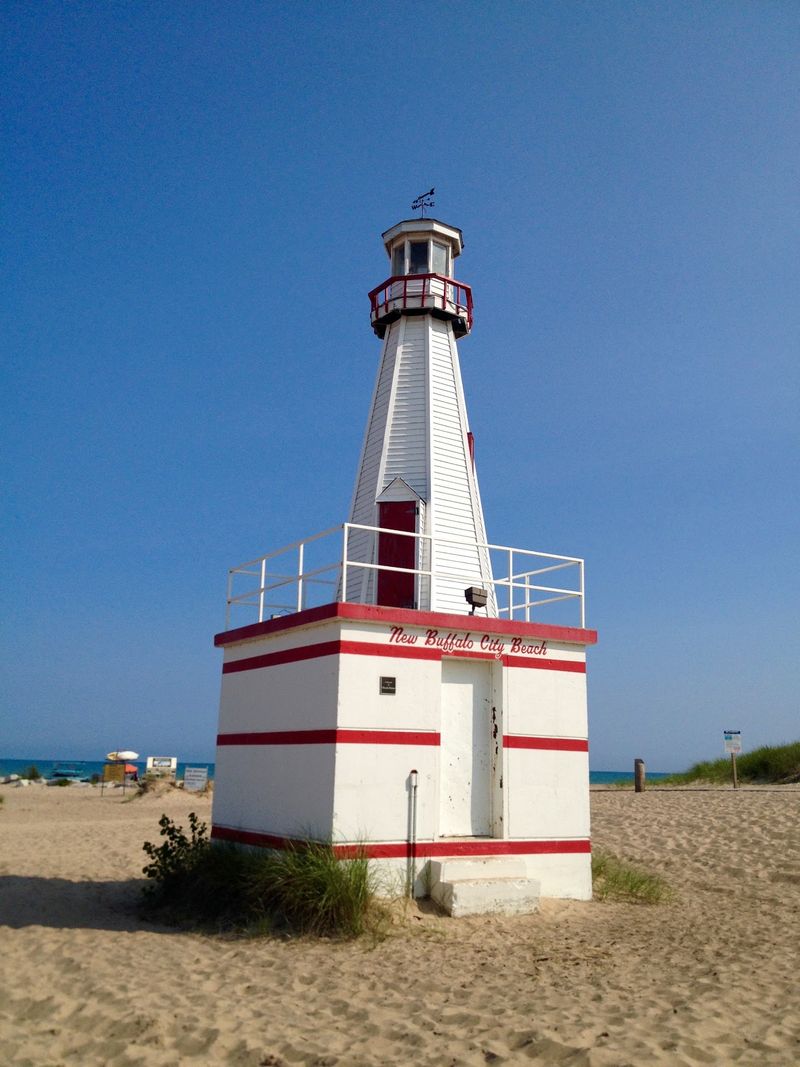
Chicago feels close enough to explain the weekend crowds, but Lake Michigan gives this southwest corner of the state a much looser rhythm. New Buffalo sits about seventy miles from downtown Chicago and serves as a gateway to Michigan’s Harbor Country, with a public beach, recreational harbor, restaurants, galleries, and shops packed into a small lakeside community.
The town’s origin story is wonderfully specific. Captain Wessel Whittaker founded the settlement in the 1830s after his schooner ran aground nearby, then named the new community after Buffalo, New York.
What began as a harbor settlement eventually became one of southwest Michigan’s best-known summer escapes.
Late summer works especially well if you visit midweek. Beach traffic eases, downtown tables become easier to find, and the sunset remains every bit as dramatic as it is on Saturday.
Leave time to wander beyond the sand because the surrounding Harbor Country landscape adds wineries, farms, galleries, and small towns within easy driving distance.
I would build the day around the lake rather than a packed checklist. Arrive before lunch, swim or walk the beach, explore downtown afterward, then return toward the water as evening light starts changing across Lake Michigan.
Weekdays make that rhythm easier.
8. Mackinac Island
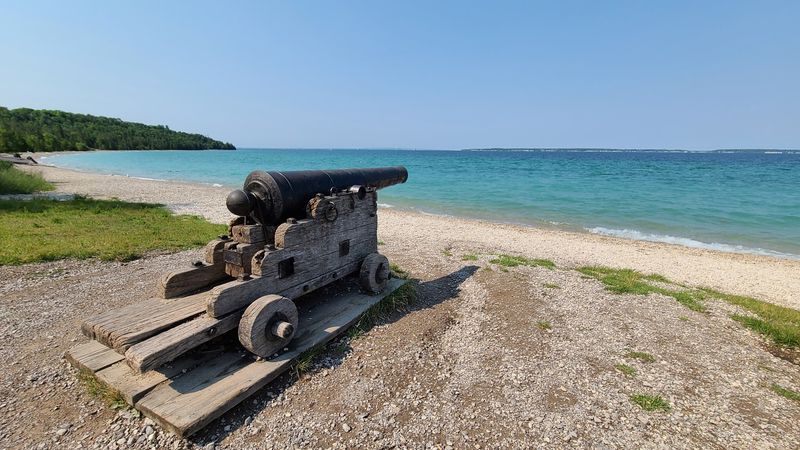
Engine noise disappears almost immediately after the ferry docks, replaced by bicycle bells, carriage wheels, hoofbeats, gulls, and people walking down Main Street. Mackinac Island has prohibited most motor vehicles since 1898, giving the busiest summer days a soundscape unlike anywhere else in Michigan.
The classic ride is M-185, the 8.2-mile state highway circling the island. It is the only state highway in the country where automobiles are prohibited, and the route stays relatively flat while Lake Huron remains beside you almost the entire way.
Rent a bicycle or bring one across on the ferry, then stop whenever a shoreline view looks better than the last.
Most attractions operate from May through October, making late summer ideal for Fort Mackinac, carriage tours, fudge shops, and the island’s extensive state park trails. The crowds are real, especially downtown, but more than seventy miles of trails provide an easy escape once you climb into the interior.
I would take an early ferry, ride the perimeter before midday traffic builds, then save Main Street for later. The island rewards anyone willing to move at bicycle speed and let a few unplanned stops take over the schedule.
The return ferry feels slower afterward somehow.
7. Tawas City
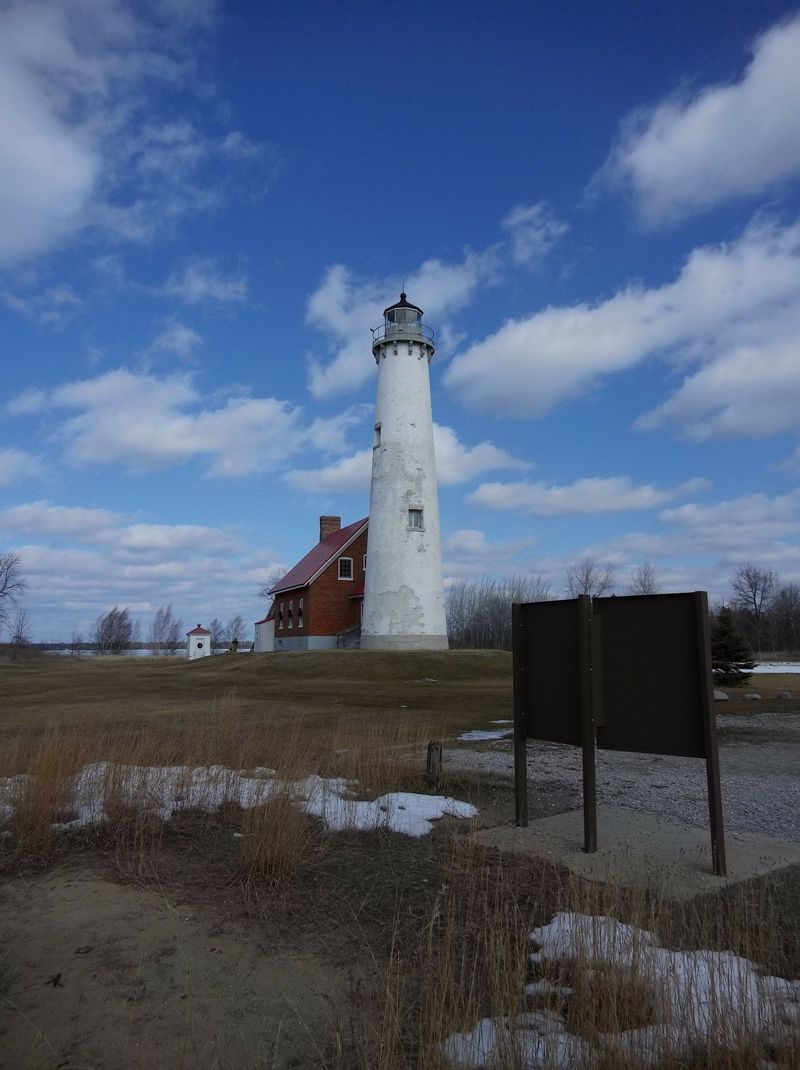
Lake Huron feels gentler around Tawas Bay, where the shoreline curves into a protected sweep of water instead of facing the open lake head-on. Tawas City and neighboring East Tawas make an easy late-summer base for beaches, downtown browsing, boating, and a trip out to Tawas Point State Park.
The lighthouse is the obvious landmark, but it deserves more than a distant photograph. Tawas Point Lighthouse dates to 1876, remained an active aid to navigation until 2016, and is open for tours through September 30 in 2026.
Visitors can climb 85 steps to the top for a panoramic view across the point and bay.
Birding gives the area another personality. The narrow peninsula funnels migrating birds through shoreline habitat, making Tawas Point especially popular during spring migration, though late summer still rewards anyone carrying binoculars.
I would split the day between town and point rather than treating one as an afterthought. Start with the lighthouse and beach before afternoon heat, then return toward Tawas City for food and a slower waterfront evening.
The Sunrise Side receives less hype than Michigan’s western shore, which is exactly why the bay can feel like a discovery even in August. Bring binoculars after dinner.
6. Grand Marais
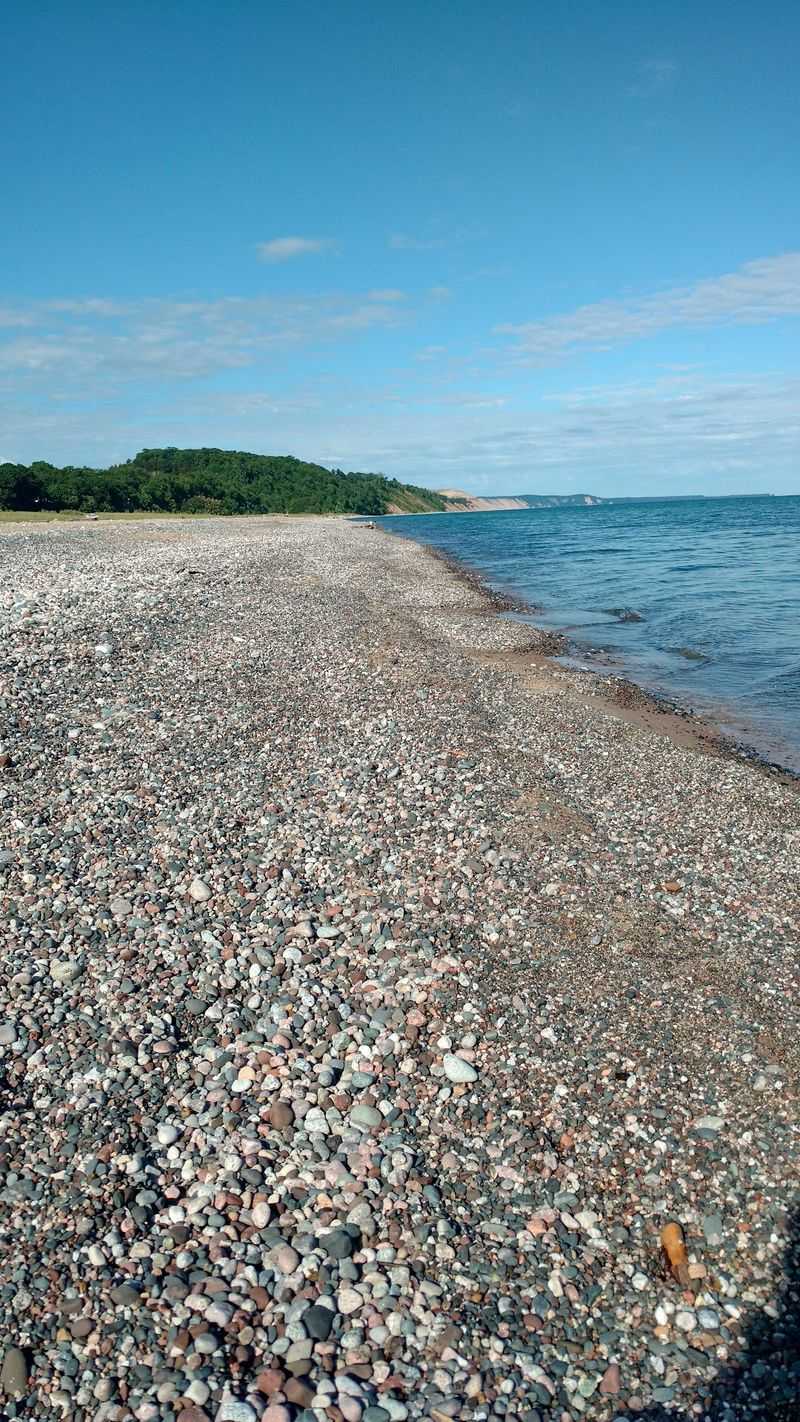
Lake Superior does most of the dramatic work here, but Grand Marais contributes enough odd history to keep the village from becoming merely a scenic stop. The tiny community sits at the eastern gateway to Pictured Rocks National Lakeshore, with a harbor, beaches, museums, trails, and the North Country Trail passing through town.
The Pickle Barrel House is the detail nobody forgets. Built as a summer cottage for cartoonist William Donahey and his wife, the sixteen-foot-tall barrel is now a museum maintained by the Grand Marais Historical Society.
Current summer hours run daily from 1 to 4 p.m. in July and August, with more limited weekend access in June and September.
Nearby museums include the Lightkeeper’s House and Old Post Office, while beachcombers head toward Lake Superior hoping for agates and other interesting stones. Evening may be the strongest attraction of all.
The harbor settles down, the water darkens, and the scale of Superior becomes much easier to feel.
I would arrive with enough time to explore before dinner, then stay through sunset. Grand Marais works best when you stop treating it as a quick gateway and let the village become part of the Pictured Rocks trip itself.
By August.
5. Saugatuck
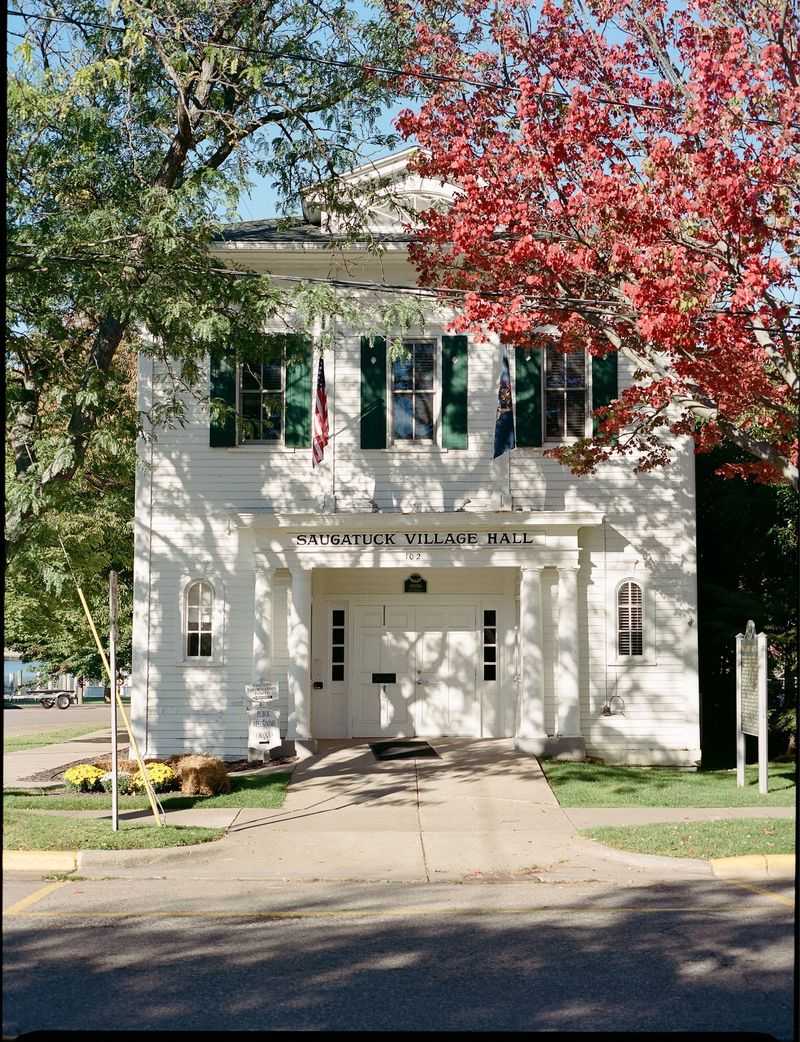
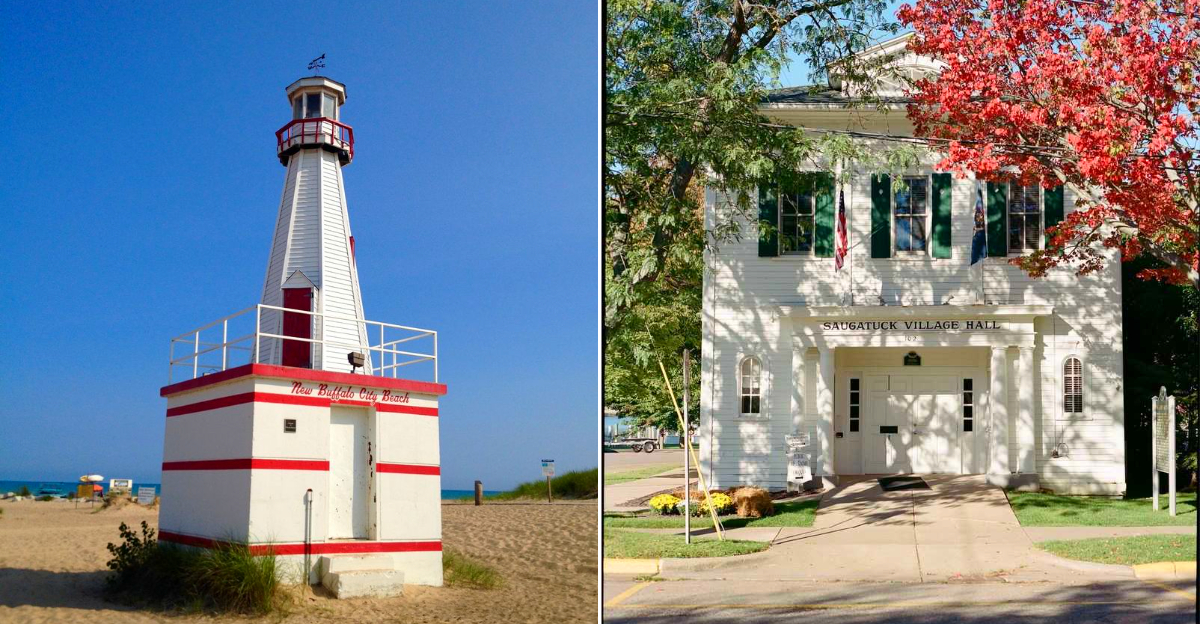
Art and water have been pulling people here for more than a century. Ox-Bow School of Art and Artists’ Residency grew from the creative community around Saugatuck in the early twentieth century, and that legacy still shapes galleries, studios, public art, performances, and its Art Coast identity.
Late summer 2026 gives visitors good reason to lean into that side of town. Ox-Bow’s Friday Night Open Studios returns August 21 from 7 to 10 p.m., opening the campus for an evening of artwork and creative activity.
Downtown, galleries and independent shops make it easy to continue browsing without building a formal itinerary.
Kalamazoo River bends through town, Lake Michigan waits beyond the dunes, and beaches and dune landscapes sit close enough for the same day. Walking between shops, waterfront areas, and restaurants is usually more pleasant than repeatedly moving the car.
I would spend the hottest afternoon hours inside galleries or the Saugatuck Center for the Arts, then move toward the water later. That works because neither half overwhelms the other.
4. Petoskey
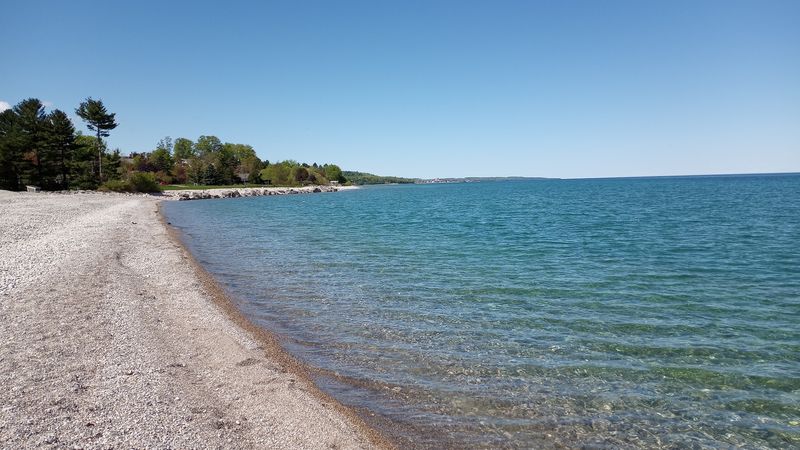
Rock hunting gives this Little Traverse Bay town a built-in summer ritual. Petoskey stones are fossilized colonial coral, Hexagonaria percarinata, preserved from a warm shallow sea that covered the region hundreds of millions of years ago.
Dry specimens can look plain, but water reveals the familiar honeycomb pattern almost instantly.
Magnus City Park offers about 1,000 feet of shoreline for rockhounding right in Petoskey, while Petoskey State Park adds two miles of Lake Michigan shoreline between town and Harbor Springs. A Recreation Passport is required for vehicle entry at the state park, so plan accordingly if that is your main hunting ground.
Do not make the whole visit about staring downward. Downtown Petoskey rises above Little Traverse Bay with shops, restaurants, historic architecture, and waterfront paths that make an easy second half of the day.
Sunset over the bay is reason enough to stay after dinner.
I would search the wet gravel first, especially after waves have rearranged the shoreline, then put the stones away and look up. Northern Michigan summer is at its best when the fossil hunt becomes only one part of the day rather than a competitive mission to fill a bucket.
Keep only what rules allow.
3. Empire
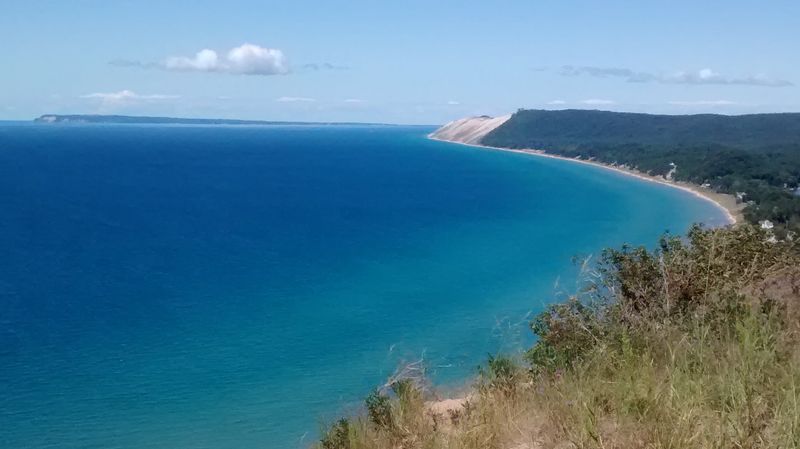
Sleeping Bear Dunes makes this small village feel like the front porch of something enormous. Empire sits beside Lake Michigan near the national lakeshore headquarters, giving visitors quick access to dunes, beaches, trails, inland lakes, and some of the most dramatic overlooks in the Lower Peninsula.
The Sleeping Bear Heritage Trail adds an easy non-motorized option. The hard-surfaced route runs about twenty miles through the lakeshore, linking communities and park destinations while giving cyclists and walkers a way to explore without spending every hour in the car.
Pierce Stocking Scenic Drive is also open for the 2026 summer season.
North Bar Lake deserves its own time. The inland lake sits just behind Lake Michigan, creating a memorable two-water setting, while Empire Beach provides an even simpler sunset option close to town.
National lakeshore entrance passes are required, and the park is cashless, so sort that out before arriving at a trailhead.
I would use Empire as a base rather than rushing through it. Start with a trail or scenic drive, cool off near the water, then return for sunset.
2. St. Ignace
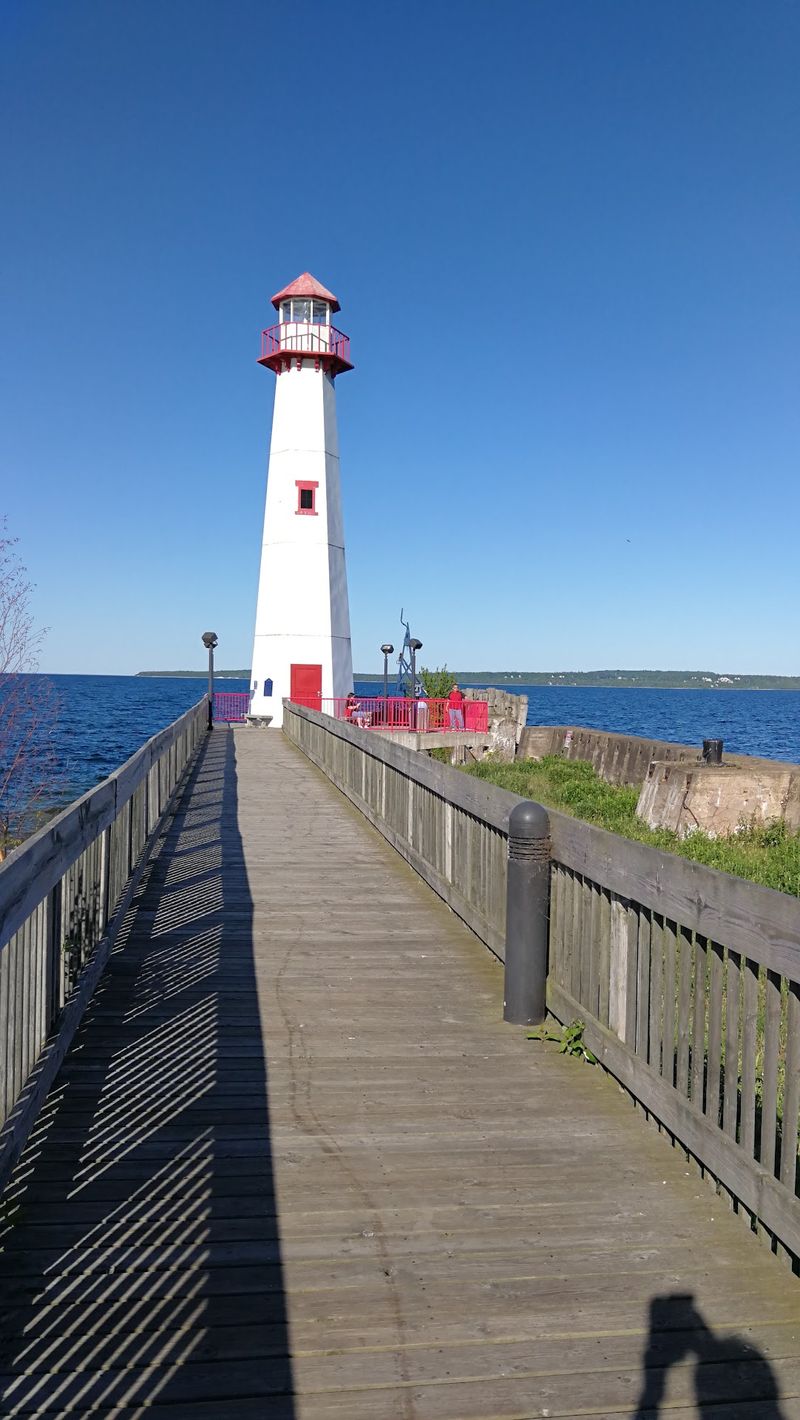
Most travelers meet St. Ignace while thinking about somewhere else. Ferries leave downtown for Mackinac Island every day during the travel season, and the Mackinac Bridge pulls road-trippers toward the Upper Peninsula, so the town often becomes a place people pass through instead of explore.
That is a mistake if Great Lakes history interests you. The area sits at the Straits of Mackinac, a crossroads long important to Indigenous communities before French missionaries and fur traders arrived.
Jacques Marquette established a mission here in 1671, while later fishing, rail, ferry, and tourism industries kept the waterfront busy.
Late summer 2026 still offers daily ferry service to Mackinac Island, but staying in town adds quieter shoreline walks and excellent bridge views. Bridge View Park and Straits State Park both provide strong perspectives on the Mighty Mac without requiring another ticket or ferry schedule.
I would spend one night instead of using St. Ignace only as a parking lot. Walk the waterfront after day-trippers leave, explore local history, then catch the bridge at sunset.
The town’s strongest quality is its position between places, waters, and eras.
1. Manistique
Cold water is the headline at Kitch-iti-kipi, but clarity is what makes the place unforgettable.
Michigan’s largest natural freshwater spring sits at Palms Book State Park near Manistique, where visitors cross the emerald pool on a self-propelled observation raft and look straight down through remarkably clear water.
The spring stays about 45 degrees Fahrenheit year-round and reaches nearly fifty feet deep. More than 10,000 gallons of groundwater rise through the bottom each minute, keeping sand in motion while trout drift through the pool.
The raft operates from 8 a.m. to dusk, and a Recreation Passport is required for vehicle entry.
Go early if you want the quietest version. By midday, summer visitors can create a line for the raft, and the experience works better when there is enough silence to notice the moving sand, submerged trunks, and fish below.
Then return to Manistique instead of treating the spring as the entire trip. Lake Michigan, the river, boardwalk, and downtown give the day a second water-centered chapter.
One current note for campers: nearby Indian Lake State Park’s modern campground is scheduled to reopen August 24, 2026, after major facility improvements.