
The Real Stonework Of London Bridge Is In Arizona And You Can Walk Right Over It
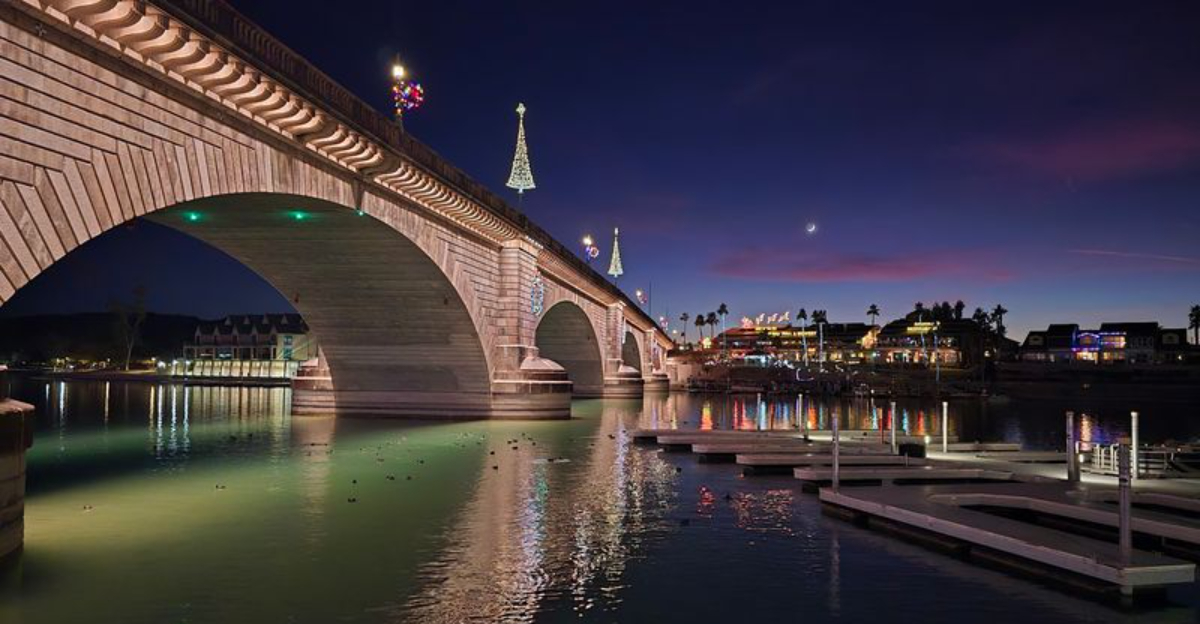
I still remember the moment my sandals hit that granite and my brain refused to cooperate. Behind me sat palm trees, boat trailers, and desert heat shimmering off the pavement.
Ahead of me stretched the genuine 1831 London Bridge, the same stones that once carried carriages over the River Thames, now spanning a dredged channel in Arizona. Nobody built a copy here.
Somebody bought the original, took it apart block by block, and shipped it halfway around the world.
I came to Lake Havasu City expecting a novelty photo op and left with a notebook full of stories about a chainsaw magnate, numbered stones, wartime scars, and a village of shops that leans cheerfully British.
In the sections ahead I will walk you through the history, the setting, the water fun, the timing, and the small details most visitors stroll right past. Pack sunscreen and curiosity, because this crossing rewards both.
A Bridge That Was Literally Sinking
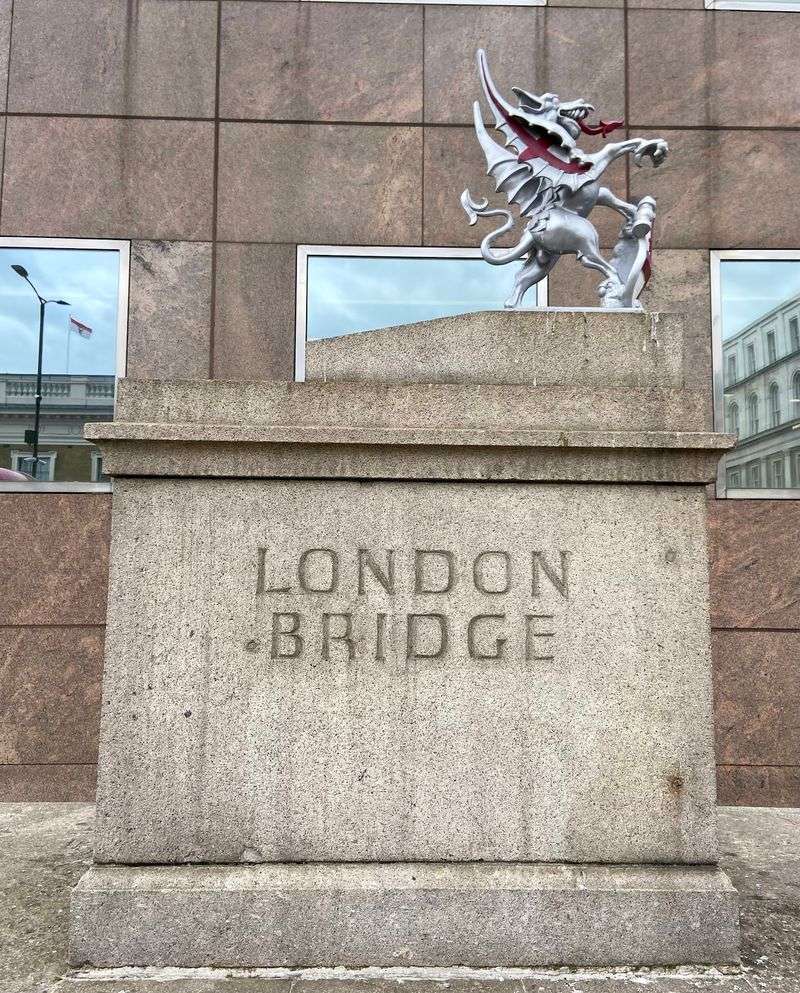
By the early 1960s, the granite crossing designed by John Rennie and finished in 1831 had a serious problem. It was slowly settling into the soft bed of the River Thames, and modern traffic loads were far heavier than anything its builders imagined.
London needed a replacement, and city officials faced a choice that most cities never consider. Instead of reducing a national landmark to rubble, they put it up for sale.
I love that detail because it changed everything. A structure that had carried Victorian carriages, delivery carts, and generations of Londoners suddenly had a price tag and a future somewhere else entirely.
Standing on it in Arizona, I kept thinking about how close those stones came to a landfill. The bridge you can walk today survived because someone decided history was worth more intact than crushed.
Fun bit of trivia: the old nursery rhyme about London Bridge falling down turned out to be uncomfortably accurate, at least in the slow, sinking sense.
That decision turned a failing piece of infrastructure into one of Arizona’s strangest preservation stories. More than a century after its original completion, the bridge still carries people across the water, just under a very different sky.
The $2.46 Million Shopping Spree
Enter Robert P. McCulloch, an American entrepreneur and the founder of Lake Havasu City, who had a desert town to fill and an imagination bigger than his budget spreadsheet. In April 1968 he bought the bridge for $2.46 million.
His logic was refreshingly bold. A brand new community in the Arizona desert needed a reason for people to visit, fall in love, and buy property, and a genuine piece of London seemed like the most memorable calling card money could purchase.
Locals I chatted with still speak about him with a grin. Some folks thought he had lost his sense of proportion, others quietly admired the nerve of it.
Either way, the gamble worked. Visitors arrived, homes sold, and the town grew around a landmark it had no business owning.
I find that part of the story genuinely inspiring, because it proves that a single stubborn idea can put a small desert city on the world map for decades.
Numbered Stones And A Very Long Boat Ride
Taking apart a bridge sounds simple until you consider that every single granite block had to be marked so it could be rebuilt correctly on another continent. Workers numbered each piece, then carefully dismantled the facing stones.
The shipping route reads like a school geography lesson. Crates crossed the Atlantic, passed through the Panama Canal, reached the west coast, then traveled overland by truck to the Arizona desert.
Reassembly started in 1968 and took three years. In October 1971 the rebuilt London Bridge was rededicated, spanning a channel that engineers dredged specifically for it, turning a peninsula into an island.
What thrills me most is that you can still spot faint numbers on some stones if you look closely along the sides. I spent a good ten minutes hunting for them and felt ridiculously pleased when I found one.
Those little painted markings are the fingerprints of one of the strangest construction projects the twentieth century ever attempted.
Where Exactly To Find It On The Map
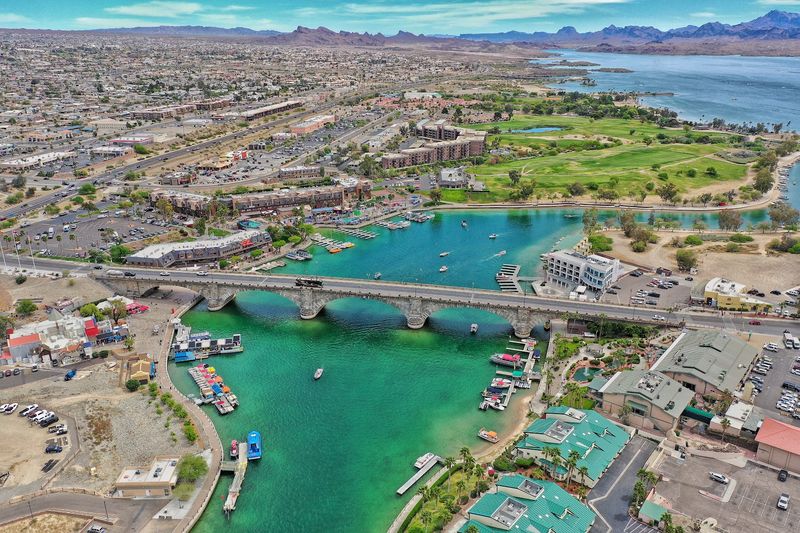
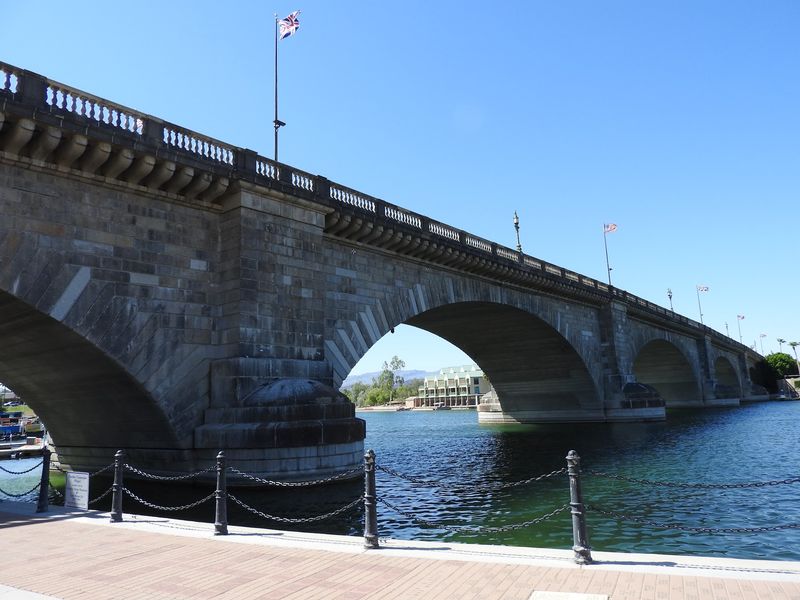
Pin drop time for anyone plotting a road trip. The bridge sits at 1340 McCulloch Blvd N, Lake Havasu City, Arizona, in the United States, carrying traffic and pedestrians over the Bridgewater Channel.
On one side you have the mainland and the heart of town. On the other lies the island, complete with beaches, parks, and boat launches.
Parking near the English Village on the mainland side worked well for me, and from there everything is walkable. Sidewalks run along both edges of the bridge, so you never have to dodge cars for a photo.
Arriving by car from Phoenix or Las Vegas is straightforward, and the drive itself delivers wide desert views that make the eventual sight of British granite even funnier.
A tip I wish someone had given me sooner: walk the full length in both directions. The view changes completely depending on whether you are facing the channel entrance or the town.
The English Village And Its Storybook Charm
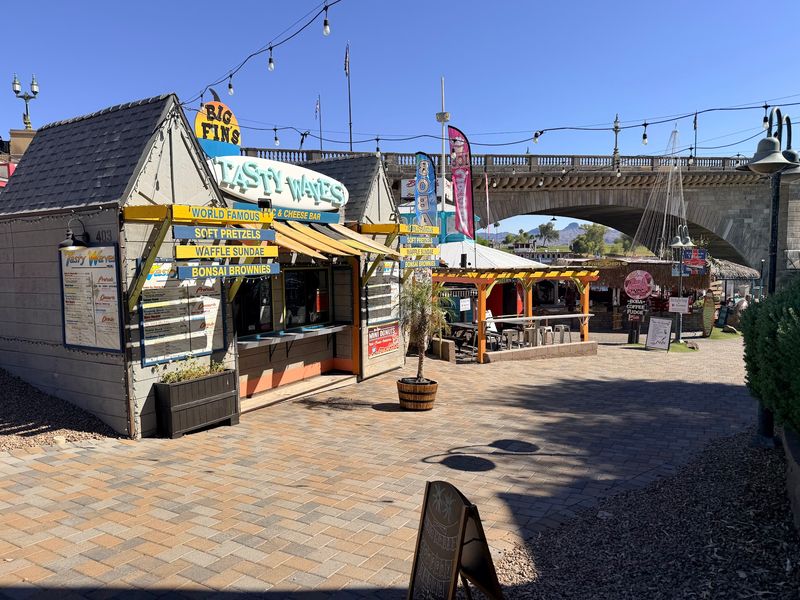
At the base of the bridge on the mainland side sits the English Village, a cheerful cluster of shops, restaurants, and resorts built to echo the bridge’s origins. The address is 422 English Village, Lake Havasu City, Arizona.
Brick walkways wind past storybook facades, and I ended up wandering far longer than planned. Souvenir shops, ice cream, resort wear, and waterfront tables with direct bridge views make it an easy place to lose an afternoon.
Eating lunch there gave me the oddest, most enjoyable sense of geographic confusion. British architectural touches, palm fronds overhead, and ski boats humming past on the channel below.
Live music sometimes drifts across the water in the cooler months, and seasonal events fill the walkways with vendors and families.
My honest advice is to treat the village as part of the attraction rather than a gift shop stop. Sit for a while, watch the boats thread beneath those arches, and let the strangeness settle in pleasantly.
Hidden Scars, Graffiti, And The Walking Tour
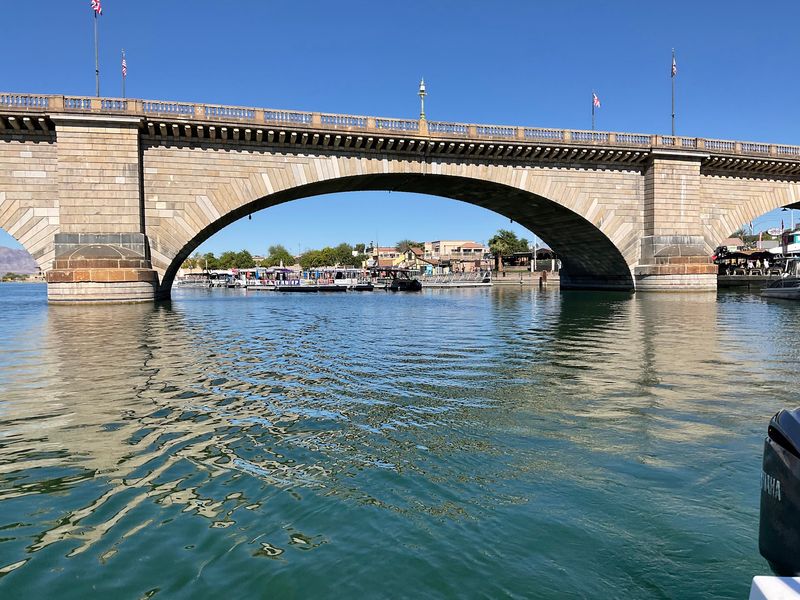
Guided storytelling turned my quick photo stop into a genuine history lesson. The Lake Havasu City Visitor Center runs a London Bridge Historic Walking Tour, and the guides point out details no casual visitor would notice.
Among the highlights are scars left by German aircraft fire and mysterious graffiti carved during World War II. Running my fingers near those marks gave me chills in the middle of a very warm afternoon.
Guides also explain how the channel was dredged, where the lamp posts came from, and which stones traveled the farthest.
Tours generally run during the cooler part of the year, so check current schedules before you build your day around one. Wear a hat, bring water, and expect to do plenty of standing.
Honestly, the tour reframes the whole place. Without it I would have seen pretty stonework, and with it I saw a survivor of Victorian London and wartime Britain resting in the desert sun.
Kayaks, Paddleboards, And The View From Below
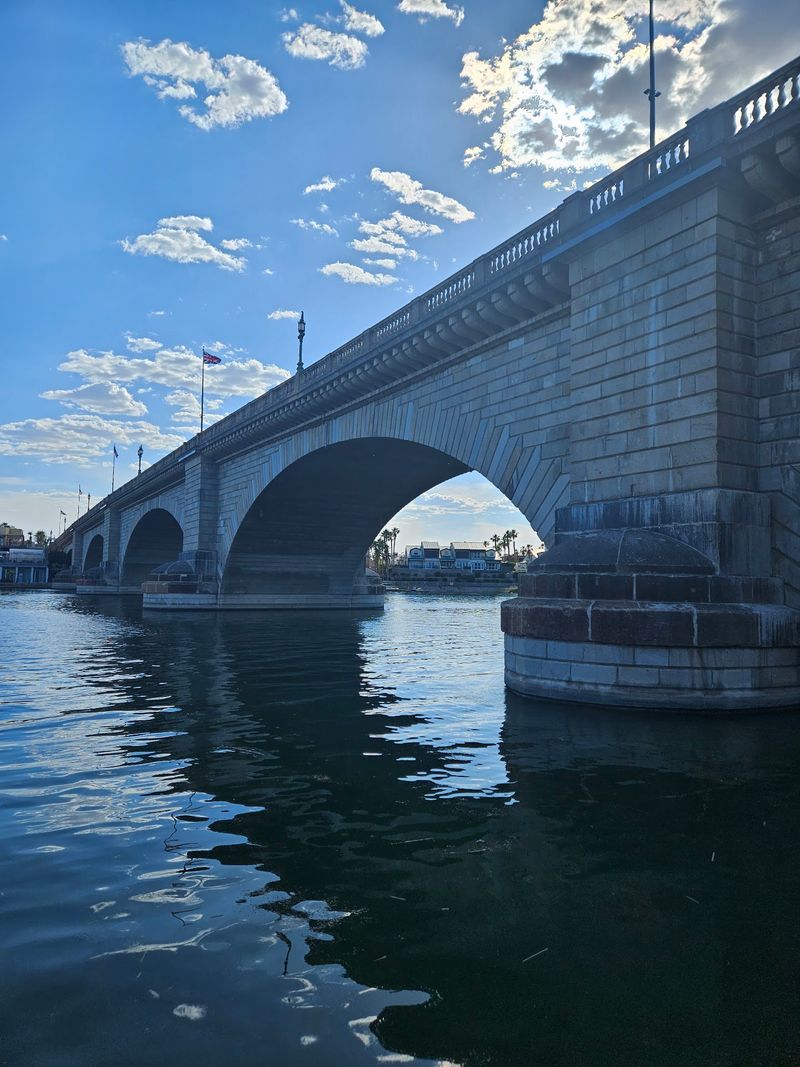
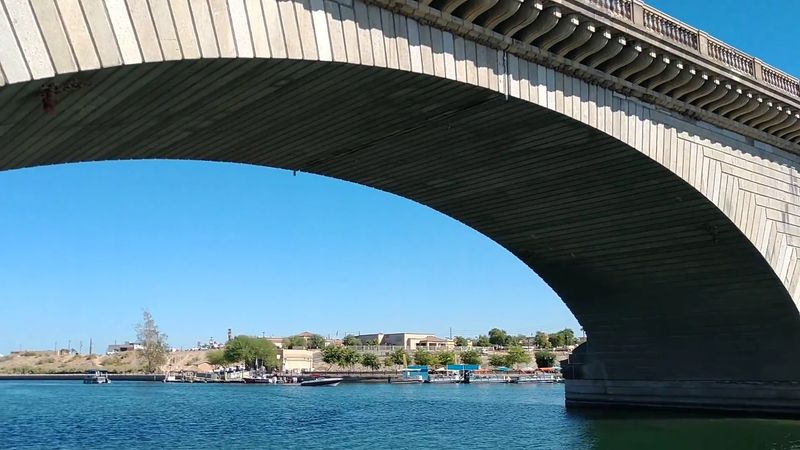
Seeing the arches from water level is where the trip clicked for me. Rentals for kayaks and paddleboards sit close to the channel, and boat tours depart from nearby docks throughout the day.
Gliding beneath the spans, I could study the underside of the arches, the weathered granite, and the reflections rippling across the surface. It is a completely different bridge from down there.
The Bridgewater Channel water runs a startling blue against the tan desert hills, and the swimming beaches on either end are popular with families.
A word of caution from personal experience: boat traffic can get busy on weekends and holidays, so paddle early in the morning when the channel is calm and the light is soft.
Sunset cruises are another favorite, especially when the bridge lights flicker on and the stonework glows warm gold. That was the photo I ended up framing when I got home.
Timing Your Visit Without Melting
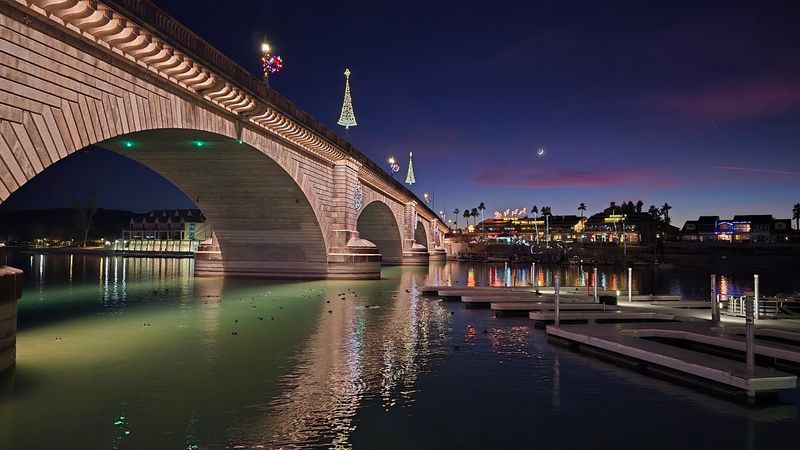
Desert heat is the one factor that can make or break your crossing. Summer temperatures in Lake Havasu City climb high enough that midday sightseeing loses its charm quickly.
My favorite months are October through April, when walking the bridge feels like a treat rather than a test of endurance. Mornings and evenings stay pleasant even in shoulder seasons.
If you do visit in summer, plan the bridge walk right after sunrise, then spend the afternoon on the water where breezes actually help.
Shade is limited along the span, so a hat, sunglasses, and a refillable water bottle earn their place in your bag. Comfortable shoes matter too, since the surrounding paths invite more walking than expected.
Allow at least half a day for the bridge, the village, and a channel activity. I budgeted an hour, stayed until dark, and would happily go back for a second round of desert-flavored British history.
An early start also gives you softer light for photos and fewer people along the walkway. By sunset, the bridge takes on a completely different mood, making a second stroll surprisingly easy to justify.