
12 Michigan Campgrounds That Will Make You Fall In Love With The Great Lakes
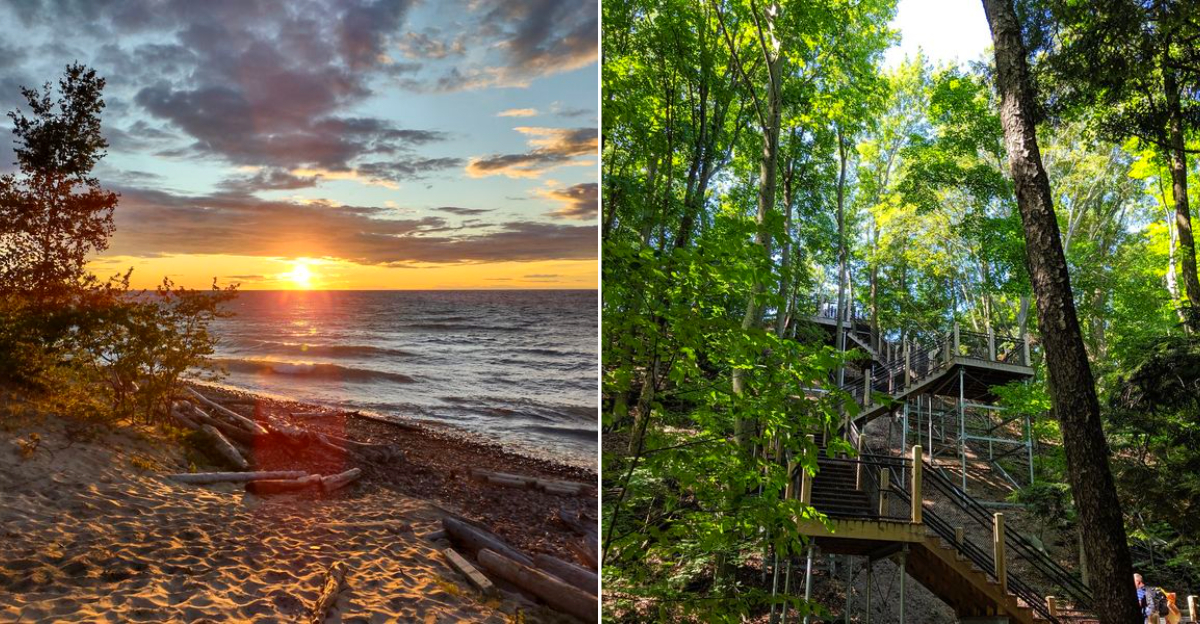
Who falls asleep to waves on a freshwater sea? I genuinely did not expect it to feel this different from ocean camping.
The Great Lakes create their own weather and their own rhythm. One campground sits on a bluff where the sunset stretches for hours over the water.
Another tucks you into dunes so remote the nearest streetlight is miles away. I have camped at a handful of these parks over the years, and each one genuinely surprised me. Some feel like real wilderness, with old-growth hemlocks and waterfalls you can hear from your tent.
Others put you right on the sand, close enough to walk into town for ice cream. A few let you sleep under some of the darkest skies in the Lower Peninsula.
From dark sky preserves to ghost town shorelines, these Michigan campgrounds deliver the best freshwater camping in the state.
12. F.J. McLain State Park
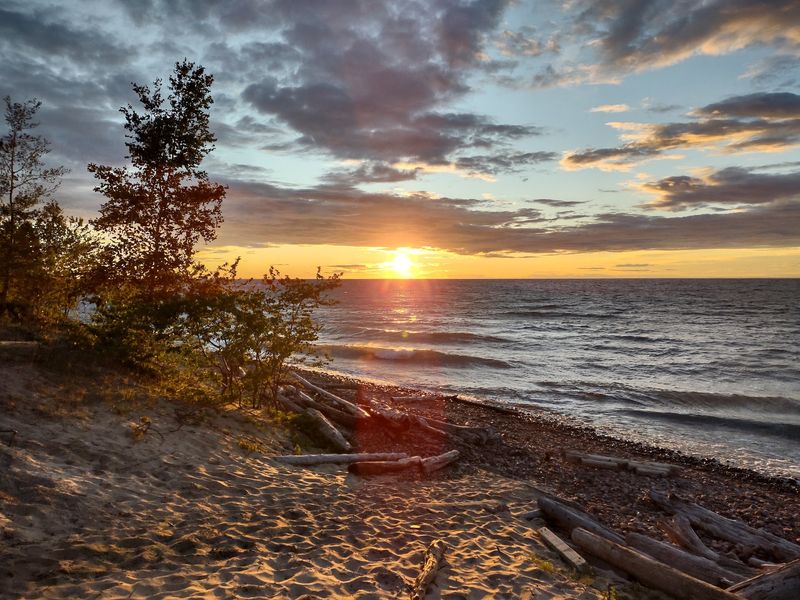
Lake Superior takes over the evening at this Keweenaw Peninsula campground, especially when the sun drops behind the water and the Keweenaw Waterway lighthouse comes into view. F.J.
McLain State Park is at 18350 Highway M-203, Hancock, MI 49930, roughly between Hancock and Calumet, with about two miles of shoreline that shifts between sand and rock.
Camping here feels close to the lake without requiring a backcountry setup. The modern campground has 114 sites, many shaded by mature trees, and the park also offers mini cabins, a camper cabin, and a tiny house.
Beachcombing, paddling, fishing, rock hunting, and berry picking can easily fill a day, while the wider Keweenaw Peninsula adds old mining sites, historic communities, and scenic drives.
Superior should still dictate what goes in the duffel bag. Even a warm afternoon can turn cool once the wind comes off the lake, so layers are more useful than optimistic forecasts.
One 2026 caveat matters: the DNR is completing electrical upgrades, and part of the campground plus several lodging units has been affected by delayed reopening. Check current reservation availability before building a trip around a specific site.
11. Brimley State Park
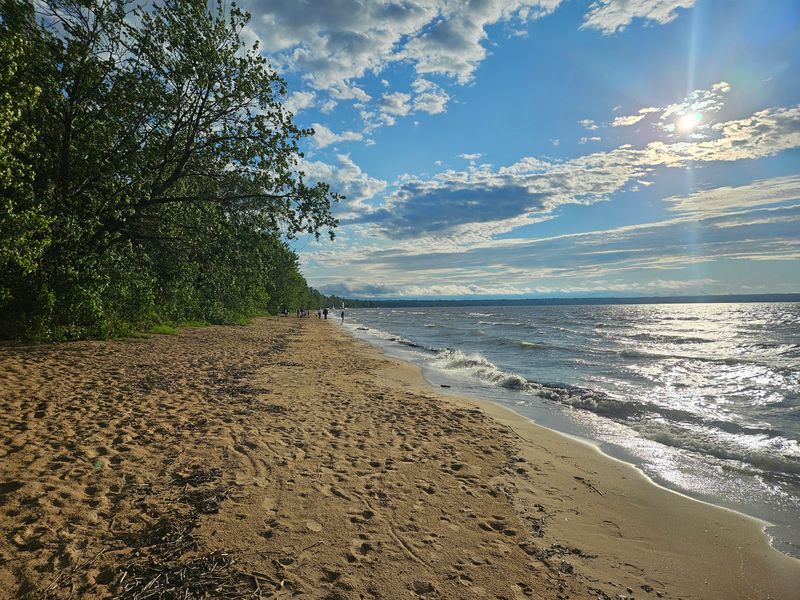
A freighter sliding across Whitefish Bay can make breakfast last longer than planned. Brimley State Park faces a busy Lake Superior shipping route, giving campers clear views of passing vessels and, on bright days, Canada in the distance.
Its sandy swimming beach often has slightly warmer water than other Superior locations.
Established in 1923 after the Village of Brimley donated land, the park ranks among the Upper Peninsula’s oldest state parks. Modern camping facilities keep the experience easy for families, while nearby trout streams in Hiawatha National Forest give anglers another reason to pack their gear.
Save room in the schedule for regional day trips. Sault Ste.
Marie and the Soo Locks are close enough for an outing, while Tahquamenon Falls and Mackinac Island can fit into longer plans. Binoculars are useful here, whether aimed at ships, shorebirds, or changing weather.
10. Porcupine Mountains Wilderness State Park
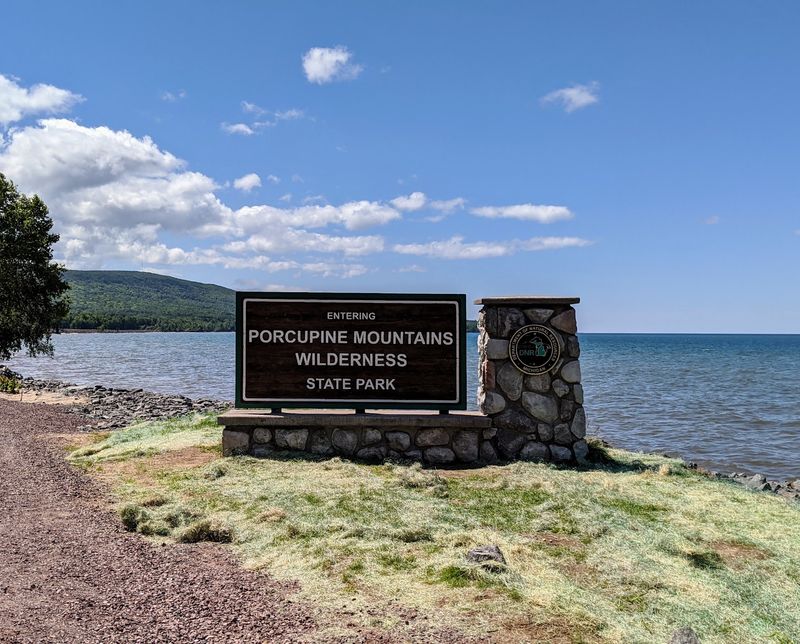
Wilderness feels legitimately large here. Porcupine Mountains Wilderness State Park covers about 60,000 acres along Lake Superior, with headquarters at 33303 Headquarters Road, Ontonagon, MI 49953-9087, and enough forest, ridges, rivers, waterfalls, and shoreline to make a two-night stay feel wildly insufficient.
Camping can be as easy or as serious as you want. Developed options exist near Union Bay, while the Presque Isle rustic campground puts campers near the wild Presque Isle River and Lake Superior.
Backcountry sites go much deeper, and they require better preparation, proper food storage, and honest judgment about distance. This is not the park for casually assuming every trail loop will be easy.
Lake of the Clouds is the famous view, but it should not become the whole itinerary. Summit Peak, the Presque Isle River corridor, old-growth forest, and quieter shoreline sections give the Porkies their scale.
The visitor center is worth stopping at before longer hikes for current trail information.
Pack rain gear, layers, navigation, and more food than a city park mindset suggests. Once you leave the developed areas, Michigan starts feeling much bigger, quieter, and more remote than most first-time visitors expect.
9. Fayette Historic State Park
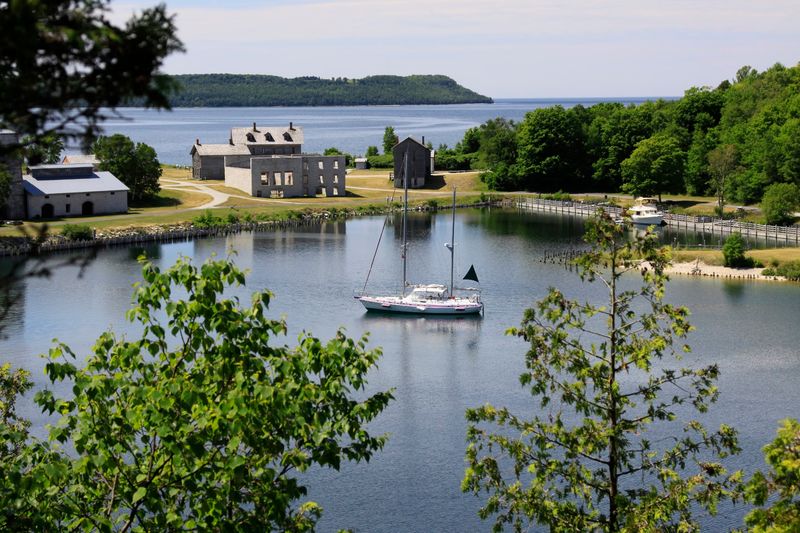
Old blast furnaces are unusual neighbors for a campground, yet they give Fayette its remarkable character. More than 20 structures remain from a nineteenth-century iron-smelting town abandoned in 1891.
Walking among the hotel, town hall, workers’ homes, and machine shop feels quiet, especially after daytime visitors begin leaving.
Nature frames that industrial story beautifully. Snail Shell Harbor curves beneath limestone cliffs reaching about 90 feet, and five miles of trails reveal changing views of the preserved townsite and Big Bay de Noc.
Clear harbor water also attracts snorkelers and scuba divers interested in underwater artifacts.
Allow several hours for the historic area rather than treating it as a quick stop. Comfortable shoes help on paths and building floors, while a light jacket suits the cool shoreline.
In snowy months, cross-country skiing and snowshoeing turn the old company town into a striking winter scene.
8. Fisherman’s Island State Park
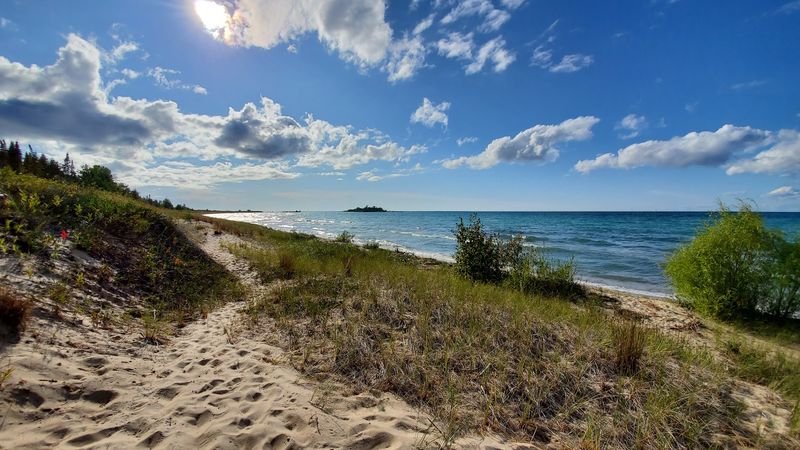
Rustic camping earns the word here. Fisherman’s Island State Park stretches along more than six miles of Lake Michigan shoreline south of Charlevoix, with the entrance on Bell’s Bay Road, Charlevoix, MI 49720.
The park protects rolling dunes, hardwoods, cedar and spruce bogs, and long sections of shore that feel surprisingly removed from nearby resort towns.
Its 80-site campground is intentionally simple. There are vault toilets and hand-pumped water, but no electricity, showers, or modern restroom buildings.
Fifteen campsites sit in dune country near Lake Michigan, making them especially appealing to campers who care more about shoreline atmosphere than campground amenities.
The beach alternates between sand and rock, and rock hunters often come looking for Petoskey stones and other fossils. A 2.5-mile hiking trail gives an inland look at the dunes and forest, while paddlers can follow the Lake Michigan coast when conditions cooperate.
Do not rely on the name to tell you whether Fisherman’s Island is actually attached to shore. Water levels can change that relationship.
For 2026 trips, timing matters even more: the rustic campground is scheduled to close September 15 through the end of the season for a culvert replacement project.
7. Grand Haven State Park
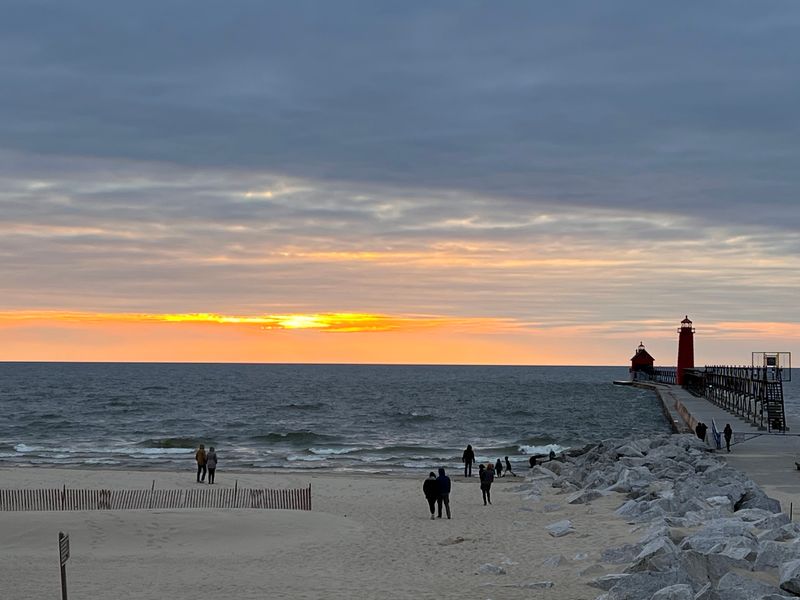
Sand is not merely beside the campground at Grand Haven. It is nearly the whole setting.
The compact 48-acre park occupies Lake Michigan beach at the mouth of the Grand River, placing campers near the pier and its pair of bright red lighthouses. Expect an energetic atmosphere rather than deep woodland solitude.
A riverside boardwalk invites morning strolls, fishing breaks, and easy walks toward town. Swimming and picnicking fill sunny afternoons, while sunset gathers people along the shoreline.
Track chairs can be borrowed to help visitors move across the sand, adding valuable beach access.
Reservations are important during warm months because this classic park has drawn vacationers since 1920. Secure awnings and loose belongings when lake winds rise, and respect pier closures during rough conditions.
An overnight lodge provides another sleeping choice. For quieter moments, walk early, before beach traffic and music begin building.
6. P.J. Hoffmaster State Park
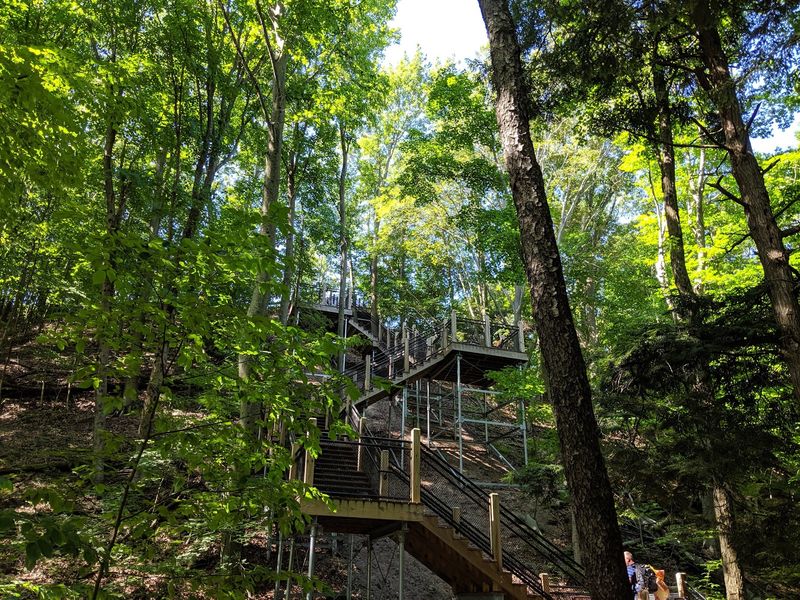
About 193 steps stand between the forest floor and one of Muskegon’s finest lake views. Hoffmaster’s Dune Climb rises roughly 190 feet above A wooded dune can hide Lake Michigan remarkably well until the trail suddenly climbs high enough to reveal blue water across the horizon.
P.J. Hoffmaster State Park is at 6585 Lake Harbor Road, Muskegon, MI 49441, with three miles of shoreline, a modern campground, and about ten miles of trails through one of western Michigan’s most impressive dune landscapes.
The classic introduction is the Dune Overlook Trail. Its staircase involves about 220 steps, with benches along the way and a broad lake view waiting at the top.
For something gentler, the two-mile round-trip Homestead Trail moves through forested dunes before reaching Lake Michigan.
The Gillette Sand Dune Visitor Center gives the landscape useful context, explaining how these dunes formed and why staying on marked routes matters. Wind and foot traffic can damage vegetation that stabilizes the sand far faster than it recovers.
Campers can balance active mornings with long beach afternoons without leaving the park. Bring water for the climbs and footwear that can handle both soft sand and wooded trail.
Hoffmaster works especially well for anyone who wants dramatic Great Lakes scenery but still prefers a comfortable modern campground waiting at the end of the hike.
5. Orchard Beach State Park
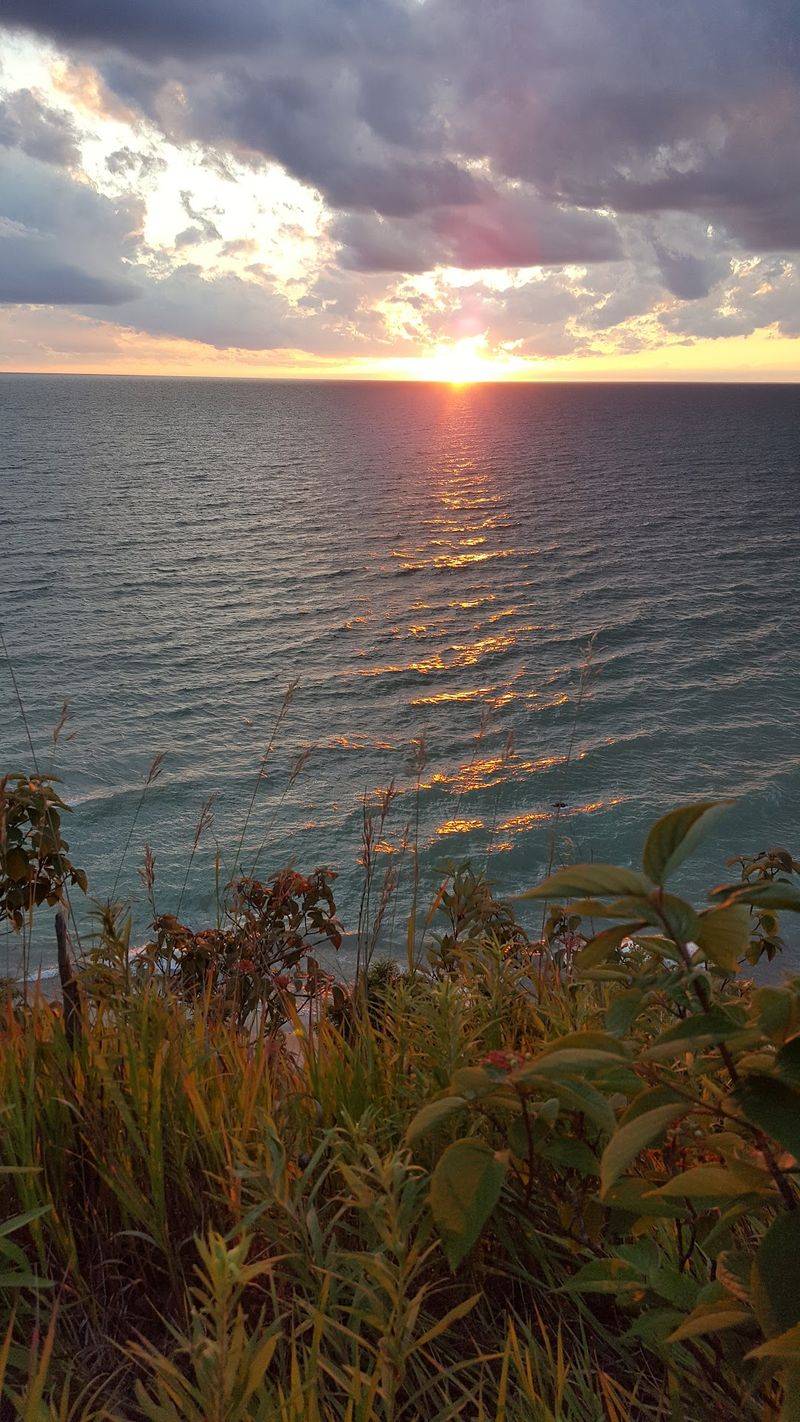
Sunset arrives at eye level on the bluff at Orchard Beach State Park. Perched about 100 feet above Lake Michigan, the campground looks west across a broad sheet of water.
The park took its name from an apple orchard that once grew here, though the commanding lake view now steals most attention.
A restored historic pavilion adds a remarkable preservation story. The 850-ton structure was moved away from the eroding bluff and carefully rehabilitated.
Other limestone features recall work completed by the Civilian Conservation Corps during the 1930s.
More than 3.5 miles of trails cross old-growth woods and former farmland, creating peaceful alternatives to the overlooks. Direct beach stairs have been closed because of erosion, so check current access information before visiting.
Bring binoculars, a picnic, and evening layers. Nearby Manistee provides additional beach access, supplies, dining, and historic streets to explore.
4. Harrisville State Park
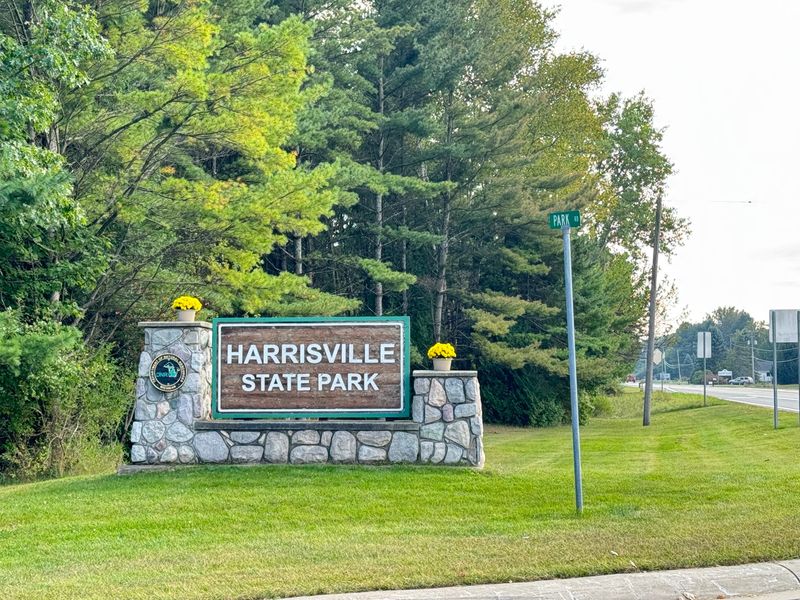
May mornings can sound wonderfully crowded even when the campground feels calm. Migrating warblers and other songbirds pause around Harrisville State Park, making its pine and cedar stands especially rewarding for birders.
A small pair of binoculars earns its place in the camping box during spring.
The 107-acre park meets a sandy Lake Huron shore with a designated swimming beach and modern campground. Shade from the mature trees gives the day-use area a sheltered feeling, while open water keeps the view bright.
Early risers may catch colorful skies before breakfast.
Leave the car parked for a while and follow the two-mile paved Heritage Trail into Harrisville. The route makes town visits easy by foot or bicycle.
Sturgeon Point Lighthouse is another worthwhile destination nearby. Water shoes, bird guides, and bicycle locks are useful additions, and reservations remain smart during summer weekends.
3. Hoeft State Park
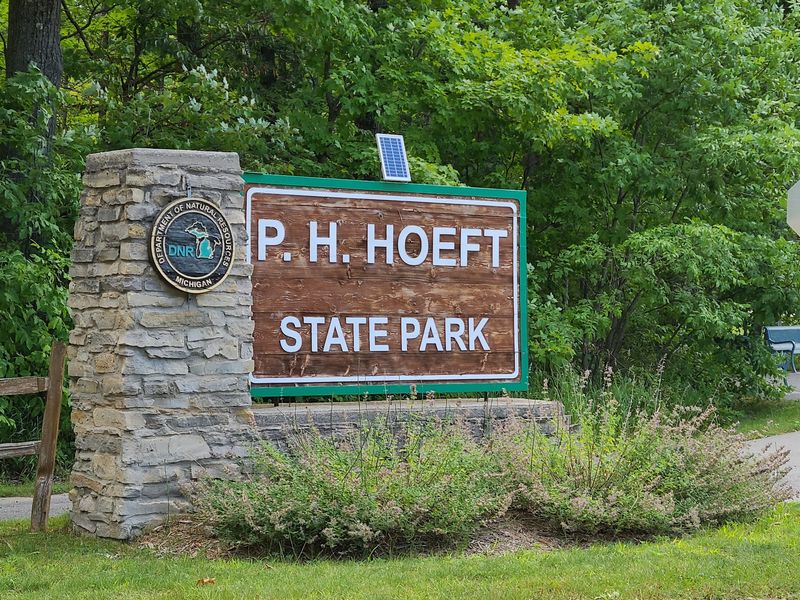
A catalog house in the woods gives Hoeft State Park an unexpectedly homey twist. The 1929 park ranger cabin, originally ordered from Sears and Roebuck, can be rented for overnight stays.
Nearby, a Civilian Conservation Corps picnic shelter from the late 1930s preserves another layer of park history.
Hoeft became one of Michigan’s first 14 state parks after lumberman Paul H. Hoeft donated land in 1922.
Some campsites date to the 1920s and rest beneath mature trees. Beyond them lies a mile of sandy Lake Huron shoreline.
Four miles of park trails provide relaxed hiking, while the connected Huron Sunrise Trail leads toward Rogers City and the 40 Mile Point Lighthouse. Bring bicycles for greater range and shoes suitable for shoreline fossil hunting.
The wooded setting muffles road noise, but lake breezes can cool campsites quickly after sunset.
2. Port Crescent State Park
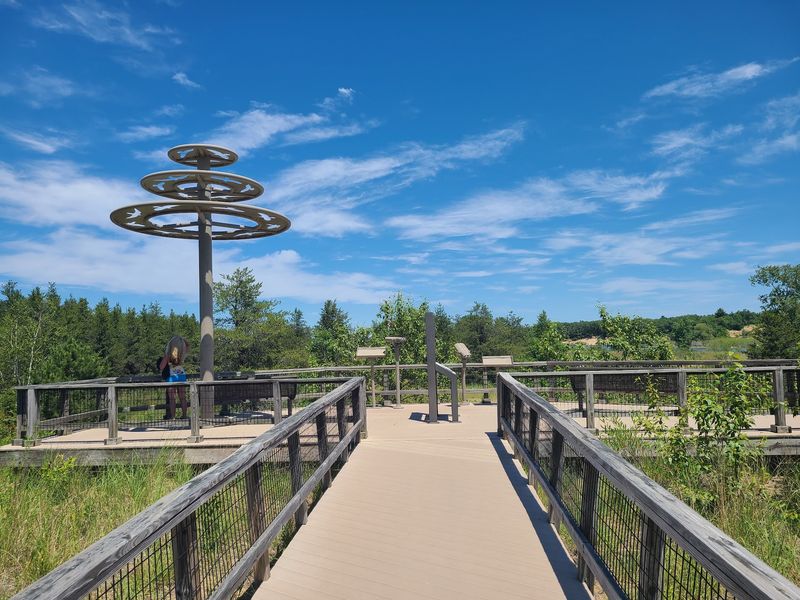
After campfires dim, Port Crescent reveals its biggest attraction overhead. Located near the tip of Michigan’s Thumb, it is one of the state’s designated Dark Sky Preserves.
A viewing platform helps visitors watch stars above Saginaw Bay without bright lights blocking the show.
Three miles of sandy shoreline support swimming, fishing, and long boardwalk strolls. Lodging ranges from modern campsites to camper cabins, cottages, and distinctive geodesic domes.
Canoers can explore the Pinnebog River, while birders may use the raptor viewing platform.
History appears in quiet fragments, including a brick mill chimney and an old steel bridge left from a former lumber town. Pack red-filtered flashlights to protect night vision and bring insect repellent near wetlands.
Waterfront sites can be breezy, so secure loose equipment. Check moon phases before booking if dark, star-heavy skies are your main goal.
1. Albert E. Sleeper State Park
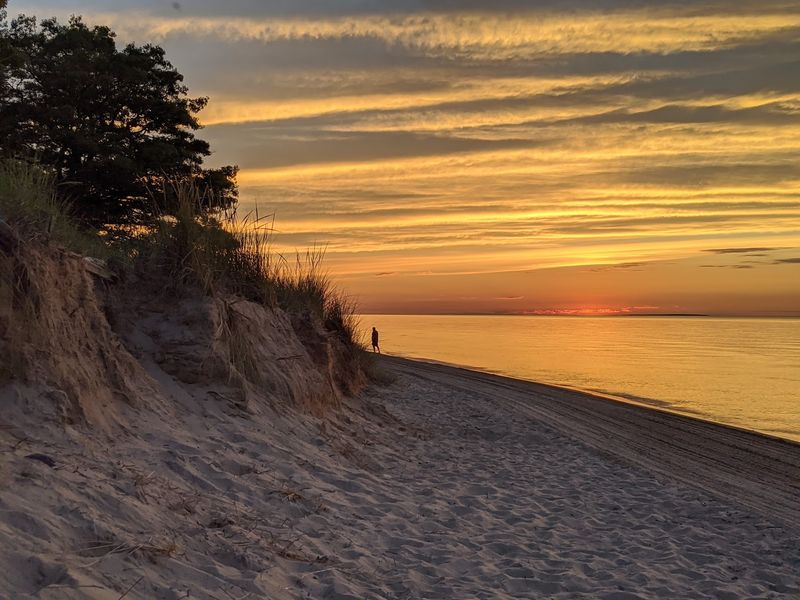
Few shoreline camps let the water frame both ends of the day. At Sleeper State Park, Saginaw Bay’s shape can produce memorable sunrise and sunset views.
A pedestrian overpass connects the campground side with a half-mile sandy beach, avoiding the need to cross the road directly.
The park protects 723 acres of forest, wetlands, and wooded dunes. More than four miles of maintained routes include the Huron Dunes Trail, where ancient dune terrain creates a varied walk. Mountain biking tracks offer a faster way to explore.
Modern campsites and mini-cabins serve regular visits, while the secluded Sleeper Outdoor Center contains 14 cabins and a dining hall for groups. Anglers pursue perch, walleye, salmon, and lake trout in nearby waters, including through the ice during winter.
Caseville supplies food and local outings. Pack bug protection for wetland paths and extra layers for breezy beach evenings.