
This Illinois Wetland Loop Lets You Walk Beside Head-High Prairie Grasses On A Boardwalk-And-Paved Trail
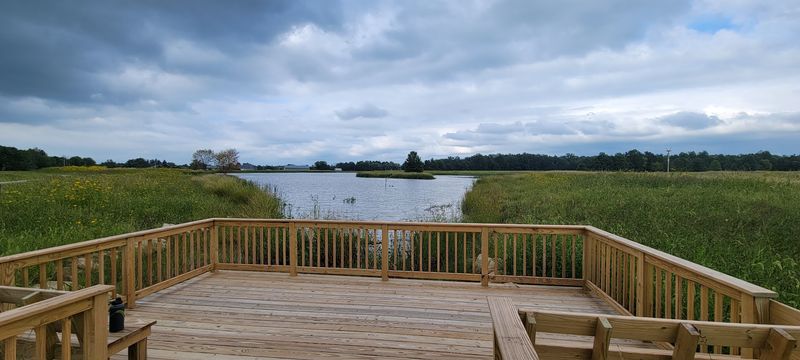
Somewhere in central Illinois, a short loop trail puts you right next to a living prairie wetland without requiring a long hike or serious gear. The Litchfield Wetland Management District, managed by the U.S.
Fish and Wildlife Service, offers a 0.17-mile route that combines a wooden boardwalk with a paved section beside native tallgrass prairie and open water. By late summer, warm-season grasses on the restored prairie plot can grow remarkably tall, giving walkers a close-up view that feels surprisingly wild for such a quick outing.
If you have ever wanted to see what a real Illinois prairie looks like without driving to a remote trailhead, this little loop is worth knowing about.
The Litchfield loop is the best-supported match
Managed by the U.S. Fish and Wildlife Service, the Litchfield Wetland Management District sits in central Illinois and includes a short walking route called the Wetland Boardwalk Loop.
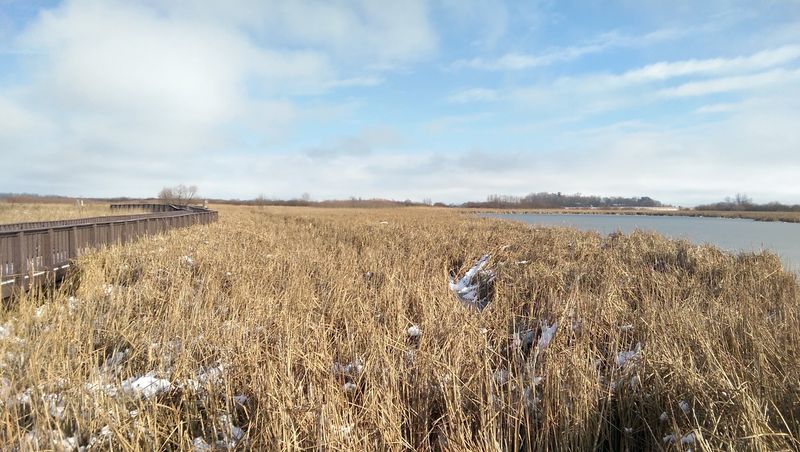
According to the official FWS trail listing, the route measures 0.17 miles, is rated easy, and combines a wooden boardwalk section with a paved segment that runs beside a prairie wetland and a pollinator plot planted with native tallgrass prairie species. The estimated walking time is about five minutes, making it one of the shortest meaningful nature walks available in the state.
Two viewing stops are built into the loop, and one of them includes a bench where you can sit and look out over the water and surrounding vegetation. The trail is not described in the available official sources as a formally designated prairie preserve, so this article uses the property’s official name rather than a preserve label.
What the site does offer is a genuine close-up of a managed prairie wetland that most visitors can walk comfortably in a single short outing.
The combination of wooden boardwalk and paved path is worth keeping in mind before you go. Some descriptions of the trail use the phrase “boardwalk loop,” which might suggest a continuous wooden surface, but the official listing makes clear that pavement is part of the design.
That distinction matters for seasonal planning, as you will see in the sections below.
Tallgrass can create an immersive view without a height guarantee
Walking the Wetland Boardwalk Loop feels less like a standard park stroll and more like stepping into a working prairie landscape. The trail passes directly alongside native tallgrass prairie plantings, which means the grasses and wildflowers are not across a field or behind a fence – they grow right at the edge of the path.
On a calm late-summer morning, that kind of proximity to living prairie vegetation is genuinely striking, even on a route this short.
Illinois prairie species like big bluestem and Indian grass are warm-season grasses that put on most of their growth during summer. Chicago Botanic Garden documentation of restored Illinois prairie areas describes vegetation reaching head height and beyond in favorable conditions, with big bluestem and Indian grass among the species capable of growing taller than a standing adult.
That ecological context is real, but it applies to Illinois prairie plantings generally, not to a confirmed measurement at the Litchfield loop specifically. No official source for this site provides a height figure or a photograph showing grasses at or above eye level.
What that means practically is that a visit in late summer could put you right beside very tall grasses, or it could find the plants at a shorter stage depending on weather, soil conditions, and recent management activity. The experience of walking close to native prairie vegetation is genuine either way.
Staying on the designated route is important both for your own safety and to protect the habitat – do not step off the boardwalk or pavement into the grass, regardless of how inviting the tall growth might look from the path.
Late summer may bring the tallest-looking conditions
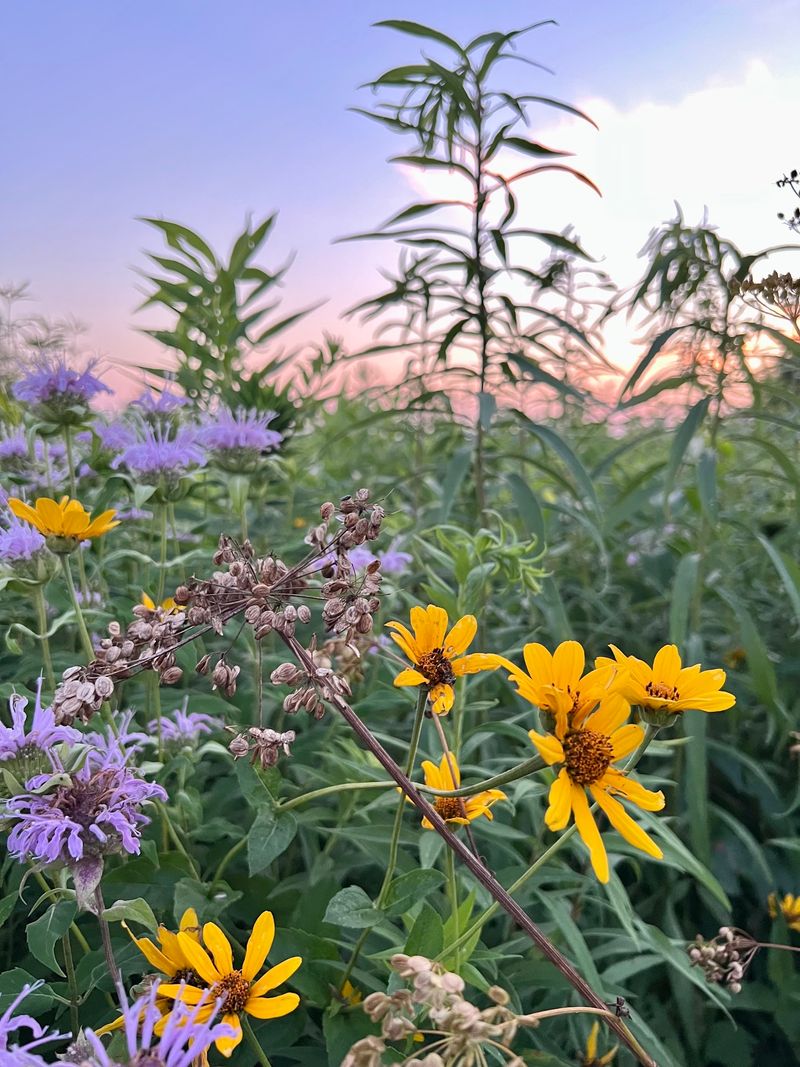
Warm-season prairie grasses grow slowly in spring and then surge upward through the heat of summer. By late July and into August, species like big bluestem and Indian grass are typically well into their most dramatic growth phase in Illinois, and Chicago Botanic Garden prairie documentation notes that this growth can reach and exceed a person’s height when conditions favor it.
Early fall, through September and into October, often adds late-blooming wildflowers and seed heads that give the prairie a different kind of visual richness even as temperatures begin to drop.
There is no fixed calendar date that guarantees the tallest or most photogenic conditions at the Litchfield loop. A wet spring followed by a hot summer tends to push growth higher, while a dry season or a late prescribed burn can produce shorter or patchier results.
Illinois Natural History Survey materials on prairie restoration explain that management practices including mowing, seeding, planting, prescribed fire, and invasive-species control all shape what a restored prairie looks like at any given time. Two visits in the same month of different years can produce noticeably different scenes.
The FWS trail listing specifically notes that prairie vegetation commonly overgrows the paved section of the loop in July and August. That detail confirms that growth can be substantial enough to encroach on the path itself, which is useful context for timing a visit – but it also signals that the same growth can create access problems.
Late summer is a reasonable window to aim for if tall vegetation is your goal, with the understanding that conditions vary and the paved section may not be fully clear.
The easy route has important seasonal accessibility limits
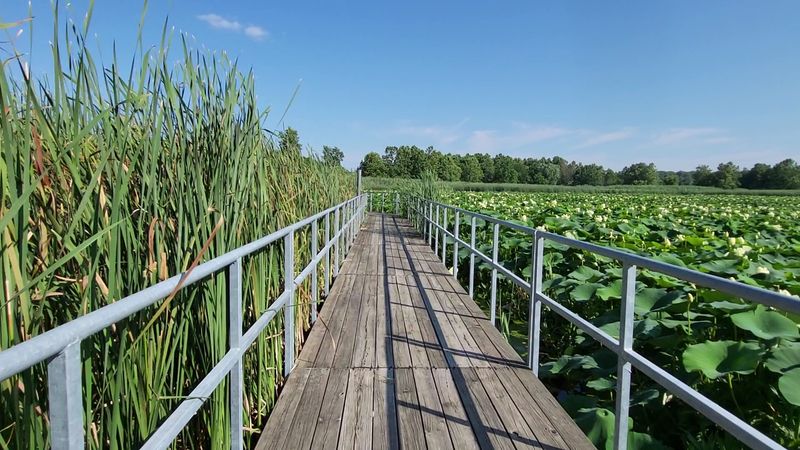
On paper, the Wetland Boardwalk Loop checks a lot of boxes for a casual outing. The official FWS listing rates it easy, puts the total distance at 0.17 miles, and estimates a walking time of about five minutes for the full loop.
The route includes two viewing stops, one of which has a bench, and the surface alternates between a wooden boardwalk and a paved section. The site is open year-round from dawn to dusk, which gives visitors a wide scheduling window.
The accessibility picture is more complicated than those basics suggest, and the official source is direct about it. Prairie vegetation can grow over the paved portion of the loop during July and August, and when that happens, the listing warns that the paved section may no longer be accessible to wheelchair users.
That is not a minor footnote – it means a trail that carries a general accessibility designation can become effectively impassable for some visitors during the peak growing season, which is also the period when the grasses are most likely to be at their tallest.
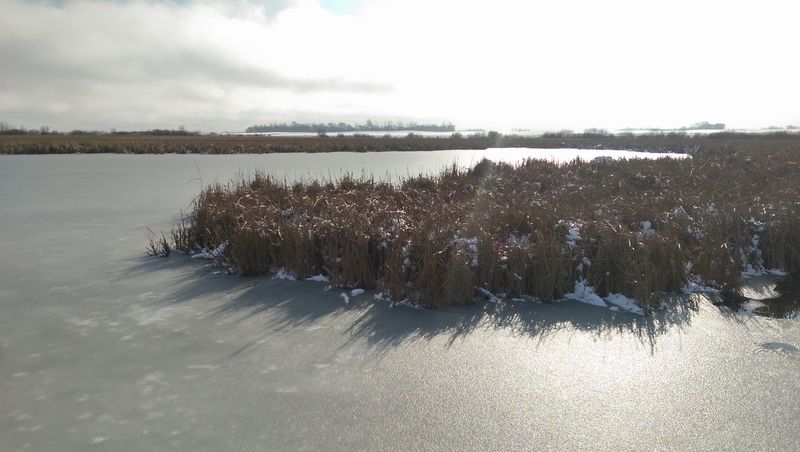
Winter visits come with a different limitation. The boardwalk is not cleared of snow, so the wooden section can become slippery or difficult to navigate after snowfall.
Anyone planning a cold-weather outing should factor that in and dress accordingly. If wheelchair access or any specific mobility accommodation determines whether a visit is possible, checking current conditions directly with the managing office before making the trip is the clearest way to avoid a wasted drive.
Seasonal vegetation growth and weather both change faster than any printed trail guide can track.
Management determines whether the prairie looks tall or recently cut
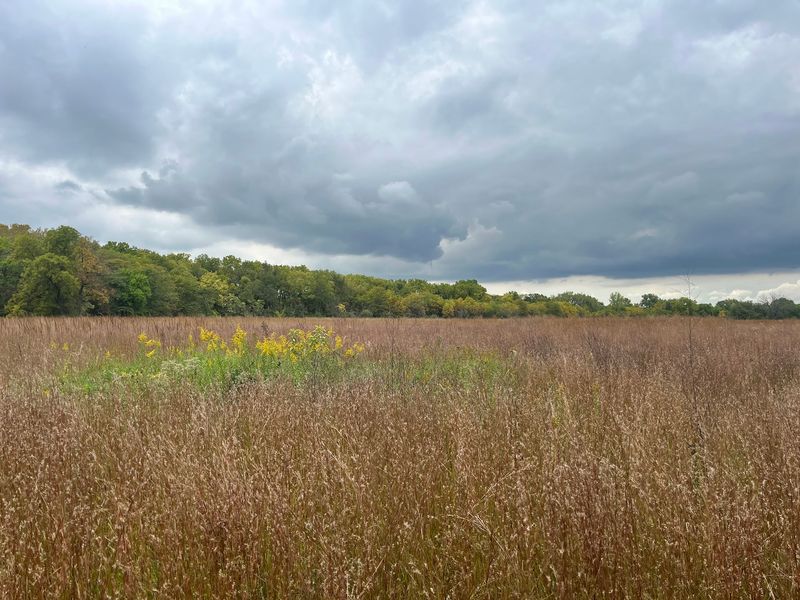
Restored prairie is not the same as original prairie, and the distinction shapes what visitors can expect to see. Illinois Natural History Survey research on prairie restoration explains that restorations and reconstructions typically contain fewer plant species than historic remnants and do not fully recreate the original soil communities, insect populations, or small-mammal networks that developed over centuries.
The Litchfield site is not described in available sources as an original prairie remnant, and calling any tall vegetation at the loop “historic prairie” would overstate what a restoration can achieve. That does not make the habitat less interesting to visit – it just means the tall grasses you see are part of an ongoing, managed process rather than a frozen piece of pre-settlement landscape.
Prescribed fire is one of the main tools managers use to control invasive species, recycle nutrients, and encourage native warm-season grasses to thrive. A burn in early spring clears the previous year’s dead material and stimulates vigorous new growth, which can produce taller, denser vegetation by late summer.
Mowing serves a similar purpose in some areas and can also be used to set back invasive plants that would otherwise crowd out native species. Seeding and planting add new native species over time, gradually shifting the composition of the plant community.
All of those decisions happen on a schedule that responds to weather, funding, staff availability, and ecological monitoring – none of which is visible to a casual visitor arriving on a given afternoon. A section that looked lush and tall one August might be shorter the following year after a management burn or a dry spell.
Rather than diminishing the value of the loop, that variability is part of what makes a short restored prairie interesting to revisit across different seasons and years.
Prepare for heat, wet ground, and ticks
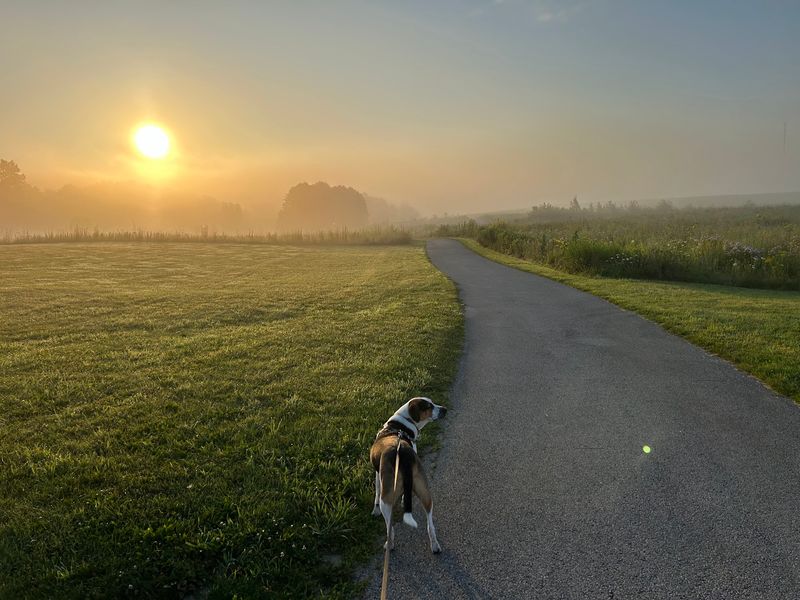
Five minutes of walking sounds easy, but an open prairie loop in July or August is a genuinely exposed environment. The sun reflects off the boardwalk surface, there is little shade, and humidity near a wetland can make the air feel heavier than it does in a shaded forest trail.
Bring water even for a short outing, wear a hat or apply sunscreen, and dress for the actual temperature rather than the distance. Wet ground near the boardwalk edges is also possible, so closed-toe shoes with a grip sole are a better choice than sandals or slip-ons.
Tick awareness is a real part of any prairie visit in Illinois. Illinois Department of Public Health guidance recommends walking in the center of trails and avoiding wooded or bushy areas with high grass and leaf litter.
Light-colored clothing makes it easier to spot ticks before they reach skin, and long pants tucked into socks reduce the exposed skin that ticks can access. Use an EPA-registered repellent according to its label directions – the label specifies the correct application method and reapplication timing, and following it matters.
After the walk, the IDPH recommends checking your clothing, gear, and any pets that came along before getting back into the car. Showering within two hours of returning indoors helps remove ticks that have not yet attached.
Do a full body check, paying attention to behind the knees, around the waistband, behind the ears, and in the hairline. A boardwalk keeps your feet off the ground, but it does not create a tick-free zone – tall grasses near the path edge can still bring ticks into contact with passing visitors.
Mosquitoes are also active near wetlands in warm months, so repellent does double duty on this kind of outing.
Choose it for a quick prairie glimpse, not a guaranteed grass tunnel
The Litchfield Wetland Management District’s Wetland Boardwalk Loop fits a specific kind of visit well: a short, low-effort outing that puts you right beside a native prairie wetland with minimal commitment. At 0.17 miles and about five minutes of walking, it works as a standalone stop or as part of a longer day trip through central Illinois.
The combination of wooden boardwalk and paved path, two viewing stops, and an adjacent wetland gives the loop more variety than its short distance might suggest.
Going in with accurate expectations makes the visit better. The route is not a continuous all-wooden boardwalk, vegetation height varies by season and management cycle, and the paved section can become overgrown and less accessible in July and August.
Illinois prairie species can grow impressively tall in favorable conditions, and late summer is a reasonable time to look for that kind of growth – but no source confirms a guaranteed grass-tunnel effect at this specific site. If seeing the tallest possible vegetation or using the full accessible path matters to your visit, check current conditions with the managing office before you go.
The loop rewards visitors who appreciate a genuine piece of managed prairie landscape without needing it to perform on command. Some days the grasses will be taller than you expect; other days the site will look recently managed and more open.
Either way, you are standing beside a working prairie wetland that would have been completely ordinary to an Illinois settler and is genuinely rare today.