
This Illinois Prairie Preserve Lets You Walk Among Bison On A Restored Grassland
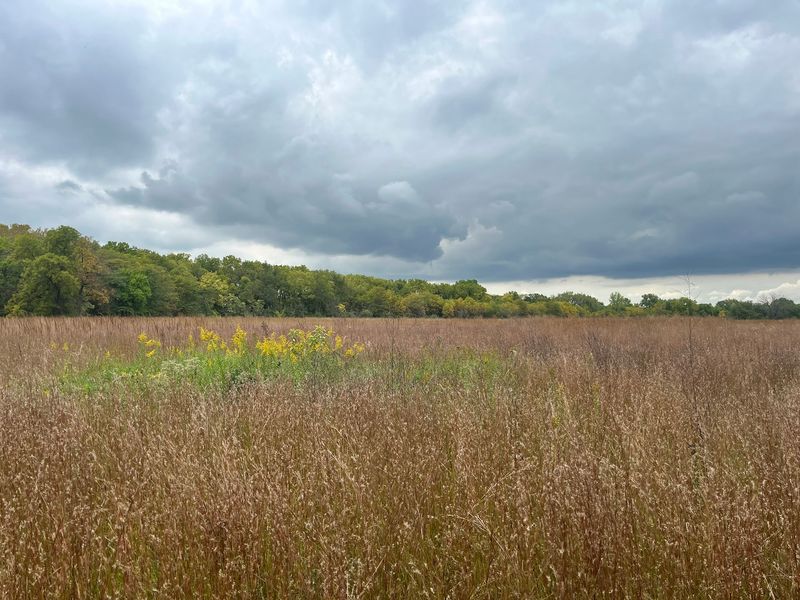
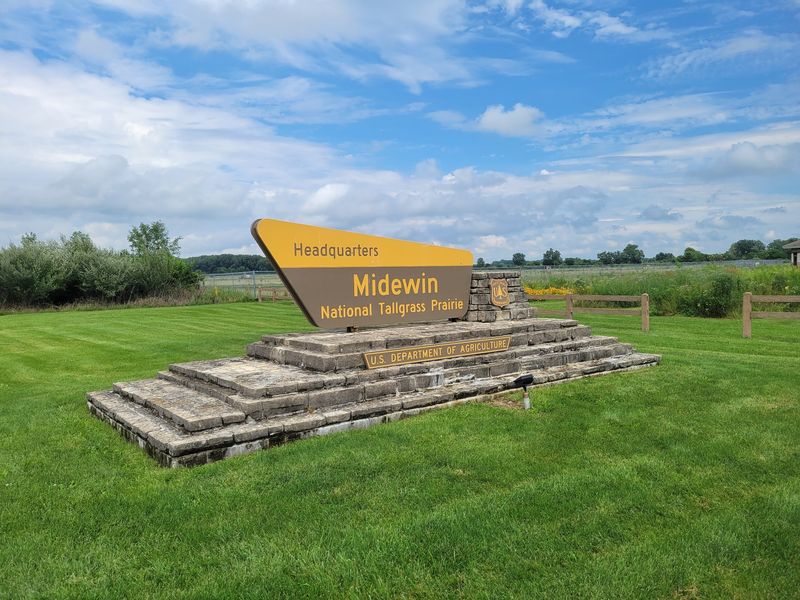
About an hour south of Chicago, a former military ammunition plant is slowly becoming something remarkable: a sprawling tallgrass prairie where bison once again roam behind a fenced pasture. Midewin National Tallgrass Prairie in Will County gives hikers miles of open trail across a landscape that looks nothing like the cornfields surrounding it.
You cannot actually walk among the bison, but you can hike out to the pasture boundary, scan the rolling grassland with binoculars, and sometimes catch a glimpse of the herd grazing in the distance.
Walk to the bison pasture, not among the bison
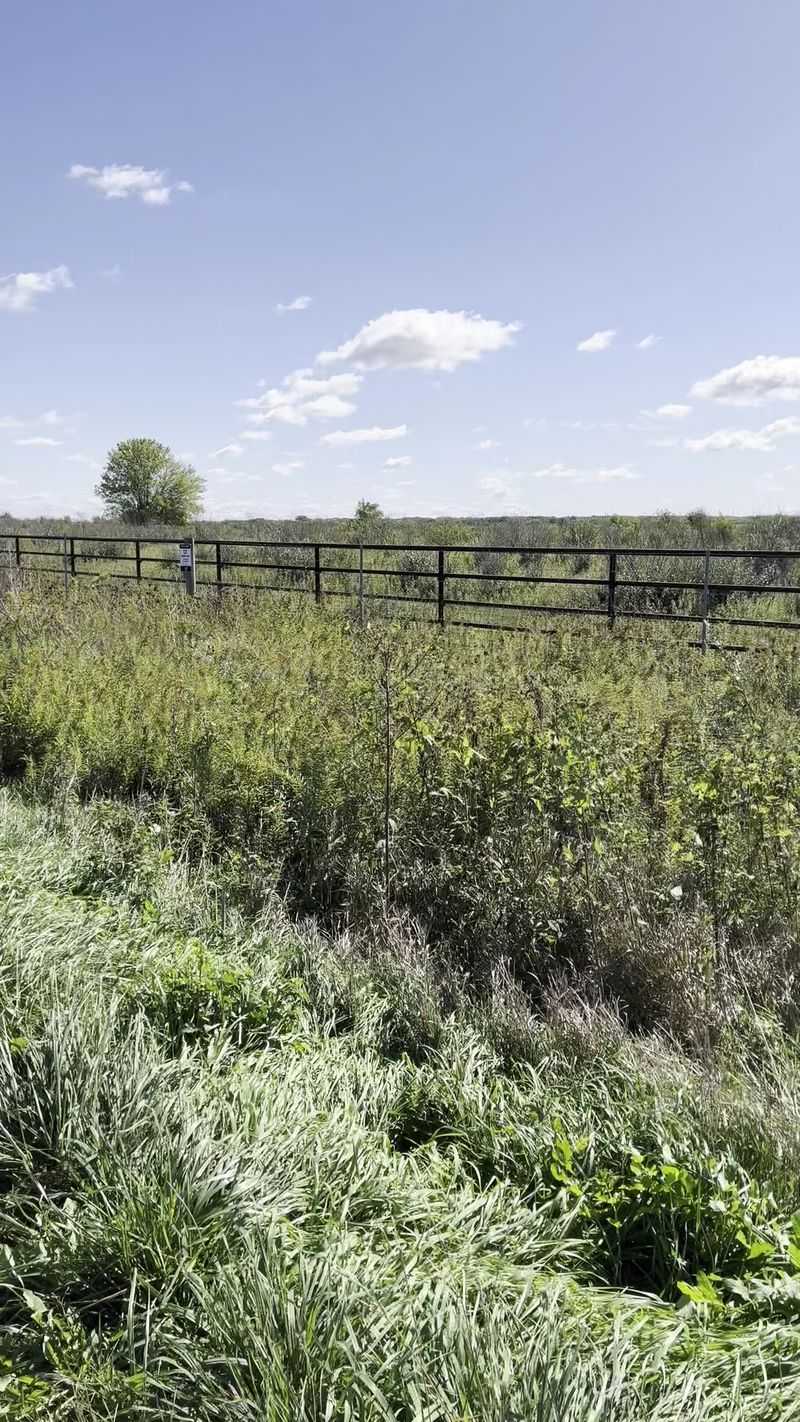
Right away, one thing deserves a clear correction: the title oversells the experience in one specific way. Visitors at Midewin do not walk freely among bison.
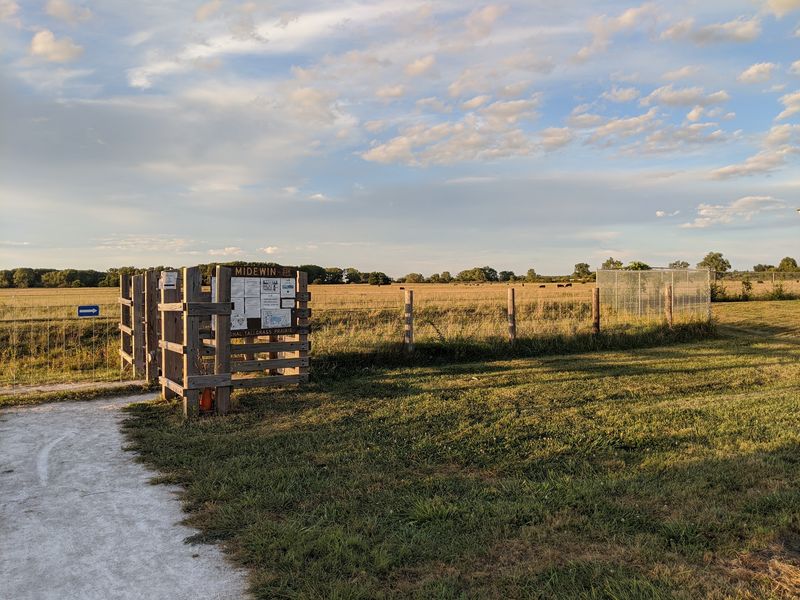
Public access brings you to the outside of a fenced pasture, where designated overlooks give you a place to stop, look, and wait. Entering the bison enclosure is prohibited, and for good reason.
That correction does not shrink the appeal of the trip. The Forest Service’s Iron Bridge Trailhead page describes a roughly 1.5-mile walk from the trailhead to a pasture overlook equipped with concrete benches and spotting scopes.
The path runs through open prairie, and the walk itself is worth taking even if the herd stays on the far side of the pasture that day.
Because the pasture is large and the terrain rolls and dips, the bison may be nowhere near the fence when you arrive. They are not guaranteed to be visible at all.
The Forest Service recommends bringing binoculars, and that advice is practical rather than optional if you want a real chance at a sighting.
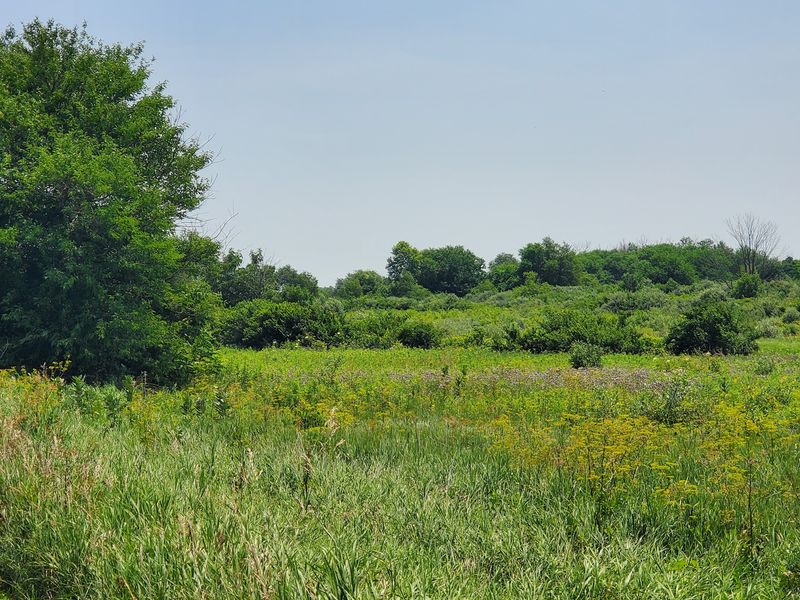
What you can count on, regardless of whether the animals cooperate, is a hike through a broad, sky-filled grassland that feels genuinely different from anything else in the Chicago region. Big bluestem and other native grasses line the trail.
Red-tailed hawks work the updrafts overhead. Midewin’s bison information materials make the boundary rules plain: stay on public trails, respect the fence, and follow posted signs.
The prairie walk delivers whether or not a single bison appears.
Part of a former ammunition plant is becoming prairie
Midewin’s origin story starts not with seeds and soil but with shell casings and TNT. The land was once part of the Joliet Army Ammunition Plant, a massive ordnance facility that produced and packaged munitions through much of the twentieth century.
When the Army no longer needed the site, a portion of that land was set aside for a very different purpose.
Congress established Midewin National Tallgrass Prairie in 1996, and the Forest Service’s official visitor guide notes that the Army transferred 15,080 acres to the Forest Service on March 10, 1997. That acreage was carved out of the broader former ammunition plant; the rest of the former facility’s land went to other uses, including a national veterans cemetery and private development.
Midewin is not the whole former arsenal, just part of it.
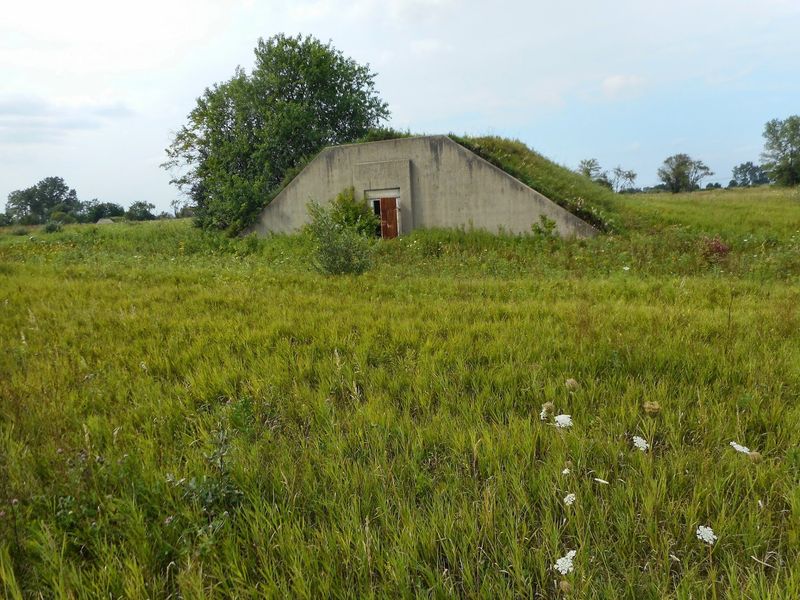
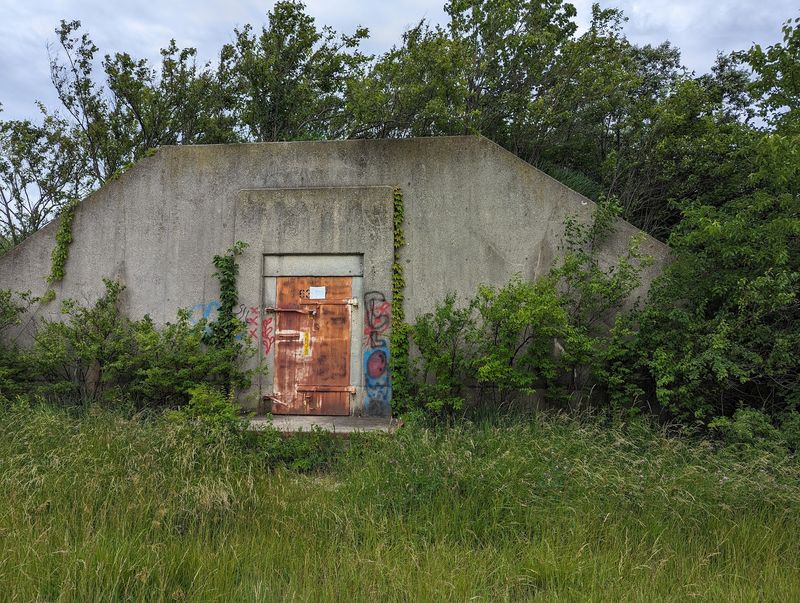
The industrial past left a complicated inheritance. Concrete bunkers, railroad berms, and demolition debris are scattered across the property.
Some areas still carry contamination from decades of ordnance work, and Army cleanup obligations have continued alongside the Forest Service’s restoration efforts. The enabling legislation laid out a framework for transferring and managing this layered landscape, acknowledging that returning it to prairie would take generations, not years.
Walking through Midewin today, you can spot the seams between eras. A crumbling concrete pad sits at the edge of a meadow thick with goldenrod.
A gravel road built for ammunition trucks now carries hikers past stands of native switchgrass. The transformation is real and ongoing, and understanding that history makes the prairie feel earned rather than simply scenic.
An active restoration project covers a broad landscape
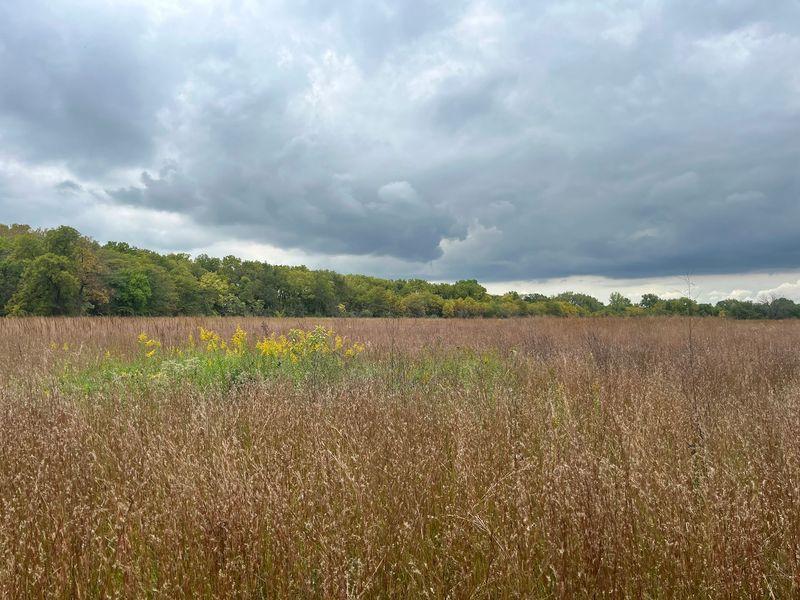
Midewin is large, but calling every acre a mature tallgrass prairie would misrepresent what visitors actually see. Restoration here is an active, decades-long project.
Some sections hold dense stands of native big bluestem and prairie dropseed. Others are former cropland or agricultural grassland still working toward something closer to a native plant community.
The Forest Service’s biological assessment for Midewin’s land and resource management plan describes a landscape that includes successional vegetation, former agricultural fields, and areas still affected by legacy land uses alongside the recovering prairie.
For recreation purposes, the Forest Service’s current recreation page lists roughly 33 to 34 miles of trails and nearly 9,000 acres open to public visitors. Those figures refer to land currently accessible for recreation, not the entire administrative area, which is larger.
Acreage and mileage numbers shift depending on which boundary or access category a document is describing, so it is worth checking current visitor-facing pages rather than older planning documents when you want practical numbers.
In an Illinois context, the scale is genuinely significant. The Illinois Department of Natural Resources describes Midewin as part of a protected prairie complex exceeding 19,000 acres and calls it the largest tallgrass-prairie complex in Illinois.
That is a meaningful state-level distinction. Whether it ranks among the largest in the broader Midwest is a harder comparison to make, and the sources reviewed here do not support that wider claim.
What the landscape offers visitors is something increasingly uncommon near a major metro area: open sky, horizon-to-horizon grassland views, and room to walk without a crowd pressing in from every side.
The experimental herd supports prairie restoration
Bison did not simply wander back to northeastern Illinois on their own. The animals at Midewin arrived in 2015 as part of a deliberate experiment in restoring tallgrass-prairie ecological processes.
The Forest Service’s bison project page frames the reintroduction as a research and management program, not a declaration that the prairie has returned to a pre-settlement condition.
The reasoning behind the experiment draws on how tallgrass prairie actually worked before European settlement. Bison are not just large animals that happen to live in grassland; they are ecological engineers.
Their grazing removes accumulated plant material, creates bare soil patches where seeds can germinate, and produces a mosaic of vegetation heights that different wildlife species use in different ways. Without that kind of disturbance, a recovering prairie can stagnate.
Midewin’s bison information materials describe the herd as occupying a fenced pasture system within the preserve. The animals are managed, monitored, and studied.
They are not roaming freely across all of Midewin, and the available official sources do not describe the herd as a fully self-sustaining wild population. The fence is a feature of the experiment, not a concession that something went wrong.
The herd’s presence also serves a longer-term goal. The Forest Service’s visitor guide situates the bison program within a broader effort to restore native tallgrass-prairie processes across a landscape that spent most of the twentieth century producing artillery shells.
Watching the animals graze, even from a distance, is a way of seeing that long-term work made visible.
Iron Bridge provides the clearest route to a viewing area
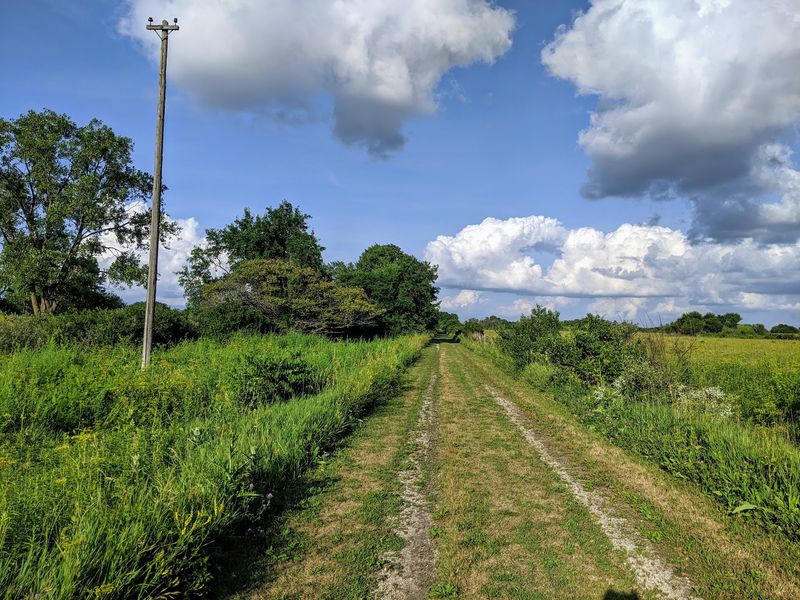
For most visitors planning a bison-viewing hike, Iron Bridge Trailhead is the logical starting point. The Forest Service’s Iron Bridge Trailhead page describes a roughly 1.5-mile walk from the parking area to a pasture overlook furnished with concrete benches and spotting scopes.
The route follows the Route 53 Trail, which runs parallel to the bison pasture boundary for a stretch, giving hikers extended views into the enclosure as they move.
The walk out is flat and exposed, which means full sun on warm days and a clear view of the sky in every direction. Bring water, sunscreen, and a hat regardless of the season.
The scopes at the overlook help, but binoculars are still worth carrying because the herd can be anywhere in a large pasture, and the scopes are fixed in place while the animals are not.
Arriving early in the morning or around dusk gives you the best odds of seeing the bison active near the fence line. Midday in summer often finds the herd resting in shade or at the far end of the pasture, well beyond useful viewing range.
None of that guarantees a sighting, and the Forest Service is direct about this: the animals may not be visible on a given visit because of the pasture’s size and the rolling topography that can hide even large animals from view.
The overlook itself is a pleasant destination even when the pasture appears empty. Bobolinks and meadowlarks work the grass nearby.
The sky opens up in a way that feels rare this close to a major city. The walk back along the Route 53 Trail gives you a second look at the fence line from a slightly different angle, which sometimes reveals animals that were out of sight on the way out.
Additional trails expose the site’s military and prairie layers
Beyond the bison-viewing route, Midewin offers trails that reveal the property’s two distinct identities: a recovering prairie and a decommissioned military installation. Each route shows a different layer of that combination, and choosing among them depends on how much ground you want to cover and what you want to see.
The Twin Oaks Trail runs about 6 miles as a loop and passes through some of the more open grassland sections of the preserve. The route is multi-use, meaning hikers share it with cyclists on some segments, and the surface varies.
It is a good choice for visitors who want a longer outing with sustained prairie views rather than a focused push toward the bison area.
The Group 63 route, approximately 3.6 miles, takes a different approach entirely. The Explosives Road Trailhead provides access to this section, where the path winds around former ammunition storage bunkers, known locally as igloos, that still dot the landscape in various states of decay.
Walking past those grass-covered concrete structures while monarchs drift overhead is one of the more unusual experiences the preserve offers.
For a shorter outing, the Newton Loop covers about 1.6 miles and gives newer visitors a manageable introduction to the landscape without a long commitment. The Forest Service recreation overview and the visitor guide note that permitted uses, surfaces, and trail conditions vary across routes.
Checking the specific trail page before you go prevents surprises at the trailhead, especially during active restoration seasons when equipment and temporary closures can redirect foot traffic without much advance notice.
Check conditions before setting out
Midewin sits in Will County near Wilmington, roughly an hour south of downtown Chicago and a short drive south of Joliet. The location makes it a realistic day trip from most of the Chicago metro area, but the preserve operates differently from a standard county forest preserve, and a few practical details matter before you load the car.
The Iron Bridge Trailhead page currently lists trails as open year-round from 4 a.m. to 10 p.m. The Welcome Center and administrative offices keep separate hours that do not always align with trail access.
Restroom availability is not consistent across trailheads: the Iron Bridge Trailhead page specifically notes that restrooms are not available there, so plan accordingly and do not assume facilities exist at every parking area.
Water is generally not available outside the Welcome Center. The visitor guide recommends carrying your own supply, and on a warm day with 3 or more miles of exposed trail, that means more water than you think you need.
Dogs must be kept on leash throughout the preserve. Bicycles and horses are restricted to designated trails, so check your specific route before bringing either.
Trail conditions at Midewin change with active restoration work, seasonal flooding, and infrastructure projects. The official Forest Service alerts page has listed bridge closures on the Henslow Trail and the Blodgett Marsh Trail, along with reroutes that affect planned routes.
Those conditions shift, and what was closed last month may be open now, or vice versa. Checking the alerts page before departure is the single most reliable way to avoid arriving at a trailhead blocked by a construction crew or a washed-out bridge.
The main recreation page is the best starting point for current visitor-facing information on hours, access, and permitted uses across the preserve.
Keep wildlife-viewing distance from every bison
Bison at Midewin occupy a managed pasture and are monitored by Forest Service staff, but managed does not mean tame. These are large, powerful animals that can weigh more than a ton and move much faster than any person.
Midewin’s bison safety materials prohibit public entry into the bison pastures and require visitors to stay on the public side of the boundary fence. The signs posted at the pasture are not suggestions.
Stay well back from the fence rather than pressing against it for a closer look or a photograph. Never feed a bison, attempt to touch one through or over the fence, or position yourself close to the boundary for a selfie.
The animals can close distance quickly if something startles or provokes them, and a fence offers limited protection when a bison decides to move.
National Park Service guidance on bison safety recommends maintaining at least 25 yards of distance from bison in settings where visitors encounter the animals. Warning signs that a bison is agitated include head bobbing, pawing the ground, bellowing, staring directly at you, or raising the tail.
If you observe any of those behaviors, move away calmly and put as much distance between yourself and the animal as possible. If a bison charges, use a substantial barrier or a vehicle for cover where one is available.
An NPS analysis of bison injuries at Yellowstone from 2000 to 2015 found that most incidents involved people who had actively approached the animals. That data comes from Yellowstone, not Midewin, but the pattern it describes applies broadly: the injuries happened because people closed the gap, not because the bison sought them out.
At Midewin, the fence does most of the work of keeping that gap in place. Your job is to respect it.
The prairie remains worth visiting without a guaranteed sighting
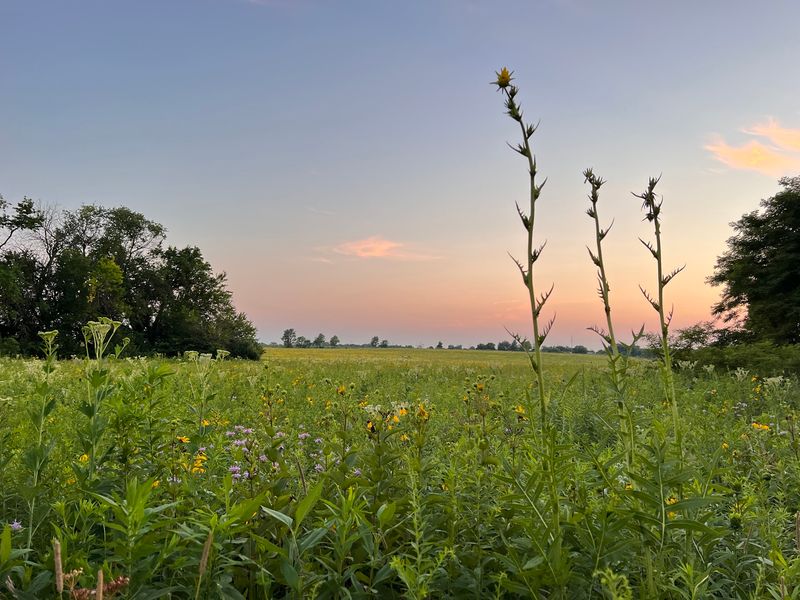
A trip to Midewin is worth planning even if the bison spend the entire day on the far side of the pasture. The preserve combines miles of public trail, an evolving prairie restoration project, and concrete remnants of a mid-century ammunition complex into a landscape that rewards slow attention.
The Iron Bridge Trailhead gives you direct access to the pasture boundary, while other routes take you through grassland that is still finding its way back to something resembling what covered this part of Illinois before the plow arrived.
The bison reintroduction program is one piece of a larger story unfolding across the landscape. Restoration work documented in the biological assessment shows how much of Midewin is still in transition, which means every visit catches the place at a slightly different point in its recovery.
The bison, when visible, are a vivid reminder of what this grassland once held and what it is slowly working toward becoming again.