
This Florida Bayfront Mansion In Sarasota Feels Straight Out Of A Fairytale, Secret Tower Included
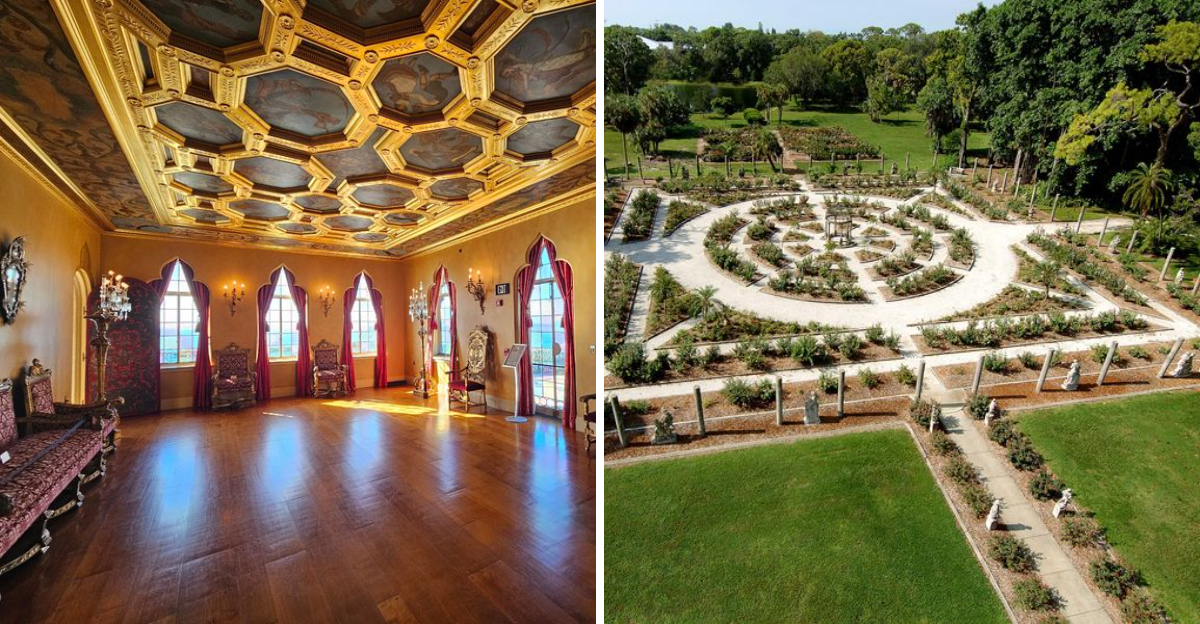
How much drama can one Florida mansion hold before it becomes a stage? Judging by the pink walls, painted ceilings, stained glass, marble terraces, and a tower decorated with zodiac symbols, the answer is all of it.
From the bay, the house looks as if a Venetian palace packed its clothes and moved south for the winter. Step inside, and restraint leaves through another door.
Every room brings colors, details, and another reason to wonder whether the owners used the phrase “keep it simple.”
Yet this is more than a display of Florida wealth. It is a personal home shaped by travel, imagination, and a couple who understood that ordinary was never going to suit them.
Would you climb the spiral staircase when the wind is pushing back? Could you resist pretending the terrace belongs to you?
Along the Florida coast, few homes make curiosity feel this glamorous, theatrical, or fun.
A Circus Fortune Built This Bayfront Palace
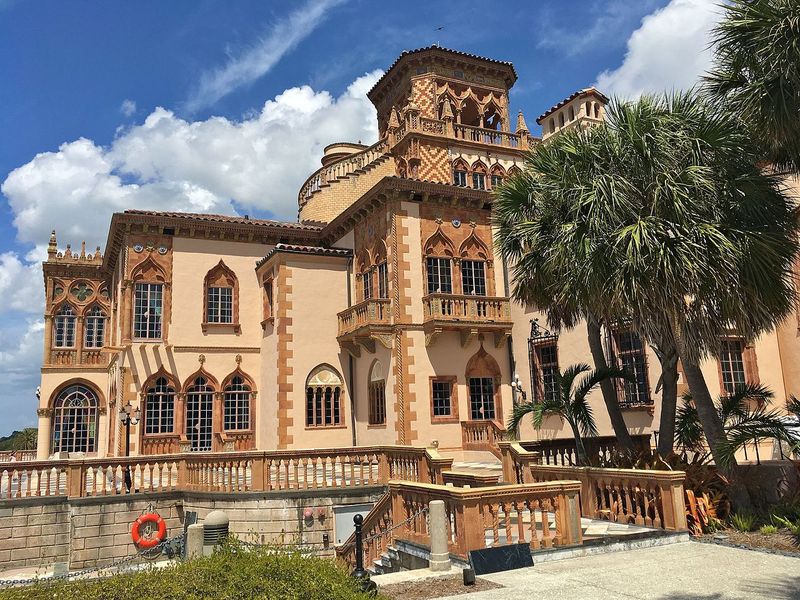
Money from the Greatest Show on Earth paid for these walls, and honestly, you can feel the showmanship in every arch.
John Ringling made his fortune with the family circus, and by the mid 1920s he and his wife Mable wanted a winter home in Sarasota that would outshine anything else on the Florida coast.
Construction wrapped up in 1926, and the couple named the house Ca’ d’Zan, which means House of John in the Venetian dialect.
Standing on the terrace, I kept thinking about how a man who spent his life staging spectacles would naturally build a home that behaves like a stage set.
Docents shared stories about Mable’s role in choosing details, and she was the real driving force behind much of the design.
Knowing the circus connection changed how I looked at the bright colors and theatrical shapes.
Nothing here whispers when it could sing instead.
Venetian Gothic Style, Florida Sunshine Edition
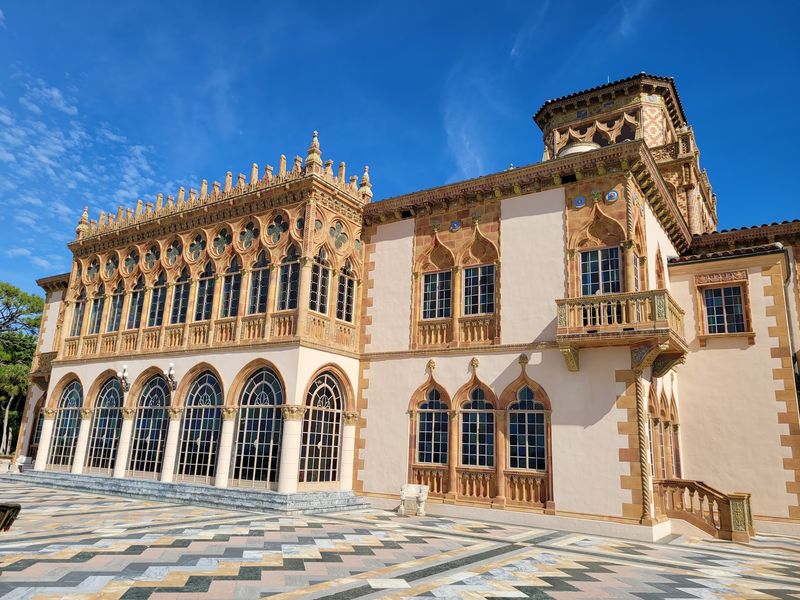
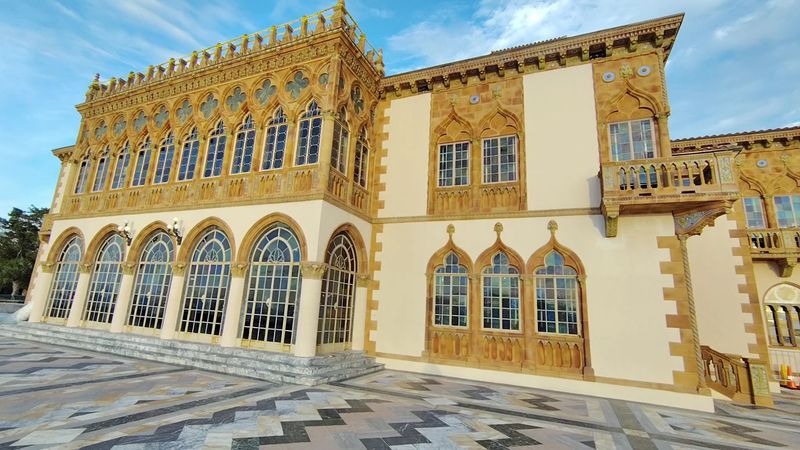
Pointed arches, twisted columns, and glazed terra-cotta cover the facade, and the whole look borrows straight from the palaces along Venice’s Grand Canal.
What surprised me was how well the style works in Florida, where strong sunlight makes the colored tiles practically vibrate.
I spent a good twenty minutes just walking the outside, spotting different patterns and small carved faces tucked into corners where most visitors never look up.
One reviewer described the exterior motifs as Turkish inspired, and that mix of influences is part of what makes the place hard to pin down.
The architect was Dwight James Baum, working closely with Mable’s clipped magazine pictures and sketches of buildings she admired abroad.
Bring a camera with a zoom, because the best details sit high on the walls.
My neck was sore by the end, and I regret nothing about that.
The Secret Tower With Zodiac Signs Overhead
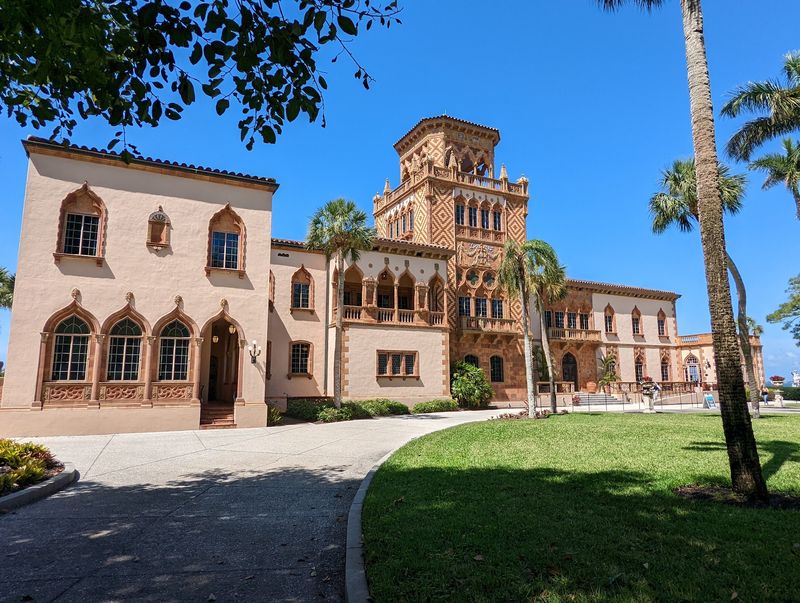
Sixty-something feet above the bay sits the part everyone whispers about, an open observation tower reached by a tight spiral staircase that fits exactly one person at a time.
Zodiac symbols ring the top of the roof up there, which I completely missed from the ground until a guide pointed them out.
Our guide warned us not to stare down at the moving water, and he was right, because the shifting surface plays tricks on your balance.
Wind whipped through the openings the afternoon I climbed, strong enough that I gripped the rail with both hands and grinned like a kid.
Tower access comes only with the full guided tour, and groups are capped small since the stairs allow single file movement.
Repairs sometimes close it, so ask when you buy tickets.
That view over rooftops, banyans, and boats stayed with me for weeks.
Stained Glass That Turns Sunlight Into Confetti
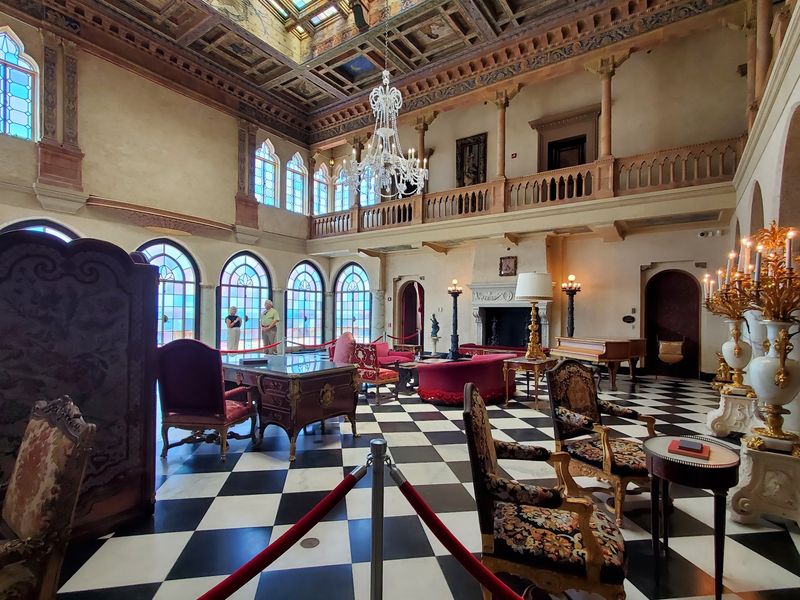
Roughly a thousand panes of colored glass fill the windows here, and when afternoon light pours through, the floors turn into a scattered mosaic of blues, ambers, and greens.
I found myself standing still in the great court just watching the colors creep across the tiles as clouds passed.
The glass came from various sources and was fitted into shapes that echo the pointed arches outside, so nothing feels randomly placed.
Guides mentioned that Mable wanted light to behave differently in each room, and you notice that shift as you move from the court toward the smaller spaces.
Photographers should aim for late morning through mid afternoon when the sun sits at a helpful angle.
Flash is unnecessary and honestly ruins the effect.
Of all the fancy materials in this house, plain old sunlight might be the best decorator on the payroll.
Ceilings Painted By Artists And Shipped In
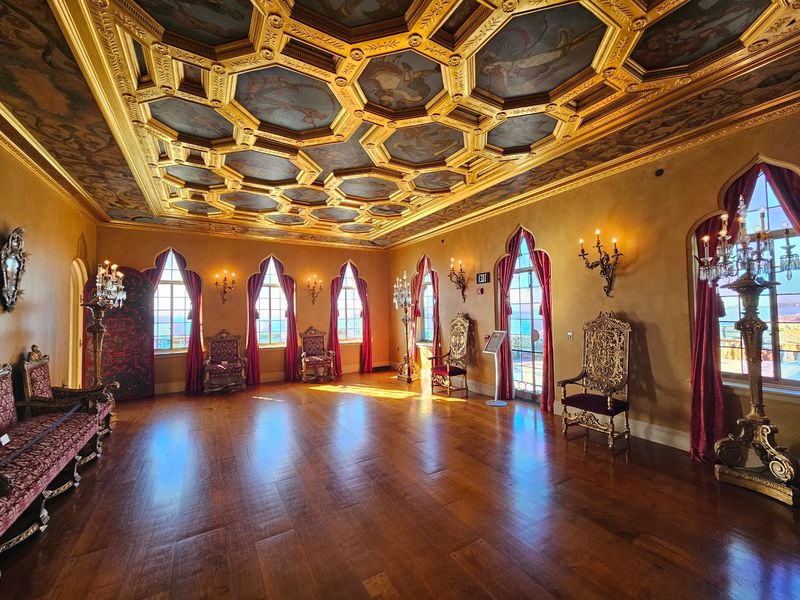
Look up almost anywhere inside and someone has painted something ambitious over your head.
Certain ceiling canvases were created by artists elsewhere, then shipped to Sarasota and installed once they arrived, which sounds like an enormous logistical headache in the 1920s.
Willy Pogany, a Hungarian artist known for theater work, handled some of the most playful pieces, including scenes with dancing figures.
I noticed people rushing past these rooms, and that felt like a mistake, because the ceilings hold as much personality as the furniture.
One painted mirror in a bathroom upstairs made me laugh out loud with how elaborate it was for such a small space.
My advice is simple, pick three rooms and give each one a slow lap before moving on.
Rushing this house is like fast forwarding through a movie’s best scenes and then wondering why the ending felt thin.
The Marble Terrace Where The Bay Comes Calling
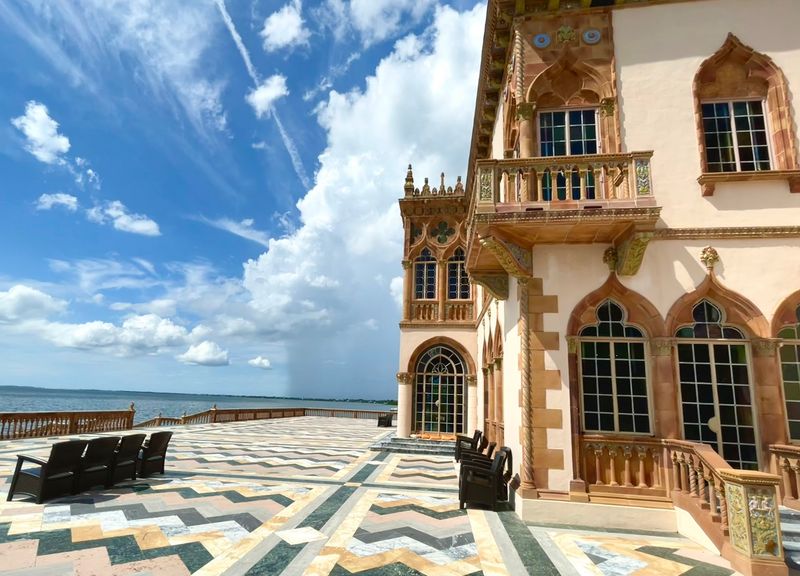
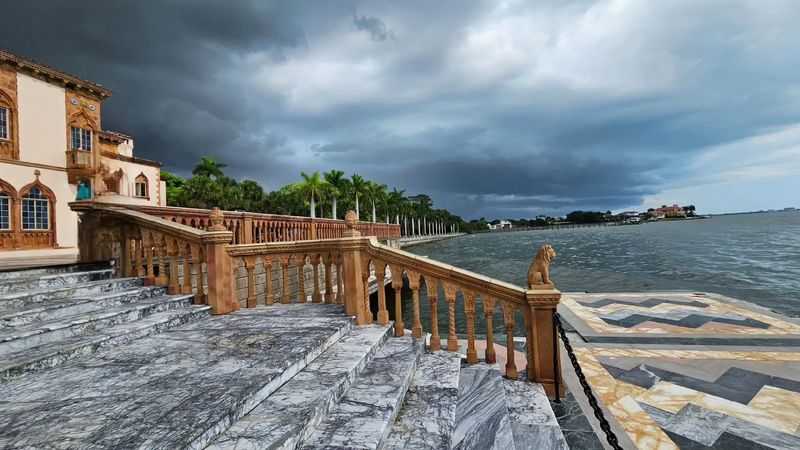
Stretching along the water sits a patterned marble terrace that once welcomed guests arriving by boat, and it remains my favorite spot on the property.
Waves lap right against the edge, sea breezes cut the Florida humidity, and Sarasota Bay opens up wide and glittering in front of you.
Even during periods when parts of the mansion were under repair, visitors reported that the terrace alone justified the trip.
I sat on the low wall for a while watching pelicans work the shallows, and no one hurried me along.
Sunset here is genuinely special, with the terra-cotta walls glowing behind you while the sky does its thing over the water.
Wear shoes with decent grip, since the marble gets slick after rain.
If the mansion is the main act, this terrace is the encore that makes you clap twice as hard.
Second Floor Suites And That Viola Marble
Upstairs is where the house gets personal, and reaching it takes a specific guided tour offered only a few times each day.
John and Mable’s bedrooms sit up there, along with bathrooms lined in original Viola marble that one visitor swore was worth the extra fee by itself.
I agree with that assessment, because the purple veined stone looks like something pulled from a museum case rather than a bathroom wall.
Rooms up here run smaller than the grand spaces below, which is exactly why groups stay limited to around eight people.
Looking down from the high windows gave me a completely new sense of the layout and the bay beyond.
Tickets for the full tour sell out, so book online ahead of your visit rather than hoping at the door.
Skipping the upper floor would be like reading only the first half of a very good story.
Mable’s Rose Garden And The Banyan Giants
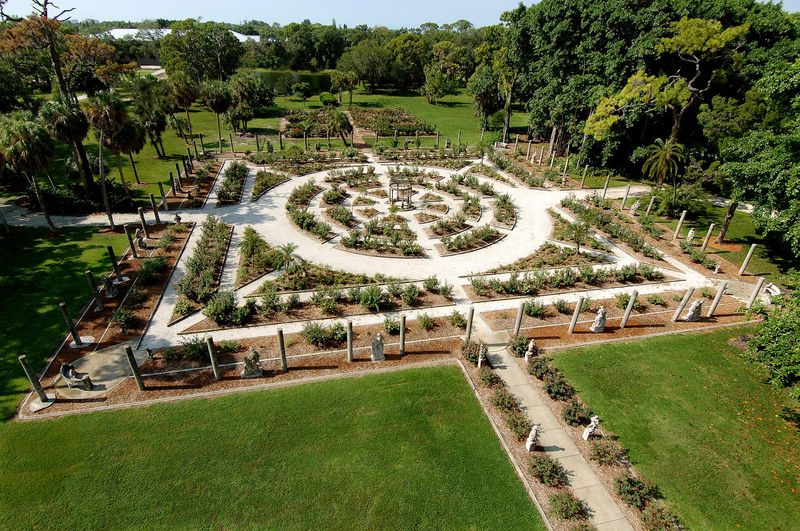
Mable planted her rose garden back in 1913, more than a decade before the mansion was finished, which tells you where her priorities sat.
Laid out in a circular pattern around a gazebo, it still blooms today and smells wonderful in the cooler months.
Beyond the roses grow enormous banyan trees, their tangled aerial roots creating shady tunnels that kids find irresistible.
I wandered the grounds before my tour time and ended up with photos I liked better than some of the interior shots.
Summer visitors should arrive right at opening, since Florida heat makes midday garden strolls a sweaty affair.
Benches sit in scattered shade, and the paths are mostly flat and easy walking.
The gardens are free to wander with general grounds admission, which makes them the most generous bargain on a property otherwise built for extravagance.
Circus Museums And Art Galleries Next Door

Your ticket covers far more than the mansion, and I nearly ran out of daylight because of it.
The Ringling campus includes an art museum stocked with old master paintings and a circus museum where a hand built miniature circus fills an entire room.
One craftsman reportedly spent about fifty years constructing that model, right down to tiny performers and wagons, and the precision borders on unbelievable.
Kids light up in there, though I watched plenty of adults grinning just as hard, myself included.
Plan four or five hours minimum if you want the mansion, both museums, and the gardens without sprinting between them.
Grab a coffee break partway through, but know that service at the on-site cafe can move slowly during busy stretches.
Treat the whole estate as a full day outing and you will leave satisfied instead of frantic.
Planning Notes, Tickets, And Restoration Updates
A few practical details will save you frustration, so here they are.
Ca’ d’Zan sits at 5401 Bay Shore Rd, Sarasota, Florida 34243, open daily from 10 AM to 5 PM, and you can call 941-359-5700 with questions before you go.
General admission gets you the first floor and grounds, while the full guided tour costs extra, around forty dollars, and adds the upper floors plus tower access when open.
Hurricane damage from recent storms means restoration work continues, so certain areas may be closed, and checking ringling.org before driving over is smart.
Download the audio tour app when you arrive, since it fills in details you would otherwise walk right past.
Morning visits beat afternoons for both crowds and heat.
Every dollar spent here helps keep this remarkable house standing, which makes the ticket price feel a lot easier to swallow.