
This Illinois Nature Preserve Hides A Boardwalk Through One Of The State’s Last Ancient Bogs
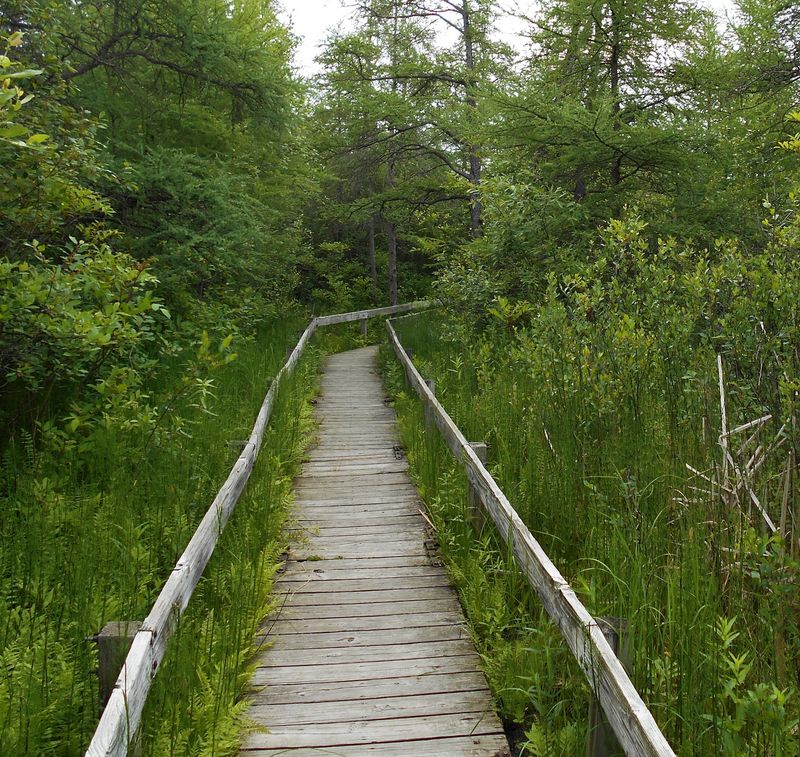
Tucked into Lake County about 56 miles northwest of downtown Chicago, Volo Bog State Natural Area protects something found nowhere else in Illinois: an open-water quaking bog, a glacially formed wetland with a living, floating mat of peat and vegetation surrounding a still, dark pool. An approximately 1,500-foot interpretive boardwalk carries visitors through the bog’s layered plant communities right to the edge of that open-water center.
The site holds carnivorous plants, rare orchids, tamarack trees, and a peat-forming process that has been building for thousands of years, all reachable on a single short walk.
Volo Bog is Illinois’s only open-water quaking bog
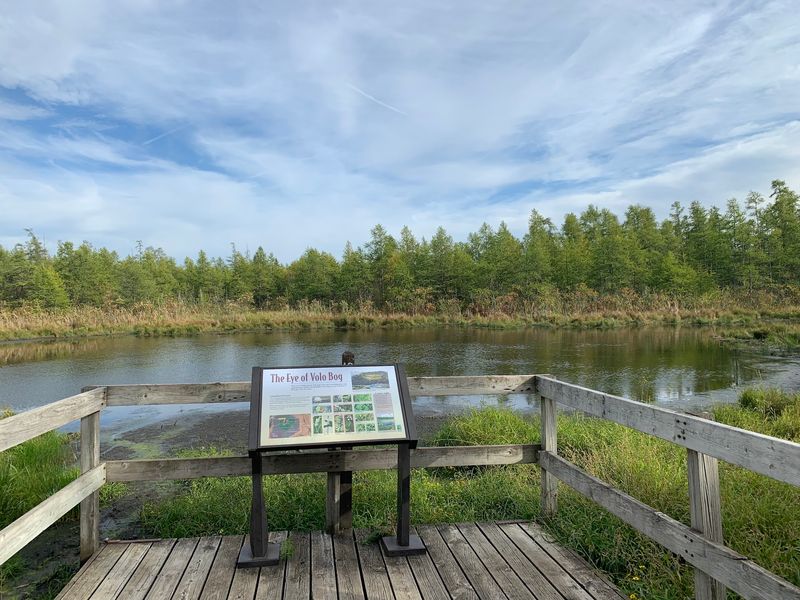
Volo Bog State Natural Area, located at 28478 Brandenburg Road in Ingleside, Lake County, holds a distinction that no other site in Illinois can claim. IDNR’s official park profile identifies it as the state’s only open-water quaking bog, meaning a bog that still has an exposed pool of water at its center, ringed by a floating, shifting mat of living and decomposing vegetation.
That combination of open water and mobile peat mat is what makes the designation specific, and it is not interchangeable with other wetland types found across northeastern Illinois.
The title that brought you here calls Volo one of Illinois’s last ancient bogs, but that framing needs a correction before you pack your bag. Volo is the state’s only remaining open-water quaking bog, which is a precise ecological category.
Illinois still supports other bog communities, peatlands, and bog nature preserves, including Wauconda Bog, Barrington Bog, Gavin Bog and Prairie Nature Preserve, and Pistakee Bog, as IDNR’s wetland communities overview makes clear. Volo’s rarity is real, but it is the rarity of its specific open-water structure, not the rarity of bogs in general.
For visitors, the main entry point into that structure is an interpretive boardwalk that loops from the trailhead through successive vegetation zones toward the open pool at the bog’s heart. The site sits roughly 56 miles northwest of downtown Chicago, making it a realistic day trip for anyone in the metro area.
Understanding what makes Volo genuinely singular helps set expectations for what the boardwalk will actually show you.
A glacial kettlehole began the bog’s transformation
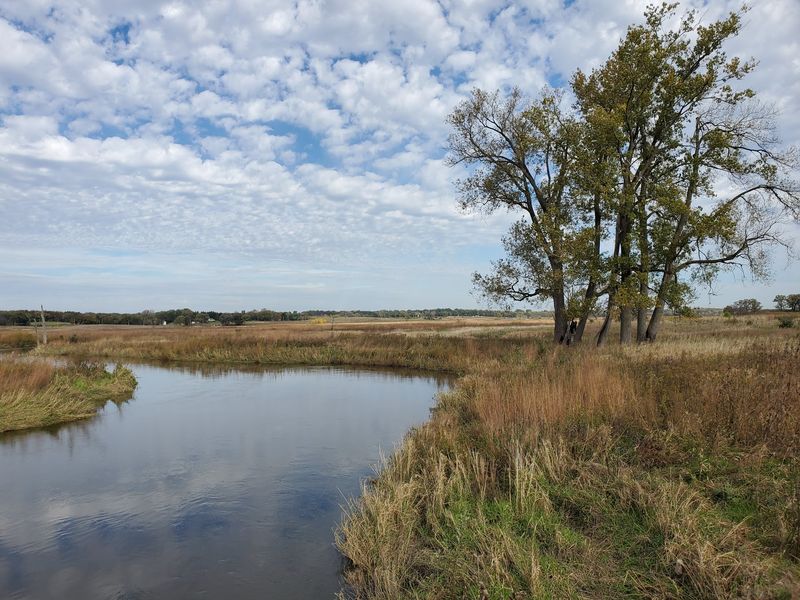
Long before the boardwalk existed, before even the tamarack trees took root, the ground here was just a hole. When the last glaciers retreated from northeastern Illinois, large blocks of ice occasionally broke off and became buried under sediment and glacial debris.
As those buried ice blocks eventually melted, they left behind bowl-shaped depressions called kettleholes. The depression at Volo filled with water and became a lake.
That lake did not stay open water forever. IDNR’s Volo Bog park page describes how the former lake began accumulating plant material approximately 6,000 years ago, which is when the peatland development process effectively started.
Calling Volo glacially formed and thousands of years old is accurate. Presenting the current ecosystem as an unchanged primeval landscape, frozen exactly as it was at the end of the Ice Age, would not be.
What made the kettlehole hospitable to peat formation was a specific set of conditions: poor drainage, cold water, high acidity, and low nutrient levels. IDNR’s peatland habitat profile explains that when plant material dies in these environments, it decomposes far more slowly than it would in a typical wetland.
That slow decomposition is the engine of peat accumulation. Over thousands of years, layers of partially decayed plant matter built up from the edges of the lake inward, gradually narrowing the open water while the peat mat thickened beneath the surface.
The result is a landscape that looks stable from the boardwalk but is geologically active in slow motion. The open pool at the center is what remains of the original kettlehole lake, steadily being claimed by vegetation from every edge.
What visitors see today is a snapshot of an ongoing process, not a finished product.
The floating mat makes the bog quake
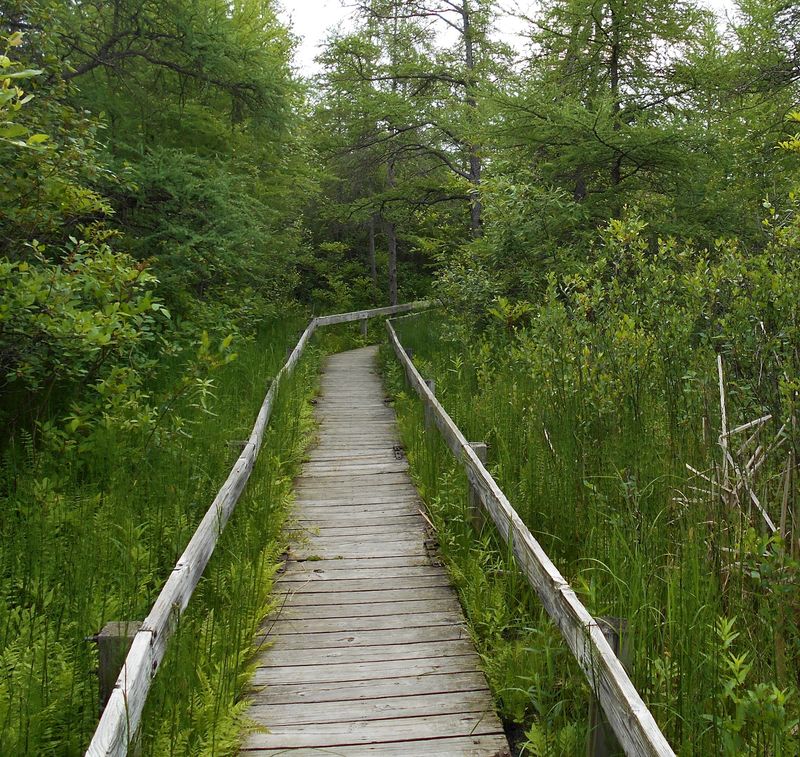
Standing on the boardwalk near the bog’s open-water center, you may notice the vegetation around the pool shifting slightly underfoot, even though you have not stepped off the planks. That movement is the quaking that gives this bog type its name.
The floating mat of sphagnum moss, cattails, sedges, and other low-growing vegetation sits on top of the water rather than rooting into solid ground. When weight or wind disturbs one part of the mat, the motion ripples outward across the surface.
IDNR’s peatland habitat profile describes how sphagnum moss is especially important in this system. The moss holds enormous amounts of water within its cells, contributing to the saturated, acidic conditions that slow decomposition.
As sphagnum and other plants die, their remains sink and compress into peat beneath the living mat. Over time, that peat layer can become thick enough to support rooted shrubs and even tamarack trees, whose shallow root systems spread horizontally rather than driving deep into solid mineral soil.
The mat is not a solid island. Its surface is uneven, waterlogged in places, and structurally dependent on the buoyancy of accumulated organic material rather than on firm ground underneath.
Some sections may be thick enough to feel almost stable, while others remain thin and actively floating. That variability is exactly why the boardwalk exists: the designated structure keeps visitors on a safe, controlled path while protecting the bog’s fragile hydrology and the rare plants rooted in the mat.
Stepping onto the mat, testing its bounce, or reaching from the boardwalk to touch the vegetation would damage organisms that have established themselves over centuries of slow accumulation. The quaking is something to observe from the planks, not something to seek out by leaving them.
Carnivorous plants share the bog with tamarack and rare species

Pitcher plants are not subtle. Their tubular, fluid-filled leaves stand upright among the moss like small, decorated traps, which is exactly what they are.
The bog’s low-nutrient, highly acidic environment means that plants relying on soil minerals for nitrogen struggle here, so some species evolved a different strategy: they catch and digest insects instead. IDNR’s peatland habitat profile identifies the purple pitcher plant as a characteristic species of Illinois peatlands, and round-leaved sundew, which traps insects on sticky, glandular hairs, is also listed among the bog community’s characteristic plants.
Whether you will see carnivorous plants on your visit depends on the season, water conditions, and where exactly you are standing along the boardwalk. Late spring through summer offers the best window for observing them in active growth, but no particular sighting is guaranteed.
Treat any encounter as a bonus rather than an expectation.
The carnivorous species share the bog with a much broader plant community. Tamarack, the only native Illinois conifer that drops its needles each fall, grows in the wetter zones near the mat’s edge.
Leatherleaf, a low evergreen shrub, forms dense thickets in the transition zone between open marsh and tamarack forest. Winterberry, bog buckbean, various sedges, and multiple orchid species also occur at the site.
Several of those species are rare, threatened, or endangered in Illinois, which is a central reason for the site’s protected status. Illinois Natural Areas Inventory standards and guidelines document the community composition and conservation criteria for Illinois bog communities, including the species assemblages that give sites like Volo their ecological significance.
The boardwalk puts you close enough to observe this community without putting pressure on the plants themselves.
The boardwalk traces the bog’s changing zones
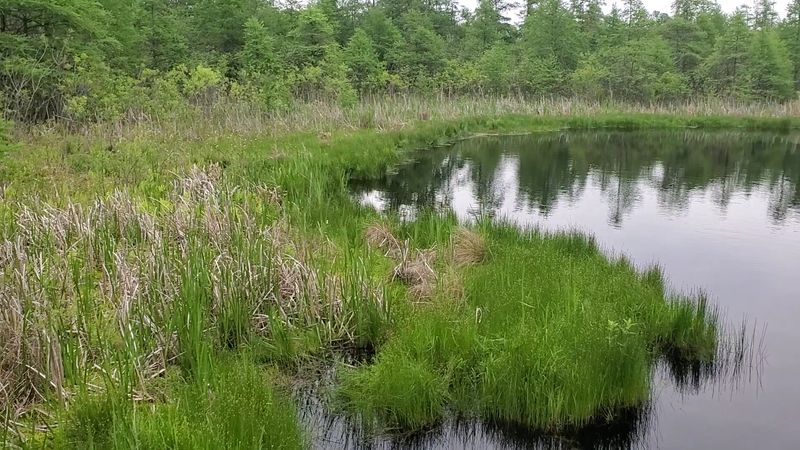
Walking the interpretive boardwalk at Volo Bog is less like hiking and more like reading a slow, living timeline. The path begins in upland areas near the trailhead and moves progressively inward through the bog’s succession zones, each one representing a different stage in the long process of a lake becoming a peatland.
Early sections pass through marsh vegetation: cattails, sedges, and open wetland plants that colonize the outermost edges of the former lake basin.
Moving deeper, the boardwalk enters the shrub zone, where leatherleaf and other low woody plants take over from the open marsh. Then come the tamaracks, their feathery needles filtering light differently depending on the season.
In autumn, when the tamaracks turn gold before dropping their needles, the transition from marsh to bog forest is especially visible. IDNR’s Volo Bog park page describes the boardwalk as leading visitors through these succession zones toward the open-water center, or “eye,” of the bog, where the original kettlehole lake is still visible as a dark, still pool.
The full loop is approximately 1,500 feet, which is short by most hiking standards. For many visitors, the walk takes 30 to 45 minutes at a relaxed pace, longer if you stop to read interpretive signs or look for carnivorous plants near the mat’s edge.
IDNR currently reports that temporary repairs allow visitors to complete the full loop to the open-water center, but boardwalk conditions can change with weather, seasonal flooding, or infrastructure needs.
Verify the current status of the loop before your visit by checking the official park page or calling ahead. Relying on access conditions described in any article, including this one, without confirming them directly could mean arriving to find a section closed.
The boardwalk is the designated route for a reason: the floating soils and fragile habitat alongside it are not a casual detour.
Short does not mean universally accessible
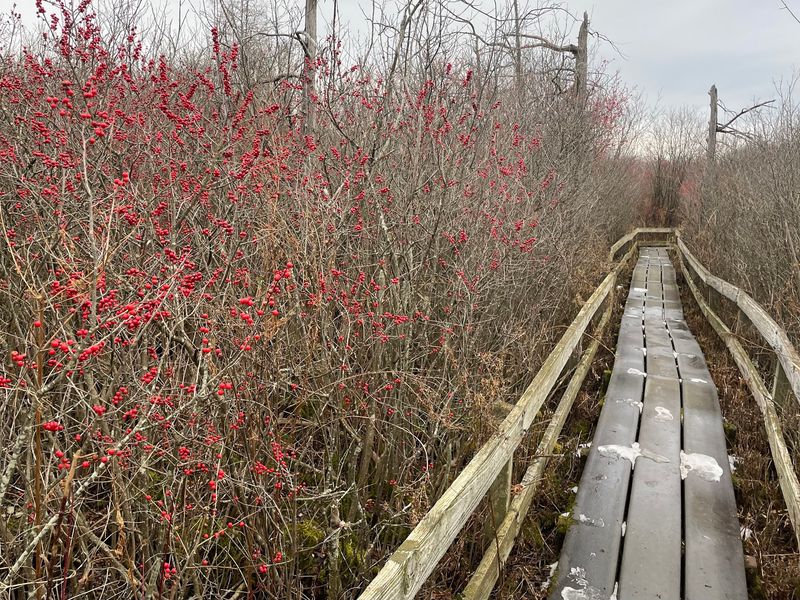
A 1,500-foot loop sounds manageable for almost anyone, and for many visitors it is. The route is short, mostly flat, and does not require any special equipment or fitness level beyond the ability to walk on an uneven wooden surface.
That said, IDNR’s own accessibility information makes several qualifications that matter for trip planning.
IDNR’s accessibility page for Volo Bog reports that the interpretive boardwalk has varied surfaces, a slight incline in sections, and insufficient width for a standard wheelchair. The boardwalk is not paved, and the planking can shift or become slippery with moisture.
Visitors using mobility aids should contact the site directly before arriving to get current information about conditions and whether any sections present particular challenges.
The interpretive boardwalk is also separate from the site’s longer hiking trails, which wind through upland and wetland areas surrounding the bog. Those trails offer a different experience and cover more ground, but they involve natural surfaces that may be muddy, uneven, or overgrown depending on the season.
The official park page lists trail options and can help visitors choose a route that fits their mobility and time.
One additional restriction applies to the interpretive boardwalk specifically. IDNR’s accessibility documentation states that service animals are welcome at the Volo Bog site, but not on the interpretive boardwalk itself.
The restriction exists because of the presence of endangered species and the bog’s fragile hydrology. Ordinary pets are not permitted on the boardwalk under any circumstances.
Visitors traveling with service animals should contact the site in advance to understand the current policy and plan accordingly.
Plan a responsible visit before you arrive
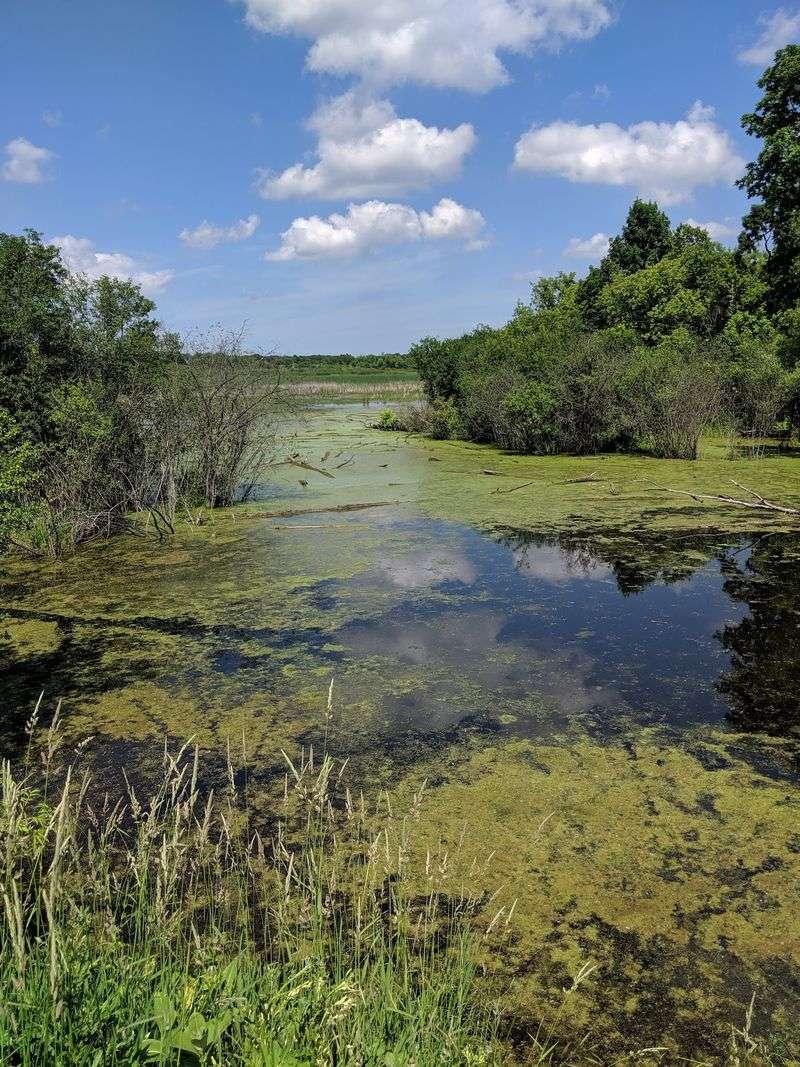
Volo Bog State Natural Area is located at 28478 Brandenburg Road, Ingleside, Illinois 60041, in Lake County. IDNR’s park page lists the site as open 363 days a year, with gates opening at 8 a.m.
The two annual closure days are Christmas and New Year’s Day. Closing times vary by season, and IDNR instructs visitors to return to the parking lot at least 30 minutes before sunset and to check the posted closing time on arrival.
Do not rely on a fixed closing hour from memory or a previous visit.
The visitor center is listed as open Wednesday through Sunday, 9 a.m. to 3 p.m., but hours depend on staff and volunteer availability. Before making the drive, call 815-344-1294 to confirm the center is open and to ask about current boardwalk conditions.
IDNR’s activities page for Volo Bog lists guided one-hour bog tours on most Saturdays and Sundays at 11 a.m. and 1 p.m., but tour schedules can change with staffing or seasonal programming. Confirm tour times directly before planning your visit around them.
For what to wear and bring: comfortable walking shoes with closed toes are a better choice than sandals on the varied boardwalk surface. Insect repellent and long-sleeved clothing help on the surrounding trails, especially in late spring and summer when mosquitoes and ticks are active.
IDNR’s general hiking guidance recommends tick checks after any trail visit, which applies here as well.
Once on the boardwalk, stay on it. Illinois Administrative Code rules governing nature preserves prohibit damaging, removing, or collecting natural objects, and prohibit killing, harassing, or disturbing wildlife without authorization.
Do not reach over the railings to touch plants, do not attempt to step onto the floating mat, and do not pick flowers or collect moss, seeds, or any other material from the site. Leave everything exactly as you found it.
A careful walk shows why Volo Bog matters
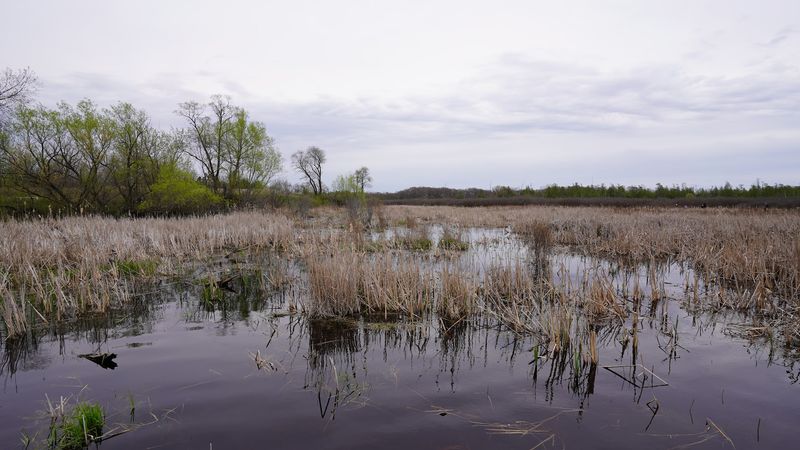
Every element of the Volo Bog experience connects back to the same glacial accident: a buried ice block that melted and left a hole, which filled with water, which slowly gave way to a floating mat of moss and peat, which now supports carnivorous plants, rare orchids, and trees rooted in material that is still technically floating. The boardwalk exists because that chain of events produced something irreplaceable and fragile in equal measure.
Volo’s distinction is specific. IDNR identifies it as Illinois’s only open-water quaking bog, not the state’s only bog or peatland.
Other Illinois peatland communities survive in various forms, each with its own ecological character. What Volo offers that no other Illinois site does is that still, dark pool at the center, visible from the end of a short boardwalk, surrounded by a living mat that has been slowly advancing toward it for roughly 6,000 years.
Go prepared, stay on the planks, and keep your expectations realistic about what you might see on a given day. The bog does not perform on a schedule, but a careful walk through its succession zones is a genuinely rare experience for anyone willing to make the trip.