
This Two-Mile Florida Boardwalk Trail Winds Through A Hidden Bird Sanctuary Most Drivers Miss
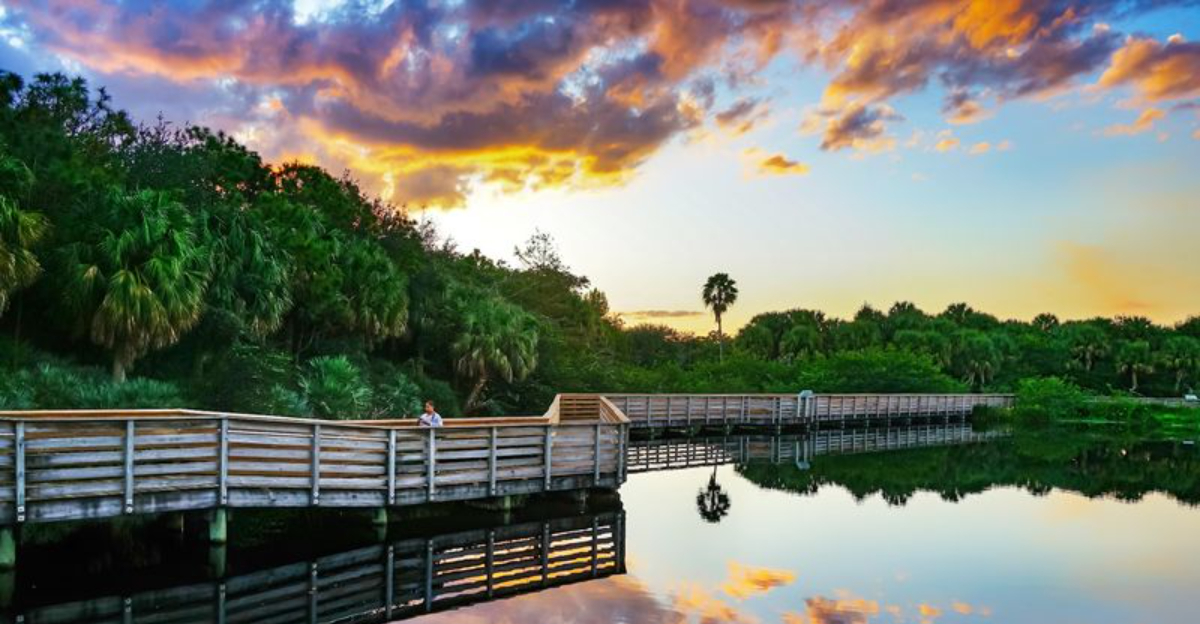
Florida rewards drivers who look beyond the traffic light, because behind one sign sits a wildlife show with free admission and no respect for your schedule.
A boardwalk rises above marsh, cypress islands, and ponds painted green with duckweed. Wood storks patrol the shallows, herons land close enough to interrupt conversations, and iguanas pose as if they arranged the scenery.
Alligators handle crowd control by doing nothing.
The surprise is how the road disappears. Within minutes, engines fade behind bird calls, wings beat across the water, and the coffee in your hand goes cold because something interesting keeps happening.
While many Florida attractions require tickets, reservations, and budgeting, this wetland asks only that you arrive, walk slowly, and pay attention.
Bring binoculars, patience, and time. In this corner of Florida, a quick stroll has a habit of becoming an entire morning, and missing your plans feels like the right decision.
A Recycled Water Project That Became A Bird Metropolis
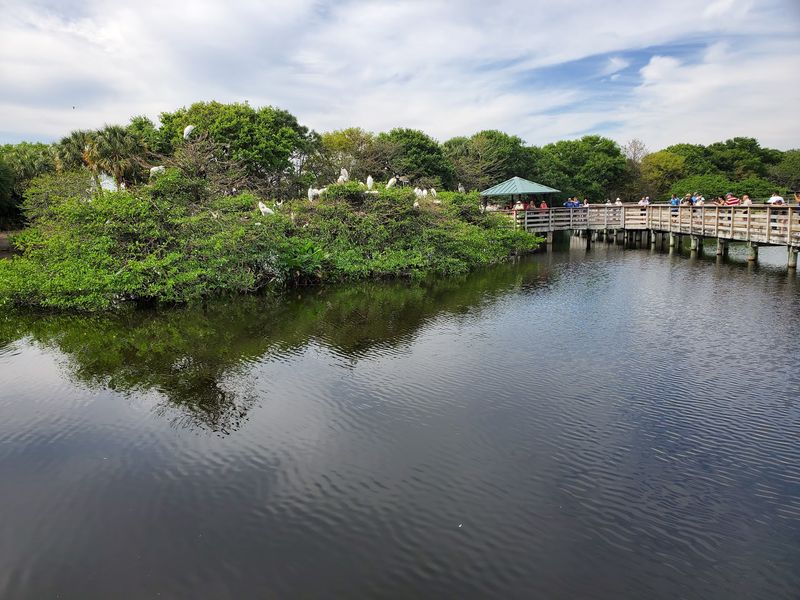
Here is the part that surprises almost everyone I bring along: these marshes were built by people, not carved out by nature.
Palm Beach County Water Utilities turned about fifty acres of unused land beside a water treatment facility into a series of shallow ponds and islands, and highly treated water flows through the plants daily.
The wetland filters that water naturally while the birds treat the whole setup like prime real estate.
I remember standing at the railing thinking how strange and wonderful it is that a utility project became one of the most beloved wildlife stops in South Florida.
The name itself comes from a Seminole phrase meaning created waters, which fits perfectly.
Some visitors get hung up on the fact that it is engineered rather than wild, but the storks, gallinules, and alligators clearly never read the paperwork.
Decades of growth have blurred the line completely, with cypress trees now tall enough to hold dozens of nests each spring.
Nature took the invitation and moved in without paying rent.
Boardwalk Math: Shorter Than the Rumors, Longer Than You Think
Ask ten people how long the loop is and you will get ten answers, so let me clear it up.
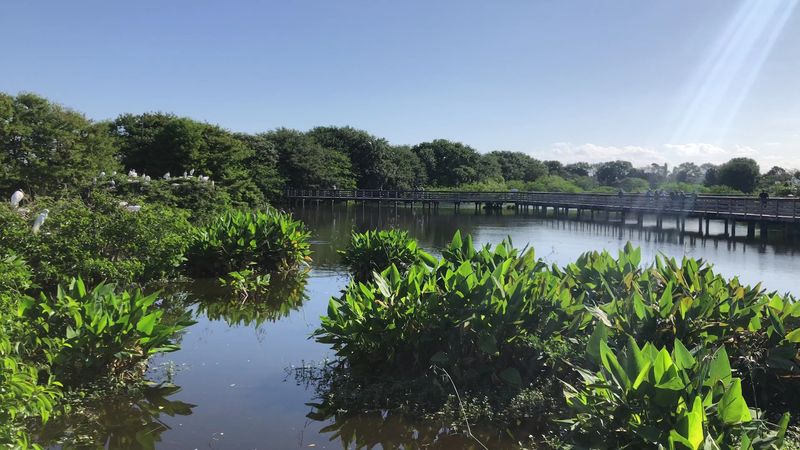
The elevated boardwalk measures roughly three quarters of a mile as a loop, and most walkers cover closer to two miles once they double back for a second look at something spectacular.
That happens more often than you would guess.
My first visit was supposed to take thirty minutes and stretched past two hours because a purple gallinule kept posing.
The surface is flat wood the whole way, with no stairs, no roots, and no mud, which makes it genuinely welcoming for wheelchairs, walkers, canes, and strollers.
Benches and a few shaded pavilions sit at smart intervals so you can rest your feet and let the wildlife come to you.
Plan on an hour minimum and bring water, since the loop is deceptively exposed to the sun.
Pacing yourself here pays better dividends than power walking ever will.
Nesting Season Turns the Cypress Trees Into a Nursery
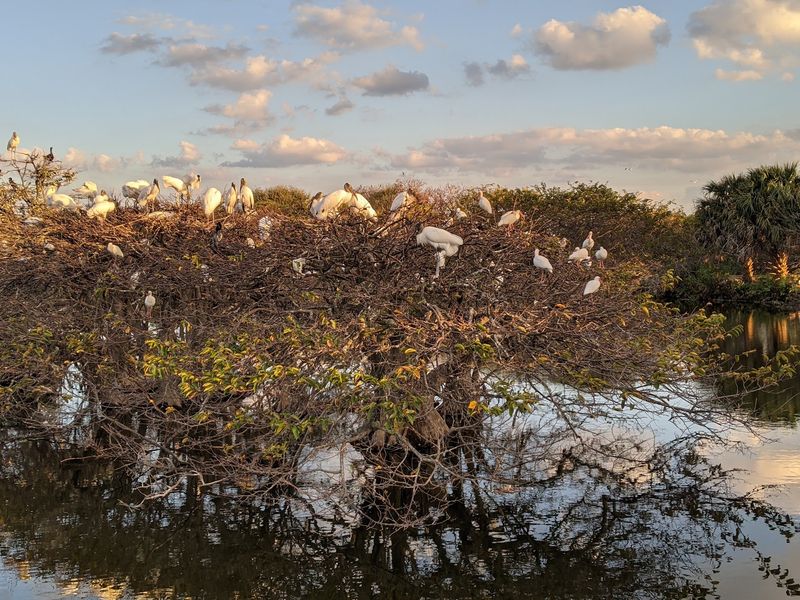
February through April is when this place stops being a nice walk and becomes something close to unforgettable.
Wood storks, great egrets, herons, and anhingas build nests in the cypress islands just yards from the railing, and the trees fill with white shapes that look like ornaments hung across every branch.
Chicks squawk nonstop for food while parents shuttle back and forth.
I watched an adult stork feed three fuzzy babies while a photographer beside me whispered that he had driven two hours for exactly that moment.
April tends to be peak hatchling viewing, though March offers plenty of active nests too.
Come outside those months and you will still see abundant wildlife, just fewer nurseries.
The proximity is what stuns people, because nothing separates you from the action except a wooden rail and a few feet of air.
Keep your voice low, resist the urge to point loudly, and the birds will carry on completely unbothered by your presence.
Alligators Sunning Themselves Within Easy Camera Range
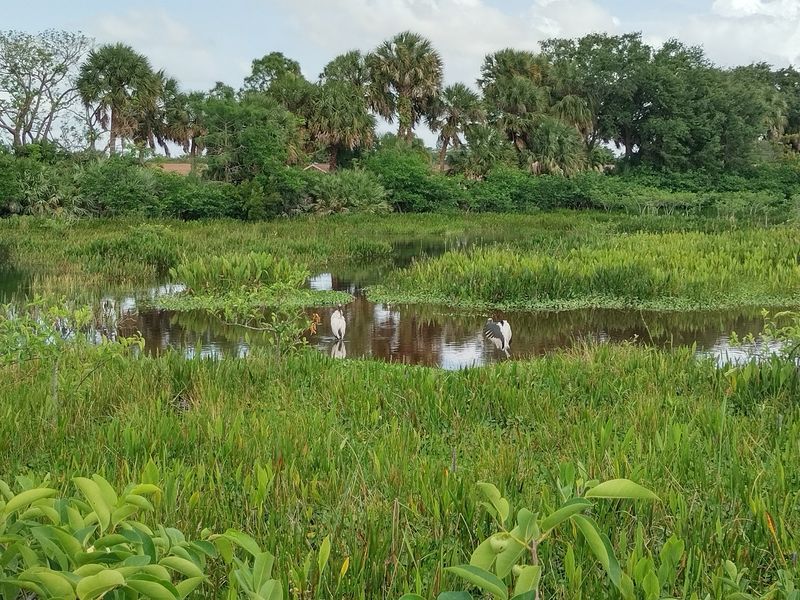
Somebody in every group asks the same question within five minutes of arriving, and yes, the alligators are real.
Regulars typically spot three or more on a good walk, stretched out on banks or floating with only their eyes and snouts above the duckweed.
They are mentioned in reviews more than any other feature here.
My favorite sighting was a large one parked directly beneath a section of boardwalk, entirely unimpressed by the crowd of phones above it.
The elevated walkway keeps everyone at a comfortable distance, which is exactly why families feel relaxed here.
Never lean over, never feed anything, and keep small children within arm’s reach out of simple good sense.
Cooler mornings often produce the best sightings because the animals climb out to warm up in the sun.
Turtles, including soft shells and cooters, share the same banks, so scan slowly along the edges rather than staring at open water.
Patience turns a lumpy log into a very memorable photograph.
A Bird List That Reads Like A Field Guide Index
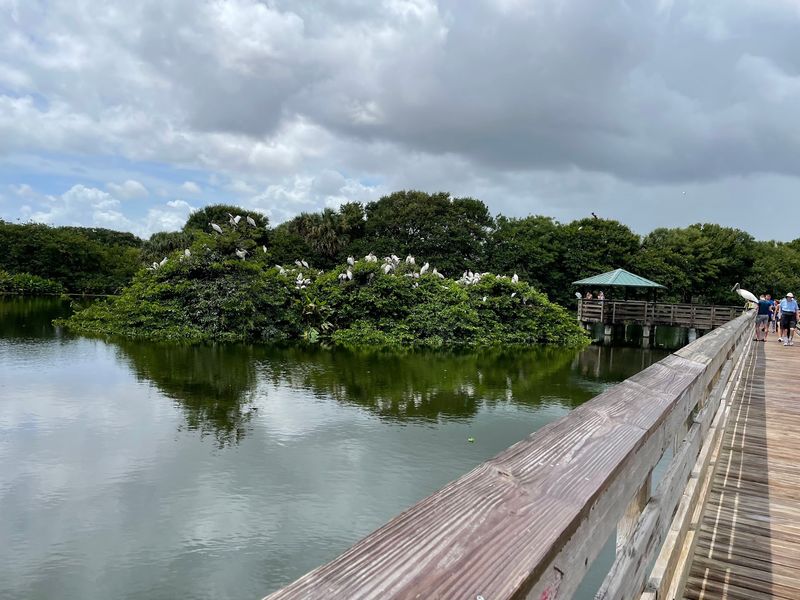
One visitor logged twenty five species in a single morning and was convinced she had missed a few.
Great blue herons, tricolored herons, little blue herons, black crowned night herons, snowy egrets, cattle egrets, white and glossy ibis, anhingas, double crested cormorants, purple gallinules, common gallinules, black bellied whistling ducks, mottled ducks, black necked stilts, ospreys, belted kingfishers, and roseate spoonbills all show up on regular rotation.
There is even a dedicated purple martin housing complex near the loop.
I keep a notes app running while I walk because I stopped trusting my memory after visit number two.
Signage about individual species is limited, so a bird identification app or a quick photo search fills the gaps nicely.
Winter months bring migrating visitors that swell the numbers even further.
Binoculars help, though honestly plenty of these birds wander close enough that you will barely need them.
Serious birders should block out a full morning, because rushing this loop is a genuine waste of feathers.
Free Entry With A Parking Lot That Fills Fast
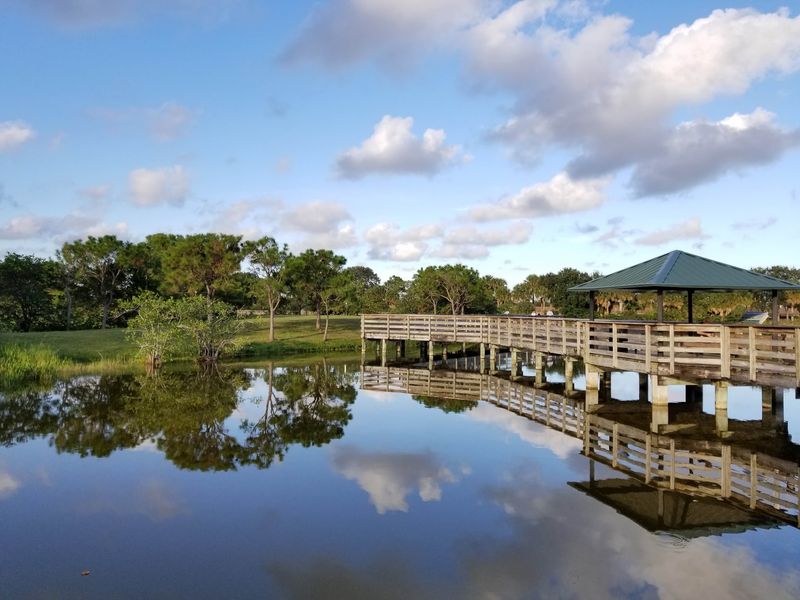
Not a single dollar changes hands at the entrance, which still amazes me for a place this good.
The catch is parking, because the lot is small and weekend mornings turn it into a patient waiting game with an attendant directing traffic.
I have circled for fifteen minutes on a Saturday and walked in five minutes flat on a Tuesday.
Gates open at 6 AM every day and close at 7 PM, so early arrival solves nearly every problem at once.
You get better light, cooler air, more active wildlife, and an actual parking space.
Weekday visits are noticeably calmer if your schedule allows the flexibility.
Holiday weekends draw crowds, and the day after Thanksgiving apparently ranks among the busiest of the year.
Even at capacity the boardwalk stays surprisingly quiet, since people naturally lower their voices around nesting birds.
Arriving before the sun clears the treetops remains the single best decision you can make here.
Iguanas Everywhere You Look, Whether You Expected Them Or Not
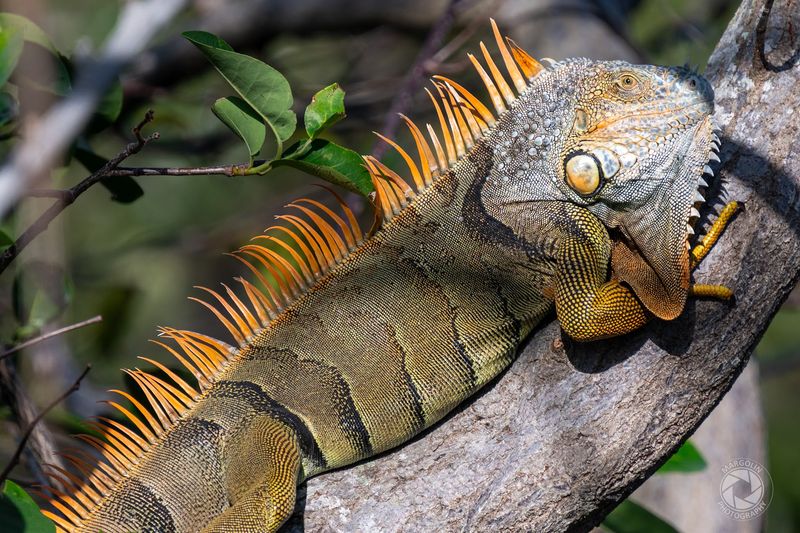
Green iguanas have become such a fixture that visitors mention them almost as often as the alligators.
You will find them draped across railings, perched on branches, and sprinting through the reeds with surprising speed for animals that look permanently half asleep.
Some grow large enough to make first timers do a genuine double take.
I once counted eleven along a single stretch of boardwalk and gave up trying to photograph them all.
They are not native to Florida, which is why the county occasionally manages their numbers, but plenty remain visible on any given day.
Marsh rabbits also hop along the edges, adding a fuzzy contrast to all those scales.
Snakes turn up now and then, usually minding their own business in the vegetation well below the walkway.
Kids tend to love the reptile roll call more than the rare birds, so let them lead the spotting.
Variety is genuinely the currency of this little wetland.
Bring Shade and Sunscreen Because Cover Is Scarce
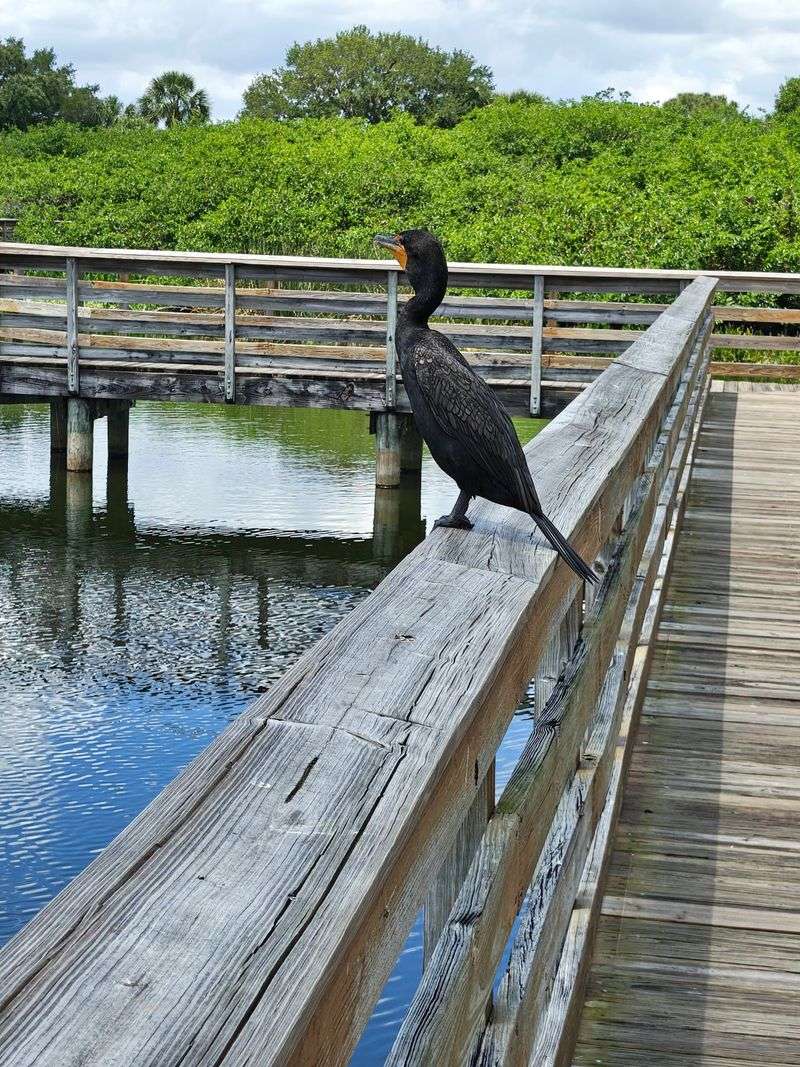
Learn from my sunburn: the boardwalk crosses open marsh with only a handful of covered spots along the way.
On a bright Florida afternoon that exposure adds up quickly, and there is no shop on site to rescue you with a cold drink.
Water bottles, hats, sunglasses, and sunscreen belong in the plan.
February visits can feel wonderfully cool, while summer midday walks test your commitment to bird photography.
Early morning and late afternoon deliver softer light and gentler temperatures, which photographers already know.
A few pavilions and benches sit under trees where a breeze usually finds you, and those are worth pausing at.
Food is not permitted on the boardwalk, so eat before you arrive rather than packing a picnic.
Restroom availability has been inconsistent according to different visitors, so plan a stop before you park.
A little preparation keeps your attention on the nests instead of on your slowly roasting shoulders.
Rules Worth Knowing Before You Reach The Gate
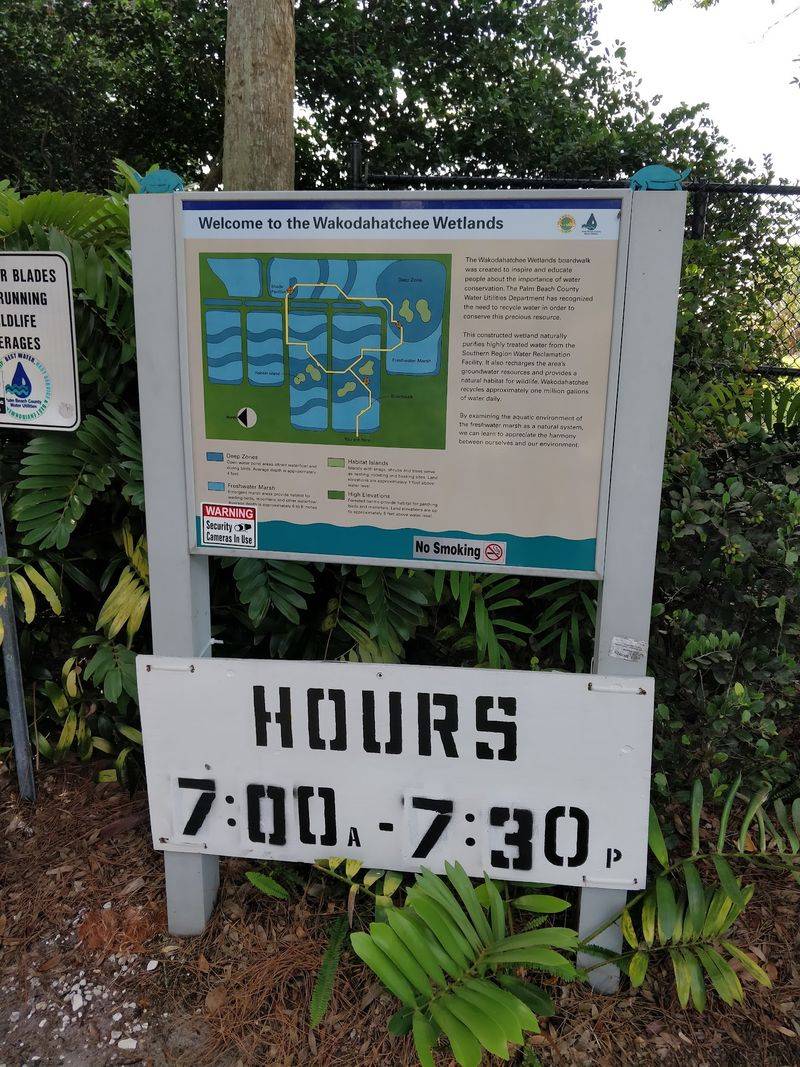
A friendly heads up saves disappointment at the entrance, because two common items are not allowed here.
Pets stay home, and drones are prohibited, both for the very sensible reason that nesting colonies panic easily.
Cameras, however, are practically encouraged, and you will see tripods everywhere during spring.
I watched someone turn back to their car with a leashed dog and felt genuinely bad for them, so consider this your warning.
Feeding wildlife is off limits, as is leaving the boardwalk at any point.
Staying on the wood is what keeps the animals so relaxed and so close, which benefits everyone holding a lens.
An information kiosk near the start shares details about the vegetation and creatures you will meet.
Trash options can be limited, so plan to carry out whatever you bring in.
Respecting a few simple guidelines is the small price of admission to a very generous wildlife show.
Pair It With Green Cay For A Full Wetland Morning
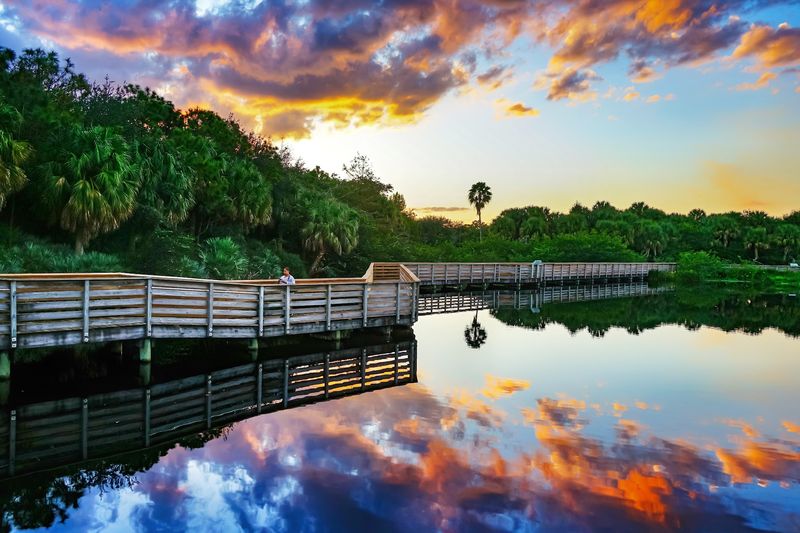
Locals will tell you the smart move is visiting two wetlands in one outing, and they are right.
Green Cay Nature Center sits a short drive away in Boynton Beach with a longer boardwalk and a full nature center, while Wakodahatchee offers tighter, closer views of more birds packed into a smaller footprint.
Doing both makes for a genuinely excellent half day.
I usually start here at opening for the nesting activity, then head to Green Cay once the sun climbs higher.
Delray Beach itself is minutes away, so lunch and the ocean are easy add ons afterward.
Repeat visits reward you differently depending on the season, water levels, and time of day.
Late afternoon light makes the white birds glow in a way that morning simply cannot match.
Call the park at 561-493-6000 if you want current conditions before driving over.
One loop here has a habit of turning first timers into regulars very quickly.