
This Illinois Preserve Hides A Prairie Where A Reintroduced Bison Herd Roams Near Franklin Grove
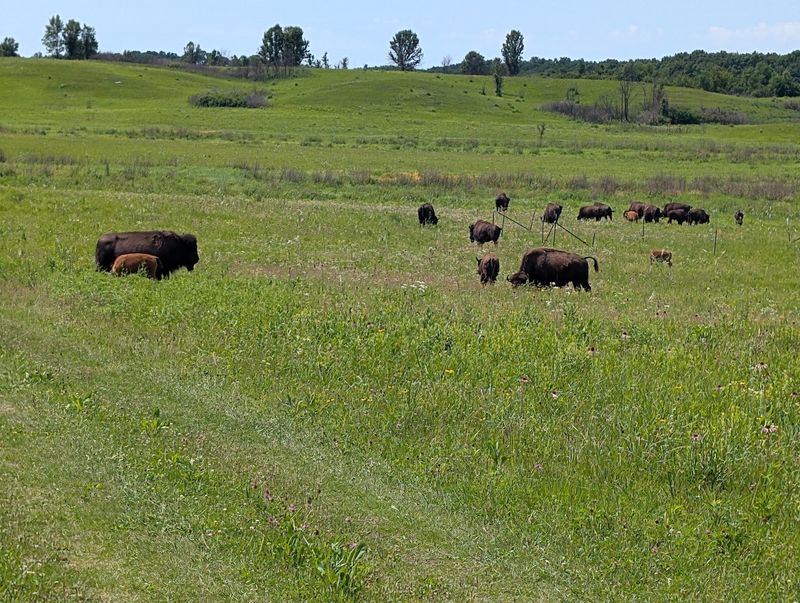
Somewhere in northern Illinois, a herd of American bison grazes across a sprawling tallgrass prairie that most people have never heard of. The place is Nachusa Grasslands, a Nature Conservancy preserve near Franklin Grove, and it offers something genuinely rare: a realistic chance to watch bison move through a restored prairie landscape without traveling to the Great Plains.
The catch is that Nachusa is not a state park, the animals are a managed conservation herd rather than an unmanaged wild population, and a sighting is never guaranteed. Understanding what Nachusa actually is makes the visit far more rewarding than any misleading headline could.
Nachusa Grasslands Is the Preserve Behind the Bison Story
Before packing binoculars and heading out, it helps to know exactly what Nachusa Grasslands is and is not. Located about three miles northwest of Franklin Grove, across Lee and Ogle counties in northern Illinois, Nachusa is managed by The Nature Conservancy.
Portions of the preserve carry Illinois Nature Preserve and Land and Water Reserve designations through the Illinois Department of Natural Resources, which means it operates under a different framework than a state park.
Calling Nachusa a state park is a common mistake, partly because Franklin Creek State Park appears in TNC’s driving directions as a nearby landmark. The two are separate places with separate management structures, and Nachusa’s rules, access points, and conservation mission reflect its status as a privately managed preserve with state conservation recognition.
In terms of size, TNC describes more than 4,000 acres of habitat at Nachusa, with its preserve page listing 4,112 acres of habitat plus an additional 690 acres protected through conservation easements. Illinois DNR separately describes the larger functionally restored ecosystem as more than 3,500 acres.
Each figure measures something slightly different, so the preserve’s scale depends on which category you count.
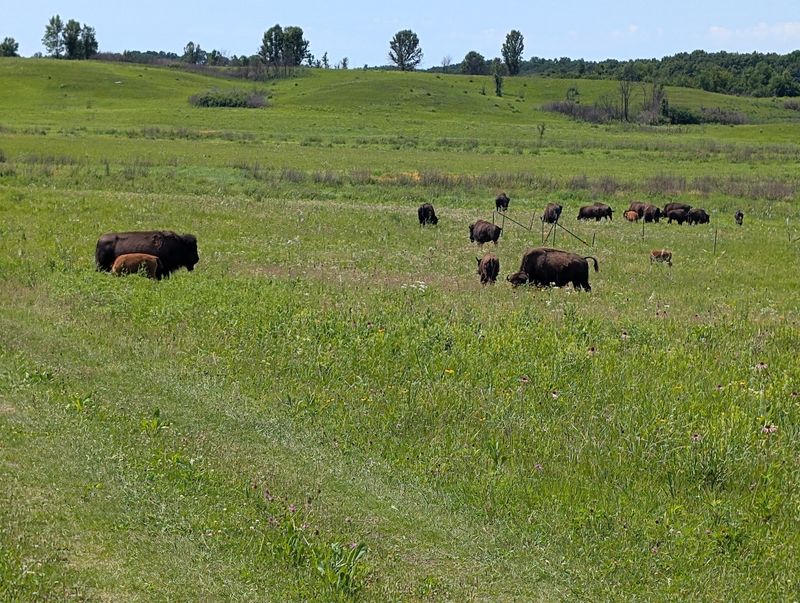
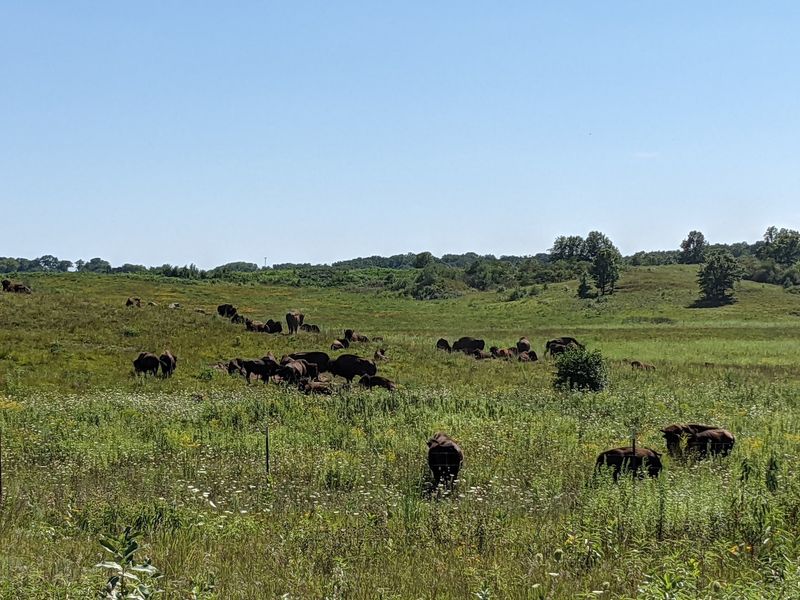
American bison, often called buffalo in everyday conversation though that is common regional usage rather than the scientific name, do roam Nachusa. Visitors can potentially observe them from the visitor-center overlook or from public roads.
However, the animals are not guaranteed to be visible, access to the fenced bison units is not permitted, and the experience is closer to hopeful wildlife observation than a scripted wildlife encounter.
A Managed Restoration Landscape Extends Beyond the Bison Units
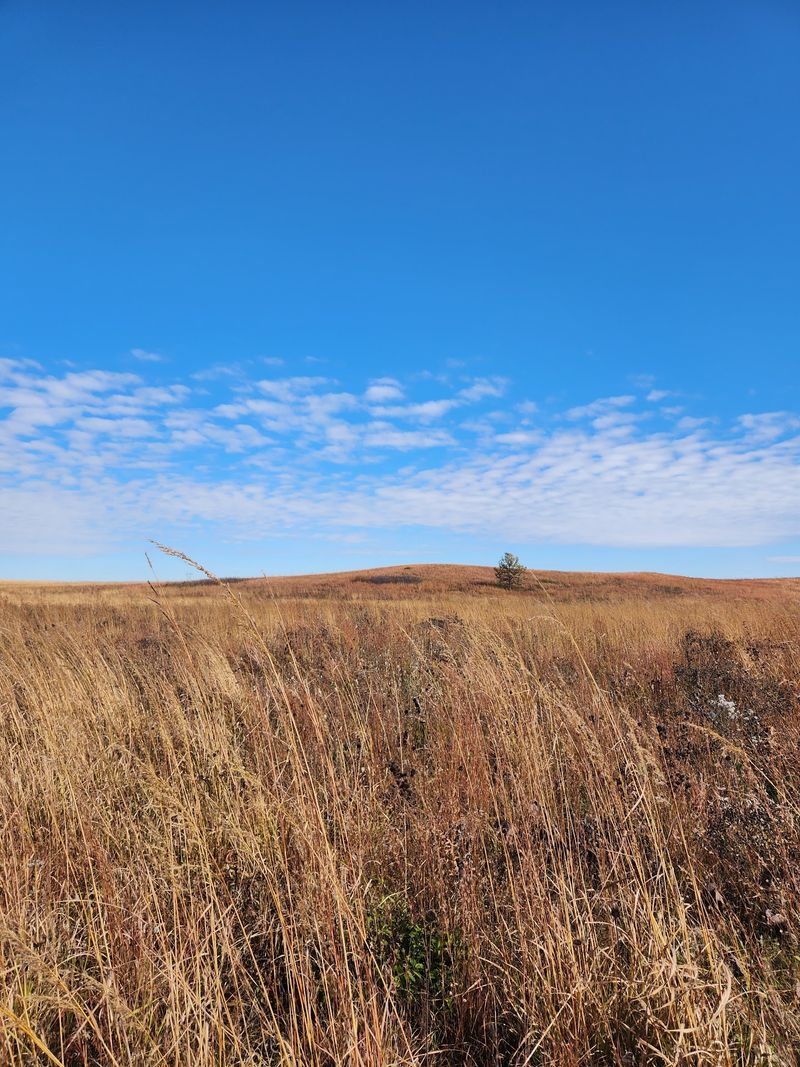
Walking through Nachusa on a summer morning, you move through a mosaic of habitats that took decades of active work to assemble. The preserve contains restored and remnant tallgrass prairie, oak savanna, wetlands, sedge meadows, and upland areas that together support a wide range of plant and animal communities.
That variety is not accidental, and it did not emerge on its own.
Nachusa is a managed restoration landscape, which means staff and volunteers intervene continuously to keep the ecosystem functioning. Prescribed fire is one of the central tools, used to suppress woody encroachment and recycle nutrients across the prairie.
Restoration plantings introduce native grasses and forbs where degraded ground needs rebuilding, while invasive-species control keeps aggressive non-native plants from crowding out the species that belong there.
Hydrologic work is another layer of management that often goes unnoticed by visitors. Restoring wetland hydrology, reestablishing seasonal water flow, and reducing drainage impacts all contribute to the habitat quality that makes Nachusa viable for the range of species it supports.
TNC’s preserve description identifies fire and grazing as major ecological processes at Nachusa, while also noting the broader restoration work that underpins them.
For visitors, the practical meaning of all that management is a landscape that feels expansive and genuinely wild in places, even though humans shaped much of what you see. Bison are one visible part of a larger conservation program that includes plants, birds, insects, and soil communities.
Spotting a bobolink over a grassy meadow or a chorus of frogs near a wetland edge can be just as memorable as catching a glimpse of the herd across a distant hillside.
The Herd Returned Through Reintroduction, Not Continuous Survival
Bison were a familiar presence across Illinois long before European settlement reshaped the landscape. The Illinois State Museum documents that American bison once roamed the state in significant numbers, grazing the same tallgrass prairies that covered much of northern and central Illinois.
By about 1830, they had disappeared from the wild in the state, pushed out by a combination of hunting pressure, habitat loss, and agricultural conversion.
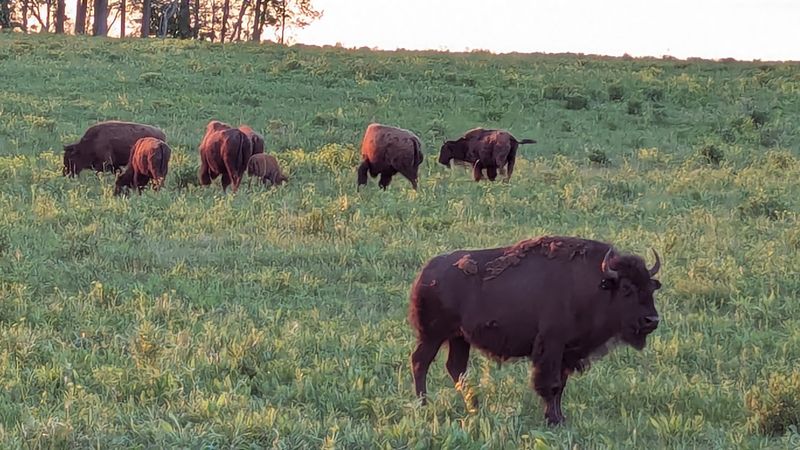
The animals at Nachusa today are not survivors of that original population. They are a modern conservation herd, deliberately reintroduced as part of a planned ecological restoration.
Friends of Nachusa Grasslands reports that 30 bison were introduced in October 2014, with animals sourced from Nature Conservancy preserves in South Dakota, Iowa, and Missouri. Those founding animals trace their genetics back to Wind Cave National Park in South Dakota, one of the historically important conservation herds.
Describing the herd as roaming exactly as bison did 200 years ago overstates what reintroduction can accomplish. Modern Nachusa is a managed restoration landscape, not a pre-settlement prairie frozen in time.
The comparison that holds up is ecological rather than literal: bison are once again performing some of the grazing functions they once provided across Illinois grasslands, within a landscape designed to support those functions.
The distinction matters because it shapes realistic expectations. Visitors are not stepping into an unaltered past.
They are observing a carefully managed conservation effort that uses historical ecology as a guide, reconnecting a landscape with a large native herbivore that genuinely belongs there, even if the path back was planned and deliberate rather than natural.
What Visitors Can Actually See at Nachusa
Planning a trip to Nachusa works best when you build your expectations around what the preserve actually offers rather than what the most dramatic headlines suggest. The preserve is open from sunrise to sunset, and Friends of Nachusa’s hours and parking page confirms that pets are not allowed on the preserve.
That rule applies across all areas, so leave the dog at home.
Five designated hiking units are open to the public, and they cover enough ground to give you a genuine sense of the prairie, savanna, and wetland habitats Nachusa contains. The fenced North and South Bison Units are not among them.
Hikers may not enter those areas, and the boundary is intentional: the units exist to give the herd space to behave with minimal human disturbance.
TNC’s preserve page notes that the visitor-center overlook and public roads offer the best viewing opportunities for the bison herd. Binoculars are strongly recommended, because the animals may be grazing far from any road or overlook.
Friends of Nachusa explicitly warns that bison are often not visible from the visitor center or roadsides, a detail that no responsible trip plan should ignore.
Herd size varies by season. TNC’s bison FAQ puts the herd at approximately 100 animals, while Friends of Nachusa reports summer estimates of 120 to 130 and winter roundup counts closer to 90 to 100, with 20 to 30 calves born annually.
Even with 100 or more animals roaming the landscape, they can spread across roughly 1,500 acres and remain completely out of sight. Treat a bison sighting as a genuine reward rather than a scheduled attraction, and the visit holds up no matter what the animals decide to do that day.
Keep at Least 100 Feet Between You and the Bison
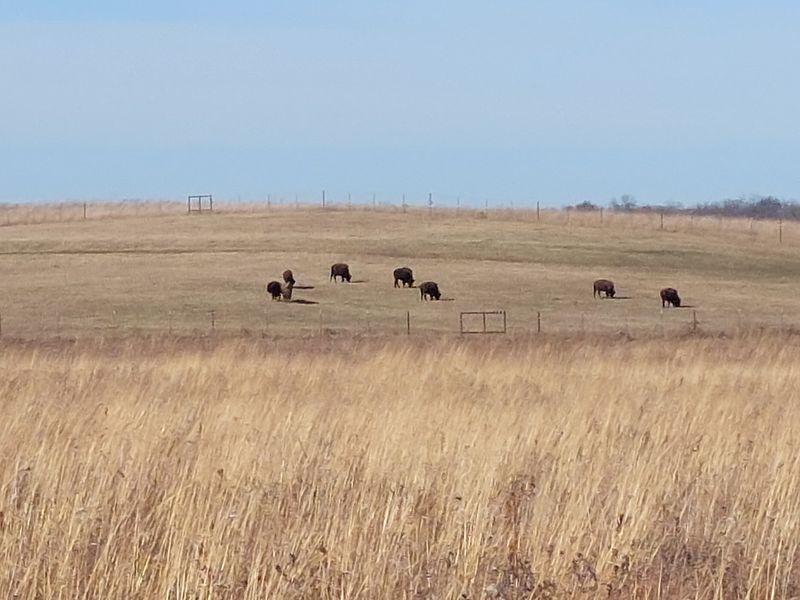
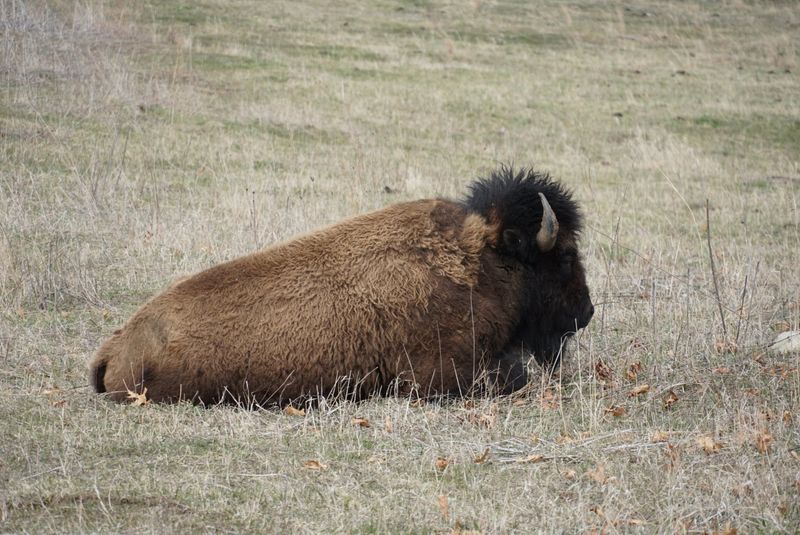
Bison are the largest land animals in North America, and their size makes them look slower and calmer than they actually are. An adult can sprint up to 35 miles per hour and can change direction quickly.
Nachusa’s bison viewing guidance requires visitors to stay at least 100 feet from the animals at all times, even when a fence stands between you and the herd. That distance is non-negotiable and applies regardless of how still or uninterested the bison appear.
Beyond the distance rule, visitors must remain outside the North and South Bison Units entirely. Entering those fenced areas is not permitted, and doing so puts both the visitor and the herd’s management program at risk.
Approaching, feeding, or following bison, including attempting close-up photographs or selfies, is prohibited. Friends of Nachusa’s bison page is direct about this: the animals may look docile but are not domesticated, and their behavior near people is unpredictable.
Roadside conduct has its own set of rules that visitors sometimes overlook. If you spot bison near a road and want to stop, pull your vehicle completely off the roadway before stopping.
Turn on your hazard flashers so other drivers can see you. Avoid blocking driveways, gates, or access roads that preserve staff and equipment need to use.
One specific location deserves extra attention: do not park or stand over the tunnel beneath Stone Barn Road. That tunnel is how bison cross between units, and a person or vehicle positioned over it disrupts their movement and creates a hazardous situation.
For broader context, the National Park Service’s bison safety guidance also advises maintaining substantial distance from bison in any setting. Nachusa’s local 100-foot rule is the controlling standard at this preserve, and it reflects the same principle: give the animals space, and everyone goes home safely.
Grazing and Fire Shape Prairie Structure Together
One of the more interesting questions about Nachusa is why the bison matter ecologically beyond the obvious visual appeal. Grazing by large herbivores does not simply reduce vegetation height uniformly.
As bison move across the prairie, they create patches of closely cropped grass alongside areas of taller, denser growth. Their wallows, shallow depressions formed when animals roll in the soil, alter drainage and expose bare ground that some plant species depend on for germination.
Dung and urine redistribute nutrients in ways that influence soil chemistry and microbial communities.
Prescribed fire works alongside grazing rather than independently of it. Fire clears accumulated dead plant material, releases nutrients, and suppresses woody plants that would otherwise shade out prairie species.
When fire and grazing interact across the same landscape, they produce a patchwork of vegetation conditions that supports a broader range of species than either process could create alone. TNC’s Nachusa preserve page identifies both fire and grazing as central ecological processes at the site.
Research adds important nuance to that picture. A Northern Illinois University study examining grassland bird responses to bison and prescribed fire disturbances at Nachusa and Kankakee Sands found that vegetation structure was highly important to grassland-obligate birds, but that individual species responded differently to the combination of grazing and fire.
Some birds benefited from the short, open patches that grazing and fire together produced, while others preferred taller or denser cover. The relationship is not a simple formula where more grazing and more fire always means more biodiversity.
Nachusa’s managers also rely on restoration plantings, invasive-species control, and hydrologic work to support the ecosystem. Bison are a powerful ecological tool, but they function within a broader management framework rather than restoring the prairie on their own.
Watching a bison graze is watching one piece of a much larger conservation system at work.
Nachusa Offers a Prairie Experience, Not a Time Capsule
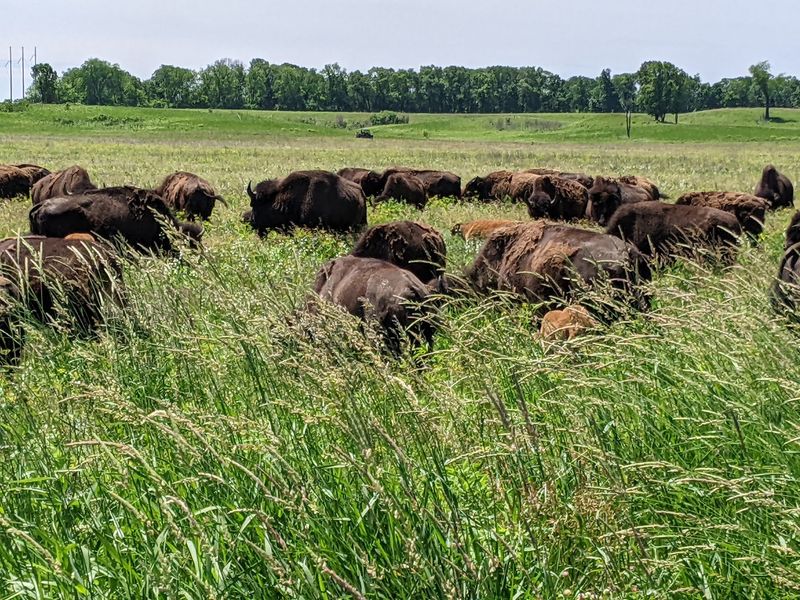
Nachusa Grasslands near Franklin Grove offers something genuinely uncommon for Illinois: a large restored prairie where American bison roam within managed, fenced units as part of an active conservation program. TNC’s preserve description and Friends of Nachusa’s bison page are both clear that the herd is free-roaming within those units but not unmanaged.
Each fall, animals are rounded up for veterinary examination, vaccination, individual identification, and weighing. Some animals may be transferred to other preserves or to Tribal lands as part of population management.
The herd is wild in behavior and movement, but it operates within a structured conservation framework.
Calling Nachusa a time capsule of pre-settlement Illinois would misrepresent what restoration can accomplish. Historical records confirm that bison disappeared from Illinois by around 1830, and the animals at Nachusa today are a reintroduced population, not survivors of a continuous wild lineage.
The landscape itself was shaped by agriculture before restoration began and continues to require active management to function as prairie habitat.
TNC’s bison FAQ puts the practical visit advice plainly: come prepared to observe from a safe distance, bring binoculars, and accept that the animals set the terms. Visitors who arrive with that mindset often find that the prairie itself, the wind moving through big bluestem, the call of a meadowlark, the smell of warm grass, rewards the trip even on the days the herd stays out of view.