
These Michigan Ruins Have Stories That Most People Will Never Hear
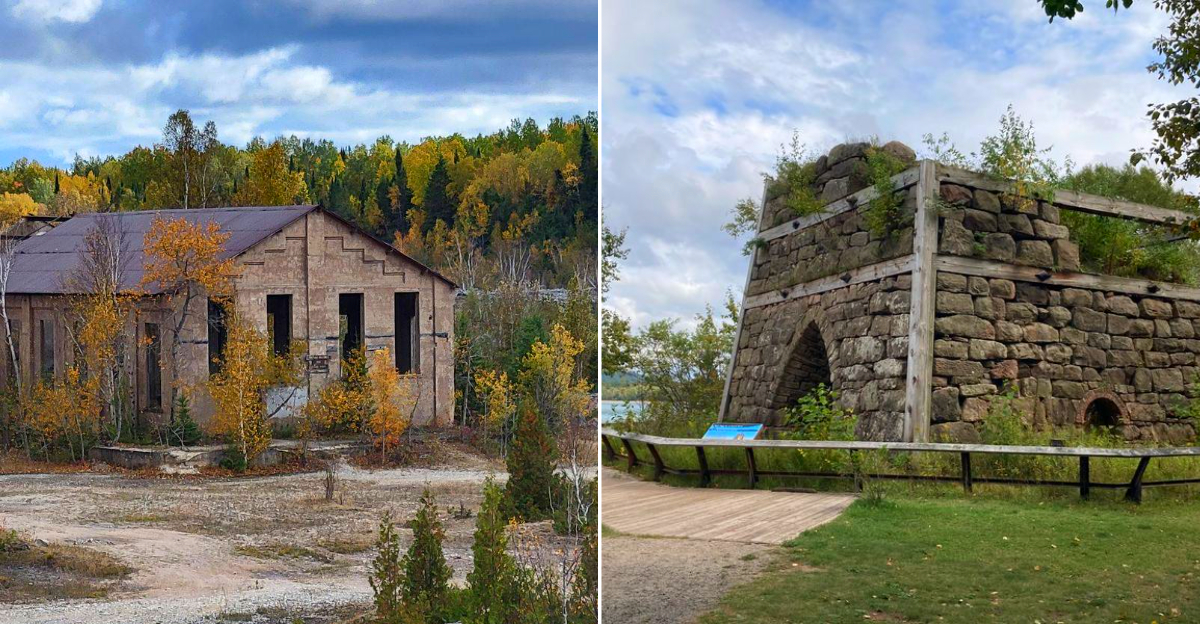
The Upper Peninsula is full of places that tried and failed. Copper mines that never produced enough. Iron furnaces that ran for a decade and then stopped. Company towns that swelled to five hundred people and emptied overnight.
I have walked through some of these sites on quiet October mornings when the only sound is wind through empty window frames. The ruins are not restored. They are not gift shops with parking lots.
They are stone walls being slowly swallowed by forest, blast furnaces standing alone in clearings, and quarries filled with water so blue it does not look real. The silence inside a place that once held hundreds of people is a specific kind of heavy.
It settles on your shoulders and does not leave. Ghost towns, abandoned quarries, and a furnace that looks like it belongs in a science fiction movie are all hiding in Michigan.
8. Fayette Historic Townsite
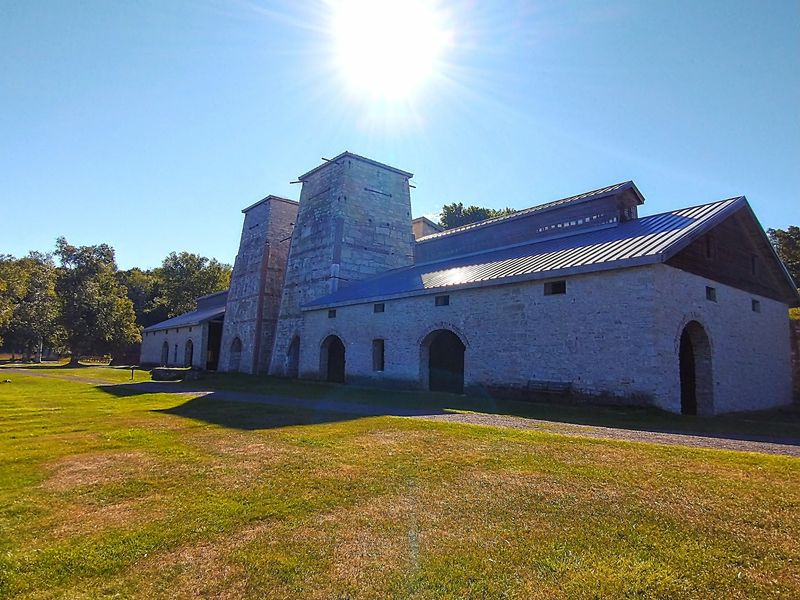
An entire company town waits at the end of the Garden Peninsula, and enough of it survives that imagination does not have to do all the work. Fayette Historic Townsite is inside Fayette Historic State Park at 4785 II Road, Garden, MI 49835, overlooking the protected waters of Snail Shell Harbor.
Between 1867 and 1891, this was an iron-smelting community built around charcoal blast furnaces.
Workers, managers, merchants, and their families lived beside an operation whose existence depended on Lake Michigan shipping, nearby limestone, iron ore, and enormous quantities of wood converted into charcoal.
Today, more than 20 historic buildings and structures help reconstruct that vanished world. Fayette is more preserved than ruined, but that actually makes the empty town more unsettling.
Furnished interiors, industrial remains, former residences, and streets lead toward enormous limestone cliffs and a harbor that looks almost impossibly peaceful compared with the smoke and noise that once filled it.
Allow around two hours for the visitor center, buildings, and overlooks. The state currently charges no separate townsite admission, although vehicles need a Michigan Recreation Passport.
Walk slowly. Doorways and ordinary rooms make the people who disappeared from this landscape feel much closer than the furnaces alone ever could.
7. Bay Furnace Historic Site
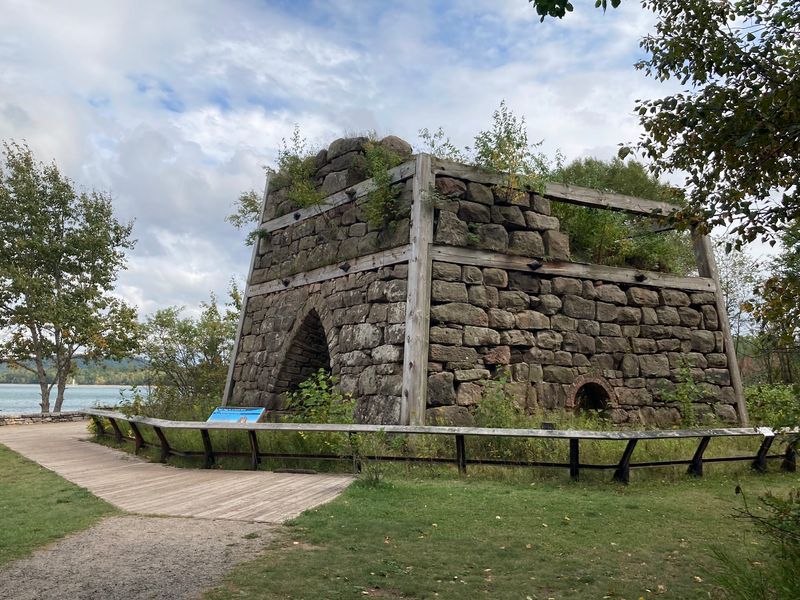
One enormous stone structure survives where almost everything surrounding it disappeared. Bay Furnace Historic Site lies beside Lake Superior near Christmas, with the campground entrance around E7900 W. M-28, Munising, MI 49862, roughly three miles west of Munising.
Pig iron was produced here from 1870 until 1877. Ore, limestone, and huge quantities of charcoal fed the furnace while a small industrial settlement developed around the operation.
Fire eventually destroyed much of the complex, leaving the furnace itself as the most dramatic reminder of the brief boom.
Today, an accessible interpretive trail runs only about one-eighth of a mile around the recently stabilized ruins. That short distance makes Bay Furnace one of the easiest industrial-history stops in the Upper Peninsula, yet the setting feels strangely remote once Lake Superior fills the background.
Spend time studying the masonry before returning to the car. A structure this large needed workers constantly cutting timber, burning charcoal, transporting materials, managing heat, and moving iron toward waiting ships.
Now waves and wind have replaced all of it. The adjacent campground and shoreline make it easy to combine the ruin with a longer stop.
6. Nonesuch Mine
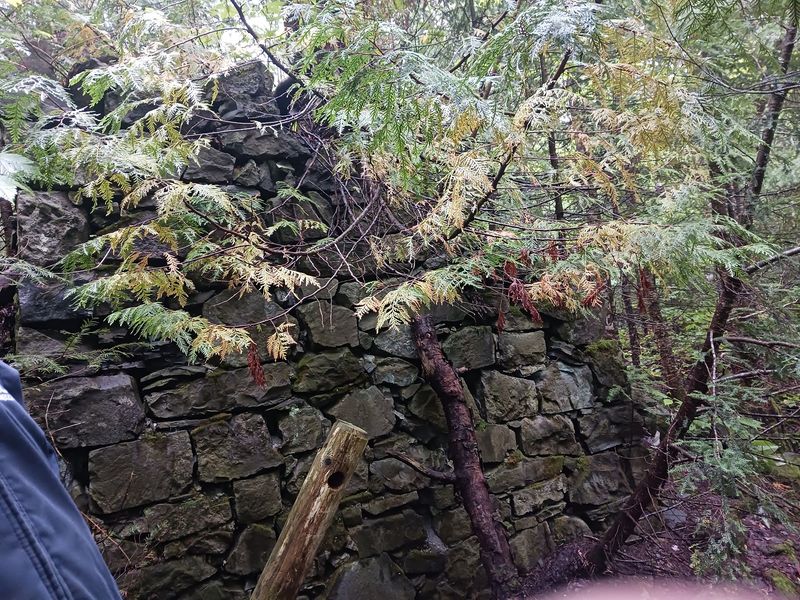
The real failure here was not finding copper. There was plenty of it. The problem was figuring out how to separate extremely fine copper from the surrounding rock without losing money in the process.
The Nonesuch Mine ruins are reached from the Nonesuch Mine Interpretive Trail parking area along South Boundary Road in Porcupine Mountains Wilderness State Park. A current 2026 DNR guide describes the route as a roughly two-mile out-and-back hike through the old mine site.
Mining attempts began in the nineteenth century and repeatedly stopped as different owners tried to make the unusual deposit profitable. A settlement grew around those efforts with homes, a school, shops, boarding facilities, stagecoach service, and even a uniformed baseball team.
Michigan geological history describes the mine as a famous example of rich copper that early technology could not economically recover. The forest has taken back most of the town.
Foundations and industrial remains appear among rocks and trees rather than in a neatly reconstructed historic district, which makes this one feel much closer to finding something abandoned.
The strange ending is that the miners were partly vindicated. Later technology eventually made large-scale extraction from the Nonesuch formation possible nearby.
5. Fiborn Quarry Ruins
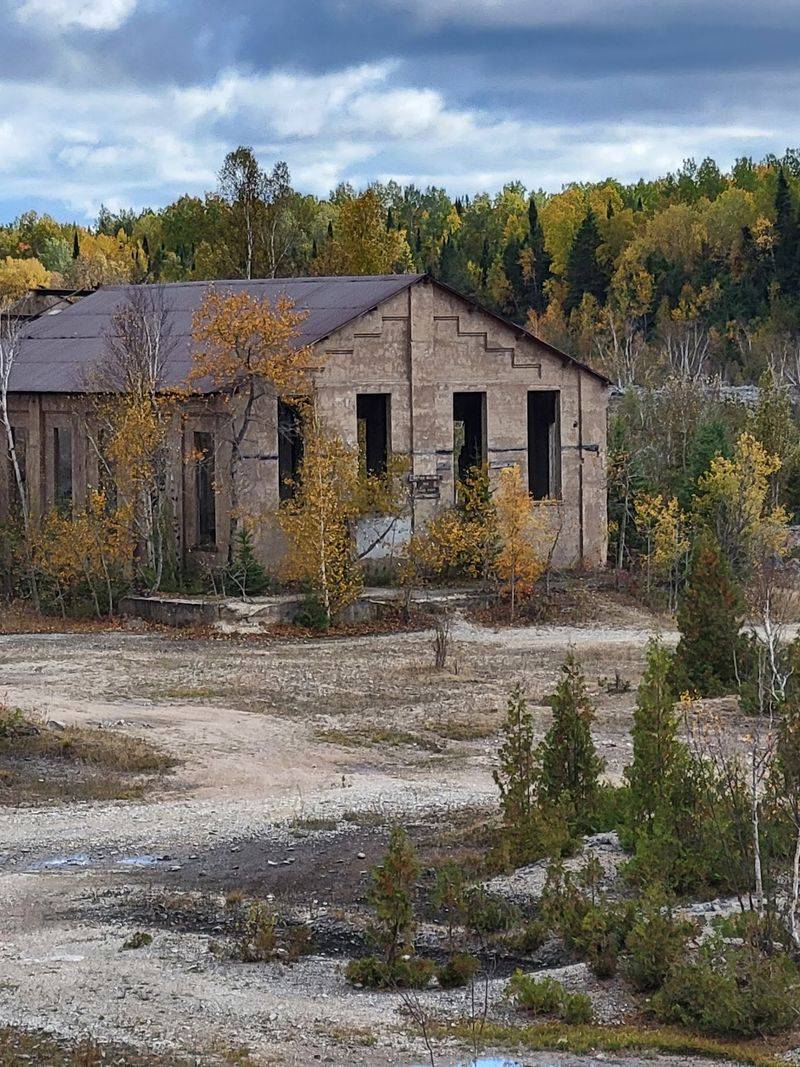
Concrete walls rise from a landscape that has somehow become stranger since the industry disappeared.
Fiborn Karst Preserve is reached from Fiborn Quarry Road near Trout Lake, MI 49793, where the Michigan Karst Conservancy now protects 480 acres of abandoned quarry terrain, forest, sinkholes, springs, and caves.
Limestone was quarried here from 1905 to 1936 and shipped to Algoma Steel in Sault Ste. Marie, Ontario.
A settlement grew beside the quarry, leaving behind the railroad house, ore-car loading structure, house foundations, and the footprint of a former boarding house.
Nature has made the site considerably stranger.
The exposed limestone belongs to the Niagara Escarpment, and water dissolving that rock created sinkholes, disappearing streams, and caves beneath the former industrial landscape.
The 1.5-mile Barbara Ann Patrie Memorial Trail passes quarry features, second-growth woods, sinks, and Fiborn Pond, while a shorter trail focuses on sinkholes.
Do not casually wander underground. Climbing and caving require permission from the preserve committee, and Hendrie River Water Cave has seasonal restrictions to protect bats.
Above ground, though, the preserve is open for respectful public recreation. Few ruins show industrial abandonment and geological time this clearly. Human beings carved the quarry open for three decades.
4. Central Mine Historic District
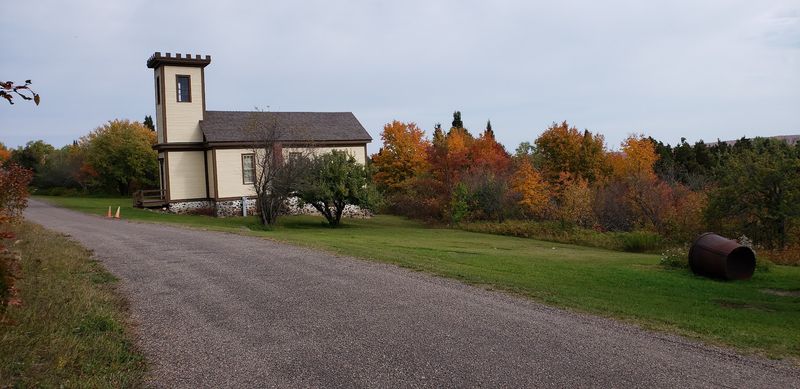
A white wooden church standing above empty foundations may be the most haunting image in Michigan’s Copper Country. Central Mine Visitor Center is at 7143 Central Road, Phoenix, MI 49950, about five miles northeast of Phoenix in the Keweenaw Peninsula.
The mine opened in 1854 and produced nearly 52 million pounds of copper before closing in 1898. At its height, more than 1,200 people lived here, many of them Cornish immigrants who brought mining skills, traditions, food, and religious life into this remote part of Michigan.
Some houses survive, others are reduced to foundations, and restoration work has preserved portions of the settlement without making Central feel artificial. Two short trails lead past former home sites, the school location, and old mining landscapes.
The 1868 Methodist Episcopal Church carries the story farther. Regular services ended after the town declined, but descendants began returning for an annual reunion service in 1907, a tradition that still ties living families to the abandoned mining settlement.
For the 2026 season, the visitor center is open daily from June 14 through October 11, 9 a.m. to 5 p.m., with no required admission fee, although donations are welcomed. The broader site remains accessible year-round.
3. Schoolcraft Furnace Site
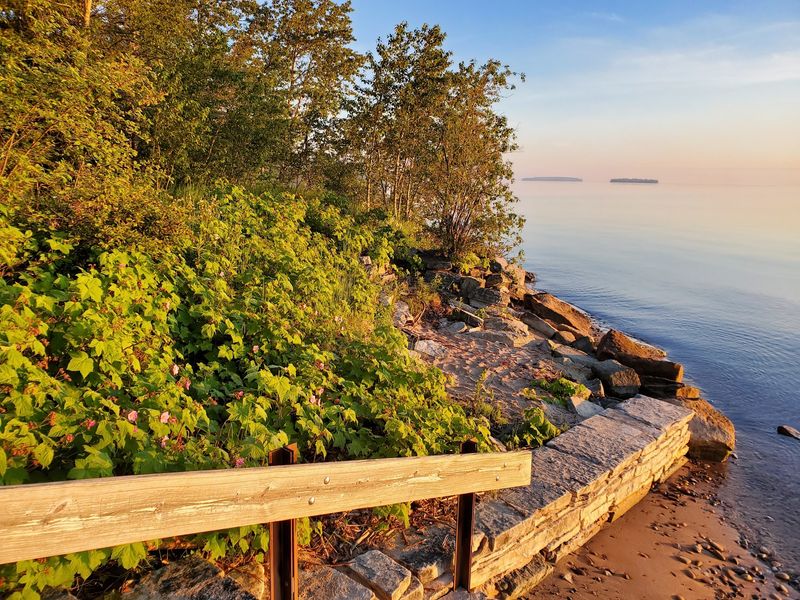
The most interesting thing about this ruin may be how little is left. Reach the site through the Munising Falls area at 1505 Sand Point Road, Munising, MI 49862. Unlike Bay Furnace, visitors should not expect a giant surviving stone stack.
The National Park Service says nature has reclaimed almost all visible evidence of the Schoolcraft operation.
That makes its history surprisingly difficult to reconcile with the peaceful forest.
The Schoolcraft furnace first went into blast in 1867 beside Munising Creek and was soon capable of producing about 20 tons of pig iron per day. Iron ore arrived from the Marquette region, limestone came from the Lake Erie area, and surrounding forests supplied beech and maple for charcoal.
More than 500 workers were employed in the wider operation, and a community sometimes called Old Munising developed around them.
Financial trouble, material shortages, and the Panic of 1873 repeatedly interrupted production. The furnace shut permanently in 1877, and most residents eventually moved away.
Today, look for fragments rather than monuments. The NPS identifies remains of the old corduroy road in the creek and pieces of furnace slag near the beginning of the North Country Trail.
That near-total disappearance is precisely what makes Schoolcraft powerful.
2. Ardis Furnace
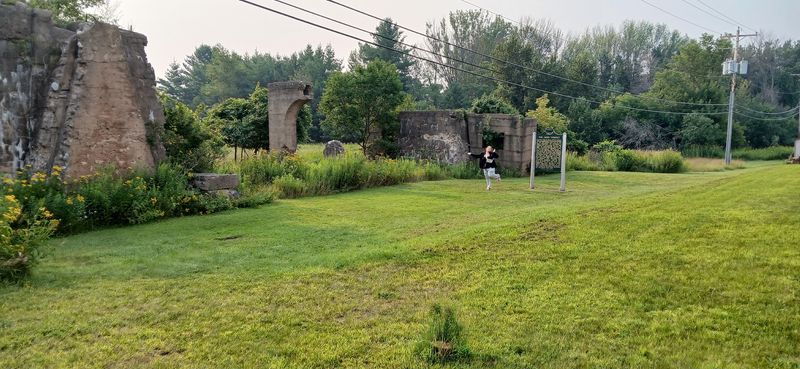
Failure left behind one of the strangest sets of concrete ruins in Iron Mountain. The Ardis Furnace remains are near Aragon and Antoine streets, with the state historical marker accessible around 1565 N. Stephenson Avenue, Iron Mountain, MI 49801, behind the nearby commercial properties.
Inventor John T. Jones built the experimental furnace in 1908 and named it after his daughter, Ardis.
His idea was to make low-grade Upper Peninsula iron ore economically useful through an unusual rotating furnace design. A huge inclined metal tube lined with firebrick rotated by electric motor while material moved through the system.
For a while, the experiment looked promising. Then heat became the enemy. The firebrick lining could not withstand operating conditions reliably, and repeated attempts to solve the problem consumed money without producing a sustainable industrial process.
Jones eventually abandoned the project. The metal furnace itself was dismantled and sold for scrap. What survives are the large concrete supports that once held the rotating tube.
That skeletal form is almost more interesting than a complete furnace would be. Nothing about the blocks immediately explains what machine once rested above them, so the historical marker becomes essential.
1. Quincy Smelter
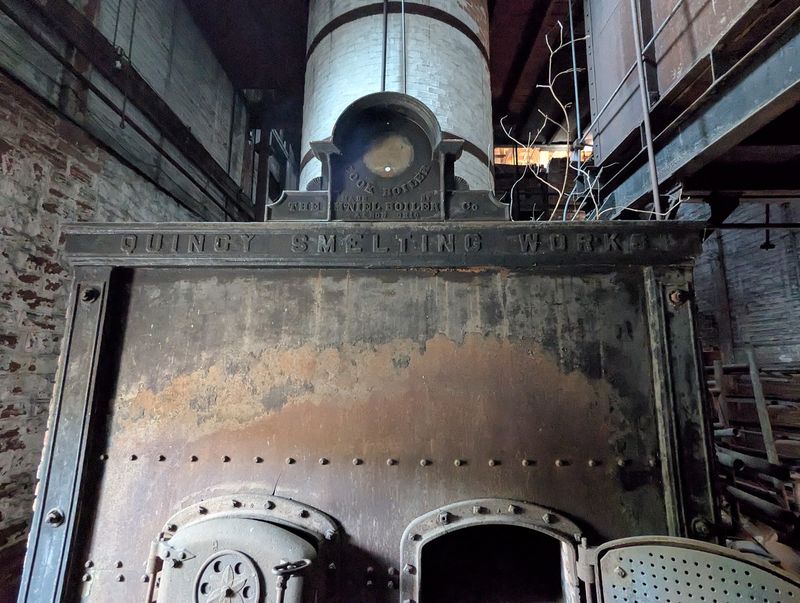
Across the Keweenaw Waterway from Houghton, this industrial complex looks as if everybody went home and forgot to return. Quincy Smelter stands at 48991 Maple Street, Hancock, MI 49930, near the intersection of Maple Street and Royce Road/M-26.
The operators specifically warn that GPS can misdirect visitors, so look for the smelter sign at the intersection.
Quincy Mining Company built the smelting works in 1898 to refine its own copper and process material from neighboring mines.
When the complex finally closed in 1971, the company did something unusually fortunate for industrial historians: instead of stripping everything for scrap, it largely locked the gates and left the site intact.
That decision preserved furnaces, buildings, Corliss steam engines, a Walker casting wheel, and other machinery rarely found together at an old smelter.
Unlike the more freely accessible ruins on this list, the interior is best experienced on an official guided tour. In 2026, tours run daily at noon and 2:15 p.m. from Memorial Day through Labor Day, with reservation-only tours continuing into mid-October.
The walking tour lasts about an hour and crosses uneven industrial surfaces, so closed-toe shoes are strongly recommended.