
The California Road Trip Everyone Should Take At Least Once
Some road trips get you from Point A to Point B. This one makes you forget you were supposed to be going anywhere.
California’s legendary coastal highway is the kind of drive where your GPS says “keep going” and your brain says, “Absolutely not.
Pull over. We need a picture.” You’ll pass surf towns, beautiful little beach communities, dramatic cliffs, and stretches of coastline that look almost suspiciously perfect.
There’s good food along the way, plenty of places to wander, and enough scenery to make your phone storage a serious concern.
And the route? It’s basically California showing off for several hundred miles. Start up north, work your way down the coast, and give yourself permission to take the long way.
Because rushing this road trip would be like fast-forwarding through your favorite movie. Technically possible.
Completely missing the point.
Where The Adventure Begins
There is no better place to kick off a legendary road trip than a city that practically invented cool. San Francisco greets you with fog, hills, and the kind of electric energy that makes you feel like anything is possible.
Before you even hit the highway, give yourself at least a full day to soak it all in.
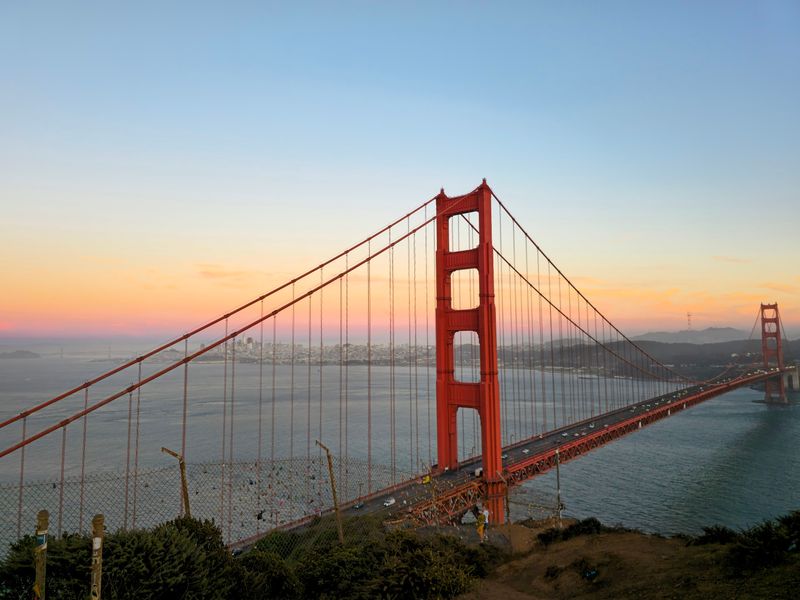
Start with the Golden Gate Bridge, because skipping it would be a travel crime. Battery Spencer on the Marin Headlands side gives you a jaw-dropping aerial perspective of the bridge with the bay behind it.
Fort Point, tucked right beneath the bridge on the San Francisco side, offers a completely different and equally stunning view. Crissy Field and Presidio Tunnel Tops are perfect for a morning stroll with serious scenery as your backdrop.
Head to Lands End and Sutro Baths for something a little more atmospheric. The ruins of the old bathhouse sit right on the edge of the Pacific, and on a foggy morning, the whole place feels wonderfully mysterious.
Baker Beach rounds out your San Francisco coastal experience with views back toward the bridge. This city sets the tone for everything that follows, and it sets it beautifully.
Sea Otters, Cannery Row, And Pure Magic
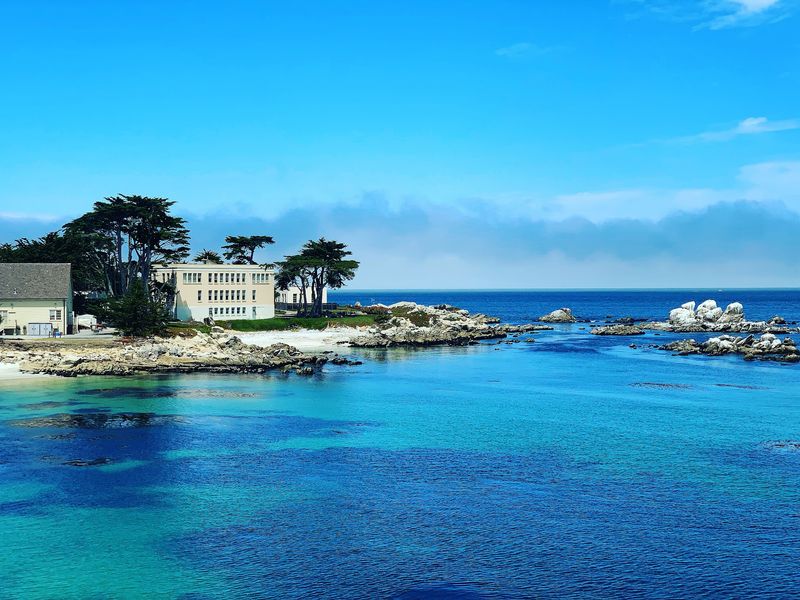
Driving into Monterey feels like arriving at a place that has always known exactly what it is. The air smells like the ocean, the harbor is full of bobbing boats, and somewhere nearby, a sea otter is floating on its back looking completely unbothered by life.
That otter has the right idea.
The Monterey Bay Aquarium on Cannery Row is genuinely one of the best aquariums in the entire country. The kelp forest exhibit alone is worth the trip.
Cannery Row itself is named after John Steinbeck’s novel, and walking along its historic waterfront feels like stepping into a chapter of California history. Fisherman’s Wharf is right nearby, offering seafood and ocean views in equal measure.
The Monterey Coastal Trail is a flat, scenic path that hugs the shoreline and connects the main attractions without you needing to get back in the car. Lover’s Point Park in nearby Pacific Grove is a gem worth adding to your afternoon.
The calm cove, walking paths, and frequent sea otter sightings make it the kind of stop that quietly becomes your favorite of the whole trip.
The Fairy Tale You Did Not Know You Needed
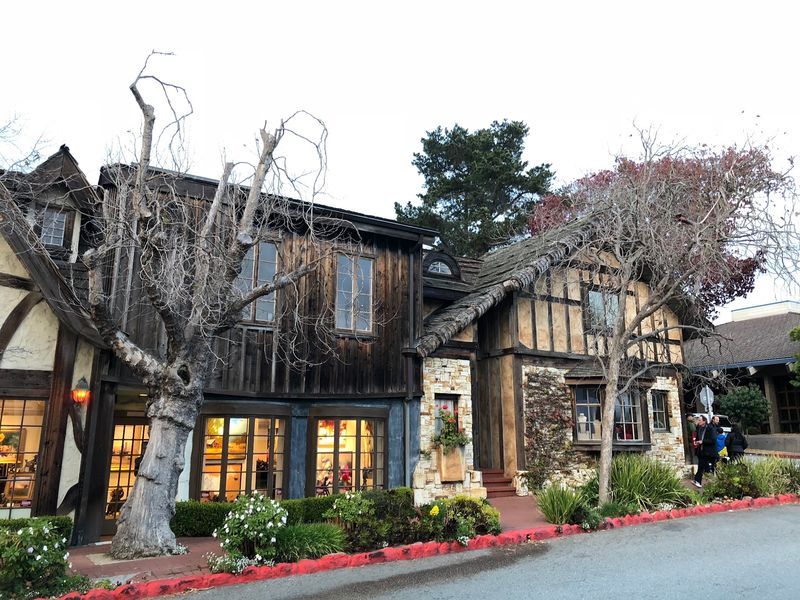
Carmel-by-the-Sea looks like someone took a European village, dropped it on the California coast, and forgot to tell anyone it was not always there.
The streets are lined with storybook cottages draped in roses, art galleries spill onto cobblestone lanes, and Ocean Avenue leads straight down to one of the most beautiful beaches you will ever stand on.
Carmel Beach is white sand, dramatic cypress trees, and waves that look like they were designed by a photographer.
Point Lobos State Natural Reserve, just south of town, is often called the crown jewel of California’s state parks. Sea Lion Point lets you watch actual sea lions lounging on the rocks while sea otters drift through the coves below.
The hiking trails wind through wildflowers and coastal scrub with views that stop you mid-stride.
The 17-Mile Drive through Pebble Beach is a scenic toll road worth every penny. The Lone Cypress, perched dramatically on a rocky point, is one of the most photographed trees in the world.
Carmel Mission, with its beautiful gardens and historic architecture, rounds out the experience.
The culinary scene here punches well above the town’s small size, with bistros and cafes that are genuinely outstanding.
Where The Road Gets Truly Wild
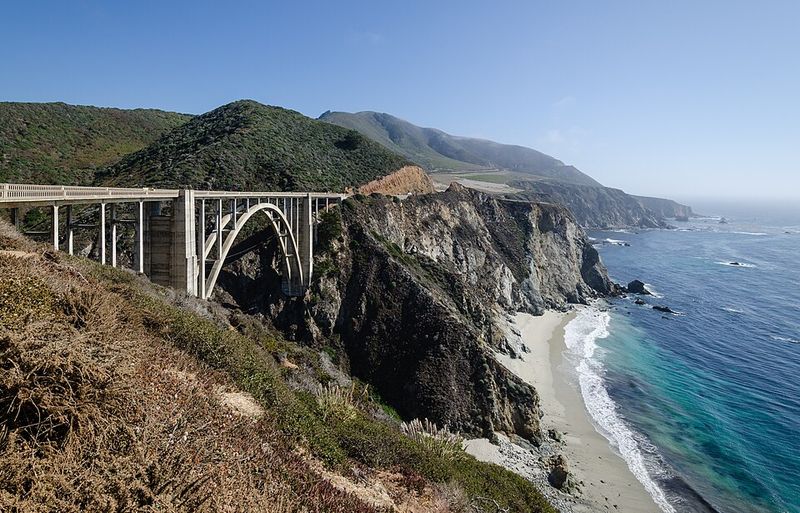
Big Sur does not ease you in gently. The moment you round the first bend south of Carmel and the cliffs drop away beneath you, the Pacific stretching out forever to the west, you understand immediately why people call this stretch of road one of the most beautiful in the world.
It earns that title without even trying.
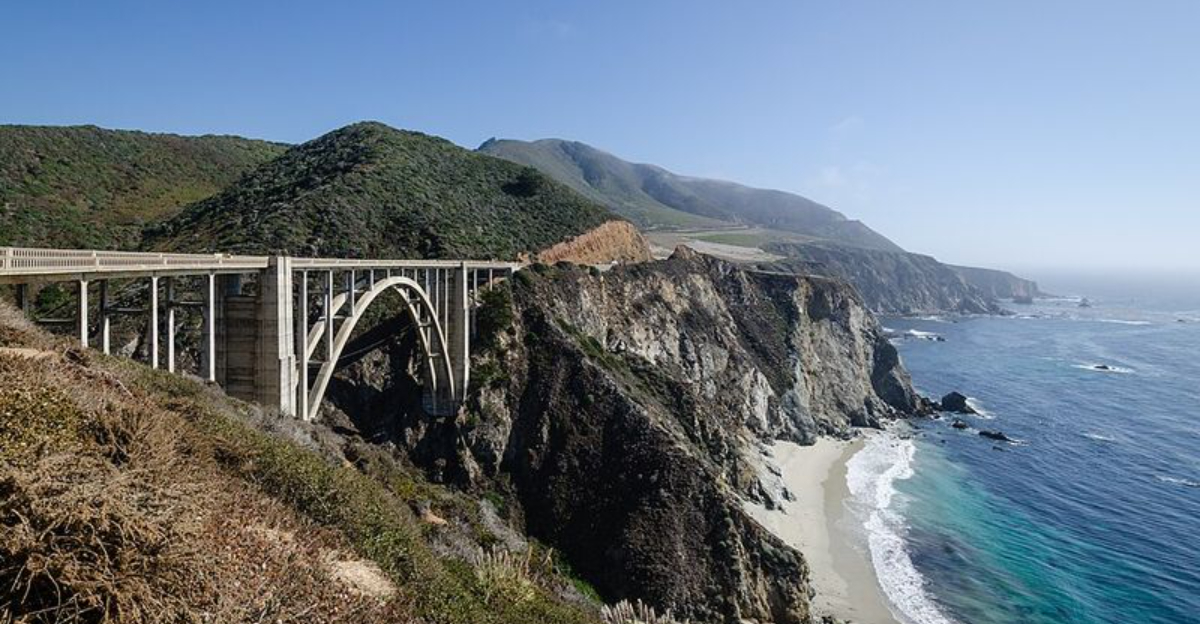
Bixby Creek Bridge is the shot everyone has seen on postcards, and seeing it in person is somehow even more spectacular.
Pull into the viewpoint north of the bridge and give yourself a few minutes to just stand there. Garrapata State Park offers coastal trail hikes with views that feel almost unreasonably dramatic.
Pfeiffer Beach is famous for its purple-tinged sand and the Keyhole Rock arch, where the sunset light pours through like something from a fantasy film.
McWay Falls in Julia Pfeiffer Burns State Park is an 80-foot waterfall that drops directly onto a secluded beach you cannot actually reach, which somehow makes it more magical.
Note that as of 2026, a section of Highway 1 near this area has a temporary closure due to the Timber Fire. Check Caltrans Quick Map before heading out, and download offline maps since cell service in Big Sur is famously unreliable.
Elephant Seals And A Castle On A Hill
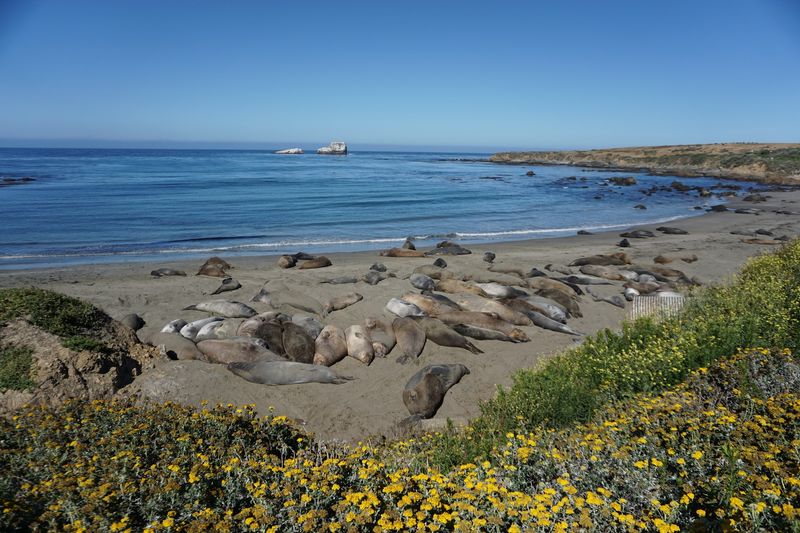
San Simeon is one of those stops that surprises people every single time. You are cruising down Highway 1, the ocean glittering to your right, and then suddenly there are hundreds of enormous elephant seals just sprawled across the beach like they own the place.
Because, honestly, they kind of do.
The Piedras Blancas Elephant Seal Rookery is completely free to visit and open year-round.
The best viewing windows are late January, late April, and late October, with pups arriving in December and January. Docents are often on site to answer questions and point out what is happening down on the beach.
Watching these massive animals interact, wrestle, and sleep in a giant pile is genuinely one of the most entertaining wildlife experiences on the California coast.
Hearst Castle sits about 4.5 miles south and is the other reason people stop here. Built by media magnate William Randolph Hearst, the estate is jaw-droppingly opulent, with pools, art collections, and gardens perched high above the Pacific.
Tours run regularly and are absolutely worth booking in advance. Keep your eyes open along the highway near the Coastal Discovery Center too, because Hearst Ranch zebras sometimes wander close to the road.
California’s Sun-Soaked Riviera
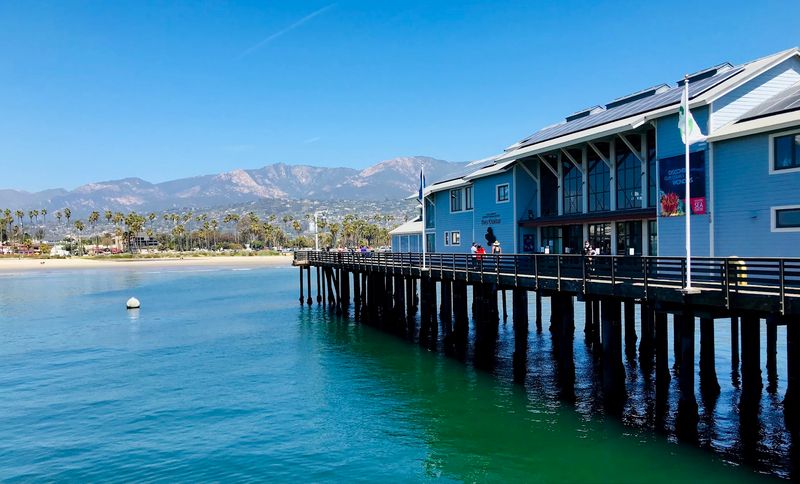
Pulling into Santa Barbara feels like the road trip just upgraded itself without asking for your permission. The city is gorgeous in a way that seems almost unfair.
Red-tiled roofs, white stucco buildings, and palm trees line the streets, all backed by the Santa Ynez Mountains on one side and the sparkling Pacific on the other.
Stearns Wharf is California’s oldest working pier and a great place to start your exploration. Walk to the end for sweeping ocean views, then wander back through the waterfront area toward East Beach, where volleyball nets, picnic areas, and sunshine await.
Butterfly Beach in nearby Montecito is a local favorite for sunset watching, with calm waters and a relaxed, unhurried atmosphere. Leadbetter Beach draws surfers and paddleboarders, while Arroyo Burro Beach has a more laid-back, neighborhood vibe.
Mission Santa Barbara, founded in 1786, is one of the most beautiful and well-preserved missions in California.
The Spanish Colonial Revival architecture throughout the downtown area is genuinely stunning and unlike anything else on this route.
Santa Barbara’s food scene is casual and excellent, with oceanfront dining options that make it very easy to linger longer than planned. Two nights here is not excessive.
The Food Stops That Make The Drive Worth Every Mile
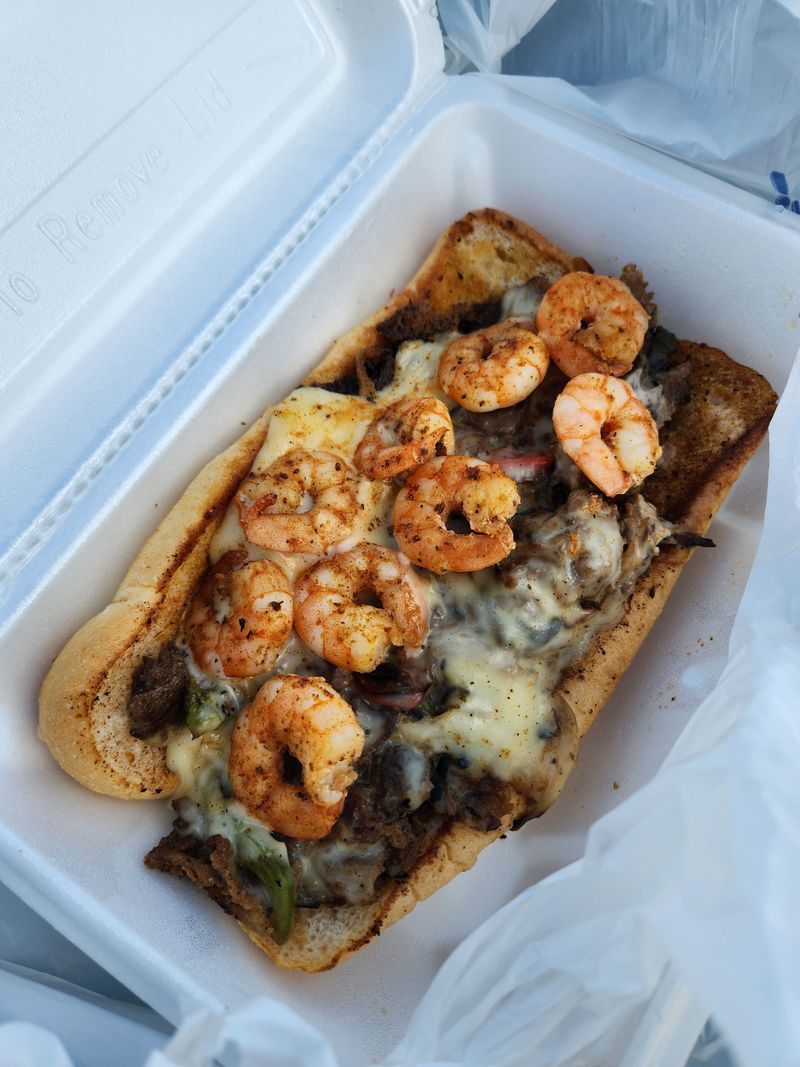
A road trip without great food is just a very long drive, and California Highway 1 has absolutely no intention of letting that happen to you.
From Cannery Row to the streets of Los Angeles, eating your way down this coastline is practically a sport, and you should train accordingly.
In Monterey, Fisherman’s Wharf delivers fresh clam chowder and seafood in a setting that feels straight out of a postcard. Big Sur has Nepenthe Restaurant perched on a cliff with views that make even a simple sandwich taste extraordinary.
Lucia Lodge is a quieter option further south, perfect for a relaxed lunch with the Pacific right in front of you.
Los Angeles is where the food adventure reaches full volume. Mexican street food from the city’s legendary food truck scene is non-negotiable.
In-N-Out Burger is a California institution that deserves its reputation. Langer’s Deli on the westside is famous for its pastrami sandwiches.
Sugarfish and Nobu represent the city’s world-class sushi scene. Sunday’s Smorgasburg food market in LA brings dozens of vendors together in one spot, making it the perfect final feast before you reluctantly point your car toward home.
Practical Tips For Driving Highway 1 Like A Pro
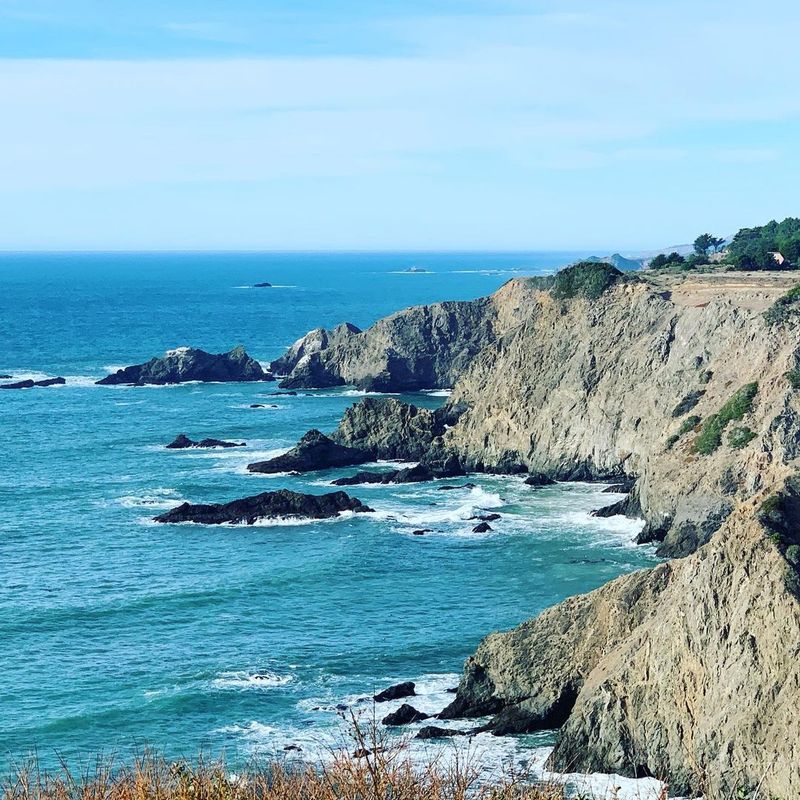
Highway 1 is spectacular, but it rewards travelers who show up prepared. The road is narrow in places, the curves are sharp, and the scenery is so distracting that you will want to stop far more often than you planned.
Budget more time than you think you need, because rushing this drive is a genuine waste of one of the world’s great roads.
Five to seven days is the sweet spot for the full San Francisco to Los Angeles route. If you only have a long weekend, focus on the Monterey to Santa Barbara section, which captures much of the magic in a tighter timeframe.
Driving south keeps the ocean on your right side, which means better views and easier pull-outs at scenic overlooks. As of 2026, check Caltrans Quick Map before departing, since sections near Big Sur have had closures and one-way traffic controls that can affect your timing.
Download offline maps before entering Big Sur, because cell service disappears reliably and completely. Use designated parking areas at popular stops to protect the fragile coastal environment.
Start your drives early to avoid afternoon traffic at popular viewpoints.
The light is better in the morning anyway, and you will have the most iconic spots nearly to yourself before the crowds arrive.
The Grand, Glorious Finish Line
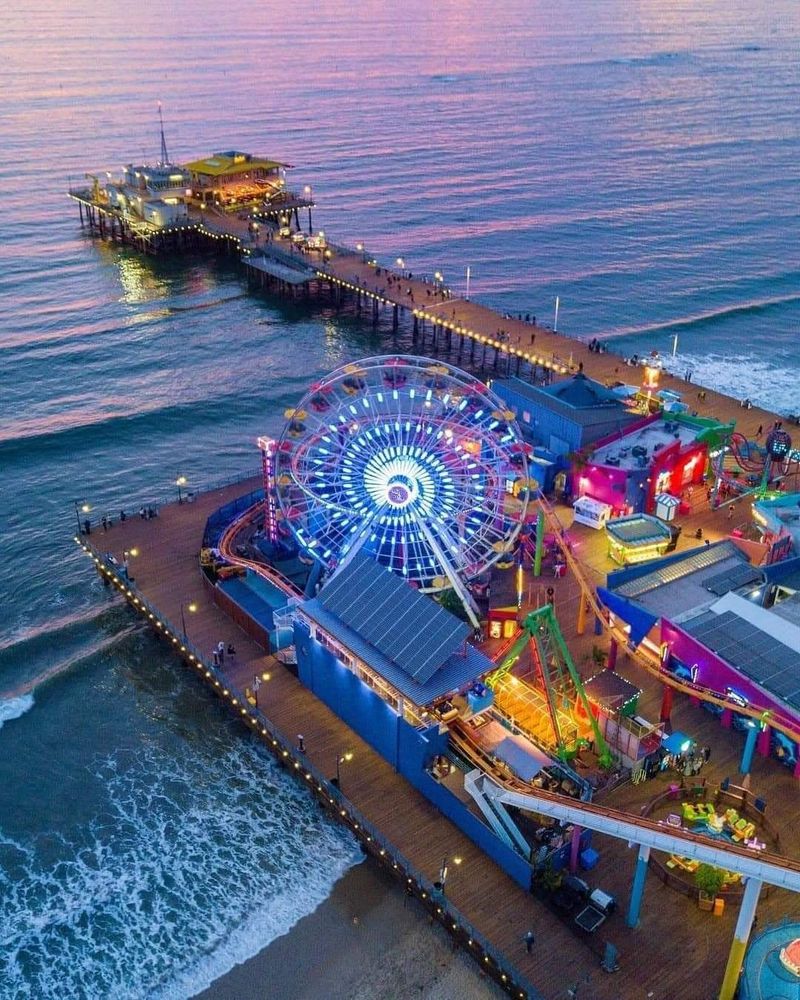
You made it. After hundreds of miles of cliffs, waterfalls, elephant seals, fairy tale villages, and the most dramatic coastline imaginable, Los Angeles rises up to greet you like a city that has been patiently waiting for your arrival.
And honestly, it has a lot to offer once you get there.
Santa Monica Pier is the natural first stop, partly because it sits right on the ocean and partly because it feels like the perfect bookend to a journey that started beside the water in San Francisco.
Venice Beach and its famous boardwalk are just a short walk south, buzzing with street performers, skaters, and the particular brand of beautiful chaos that only Los Angeles can produce. The Griffith Observatory up in the hills gives you sweeping views of the city, the Hollywood Sign, and on a clear day, the ocean you just drove along for an entire week.
The Hollywood Walk of Fame and TCL Chinese Theatre are classic stops that deliver exactly what they promise.
LACMA’s “Urban Light” installation is a favorite for photos at golden hour. The Getty Center is a world-class museum with garden terraces that overlook the city in every direction.
So, now that you know what is waiting at every stop along this route, what is stopping you from booking the trip?