
A Michigan Sculptor Left Behind Thousands Of Works Most People Have Never Seen
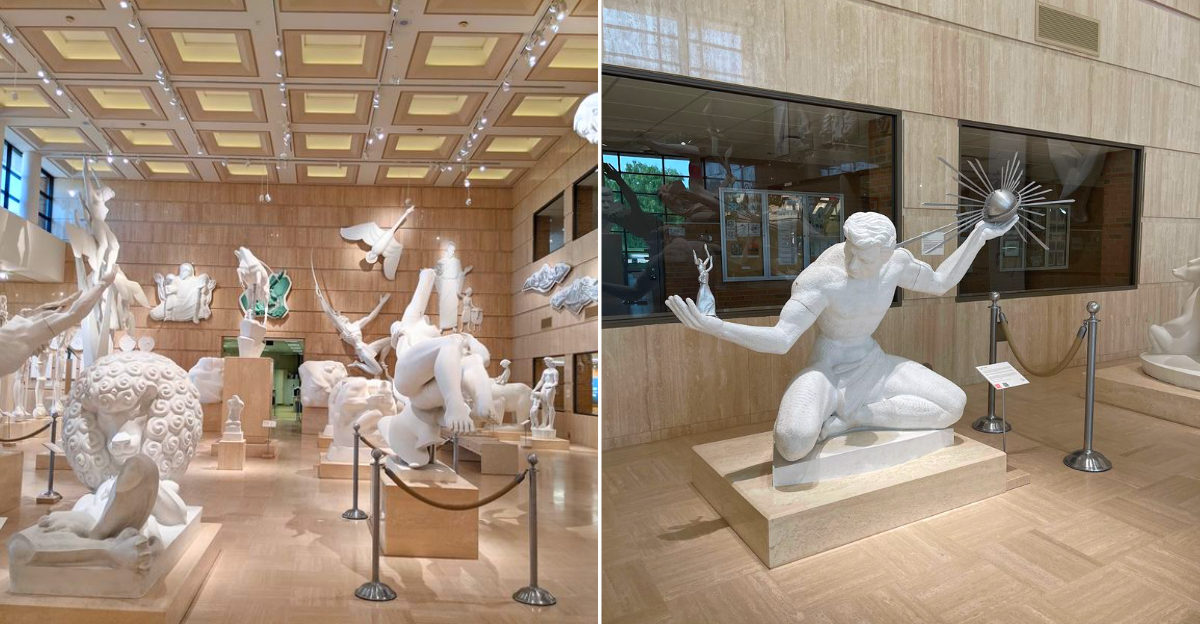
Most museums spread their collections across dozens of artists. This one commits entirely to a single sculptor, and that choice makes every room hit harder.
I lost count of plaster casts and bronze studies somewhere around two hundred.
The man spent six decades shaping clay into figures that ended up in parks, churches, and civic buildings across the country, but the largest concentration sits in one building on a university campus in Michigan.
I stood beneath a fountain figure I had walked past a dozen times in another city without ever knowing who made it. The studio room, preserved exactly as he left it, has clay on the armrests and sketches pinned to the wall.
Seeing his process up close changed the way I look at public sculpture. One sculptor’s life work fills an entire Michigan museum, and seeing it changes how you look at public art everywhere else.
Look Closely At The Plaster Models
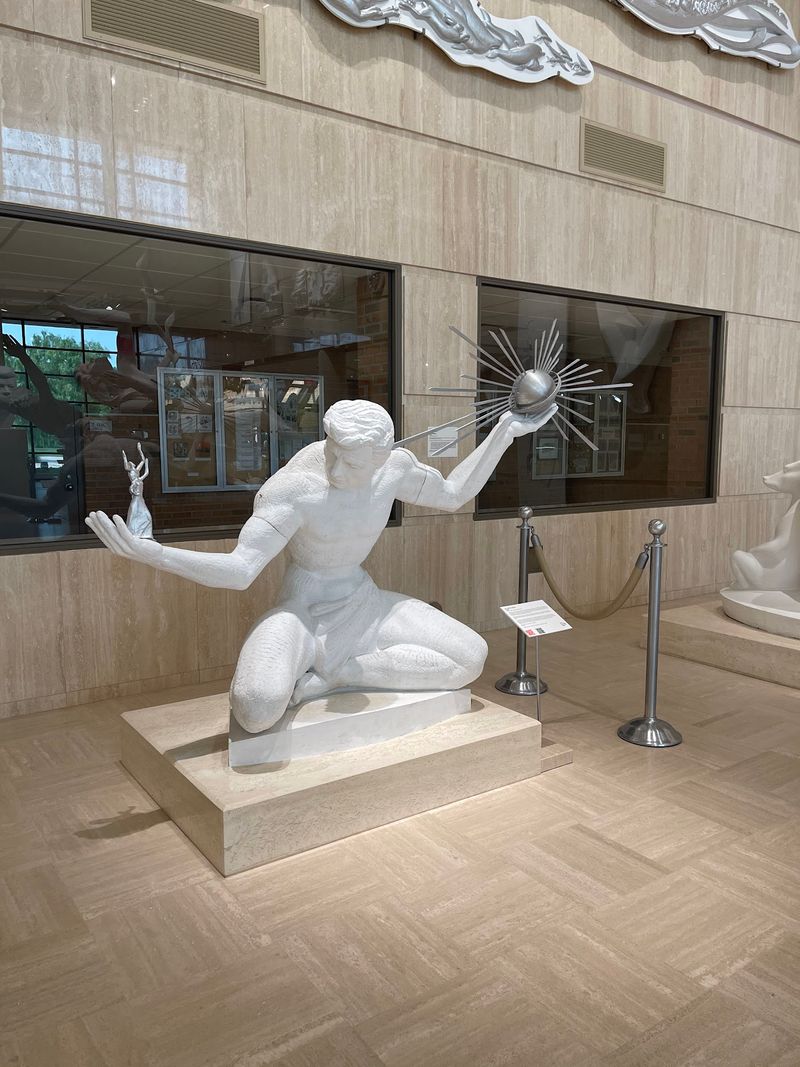
White plaster can look plain from across the room, yet a closer view reveals fingerprints, tool marks, seams, and careful changes in shape. Many models here served as working guides for monumental bronzes, so they carry evidence of decisions made before casting.
Walk around each piece when gallery space permits. A profile may show an expression or curve that disappears from the front, while changing light makes shallow textures suddenly visible.
Remember that scale can play tricks on the eye. Some heads and hands seem oversized because they belonged to much larger compositions intended for outdoor settings.
Studying them up close turns the museum into a lesson about planning, balance, and engineering, not simply a room filled with pale statues for curious visitors to admire.
Bay Road Opens Into The Sculpture Campus
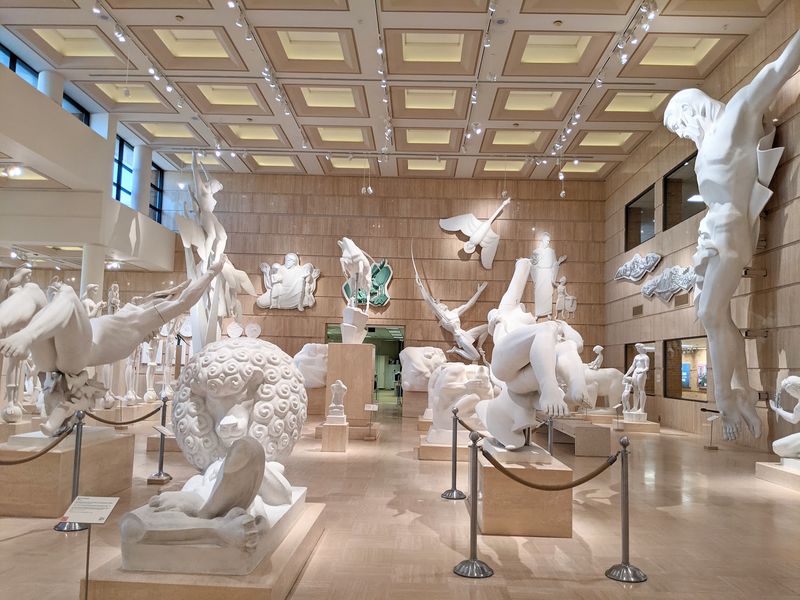
Marshall M. Fredericks Sculpture Museum is located at 7400 Bay Road on the Saginaw Valley State University campus in University Center, Michigan.
From I-75, take Exit 160 for M-84/Saginaw Road, then head south on M-84, which becomes Bay Road along the university.
Continue south on Bay Road for about 3.5 miles, then turn left onto College Drive at the main SVSU entrance. At the second stop sign, turn right onto Fine Arts Drive and follow it toward the Arbury Fine Arts Center.
The museum sits on the left at the end of the circle drive. Several free parking spaces are marked near the entrance and along Fine Arts Drive, with additional visitor parking available in campus lots J and D.
Step Inside The Sculptor’s Studio
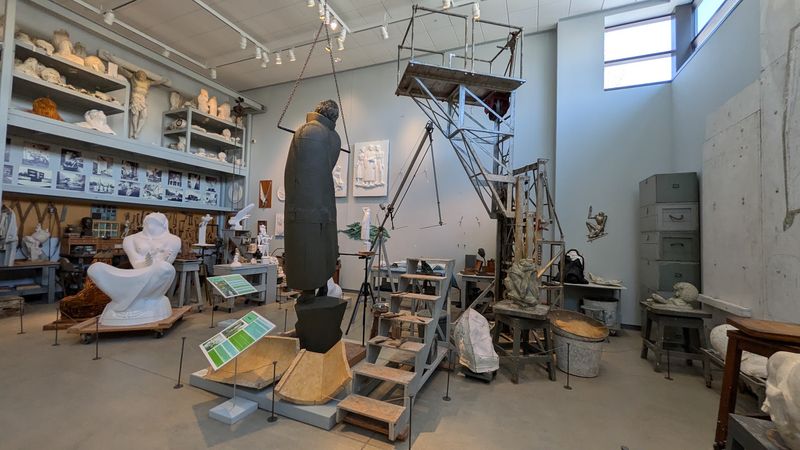
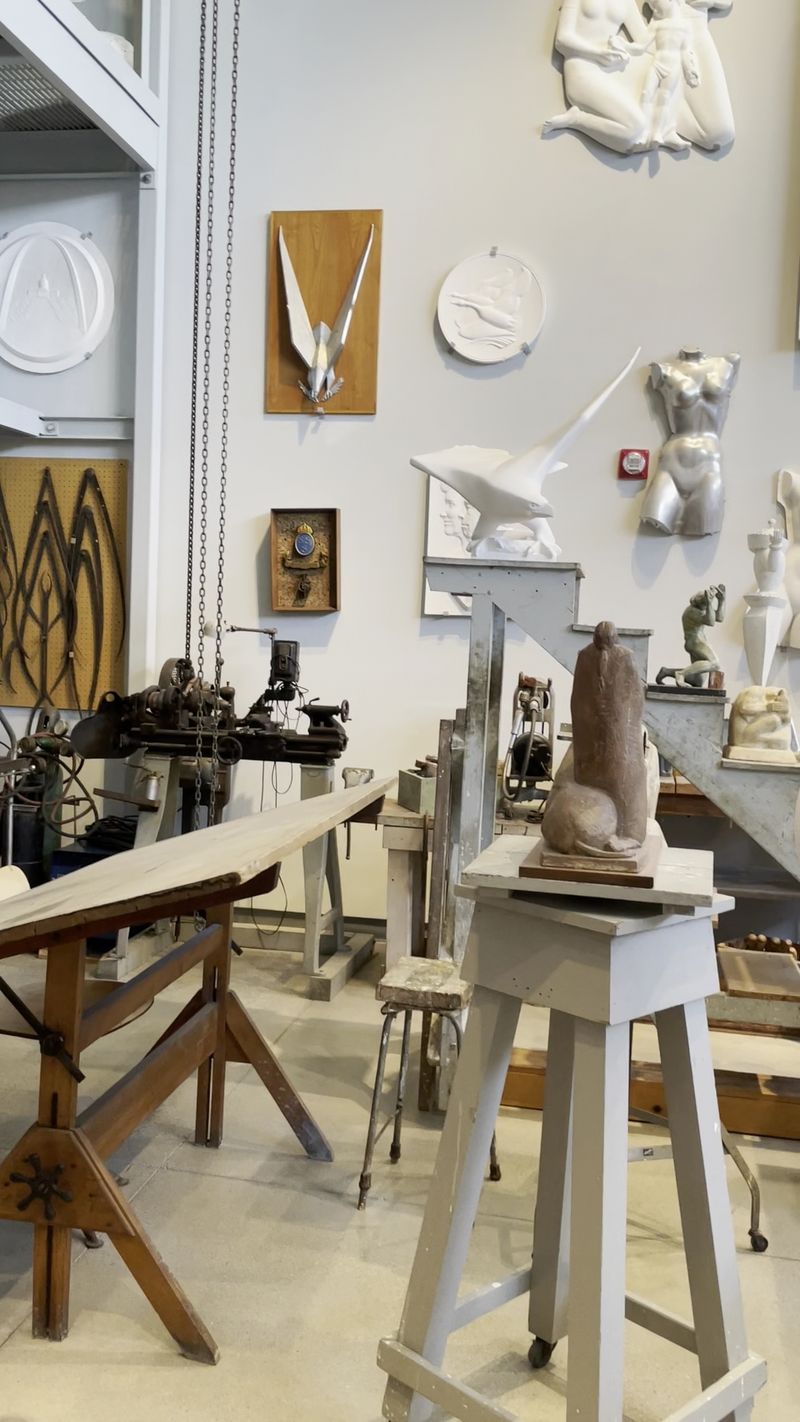
Tools often tell a more personal story than polished monuments, and the permanent Sculptor’s Studio proves it. Fredericks’s authentic equipment, armatures, models, and working materials recreate the practical world behind his graceful public figures.
Notice the small male anatomical model darkened by years of contact with clay-covered hands. That humble object shows how seriously Fredericks studied the body, even when creating figures that appear simple or playful.
Models and video recordings connected with Lord Byron, his final statue, help explain the complicated casting process. Fredericks worked continuously in his Royal Oak studio from 1945 until his death in 1998.
Spend time here after seeing the main gallery because familiar sculptures will begin to look less mysterious and far more labor-intensive once you understand their construction.
Follow A Sculpture From Clay To Bronze
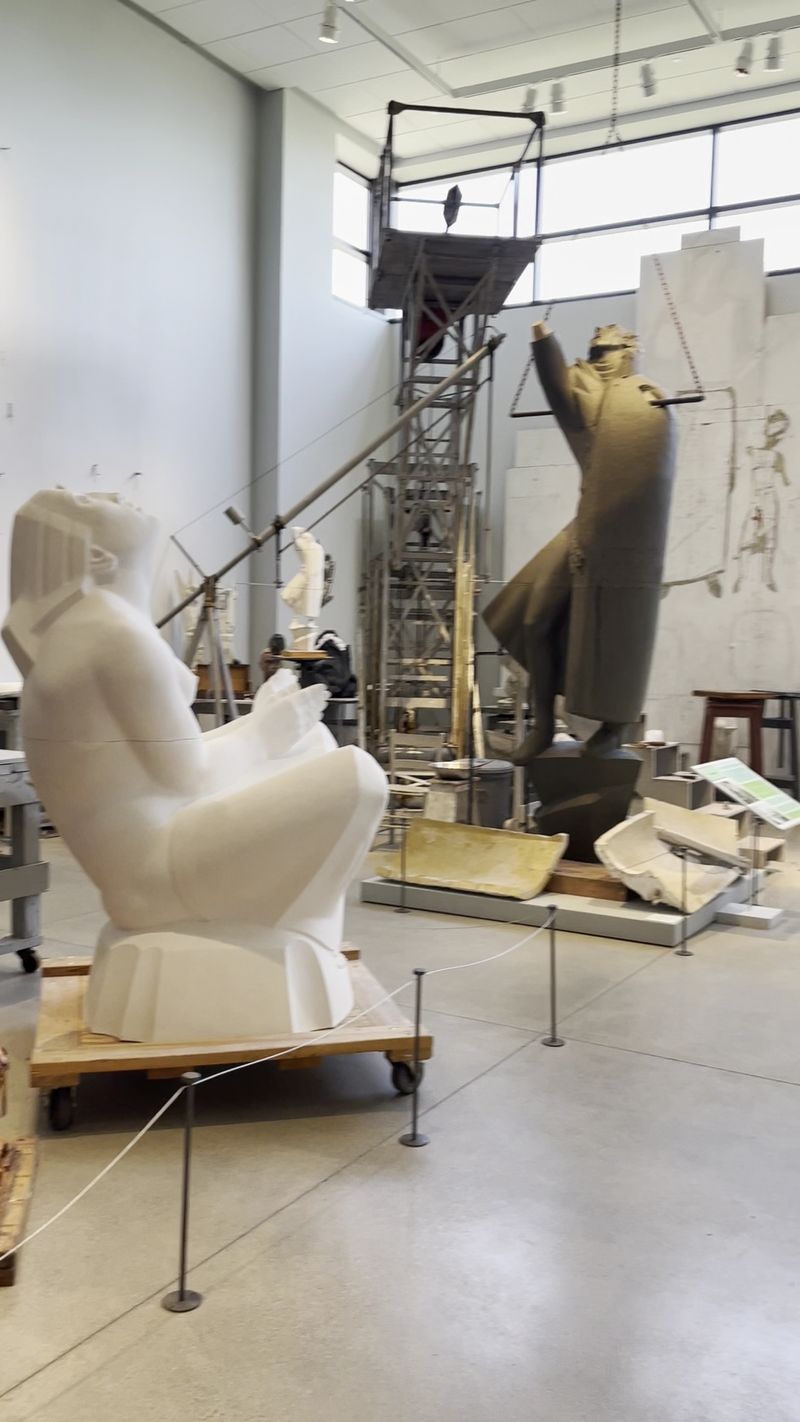
A monument may begin with something small enough to sit comfortably on a table. Fredericks commonly shaped a 12-inch clay maquette, enlarged the idea to quarter-scale plaster, and then developed a full-scale version for casting.
Use the displays to follow that growth step by step. Comparing versions helps explain why proportions changed and why large sculptures sometimes had to be cast in separate sections at specialized foundries.
The Spirit of Detroit, for example, was cast in Norway before reaching its famous public setting. Knowing that journey adds a useful engineering angle to the art.
Look for armatures, joins, and surface marks instead of viewing only the finished pose. Young visitors may especially enjoy spotting how a tabletop idea becomes a structure taller than a person outdoors.
Meet Familiar Michigan Figures Again
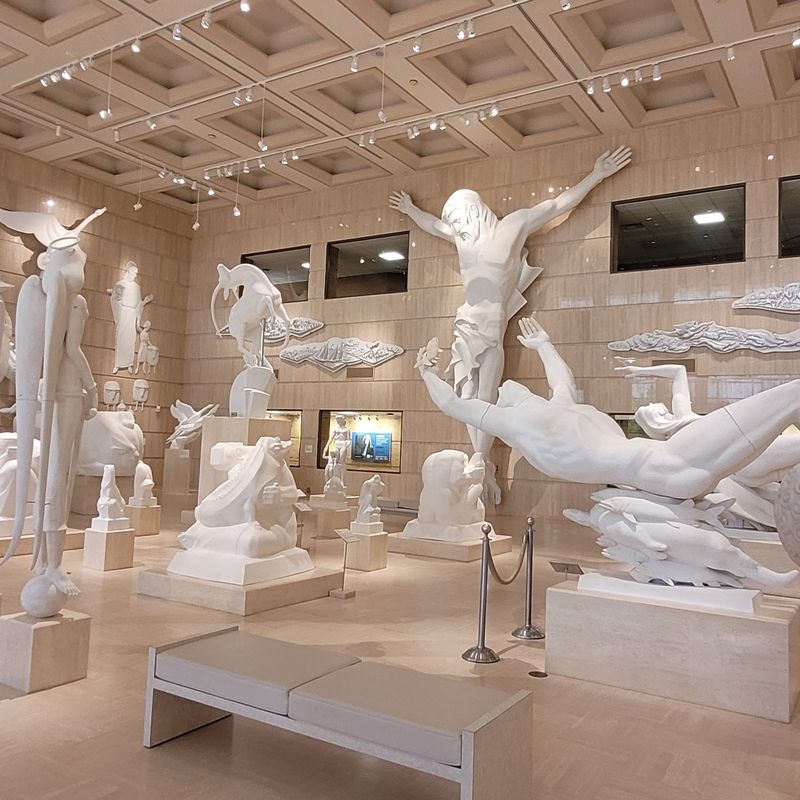
Recognition can arrive unexpectedly here, especially for people who grew up near Detroit-area civic spaces or former shopping centers. A figure remembered from childhood may appear again as a model, suddenly separated from its original fountain, plaza, or busy public setting.
Fredericks created approachable human and animal forms that invited communities to form attachments. The museum provides context for familiar works such as The Spirit of Detroit while introducing designs that never became household names.
Read the location details on labels and note places you might visit later. Seeing a model first makes the completed monument easier to understand, while recognizing an old favorite gives the gallery an emotional charge.
Photographs are useful, but pause before reaching for the camera and study the expression.
Pause Beneath The Towering Christ
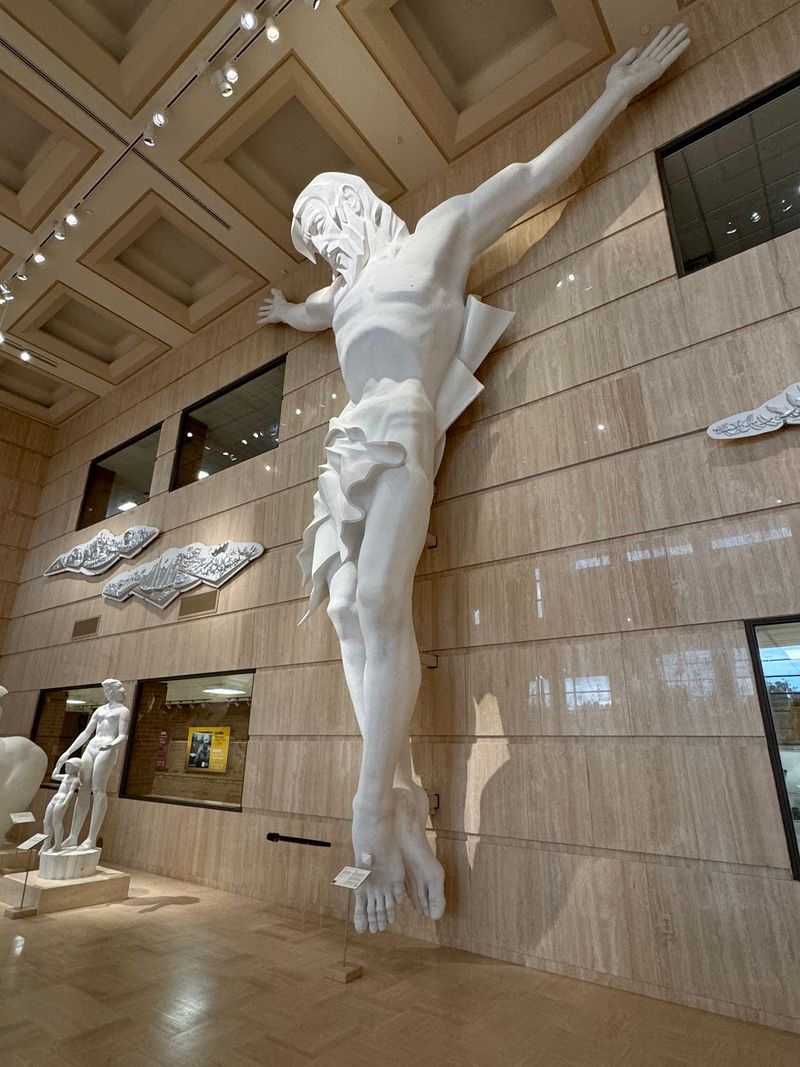
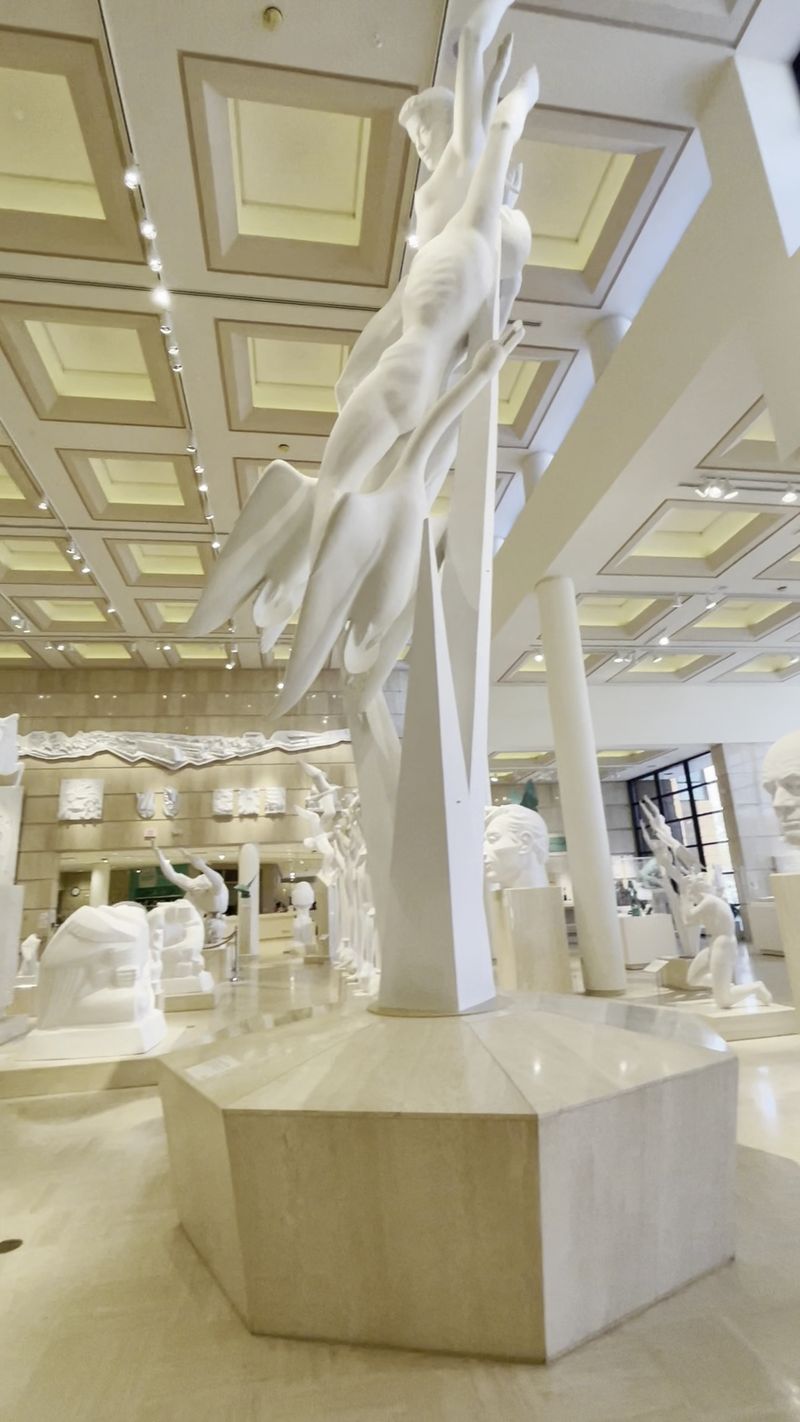
Few indoor encounters prepare you for a figure rising 28 feet along a museum wall. The towering Christ sculpture changes the scale of the room, making nearby visitors and models appear almost miniature beneath its calm, extended form.
Stand back first to understand the complete silhouette, then move nearer to examine the modeling of the face, hands, and drapery. That shift in distance mirrors how monumental art must work from both far away and close range.
The piece also highlights Fredericks’s spiritual and architectural commissions, an important part of his broad career. Give yourself a quiet minute instead of treating it as a quick photograph.
Its size attracts immediate attention, but the restrained expression and balanced design provide the lasting impression after you walk onward.
Read The Drawings Like Blueprints
Pencil lines offer a quieter kind of drama than bronze, yet they reveal where Fredericks solved difficult visual problems. The museum archives hold about 10 linear feet of life drawings, project sketches, and presentation drawings from across his career.
When selections appear on display, compare a drawn pose with a nearby sculpture. Fredericks regularly studied live models, using observed anatomy to guide figures that later became simplified, enlarged, or adapted for architecture.
Look for erased marks, revised outlines, and notes along the page. They show that confident public art grew through patient correction rather than one magical burst of talent.
Drawings are also easier for young artists to imitate at home, so bringing a small sketchbook can make the visit active without touching artwork.
Walk The Sculpture Garden Slowly
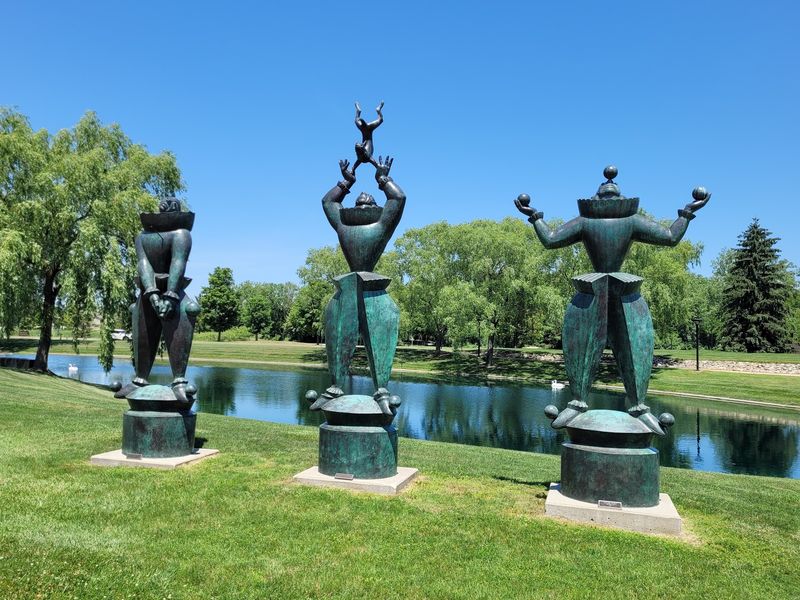
Outside, bronze figures trade gallery lighting for clouds, leaves, reflections, and Michigan weather. The Jo Anne and Donald Petersen Sculpture Garden contains a growing collection of Fredericks bronzes arranged among landscaped paths and water features.
Save time for a full loop rather than treating the garden as an entrance decoration. Changing viewpoints reveal how each figure interacts with open space, while sunlight and shadow bring out textures that appear softer indoors.
Private donors helped make more than a dozen bronze casts for this setting over the years. A dry, mild day offers the easiest walk, although seasonal changes give the sculptures different backgrounds.
Keep children near the path and follow posted guidance about touching. Benches and calmer corners make this a pleasant pause before leaving.
Check The Changing Exhibition Galleries
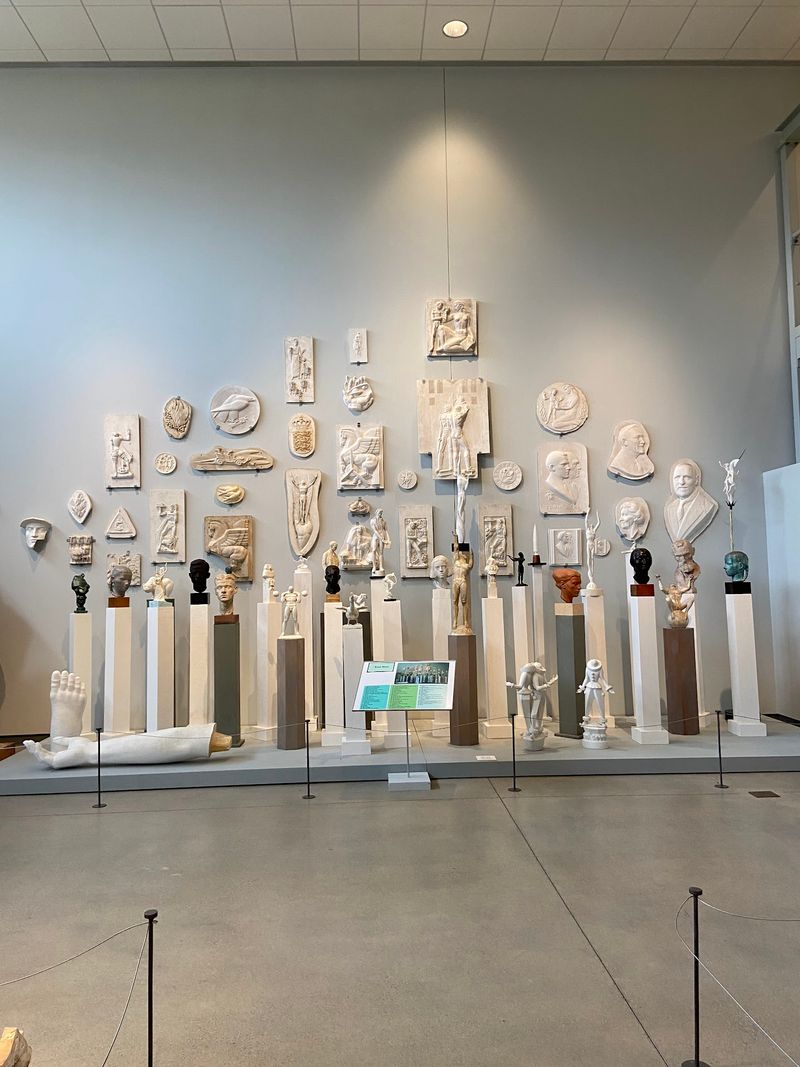
A return trip need not repeat the first one because two galleries host changing exhibitions. Displays may feature national and international artists, selections from museum holdings, or focused studies of Fredericks’s architectural, commemorative, spiritual, and whimsical work.
Check the museum’s official exhibition calendar before driving to campus. Rotating shows have their own dates, and advance research prevents disappointment if a gallery is between installations or closed for preparation.
Temporary exhibitions also create useful conversations with the permanent collection. A modern artist may handle bodies, materials, memory, or public space very differently, sharpening your view of Fredericks’s choices.
Give these rooms proper attention even when the monumental plasters are calling from nearby. Their smaller scale often encourages closer reading and a slower, more thoughtful pace.
Remember The Gift Behind The Museum
Generosity shaped this collection as surely as tools shaped the sculptures. The institution opened in May 1988 as the Marshall M.
Fredericks Sculpture Gallery after Dorothy Honey Arbury, a former student of Fredericks and founding college board member, helped develop the idea.
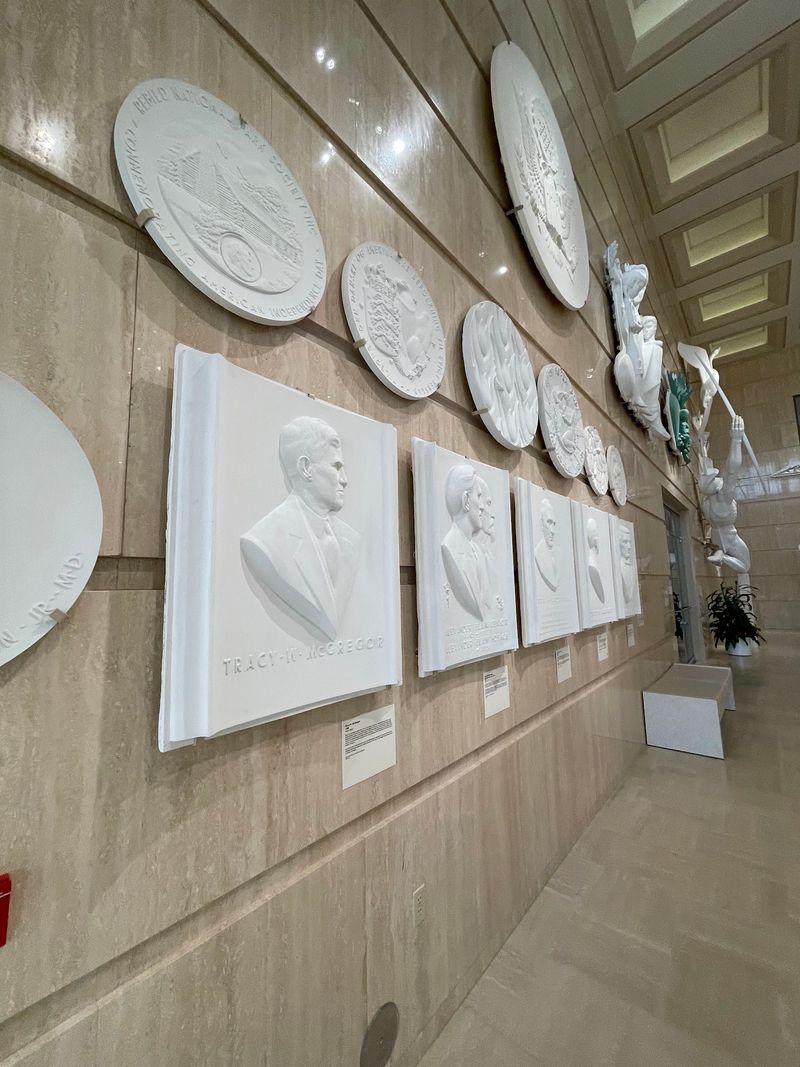
Fredericks personally oversaw the first installation of more than 200 plaster and bronze models and molds. In 1994, he donated most of his personal collection to Saginaw Valley State University.
After his death in 1998, remaining sculptures, studio equipment, tools, and papers strengthened the museum and its archives. Keep that history in mind while walking through the free galleries.
Visitors are not seeing a random collection of leftovers, but an artist’s carefully preserved working legacy made available for public learning.
Plan Enough Time For A Free Visit
Free admission makes an unplanned stop tempting, but checking basic details will produce a smoother visit. The museum is at 7400 Bay Road on the Saginaw Valley State University campus and is open Tuesday through Saturday from 10 a.m. to 4 p.m.
Doors are closed Sunday and Monday. Most visits are self-guided, so allow roughly one to two hours if you want to read labels, study the studio, see temporary exhibitions, and walk through the outdoor garden.
Campus parking is available, and official directions include guidance from I-75 exit 160. Groups larger than six should contact the museum ahead of time about arrangements.
Confirm hours and exhibition information on the official website before traveling because schedules, programs, and campus conditions can change.