
These 10 Michigan Towns Let You Park The Car And Never Need It Again
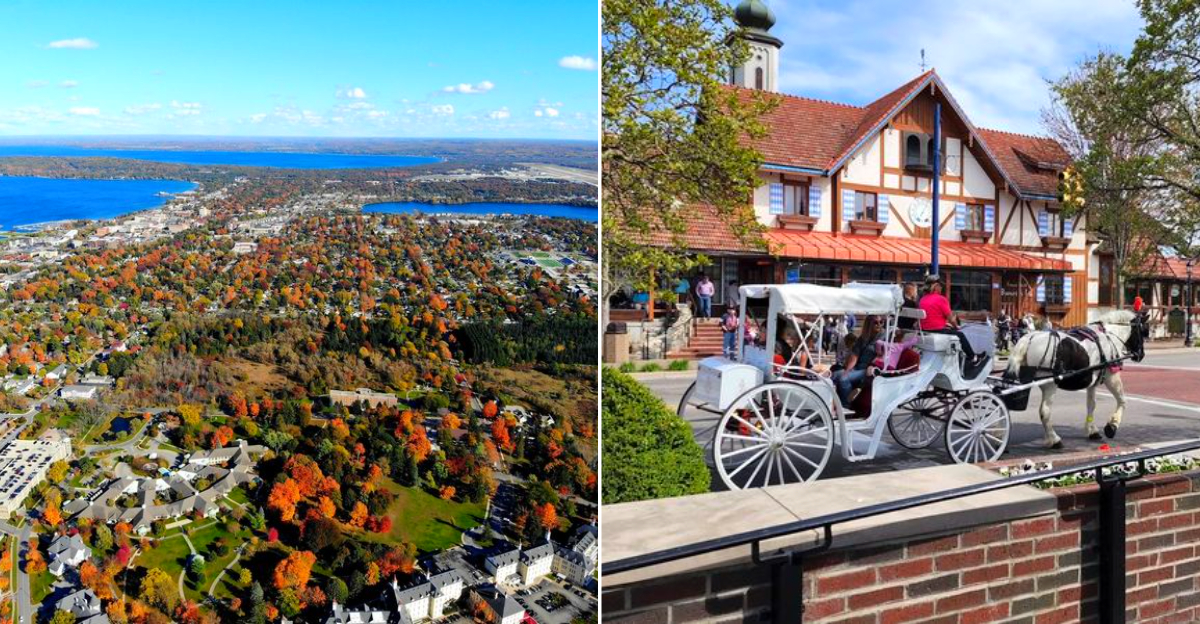
Walking through a lakeshore village one weekend, I realized I had not once reached for my car keys. Coffee in the morning, a bookstore by noon, dinner within four blocks of my hotel, and a sunset view I walked to instead of drove to.
That trip ruined me for sprawling suburbs. This state has an unfair share of small towns where the main street actually functions as a main street: shops you want to browse, restaurants worth returning to, and just enough weird local flavor to keep things interesting.
Some sit on the water. Others lean into their heritage with architecture that looks imported from somewhere far away.
All of them share one thing: you park once and everything you need is within walking distance. These ten towns convinced me that the best trips happen on foot. Try it once and you will not go back.
10. Saugatuck
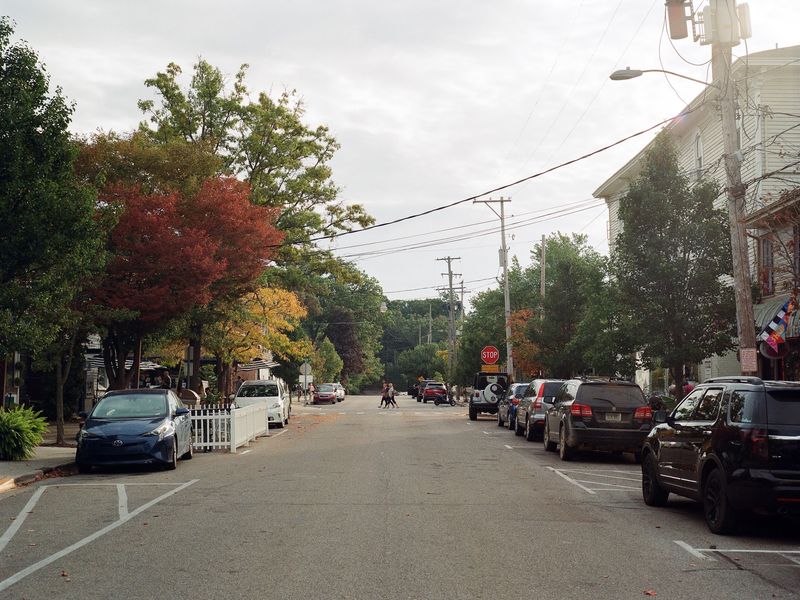
Few Michigan towns support the park-once idea as enthusiastically as Saugatuck. The local tourism bureau actually tells visitors that many people leave the car behind for the trip, thanks to a compact downtown, pedestrian-friendly connections, bikes, boats, and the inexpensive Interurban bus.
Butler Street alone can absorb hours with galleries, boutiques, restaurants, coffee, and river views packed into a small area.
Use 528 Water Street, Saugatuck, MI 49453, home of the Saugatuck Chain Ferry, as a useful waterfront anchor. The hand-cranked ferry has operated in some form since 1838 and currently runs seasonally from Memorial Day through Labor Day, weather and staffing permitting.
The 2026 fare is $3 each way for most adults.
Across the river, walkers can continue about half a mile along Perryman Street to Oval Beach. Anyone unwilling to make the return walk can use the Interurban, which provides demand-response transportation around Saugatuck and Douglas for about $1 per adult ride.
That combination is what makes Saugatuck special. Even the beach does not require surrendering to the car.
9. Holland
Heated sidewalks might be the ultimate evidence that a downtown genuinely expects people to walk.
Start around the Holland Visitors Bureau at 78 E. 8th Street, Holland, MI 49423, then follow the brick and cobblestone-lined downtown past more than 100 locally owned shops, galleries, restaurants, cafes, and brewpubs.
Holland’s municipal snowmelt system keeps much of that core considerably easier to navigate during winter too.
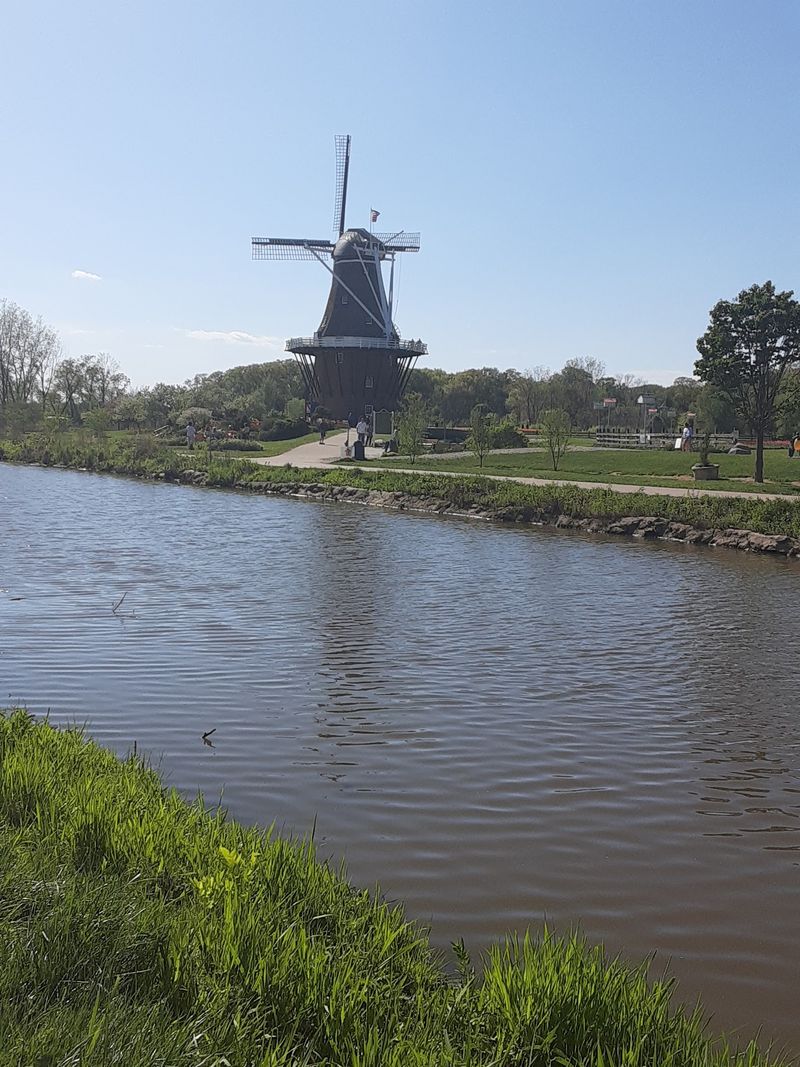
Dutch heritage appears without requiring a complicated itinerary. The Holland Museum is only a few blocks from Eighth Street, while Windmill Island Gardens at 1 Lincoln Avenue sits just beyond downtown and remains reasonable for walkers comfortable adding some distance.
Its centerpiece is De Zwaan, the only authentic operating Dutch windmill in the United States, surrounded by 36 acres of gardens and cultural displays. The important limitation is Lake Michigan.
Holland’s beaches are several miles from downtown, so a truly car-free weekend works best if the plan centers on Eighth Street, Hope College, Centennial Park, the farmers market, museums, and Windmill Island rather than trying to include Holland State Park.
Choose downtown lodging and the tradeoff feels reasonable.
There is enough food, shopping, culture, and Dutch character within the center to keep the keys untouched for a couple of days.
8. Traverse City
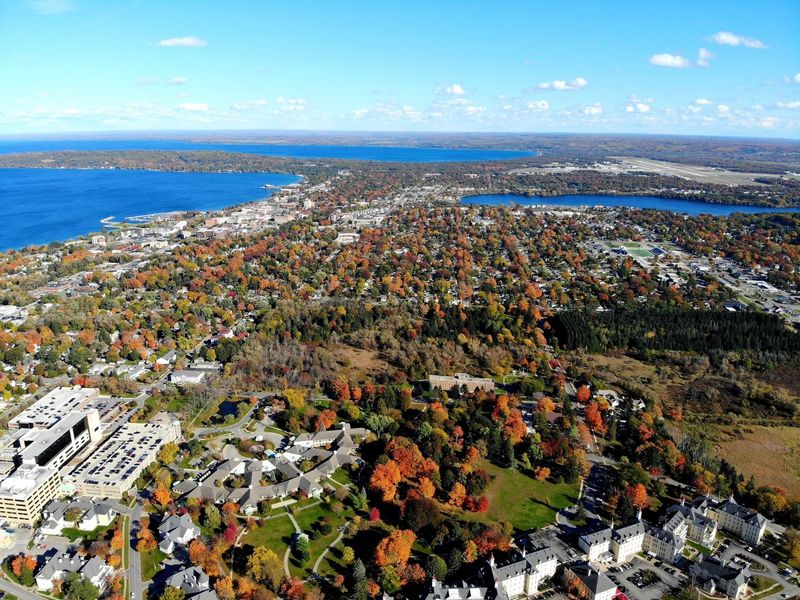
A larger city has no business being this easy without a car, but downtown Traverse City makes a convincing effort. Use 303 E.
State Street, Traverse City, MI 49684, as the center of the downtown district, where more than 200 shops, restaurants, and galleries spread through Front Street, Old Town, West End, and the Warehouse District. Traverse City Tourism explicitly describes the downtown as extremely walkable.
Water is only a few blocks away.
Clinch Park and Grand Traverse Bay connect directly with the paved TART Trail, a 10.5-mile nonmotorized corridor passing beaches, parks, restaurants, and other city destinations. That makes a bike useful but hardly mandatory for the central stretch.
When feet have had enough, public transit extends the radius. BATA’s free Bayline connects downtown with locations east and west of the core, while regular routes reach additional neighborhoods.
Service adjustments have been occurring during 2026 because of construction and staffing, so check the live schedule rather than relying on an old map.
Book downtown lodging and forget about peninsula wineries for one weekend.
Front Street, bookstores, restaurants, beaches, the Boardman River, theaters, nightlife, and waterfront sunsets already create a remarkably complete car-free version of Traverse City.
7. Petoskey
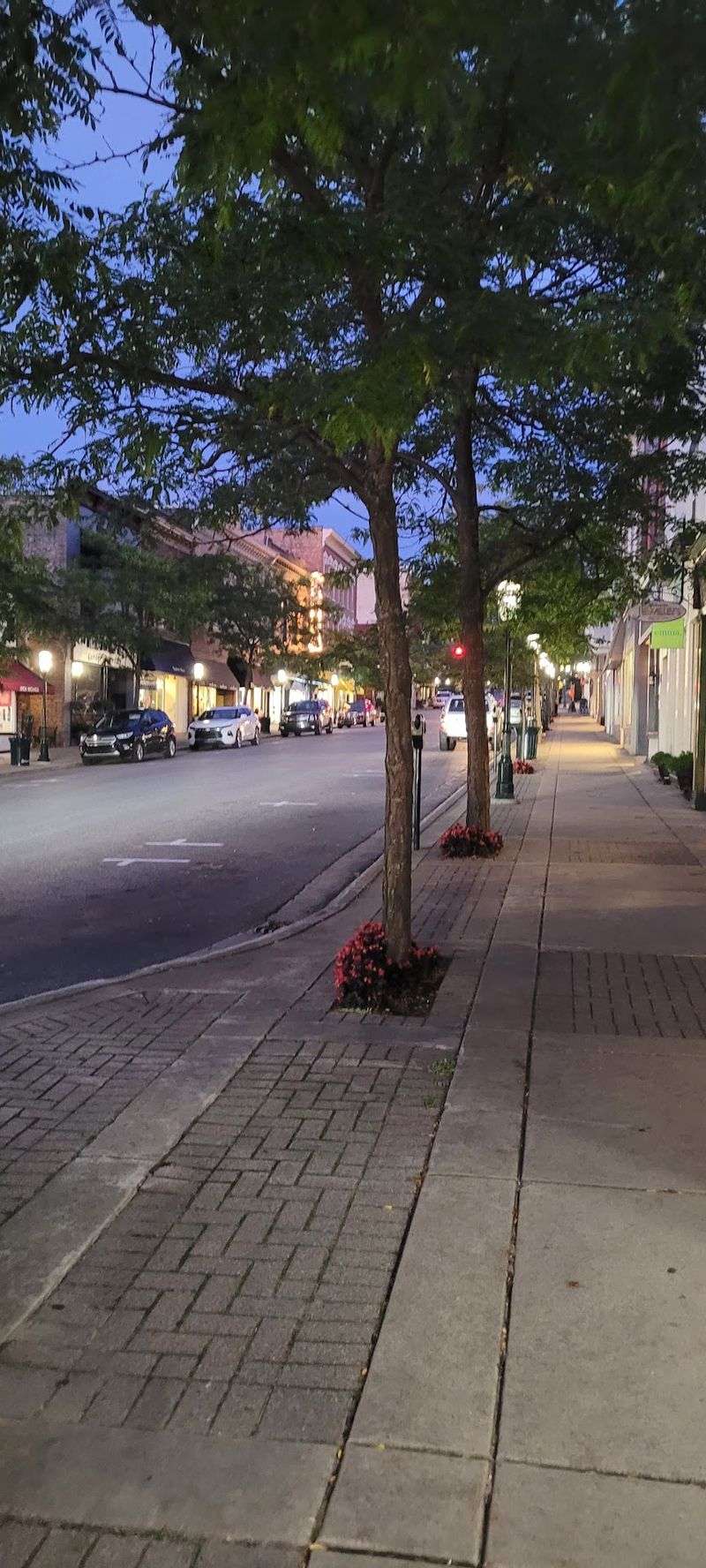
Petoskey makes the transition from downtown to waterfront without forcing pedestrians across US-31 traffic. That single design choice does wonders for a weekend on foot.
The Historic Gaslight District clusters independent shops, restaurants, galleries, and boutiques around Lake and Mitchell streets. From there, a pedestrian tunnel passes beneath the highway directly into Bayfront Park at 101 E.
Lake Street, Petoskey, MI 49770, putting more than 25 waterfront acres into the same walkable circuit.
Once below the bluff, there is a marina, pier, shoreline, waterfall area, historical museum, playground, and access to the Little Traverse Wheelway.
The paved trail runs through Petoskey and onward toward neighboring communities, although a portion of the broader Wheelway remains closed because of erosion, so check current conditions before planning a long-distance ride.
For an uncomplicated getaway, staying downtown matters. The official 2026 Petoskey itinerary even points visitors toward downtown lodging and describes Bayfront Park as walkable through the tunnel.
There are hills, so footwear matters more here than in flatter beach towns.
Still, coffee, bookstores, dinner, waterfront walks, Petoskey-stone hunting, parks, and sunset can all happen without returning to the parking lot.
6. Charlevoix
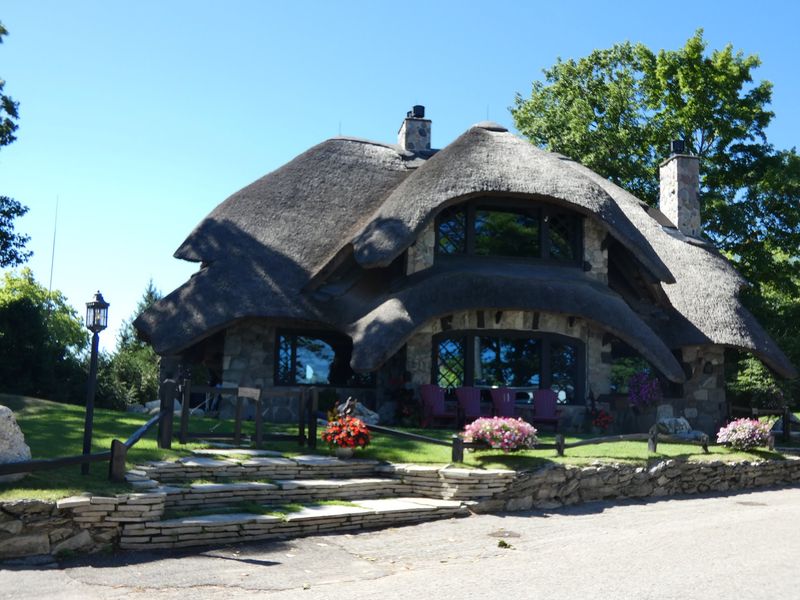
Three lakes squeeze so much scenery into central Charlevoix that walking often makes more sense than driving. Begin at East Park, 400 Bridge Street, Charlevoix, MI 49720, where the marina and Round Lake sit directly beside downtown restaurants and shops.
The local tourism bureau specifically describes walkability as one of downtown’s strengths.
From there, a surprisingly complete sightseeing loop unfolds on foot.
Walk toward Lake Michigan Beach and the red lighthouse, circle through the Earl Young Mushroom House neighborhoods, stop at the library and Charlevoix Circle of Arts, then return toward East Park and the marina. Visit Charlevoix even publishes a downtown walking tour tying these places together.
The Mushroom Houses deserve one important rule: they are private residences. Admire the stonework and whimsical roofs from public streets and sidewalks without wandering onto lawns, driveways, or porches.
Summer traffic gives walkers another advantage. The Memorial Drawbridge opens regularly for boats, interrupting vehicle traffic, while pedestrian routes beneath the bridge can help people avoid waiting at certain crossings.
Local tourism officials actively recommend ditching the car when staying nearby. In other words, the bridge may annoy drivers. For someone already walking to dinner, it mostly provides entertainment.
5. Frankenmuth
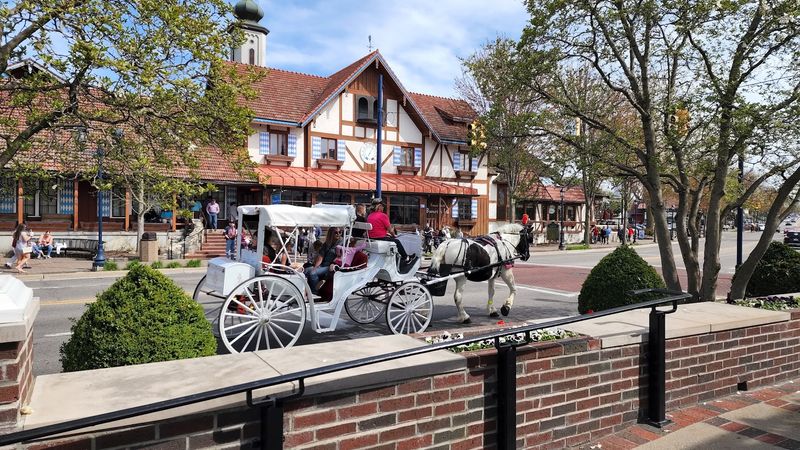
The Bavarian architecture may attract the camera first, but the transportation setup is what makes a car-free weekend surprisingly practical. Start near the Frankenmuth Visitor Center at 635 S.
Main Street, Frankenmuth, MI 48734, then walk Main Street toward Zehnder’s, Bavarian Inn, the Covered Bridge, riverside paths, and Frankenmuth River Place Shops. Official tourism guidance explicitly describes downtown streets as walkable.
River Place alone contains more than 40 shops and attractions at 925 S. Main Street, plus restaurants and seasonal events.
Main Street’s wide sidewalks and the compact tourist core make wandering easier than repeatedly moving a vehicle between attractions.
Bronner’s CHRISTmas Wonderland is the obvious complication.
It sits farther south than the central restaurant and shopping district, but Frankenmuth solves that problem with its shuttle system. Current stops include downtown, River Place Shops, lodging areas, and Christmas Lane for Bronner’s.
The tourism bureau summarizes the idea neatly: park once and explore endlessly.
Add a horse-drawn carriage or seasonal Bavarian Belle cruise and the weekend becomes even less dependent on four wheels.
Frankenmuth may look like a themed driving destination from the highway. Once checked into central lodging, it works much better as a village explored slowly.
4. Lexington
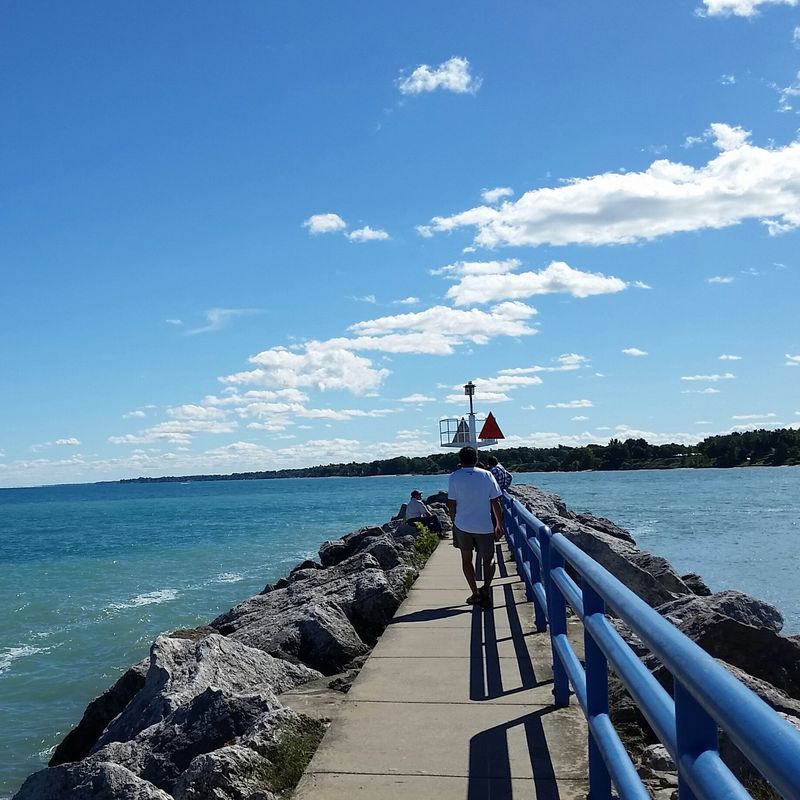
Lexington may be the purest small-town version of this list. The village government itself promotes shopping, restaurants, Lake Huron swimming, harbor strolling, fishing, parks, and leisurely walks through tree-lined streets within the same compact community.
Use Village Hall at 7227 Huron Avenue, Lexington, MI 48450, as an easy downtown anchor.
Huron Avenue does most of the commercial work, while the lake appears only a few blocks away.
Walk toward Lexington State Harbor and the waterfront, browse shops, stop at the old-fashioned General Store, then return downtown for dinner without involving the car.
Michigan’s own tourism listing for Lake Huron Lodge even tells guests that downtown attractions are within roughly a five-minute walk and that they can simply park and explore on foot.
There is good 2026 news at the water too. Tierney Park underwent a major renovation and reopened to the public on July 2, 2026, adding improved paths, a new amphitheater, restrooms, and waterfront features.
Some harbor and boating projects are continuing into 2026 and 2027, so marina operations may occasionally be affected. The renovated park also brings summer Music in the Park back into the walkable core.
3. Grand Haven
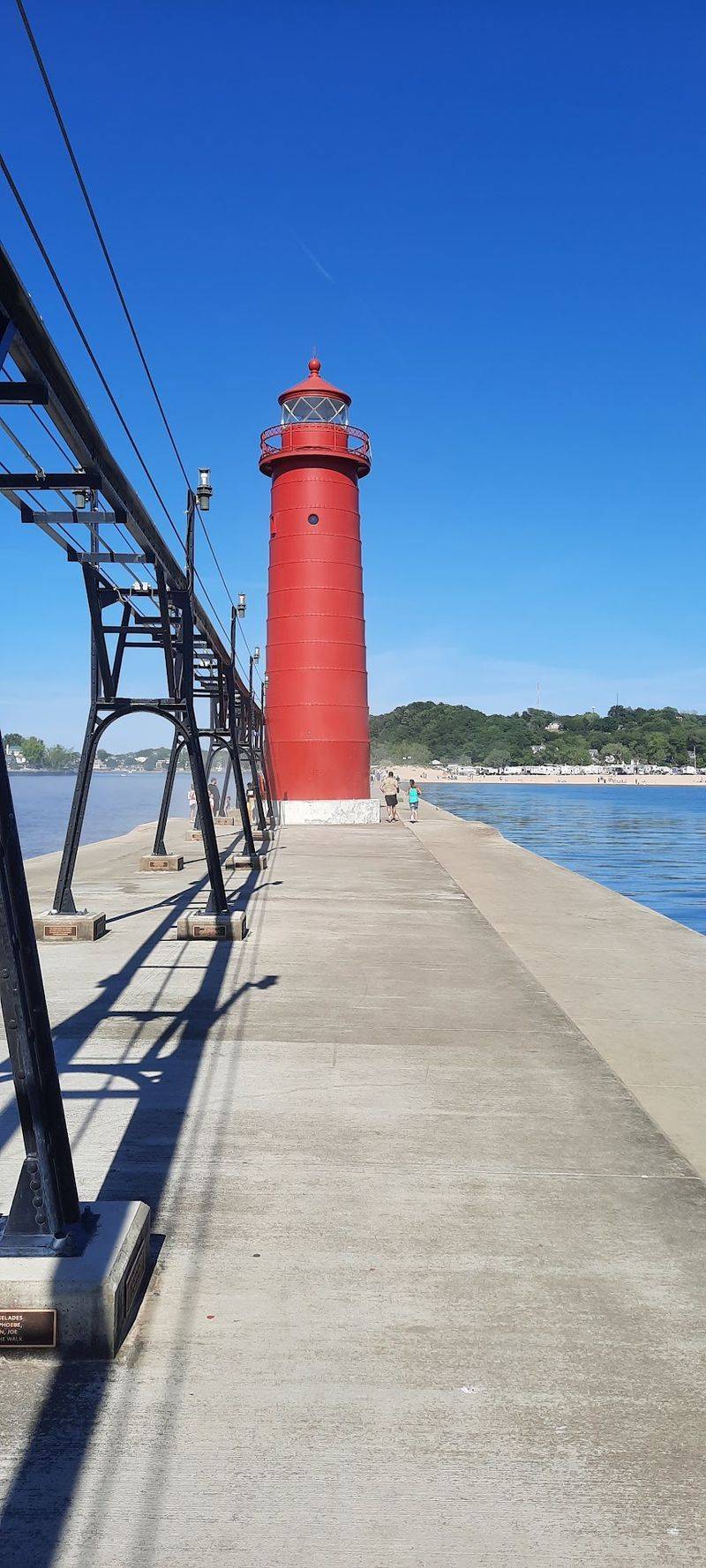
A waterfront path does most of the navigation for you in Grand Haven.
Begin near Chinook Pier at 301 N. Harbor Drive, Grand Haven, MI 49417, then follow the paved boardwalk along the Grand River toward Lake Michigan.
The route runs about 1.5 miles one way, passing marinas, restaurants, parks, charter boats, and places to stop before eventually reaching Grand Haven State Park, the pier, and the city’s red lighthouse structures.
Downtown intersects naturally with the waterfront route, so coffee on Washington Avenue, shopping, lunch, beach time, and sunset do not require separate parking missions.
The lighthouse is particularly interesting in 2026. The restored foghouse began opening to visitors on select Tuesdays, Thursdays, Saturdays, and Sundays from 10 a.m. to 5 p.m., weather permitting. Save some energy for the return walk.
Three miles round trip between Chinook Pier and the end of the waterfront route is manageable for many travelers, but it becomes considerably longer after sand, swimming, dinner, and an evening show.
The Musical Fountain provides the final reason to stay downtown after dark, with seasonal performances at dusk.
The car can sit still while Grand Haven supplies nearly everything else along one long ribbon of water.
2. South Haven
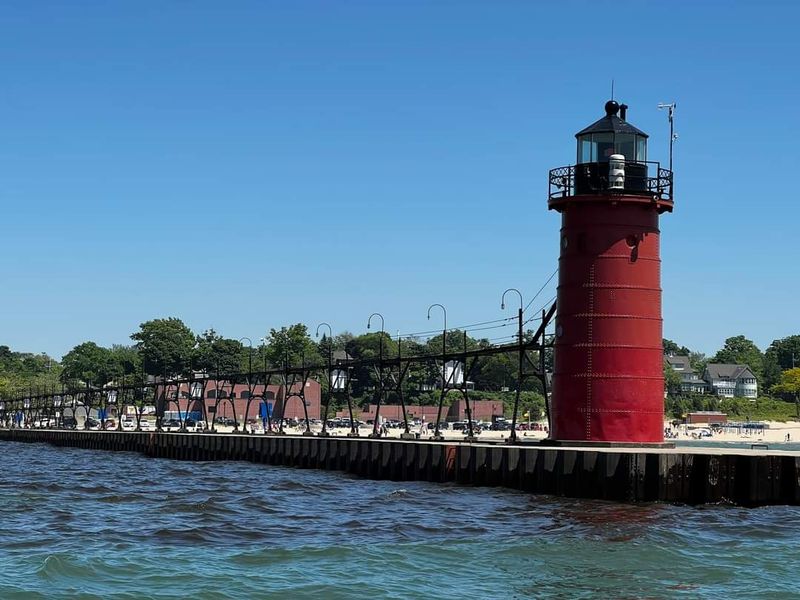
South Haven is one of the few towns whose tourism office practically writes the headline for us: park once and spend the rest of the day on foot.
Downtown flows directly toward the Black River harbor and Lake Michigan, with restaurants, shops, beaches, museums, and waterfront paths connected closely enough for wandering to become the transportation plan.
Use 546 Phoenix Street, South Haven, MI 49090, near the visitor center, as a practical downtown anchor.
From there, South Beach at 60 Water Street is only a short walk away and was named Michigan’s best beach in the 2026 USA TODAY 10Best Readers’ Choice Awards. Lifeguards also returned to South Beach in summer 2026 for the first time in 25 years.
The nearby red South Pierhead Light completes the route. The present tower dates to 1903, while the lighthouse station’s history goes back to 1872, and its elevated catwalk is one of only four surviving lighthouse catwalks in Michigan.
For a longer stroll, the Maritime District Harbor Walk connects the North and South Pier areas through the waterfront.
Book a downtown inn, travel light to the beach, and leave the car alone.
1. St. Joseph
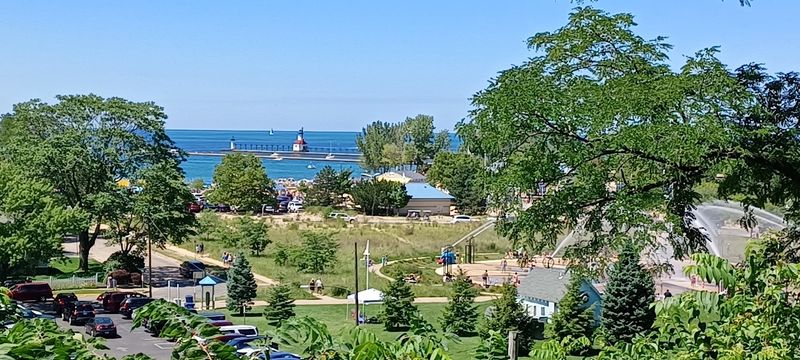
St. Joseph might be the easiest town here for proving that the beach and downtown do not have to be separate destinations.
The walkable Victorian-era center sits above Lake Michigan, while Silver Beach County Park at 101 Broad Street, St. Joseph, MI 49085 spreads directly below the bluff. Southwest Michigan tourism explicitly identifies Silver Beach as walkable from downtown.
A ramp connects the beachfront area back toward the upper streets, while paved routes lead among the beach, Whirlpool Compass Fountain, Silver Beach Center, and South Pier.
Silver Beach Center at 333 Broad Street adds the historic carousel and family attractions only steps from the sand. Downtown cafes, restaurants, galleries, and shops then fill the other half of the day.
St. Joseph even works without arriving by car.
Amtrak stops at a depot within walking distance of the beach, attractions, hotels, and downtown businesses, making this one of the rare Michigan lake towns where a visitor can realistically arrive by train and continue the getaway on foot.
The bluff means there is a climb involved, so “walkable” should not be confused with completely flat.
Still, few Michigan towns connect breakfast, shopping, beach sand, a carousel, lighthouse views, and dinner so efficiently.