
Nearly A Century Of Crunchy Finnish Toast Comes Out Of This Michigan Bakery Every Morning
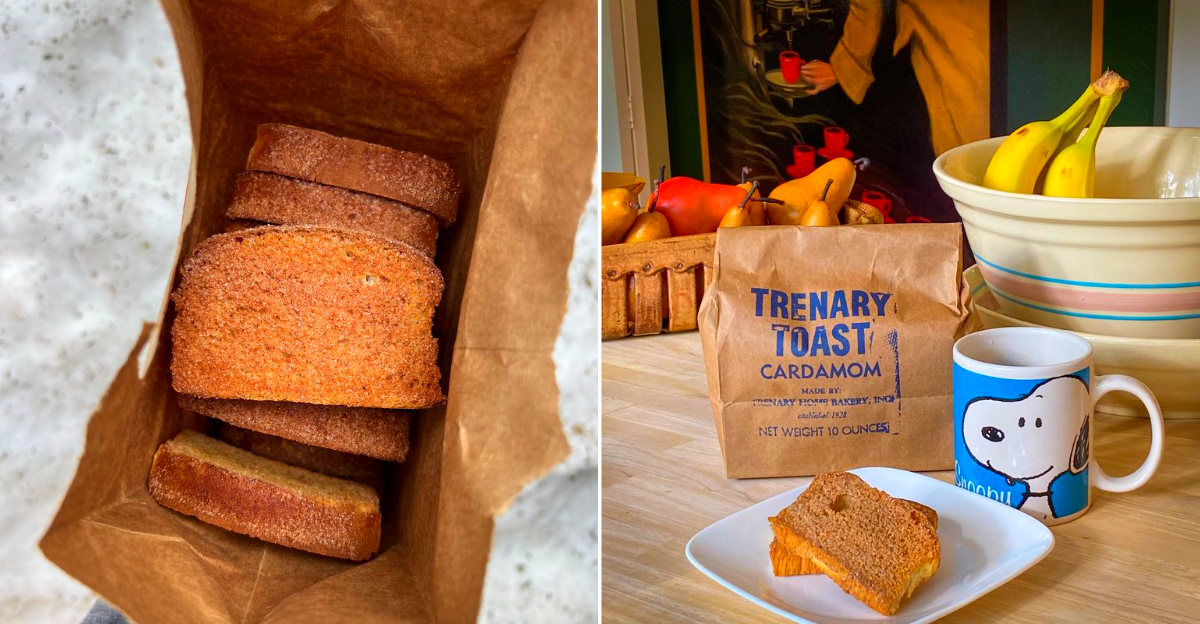
Nobody drives through a town of one hundred people for bread. Except they do. The bakery sits on a two-lane highway in the Upper Peninsula, and on most mornings the parking lot has plates from three or four states. The toast is the draw.
Thick-sliced, baked twice until it cracks and snaps, then dunked in coffee until it yields and turns sweet. My first time, I ate an entire bag standing by the car before I started the engine.
The cinnamon-sugar version is the one people argue about, but the plain has a subtlety that grows on you fast. Cardamom bread sits on the counter next to doughnuts that taste like someone’s grandmother made them before dawn.
The women behind the counter know the regulars by name. Michigan has kept this bakery running for nearly a century, and the toast still crunches the way it did in 1928.
Know The Finnish Story
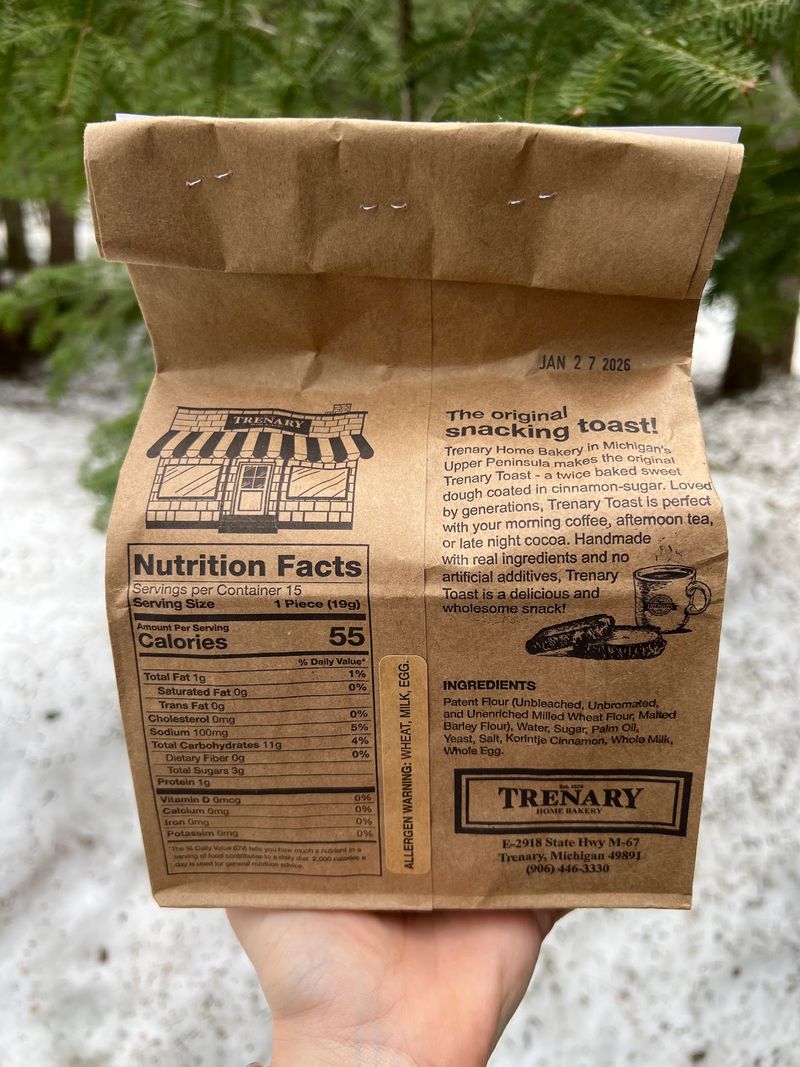
A humble rusk carries a surprising amount of Upper Peninsula history. Finnish immigrant Jorma Syrannen founded Trenary Home Bakery in 1928 and adapted korppu, a hard Finnish bread made for dipping, for the local Finnish community.
The recipe has remained largely unchanged while the toast has moved from everyday pantry food to a recognizable Michigan specialty.
Remember that background when tasting it, since hardness is not a flaw or an accident. Drying bread through a second bake once made practical sense, and the resulting toast keeps far longer than moist loaves.
Local families have eaten it for decades, with some people recalling it as a childhood food later shared with their own children. Reading the package or bakery history before breakfast adds useful context: every crisp slice connects migration, thrift, family habits, and nearly a century of baking in tiny Trenary.
M-67 Runs Straight To The Home Of Trenary Toast
Trenary Home Bakery is located at E2918 State Highway M-67 in Trenary, Michigan, in the heart of the Upper Peninsula. From US-41, turn east onto M-67, which leads directly into the small community.
Stay on M-67 as you enter Trenary and continue toward the bakery. The longtime roadside business sits directly along the state highway, so the final approach requires no detour onto smaller local roads.
Turn from M-67 into the bakery property and walk toward the storefront entrance. The bakery remains at its original Trenary location, where visitors can buy its breads and signature toast directly from the source.
Try A Plain Crunch
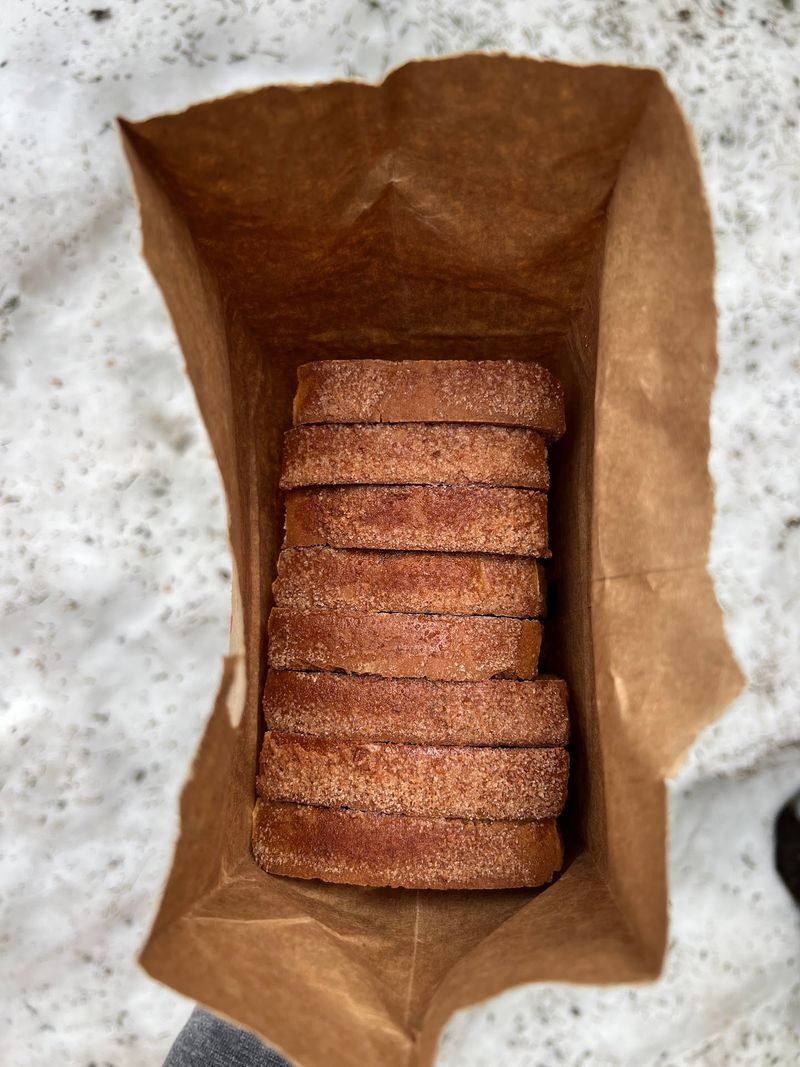
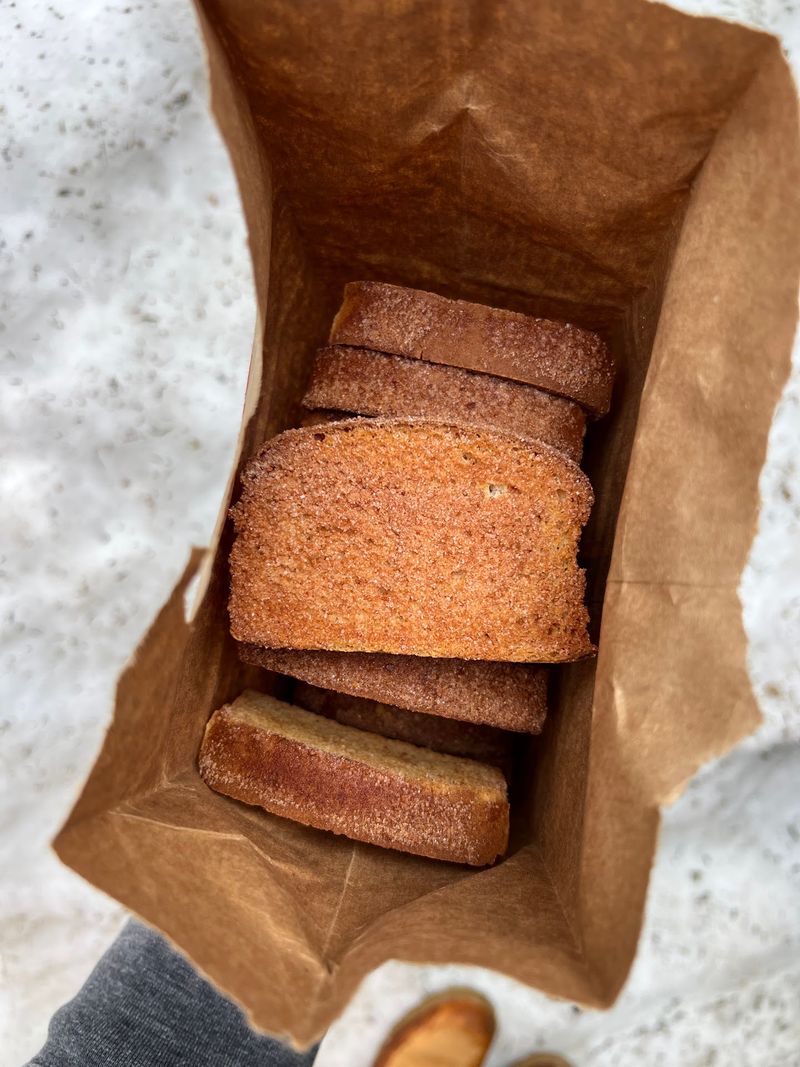
The first unsoftened bite can sound almost comically loud. Trenary Toast earns that sturdy texture from being baked twice until nearly all moisture is gone, leaving a dry slice that resists the teeth before breaking cleanly.
People who enjoy eating it straight from the bag are sometimes called crunchers, and the name fits beautifully.
For the safest, most enjoyable test, take a modest bite rather than attacking a whole corner at once. Let smaller pieces break down slowly, and notice how the cinnamon coating and toasted bread develop as you chew.
Plain tasting also gives you a baseline before adding drinks or toppings. Anyone with sensitive teeth should skip the bravado and move directly to dunking.
The point is not to prove toughness. It is to understand the unusual structure created by that careful second bake and decide which texture suits you best.
Master The Dunk
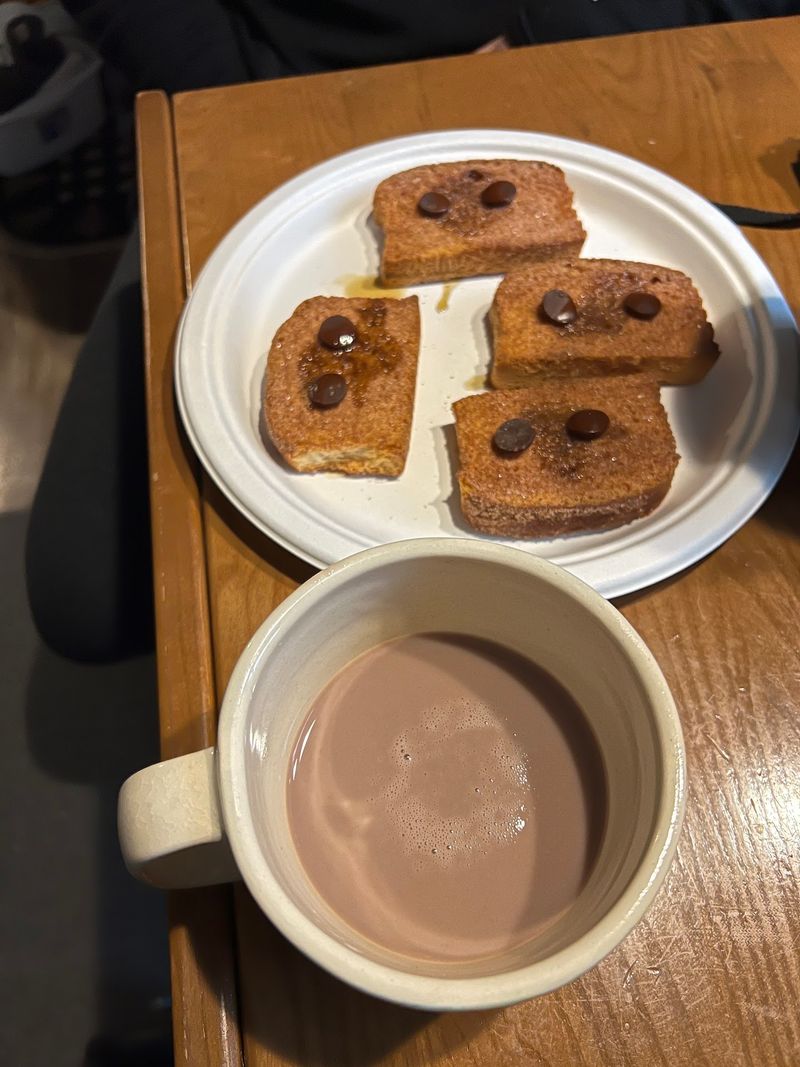
One quick dip changes this formidable toast into something gentler without turning it to mush. Coffee, tea, and hot chocolate all work because warmth slips into the dry crumb, softening the surface while the center keeps some bite.
That balance between soaked edge and crisp middle is the heart of the traditional Trenary ritual.
Hold one end and dip the other for only a few seconds on your first attempt. Longer soaking produces a softer piece, so adjust the timing instead of dropping the whole slice into the mug.
A wide cup helps prevent cinnamon sugar and crumbs from landing on the table. Dunking also encourages a slower breakfast, since each piece asks for a pause before the next bite.
Shared around a kitchen table, the small routine feels practical and social, much like the Finnish custom that inspired the bakery’s enduring product.
Watch For Seasonal Flavors
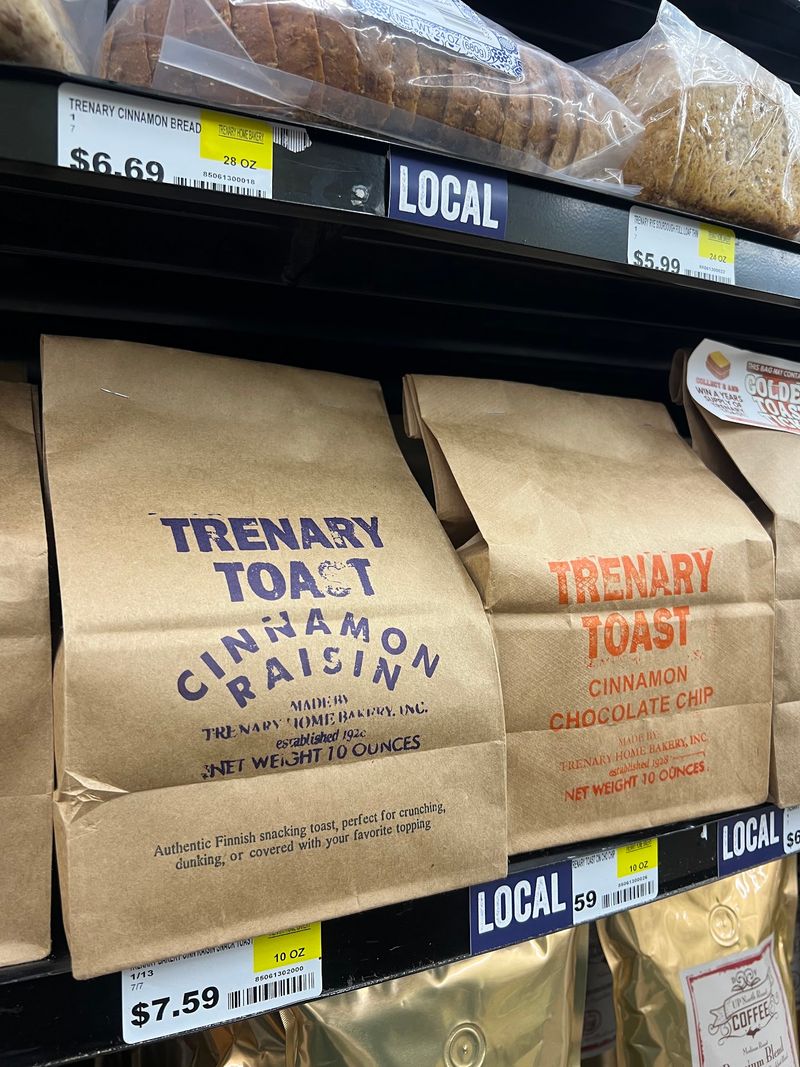
Summer and winter occasionally bring different personalities to the familiar twice-baked slice. Tart Cherry Sugar Trenary Toast has appeared as a summer variety, while Chocolate Chip Trenary Toast is associated with the winter months.
Milk-chocolate-dipped and dark-chocolate-dipped options add another layer of sweetness when available.
Check the bakery’s official shop before planning around a particular seasonal flavor because limited products can change or sell out. Tart cherry offers a Michigan-friendly fruit note against the dry toast, while chocolate makes the snack feel richer than the cinnamon original.
Sampling a special release beside a standard flavor is a useful way to compare coatings without losing sight of the shared crisp base. Buy only what you can store sealed, even with the product’s long life.
Seasonal bags also make thoughtful gifts, particularly for someone who already knows the original and wants a less expected version of Trenary’s signature crunch.
Notice The Cardamom
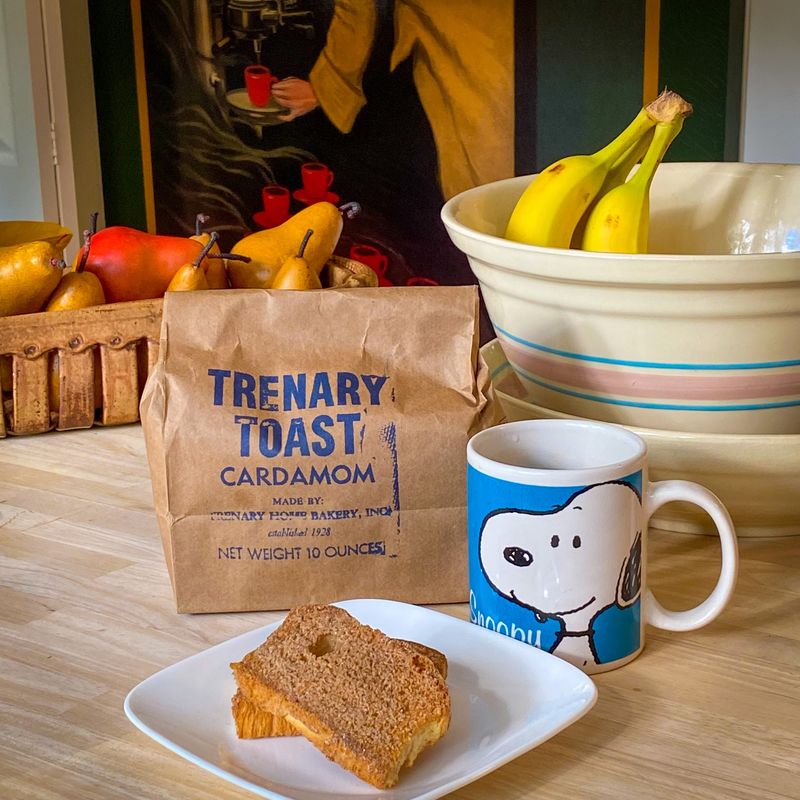
Cardamom brings a bright little spark that cinnamon cannot imitate. Inspired by Finnish sweet breads such as pulla or nisu, this Trenary Toast variety starts with sweet bread, receives a cardamom-and-sugar coating, and returns to the oven for its defining second bake.
The spice can seem citrusy, floral, and gently sharp rather than simply sweet.
Smell a slice before eating because much of cardamom’s character arrives through its aroma. A brief dunk in coffee or tea releases more fragrance and softens the bread enough to let the spice linger.
Pairing it with a plain topping, such as butter or cream cheese, keeps louder flavors from covering its distinctive edge. Cardamom is an especially sensible choice for anyone curious about the bakery’s Finnish influences beyond the basic korppu method.
It tastes familiar enough for breakfast but unusual enough to make you stop and reconsider the next bite.
Add A Favorite Spread
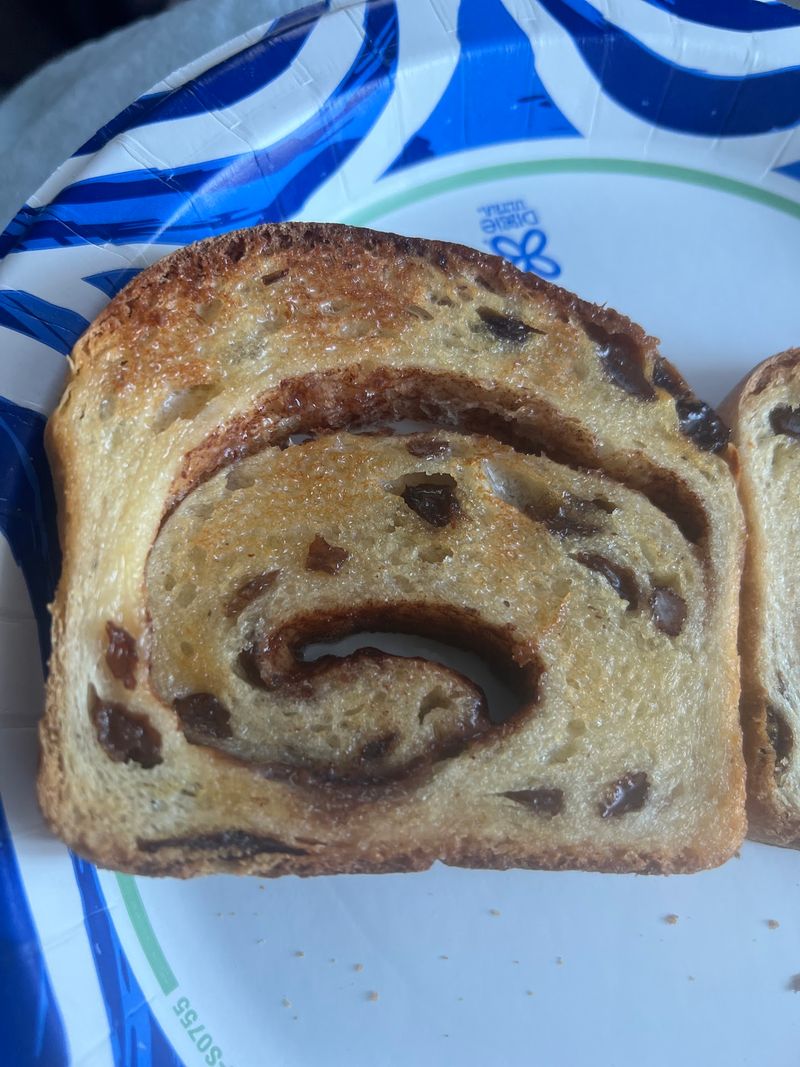
A sturdy slice can carry toppings that would overwhelm a fragile cracker. Butter melts into a lightly warmed piece, jam fills the dry crumb with fruit, and peanut butter turns it into a more filling snack.
Cream cheese supplies cool tang, while chocolate-hazelnut spread leans firmly toward dessert.
Begin with a thin layer because Trenary Toast already has sweetness and a pronounced baked flavor. Spreading too heavily can bury the cinnamon or cardamom coating and make the slice awkward to bite.
For easier handling, soften the toast with a very quick dunk or warm it briefly before adding butter, but avoid soaking it when using thick toppings. I like comparing two halves of one slice, each with a different spread, because the crisp base stays constant while everything above it changes.
Serve immediately after topping so moisture does not have time to erase the appealing contrast.
Save Crumbs For Recipes
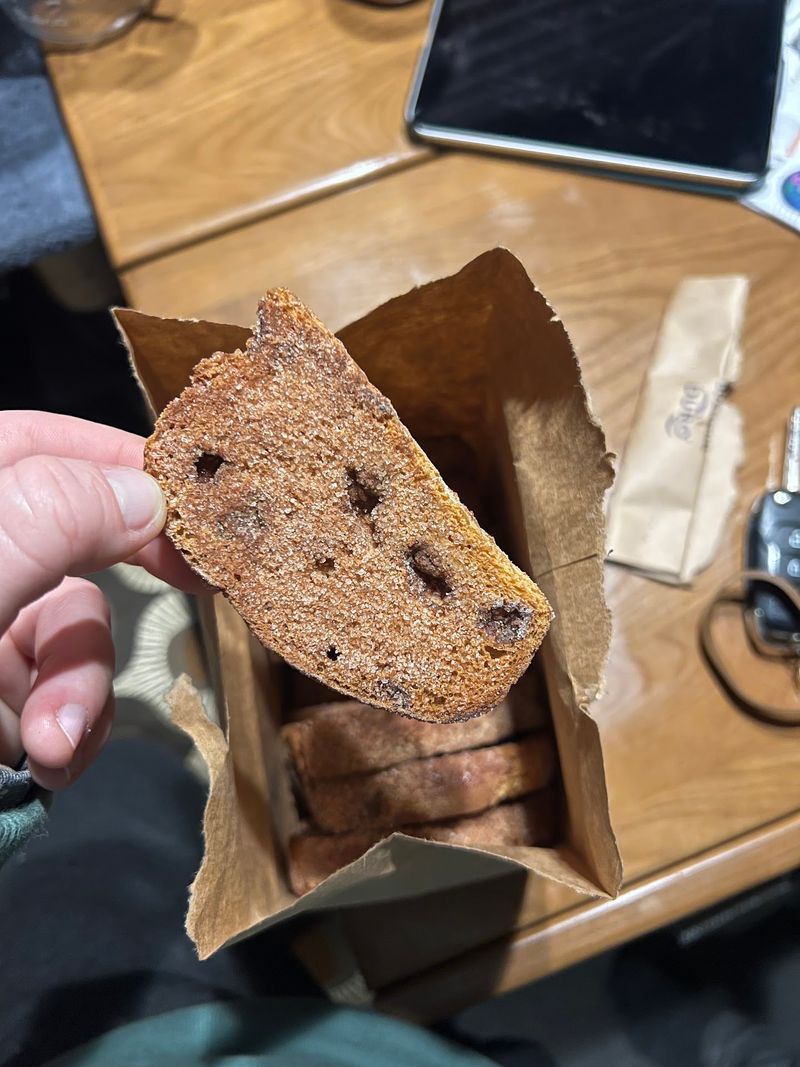
Broken pieces need not end their career at the bottom of the bag. Trenary Toast can be crumbled into warm milk for a simple, comforting bowl, and its dry structure also makes it useful in baked dishes.
Crumbs may become a pie crust, a crisp topping, or part of a French-toast-style bake.
Crush pieces inside a sealed bag with a rolling pin to control flying crumbs and choose the texture your recipe needs. Fine crumbs bind more evenly for crusts, while rough chunks create a noticeable crunch on top of fruit or casseroles.
Remember that flavored toast already contains sugar and spice, so reduce other sweeteners when necessary. Add liquids gradually because the twice-baked bread absorbs moisture eagerly.
Repurposing crumbs respects the work behind each slice and gives an old bakery product a playful second role. It is also a practical answer when only shattered pieces remain.
Picture The Double Bake
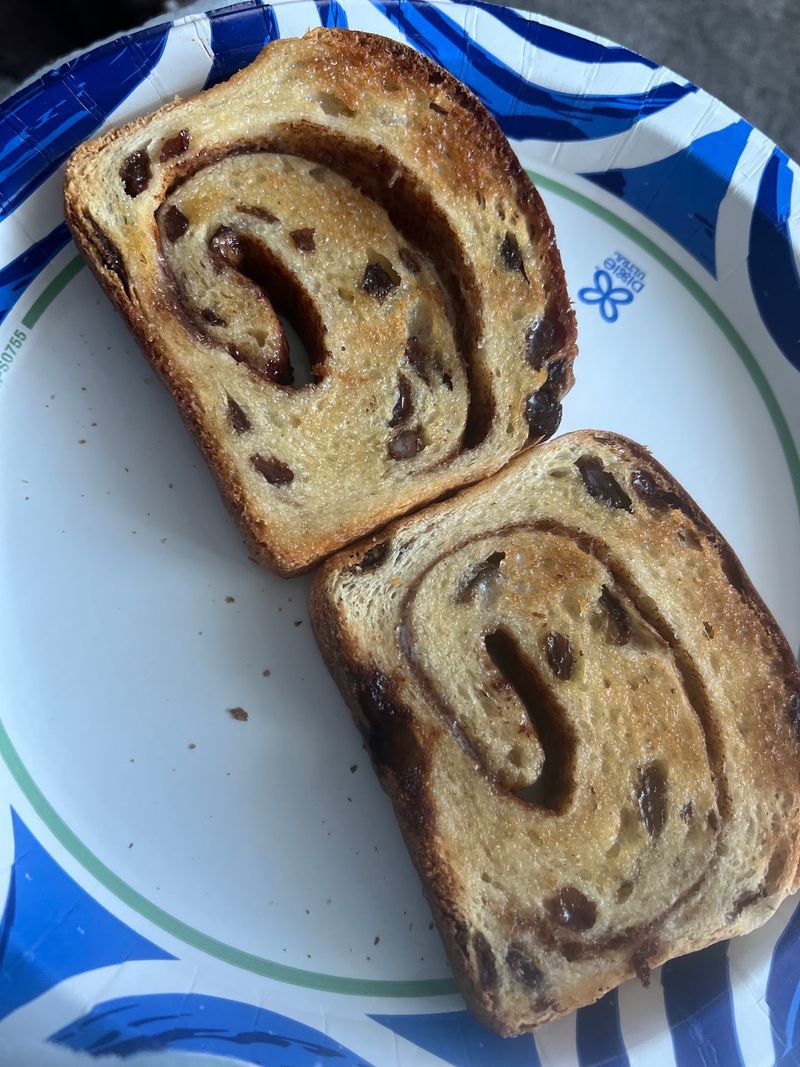
At 2:00 in the morning, the bakery’s working day is already underway. Five days a week, a team of roughly 20 to 25 employees produces and hand-packs goods in Trenary.
Raw ingredients become dough, the dough is shaped into balls, and those forms are baked into loaves before the process takes its unusual turn.
Workers slice the loaves, apply the chosen flavor coating, and bake the pieces again. That second round drives out moisture and creates the dry, durable texture associated with Trenary Toast.
Knowing the sequence helps explain why this is more than ordinary bread left in an oven too long. Each stage controls shape, flavor, and shelf stability, while hand packing keeps production tied to its Upper Peninsula home.
When opening a bag, look at the evenly dried surfaces and coating. They are small signs of an exact routine repeated before sunrise.
Plan Before Visiting
A road trip to E2918 M-67 deserves a quick check before turning off the highway. The Trenary building is the production home of the toast, but public access and posted hours have not always been clear.
Contact the bakery through its official website or phone number before assuming the site operates like a daily retail cafe.
If an in-person stop does not fit, the company ships Trenary Toast across the United States and internationally. Packages have even traveled overseas to active military personnel wanting a familiar taste of home.
A Trenary Toast Cafe also operates in Marquette, providing another connection to the brand away from the original bakery. Online ordering is the simplest option for many people, especially outside the Upper Peninsula.
Confirm current availability, shipping times, and pickup details directly with the business. Careful planning protects a long drive from becoming a closed-door photograph and nothing more.
Protect The Famous Crunch
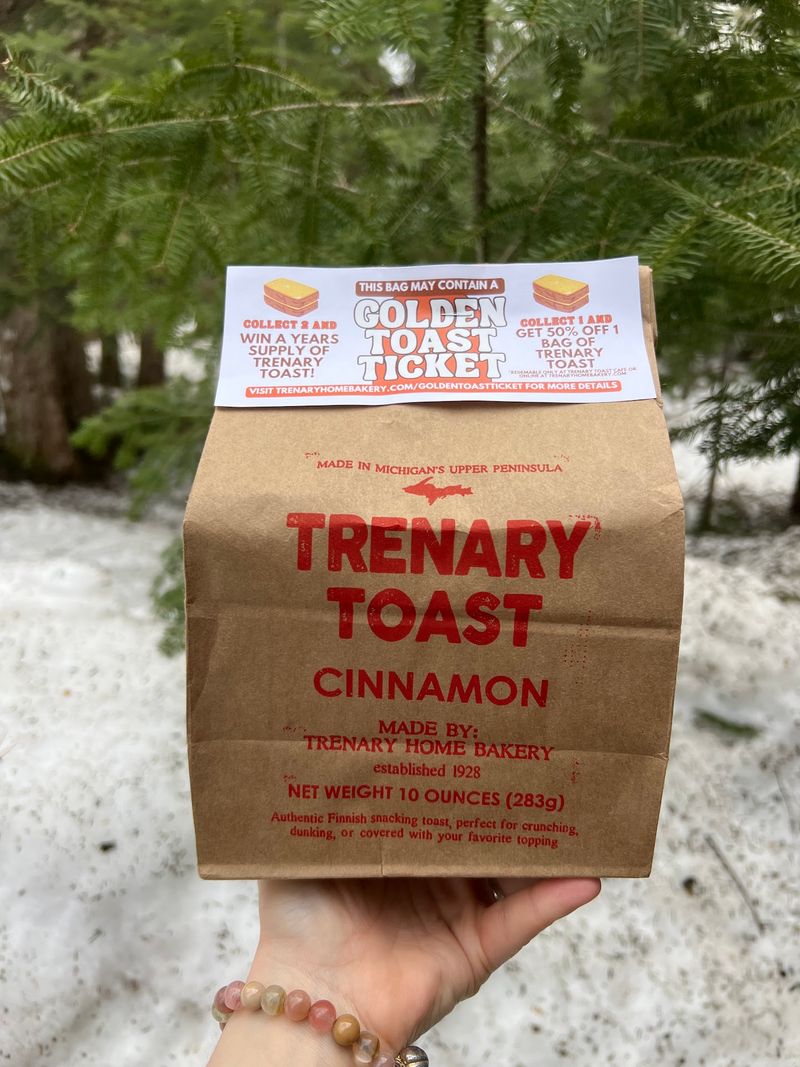
A year-long shelf life sounds improbable for bread, yet dryness makes it possible here. The twice-baking process removes so much moisture that Trenary Toast can keep for up to 365 days without preservatives.
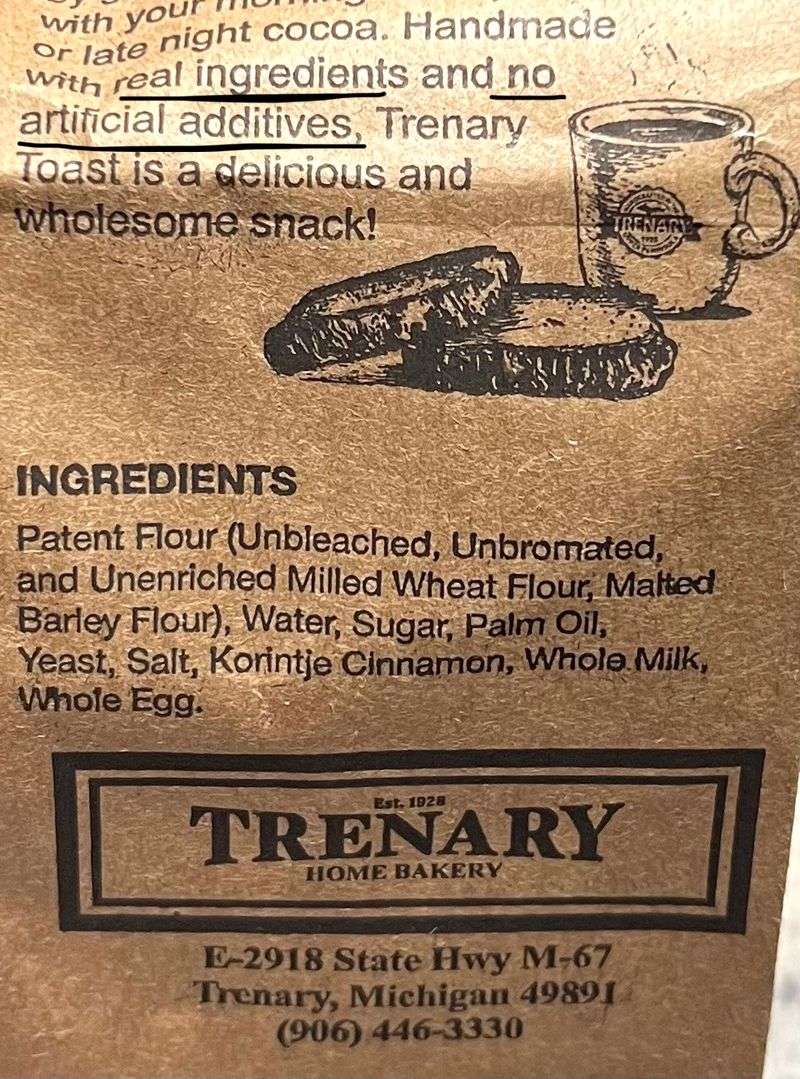
Its original cinnamon formula uses familiar baking ingredients, including flour, water, sugar, palm oil, yeast, salt, cinnamon, milk, and egg.
Storage still matters because humid air can creep into an open package and soften the slices. Press out extra air, close the inner packaging securely, and keep it in a cool, dry cupboard rather than near steam or a warm stove.
If the toast loses its snap after moisture exposure, the bakery advises re-crisping it in a conventional oven. Follow current package guidance for temperature and timing instead of guessing.
Let restored pieces cool before testing them, since crispness improves as heat fades. Good storage preserves both texture and the bakery’s straightforward, no-preservative approach.