
8 Michigan Areas Where Black Bear Sightings Keep Popping Up In Late Summer
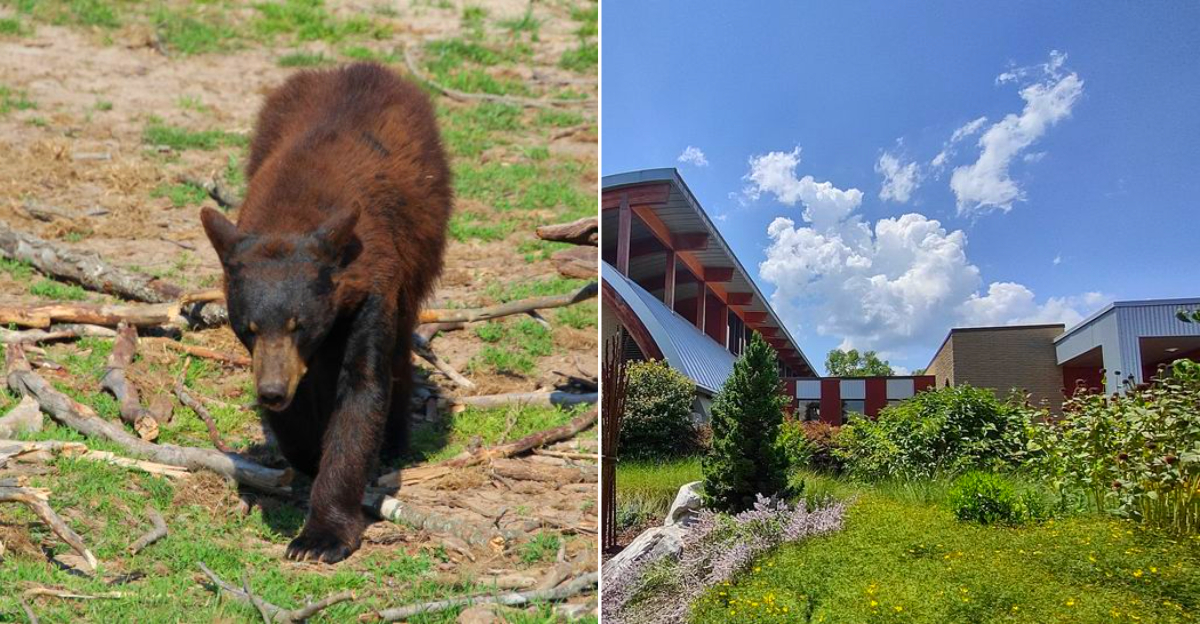
Late summer in the northern counties means something different than it does downstate. The blueberries are ripe, the acorns are starting to drop, and a black shape moving across a logging road at dawn is just Tuesday.
I have seen them twice from a car and once from a porch, and each time the locals barely looked up.
The Upper Peninsula holds most of the population, roughly twelve thousand bears spread across national forest and swamp, but the northern Lower Peninsula has its own pockets where the animals push south along river corridors.
Berry patches along forest service roads are reliable spots. So are the edges of clearings at dusk, where the light drops and the temperature follows.
In these eight areas of Michigan, black bears show up often enough in late summer that locals do not even slow down, and the rest of us should pay closer attention.
8. Bergland
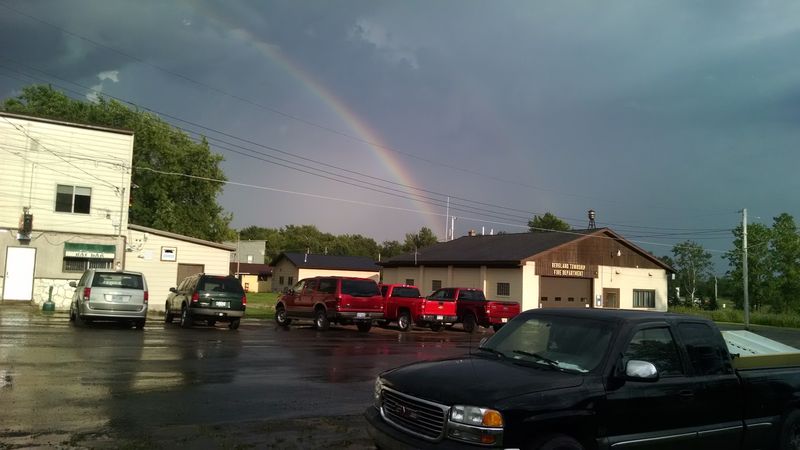
Miles of forest around Lake Gogebic give the western Upper Peninsula exactly the mix of cover and food black bears use well. The Bergland Bear Management Unit covers the portions of Gogebic and Ontonagon counties west of US-45, making Bergland itself a practical base for exploring this broad stretch of Michigan bear country.
The unit is not merely named after a town with occasional sightings. Michigan actively manages an established bear population here, with three hunting periods scheduled for 2026 and a total quota of 835 licenses.
That management structure is a much stronger indication of sustained bear presence than scattered social-media reports.
Late summer suits the habitat especially well. Bears use berries and other soft mast throughout summer before shifting more attention toward nuts and other calorie-dense foods as fall approaches.
Forest openings, regenerating cuts, wetlands, and mature hardwoods can all provide different parts of that seasonal menu.
Do not treat those food sources as instructions for tracking bears into berry patches. Spotting one from a road or established trail is the time to stop at a safe distance rather than close the gap.
7. Baraga
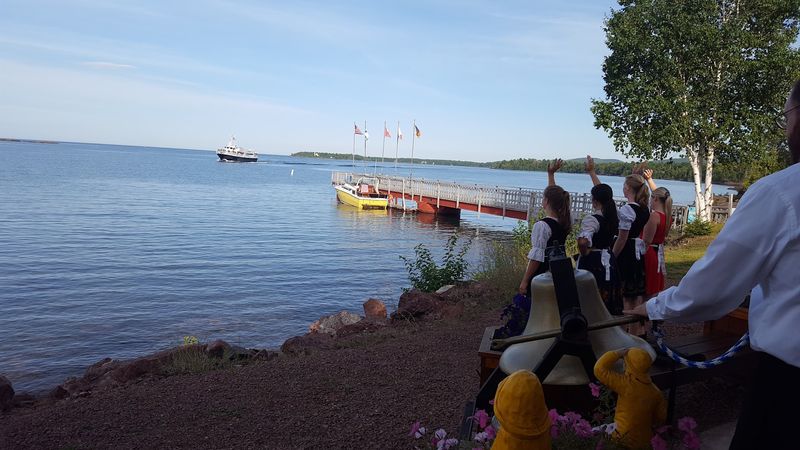
Lake Superior dominates the horizon around Baraga, but the forest behind Keweenaw Bay is where this area’s bear-country credentials become obvious. The Baraga Bear Management Unit extends across Keweenaw County and substantial portions of Baraga, Houghton, Marquette, and Ontonagon counties.
That makes the name considerably bigger than the village itself.
The 2026 DNR regulations allocate 1,570 bear licenses across three hunt periods in the Baraga unit, the largest quota of any Upper Peninsula management unit. Quotas are designed around management goals rather than functioning as a direct head count, but they clearly establish this as major bear habitat.
The surrounding landscape helps explain why. Northern hardwoods, conifer lowlands, wetlands, and relatively sparse agricultural development provide the kind of large forest complexes Michigan black bears prefer.
DNR guidance describes diverse forests as prime habitat because different cover types provide both shelter and changing food sources through the year.
Late summer is especially interesting because wild fruits remain available while bears begin increasing food consumption ahead of winter.
For travelers, Baraga works better as a base than a bear-viewing destination in itself. Wildlife encounters are most likely to be incidental while driving, hiking, camping, or staying in the broader region.
6. Amasa
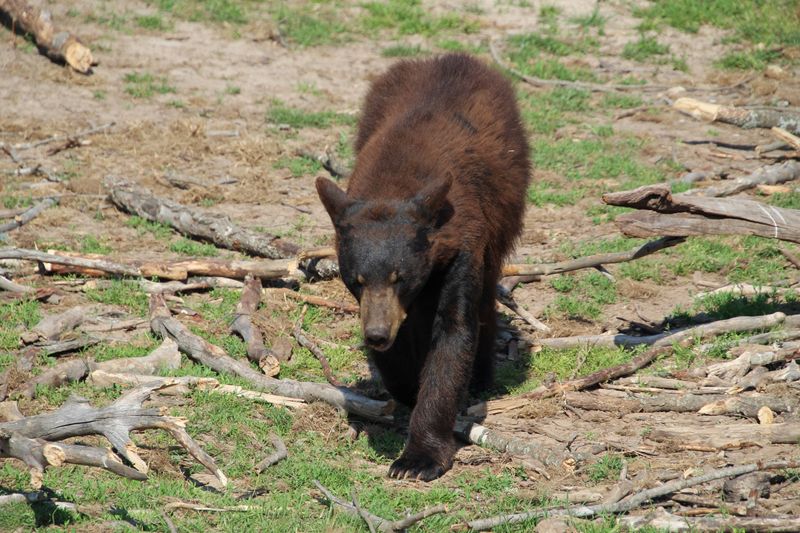
The small Iron County community of Amasa sits inside a bear management unit that covers a much larger block of the western and central Upper Peninsula. The Amasa Bear Management Unit includes all of Iron County plus portions of Baraga, Dickinson, Gogebic, Houghton, Marquette, and Ontonagon counties between major highways and the Wisconsin border.
In other words, this is serious forest country.
Michigan has scheduled three bear hunt periods in the Amasa unit for 2026, with a combined license quota of 510. The DNR’s recent population-management recommendations maintain a desired harvest here, confirming a stable enough population for ongoing active management.
The landscape around Amasa contains exactly the sort of mix bears use throughout late summer. Hardwood stands can eventually provide acorns and other hard mast, while younger forest openings produce berries and herbaceous foods.
Wetlands and conifer cover offer places to retreat during warmer weather.
Roadside encounters can happen quickly in a landscape where forest presses close to quiet roads.
If one crosses ahead, stay inside the vehicle and let it finish rather than stopping beside the animal for a closer photograph.
5. Gwinn
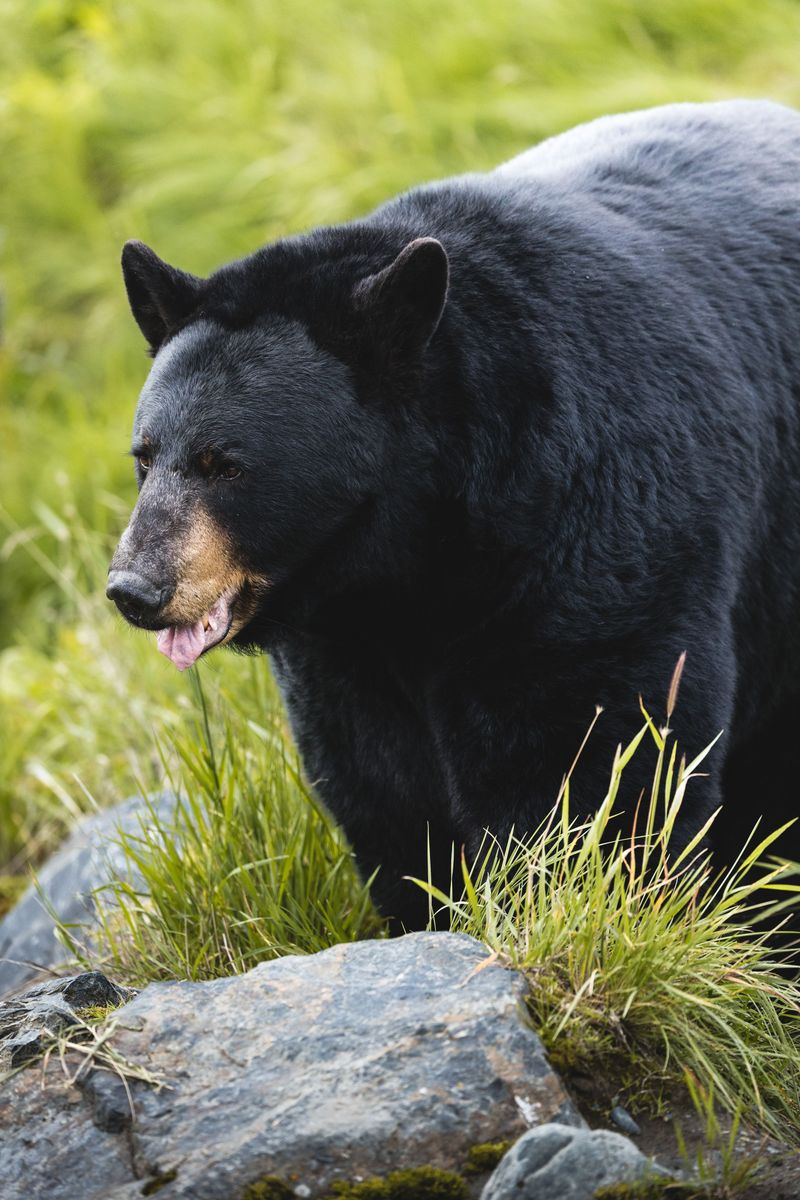
The planned streets of Gwinn give way quickly to something much less orderly: enormous stretches of forest, wetlands, lakes, and timber country.
That surrounding habitat sits inside the Gwinn Bear Management Unit, which covers portions of Alger, Delta, Dickinson, Marquette, and Schoolcraft counties. Its complicated official boundary reaches from Lake Superior toward Lake Michigan through some of the central Upper Peninsula’s largest forested landscapes.
Michigan’s 2026 bear season includes three hunt periods in this unit, with 735 licenses allocated across them. The DNR manages bear numbers through harvest quotas designed to balance population objectives and human-bear interactions.
Late summer can increase the odds that residents and visitors notice bears simply because the animals are spending so much time searching for food. Michigan research identifies late summer and fall as another period of intensified activity, with berries, fruits, insects, and eventually hard mast helping bears accumulate weight before denning.
That does not make dusk drives an informal wildlife safari.
Slow down on wooded roads because a bear may appear suddenly, and resist following one after it leaves the shoulder.
4. Newberry
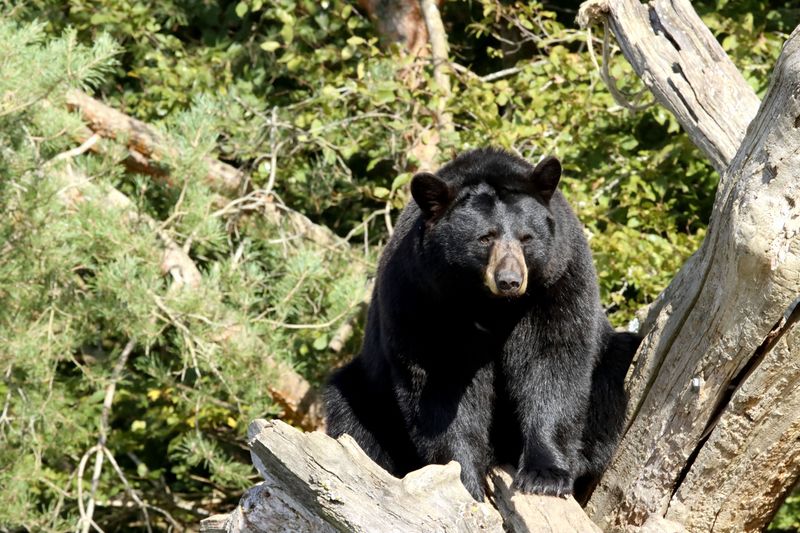
Newberry may advertise itself as Michigan’s Moose Capital, but the surrounding eastern Upper Peninsula is unquestionably bear country too.
The Newberry Bear Management Unit covers a large portion of Michigan east of the Gwinn unit, encompassing extensive forest around Luce, Chippewa, Schoolcraft, Mackinac, and neighboring areas. Michigan’s 2026 regulations again schedule three hunting periods here, with a combined quota of 880 bear licenses.
That is a useful reality check for travelers who think of bears as mainly a western Upper Peninsula animal.
The eastern U.P. contains the same broad ingredients bears need: continuous forest, conifer wetlands, hardwood stands, regenerating openings, lakes, streams, and relatively low human density. Michigan forest planning documents also identify hard and soft mast as important bear resources in this region.
Use Newberry as the practical base for the region, especially if the trip already includes Tahquamenon country or other eastern U.P. outdoor destinations.
Wild bears should remain entirely separate from captive-bear attractions. Seeing an animal from a vehicle or trail is unpredictable and requires space, not an attempt to recreate a controlled viewing experience.
If a bear notices you and does not immediately leave, Michigan DNR advises making your presence known, giving it an escape route, and backing away slowly.
3. Carney
Agricultural openings meet heavy forest around the southern Upper Peninsula, creating a landscape where bear habitat and human food sources can sit uncomfortably close together.
The Carney Bear Management Unit covers much of the southern U.P. around Menominee and Delta counties and remains one of Michigan’s seven mainland Upper Peninsula bear units. Its 2026 hunting structure includes three periods with a combined quota of 565 licenses.
Carney itself makes a useful reference point, but the unit extends far beyond village limits.
Late summer can bring bears toward orchards, crops, beehives, gardens, birdseed, livestock feed, and garbage when easy calories overlap with natural foraging. That does not mean bears prefer human food.
It means their powerful sense of smell can make an unsecured food source difficult to ignore.
Michigan DNR recommends removing bird feeders from April through November, promptly collecting ripe and fallen fruit, securing livestock feed, protecting beehives where necessary, and putting garbage out only on collection morning.
Those habits matter particularly in rural areas where a bear can move from deep cover to someone’s backyard without crossing much developed land.A bear that appears once is wildlife.
A bear that repeatedly finds food around the same house can become a far more complicated problem for residents and for the animal itself.
2. Red Oak
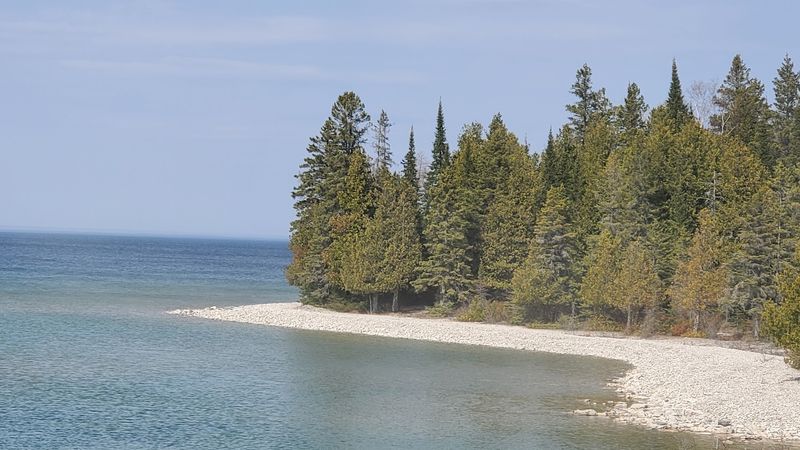
An island in Lake Huron might sound like an odd place for black bears, but Michigan treats Drummond Island as its own bear management unit.
The entire island sits inside that designation, separate from the mainland Newberry unit. The 2026 DNR season assigns only eight licenses to Drummond Island, reflecting a much smaller management area and population than the sprawling mainland units.
Its inclusion is what makes Drummond especially interesting.
A visitor does not need to assume that a bear seen here somehow wandered accidentally into the wrong landscape. Black bears are an established part of island wildlife management.
Forest, wetlands, berries, nuts, insects, and seasonal vegetation provide food, while relatively undeveloped sections offer cover. Bears are capable swimmers too, although Drummond’s population is managed as a distinct unit rather than being treated as a temporary extension of the mainland population.
Late-summer visitors should apply the same food discipline here that they would deep in the Upper Peninsula. Secure garbage, grills, coolers, pet food, and anything else with a strong odor.
Keep dogs controlled, especially around wooded campsites.
1. Baldwin
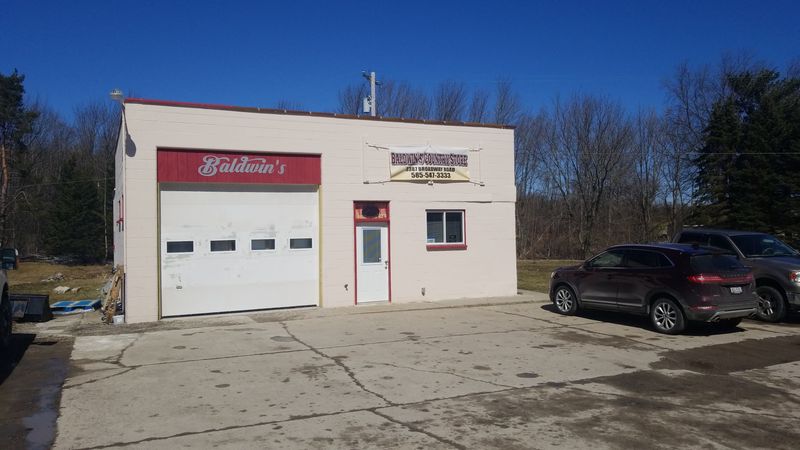
Baldwin marks the clearest shift from Upper Peninsula bear country to the established population of Michigan’s northern Lower Peninsula.
The Baldwin Bear Management Unit covers a large western portion of that range, centered around forested country that includes Lake County and neighboring areas. It is one of only three Lower Peninsula units open to bear hunting in 2026.
The DNR has allocated 395 licenses for the Baldwin unit this year, with the 2026 season running Sept. 12 through Sept. 22 and again Oct. 2 through Oct. 8.
The surrounding landscape explains why bears persist here.
The northern Lower Peninsula contains large public forests, wetlands, river corridors, and regenerating timber stands. Michigan bear research notes that conifer-dominated wetlands are particularly important in the Lower Peninsula, while upland woods and forest openings provide seasonal food.
Baldwin’s outdoor culture also means anglers, paddlers, campers, hikers, and bears can occupy the same broad landscape in late summer.
Fish scraps and campsite food deserve particular attention. Store catches, bait, coolers, cooking supplies, and trash securely rather than leaving them outside overnight.
Sightings are less routine here than in some Upper Peninsula strongholds, but 2,100 bears now live in the Lower Peninsula, primarily across the north.