
Washington Has A Hidden Lake Beach With Waters So Blue, They Rival The Caribbean
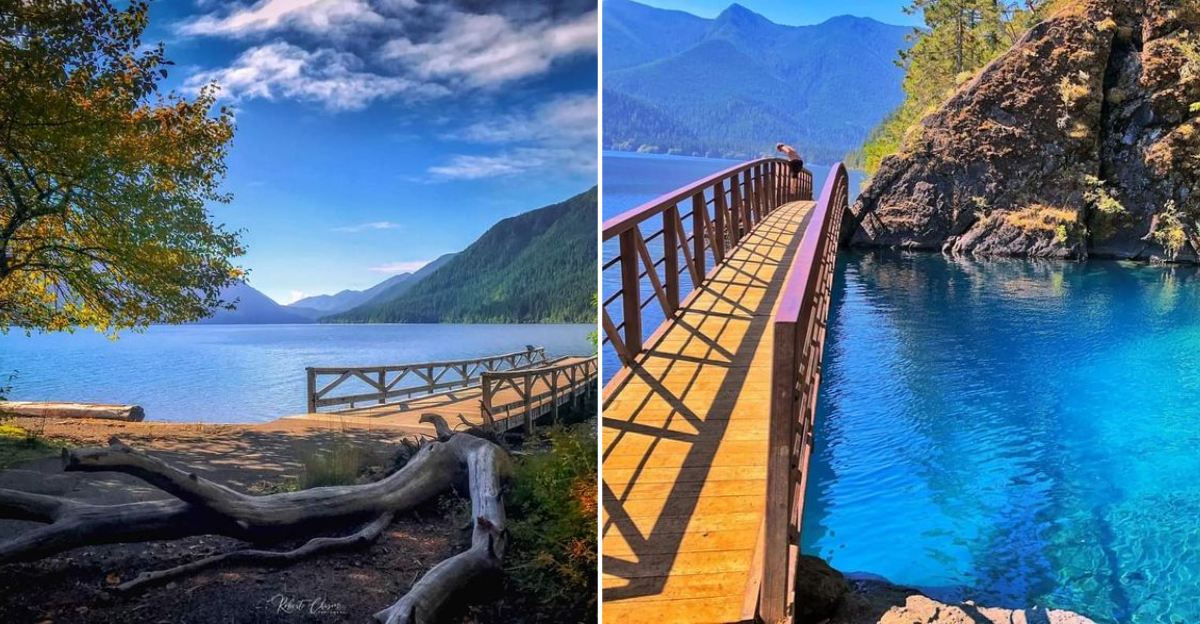
I rounded a bend on Highway 101, and the trees suddenly stepped aside to reveal water the color of stained glass. This lake looks like someone spilled tropical paint across the Pacific Northwest.
I had packed rain gear and hiking boots, fully expecting gray skies and moss, but instead I got turquoise shallows, pebble beaches, and a shoreline where families spread out towels under fir trees. That day changed how I think about Washington entirely.
In the sections ahead, I will walk you through why the water glows the way it does, the landslide story behind its shape, the trails that climb above it, the paddling and swimming spots worth your morning, where to sleep nearby, and the timing tricks that keep you ahead of the crowds.
Bring curiosity, a swimsuit you are brave enough to use, and a camera with plenty of storage space.
Water That Glows Like Stained Glass
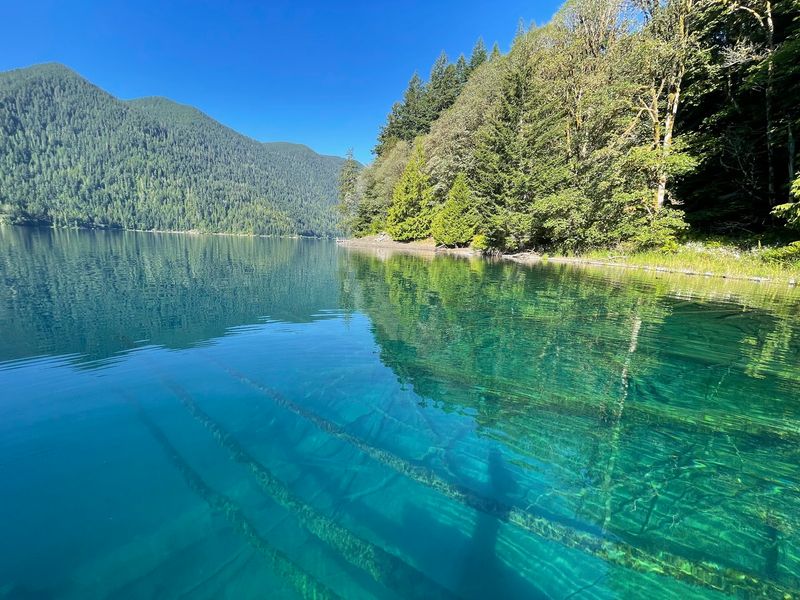
Nitrogen is the secret, or rather the lack of it. Lake Crescent holds unusually low levels of that nutrient, so algae never gets the chance to cloud things up.
Sunlight slips deep into the water instead of scattering, and blue wavelengths bounce back toward your eyes. Add fine glacial rock flour floating in the water plus a depth reaching about 624 feet, and you get color that shifts hour by hour.
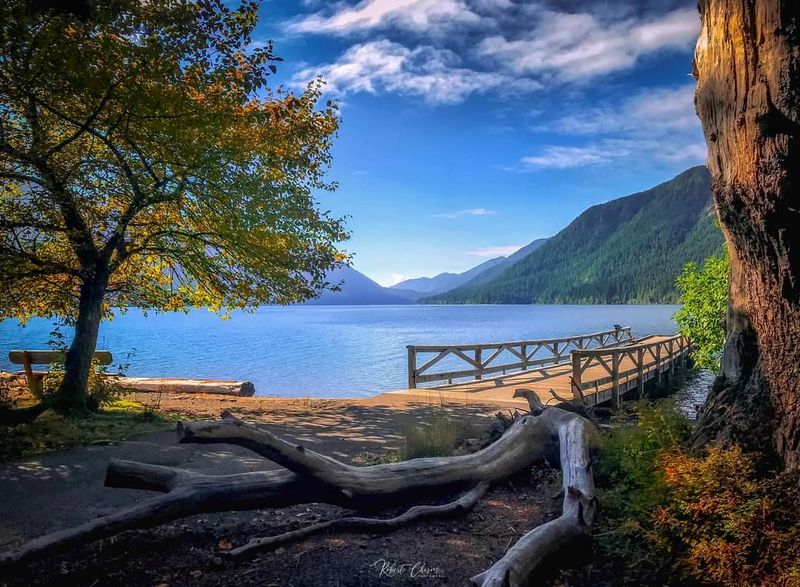
I stood at the shoreline one morning watching pale turquoise near my ankles fade into a rich sapphire farther out. Scientists call it ultra-oligotrophic, which is a fancy way of saying remarkably pure. Visibility can stretch beyond 70 feet on calm days, so you can count stones far below the surface.
My advice is simple: come when the sun is high, roughly between ten and two, because overcast light flattens everything into steel gray. Polarized sunglasses help too, cutting glare so the colors truly pop for you.
A Landslide, A Legend, And A Sunken Forest
Roughly 8,000 years ago, something enormous let go. A massive landslide, likely shaken loose by seismic activity in the Olympic Mountains, tumbled down and dammed Indian Creek.
That single event split one long body of water into two, separating Lake Crescent from its smaller neighbor, Lake Sutherland, and cutting the lake off from the Elwha River. Glaciers had already carved the basin during the last Ice Age, gouging it deep and narrow.
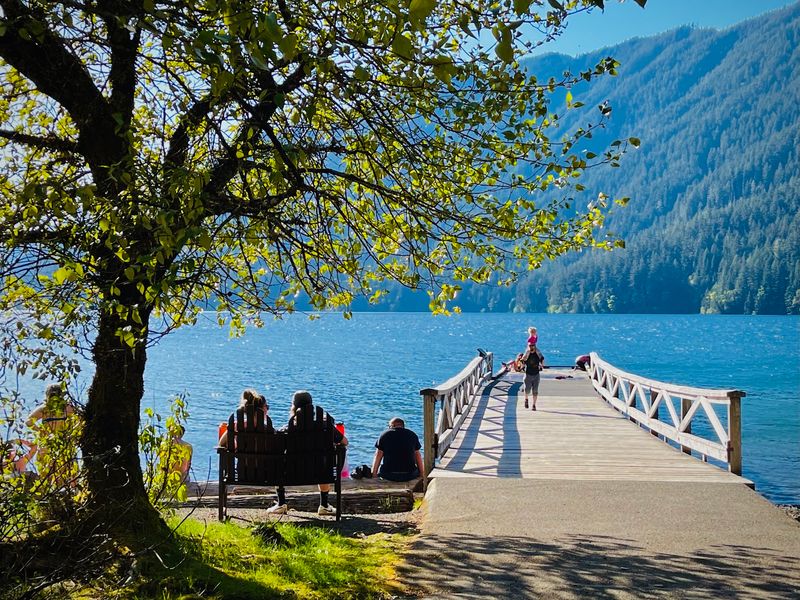
Here is the part that gave me goosebumps: an entire forest was swallowed when water levels shifted, and those trees still stand quietly beneath the surface. Local Native American stories tell it differently and, honestly, more poetically.
Mount Storm King, the peak looming overhead, grew angry at warring tribes and hurled a boulder into the valley, splitting the land and creating the lake.
Standing on the shore with both versions in mind made the view feel layered, ancient, and strangely personal to me.
Pebble Beaches Made For Lazy Afternoons
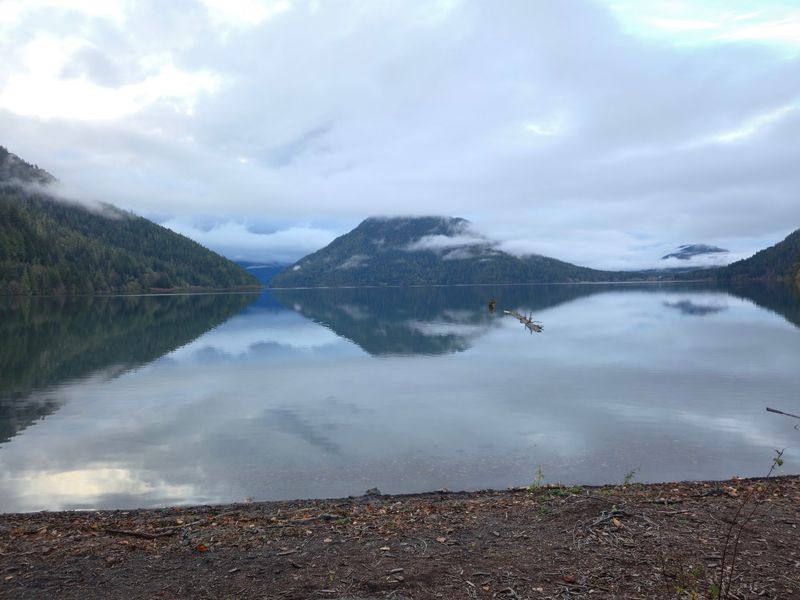
Forget sand. The shoreline here is smooth gray and white stones, warm underfoot by midday, and surprisingly comfortable once you settle in with a towel.
East Beach on the far end draws families because of its shallow entry and open sky, while the stretch near Lake Crescent Lodge offers a designated swimming area with the water lapping right up to the lawn.
I spent an entire afternoon at East Beach doing nothing more ambitious than skipping rocks and reading.
Water temperature is the plot twist. Even in August it hovers around the mid-40s Fahrenheit, so wading is delightful and full immersion is a shock your lungs will remember.
Bring water shoes if your feet are tender, plus a wide towel since the stones are uneven. Pack a picnic too, because dining options are limited and thin out fast during summer weekends around this shoreline.
Cold water turns even a quick swim into something you remember. On warm afternoons, the rocky shore is also a great place to stretch out between dips. The contrast between sun-warmed stones and icy lake water makes East Beach especially memorable.
Paddling Across Liquid Glass
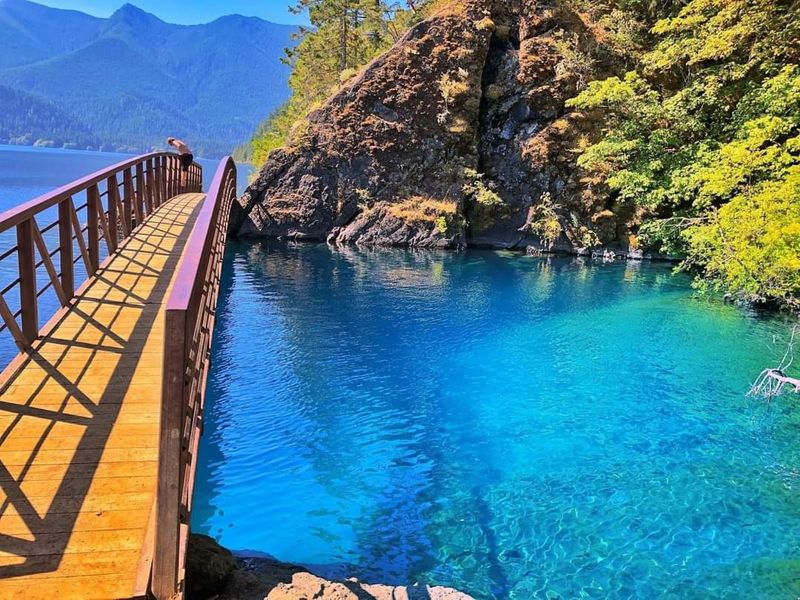
Nothing prepared me for how still the surface can be at seven in the morning. My kayak paddle left tiny swirls and the reflection of the mountains barely wrinkled.
Rentals make this easy. Lake Crescent Lodge, Log Cabin Resort, and the Fairholme General Store all offer kayaks, canoes, and stand-up paddleboards, so you do not need a roof rack or a trailer to get out there.
Paddling gives you angles the road never will, including hidden coves, steep rock walls dropping straight into the depths, and water so transparent that you can watch the bottom disappear into deep blue underneath you.
A word of caution from experience: afternoon winds pick up quickly and can push you farther than expected. Head out early, wear your life jacket, and stay closer to shore if you are new to paddling. The chilly water demands respect from everyone, no exceptions.
Trails That Trade Sweat For Views
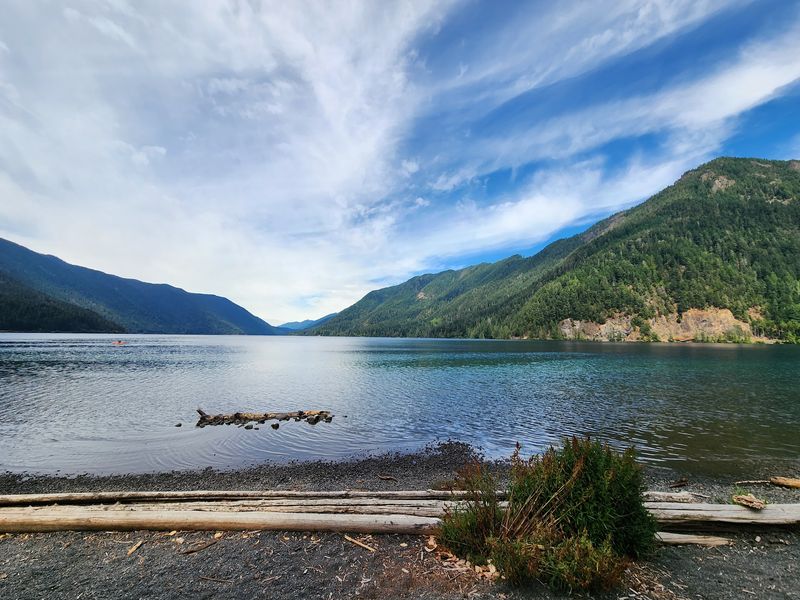
Two trails stole my heart, and they could not be more different. Marymere Falls is the friendly one, an easy 1.8-mile round trip winding through old-growth forest to a slender waterfall dropping through green shadows.
Kids handle it fine, and the mossy footbridges along the way feel like something out of a storybook. Then there is Mount Storm King, which is essentially a staircase disguised as a hike.
The climb is steep, relentless, and finishes with rope-assisted scrambling that not everyone should attempt. My legs complained the whole way up, and my jaw dropped at the top anyway. You look down on the entire lake, out toward the Strait of Juan de Fuca, and across the Olympic Mountains.
Parking near the Marymere trailhead fills by mid-morning in summer, so arriving before nine saves real frustration. Carry water, wear grippy shoes, and check trail conditions with rangers before committing to the upper route.
Where To Rest Your Head By The Shore
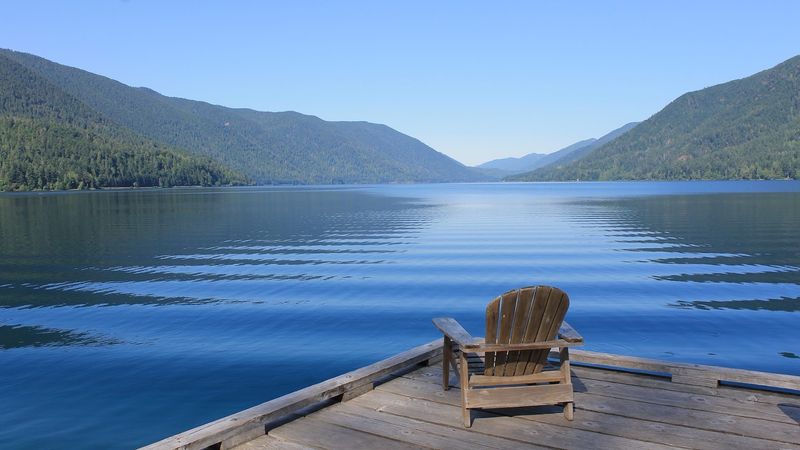
Sleeping near the water changes the whole trip. Lake Crescent Lodge carries a historic charm with its wide porch, rows of chairs facing the water, and rooms that book out months ahead for summer dates.
Log Cabin Resort keeps things more relaxed and casual, with cabins and RV spots on the northeast shore. Campers can aim for Fairholme Campground at the western end, tucked among tall trees just steps from the shoreline.
I stayed one night in a lodge cabin and woke to fog peeling off the surface like a slow curtain rising. Coffee on the porch that morning ranks among my favorite travel memories.
Book early, and I mean genuinely early, because these places fill fast. Every visitor also needs a valid Olympic National Park pass, so grab one online or at an entrance station before you arrive to avoid delays and unnecessary backtracking.
Timing Your Visit Just Right
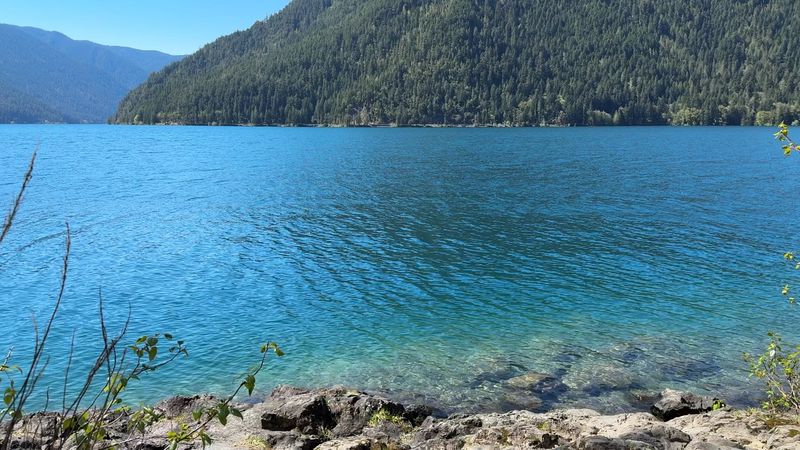
Late spring through early September is when everything is open and swimmable, and it is also when the parking lots turn into a competitive sport. Highway 101 traces the southern shore with scenic pullouts scattered along the way, and those small gravel spaces disappear fast on sunny weekends.
My favorite window, though, is early fall. Crowds thin considerably, big-leaf maples turn gold along the shoreline, and the contrast against that blue water is almost unreal.
Winter brings a moody quiet with fog draped across the surface, though some services close and rain becomes a regular companion. Weekdays beat weekends by a wide margin any time of year.
Give yourself a full day rather than a quick photo stop, since the drive from Port Angeles takes about half an hour and the trails deserve unhurried time. Fill your gas tank first, because cell service near the lake is unreliable at best.
Trout Found Nowhere Else On Earth
Two fish species swim in Lake Crescent that exist nowhere else on the planet. The Beardslee rainbow trout and the Crescenti cutthroat became trapped here thousands of years ago when a massive landslide sealed off the lake.
Cut off from the sea, they slowly evolved into their own kinds, growing silvery and unusually large in the nutrient-poor water.
Anglers can still fish for them, but rules are strict and catch-and-release is required in most areas. Check park regulations before casting, and handle any fish gently. Spotting one flash beneath your kayak feels like meeting living history.
The cold, clear water makes spotting movement below the surface surprisingly thrilling. These rare fish add another layer of mystery to a lake already known for its unusual depth and color.
Even if you never cast a line, knowing they are down there makes every paddle feel a little more special. Their story is a reminder of how dramatically the landscape shaped life here.
Few lake visits come with a natural history lesson quite this fascinating.