
This Tiny Washington Town Celebrates Its History With The World’s Largest Egg
I used to think the most exciting thing about local history was a plaque on a boring park bench. Then I visited a delightfully strange little Washington community and realized I was living in the dark ages.
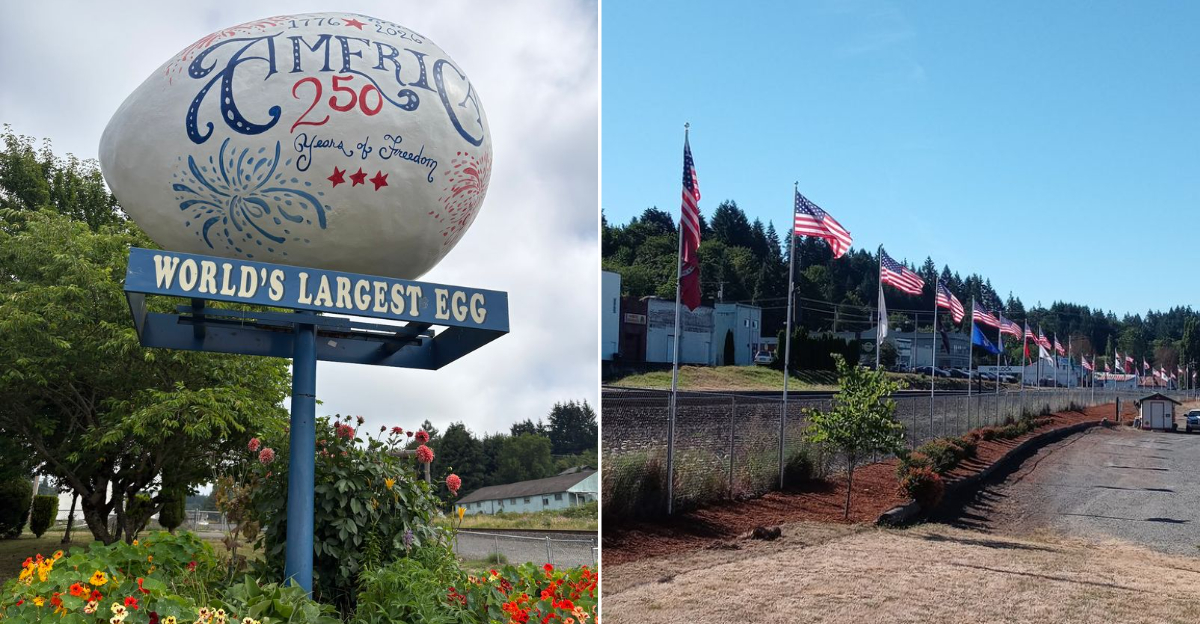
Instead of honoring their founders with a standard bronze statue, these absolute legends erected the World’s Largest Egg, and honestly, I have never felt more respect for strangers. It’s huge, it’s shiny, and it proudly dominates the skyline like a monument to the ultimate omelet.
I tried to calculate how many chickens it would take to produce such a beast, but my brain short-circuited around the ten-thousand-bird mark.
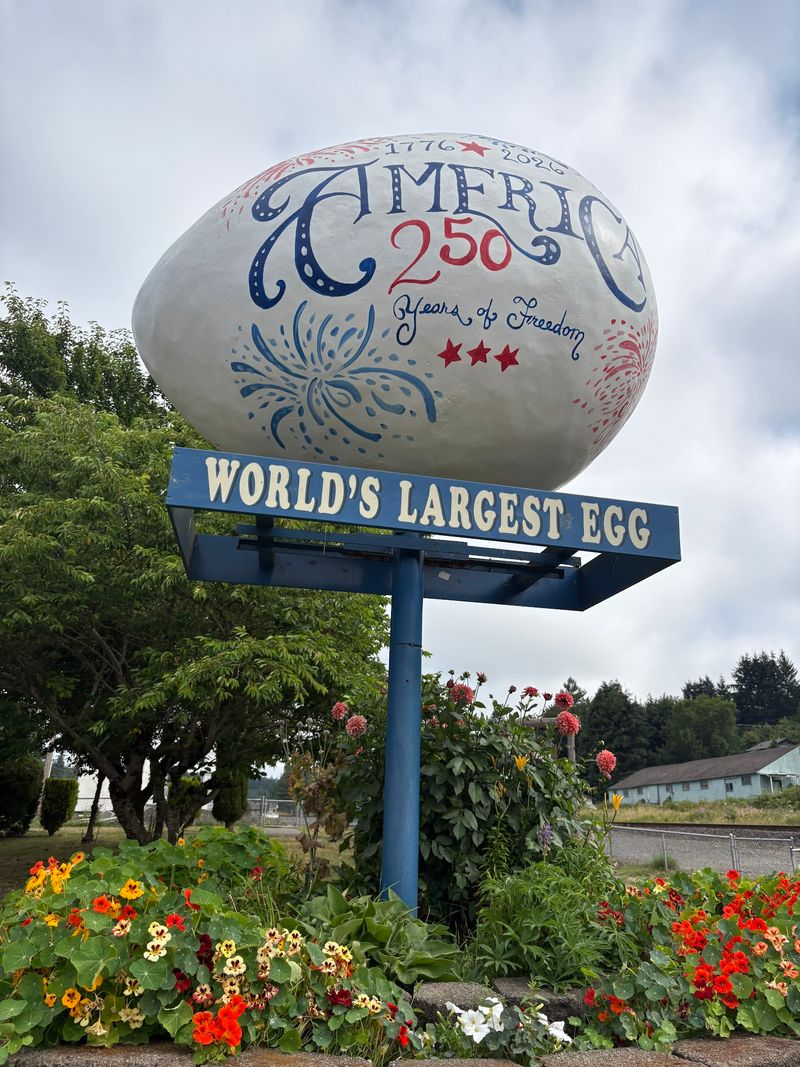
Locals painted it patriotic once, then dressed it in Seahawks colors, because why should a giant egg stay plain. Behind the goofy grandeur sits a real story about hatcheries, shipping crates, two million eggs a year, and a town that refused to let its proudest chapter fade quietly.
Stick with me and I will walk you through the history, the festival, the park benches, the museum, and the small-town details that made me linger far longer than a photo stop deserves.
How A Parade Float Became A Permanent Monument
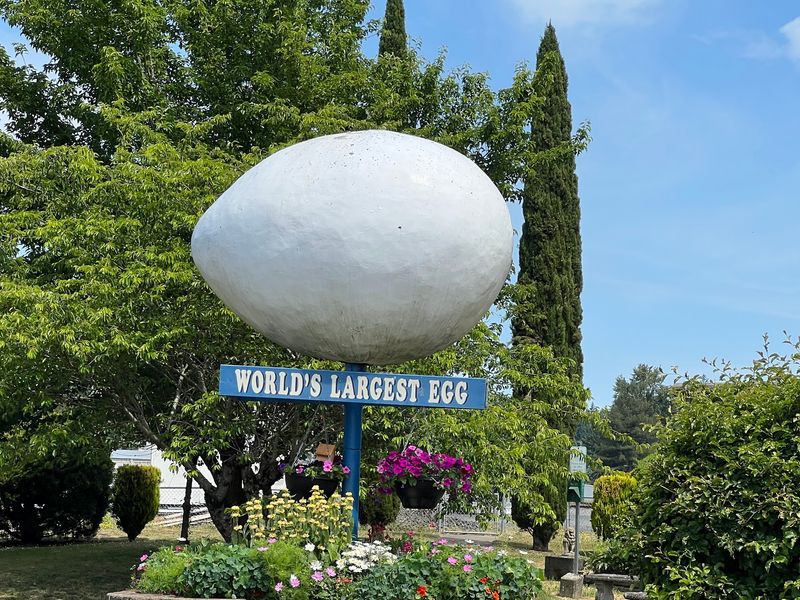
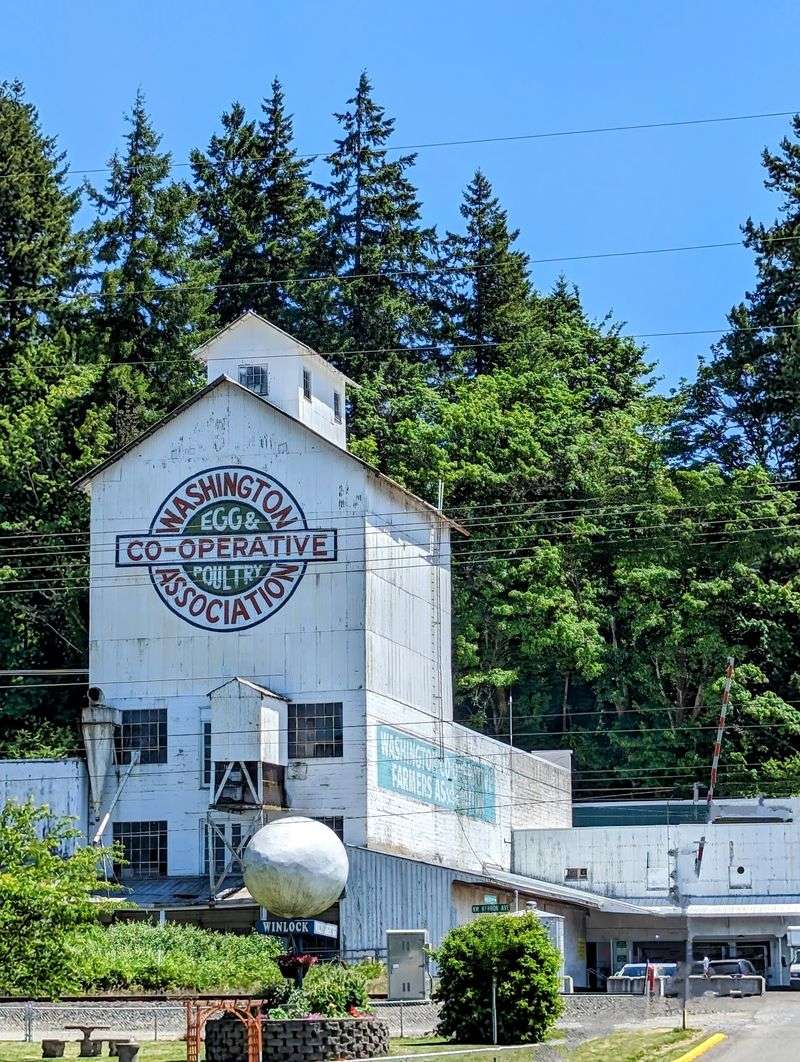
Back in 1923, the Pacific Highway Bridge opened near Winlock, and the town wanted to make some noise about it. John G. Lawrence, who managed the local egg and poultry co-op, decided the loudest statement would be a 12-foot egg built from plaster stretched over canvas on a wood frame.
It rolled through town as a parade float first, then settled near the train depot where freight cars hauled Winlock eggs to the rest of the country. That original shell was fragile, and time was not kind to it.
Three replacements followed. The version standing today arrived in 1991, a 1,200-pound fiberglass sculpture funded by local hatcheryman Vern L. Zander, which explains the name on the park sign.
I found something oddly touching about a monument that keeps getting rebuilt. Most towns let their old symbols crumble. Winlock keeps hatching new ones, each a little sturdier than the last, and each carrying the same message about where the money and the pride once came from.
When Winlock Called Itself The Egg Capital Of The World
Two million eggs and 2.5 million chicks shipped out of here every year by the 1930s. That output made this small Washington community the second-largest egg producer in the entire United States, which is a wild statistic for a place that now counts roughly 1,400 residents.
The nickname stuck: Egg Capital of the World. Hatcheries lined the area, rail service carried crates south and east, and families built their livelihoods around feed, incubators, and careful counting.
Standing beside the sculpture, I tried to picture the depot busy with loading, the noise, the sheer volume of fragile cargo moving through a town this size.
The industry eventually shifted elsewhere, as industries do. What stayed behind was the memory, cast in fiberglass and set on a pedestal where nobody can miss it.
Understanding that number, two million, changes how the egg reads. It stops being silly and starts being a receipt for decades of hard, unglamorous work.
Finding Vern Zander Memorial Park Without Getting Lost
Directions here are refreshingly simple. Take Exit 63 off Interstate 5, head west on State Route 505 for about five miles, and the town appears with almost no ceremony.
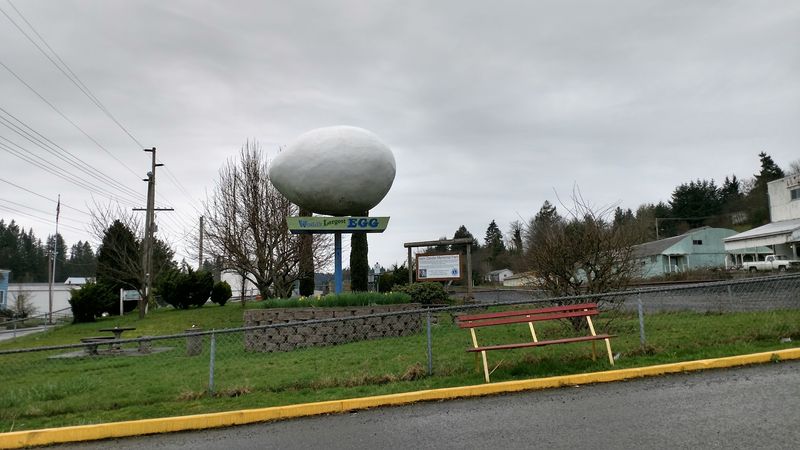
The egg waits in Vern Zander Memorial Park at the intersection of Old Highway 603 and Fir Street in Winlock, Washington 98596, United States. Your phone will get you there, but honestly the thing announces itself.
It sits atop a 10-foot-tall blue pedestal, which means you spot the white curve before you spot the park. Parking is easy and free, the kind of easy that only exists in towns under 2,000 people.
I gave myself fifteen minutes and stayed forty. There are benches, shade, and a strange satisfaction in reading the plaque while cars trickle past.
My advice: pull in mid-morning when the light hits the shell cleanly, then walk a block or two before you climb back into the car.
An Egg That Changes Outfits With The Seasons
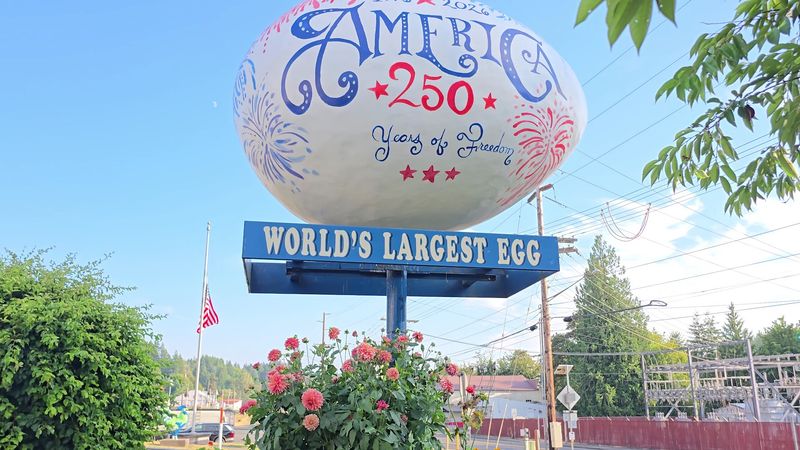
Nobody told me the egg has a wardrobe. Locals repaint and decorate it throughout the year, treating that smooth surface like a community canvas rather than a museum piece.
Stars and stripes show up around the Fourth of July. Seahawks fans have given it the 12th Man treatment during football season. Seasonal designs come and go depending on the mood and the volunteers.
That rotating look is exactly why repeat visitors keep photographing it. The egg you see in March might look nothing like the one your cousin posted in October.
I asked around and got the sense that decorating it is considered a privilege, not a chore. Somebody always steps up with brushes.
If you want a specific version, check local social media before driving out. Otherwise, embrace the surprise. Mine wore a fairly plain white finish, and even that felt like a deliberate choice, a blank shell waiting patiently for the next holiday.
Egg Days, The Festival That Runs On Egg Salad
Every June, Winlock throws a two-day party called Egg Days, and it is the single best time to show up. The whole town leans in.
A parade rolls down the main stretch. A car show fills a lot with polished chrome. Someone gets crowned Egg Queen, which sounds like a joke until you see how seriously the honor is taken.
Best tradition of all: free egg salad sandwiches handed out to visitors. I ate two, then felt guilty, then ate a third and stopped feeling guilty.
What struck me was the ratio of participants to spectators. In a town of about 1,400, almost everyone seems to have a job during the festival.
Arrive early for parking, bring a folding chair, and talk to people. The stories I collected in line, about grandparents who worked the hatcheries, gave the giant egg a warmth no plaque could manage on its own.
Museum Visits And Saturday Market Wandering
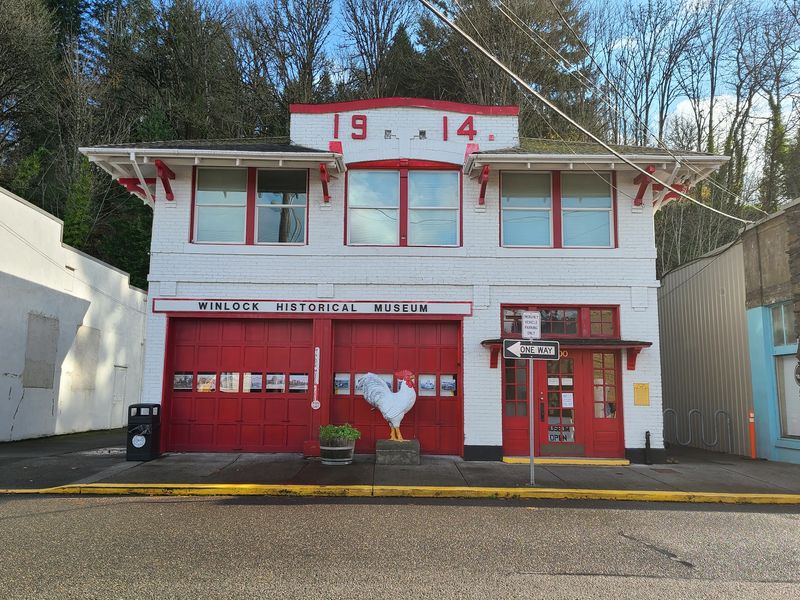
Curiosity got the better of me, so I tracked down the Winlock Historical Museum. Inside, the exhibits cover both the poultry boom and the timber industry that shaped Lewis County just as heavily.
Old photographs, farm tools, hatchery equipment, and everyday objects fill the space. It is small, unhurried, and staffed by people who actually remember some of it.
From June through September, the Winlock Saturday Market brings local growers and makers into town. Produce, baked goods, handmade items, and conversation, all in one modest gathering.
I picked up berries and a jar of something homemade, then ate lunch on a bench with no particular plan.
Pairing the museum with the market turns a five-minute photo stop into a proper half-day. One gives you the context behind the giant egg, the other shows you what the community looks like right now, still growing things, still showing up, still glad you came.
Music, Green Space, And Where To Sleep Nearby
July brings the Winlock Pickers Fest, a regionally known celebration of string music that fills the air with melody and draws players from well beyond Lewis County. If you time your trip right, you get a soundtrack with your sightseeing.
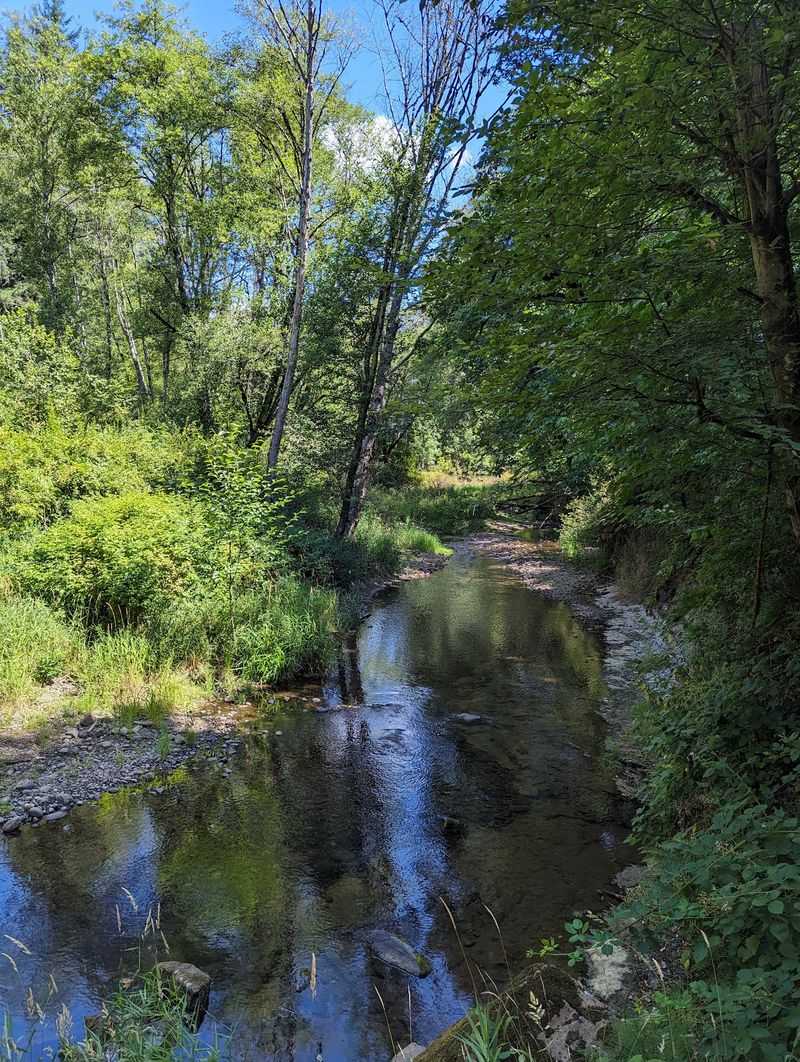
For stretching your legs, Winolequa Park offers walking paths, sports fields, and shaded green space that feels miles away from the freeway you just left.
Hungry travelers should aim for Kerron Avenue, where local eateries serve straightforward food and let you eavesdrop on genuine small-town conversation.
Lodging within Winlock is limited, which surprised nobody but me. Nearby Chehalis is a short drive north and has comfortable rooms if you want to stay overnight.
My suggestion for a full itinerary: egg first, park second, lunch third, then a slow drive back with the windows down. Winlock rewarded my detour with something better than a photograph, which was the feeling of having actually met a place.
Why The Egg Keeps Getting Rebuilt
Plaster and canvas do not survive Washington rain, and the original 1923 egg fell apart fairly quickly. Volunteers rebuilt it in concrete, then in plastic, and finally in fiberglass during the 1990s.
Each version got a little sturdier, though nobody ever agreed on the exact measurements.
Depending on who you ask, the current egg stretches roughly 12 feet long and weighs around 1,200 pounds.
That uncertainty almost makes the landmark more entertaining. Nobody seems especially bothered that the numbers shift from one retelling to the next. The important part is that the giant egg is still standing.
Visitors keep stopping for photos, and locals keep telling its story.
It has become the sort of oddball landmark that would be impossible to replace with something sensible. Even after several rebuilds, the joke has somehow only gotten stronger.
What sticks with visitors is not the size but the stubbornness. Four rebuilds in one century says plenty about how much a small town can care about one odd roadside landmark.