
This Easy Pennsylvania Hike Takes You Past Ancient Rocks That Look Almost Otherworldly
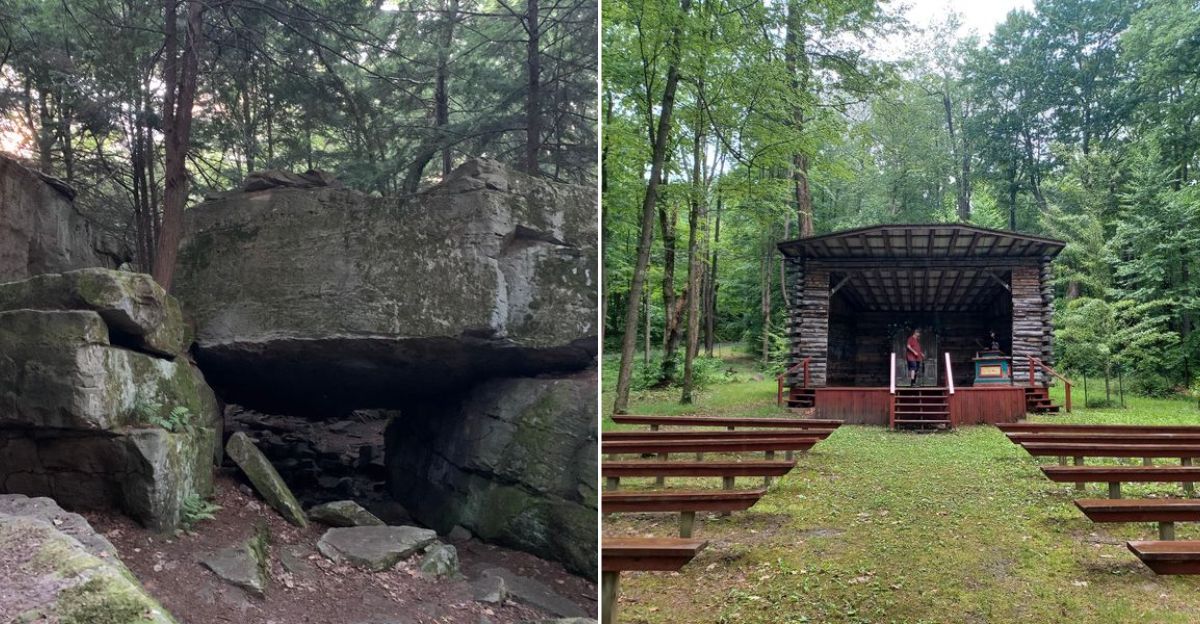
Some hikes impress you with distance. This one wins by making the landscape look like it belongs on another planet.
Along an easy Pennsylvania trail, massive ancient rocks create the kind of scenery that makes you slow down and stare.
The route does not demand expert hiking skills, which means you can focus more on the strange formations than on catching your breath.
It is a great choice for anyone who wants a memorable walk without turning the day into a serious workout. The real fun comes from how unexpected the terrain feels.
One moment you are on a simple trail, and the next you are surrounded by stone shapes that look almost unreal. I tend to get completely distracted by places that look older than anything around them.
If a trail gives me a reason to stop, look up, and wonder how the rocks ended up that way, I am happy. Pennsylvania hikes are especially fun when the scenery starts doing the storytelling for you.
Rocks That Started Forming Around 300 Million Years Ago
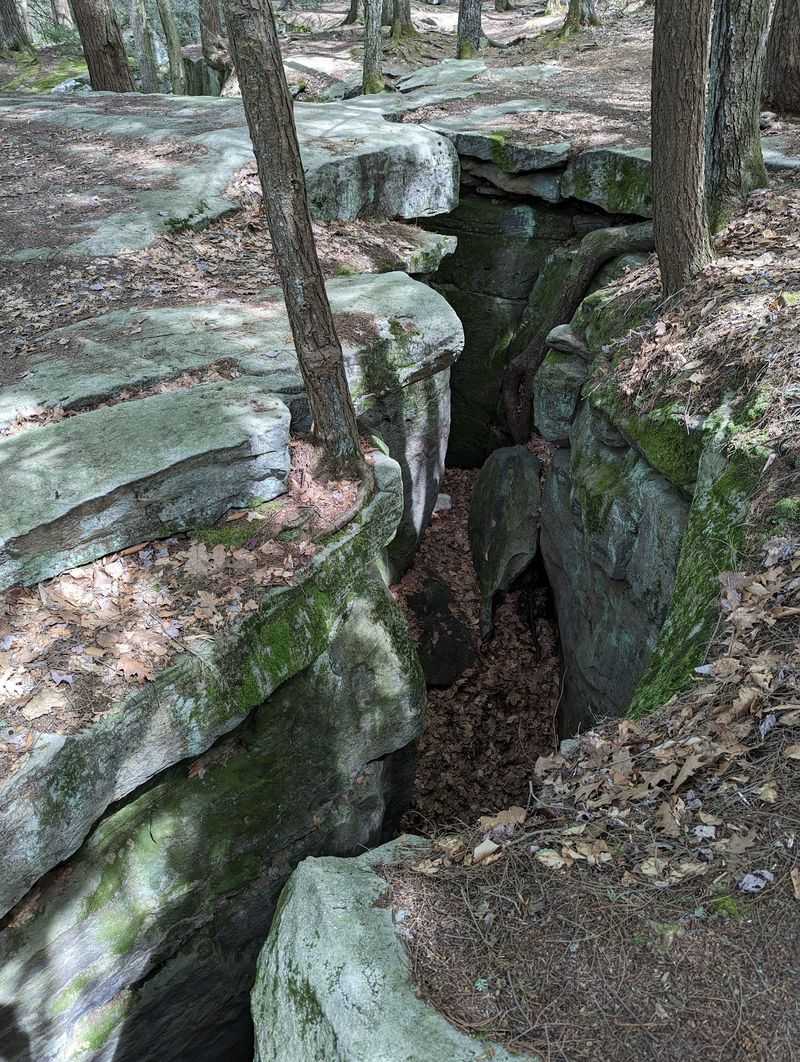
Long before dinosaurs walked anywhere, sand and sediment were piling up in ancient river systems that once covered this part of Pennsylvania.
Those layers hardened into the crossbedded Homewood sandstone you can touch today. Geologists connect the formation to the Pennsylvanian period, which is roughly 300 million years old.
Over that unimaginable stretch of time, water froze in cracks, expanded, and slowly pried the bedrock apart into separate blocks.
What makes the site so striking is how the blocks shifted apart. Freeze-thaw action and gravity gradually widened fractures, leaving narrow corridors between them.
Look closely at a wall and you can see angled layers preserved in the stone, evidence of the sand that ancient currents deposited along channels.
I found myself doing math in my head, trying to picture how many human lifetimes fit into that number, and giving up somewhere around the millionth.
Standing between walls older than almost anything else you will see in a day of travel does something quietly humbling to a person.
Where Exactly To Point Your Car
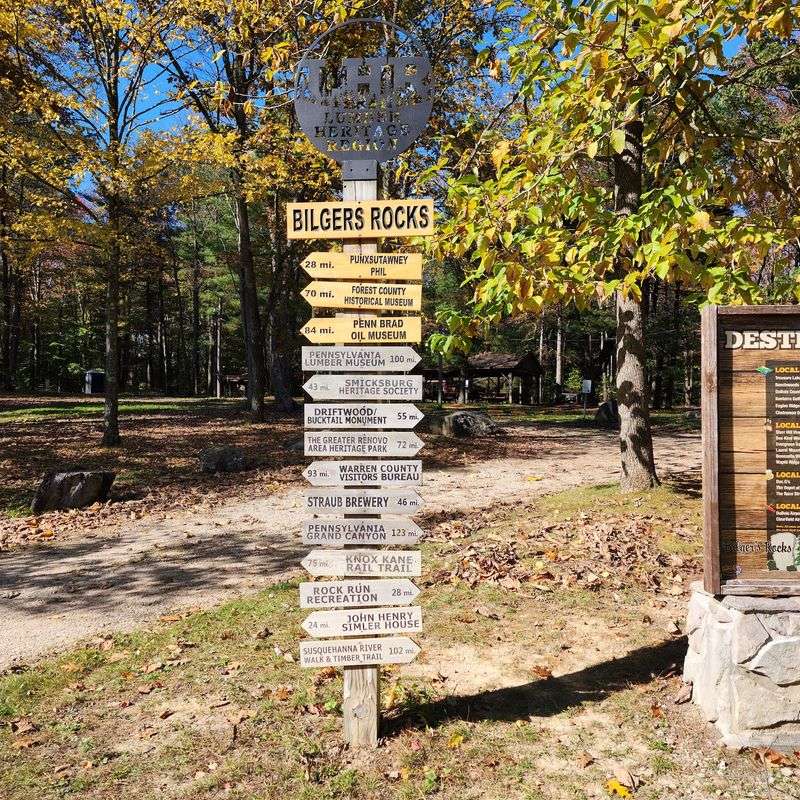
Finding the place is half the adventure, since the roads out here wind through farmland and stands of hardwood forest.
The address is 1921 Bilgers Rocks Rd, Grampian, PA 16838, sitting in Clearfield County in central Pennsylvania.
Grampian itself is a small community, so do not expect strip malls or chain restaurants nearby.
Cell service can get patchy on the final approach, which is why I recommend downloading your map before leaving the highway. I learned that lesson while circling a crossroads twice.
Parking is straightforward and free, with room for regular cars and larger vehicles alike.
Once you step out, the temperature difference registers immediately, because the tree canopy and the stone itself hold cool air close to the ground.
Bilgers Rocks sits close enough to Interstate 80 to make a solid detour on a longer drive across the state, and far enough off the main route to feel like your own discovery. Fill your gas tank in advance and thank yourself later.
Trails Short Enough For Almost Anyone
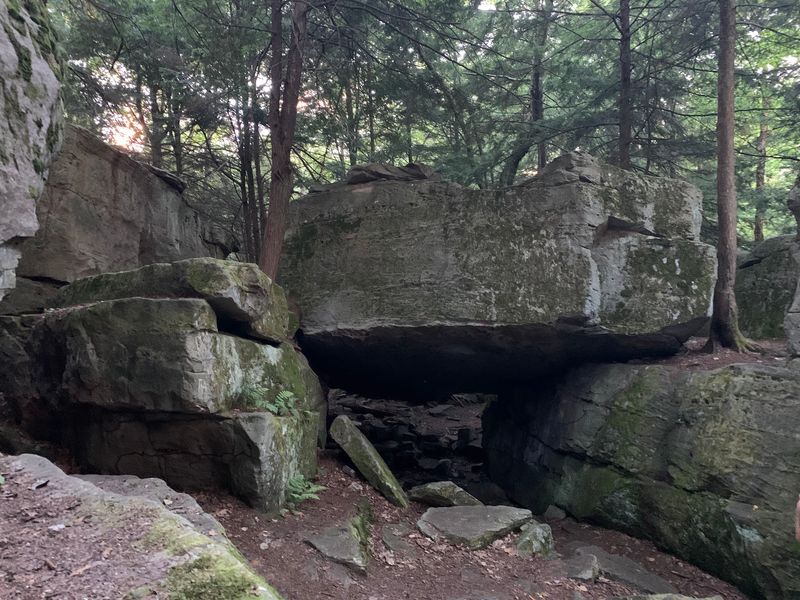
Not every rewarding hike demands a full day and a change of socks, and this one proves the point nicely.
The trail network here extends for more than ten miles, though three marked routes near the rocks are each under one mile. A wide gravel path circles the main rock bed area nearby.
Elevation changes vary by route, and ground gets uneven where roots, loose rock, and crevices take over.
Visitors wanting an easier walk can stay on the gravel path, while narrow rock passages require steadier footing, sturdy shoes, and caution.
I watched a toddler in light up sneakers march ahead of his whole family, completely unbothered by the terrain.
The real time sink is not distance but distraction, because you will stop constantly to peer into gaps and crane your neck upward.
Plan for longer than the map suggests, not because every route is long, but because you genuinely will not want to keep moving at a normal pace.
Passageways Narrow Enough To Test Your Shoulders
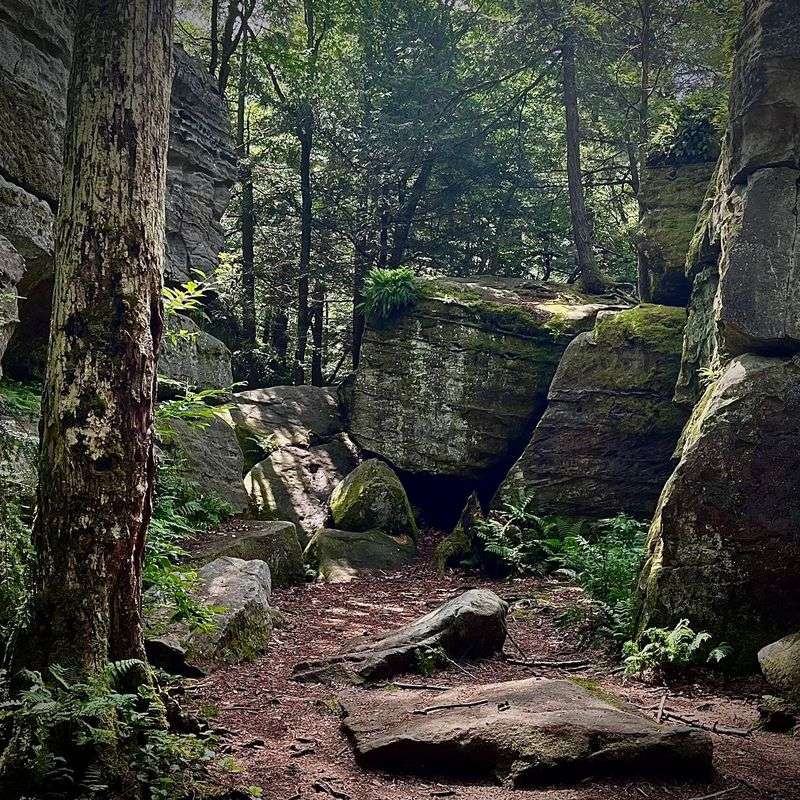
Squeezing between two walls of stone turns an ordinary walk into something you talk about for weeks.
Several corridors here pinch down to shoulder width, forcing you to turn sideways and shuffle. Others open into small rooms where the sky appears as a thin blue ribbon overhead.
Kids treat the whole thing as a natural obstacle course, and honestly, so did I.
A word of caution though. The rock surfaces stay damp in shaded spots, and moss makes them slick, so keep a hand free and move slowly through tight sections.
Backpacks are worth taking off before the skinniest gaps, unless you enjoy getting wedged in place while strangers wait politely behind you.
Ask me how I know.
Not every passage connects to another, so expect a few charming blind alleys that simply invite you to double back.
Exploring on foot at Bilgers Rocks rewards the willing more than the hurried, and the best discoveries hide just past the uncomfortable squeeze.
A Volunteer Effort Keeps The Gates Open
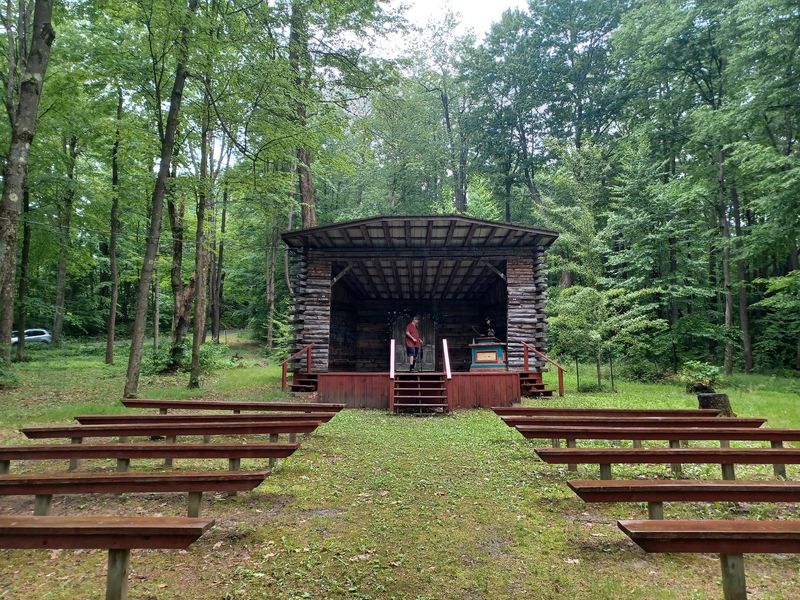
Behind every well kept natural site sits a group of people doing unglamorous work, and that holds true here.
The property is looked after by a nonprofit association made up of local volunteers who handle trail upkeep, signage, mowing, and general repairs.
Admission is free, though donation boxes make it easy to chip in. That community ownership shows in small ways, like tidy paths and hand built steps in the trickier spots.
I dropped a few bills into the box and considered it the cheapest entertainment of my entire trip through Pennsylvania.
Volunteers also organize seasonal events and maintain a pavilion area used for gatherings, which keeps the place woven into everyday local life rather than treated as a museum piece.
Respecting that effort means packing out trash, staying off fragile moss, and leaving carvings out of your plans.
Places like this survive because neighbors decided they should, and a little courtesy from visitors goes a remarkably long way toward keeping them that way.
Moss, Ferns, And Green That Almost Glows
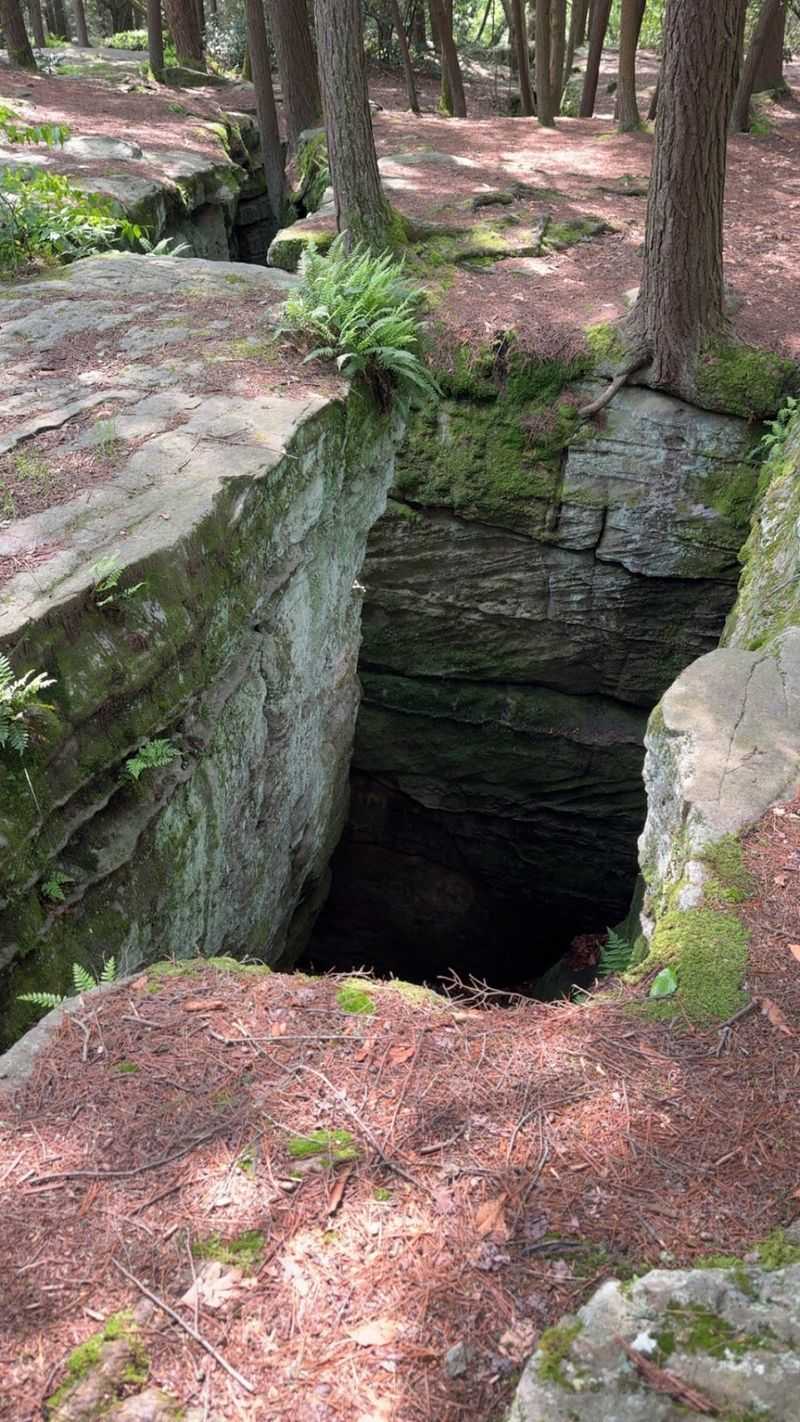
Green takes over everything here once the humidity of a Pennsylvania summer settles in.
Thick moss carpets the north facing rock faces, ferns sprout from cracks with no visible soil, and lichen patterns spread across dry ledges in pale circles.
The cool microclimate between the boulders holds moisture that the surrounding forest floor loses quickly, which is why the plant life looks so lush in such an unlikely spot.
Photographers love overcast days for exactly this reason, since flat light makes the greens saturate instead of washing out.
Hemlock and hardwood trees grow directly on top of the formations, their roots draped over stone like heavy rope.
I spent an embarrassing amount of time crouched with my phone an inch from a moss cushion, convinced it was the most photogenic thing in the county.
Look but resist touching the softest patches, because moss recovers slowly from footprints and fingers.
Small scale beauty here competes surprisingly well with the giant slabs towering above it.
Fall Turns The Whole Place Gold
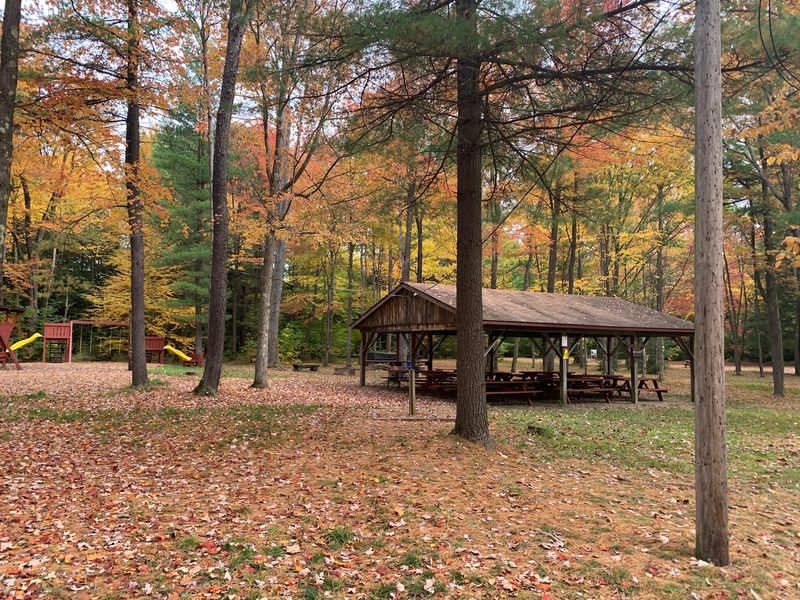
Autumn arrives in Clearfield County with maples, oaks, and birches all showing off at once.
Mid October usually brings peak color to this part of Pennsylvania, though exact timing shifts year to year with rainfall and temperature.
Fallen leaves collect in the crevices and turn the corridors into golden hallways, which looks wonderful and hides uneven footing at the same time.
Step carefully, because a leaf covered gap between two stones can surprise an ankle.
Spring has its own appeal, with wildflowers and running water after snowmelt, while winter coats the formations in ice that transforms familiar shapes entirely.
Summer visits stay comfortable thanks to the shade, making the site a genuine escape on a sticky afternoon.
My favorite visit landed on a cool October morning when fog was still lifting off the ground and the only sound was leaves dropping.
Any season works, but if you can choose, aim for the weeks when the canopy is putting on its brightest performance.
Shapes With Names And Local Legends
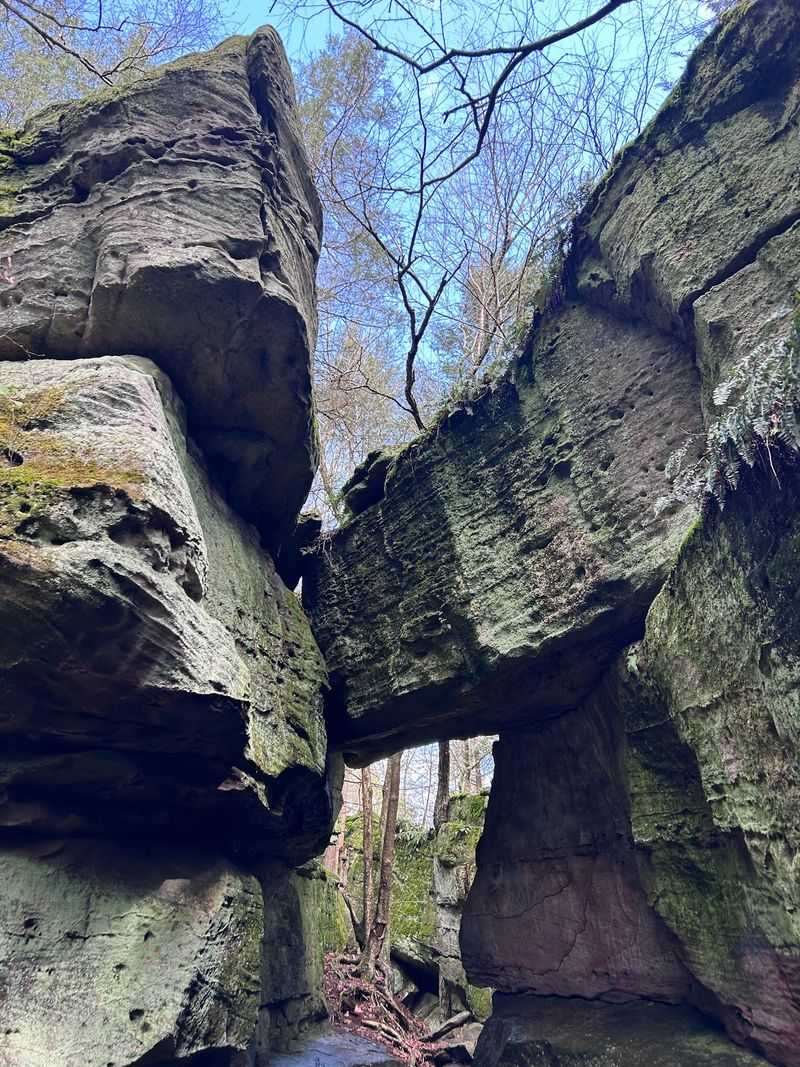
Locals have been naming the odder formations for generations, and once you hear the names you cannot unsee them.
Certain blocks resemble faces, tables, or animals depending on the angle and your imagination. Others balance in ways that look temporary but have held for millennia.
Stories passed down in the area mention Native American use of the shelters long before European settlers arrived, which makes sense given the natural protection the overhangs provide from wind and rain.
The Bilger family name attached to the site comes from the landowners connected to this ground, and Bilgers Rocks has carried that title for well over a century.
Standing under a wide overhang, I understood immediately why anyone traveling through would stop here for shelter.
Bring the kids and let them assign their own names to the shapes, since half the fun is arguing about whether a boulder looks like a turtle or a loaf of bread.
Imagination costs nothing and improves the visit considerably.
What To Wear And Carry
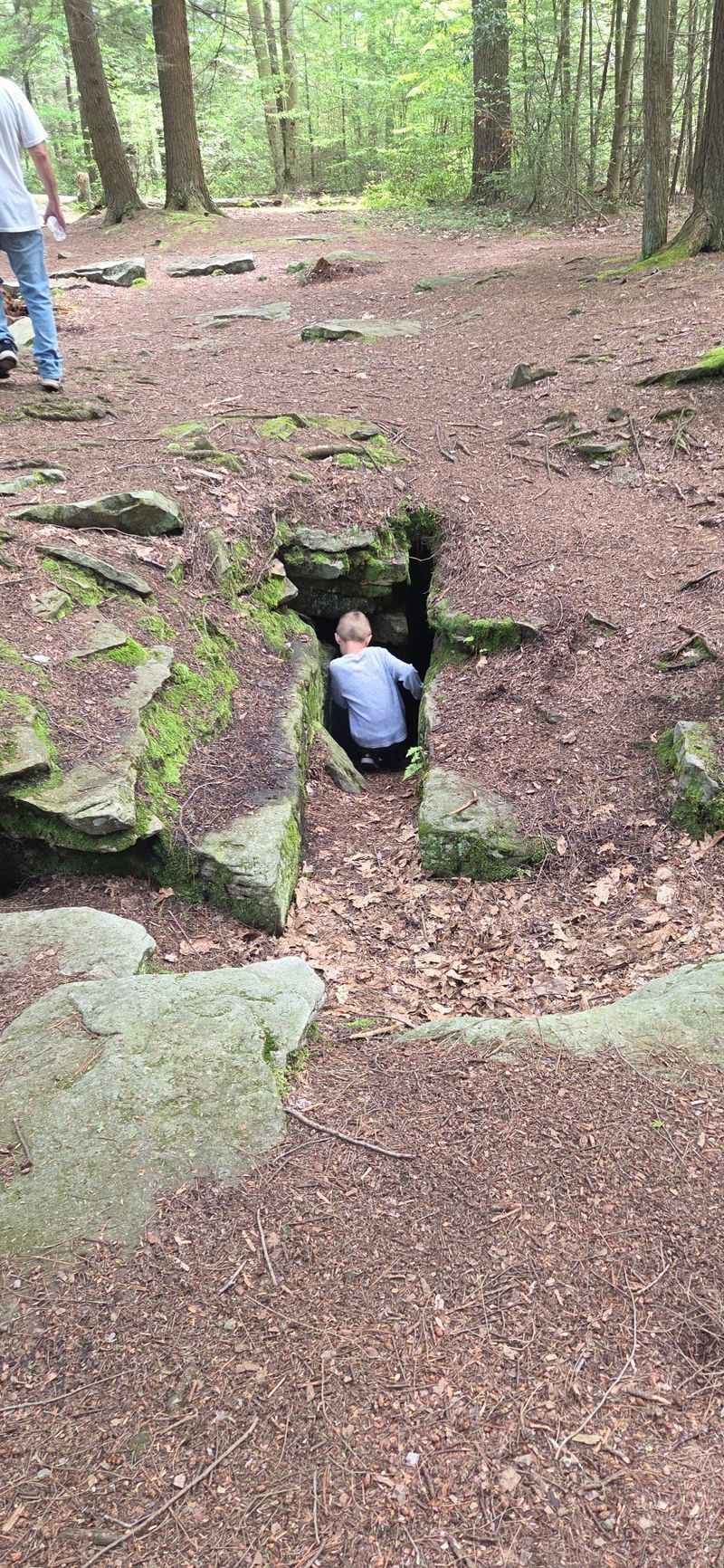
Footwear makes or breaks a visit, and sandals belong nowhere near these damp stone surfaces.
Closed shoes with real tread give you confidence on slick moss and loose gravel. Long pants help too, since narrow gaps mean occasional contact with rough rock.
Temperatures between the boulders run noticeably cooler than the parking area, so a light layer earns its space in your bag even in July.
Water, bug spray during warm months, and a small flashlight for peering into shadowy recesses round out a sensible kit.
Leave the tripod at home unless you are serious, because carrying gear through tight passages gets old fast.
I clipped a headlamp to my belt and used it more than expected, mostly to inspect crevices that swallowed all available light.
Restroom facilities exist on site, though amenities stay basic, so plan meals before or after rather than expecting food nearby.
Pack light, dress practical, and you will spend your energy exploring instead of adjusting.
Pairing The Stop With Nearby Adventures
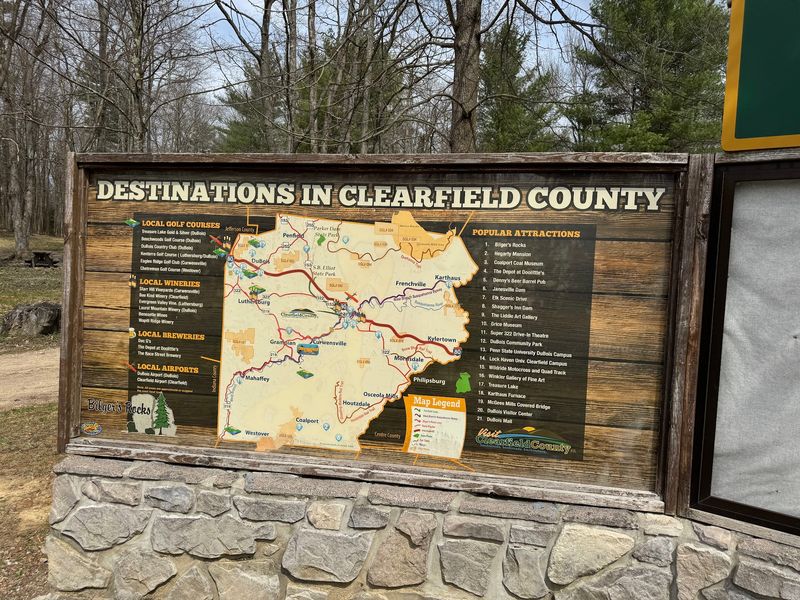
Since the walk takes about an hour, most travelers build a bigger day around it.
Clearfield County offers state forest land, fishing spots, and quiet country roads that make for pleasant driving between stops. The West Branch of the Susquehanna River runs through the region and adds paddling options for anyone hauling a kayak.
Curwensville and Clearfield sit within a short drive and cover practical needs like fuel, groceries, and diners.
Parker Dam and S.B. Elliott state parks are reachable for picnicking or a longer trail, keeping the whole itinerary within Pennsylvania backcountry territory.
I turned my visit into a loose loop with a diner breakfast, a couple of hours among the boulders, and an aimless afternoon drive that ended at a covered bridge.
No schedule, no pressure, just a good stretch of central Pennsylvania scenery.
Treat Bilgers Rocks as the anchor of the day rather than the entire plan, and the trip feels complete instead of rushed.