
New York’s Oldest Coffee Shop Hasn’t Changed In Decades
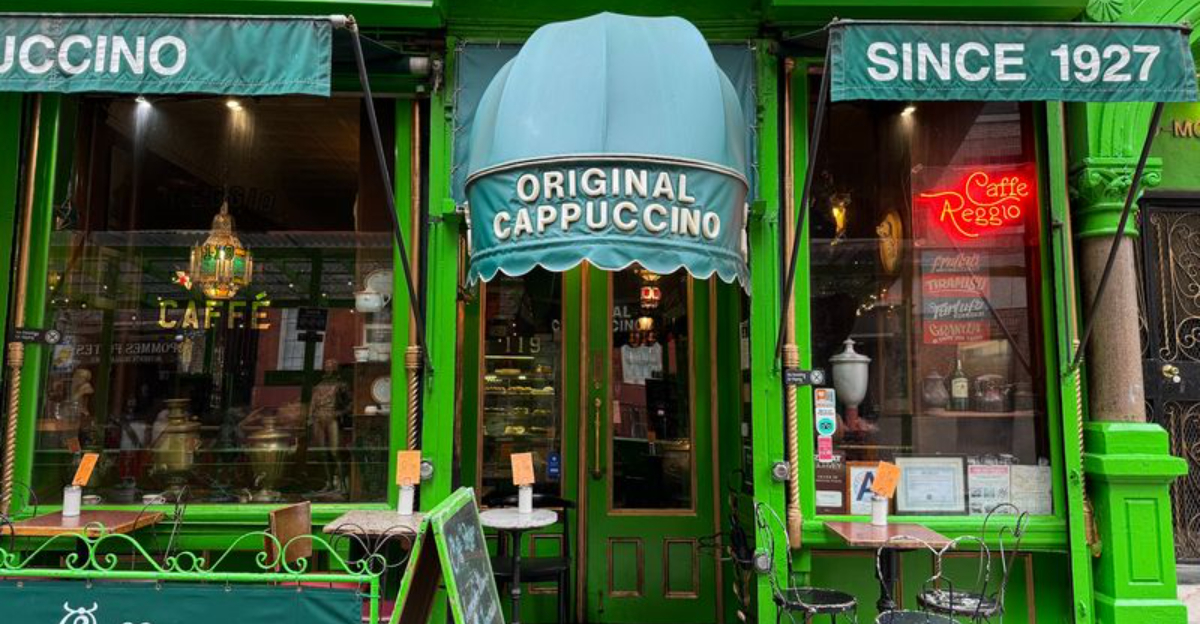
New York has changed a lot since the 1920s. This place clearly didn’t get the memo.
Walk inside and you’re surrounded by old-school Italian charm, vintage furniture, Renaissance art, and one very impressive piece of coffee history that has been sitting there for generations.
But here’s the part that might make you look twice at your cappuccino.
This little café is credited with helping introduce the drink to America. Yep, the cappuccino. That foam-topped thing we now order without even thinking twice.
And somehow, nearly a century later, the place still feels more like a time capsule than a coffee shop. Oh, and if the room looks strangely familiar, there’s a reason for that, too. Hollywood has stopped by.
More than once. So, how has this place managed to stay almost frozen in time while the city around it keeps changing? Let’s take a closer look.
Step Into The Time Machine, Darling
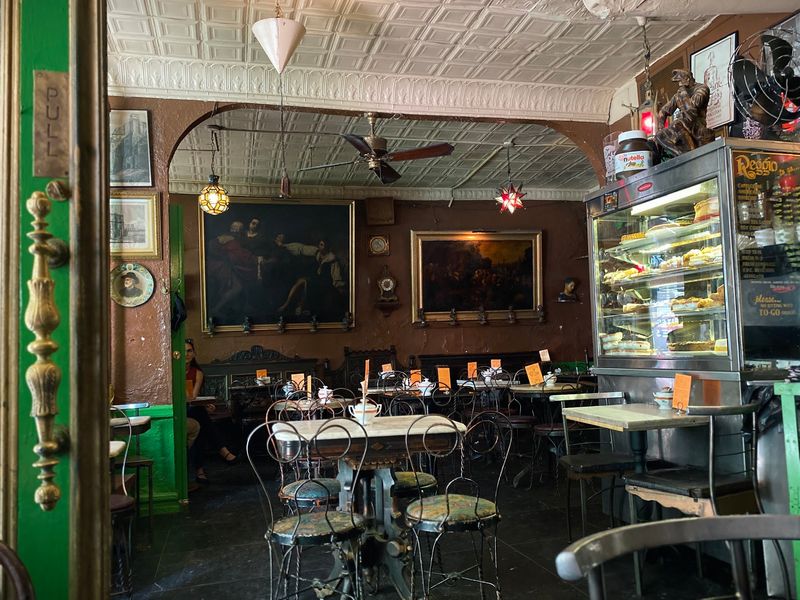
Walking through the door of Caffè Reggio feels less like entering a café and more like pressing play on a beautifully preserved old film reel.
The city noise fades almost instantly, replaced by the soft hum of classical music and the gentle clinking of ceramic cups. Every single detail inside has been thoughtfully kept exactly as it was, and that consistency is genuinely breathtaking.
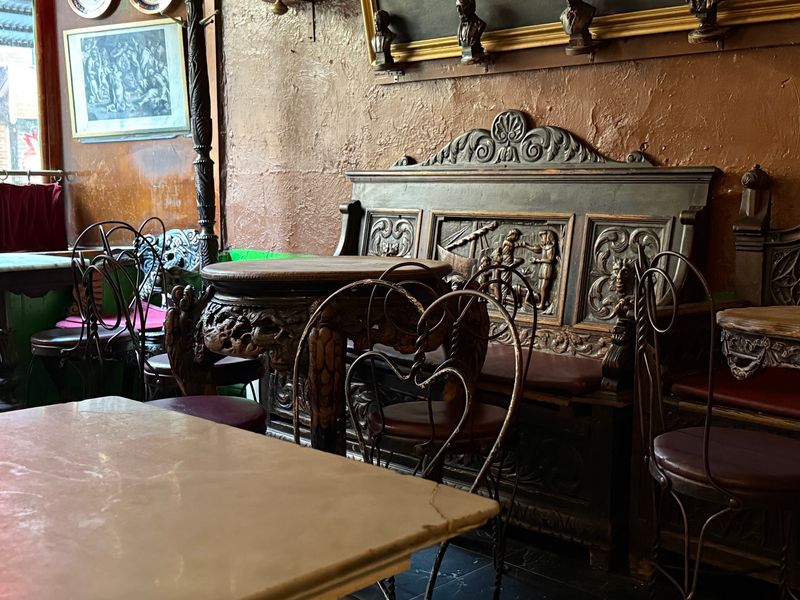
The warm, amber-tinted lighting casts a glow over dark wooden furniture that has hosted countless conversations over nearly a century.
Tin ceilings hover above, vintage Italian furnishings line every wall, and the overall effect is one of extraordinary, unhurried elegance. There’s no modern minimalism here, no trendy neon signs, no curated Instagram aesthetic.
What you get instead is the real thing.
Opened in 1927, this legendary café has steadfastly refused to follow trends, and that stubborn commitment to its original character is precisely what makes it magnetic.
People come from all over the world just to sit inside these walls and breathe in the atmosphere. Caffè Reggio doesn’t chase relevance; it simply is relevant, always has been, and probably always will be.
The Address That Tells A Story
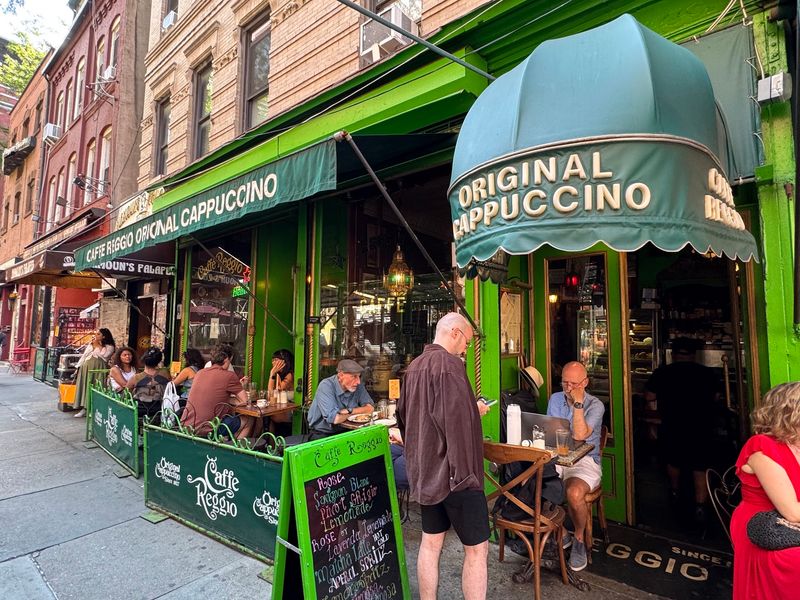
There’s something deeply satisfying about a place whose address has become legendary in its own right. Sitting at 119 MacDougal St, New York, NY 10012, right in the pulsing heart of Greenwich Village, Caffè Reggio occupies a spot that has witnessed more history than most city blocks could ever claim.
MacDougal Street itself is one of those iconic New York thoroughfares that feels electric just to walk down.
The Village has long been a magnet for creative thinkers, countercultural movements, and passionate individuals who refused to blend in.
Caffè Reggio fits that neighborhood identity perfectly, like a key sliding smoothly into a lock that was made specifically for it. The surrounding streets are lined with bookshops, jazz clubs, and independent boutiques that share that same spirit of individuality.
Stepping onto MacDougal Street and spotting the café’s familiar facade gives you an instant sense of arrival, like you’ve found exactly where you were supposed to be all along.
The neighborhood wraps around the café like an old friend, and together they form one of New York City’s most authentic and enduring stories. This block genuinely rewards curiosity.
The Espresso Machine That Started It All
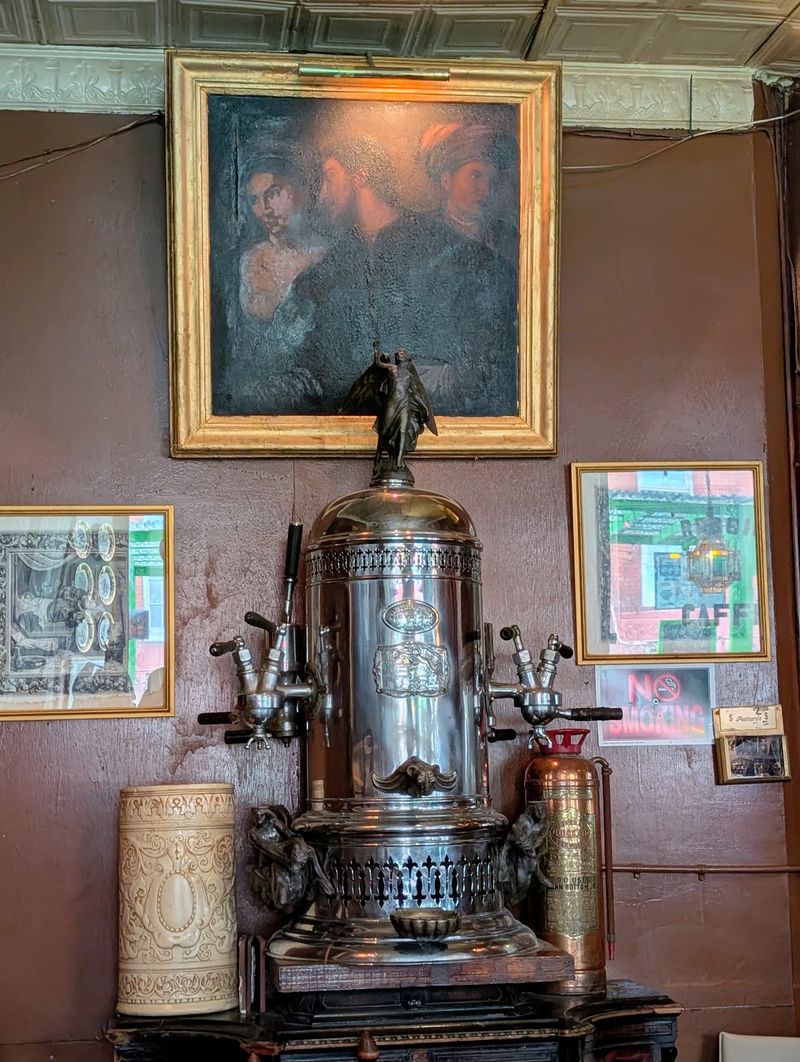
Here’s a fun fact that will make your jaw drop straight into your cappuccino: the espresso machine sitting against the back wall of Caffè Reggio is from 1902.
Not a replica, not a decorative prop. An actual, real, functioning prototype that was originally designed for the 1900 Paris World’s Fair.
It’s the kind of artifact that belongs in a museum, yet here it sits, casually anchoring a working café.
This gleaming bronze and chrome beauty was brought over from Italy by the original proprietor, who reportedly spent his entire life savings, roughly one thousand dollars at the time, to acquire it. It was coal-fired originally, which makes it an extraordinary piece of early engineering history.
Caffè Reggio is widely credited with introducing the Italian cappuccino to America, and that machine is the origin point of that delicious legacy.
Though it no longer brews daily cups, it remains proudly on display as a tangible connection to everything this café represents.
Standing in front of it, you realize you’re looking at the object that fundamentally changed how Americans think about coffee. That’s not a small thing; that’s genuinely revolutionary, one antique at a time.
Renaissance Art With Your Cappuccino
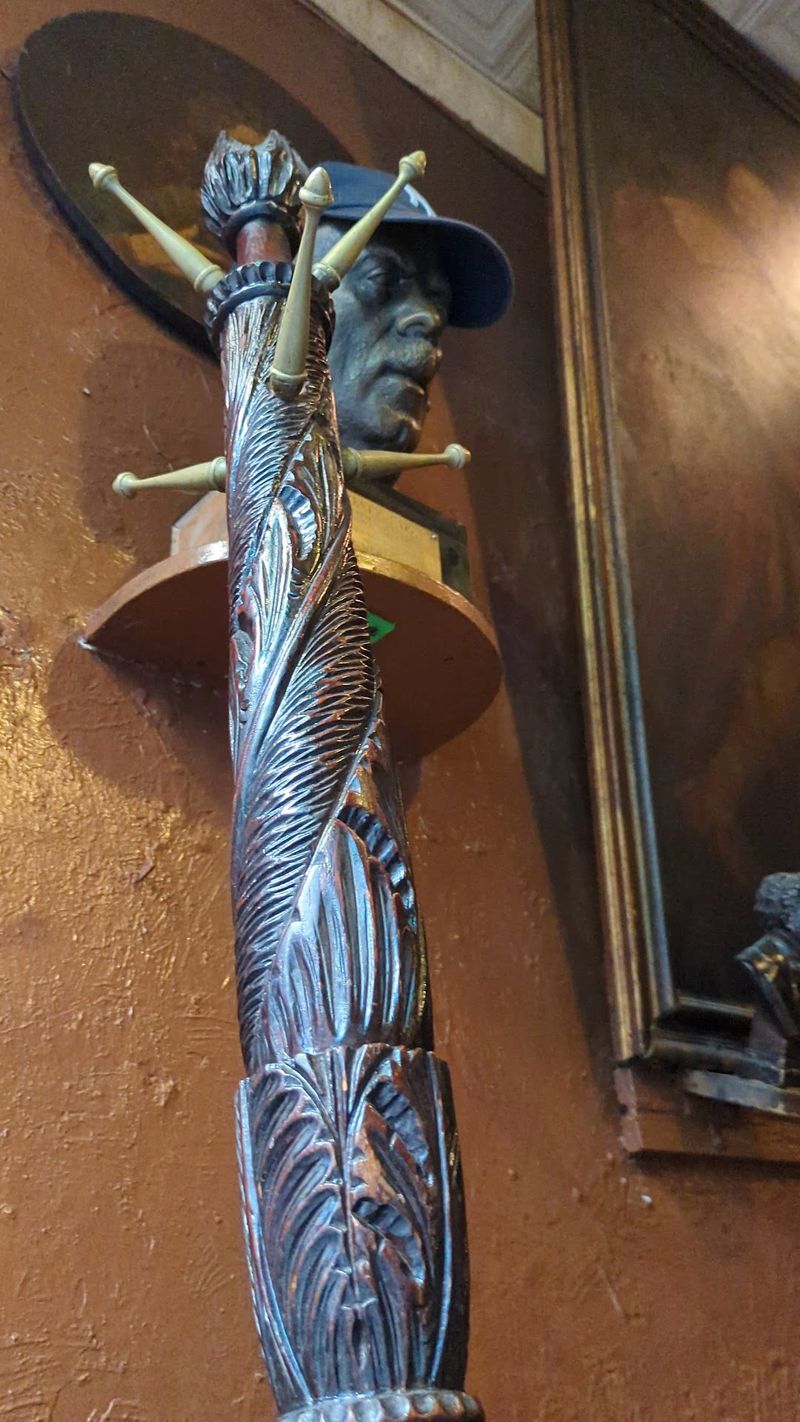
Most coffee shops decorate their walls with chalkboard menus or motivational quotes. Caffè Reggio went a completely different direction and hung centuries-old artwork instead, and honestly, respect.
Among the visual treasures adorning the café’s interior is a dramatic 16th-century painting from the school of Caravaggio. You read that correctly.
A Caravaggio-school painting, just casually hanging there while you sip your espresso.
The collection doesn’t stop there.
Antique sculptures, ornate framed canvases, and decorative objects fill every available corner, creating an atmosphere that feels genuinely palatial without being remotely pretentious. It’s the kind of aesthetic that could only happen organically over decades of passionate collecting, not something you could manufacture or replicate overnight.
And then there’s the bench. Reportedly belonging to the illustrious Medici family of Florence, it sits inside the café bearing their Florentine crest.
Sitting on a Medici bench while drinking an Italian cappuccino in Greenwich Village is the kind of absurdly wonderful experience that only New York can offer. The art isn’t background decoration here; it’s a full participant in the story Caffè Reggio tells every single day.
A Certified Hollywood Star
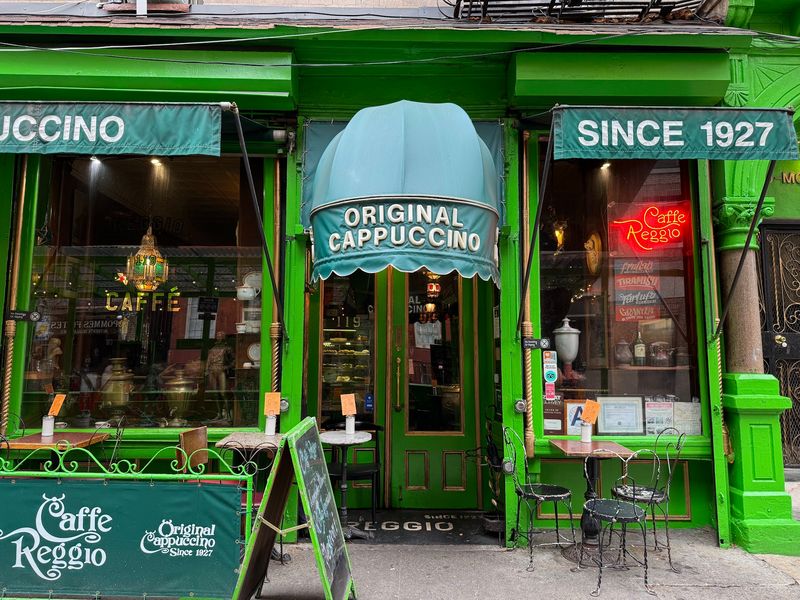
If Caffè Reggio were a person, it would have a very impressive filmography. This café has appeared in some of the most iconic films ever made, and its interior provides the kind of authentic, atmospheric backdrop that no studio set could convincingly replicate.
The Godfather Part II filmed scenes right here, which somehow feels completely appropriate given the café’s old-world Italian gravitas.
Beyond the saga, Caffè Reggio also showed up in Shaft, Serpico, and the Coen Brothers’ Inside Llewyn Davis, among other productions. Each film used the space to evoke a specific era, a specific feeling of New York that is increasingly hard to find in the real city.
The café’s timeless interior effortlessly transports viewers and visitors alike.
Adding to its remarkable resume, presidential candidate John F. Kennedy delivered a speech right outside its doors in 1959.
That’s the kind of historical footnote that most landmarks would frame and hang prominently.
Caffè Reggio barely mentions it, because honestly, when you have that much history, you can afford to be understated. Every visit carries the quiet thrill of standing somewhere truly significant.
The Bohemian Soul Of Greenwich Village
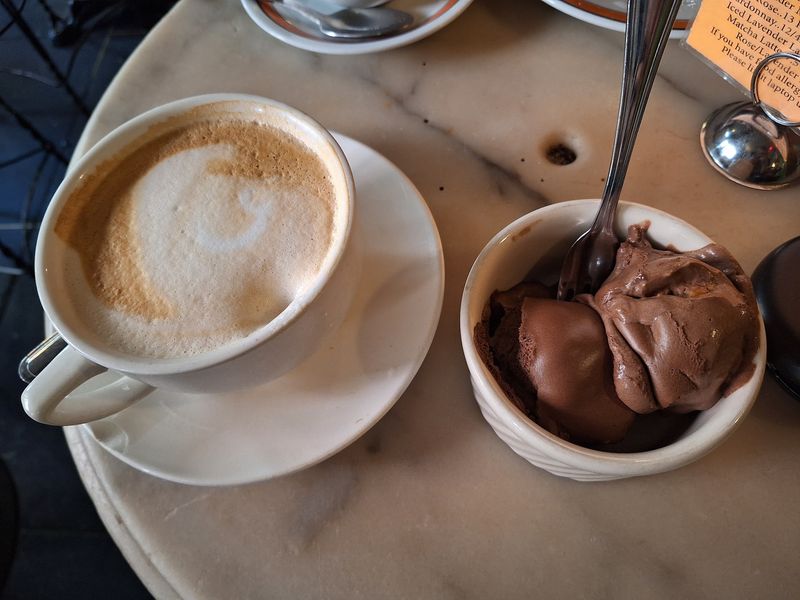
Long before “third wave coffee” became a marketing term, Caffè Reggio was already doing something far more interesting: it was fostering genuine intellectual community.
The Beat Generation found a home here, with literary legends like Jack Kerouac and Gregory Corso reportedly huddling over steaming cups, shaping conversations that would influence entire cultural movements.
The energy those writers brought to this space left a permanent imprint.
Greenwich Village in the mid-20th century was the epicenter of American counterculture, and Caffè Reggio sat right at its beating heart. Artists, philosophers, activists, and musicians all passed through these doors, drawn by the same combination of strong coffee, welcoming atmosphere, and an almost magnetic sense that something important was always happening here.
That creative electricity hasn’t entirely dissipated.
Even today, you’ll find people tucked into corners with notebooks, laptops, or well-worn paperbacks, continuing a tradition of thoughtful presence that stretches back nearly a century.
The café has never tried to be a trendy co-working space or a lifestyle brand. It simply provides the conditions for good thinking, and people have been showing up to take advantage of that ever since.
The Menu That Keeps You Coming Back
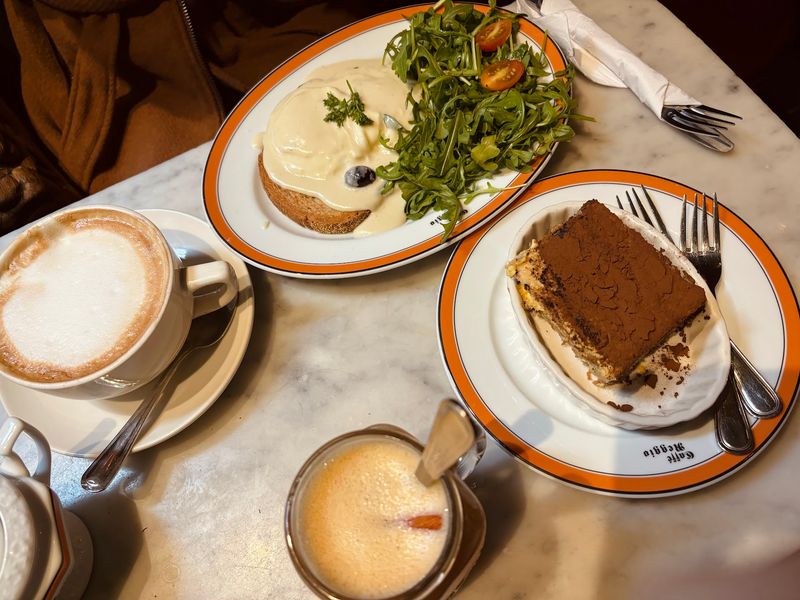
Let’s talk food, because the menu at Caffè Reggio is genuinely worth celebrating on its own terms. The cappuccino is the obvious starting point, given that this place literally introduced the drink to America, but the food offerings are equally compelling.
Tiramisu here is the kind of dessert that makes you close your eyes and take a slow breath before the second bite.
Cannoli, sfogliatella, and Italian cheesecake round out a dessert selection that feels authentically crafted rather than mass-produced.
On the savory side, bruschetta, paninis, and comforting soups provide solid, satisfying options for anyone who arrives hungry. The pecan pie has also developed a devoted following among regulars, which is a pleasantly unexpected twist for an Italian café.
Everything on the menu feels intentional, like each item was chosen to complement the overall experience rather than just fill space on a laminated card.
You’re not eating here purely for sustenance; you’re participating in a ritual that has been repeated by countless people across nearly a hundred years. That context makes every bite taste just a little bit richer, a little more meaningful than an ordinary meal.
The Art Of Staying Exactly The Same
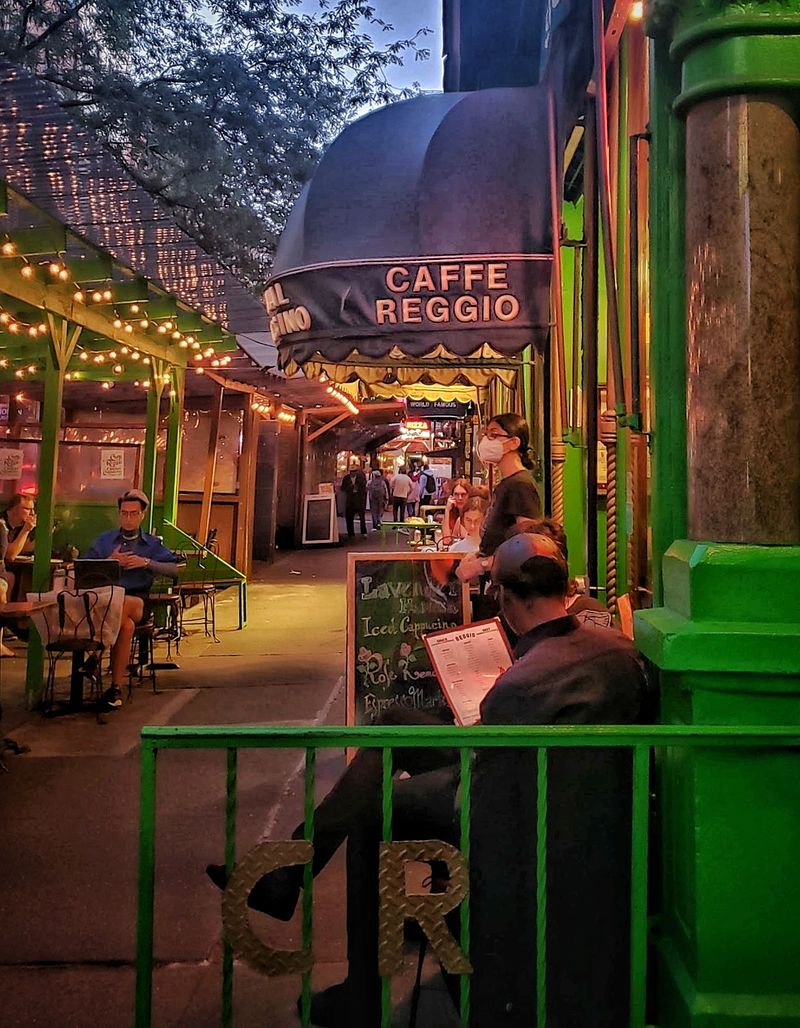
In a city that tears down and rebuilds constantly, choosing to stay exactly the same is a radical act. Caffè Reggio has been practicing that particular form of quiet rebellion since 1927, and it wears that commitment beautifully.
The tin ceilings, the dark wood paneling, the worn velvet seating, all of it remains deliberately, lovingly intact. Nothing about this place screams renovation or refresh.
That consistency creates something rare in modern urban life: genuine continuity. When you sit at a marble-topped table inside Caffè Reggio, you’re occupying the same physical space that has comforted people through decades of change, uncertainty, and transformation.
There’s a profound comfort in that kind of permanence, especially in a city that sometimes feels allergic to it.
In 2010, the Greenwich Village Society for Historic Preservation honored Caffè Reggio with a Village Award, formally recognizing what regulars had known for generations: this place is irreplaceable. The award acknowledges not just age, but genuine cultural contribution.
Caffè Reggio isn’t preserved because it’s old; it’s cherished because it continues to mean something real to the people who find their way through its door.
Why This Place Belongs On Every New York Itinerary
Some places earn their reputation through hype, and others earn it through decades of simply being extraordinary. Caffè Reggio belongs firmly in the second category.
Open from 9 AM through the late-night hours, it welcomes everyone from morning coffee seekers to night owls looking for a calm, atmospheric place to land after a long evening in the Village. That range of availability says a lot about the café’s generous spirit.
Whether you’re a first-time visitor to New York or a lifelong resident who somehow hasn’t made it here yet, Caffè Reggio offers something genuinely difficult to find: an experience that feels both historic and completely alive.
The atmosphere doesn’t feel frozen or museum-like; it feels inhabited, warm, and present. People come, they linger, they leave reluctantly.
There’s a reason this café has survived everything the city has thrown at it across nearly a century. It gives people exactly what they need, a beautiful, unhurried place to sit with a great cup of coffee and feel connected to something larger than the daily rush.