
North Carolina’s Largest Natural Lake Is A Quiet Wildlife Escape Most Road-Trippers Pass By
A lake this big should probably be harder to miss. Instead, most people drive right past it.
That’s part of the charm of this quiet corner of eastern North Carolina, where the horizon opens up, the roads get quieter, and wildlife has considerably more room than humans do.
The lake itself is the star, but the real show starts when you slow down and pay attention. Waterfowl overhead, birds working the shoreline, and stretches of wetland that feel a world away from the highway.
There’s no amusement-park version of nature here, no giant entrance sign promising an unforgettable experience. It’s more of a “pull over, get out, and look around” kind of place.
And that’s exactly why it works.
For road-trippers who usually treat this part of the state as something to pass through, this is the sort of detour that can turn an ordinary drive into a surprisingly good wildlife day.
The highway can wait. The birds clearly aren’t.
World-Class Birdwatching At Mattamuskeet
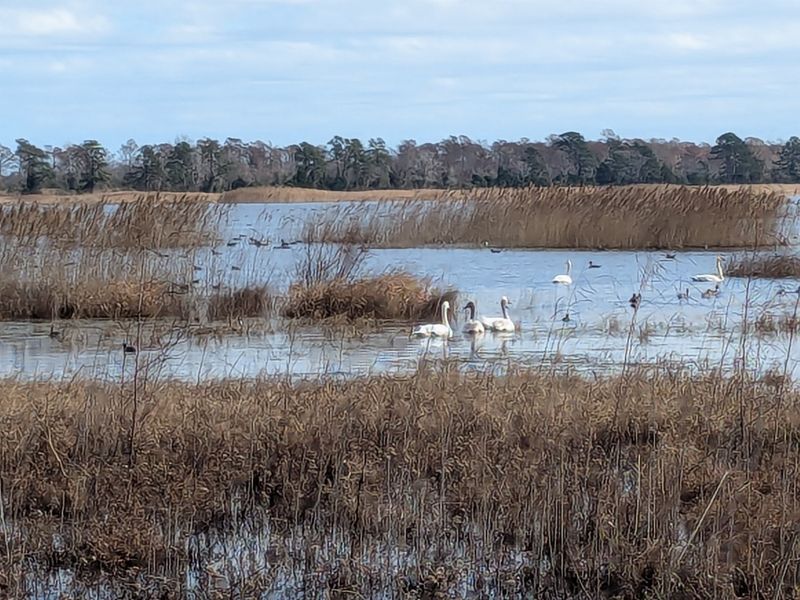
Nothing prepares you for the first time you see thousands of Tundra swans lift off the water at once. The sound alone is something you carry with you long after you leave.
Mattamuskeet National Wildlife Refuge sits along the Atlantic Flyway, and between November and February, over 200,000 ducks, geese, and swans turn this lake into one of the most extraordinary birding destinations on the East Coast.
The refuge hosts over 240 bird species throughout the year. You might catch great egrets wading through shallow impoundments, white ibises picking through marsh grasses, or a bald eagle cutting across a pale winter sky.
Snow geese, Canada geese, northern pintails, and green-winged teal are regulars here during migration season.
Early mornings and late afternoons offer the best viewing windows. Bring binoculars and a little patience, and the refuge will reward you generously.
The 15 managed wetland impoundments spread across nearly 2,505 acres give waterfowl prime feeding and resting grounds. Songbirds fill the cypress swamps with sound even on quieter days.
Mattamuskeet is proof that sometimes the most breathtaking wildlife experiences happen far from the tourist trail.
The Lake That Almost Vanished
Believe it or not, this entire lake was nearly drained for farmland back in the early 1900s. Fortunately, the project proved too costly and impractical, and Lake Mattamuskeet survived to become the stunning centerpiece it is today.
Located at 85 Mattamuskeet Rd, Swan Quarter, NC 27885, the refuge offers scenic drives that reveal just how spectacular that survival story really is.
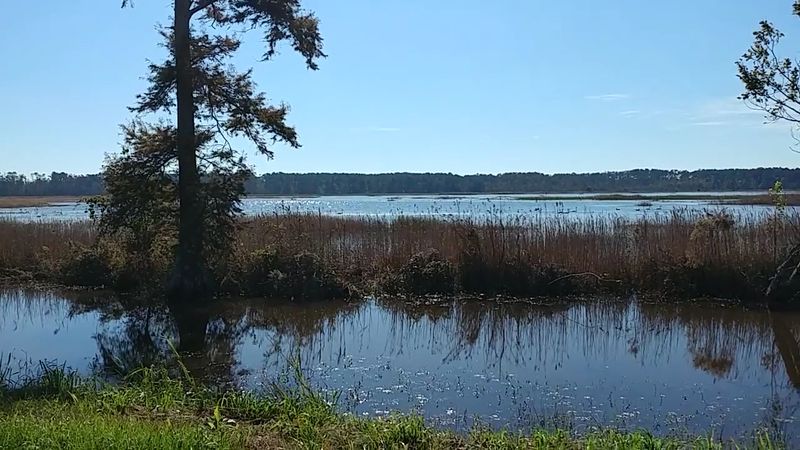
Highway 94 cuts directly across the heart of the lake, offering pull-off spots with benches and picnic tables where you can sit and take it all in.
The gravel Wildlife Drive winds around the largest wetland impoundment, giving you slow, window-level views of the creatures that call this place home. Eastern mud turtles bask on logs.
Hooded mergansers glide silently through canal water. Anhingas stretch their wings on cypress branches like tiny prehistoric statues.
Driving through here feels less like a commute and more like flipping through the most beautiful nature documentary you have ever seen. You do not need a hiking plan or a packed bag.
Just a full tank of gas and a willingness to stop often.
The refuge covers over 50,180 acres of marshes, pine forests, mixed hardwoods, and open water, and every mile of road reveals something new.
Hiking Trails Worth Every Step
Not every great trail needs to be ten miles long to leave an impression. Mattamuskeet keeps things approachable, and that is honestly part of its charm.
The New Holland Trail is a 0.3-mile wooden boardwalk that guides you right through serene cypress groves and wetlands, the kind of setting where you instinctively start walking slower just to soak it all in.
The Outfall Trail runs 0.25 miles alongside a pond, passing near the historic Mattamuskeet Lodge before disappearing into whispering pine woods. It is short, flat, and quietly rewarding.
There is also a Photo Blind Trail that leads through tall grasses to a dedicated blind positioned right at the lake’s edge, perfect for getting close without disturbing anything.
All the trails here are flat and easy to navigate, making them welcoming for casual walkers and nature lovers of all experience levels.
The habitats shift noticeably as you move through each path, from open marsh to shaded forest to open water views.
Deer have been spotted stepping quietly through the edges of the boardwalk trail. These paths do not demand much from you physically, but what they give back in atmosphere and wildlife encounters is genuinely outsized.
Photography That Will Make Your Camera Sing
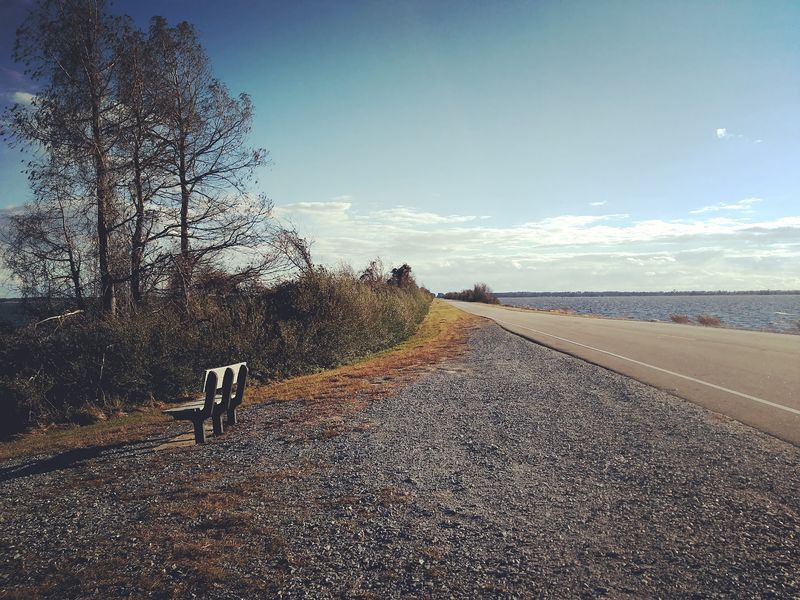
Photographers, consider this your personal invitation. Mattamuskeet National Wildlife Refuge operates on a completely different aesthetic level than most outdoor destinations.
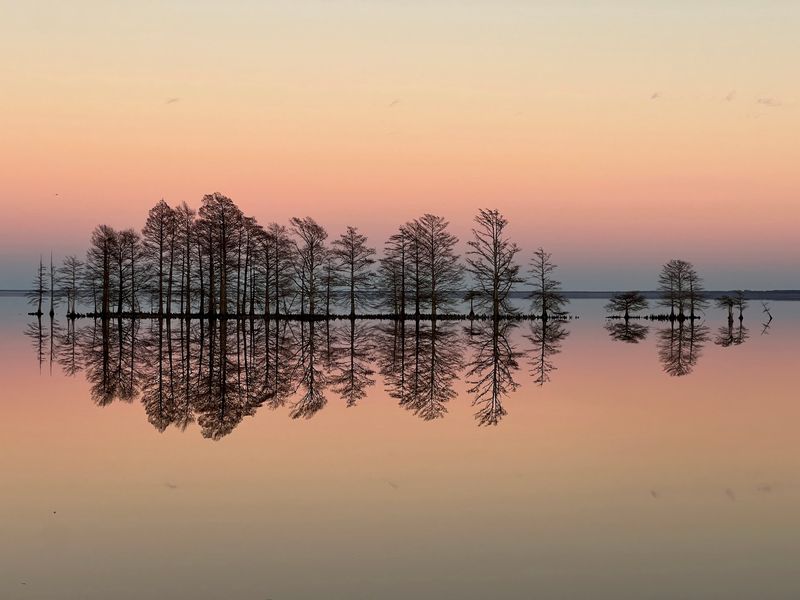
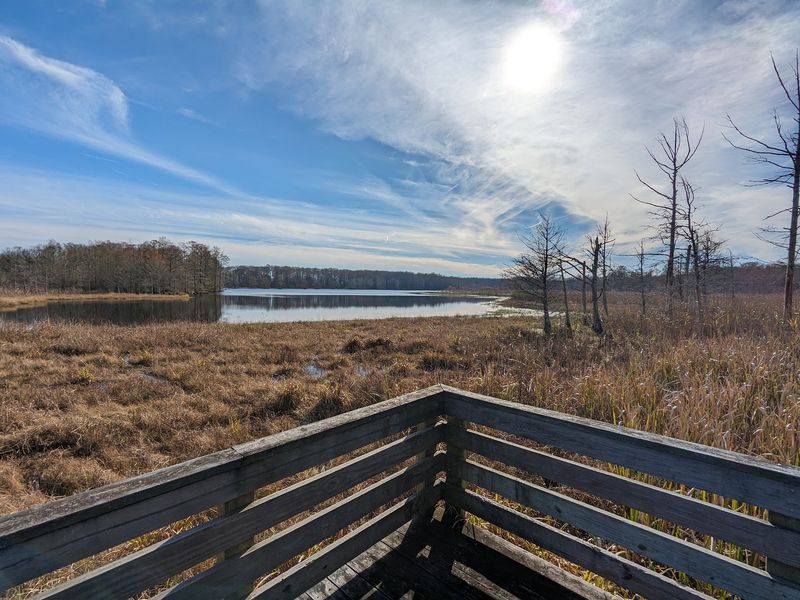
The combination of shallow, mirror-still water, ancient bald cypress silhouettes, and extraordinary wildlife density creates a setting that almost feels designed for dramatic imagery.
There is a dedicated photography blind right on Lake Mattamuskeet, letting you position yourself close to action without spooking anything.
Observation decks along the Wildlife Drive and the Highway 94 causeway offer elevated angles perfect for capturing wide, sweeping shots of the lake with its iconic tree line. Early morning fog rolling across the water creates the kind of moody atmosphere that makes landscape photographers genuinely emotional.
Golden hour here is something else entirely. The warm light bounces across the shallow lake surface, turning everything amber and rose.
A great blue heron standing at the water’s edge, a flock of snow geese lifting off in unison, a bald eagle perched in a cypress crown, these are not rare sightings here. They are Tuesday.
Pack extra memory cards, because Mattamuskeet has a way of filling them faster than you expect and leaving you wishing you had stayed until dark.
Fishing And Crabbing At The Refuge
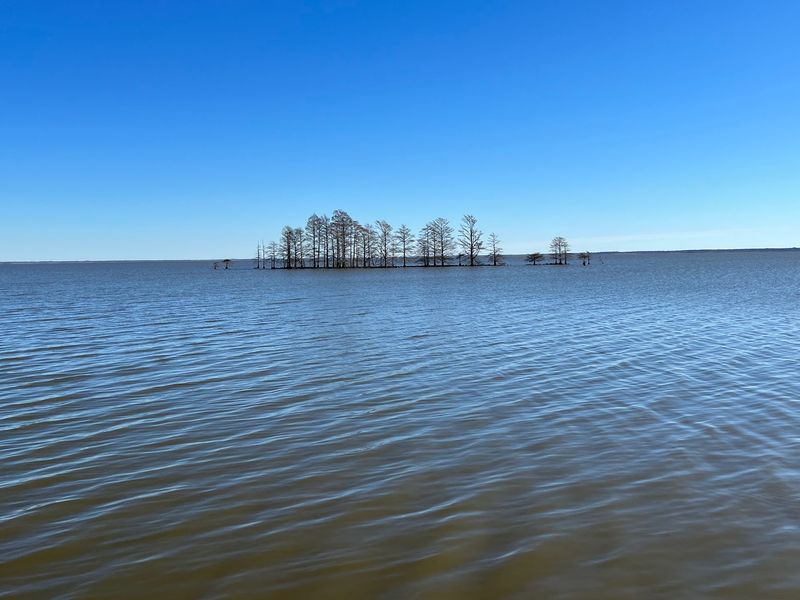
Fishing at Mattamuskeet has a slow, satisfying rhythm that feels nothing like the crowded marina scene. The lake and its canals hold largemouth bass, striped bass, catfish, crappie, and sunfish, giving anglers plenty of reasons to stick around.
Blue crabs round out the catch list for those who prefer something with claws.
Bank fishing is permitted year-round, so there is no wrong season to grab your gear and head out. The canals and water-control structures scattered throughout the refuge are known hotspots, especially for those willing to explore a little.
Motorized and non-motorized boats are welcome from March 1 through November 1, opening up the lake’s broader waters to anyone ready to venture further from shore.
A valid North Carolina inland fishing license is required, so make sure you are sorted before you arrive. Crabbing along the brackish-water zones near the canals that connect to Pamlico Sound adds another dimension to the experience.
The refuge’s waters are clean, quiet, and genuinely productive. Whether you are a seasoned angler chasing striped bass or a first-timer hoping to pull up a catfish, Mattamuskeet gives you the kind of fishing morning that makes the whole week feel better.
Paddle Your Own Adventure
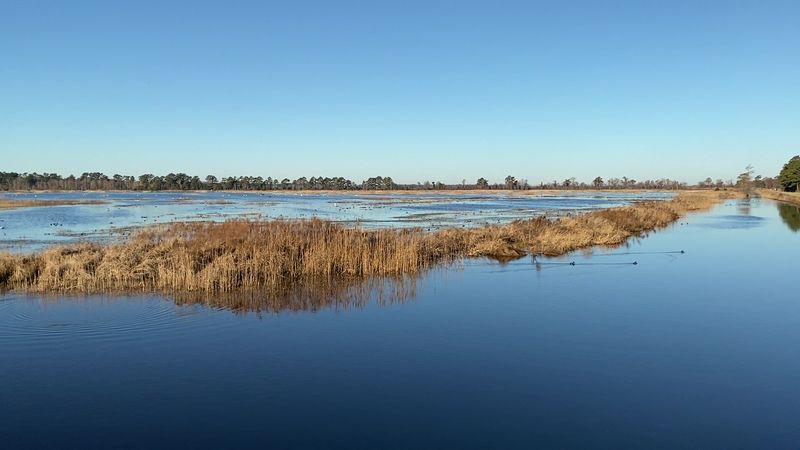
There is something about moving through water at your own pace, quietly, with no engine noise, that completely changes how you experience a place.
Mattamuskeet’s canals and lake edges are tailor-made for kayaks and canoes. Non-motorized boats are welcome from March 1 through November 1, giving paddlers nearly nine months of access to some seriously gorgeous waterways.
The lake’s average depth of just 1.5 to 4 feet makes it ideal for shallow-draft vessels. You can drift right up to bald cypress trunks, watch a river otter slip beneath the surface, or sit motionless while a great blue heron decides you are not a threat.
Multiple launch areas give paddlers flexible starting points for exploring different sections of the refuge.
Paddling here strips away every distraction. No notifications, no background noise, just water, wind, and wildlife.
The canals that wind through the wetland impoundments offer sheltered, calmer routes if you prefer something more contained than open lake paddling. Bring a dry bag for your camera, pack a light snack, and plan to move slowly.
Rushing through Mattamuskeet by kayak would be like fast-forwarding through your favorite film. The whole point is to linger in the best parts.
The Lodge That Time Forgot
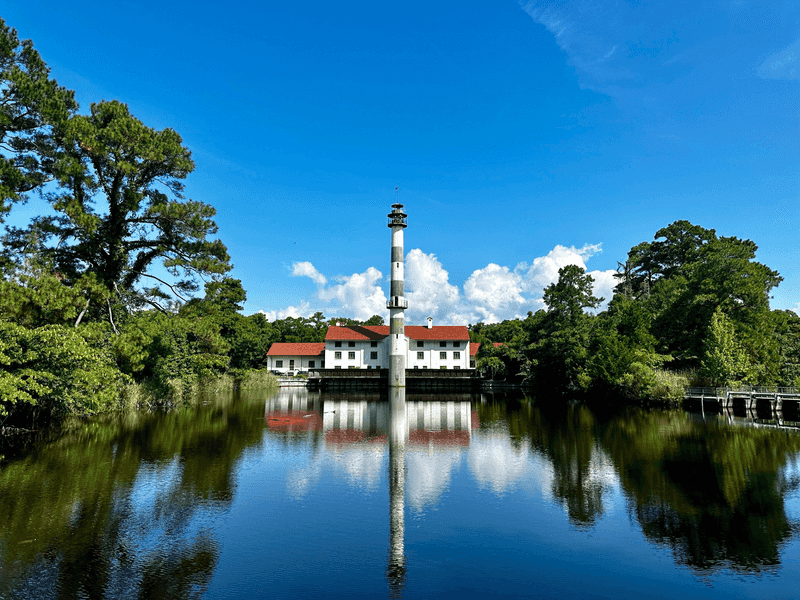
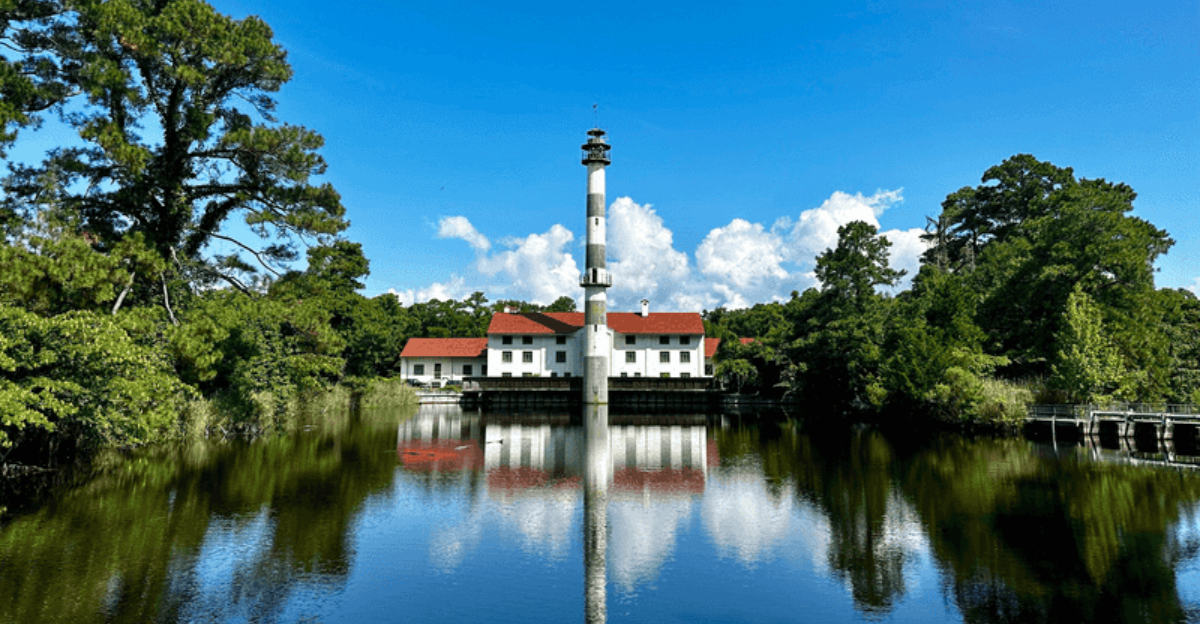
Some buildings just have stories radiating from every brick, and the Mattamuskeet Lodge is absolutely one of them.
Originally constructed in 1914, this massive structure was built as the largest pumping plant in the world. Its original mission was audacious: drain an entire 40,000-acre lake and turn it into farmland.
The plan ultimately failed, and the lake won.
In the 1930s, the Civilian Conservation Corps stepped in and transformed the former pumping station into a nationally recognized hunting lodge.
The most remarkable detail is the smokestack. They converted it into a circular staircase leading to an observation tower, offering sweeping views across the refuge.
It became a landmark as striking as anything the original engineers could have imagined.
The lodge ceased operations in 1974 and is currently closed to visitors, but it still commands attention from the road.
Standing near it, you get a real sense of how dramatically this landscape has shifted over a century, from industrial ambition to protected wilderness.
The history here adds genuine depth to a visit. Mattamuskeet is not just a pretty lake.
It is a place where nature quietly outlasted every plan humans made to tame it, and that story is worth knowing.
The Conservation Mission Driving It All
Mattamuskeet is not just a place to visit. It is a place actively working to protect something irreplaceable.
The refuge manages nearly 2,505 acres of wetland impoundments using a practice called moist-soil management, which involves carefully controlling water levels to encourage the growth of natural waterfowl foods like wild millet, panic grasses, and spikerushes.
This is not passive conservation. It is precise, science-driven habitat work.
Water levels across the 15 impoundments are monitored and adjusted using pumps and control structures throughout the year.
The goal is to keep the habitat in peak condition for the hundreds of thousands of migratory birds that rely on Mattamuskeet as a critical stopover along the Atlantic Flyway. Without this active management, the refuge could not support the wildlife numbers it currently does.
One of the most urgent ongoing projects involves removing invasive common carp from Lake Mattamuskeet.
Carp disrupt the lake’s natural ecosystem by stirring up sediment and outcompeting native species. Removing them helps restore water clarity and native plant growth.
The refuge also provides habitat for bobcats, black bears, river otters, and even endangered red wolves.
Visiting Mattamuskeet means stepping into a living conservation story, one still being written. Does that change how you see a wildlife refuge?