
This Michigan Golf Course Road Trip Belongs On Every Golfer’s Bucket List
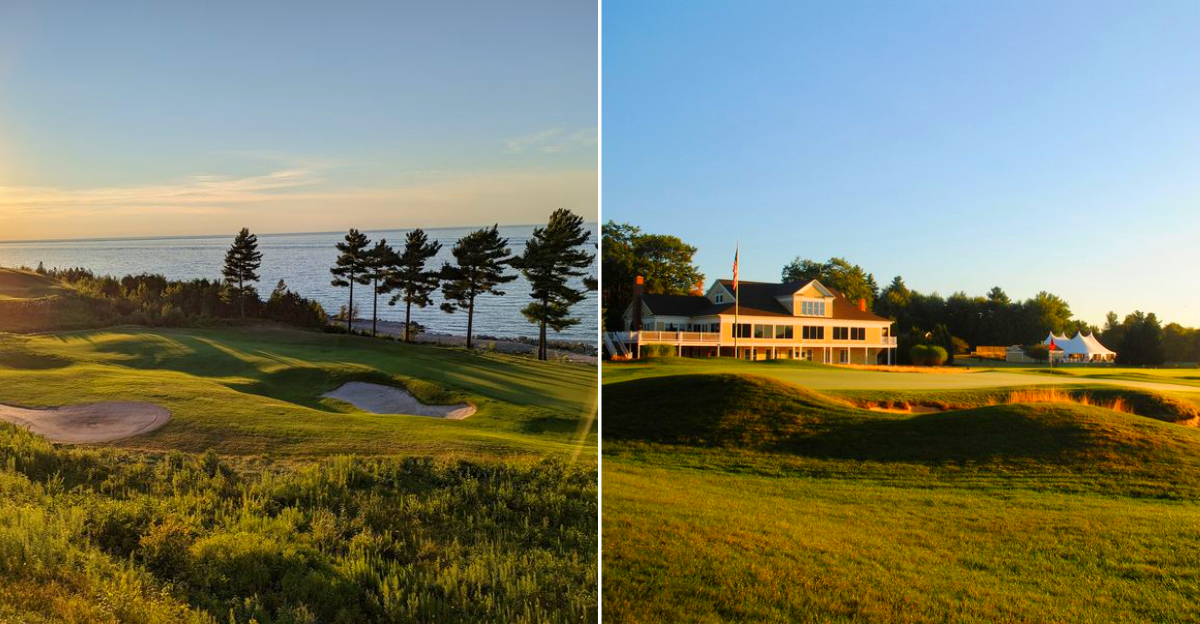
Michigan golf gets considerably more interesting once you stop treating the drive between courses as wasted time.
Head north with clubs in the trunk and the route starts unfolding through Lake Michigan bluffs, forest roads, small towns, and landscapes that seem designed to make every round feel completely different.
One course may punish you with wind and dramatic elevation changes. The next might twist across old quarry land or use reversible fairways that make familiar terrain behave in entirely new ways. I would resist the temptation to cram too much into one day.
A northern Michigan golf road trip combines dramatic courses, Lake Michigan scenery, forest landscapes, and unforgettable drives between tee times.
Reserve rounds early, but leave breathing room between them. You will want time for roadside meals, sunset overlooks, and the occasional recovery period for legs that suddenly remember they are not twenty anymore.
The golf matters, obviously, but the spaces between rounds are half the reason this trip works.
1. Arcadia Bluffs Golf Club
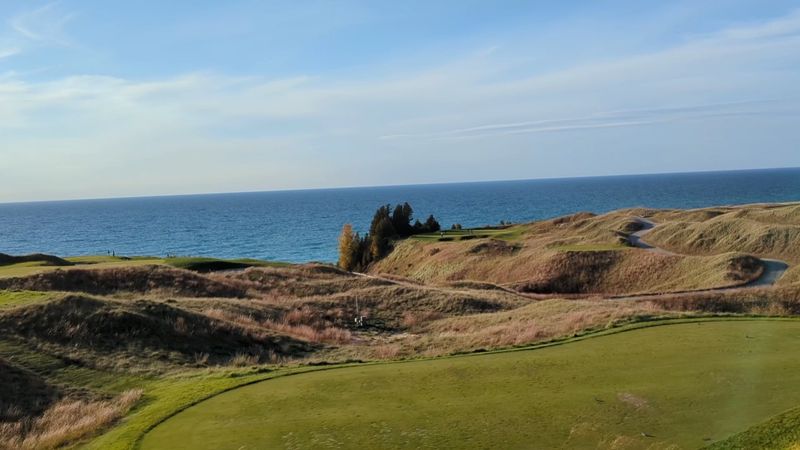
Few opening tees in Michigan make it this easy to forget the scorecard. Lake Michigan stretches beside the property, the fairways sit high above the water, and the wind has a habit of turning an ordinary club choice into a small philosophical crisis.
The Bluffs Course opened in 1999, with Warren Henderson and Rick Smith shaping a layout that leans hard into the drama of its blufftop setting.
The experience feels more coastal than Midwestern. Broad landing areas, rumpled ground, native grasses, deep bunkers, and big changes in elevation keep the eye busy even when the swing is behaving.
The safest plan is to arrive with layers, accept that the breeze may rewrite your strategy, and avoid assuming a calm practice green means a calm afternoon.
Walking with a caddie is especially worthwhile if you enjoy learning the course rather than simply surviving it. Blind lines and sloping ground can punish a first-time visitor who plays everything by instinct.
You will find the club at 14710 Northwood Highway in Arcadia, close enough to Lake Michigan that the water feels like part of the architecture. Chase a later tee time if possible and stay through sunset, when the shoreline light can make even a bruised scorecard feel forgivable.
2. Bay Harbor Golf Club
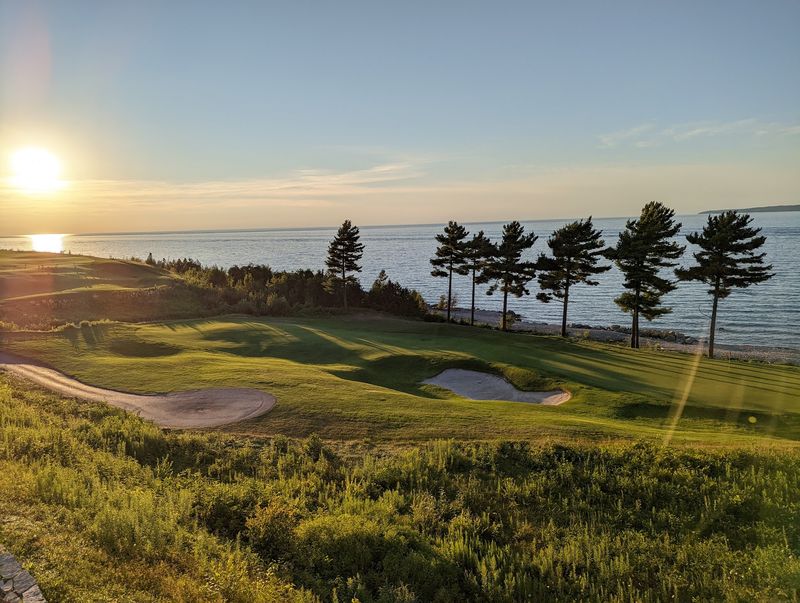
Industrial history rarely appears on a golf itinerary as a selling point, but that is exactly what makes this stop memorable. Parts of the property occupy former quarry and cement-factory land, and Arthur Hills used the scars rather than trying to disguise them.
The result is a 27-hole complex where lakefront golf, exposed rock, forest, and shoreline scenery can all appear in the same visit.
Three distinct nines create the choice: The Links, The Quarry, and The Preserve. I would pick a combination based on what your group wants from the day rather than automatically chasing the most dramatic photographs.
The Links gives you open views and the constant presence of Little Traverse Bay. The Quarry brings rock walls, rougher edges, and a sense that the land remembers what it used to be.
The Preserve slips into hardwoods and wetlands before returning toward the water.
Whichever pairing you book, give the wind some authority. Low shots and conservative targets can save strokes when conditions sharpen.
The club sits at 5800 Coastal Ridge Drive in Bay Harbor, placing you within easy reach of Petoskey, Harbor Springs, and plenty of options for dinner after the round. Arrive early, use the practice area, and confirm which two nines you are playing before heading to the first tee.
3. The Highlands
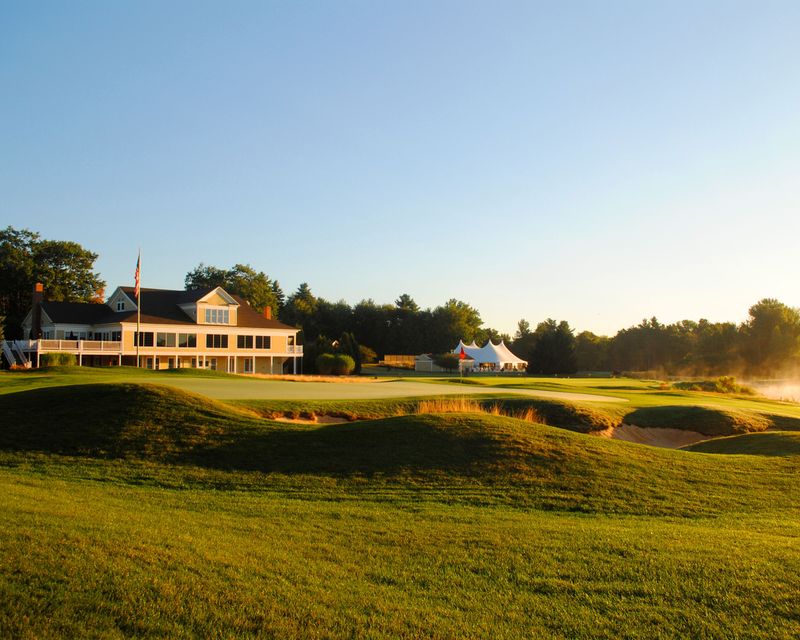
Morning golf feels particularly right in these wooded hills, especially when mist is still hanging between the trees and the first fairway looks half hidden from the rest of the world. The resort works well on a road trip because one stop gives you several very different versions of northern Michigan golf instead of a single signature experience.
The Heather is the historical anchor. Robert Trent Jones Sr. designed it in 1966, and its finishing hole still demands a nerve-testing carry over water.
The Arthur Hills course offers a more cinematic ride through elevation changes and forest, while The Moor and Donald Ross Memorial add still more variety for anyone staying longer than a night.
Then there is Doon Brae, the short par-3 course designed by Ray Hearn on the lower ski slopes. It is fully lit for night play, which makes it ideal when nobody wants the golf day to end but everybody’s knees have submitted a formal complaint.
The main resort is located at 600 Highlands Drive in Harbor Springs, making it an especially convenient overnight base on this route. My preference would be one championship round, a long lunch, then an easy evening loop rather than trying to squeeze two serious rounds into a single day.
4. Treetops Resort
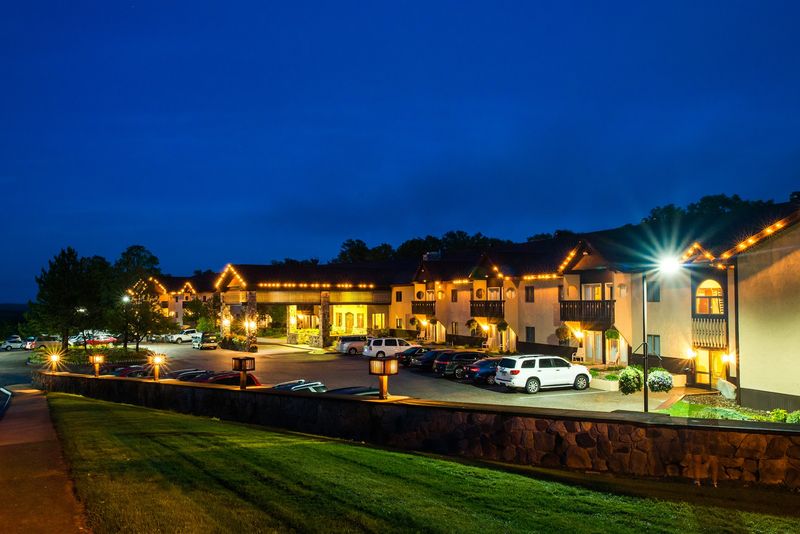
Gravity becomes part of the strategy almost immediately here. A yardage that looks perfectly reasonable on the card can play completely differently once a tee box is perched above the fairway or an approach climbs into the hills.
That constant vertical movement gives this Gaylord resort much of its personality.
The Jones Masterpiece, opened in 1987 and designed by Robert Trent Jones Sr., is the course most closely tied to the resort’s identity. Its views across the Pigeon River Valley helped inspire the Treetops name, and several holes make restraint more useful than bravado.
Rick Smith’s Signature followed later, bringing strongly rolling greens and plenty of strategic trouble. The Fazio Premier and Smith Tradition offer still more options, while Threetops compresses the elevation drama into a memorable par-3 experience.
With so much golf on the property, scheduling may become a bigger threat than the bunkers. Do not stack tee times so tightly that you spend the day watching the clock, especially since the courses occupy different parts of the resort.
Set your GPS for 3962 Wilkinson Road in Gaylord, which brings you to the main resort complex. I would stay overnight, choose two contrasting courses, and leave the others as an excuse to come back.
5. Forest Dunes Golf Club
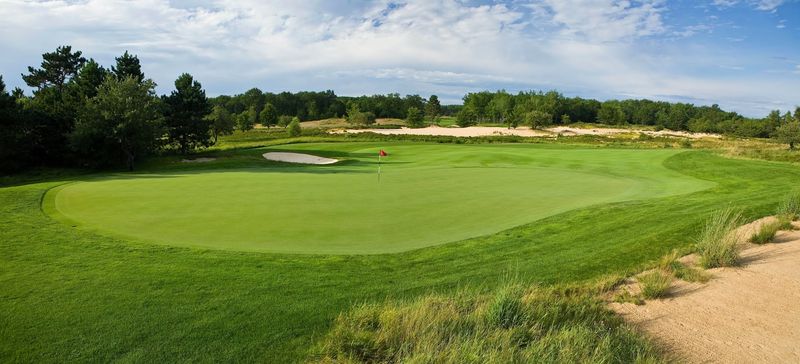
Remoteness is part of the appeal long before the first tee. The drive toward Roscommon leaves busier resort towns behind, and by the time forest begins closing around the road, the journey feels less like another golf stop and more like a temporary disappearance.
That mood suits a property built almost entirely around the game.
Tom Weiskopf’s original Forest Dunes course moves between heavily wooded holes and sandier, more open terrain shaped by ancient glacial deposits. It is polished without feeling overly manicured, and the quiet can make a flushed iron shot sound suspiciously heroic.
The real reason to stay longer, though, is The Loop. Michigan native Tom Doak designed the same 18 greens and fairways to be played in opposite directions on alternating days.
The Red routing runs one way and the Black the other, turning familiar ground into an entirely different strategic puzzle. Firm turf encourages bump-and-run shots, creative angles, and using slopes instead of insisting that every approach arrive through the air.
The club is tucked away at 6376 Forest Dunes Drive in Roscommon, so I would fuel the car before the final stretch and settle in rather than planning a rushed departure. If the schedule allows, book both directions of The Loop on consecutive days.
Playing only one reveals the trick; playing both reveals why it works.